Except for local gains, the Greek offensive basically has ground to a halt by 27 December 1940. The Greek government and military commanders assess the situation to see if perhaps now it is time to go over to the defensive. The weather in the mountains simply is too brutal at this point to facilitate major advances. To the credit of the Greek forces, they have secured strong defensive positions, with V Army Corps taking Mount Tomorr and establishing a connection between II and III Corps, which have been blocked by the Italians in the valleys below. Greek I Corps captures Kalarati and Boliena in the coastal sector.
On snowbound peaks, Greeks and Italians were locked tonight in a furious battle for Klisura, fiercely defended mountain gateway through which the Hellenes’ right flank seeks to fight into Tepeleni and on Valona in a coordinated drive with the coastal left flank. In the Tepelini area, a government spokesman said tonight, the Fascists had been driven from several villages in battles on the high, cold terrain. Their retreat eastward from Chimara continued, he added, and in that sector the Greeks pressed an uninterrupted advance.
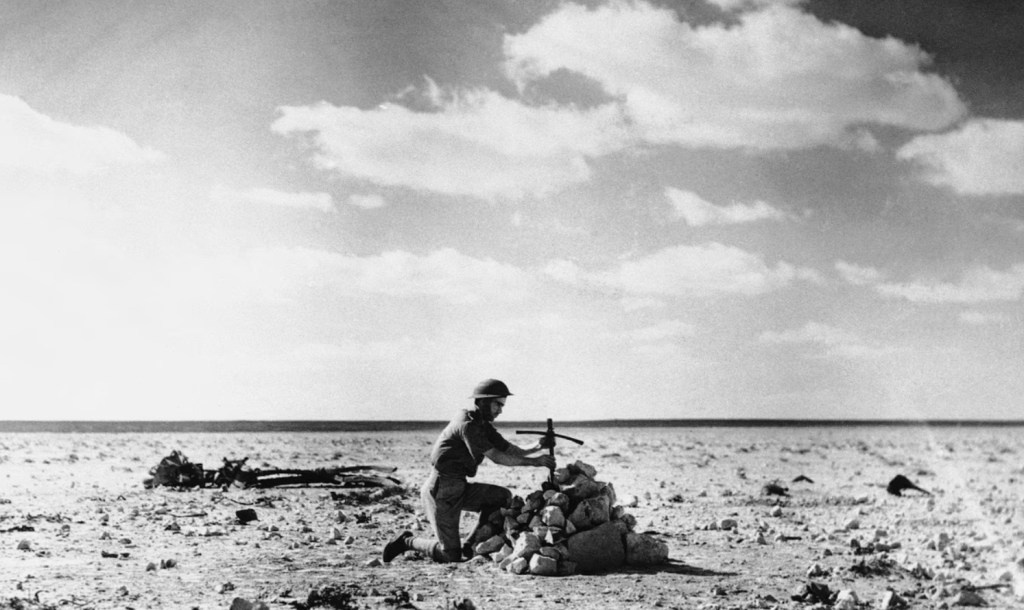
A “sacrifice garrison” of 20,000 Italians stubbornly held this besieged post tonight at the personal order of Premier Benito Mussolini, while thousands of their comrades threw up additional fortifications for a stronger stand at Tobruk, 50 miles to the west. Italians captured by the British said Mussolini’s order, that they be “ready to die” rather than give up Bardia, was transmitted by Marshal Rodolfo Graziani, North African commander now at Tobruk. General Francesco Berti, Bardia commander, noted for his ability to exhort his men to brave deeds, thereupon called on them to rally and redeem the Italian army’s prestige.
Admiral Erich Raeder met with Hitler in Berlin and expressed “grave doubts” about starting a war with the Soviet Union before Britain was defeated. Raeder met with Adolf Hitler in Berlin, Germany. He tells Hitler, “The threat to Britain in the entire eastern Mediterranean, the Near East and in North Africa has been eliminated … The decisive action in the Mediterranean for which we had hoped therefore is no longer possible.” Raeder essentially is admitting that the peripheral strategy that he pushed on Hitler just months earlier has become a complete failure, and essentially Germany is left with no effective strategy against England at all. Raeder also expresses “grave doubts” about attacking the Soviet Union with Great Britain still unsubdued.
Even though Raeder is one of the very few advisors from whom Hitler sometimes takes advice, perhaps because he knows little about naval warfare and grand strategy involving sea transport, the issue of the Soviet Union is a closed issue in his mind. Several other top advisors, including Reichsmarschall Hermann Göring, also are extremely skeptical of the wisdom of tangling with the Soviet Union. However, Hitler considers himself — apparently due to his own war service and his past successes with invasions as Fuhrer — as the best strategist for land operations.
Hitler remains positive about the prospects for Operation SEA LION, the proposed invasion of England. He states that “in all probability, it will not take place until the summer of 1941.” During this period, Hitler seems to be balancing the competing ideas of invading Great Britain or invading the Soviet Union, which, despite his Führer Directive No. 21 of 18 December setting forth planning and a target date for Operation BARBAROSSA, he still seems uncertain about.
Germany tonight warned the United States against “exposing herself to acts of war” by any revision of the neutrality act to permit shipment of American war materials to Britain by way of Irish ports. To the warning that the United States might thus find herself at war, Nazi Propaganda Minister Paul Joseph Goebbels added an assertion that Britain’s plight is “absolutely hopeless” and that the British are thinking only of desperate appeals for U. S. help. The new warnings to the United States were issued in a chorus of the German controlled press in advance of President Roosevelt’s fireside chat to the American people Sunday night. He is expected to call for the fullest possible aid to Britain.
Prime Minister Churchill asks the First Sea Lord, Admiral of the Fleet Sir Dudley Pound, whether merchant ships, particularly tankers, can be converted to launch “expendable aircraft” (which apparently means battle-worn Hawker Hurricanes) from catapults (as from battleships and cruisers) for convoy protection. This indeed is possible, and such craft first are called Auxiliary Fighter Catapult Ships, and later become known as Catapult Aircraft Merchant ships (CAM ships). The Hurricanes carried by the CAM ships become known as “Hurricats” or “Catafighters” or “Sea Hurricanes.”
Churchill to First Sea Lord: “What have you done about catapulting expendable aircraft from ships in outgoing convoys? I have heard of a plan to catapult them from tankers, of which there are always nearly some in each convoy. They then attack the Focke-Wulf and land in the sea, where the pilot is picked up, and machines salved or not as convenient. How is this plan viewed?”
Churchill sends a memo to General Hastings “Pug” Ismay, who holds several top military positions but essentially is Churchill’s personal military advisor and adjutant (basically fulfilling a role similar to that of Keitel in Germany). Churchill suggests that preparations for Operation Marie, the invasion and occupation of Djibouti, should be set in motion by the sailing of several French battalions to Port Sudan on a convoy departing on 4 January 1941. “The operation “MARIE” [the occupation of Djibouti] has been regarded by the Chiefs of Staff, and is considered by me, to be valuable and important. For this purpose not only the Foreign Legion battalion but two other French battalions should be sailed in the January 4 convoy, and deposited at Port Sudan, where they can either intervene in “MARIE” or in Egypt.”
Air Vice-Marshal Keith Park, recently unceremoniously ousted from his command of No. 11 Group defending London, is given command of the RAF Fighter Command No. 23 Training Group.
Negotiations seeking to improve British-Soviet relations were started today when Anthony Eden, Britain’s new foreign secretary, conferred with Russian Ambassador Ivan M. Maisky at the foreign office. Eden and Maisky, meeting for the first time since Eden was named to replace Viscount Halifax as foreign secretary, were said to have exchanged “mutual assurances” of a desire to improve relations between London and Moscow. Both men described the talk as having been a cordial one; although it was pointed out that it necessarily was “a preliminary one” because Eden’s four days at the foreign office have not permitted him to pick up all the threads of the situation. Any success in bringing Britain and Russia into closer relations at this time is generally recognized as one of the greatest diplomatic and strategic victories which Britain could achieve. When Eden was named foreign secretary last week returning him to the post he resigned in February of 1938 in protest against the Chamberlain “appeasement” policies, it was said that British efforts to effect a reconciliation with Russia were to be expected.
The George Cross is gazetted for Sub-Lt Richard Valentine Moore (b. 1916), RNVR, who was called upon in an emergency and, although he had no practical training, disarmed five mines. The George Cross is also gazetted for Sub-Lt John Herbert Babington (b. 1911), RNVR, who died tackling a bomb at Chatham which had a new type of fuse, knowing that a similar device had recently killed an RAF expert; he could not remove it, but much was learnt from this brave attempt.
The official Vichy press agency states that the Laval incident is closed and that the former Premier is in Paris on private business. His retirement is confirmed by the Vichy government. On 12 July 1940, Laval was appointed vice-premier and because he was enthusiastically pro-Nazi; his demands for a Franco-German military alliance led to him being sacked from the government and arrested on 13 December. The German ambassador in France, Otto Abetz, has him freed and moved to Paris. Premier Marshal Petain has released Pierre Laval, but has not restored him to his offices despite German pressure via Ambassador Abetz. The official French press agency alludes to Laval’s “retirement” today and notes that he is living in Paris as a private citizen.
The Dublin correspondent of the London Daily Mail reported today that the Rome radio had offered full axis support to Ireland in the event of “British aggression.” This was the radio’s statement, according to the correspondent: “Should the Irish people be forced to defend themselves against British aggression they can be assured of the full and wholehearted help of the axis powers. Besides this military help, the whole Catholic world would be on their side.”
Following its abortive attack on Convoy WS.5, Admiral Hipper makes port at Brest. Is is the first major Kriegsmarine warship to reach any of the French ports. This concludes Operation Nordseetour, the codename for Hipper’s raiding expedition. Nordseetour must be adjudged only a partial success because Hipper sank only one ship of 6,078 tons during the entire cruise — but its mere presence in the Atlantic jumbled Royal Navy deployments and kept the Admiralty wasting men and ships on fruitless searches in both the North and South Atlantic. In addition, it now is in position to sortie out into the Atlantic at will and also preoccupy RAF Bomber Command, drawing bombs away from other targets. Thus, saying that Operation Nordseetour is “unsuccessful” as many do is untrue — it simply is not as successful as it might otherwise have been. Getting Admiral Hipper to the Atlantic coast ports is a strategic gain for the Kriegsmarine.
Meanwhile, heavy cruiser Admiral Scheer remains in the Atlantic, meeting with German raider Thor and supply ships Nordmark and Duquesa (captured) east of St. Helena.
The German coastal guns at Cap Gris Nez shell British convoys off Dover and score some rare successes, hitting and damaging 530-ton Royal Navy armed trawlers HMT Blackthorn and Deodar.
Weather in the Mediterranean Basin is especially severe, heavy storms blowing cold winds all across the region. It is turning into the coldest month in 17 years. In Malta, it rains for 36 hours straight, and morale is so poor that the military offers another extra rum ration.
Cairo signals “No change” in the battlelines. With military operations at a standstill again — the Italians are defending Bardia and Tobruk, while the British are bringing up Australian troops to launch assaults on them — the British begin strategizing over the next steps. A big meeting is planned in Cairo between General Wavell, General O’Connor and Major General Iven Mackay, commander of the 6th Australian Division currently deploying to launch an assault on Bardia.
The German air force delivered a short but furious blow at London last night which left no doubt that the tacit Christmas truce in this bitter air war is now only history. The Luftwaffe returns to the attack, bombing London with 108 bombers over the course of four hours overnight. There is heavy damage in the City and Whitehall, with 141 deaths. Damage is concentrated in certain neighborhoods such as Islington. For some hours flares, then incendiaries and finally heavy bombs fell in district after district. The “raiders passed” signal sounded an hour before midnight, but in the preceding hours, British sources said, the raid was equal in intensity to some of the heaviest attacks on London.
RAF Bomber Command dispatches 75 aircraft overnight to the aircraft factory at Bordeaux and to ports and airfields. 1 Blenheim and 1 Wellington lost; 4 aircraft crashed in England.
RAF No. 252 Squadron receives the first Beaufighter to be delivered to a coastal fighter squadron.
U-38, commanded by Kapitänleutnant Heinrich Liebe, damaged steamer Ardanbhan (4980grt) in convoy OB.263. Thirteen hours later, Italian submarine Tazzoli finished her off with the loss of all her crew.
British ship Waiotira, damaged by German U-boat U-95 300 miles south of Iceland in the previous night, was detected by U-38, commanded by Kapitänleutnant Heinrich Liebe. The stopped Waiotira was located by U-38 during the night and hit underneath the bridge by a coup de grâce at 0146 hours on 27 December. Also this U-boat left the area before the ship sank because a destroyer was approaching, but the vessel sank a few hours later. One passenger was lost. The master, 78 crew members and ten passengers were picked up by HMS Mashona (F 59) (Cdr W.H. Selby, RN) and landed at Greenock on 28 December. The 12,823 ton Waiotira was carrying refrigerated and general cargo and was bound for the United Kingdom.
U-65, commanded by Korvettenkapitän Hans-Gerrit von Stockhausen, sank Norwegian steamer Risanger (5455grt) at 12‑30N, 21‑30W, but all her crew were rescued. At 1131 hours on 27 Dec 1940 the unescorted Risanger (Master Sverre Kure Olsen) was hit amidships by a stern torpedo from U-65 off Freetown. The U-boat surfaced and fired 70 rounds from the deck gun to finish off the vessel that sank with still turning screw. All on board abandoned ship in the lifeboats and were picked up after a few days by the Norwegian motor tanker Belinda (Master Lorentz Christensen) and landed in Capetown on 10 Jan 1941.. The 5,455 ton Risanger was carrying coal and vehicles and was bound for Alexandria, Egypt.
German cruiser Admiral Hipper arrived at Brest, France, ending an one-month patrol in the Atlantic Ocean, a cruise in which she sank one ship for 6,078 tons.
Destroyers HMS Bedouin, HMS Tartar, HMS Sikh, and HMS Keppel were brought to two hours notice at Scapa Flow at 1825.
Steamer Araby (4936grt) was sunk on a mine nine cables west of Nore Light Vessel, with the loss of six crewmen.
Steamer Kinnaird Head (449grt) was sunk on a mine off Southend, seven cables north of 2 Buoy, also with the loss of six crewmen.
Steamer Lady Connaught (2284grt) was damaged on a mine in 53‑37N, 03‑43W.
Steamer Victoria (1641grt) was damaged on a mine eight miles 290° from Bar Light Vessel, Mersey.
Dutch tanker Woensdrecht (4668grt) was damaged by German bombing in 51‑40N, 01‑18E.
An RAF Hudson bombs and sinks 1200-ton Norwegian freighter Arnfinn Jarl at anchor off Egersund, Rogaland. However, the freighter is not badly damaged and sinks in shallow water, so it can be refloated and repaired. As with many ships sunk in World War II, this ship bears the name of a similar freighter sunk during World War I. The attack on Egersund is one of half a dozen attacks on shipping launched during the day by Coastal Command, which reports other successes which have not been confirmed.
Australian light cruiser HMAS Perth was at Alexandria for camouflage painting on the 27th and 28th, and on the 30th replaced sister ship HMAS Sydney in the 7th Cruiser Squadron.
Heavy cruiser HMS Dorsetshire departed Freetown with Force K.
Convoy CE.20 was shelled off Dover, and armed trawlers HMS Blackthorn (530grt) and HMS Deodar (530grt) damaged.
Convoy FN.368 departed Southend, and arrived at Methil on the 29th. FN.369 did not sail.
Convoy FS.372 departed Methil, escorted by destroyers HMS Vivien and HMS Wallace, and arrived at Southend on the 29th.
Convoy FS.373 departed Methil, escorted by destroyers HMS Verdun and HMS Wolsey. Corvette HMS Snapdragon joined on the 28th, and the convoy arrived at Southend on the 29th.
Convoy BS.11B departed Suez, escorted by sloop HMS Clive. Sloop HMS Yarra joined on the 28th. The convoy arrived at Port Suden on the 29th.
President Roosevelt was reported authoritatively tonight to have drafted a $17,000,000,000 budget for the coming fiscal year, including $10,000,000,000 for the armament program. The president was said to have settled major details of the budget shortly after he told reporters at a press conference that Budget Director Harold D. Smith was coming to the White House with the latest figures. The $10,000,000,000 armament estimate was double that of the current year, and easily the largest since World War days. If the Treasury pays out $17,000,000,000 in the fiscal year beginning next July 1, it will be the highest in American history, with the exception of the last year of the World War, when $18,522,895,000 was expended. Officials indicated that the budget was large enough so that no substantial changes would be needed to take care of the President’s proposal to lease war material to Great Britain. These sources indicated that the principal expenditures on behalf of Great Britain in the next fiscal year would be for the construction of factories and other facilities for the production of war material. This construction had been tentatively budgeted as American cost even before the President broached his Lend-Lease plan.
President Roosevelt told his press conference today that he had turned over to the new Defense Council for study, the Congress of Industrial Organizations proposal that unused space and equipment in automobile factories be employed for the manufacture of 500 fighting planes a day. The President said that the plan, drafted by Walter P. Reuther of the United Automobile Workers of America and submitted to him Monday by Philip Murray, C.I.O. president, would be a real contribution to national defense if something concrete could be developed from it. The plan, however, involved questions of technical management which require further study, he added. When asked to comment on proposals by Senator Vandenberg and others in Congress that the United States start peace negotiations to end the war in Europe, the Chief Executive said that he had no news on that today.
Senator Burton K. Wheeler of Montana renewed his demand today that this government use its influence to bring about a “just peace” in Europe before proceeding with new steps to aid Great Britain in the war. A “just peace,” In Senator Wheeler’s eyes, would be terms which the belligerents, especially Great Britain, are willing to accept in preference to continuing the struggle. The price of failure to find that basis in the near future might be the lives of millions of Americans, he added. Senator Wheeler, who led the opposition to President Roosevelt’s Court Bill in 1937, is fast emerging as one of the leaders of the peace group in Congress. He conceded today that his group might be small at first in the now Congress, but expressed the conviction that reactions would certainly follow any policy of this government which draws the United States nearer the war.
The War Department decided today to ignore protests by Sidney Hillman against the award of a contract to the Ford Motor Company for 1,500 light reconnaissance motor cars to cost $1,387,500, but its decision left the general labor policy of the nation’s defense program still unclear. Mr. Hillman, who is the member of the National Defense Advisory Commission charged with advising President Roosevelt on labor problems, had protested that the Ford company would not bind itself to abide by Federal and State labor regulations. The War Department’s decision was announced in the following press release: “After careful consideration of the protest against the award previously made to the Ford Motor Company of a contract for the production of 1,500 light reconnaissance cars, the War Department announced today that the award would be allowed to stand. Award of this contract was announced by the War Department on November 27, 1940.”
A U.S. Commerce Department report disclosed today that aircraft exports declined last month as compared with October, and informed sources explained that Nazi raids on shipping were hampering delivery of American warplanes to England. The report said all exports of aircraft and parts in November were valued at $26,738,000, compared with $31,389,000 the month previous. The bulk in both months went to Great Britain. Persons in close touch with aircraft exports said a scarcity of shipping bottoms was a major explanation of the decline. They pointed to the toll of shipping taken by Nazi submarines. President Roosevelt said at his press conference meanwhile that serious consideration was being given a proposal put forward by the C.I.O. that the motor industry be converted to warplane manufacture with the aim of turning out 1,600 planes a day.
Rancor and bigotry, racial animosities and intolerance were denounced today by Chief Justice Charles Evans Hughes as “deadly enemies of true democracy, more deadly than any external force because they undermine the very foundation of democratic effort.”
Vivien Leigh and Laurence Olivier departed New Jersey for England, intending to support the British war effort. Laurence Olivier and Vivien Leigh, British screen stars who were married in this country last August, sailed from Jersey City on the American Export liner Excambion for Lisbon. They expect to go to London, where Mr. Olivier said he will offer his services to the British Government.
The drama film “Kitty Foyle” starring Ginger Rogers, Dennis Morgan and James Craig was released by RKO Radio Pictures. It is directed by Sam Wood based upon a book by Christopher Morley and a screenplay by Dalton Trumbo and Donald Ogden Stewart. A style of dress worn by Rogers in the hit film became popular throughout the 1940s, known as a Kitty Foyle dress. It is RKO’s top film for 1940 and essentially finances 1941’s “Citizen Kane.”
Continuing the H.G. Wells “Invisible Man” franchise, Universal Pictures releases “The Invisible Woman.” Starring Virginia Bruce and John Barrymore, this outing plays the concept for laughs, with a model using her invisibility as a means to get even with her boss, Mr. Gowley (Charles Lane). Shemp Howard of the Three Stooges (with whom he is not working at this time, but has before and will again) makes a brief appearance as a hapless thug. This film also becomes a big hit, though it’s not a big prestige picture like “Kitty Foyle.”
New Zealand Division light cruiser HMS Leander departed Bombay with steamers for convoy BN.12, which she escorted into the Red Sea until 6 January when relieved, and took over convoy BS.12. On the 14th, she departed Aden and arrived at Colombo on the 21st for refitting. Convoy BN.12 departed Bombay, escorted by sloop Leander. The convoy was joined on 2 January by destroyer HMS Kimberley, sloops HMS Flamingo and HMIS Hindustan, and anti-submarine trawler HMS Amber. Destroyer Kimberley was detached on 6 January when the convoy was joined by sloops Clive and HMS Grimsby. Sloops Flamingo and Hindustan were detached on 6 January. The convoy arrived at Suez on 9 January.
France plans to send a delegation from Indo-China to Bangkok in an effort to settle the frontier dispute with Thailand [Siam], it was reliably reported today.
The United States scrap iron embargo has caused Japan to revise the steel production plans adopted in 1938. The Cabinet today approved an amended scheme prepared by the Planning Board in cooperation with private interests.
The defenses at Singapore are being strengthened. Aircraft, air force personnel, members of Indian infantry, artillery, engineers, and auxiliaries have recently arrived in Malaya.
Captain Eugene T. Oates assumes temporary duty as Commandant Sixteenth Naval District and Cavite Navy Yard (see 11 January 1941).
German armed merchant cruiser Komet arrived at Nauru and warned the British dock personnel to evacuate without signaling any alarm. Upon the completion of the evacuation, Komet shelled the facilities, destroying much of the port. Nauru’s dock would be rebuilt in 10 weeks, but the port never returned to full capacity during the war. Having futzed around in the general vicinity for a week — including an abortive attempt to lay mines near Rabaul on 24 December — German raider Komet returns to Nauru today. At 05:45, it appears off the main phosphate loading facilities and issues a warning to the inhabitants not to radio for help and to avoid the phosphate installations. Then, at 06:40, Captain Kurt Weyher orders the Komet’s crew to open fire with some combination of its six 15 cm, one 7.5 cm, one 3.7 cm, and four 2 cm guns. The bombardment wrecks the phosphate operation, destroying the loading plant, the oil tanks, boats, buildings, even the mooring buoys.
Having crippled the island’s phosphate trade, Captain Weyher sets sail to the southeast. This is the only attack by German raiders on Nauru and the most effective attack of any kind by German forces in the Pacific Ocean during World War II. The British Admiralty quickly acts to station forces on the island for its protection, but the damage is done. Fertilizer production in the entire region is crippled, and New Zealand eventually must institute rationing. In a somewhat ironic twist, Japan’s imports of phosphate are cut, and Japan has harsh words with the German government. There also is the little matter that the Komet flies the Japanese flag during the attack.
One may well ask, why raid Nauru? Who cares about fertilizer? True, this incident does little to advance the German war effort. It also somewhat hampers future German raider operations, since the prisoners released by Orion and Komet tell the British authorities many useful details about Kriegsmarine operations in the region.
However, in 21st Century parlance, Nauru is a “soft target” and, as a British colony, certainly fair game for attack. The island has no defenses at hand, and none close enough to matter. Thus, attacking it can bring virtually no consequences to the Germans — at least immediately. A common German belief throughout this period of the war is that the British commonwealth nations are stretched extremely thin, and disrupting their economies aids the overall war effort. Attacking Nauru forces the Royal Navy to divert ships to guard the island — and that alone justifies the attack, in order to thin out the fleet available to search for Komet and its fellow raiders.
There also is a more subtle reason for German attacks on Nauru: the island is a former German colony. Annexed by Germany in 1888 and incorporated into Germany’s Marshall Islands Protectorate for administrative purposes, German recalls a long, profitable relationship with the island. Phosphate was discovered there in 1900, and exports began in 1907. It still would be a German colony in 1940, except the Australians captured it during World War I. The League of Nations then gave it to Great Britain under a mandate as part of the overall resolution of the war.
One of the reasons behind the rise of Adolf Hitler in the first place was the desire to “right the wrongs” of the decisions made by the victors after the Great War (which go far beyond just the Treaty of Versailles, though that is the easy handle to remember). Just before this raid, on 24 December, Captain Weyher tried to attack another target with mines — Rabaul. What do Rabaul and Nauru have in common? They are both former German colonies, stripped from Germany after its defeat in World War I (Rabaul went to Australia). Out of all the targets in the South Pacific, the Germans pick the two that were taken from them as part of “victor’s justice.” There may be an edge of vengeance or even spitefulness behind the apparent German obsession with this remote island in 1940. One word can explain this choice of targets: resentment.
Dow Jones Industrial Average: 129.51 (+0.49)
Born:
Pete Case, NFL guard (Philadelphia Eagles, New York Giants), in Dayton, Ohio (d. 2008).
Naval Construction:
The U.S. Navy Accentor-class coastal minesweeper USS Chachalaca (AMc-41) is laid down by the Bristol Yacht Building Co. (South Bristol, Maine, U.S.A.).
The U.S. Navy Accentor-class coastal minesweeper USS Roller (AMc-52) is laid down by the Snow Shipyards Inc. (Rockland, Maine, U.S.A.).
The Royal Canadian Navy Bangor-class (VTE reciprocating-engined) minesweeper HMCS Kelowna (J 261) is laid down by the Prince Rupert Dry Dock and Shipyards Co. (Prince Rupert, British Columbia, Canada).
The Royal Canadian Navy Bangor-class (Diesel engined) minesweepers HMCS Noranda (J 265) and HMCS Lachine (J 266) are laid down by the Davie Shipbuilding and Repairing Co. Ltd. (Lauzon, Quebec, Canada).
The U.S. Navy 77-foot Elco patrol motor torpedo boat USS PT-24 is laid down by the Electric Launch Company Ltd. (Elco), (Bayonne, New Jersey, U.S.A.).
The U.S. Navy submarine tender USS Fulton (AS-11), lead ship of her class of 7, is launched by the Mare Island Navy Yard (Vallejo, California, U.S.A.).
The Royal Navy Fairmile B-class motor launch is commissioned.
The Imperial Japanese Navy light aircraft carrier HIJMS Zuihō (瑞鳳; “Auspicious Phoenix”), name ship of her class of 2, is commissioned. Her first commanding officer is Captain Nomoto Tameki.
 History Diaries