The British moved more reinforcements today to Bardia, besieged Libyan port where the Italians are making their first real stand against Britain’s 13-day-old North African campaign. The town now has been cut off for two days with the best part of two Italian divisions, 20,000 men, inside and British guns turned on it from land and sea. Field forces are reported officially to be striking beyond that smoking strong hold toward the important Fascist base of Tobruk, clearing areas to the west and northwest. Whether Bardia’s beleaguered Italians intend to fight to the finish or surrender is a question to which there was no answer so far from British military sources. The 6th Australian Division moves forward toward Bardia, where it will lead the upcoming assault. The Italians are surrounded on the landward side, but they show no signs of surrendering — as they have everywhere else.
Greek forces pushing deeper into Albania have captured new fortified heights in the Tepelini-KIisura sectors and have taken 300 prisoners and a quantity of war material, a government spokesman reported tonight. He declared the Greeks also were continuing their advance in other sectors, especially in the coastal region toward Chimara. The Greeks on 21 December 1940 continue pressing on through the snow and winds toward the secondary Italian port of Chimara (Himarë). The 3/40 Evzone Regiment under Colonel Thrasyvoulos Tsakalotos mounts a bayonet charge up the sides of Mount Pilur, capturing an Italian battery. They complete the capture of this mountain as well as the Kuç saddle, which opens up the valley of Shushicë.
I Corps, now comprising 2nd, 3rd and 4th Divisions, continues pressing up the heights that surround the town. The Greeks capture the heights of Tsipista northwest of the town, completing their removal of the Italian artillery. This forces the Italians, who have lost six artillery pieces, a mortar company, and other important equipment, to abandon the town during the night.
During today’s meeting with the Ministry of Supply Churchill discusses the state of Britain’s stockpile of mustard gas and the number of gas shells filled and available for use. Prime Minister Winston Churchill travels to Shell Mex House in The Strand to meet with Sir Andrew Duncan of the Ministry of Supply. Among other things, they review Britain’s supplies of mustard gas, the offensive chemical used during World War I with great lethal effect but subsequently banned. Britain, he learns, has 1485 tons of mustard gas, and 650 additional tons is being produced.
In a quote picked up by press agencies around the world, a German Foreign Ministry spokesman at the Wilhelmstrasse calls President Roosevelt’s Lend-Lease idea, first floated by him only days before at a press conference, part of a policy of “pinpricks, challenges, insults, and moral aggression.” Such a policy, he adds, is “insupportable,” but everyone knows there is nothing to deter the United States from doing everything it wants to do to support England, short of an outright German declaration of war.
The Justices of the Supreme Court of Norway resign. This is in response to a letter from Reichskommissar for Norway Josef Terboven dismissing the concerns of the Justices. The Justices had written him in November disputing the government’s right to hire and fire judges at will — in Norway, judges are elected. Terboven shot back a letter telling the Justices that it “was recommended” for them to mind their own business and that the German government was not subject to any legal restrictions.
Terboven simply makes clear in his letter that Norway is no longer an independent country and is under military rule. This really does not surprise anyone, but it gives the Norwegian Justices the impetus to make a big decision. The Justices send Terboven a resignation letter which states:
“[T]he courts have, under Norwegian constitutional law, a duty to review the validity of laws and regulations…. We cannot conform to the view of judicial power expressed in the Reichskommisar’s letter without violating our duties.”
(Former) Norwegian Chief Justice Paul Berg becomes a leading figure in the resistance movement after resigning.
The Swiss government cuts off diplomatic relations with the USSR.
U.S. chargés d’affaires to the Vichy French government Robert D. Murphy and French General Maxime Weygand, Delegate-General to the North African colonies, meet in Dakar, Senegal. The Americans believe that Weygand is a good political alternative to both Marshal Henri Petain and Charles de Gaulle, neither of whom is looked upon with much favor in Washington. This is the beginning of extensive American meddling in murky Gallic politics during the war.
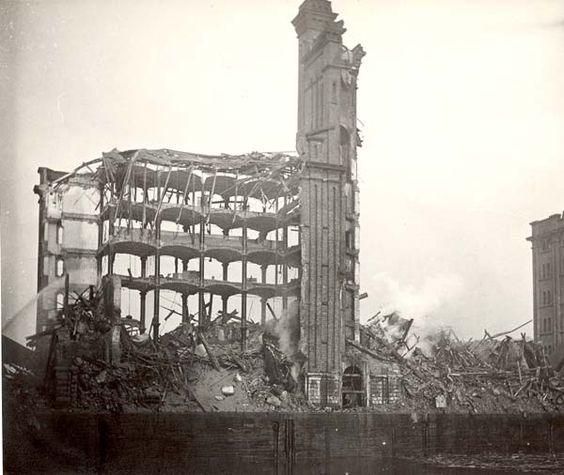
Luftwaffe bombers struck Liverpool, England, United Kingdom overnight. The Luftwaffe attacks Liverpool and the Merseyside region again, badly damaging the docks and nearby warehouses. The manufacturing area of the city also receives extensive damage. The railway system is largely paralyzed by the attack. The Luftwaffe loses a Heinkel He 111 of 7,/KG 55 when it crashes upon returning to base in France.
The Italian Corpo Aereo Italiano chips in with its standard attack against Harwich.
RAF Bomber Command dispatches 1 Blenheim to Le Havre during the day which turned back.
RAF Bomber Command dispatches 71 Blenheims, Wellingtons and Whitleys overnight to many targets. Bomber Command sends a small-scale raid against Berlin. 5 Hampdens minelaying in Kiel Bay. 1 O.T.U. sortie. No losses.
The RAF bombed docks and oil tanks at Porto Marghera, Italy.
U-65, commanded by Korvettenkapitän Hans-Gerrit von Stockhausen, sank Panamanian tanker Charles Pratt (8982grt) at 08‑26N, 16‑50W. At 1605 hours on 21 Dec 1940 the unescorted, unarmed and neutral Charles Pratt (Master Eric R. Blomquist) was hit amidships by one torpedo from U-65 about 220 miles off Freetown. Stockhausen had clearly seen the Panama flags painted on her sides, but decided to attack without warning as the tanker was obviously heading for an enemy port. The torpedo hit on the starboard side at #6 tank blowing out the bulkheads in #6 main tank and #4 summer tank and also the deck plates in the way of the pump room. The blast showered oil and debris clear to the top of the mast and over the boat and poop deck. The tanker caught fire at once and burning oil flowed into the starboard alleyway. Steam smothering lines were opened but to no avail as all lines were destroyed in the pump room. The survivors abandoned ship immediately in both port lifeboats. After 20 minutes, the tanker was struck on the starboard side by a second torpedo just forward of the midship house, blowing burning oil and debris several hundred feet in the air and showering the water with oil and steel fragments, some just missing a lifeboat. The second explosion put out the fire but the flooding eventually caused the ship to sink with a heavy list. The lifeboats remained in the vicinity to search for three missing men and after 40 minutes rescued the chief mate who suffered various injuries including a broken leg. He and second crewman had been blown overboard by the explosion, but the other man was not found. At nightfall, they tried to return to the ship to get medical supplies and to repair the radio because no emergency message had been sent due to damage to the aerial, but could not locate the tanker anymore. The boats then set sail towards Freetown and were separated on the evening of 24 December. At 1500 hours on 25 December, the survivors in the lifeboat of the master were picked up by the British motor merchant Gascony about 60 miles west of Freetown and were landed there the following morning. On the afternoon of 26 December, the survivors in the other boat were picked up by the British steam merchant Langleegorse and were also landed at Freetown the next morning. The 8,982-ton Charles Pratt was carrying fuel oil and was bound for Freetown.
Italian submarine Mocenigo in attacks on convoy OG.47 sank Swedish steamer Mangen (1253grt) in 40‑45N, 16‑50W and claimed sinking one other and damaging another ship in the convoy with torpedoes, but no confirmation is available. British steamer Sarastone (2473grt) was shelled by the Italian submarine, but sustained only splinter damage. Eight crewmen were lost on the Swedish steamer. The survivors were rescued by Swedish steamer Garm (1231grt).
Anti-aircraft ship HMS Alynbank departed Scapa Flow at 1030 to meet convoy WN.56 in Pentland Firth and cover it as far as Buchanness. The anti-aircraft ship returned to Scapa Flow arriving at 0730/22nd.
Destroyers HMS Bedouin, HMS Matabele, HMS Mashona, and HMS Eskimo were sent at 0957 to search for a German submarine reported by aircraft carrier HMS Argus in 56-20N, 16-25W. The search was unsuccessful and the destroyers returned to Scapa Flow at 0530/24th.
In German air raids on Liverpool, Ocean boarding vessel HMS Maplin was set afire, British steamers Silvio (1293grt) was sunk in the Alexandra Dock and Alpera (1777grt), City of Corinth (5318grt), Demeterton (5251grt) and Dutch tanker Onoba (6256grt) were damaged. One crewman was lost on the steamer Silvio.
Australian heavy cruiser HMAS Australia in dry dock was near missed by a heavy bomb which landed in the dock off the cruiser’s port quarter.
In German air attacks on Liverpool during the night of 21/22 December, British steamers Llangibby Castle (11,951grt), Mahronda (7926grt), Deucalion (7516grt) and Dutch steamer Mariso (7659grt) were damaged.
British steamer Innisfallen (3071grt) was sunk on a mine at the entrance to Canada Dock, River Mersey. Four crewmen were lost on the British steamer.
British barge Tic.12 (118grt) was sunk on a mine in 51‑28N, 00‑46E. The entire crew of the barge was rescued.
Tug River Thames (88grt) was sunk on a mine in 51‑28N, 00‑46E. The entire crew, except the Master, was lost on the tug.
Tug Sun IX (196grt) was sunk on a mine between 1 and 2 Buoys, Yantlet Channel, Thames Estuary. Three crewmen were lost on the tug.
German minelayers Roland, Cobra, Kaiser, and Skagerrak, escorted by torpedo boats Greif, Falke, and Seeadler, laid minefield SWa in the western North Sea.
Aircraft carrier HMS Illustrious aircraft with nine aircraft of the 815 and 819 Squadron attacked an Italian convoy escorted by torpedo boat Vega east of Kerkenah Bay. Italian steamers Norge (6511grt), Peuceta (1926grt), Luigi Rizzo (382grt) and torpedo boat Vega were attacked and steamers Norge and Peuceta were sunk in 34-39N, 10-48E. Lt (A) D. C. Garton — Stone, Lt J. H. R- Medlicott — Vereker, Naval Airman 1/c W. E. Sperry of the 819 Squadron were lost when their Swordfish was shot down. Steamer Luigi Rizzo arrived at Tripoli on the 22nd.
Heavy cruiser HMS Berwick arrived at Gibraltar from Azores patrol. After refueling, she departed later in the day to join Cruiser Squadron 15 escorting convoy WS.5 A.
Convoy OB.262 departed Liverpool escorted by destroyers HMS Broke, HMS Sardonyx, and HMS Shikari, corvettes HMS Anemone and HMS Heliotrope, and anti-submarine trawlers HMS St Kenan and HMS St Zeno. The escort was detached on the 23rd.
Convoy FN.364 departed Southend. The convoy arrived at Methil on the 23rd.
Convoy FS.366 departed Methil, escorted by destroyer HMS Vortigern and sloop HMS Egret. The convoy arrived at Southend on the 23rd.
Convoy FS.367 departed Methil, escorted destroyers HMS Westminster and HMS Exmoor. The convoy arrived at Southend on the 24th.
An official spokesman of the Reich foreign office charged today that Britain’s minister of shipping was “inciting America to commit a warlike act against the axis and, in carefully chosen words, added that the United States’ reaction “is being awaited by Germany with extraordinary interest.” The occasion for this solemn and emotional statement was a press conference weighted with gravity; the reason, an interview given the American press in London yesterday by Ronald Cross, the British shipping minister, who suggested assignment to the British of the German and Italian ships which are tied up in neutral United States.
Congressional reaction to the idea that axis ships in American ports be turned over to Great Britain indicated today that any formal proposal of that nature would encounter determined opposition. Ronald H. Cross, British minister of shipping, advanced the suggestion yesterday in London, asserting that he saw no hope of immediate replenishments to the British merchant marine except by action of this nature or addition of United States ships to the British service. United States officials are known to be studying the possibility of acquiring some of the 140 foreign flag vessels tied up in American ports, although no definite announcement has been made. Among such vessels are two German and 27 Italian ships.
The Roosevelt Administration was reported today to be studying means of compromising the one major controversy that has cropped up over national defense whether armament contracts shall include a clause requiring compliance with labor laws. Informed sources said the war department was considering a broader clause than that now included in defense contracts. At present, contractors need only pledge observance of the Walsh-Healey act under which the labor department can fix wage and hour standards for an industry. Some officials doubted, however, that any concessions would include the proposal of Sidney Hillman, labor member of the defense commission, and C.I.O. leaders that the contracts state specifically that employers must comply with the Wagner act guaranteeing labor the right to organize and bargain collectively.
William S. Knudsen, newly appointed director of the Office for Production Management, in charge of defense preparations, called upon the American people today “to recognize the full gravity of the crisis” and “to pull off their coats and roll up their sleeves and give their concentrated, undivided attention to one thing — the swiftest possible production of the means of defense.” The contest which produced this crisis, Mr. Knudsen said, “is irreconcilable in character and cannot be terminated by any methods of appeasement.” Warning that “the future security of the United States” and our democratic principles were at stake, he declared that the situation demanded ceaseless effort and maximum production “in every field which can contribute to victory.”
Hartford, Connecticut, whose defense industries are making airplanes, machine tools and small arms, will need at least 14,000 new workers in the next year, but already, as the Hartford people put it, “you can’t get a rent anywhere.”
In Detroit (tanks, airplane parts), rent increases of 14 to 40 percent are reported. There is talk of asking the state for a law to freeze rents.
At Portsmouth, Virginia (warships) civilian housing officials say that not long ago the Navy Yard was losing 100 workers a day because men could not find decent places for their families to live in. Navy Yard officials do not discuss the matter. With their colleagues in other naval stations throughout the country, they have been ordered by Washington not to talk about housing.
At Seattle (airplanes, naval vessels at the nearby Bremerton yard) an architect says: “By June of next year they’ll be sleeping in the streets.”
At Rock Island, Illinois (biggest manufacturing arsenal in the world), lack of housing may make it impossible to fully meet the nation’s demand for arms.
At San Diego, California (airplanes), the auto courts are jammed, hotels are 90 percent occupied even on weekdays; portable houses and dormitories are being called for.
At Bridgeport, Connecticut (machine tools, shell casings, airplanes, small arms), men report daily for work from homes as far away as New York City; that means four hours of automobile commuting.
There is, then, a tremendous housing shortage in the key points from which the nation must receive the implements of war that it has to have — and has to have soon.
The U.S. War and Navy Departments adopt a “Europe-first” policy and forward it to the White House for approval. The first version of the “Rainbow” war plan is adopted. Captain Richmond Kelly Turner, director of war plans for the U.S. Navy, completes WPL-44 (Navy Rainbow Three). This plan for the first time institutes a “Germany first” policy within the U.S. military, relegating the Pacific theater to a defensive posture should the U.S. find itself at war with both Germany and Japan. Essentially, U.S. naval forces would adopt a defensive posture in case of aggression by the Japanese and shift resources to the Atlantic.
The army hates this plan, partly because this was purely a naval staff planning exercise and they were not consulted — and never, ever discount the importance of inter-service rivalries. However, the army generals do have some grounds for objecting. Recall that the U.S. Army still controls the air force (the U.S. Army Air Corps), so it does have ways (in theory) of taking the war to Japan immediately from bases in the Philippines and Guam. However, Naval Secretary Knox approves the plan — and it is difficult to believe that Rainbow 3 was not at least in concept all or partly his idea in the first place. Some feel in 1940 and afterward that the U.S. would be quite capable of offensive action against Japan upon the outbreak of war. This theory will be put to the test in almost exactly one year as if it were a laboratory experiment. A definitive answer will result.
Rainbow 3 is an interim plan, and planners from both the army and navy immediately begin working together on a new plan that will become Rainbow 5 in the spring of 1941. Somewhat ironically, it is the U.S. Navy that later will raise Winston Churchill’s ire by prioritizing the Pacific Theater of Operations.
Separately, the U.S. Marine Corps 7th Defense Battalion completes its move to Pago Pago, Tutuila, American Samoa.
Representative Bradley, Michigan Republican, one of 12 congressmen returning from a trip to the Panama Canal, declared today that there “was not a modern bomber in the zone. If the administration considers it such a vital place to guard,” he said, “why doesn’t it do something to protect the zone with up-to-date aircraft? If there are any modern bombers there, they are so pitifully few that we didn’t see them. I was told the fastest airplane there was capable of only 140 miles an hour.”
Big Christmas shopping crowds rolled up substantial trade gains in a wartime spending splurge at busy industrial centers, a nationwide survey showed. Many merchants reported the best Christmas trade since 1929 as workers from defense-stimulated industries poured their extra pay into retail channels. Some said the buying broke all records. Increased factory employment and overtime wages in the drive to speed defense output augmented the buying power of millions. Government figures indicated national income this year had climbed at least $4,000,000,000 above the 1939 total.
Drenching rains over all northern California raised stream and river waters to dangerously high levels in some sections today, interrupted train service, flooded highways and washed away much snow in the mountains. The forecast was for clearing and cooling weather tonight, however, with rain reaching the southern part of the state probably tomorrow. It rained as far south as Fresno today. Dunsmuir and Kennett, north of Redding, were about the wettest spots in the state today. At Kennett, 5.82 inches of rain fell in the 24-hour period ending at 7 a.m., and it was still falling this afternoon.
Warner Bros. releases “Shop, Look and Listen” (a variation on the well-known railroad expression “Stop, look, and listen”). This is the second and last cartoon to feature the character Blabbermouse. Voiced by Mel Blanc, Blabbermouse never catches on with audiences.
“Frenesí” by Artie Shaw topped the Billboard singles chart. “Frenesí” (Spanish for frenzy), recorded on 3 March 1940 by Artie Shaw and his orchestra with an arrangement by William Grant Still, hits No. 1 on the Billboard pop chart. The song remains there for 13 weeks and on the charts for 23 weeks altogether. It is the second most popular song of 1940 and also one of the most remembered songs of the war years by American servicemen.
Chicago writers name Indian shortstop Lou Boudreau as the outstanding rookie in the Major League. He’ll be honored at the January banquet.
Merry Christmas to Ben Chapman from the Indians who ship him to Washington for pitcher Joe Krakauskas. The Tribe sells Johnny Allen to the Browns.
Claire Chennault, an air advisor to the Chinese Nationalist leader Chiang Kai-shek, and T.V. Soong meet with Secretary of the Treasury Henry Morgenthau. They brainstorm how to form fund an American Volunteer Group in China to help fight the Japanese — with whom the US is not at war. This meeting will lead eventually to the famous Flying Tigers.
An important second avenue over which much-needed wartime supplies are being delivered to Chungking’s armies is being operated from Vladivostok, Siberia, to supplement the Burma Road.
Light cruiser HMS Dauntless arrived at Penang.
Japan’s program for expansion in the Far East is described by neutral observers today as being in a “fluid state” as a result of the attitude of the United States and the reverses suffered by the Axis in Africa and Albania. Government spokesmen at Tokyo continue to describe the Japanese program, including plans for expansion southward toward the Netherlands Indies, as “immutable.” But most foreign observers in Tokyo believe Japanese policies depend on the trend of world events outside Japan and that the most important of these will be the moves made by the United States. But the troubles of Italy in Greece and Libya have not tended to encourage Japan to invite new difficulties in the Far East. Government and business leaders in Japan say American measures to protect American interests in Asia will not necessarily deter the Japanese. Diplomatic observers believe that many proposals now being discussed in some American newspapers for increasingly stiff economic measures against Japan might precipitate war.
German raiders Orion and Komet have been lurking in the vicinity of Nauru, a key source of phosphate, since 8 December. They don’t want the phosphate — which is important for agricultural purposes — but rather to destroy the facilities there so that nobody else can. So far, they have sunk a few ships in the vicinity, but with no success actually attacking the facilities due mainly to poor weather.
German raiders Komet and Orion and support ship Kulmerland released 514 prisoners captured from various ships, mainly women, children and the injured, at Emirau Island, Bismarck Islands. They were given food before being turned over to two English families living on that island. British ship Nellore would arrive on 29 December to pick them up. 150 prisoners remained aboard Orion.
After depositing their prisoners on the island, Orion sails to Lamutrik and then Maug in the Mariana Islands for an engine overhaul. Supply ship Kulmerland, which has been tagging along to house some of the prisoners, heads off to re-supply at Japan. Komet remains in the vicinity, continuing to plot ways to disrupt Nauru’s phosphate trade, which is virtually the only worthwhile Allied target for it in the Pacific Ocean region aside from shipping.
The rear echelon of the newly established U.S. Marine Corps 7th Defense Battalion arrived at Pago Pago, Tutuila, American Samoa.
Dow Jones Industrial Average: 128.89 (+0.02)
Born:
Frank Zappa, musician and composer (Mothers of Invention), in Baltimore, Maryland (d. 1993).
Ray Hildebrand, American pop and contemporary Christian music singer and songwriter (Paul & Paula — “Hey Paula; Land and Hildebrand), in Joshua, Texas (d. 2023).
Tony Rivers [Thompson], British pop singer and vocal arranger (Harmony Grass; Cliff Richard), in Shildon, England, United Kingdom.
Bud Abell, AFL linebacker (AFL Champions-Chiefs, 1967 [Lost Super Bowl I]; Kansas City Chiefs), in Kansas City, Missouri.
Died:
F. Scott Fitzgerald, 44, American author (“Great Gatsby”, “Zelda”), of a heart attack.
Naval Construction:
The merchant ship SS Fred Morris, a Maritime type C1-B hull, launched under Maritime Commission contract (MC hull 70) at Federal Shipbuilding and Drydock, Kearny, New Jersey, is acquired by the U.S. Navy. She will be converted to a submarine tender and become the USS Otis (AS-20).
The Royal Navy LCT (Mk 1)-class landing craft, tank HMS LCT 28 is laid down by the John Brown Shipbuilding & Engineering Company Ltd. (Clydebank, Scotland).
The Royal Indian Navy Basset-class minesweeping trawler HMIS Berar (T 256) is laid down by the Hooghly Docking & Engineering Company, Ltd. (Calcutta, India).
The U.S. Navy Accentor-class coastal minesweeper USS Fulmar (AMc-46) is laid down by the Greenport Basin and Construction Co. (Greenport, Long Island, New York, U.S.A.).
The Kriegsmarine (German Navy) Type IXC U-boat U-173 is laid down by AG Weser, Bremen (werk 1013).
The Kriegsmarine (German Navy) Type VIIC U-boat U-255 is laid down by Bremer Vulkan-Vegesacker Werft, Bremen-Vegesack (werk 20).
The Royal Canadian Navy Flower-class corvettes HMCS Weyburn (K 173) and HMCS Oakville (K 178) are laid down by the Port Arthur Shipbuilding Co. (Port Arthur, Ontario, Canada).
The Royal Navy Hunt-class (Type II) escort destroyer HMS Hursley (L 84) is laid down by Swan Hunter and Wigham Richardson Ltd. (Wallsend-on-Tyne, U.K.); completed by Wallsend.
She will be transferred to the Royal Hellenic (Greek) Navy on 2 November 1943 and is renamed RHS Kriti.
The U.S. Navy Hamul-class destroyer tender USS Markab (AD-21) is launched by the Ingalls Shipbuilding Corp. (Pascagoula, Mississippi, U.S.A.).
The Royal Navy Dance-class ASW trawler HMS Cotillion (T 104) is launched by the Ardrossan Dockyard (Ardrossan, Scotland); completed by Plenty.
The Royal Australian Navy Bathurst-class minesweeper-corvette HMAS Lithgow (J 206) is launched by the Morts Dock & Engineering Co. Ltd. (Sydney, New South Wales, Australia).
The Kriegsmarine (German Navy) Type VIIC U-boat U-651 is launched by Howaldtswerke Hamburg AG, Hamburg (werk 800).
 History Diaries