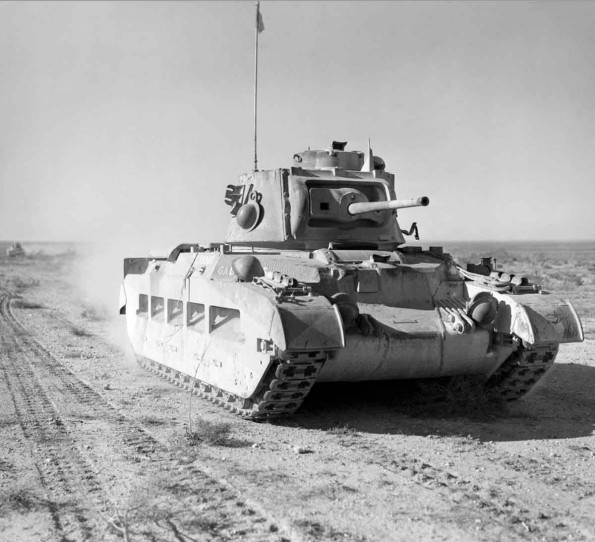
Churchill makes a long statement on the general war position. The first task of the government was to protect the people at home and ensure they get a good night’s rest whether at home or in an adequate and sanitary shelter. “The ARP, the Home Office, and the Ministry of Health are just as much in the front lines as are the armored columns chasing the Italians about the Libyan desert. He also issues a warning about the level of sinkings in the Atlantic.
Snow is piled 3 meters high at the higher elevations in Albania on 19 December 1940, even near the coast. However, while this might normally be thought to aid the defense, in some ways it helps the attacking Greek forces. Italian fixed defenses such as barbed wire are covered by the heavy snow, and the Greeks can just run right over the Italian fortifications. That does not mean that attacking in such circumstances is at all easy, just that the horrendous conditions do bestow a few odd benefits.
Greek I Corps (2nd, 3rd, and 4th Divisions) continue advancing on Himarë (Himara) along the southern coast of Albania. They capture the Giam height.
The Greek 3/40 Evzone Regiment, under the command of Colonel Thrasyvoulos Tsakalotos, helps the assault on Himarë. It launches a surprise dawn attack on Italian troops at Mount Mount Mali i Xhorët (Mount Pilur) a little to the east. Their objective is Italian artillery posted the high ground, which guards the entrance to the valley of Shushicë which provides access to the Italian port.
British battleships HMS Valiant and HMS Warspite shelled Italian defensive positions at Valona (Vlorë), Albania overnight in support of Greek advances.
The British pursuit of the Italians during Operation Compass basically is at a halt by this point. Australian troops are advancing to take the lead in assaulting the fortress of Tobruk, but they will take a couple of weeks to be ready to attack. The Italians have mustered some tanks outside of Bardia which slow the British down, but they have two divisions trapped there.
British gunboat HMS Aphis bombarded Bardia, Libya in support of Operation Compass. Meanwhile, General O’Connor reported that in the first 10 days of the offensive his forces had suffered 141 killed or missing and 387 wounded.
Wavell replies to Churchill asking for more planes, “every good gift and every perfect gift is from above” (James I, 17). Incredulity about recent events in North Africa breaks out in an odd exchange between Prime Minister Churchill and General Wavell, the Middle East Commander, who throw scriptural references at each other. Churchill has sent Wavell a telegram with the cryptic reference:
“St. Matthew, Chapter VII, verse 7” (Ask, and it shall be given you; seek, and ye shall find; knock, and it shall be opened unto you).
Wavell replies today with the following:
“St. James, Chapter I, first part of verse 17, “Every good gift and every perfect gift is from above…”! More aircraft are our immediate need and these you are providing.”
While it is not much of an exchange, it underscores how the two men — and everyone else in the know — ascribe the wildly unexpected success of Operation Compass to some sort of divine intervention.
Wavell also telegrams the CIGS: “Italians have decided to hold Bardia and reconnaissance’s have drawn fire from defences… You must not expect rapid progress. Defences are strong, supply situation is difficult and all vehicles are showing signs of hard work. Enemy air force is superior in numbers … our aircraft want time to establish in advanced aerodromes.”
The Italian High Command appeal to the OKW to send a German armoured division to North Africa as soon as possible. The Italian attitude toward German intervention in North Africa has shifted 180 degrees from its position just two months ago. While then the Italians had not wanted any German interference in what they saw as their own national sphere of influence, the Mediterranean basin, today they ask that the Wehrmacht send an armored division and support troops to Libya at the earliest opportunity.
German submarine U-37 mistakenly torpedoed and sank the Vichy French submarine Sfax (Q 182) and support ship Rhône off the coast of Morocco. The U-boat captain chose not to record this incident on the ship’s logs.
Prime Minister Winston Churchill gives a speech that receives extensive media coverage around the world. He notes, with classic British understatement:
“One cannot say that the Italians have shown high fighting spirit or quality in this battle…. The A.R.P. services, the Home Office, and the Ministry of Health are as much in the front lines as are the armoured columns chasing the Italians about the Libyan desert….”
In a long-winded address, Churchill posits that “The Germans reached the culminating point at the end of last year,” and he points to the recent bombing of Mannheim — which by now he knows did not hit the strategic targets intended — as inflicting “very heavy blows.”
Risto Ryti takes over as president of Finland from Dr. Kallio. Kyösti Kallio had been the President of the Republic since 1937. The Winter War had been an especially hard time for him, even if the more immediate decision making had in practice been in other hands, in civilian affairs with PM Ryti and Foreign Minister Väinö Tanner, and in military matters with Marshal Mannerheim. When Kallio on 12 March 1940 gave the Finnish negotiators the powers to sign the harsh peace treaty, he uttered the famous words “May wither the hand that has signed a paper like this!” The next summer (1940) Kallio suffered a stroke that left his right arm paralyzed. Kallio’s health deteriorated during the summer and autumn of 1940, and finally in December 19th, 1940 he gave up the presidency. The President was normally elected by a chamber of electors elected by popular vote. This time this process was dispensed with and the new President was elected by the electors of 1937. The new President Risto Ryti had been the Prime Minister during the Winter War and the Director of the Bank of Finland before that.
Later on the same day Kyösti Kallio left Helsinki for his estate in Nivala. But at the Helsinki railway station, as he was seen off by the Finnish political and military leadership, he suffered a final fatal stroke and died in the arms of his senior adjutant Colonel Aladar Paasonen.
Archbishop Sapieha of Krakow, Poland sent a letter to Auschwitz Commandant Rudolf Höss requesting permission for Christmas mass to be held in the camp for Catholic prisoners. Höss turned down the request because the camp rules did not permit religious observations, but did agree that approximately 6,000 one-kilogram food parcels could be sent to all the prisoners over the holidays. A former Catholic, Höss left the religion due to the horrors of World War I. International Red Cross shipments such as these, incidentally, are greatly treasured throughout the war both in the concentration camps and in POW stockades and often a large proportion of them fall into the hands of the guards. The IRC does do its best to verify matters.
The Luftwaffe makes a few small sorties against the Home Counties after dark, losing a bomber but causing some damage in Swindon.
RAF Bomber Command dispatches 5 Blenheims to France in daylight which turned back.
RAF Bomber Command dispatches 85 aircraft overnight to Cologne, Duisburg, Gelsenkirchen and on small raids on Boulogne and airfields, but only 23 aircraft bombed primary targets. 1 Blenheim lost. 8 Hampdens minelaying off Brittany.
RAF Coastal Command raids the airfield at Le Touquet and a railway between Oslo and Bergen.
The British War Cabinet is reviewing the efficiency of the air war against Germany and Italy. In a report for their eyes only by the Secretary of State for Air, the conclusion is drawn that, relative to the size of their respective forces, the RAF is causing more damage to Germany than the Luftwaffe is to Great Britain.
The RAF bombs Bardia and Derna. General O’Connor reports that his forces have suffered only 141 killed or missing and 387 wounded during Operation Compass. The British now have literally tens of thousands of prisoners to process and new forward supply bases to set up.
U-37, commanded by Oberleutnant zur See Asmus Nicolai Clausen, sank in error Vichy French submarine Sfax and tanker Rhone (2785grt), which were travelling together from Casablanca to Dakar, off Cape Juby. At 1640 hours on 19 Dec 1940, U-37 torpedoed and sank the Vichy French vessels Rhône and Sfax (Q 182) by mistake seven miles off Cape Juby, Morocco. Neither torpedo reports nor statements concerning this incident can be found in the KTB of the U-boat. Actually the entry simply reads DJ 9285 — Nothing to see, but the stated grid is situated on land in the Sahara. The 2,785-ton Rhône was carrying fuel oil and was bound for Dakar, Senegal.
Destroyer HMS Legion was completed. Following working up, she was assigned to the 19th Destroyer Flotilla operating with the Home Fleet.
Destroyers HMS Veteran and HMS Verity were damaged in a collision in Lough Foyle near Londonderry. Both destroyers proceeded to Londonderry and anchored off Moville. Destroyer Veteran with slight damage to her stem was repaired at Londonderry in the Barrow yard from 19 to 21 December. She was able to depart on the 22nd. Destroyer Verity’s engine room was flooded. She was repaired at Londonderry from 19 December to 6 January. Permanent repairs were done at Belfast from 7 January to 5 March.
Anti-aircraft ship HMS Alynbank arrived at Scapa Flow at 0845 after escorting convoy EN.42 from Methil to Duncansby Head.
Destroyer HMS Echo departed Greenock at 1530 after repairs. The destroyer arrived at Scapa Flow at 1200/20th.
Destroyer HMS Kelly departed the Tyne at 0830 to carry out gunnery trials and proceeded to Scapa Flow. The destroyer arrived at Scapa Flow at 0900/20th to work up.
Destroyer HMS Churchill arrived at Scapa Flow at 1000 to work up.
Submarine HMS Tribune attacked a large steamer forty miles west of Belle Ile in 47-02N, 4-14W, without success.
British 57-ton naval trawler HMT Proficient runs aground and is broken up by the waves at Whitby, Yorkshire.
Dutch 400-ton freighter Twee Gebroeders hits a mine and is damaged in the Thames Estuary.
British tanker Arinia (8024grt) was sunk on a mine eight miles east, southeast of Southend Pier. Fifty four crewmen, the pilot, five gunners were lost on the tanker.
British steamer Isolda (Light Vessel Tender, 734grt) was sunk by German bombing in the vicinity of Barrels Rock Light Vessel, South Wexford. Six crewmen were lost on the steamer.
British drifter Proficient (57grt) was lost after grounding off Whitby.
Dutch steamer Twee Gebroeders (400grt) was damaged on a mine near No. 2 Yantlet Buoy, Thames Estuary.
Norwegian steamer Arosa (5043grt) was damaged on a mine three cables 130° from Bull Fort, Humber.
Italian submarine Bagnolini sank British steamer Amicus (3660grt) from dispersed convoy SC.15 in 54‑10N, 15‑50W. The entire crew of the steamer was lost.
Force H with battlecruiser HMS Renown, aircraft carrier HMS Ark Royal, light cruiser HMS Sheffield, and destroyers HMS Faulknor, HMS Firedrake, HMS Forester, HMS Foxhound, HMS Fortune, HMS Duncan, HMS Encounter, HMS Isis, HMS Wishart, and HMS Jaguar departed Gibraltar on the 19th meet the forces coming from Alexandria in Operation HIDE and SEEK.
Gunboat HMS Aphis bombarded the Bardia area.
German steamers Freienfels (7563grt) and Geierfels (7605grt) were sunk on mines near Livorno.
Convoy OB.261 departed Liverpool escorted by destroyer HMS Wolverine, sloop HMS Aberdeen, and corvettes HMS Arbutus, HMS Camellia, and HMS Columbine. The escort was detached on the 22nd.
Convoy FS.364 departed Methil, escorted by destroyers HMS Vivien and HMS Wallace. The convoy arrived at Southend on the 22nd.
Convoy FS.365 departed Methil, escorted by destroyers HMS Verdun and HMS Wolsey. The convoy arrived at Southend on the 21st.
Convoy BS.11 departed Suez, escorted by sloops HMS Clive and HMS Grimsby. The sloops were detached on the 22nd when joined by light cruiser HMS Caledon and sloops HMS Auckland, HMS Flamingo, and HMS Shoreham. Sloop HMIS Indus joined on the 24th. Sloop Shoreham was detached on the 26th. The convoy dispersed on the 27th.
British troop convoy US.8 departed Wellington with British liners Dominion Monarch (27155grt) and Empress of Russia (16810grt) escorted by New Zealand Division light cruiser HMS Achilles. The convoy safely arrived at Sydney on the 23rd. On the 28th, the convoy departed Sydney with British liners Queen Mary (81235grt) and Dominion Monarch (27155grt). Liner Dominion Monarch carried stores for Colombo. Liner Empress of Russia returned to Auckland on the 30th in convoy VK 1. On the 30th, Aquitania (44786grt), Mauretania (35739grt), and Awatea (13482grt) with troops for Colombo departed Sydney and joined the convoy with Australian heavy cruiser HMAS Canberra, which continued with the convoy to Colombo. The convoy departed Fremantle on 4 January and departed Colombo on 12 January. The convoy arrived at Suez on 28 January.
In Washington, President Roosevelt discussed at a Cabinet meeting methods of helping Britain to place $3,000,000,000 worth of new war orders in the United States.
Plans to adjourn Congress were abandoned when some members in each house opposed the plan. The Senate confirmed Robert B. Patterson as Under Secretary of War and Brigadier General Lewis B. Hershey as deputy director of Selective Service and adjourned at 12:30 PM until Monday.
In the House, Representative Ludlow quoted Ambassador Kennedy as charging domestic production was inadequate for American needs. Adjournment was taken at 12:57 PM until Monday.
All plans to adjourn Congress before its expiration by constitutional limitation on January 2 were abandoned today because of the opposition of a small number of Republicans in the Senate and a single Republican in the House. No further business will be transacted, under an agreement between the major parties’ leaders, and virtually no members will remain in Washington, but the session will be kept alive legally by pro forma meetings of both branches every three days. Thus the Seventy-sixth Congress will become the first in the history of the country to remain legally in session for 366 days in any single year. The previous longest record of 354 days, set by the second session of the Sixty-fifth Congress in sitting from December 3, 1917, to November 21, 1918, will be tied on Saturday and the session on Monday will break it. The inability of Administration leaders to force passage of the adjournment resolution, which appeared to be desired by a great majority of members in both houses, came from the absence of a quorum. On each side of the Capitol the contention of a single member that a quorum was not present would block further consideration of all business, including an adjournment resolution.
The British Purchasing Commission places $750 million in war orders. This includes orders for 12,000 aircraft and 60 merchant ships, all to be completed within one year’s time. Congress will be consulted about this transaction.
Great Britain has begun negotiations, it was disclosed today, looking toward ordering $3,000,000,000 worth of arms in this country, possibly to be financed by the United States under President Roosevelt’s “lease-lending” plan. Announcement that the British had been told to go ahead with negotiations on new war orders was made by Secretary Morgenthau, who said no contracts would be signed until congress could act on Mr. Roosevelt’s proposal for putting aid to Britain on a new footing. As outlined by the president at a press conference last Tuesday, this idea is for the United States to take over British orders for war mate rials, pay the manufacturer for their production, and lease or lend the products to Britain. When the war was over, the British would return those arms which were in good condition and replace those destroyed.
The defense reorganization plan discussed yesterday by President Roosevelt and the four highest executives of the War and Navy Departments for a “supreme defense council.” to consist of Defense Commissioner Knudsen, Secretary Stimson and Secretary Knox, was left with the Army and Navy authorities for a further working out of details. Stephen Early, the President’s secretary, disclosed the situation. today in guarded replies to correspondents’ questions. The framers of the plan, who developed it during the President’s cruise in the Caribbean, took it back at the President’s request for further consideration. Those attending the conference with the President were Secretaries Stimson and Knox, and Undersecretaries Patterson and Forrestal of the War and Navy Departments, respectively. Mr. Early did not state how far the agreement in principle, reported yesterday, had gone. He said the President is studying four or five other plans and it might be that he “was trying to discover what, if any, realignment of the defense setup is necessary, what parts of each of the plans he has are meritorious and should be considered and worked into the final plan.”
R.J. Thomas, president of the C.I.O.’s United Automobile Workers, defended labor policy today on national defense production problems in the automotive industry and said that labor sought “no special compensation” and was not trying to take advantage of the emergency.
An investigator on the Illinois state’s attorney’s staff reported today that a book seized in the Chicago headquarters of the German-American Bund indicated that between 1,500 and 2,000 members were in U. S. military or naval service. The book was examined by federal bureau of investigation agents who did not comment and there was no definite word as to whether the men listed were now in any branch of this nation’s armed forces, or had served at some previous time.
An undisclosed number of army units will leave New York for Newfoundland early next month, to garrison the northernmost of the Atlantic naval and air bases being acquired from Great Britain. Announcing this today, the war department disclosed that the troops would sail for the outpost even before shore accommodations were ready for occupancy. Until these are completed, the transport which carries them to Newfoundland will be used as a floating barracks.
Canadian industry will be fully mobilized for the war effort by next July, C.D. Howe, Minister of Munitions and Supply at Ottawa, said today on his arrival in London after a harrowing experience in the Atlantic aboard the torpedoed liner Western Prince.
Mexico is willing to meet the United States halfway on the settlement of current problems, Josephus Daniels, United States Ambassador to Mexico, said today after a luncheon conference with President Roosevelt.
U.S. President Franklin D. Roosevelt approved $25 million in aid to the Republic of China, allowing the Nationalist government to buy one hundred P-40 pursuit aircraft.
Conferences of Japanese naval leaders from various parts of China were reported reliably to be under way in Shanghai today, principally to discuss the question of reopening the Yangtze River to foreign shipping as far as Nanking.
After the refusal of American companies to sell more military planes to Thailand [Siam], that country has ordered thirty from Japan, ten of which have already been delivered, it was reported here today. The Japanese are flying in their deliveries via Formosa and Indo-China, it was said.
Thai planes on Monday and Tuesday bombed nine areas in Cambodia and the Laos territory of Indo-China to retaliate for French night bombing raids, it was announced officially tonight. The Thai raids were described as “purely retaliatory” and not in contravention of this country’s willingness to peacefully settle its territorial claims against the French colony. The Bangkok radio today said that Indo-China should have no cause to be “irritated” at new Thai aerial attacks.
French reinforcements today were sent to the Lạng Sơn area northwest of Hanoi to aid in quelling armed native bands that have been terrorizing villages in the area and raiding towns in Kwangsi Province,southern China.
Palmyra Island in the central Pacific Ocean is placed under control of the U.S. Secretary of the Navy. The U.S. Secretary of the Navy takes over control of uninhabited Palmyra Atoll, which legally has been under the Navy’s jurisdiction since 1934. This is to become the site of the “Palmyra Island Naval Defensive Sea Area,” restricted to passage only by ships authorized by the US Secretary of the Navy. The date when the Navy actually arrives is in spring 1941. Palmyra Atoll, incidentally, remains to this day the only incorporated territory in the United States, but it most definitely is American land although almost nobody outside the Navy knows it even exists. It truly is one of the most remote spots on earth and apparently never has been permanently inhabited, whether in ancient or modern times.
Dow Jones Industrial Average: 128.84 (-0.58)
Born:
Phil Ochs, protest singer, in El Paso, Texas (d. 1976).
Randy Kerbow, AFL wide receiver (Houston Oilers), in Paris, Texas.
Died:
Hendrik Christian Andersen, 68, Norwegian-born American sculptor, painter and urban planner.
Kyösti Kallio, 67, 4th President of Finland.
Naval Construction:
The Royal Navy Hunt-class (Type II) escort destroyer HMS Blankney (L 30) is launched by the John Brown Shipbuilding & Engineering Company Ltd. (Clydebank, Scotland).
The Royal Navy Fairmile B-class motor launch HMS ML 199 is commissioned.
The Royal Navy British Power Boat 70-foot-class motor anti-submarine boat HMS MA/SB 17 is commissioned.
The Kriegsmarine (German Navy) Type VIIB U-boat U-75 is commissioned. Her first commanding officer is Kapitänleutnant Helmuth Ringelmann.
The Kriegsmarine (German Navy) Type IXB U-boat U-111 is commissioned. Her first commanding officer is Kapitänleutnant Wilhelm Kleinschmidt.
The Royal Navy Flower-class corvette HMS Verbena (K 85) is commissioned. Her first commanding officer is Lieutenant Commander Denys Arthur Rayner, DSC, RNVR.
The Royal Navy “L”-class destroyer HMS Legion (G 74) is commissioned. Her first commanding officer is Commander Richard Frederick Jessel, RN.
 History Diaries