At dawn today Scottish troops appeared from a ridge overlooking the town of Sidi Barrani and charged into the ruins. After hours of fierce hand-to-hand fighting, the Italian blackshirts began to hold up white flags. The first phase of the assault was complete and 15,000 Italians have been taken prisoner, including three generals.
The Battle of Sidi Barrani ended in British victory. Outside Sidi Barrani — held by the British on 11 December 1940 — the English Army goes to work reducing the remaining pockets of Italian troops. Selby Force attacks the 1st Libyan Division Sibelle and forces it to surrender. Their surrender uncovers the 4th Blackshirt Division 3 Gennaio, which also surrenders. The British bring 7th Armoured Brigade forward to relieve 4th Armoured Brigade near Buq Buq on the western sector of the front — 4th Armoured is being pulled out of the line and sent south after it completes its current operations.
The Italians, meanwhile, are either surrendering or running. Italian 63rd Division Cirene abandons Rabia and Sofafi and they run so fast — literally, in many cases — that British 4th Armoured Brigade is too late to cut them off. Retreating down the coast road, the Italians build up their position at Halfaya, the critical defensive position further west. Today the Italians have suffered 2184 killed, 2287 wounded and 38,000 taken prisoner. Usually, such a high ratio of KIA to wounded suggests that a military force is fighting hard, but in essence, all the Italians who weren’t killed outright in the first British assault and could still walk have bugged out immediately to the West. Overall, 15,000 Italians have surrendered during Operation Compass — though the British aren’t stopping to count. There are “5 acres of officers and 200 acres of other ranks,” as put by a Coldstream Guards officer.
The Royal Navy has large forces approaching from both the east and west, but, given the outcome of Operation Compass so far, their presence would be purely superfluous. Monitor Terror and two gunboats shell the retreating Italians in the Sollum area overnight, later joined by British battleships HMS Barham and Valiant. Royal Navy submarine HMS Truant damages Italian torpedo boat Alcione off the Libyan coast, but it escapes.
Wavell telegrams to Dill:
“Sidi Barrani area was attacked by 4 Indian Div., and 4 Armoured Brigade.
“Maktila garrison withdrew west during night 9/10 December to dig in near Sidi Barrani. Enemy still in position between Sidi Barrani and Buqbuq. Patrols 11 Hussars have been 15 miles west of Buqbuq.
“Navy bombards Sollum area.
“3rd Coldstream Guards capture two Libyan battalions between Maktila and Sidi Barrani.”
Later 4 Armoured Brigade is directed west of Buqbuq. 7 Armoured Brigade and Support Group is moving west of Sofafi camps to cut off enemy in that area.
On the coast, British battleships HMS Barham and HMS Valiant bombarded Italian positions at Sollum, Egypt.
The Royal Air Force has command of the air in North Africa — and during World War II this almost invariably is a tell as to who is winning. Flight Officer C.H. Dyson, flying a Hurricane in RAF No. 33 Squadron, has no difficulty with the biplanes the Italians are flying. He shoots down a record seven Italian fighters in one sortie before being shot down himself. He is uninjured, an ace-and-a-half (almost) in one day. This is a record for an Allied pilot in the war. He is uninjured and returns to base six days later. Elsewhere, though, the news is not quite so good for the RAF, as two Swordfish of RAF No. 810 Squadron flying off HMS Ark Royal collide off Europa Point, with three deaths.
While the Greeks are still making progress in Albania, the weather is horrible and there aren’t any towns to mark their progress. Greek Commander-in-chief Papagos knows that the real prize is Valona, the key Italian supply port, and without that, the Italian ability to strike back after it builds up reinforcements and supplies remains intact. Valona, however, remains well-defended by the Greeks, who, by and large, have occupied a lot of worthless mountain goat territory and only a few significant towns. The Greeks are approaching Himara on the left of the line.
Associated Press reports that Rumania has promised to deliver three million tons of oil to Germany in 1941. Rumania agrees to export three million tons of oil to Germany during 1941. That would be double what it has exported in 1940, but the Wehrmacht war machine is exceedingly thirsty. Rumania is virtually Germany’s only oil source, and this fact informs many of Hitler’s strategic decisions.
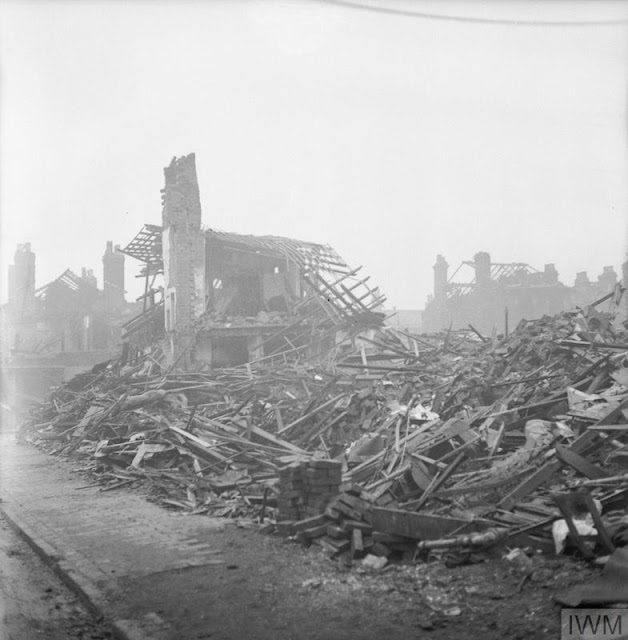
The Luftwaffe sends a major effort against Birmingham after dark. Dropping 277 tons of high explosives and 685 incendiaries, 278 bombers destroy 6 churches, 11 schools and hundreds of homes.
RAF Bomber Command dispatches 1 Blenheim to Schiphol airfield which turned back.
RAF Bomber Command dispatches 42 Blenheims, Wellingtons and Whitleys overnight to Mannheim and many other cities but less than half reached their targets. 1 Blenheim and 1 Wellington lost. 20 Hampdens attempted interceptions of Germany bombers over Birmingham without success.
Air Marshal A. W. Tedder is appointed Deputy to Air Officer Commander-In-Chief, Middle East. He replaces Air Vice-Marshal O.T. Boyd, captured on Sicily recently after his plane made a forced landing there on a trip to Malta.
U-94, commanded by Kapitänleutnant Herbert Kuppisch, sank British steamer Empire Statesman (5306grt) west of Ireland. At 1912 hours the unescorted Empire Statesman (Master James Brown), a straggler from convoy SLS.56 due to engine troubles since 21 November, was torpedoed and sunk by U-94 west of Ireland. The master, 30 crew members and one gunner were lost. The 5,306-ton Empire Statesman was carrying iron ore and was bound for Middlesbrough, England.
U-96, commanded by Kapitänleutnant Heinrich Lehmann-Willenbrock, in attacks on convoy HX.92 sank British steamer Rotorua (10,890grt, Convoy Commodore Rear Admiral J. U. P. Fitzgerald Rtd) in 58‑56N, 11‑20W and Dutch steamer Towa (5419grt) in 58‑50N, 10‑10W. The convoy SO was on destroyer HMS Veteran.
At 1512 hours the Rotorua (Master Edgar Reginald Harrison Kemp) in convoy HX.92 was hit by one G7e torpedo from U-96 while steaming at 9.5 knots about 110 miles northwest of St. Kilda, Outer Hebrides. The ship had been in station #61 as the ship of the convoy commodore (Rear-Admiral J.U.P. Fitzgerald, CB, RN) with 20 passengers (service personnel), but the convoy had been scattered in a gale on 7/8 December and she was leading a group of about twelve merchant ships without escort when attacked. The lookout in the crow’s nest spotted the torpedo only 100 yards away and tried to telephone the bridge but it struck on starboard side at the forward end of #5 hold before he got through. The explosion shattered the bulkhead to the engine room that was flooded, causing all lights to fail and an immediate list of 15-20° to starboard. The wireless room was completely wrecked, but nevertheless the operator attempted to send a distress signal before the crew, passengers and three gunners (the ship was armed with one 4.7in and one 12pdr gun) began to abandon ship about 10 minutes after being hit. The #2 port boat had been damaged by the gale and #7 starboard boat had its after davit carried away by the explosion, so they launched the remaining six lifeboats but had some difficulties due to moderate sea with a high confused swell that kept crashing the boats against the side of the ship. The Rotorua sank by the stern after about 20 minutes. The master, the commodore, three naval staff members, 14 crew members, one passenger and two gunners were lost. At 15.40 hours, the U-boat surfaced to question the survivors in the boats but had to dive again before they could do so because the Cardita had turned back to come to assistance and opened fire with her stern gun. 15 minutes later U-96 fired one G7e torpedo at the tanker which was missed and managed to escape after laying a smoke screen. During the afternoon the lifeboats were sighted by a Sunderland flying boat that led three armed trawlers to them. The 25 survivors in #5 boat in charge of the fourth officer were picked up by HMS Varanga (FY 1625) (T/Lt G.C. Crowley, RNVR) at 19.40 hours. HMS Alsey (M 51) (T/Lt H.A. Inglis, RNR) then rescued the 34 survivors in #1 and #6 boats at 20.30 hours, while HMS Ebor Wyke (FY 1601) (T/A/Skipper T.E. Olgeirsson, RNR) picked up 49 survivors from #3 and #4 boats, but one of them subsequently died. All survivors were landed at Stornoway in the evening of 12 December.The 10,890-ton Rotorua was carrying passengers, general cargo, including refrigerated foodstuffs and was bound for Avonmouth, England.
At 2052 hours the Towa (Master W. Smit) in convoy HX.92 was hit amidships on the starboard side by one G7e torpedo from U-96 and stopped. When the ship did not sink after a coup de grâce hit at 2130 hours, the U-boat began shelling the ship at 2202 hours. 16 rounds were fired that caused the ship to sink at 2242 hours. The crew abandoned ship in three lifeboats, but one of them capsized when it was lowered incorrectly, the occupants fell into the sea and drowned. The men in one of the other boats were questioned by the Germans, but they somehow misunderstood the name of the vessel as Dover. The master and four men were picked up by HMS Matabele (G 26) (Cdr R.St.V. Sherbrooke, RN), which probably also picked up the remaining survivors and landed them all at Scapa Flow on 16 December. The 5,419-ton Towa was carrying grain and 48 trucks and was bound for London, England.
British steamer Cardita (8237grt) reported making a direct hit on the German submarine. Destroyer HMS Matabele and her destroyers were detached to assist to and to search for the submarine before joining battleship HMS Rodney.
U-65 was the first U-boat to cross the Equator, in Grid FC 39
Due to the threat of German bombing, battleship HMS Queen Elizabeth was moved from Portsmouth to complete her refit. On the 11th, battleship Queen Elizabeth departed Portsmouth, escorted by destroyers HMS Kashmir, HMS Kipling, HMS Punjabi, and HMS Jupiter. They were joined by destroyer HMS Holderness from Devonport. When a German submarine was reported nearby by aircraft in 50‑26N, 5‑20W, Free French destroyer Le Triomphant and Destroyers HMS Jersey, HMS Wrestler, and HMS Montgomery were hunting. The submarine hunt delayed the battleship’s progress twenty four hours. Because of the delay, the Scapa Flow destroyers went to Greenock to refuel. The destroyers departed Greenock at 1850/12th. En route to the Clyde, the original escorting destroyers were relieved by destroyers HMS Southdown, HMS Exmoor, HMS Pytchley, and HMS Brilliant at 1600/13th. The British force safely arrived the next day. The battleship went on to Rosyth arriving at 1330/15th. The battleship’s refit was completed at the end of January.
Destroyer HMCS St Clair arrived at the Clyde for duty with EG-4 at Greenock.
Destroyers HMS Matabele, HMS Escapade, HMS Electra, and HMS Bulldog departed Scapa Flow at 1030 to meet Battleship HMS Rodney in 59-32N, 26-00W and escort her to Scapa Flow.
Anti-aircraft cruiser HMS Curacoa departed Scapa Flow at 0930 to cover convoy WN.51. The cruiser parted company with the convoy after dark and returned to Scapa Flow.
Destroyer HMAS Napier was completed. She underwent trials at Scapa Flow and was assigned to the 7th Destroyer Flotilla operating with the Home Fleet.
Submarine HMS Unique departed Portsmouth for patrol in Biscay. After the patrol, the submarine arrived at Gibraltar on the 23rd.
Submarine HMS Usk departed Portsmouth for patrol off Fecamp. After the patrol, the submarine arrived at Gibraltar on the 23rd.
British steamer Saxon Queen (482grt) was damaged by German bombing near Sunk Head Buoy, Thames Estuary.
British trawler Robinia (208grt) was sunk on a British defensive minefield in 65‑20N, 12‑40W. The entire crew was rescued.
Swedish steamer Tor (1130grt) was damaged by German bombing near Sunk Head Buoy, Thames Estuary.
Two Swordfish aircraft of 818 Squadron from aircraft carrier HMS Ark Royal collided off Europa Point. Sub Lt S. G. J. Appleby, Sub Lt J. W. A. Grant, and Leading Airman L. O- Clark of one aircraft were killed. The other crew was rescued.
Submarine HMS Truant damaged Italian torpedo boat Alcione in 35-29N, 24-11E.
Convoy OB.257 departed Liverpool escorted by destroyers HMS Achates, HMS Active, and HMS Antelope, corvettes HMS Heather and HMS Picotee, and anti-submarine trawlers HMS Lady Madeleine and HMS Norwich City. The escort was detached on the 13th.
Convoy FN.357 departed Southend, escorted by destroyer HMS Vimiera and sloop HMS Weston. The convoy arrived at Methil on the 13th.
Convoy FS.359 departed Methil, escorted by destroyer HMS Vortigern and sloop HMS Egret. The convoy arrived at Southend on the 14th.
Convoy BS.10A departed Port Sudan, escorted by sloop HMS Yarra. The convoy was dispersed on the 16th.
The British Ambassador to the U.S., Lord Lothian, asks for more American aid stating, “Hitlerism in the end must go down unless Admiral Mahan is all wrong. By ourselves we cannot be sure of this result though we will try our best. Not only is there the situation in the North Atlantic I have described, but no one can yet tell when the constant pressure of Hitler both on the Vichy government to give him control of the French fleet and bases in the Mediterranean, and on Japan to extend the war in the Pacific, may lead to. But with your help in airplanes, munitions, in ships and on the sea, and in the field of finance now being discussed between your Treasury and ours, we are sure of victory.” Sure that the gangster menace to human freedom, the greatest the world has ever seen, will go down to the oblivion it deserves. But if ramparts fall, the war will inevitably cross the oceans and roll up against your shores. If Britain and the eastern shores of the Atlantic and the islands which lie off its shores, Iceland, the Azores, or bases like Dakar fall into the dictators’ hands, or if you are unable to defend the island fortresses in the Pacific, then the jumping off grounds go against you, the oceans become a passageway and your power to strike back at an enemy disappears because you have no bases from which to do so.” Lothian himself has just hours to live.
Unless President Roosevelt himself directs another course, the question of financial aid to Great Britain will be put squarely up to the new Congress some time after it convenes on January 3.
President Roosevelt hopes to obtain Congressional authorization of the Great Lakes-St. Lawrence seaway without risking a Senate rebuff such as he received in 1934 when the treaty with Canada failed ratification by a wide margin, receiving only forty-six votes against forty-two, with two-thirds required for affirmative action. Administration lawyers have convinced the President, it is understood, that sufficient treaty basis for the project exists under the convention concerning the boundary waters between the United States and Canada ratified by the Senate in 1909 and proclaimed in effect on May 13, 1910.
Congressional leaders planned today to call their colleagues back into full session either December 17 or 18 for a vote upon sustaining or overriding an expected Presidential veto of the Logan-Walter bill. The measure would subject governmental agency rules and regulations to judicial review.
That agreement, in its Article xiii, states: “In all cases where special agreements between the High Contracting Parties hereto are referred to in the foregoing articles, such agreements are understood and intended to include not only direct arrangements between the High Contracting Parties, but also ary mutual arrangements between the United States and Dominion of Canada expressed by concurrent or reciprocal legislation on the part of Congress and the Parliament of the Dominion.”
The United States today closed the door on proposals sponsored by former President Herbert Hoover and others for feeding the peoples of German-conquered areas in Europe. Following closely the British government’s formal rejection of the Hoover and similar plans, Secretary of State Cordell Hull suggested that persons and organizations interested in sending relief supplies to German-occupied nations might ask Germany to contribute to the cause. Germany, he indicated, might be called upon to contribute part of its much publicized food reserves and clothing to war victims. Hull left little doubt that the administration has no intention of asking the British to modify their blockade so supplies can be sent into German-dominated countries. Hull underscored this when he suggested that the feeding and clothing by Germany of the war-ridden civilians would be in accordance with custom when one nation has conquered another.
Appointment of Rear Admiral Ernest J. King to command the Atlantic Patrol Force of the Fleet was announced today by the Navy Department. Admiral King, who succeeds Rear Admiral Hayne Ellis, is a member of the General Board. He was formerly chief of the Bureau of Aeronautics and in 1938 and 1939 commanded the aircraft units of the Battle Force of the Fleet.
H. W. Prentis Jr., president of the National Association of Manufacturers, opened the association’s “total preparedness” convention today with a demand that the government clarify its aims and scope of its defense program He expressed gratification that President Roosevelt last night gave strong public recognition” to the fact that “political and economic freedom go hand in hand,” and accepted for industry the president’s “challenge to work with labor and government for the preservation of these ideals.”
The General Motors Corporation has received $400,000,000 in national dafense orders from the British, Canadian and American governments, of which $164,800,000 is for Allison airplane engines for the British and United States Army Air Corps, it wan announced yesterday in a letter to stockholders by Alfred P. Sloan Jr., chairman of the corporation.
The city authorities are taking steps to protect New York against possible aerial bombing attacks, Mayor La Guardia revealed yesterday. Study of the methods to be followed in case of war, particularly to meet the hazard of incendiary bombs, was started here “just after Munich,” the Mayor said.
The Major League extends Judge Landis another 4–year term. They also vote to limit night games to 7 per team.
The Canadian-built corvettes HMCS Eyebright, HMS Mayflower, HMS Spikenard and HMCS Orillia arrived at Halifax incomplete from their builders to avoid the winter St Lawrence River freezing.
German freighter Rhein, having been trailed by destroyer USS Simpson (DD-221) and, later, USS MacLeish (DD-220), is intercepted by Dutch destroyer leader HNMS Van Kinsbergen near the Florida Straits, and is scuttled by her own crew to avoid capture. MacLeish and USS McCormick (DD-223) are present as the German ship’s bid to escape fails. The other shoe drops in the Caribbean when 6049-ton German freighter Rhein, the second ship (with the Idarwald, already sunk) to make a jailbreak from Tampico, Mexico to Occupied France. Dutch warship Van Kinsbergen alerted to the situation by US destroyers Simpson and MacLeish shadowing the Rhein as part of the Neutrality Patrol, intercepts the Rhein near the Dry Tortugas (off Key West). Just like the crew of the Idarwald, Rhein’s crew sets fire to the ship and attempts to scuttle it. After taking the German crew prisoner, the destroyer HMS Caradoc sinks the flaming wreck with gunfire as destroyers USS MacLeish and McCormick watch. The Rhein now is a popular dive wreck for experienced divers. Incidentally, Adolf Hitler mentions this sinking — along with that of the Idarwald — in his declaration of war upon the United States on 11 December 1941 — exactly one year from today.
A $60,000,000 Export-Import Bank loan to Argentina, in addition to the $50,000,000 loan from the government Currency Stabilization Fund decided on last week, was announced today by Jesse H. Jones, Secretary of Commerce and Federal Loan Administrator.
Thai airplanes dropped three bombs today on the outskirts of Pakse, which is in the Laos province territory on Thailand’s frontier, demanded by Thailand from the French. The raid marked the first time that Pakse had been bombed but the natives showed no panic and. marched casually to crudely constructed air raid shelters. Before diving to drop their bombs, the Thai planes circled Pakse slowly for some time. Thai troops were reported to be twenty-five miles west of Pakse, but French officers said there was no fighting.
The Thai consulate charged today that a flare-up Monday in the Thailand-French Indo-China border fighting was started by the French, who were alleged to have bombed and machine-gunned the Thai border towns of Lakhon and Panom. The Thai report said one of the French planes was shot down by a Thai pilot in an air battle. It added that on the same day French artillery fired 100 shells across the Mekong River, the boundary between Thailand and Indo-China, damaging residence districts In the Thai town of Ban-Muk Dahan, whereupon Thai planes were sent across the river and bombed French batteries.
Japan’s treaty of amity with Thailand (Siam), signed December 6, has now been recommended for ratification by the Japanese Privy Council. The change in the Japanese Government in July and the uncertainties introduced into its foreign policy by the decision to join the Axis account for the delay. The treaty’s main points are:
- Japan and Thailand agree to respect each other’s territories and they reaffirm their friendly relations.
- They agree to maintain contact and exchange information on matters of mutual interest.
- They pledge that if either power is attacked, neither will assist the attackers.
The pact is for five years. When Thailand proposed nonaggression pacts to Britain, France, and Japan the former two accepted the proposal, but the Japanese Government preferred something more distinctive, in keeping with its claim to be the leading power in East Asia, and proposed a treaty of amity. Actually it differs little from a nonaggression pact. Ratification will assure Thailand that Japan will not support Indo-China. in resisting Thai claims. Foreign Minister Yosuke Matsuoka of Japan recently expressed the hope that the fighting between Thailand and Indo-China would not spread, but today’s Japanese reports predict that a major conflict will develop from the present border clashes.
A treaty of amity with Iran was also approved by the Japanese Privy Council. The Japanese Government desires a commercial treaty but Iran prefers only a treaty of amity, simply declaring the friendly relations of the two nations and regulating diplomatic and consular intercourse.
Dow Jones Industrial Average: 131.76 (+0.39)
Born:
Donna Mills [as Donna Jean Miller], American actress (“Knots Landing”) and producer, in Chicago, Illinois.
David Gates, American soft rock vocalist (Bread — “Baby I’m A Want You”; “If”), in Tulsa, Oklahoma.
Tony Adams, Welsh soap opera actor (“Crossroads”, “General Hospital”), in Anglesey, Wales, United Kingdom (d. 2025).
Dave Richardson, Canadian NHL left wing (New York Rangers, Chicago Black Hawks, Detroit Pistons), in St. Boniface, Manitoba, Canada (d. 2022).
Died:
J. Harold Murray, 49, American baritone.
Naval Construction:
The U.S. Navy Benson-class destroyer USS Farenholt (DD-491) is laid down by the Bethlehem Steel Corp. (Staten Island, New York, U.S.A.).
The Kriegsmarine (German Navy) Type IXC U-boat U-172 is laid down by AG Weser, Bremen (werk 1012).
The Royal Canadian Navy Flower-class corvette HMCS Dunvegan (K 177) is launched by Marine Industries Ltd. (Sorel, Quebec, Canada).
The Royal Navy Fairmile B-class motor launch HMS ML 144 is commissioned.
The Royal Navy Fairmile B-class motor launch HMS ML 155 is commissioned.
The Royal Navy LCT (Mk 1)-class landing craft, tank HMS LCT 1 is commissioned.
The Royal Navy LCT (Mk 1)-class landing craft, tank HMS LCT 2 is commissioned.
The Royal Navy LCT (Mk 1)-class landing craft, tank HMS LCT 15 is commissioned.
The Kriegsmarine (German Navy) Type IID U-boat U-147 is commissioned. Her first commanding officer is Kapitänleutnant Reinhard Hardegen.
The Вое́нно-морско́й флот СССР (ВМФ) (Soviet Navy) Project 38 (Minsk-class) class destroyer (flotilla leader) Tbilisi is commissioned.
The Royal Australian Navy “N”-class destroyer (Flotilla leader) HMAS Napier (G 97) is commissioned. Her first commanding officer is Captain Stephen Harry Tolson Arliss, RN.
The Royal Navy battleship HMS King George V (41), lead ship of her class of 5, is commissioned. Her first commanding officer is Captain Wilfrid Rupert Patterson, RN.
 History Diaries