Greek soldiers fighting stubbornly on home grounds have halted the most serious Italian thrust so far offered by the invaders a move down the western coast and have hopelessly trapped a famed Italian division of perhaps 15,000 men, it was reported here tonight. Greeks said the Italian Centaur division, one of the best known units of the Fascist forces, was so surrounded in the Pindus Mountains that its surrender was imminent and that hundreds of the division’s men and its commanding general already had been captured. It was reported the Fascists were without food and their supply lines were cut.
The Italians have stopped advancing into Greece on 9 November 1940, and in fact are withdrawing to their starting points in most areas. The Greek 8th Division on the Epirus sector begins launching local counterattacks to recover lost ground and push the Italians back over the Kalamas River. The Italian troops in the Vovousa Valley are trapped and gradually surrendering. The Greeks basically have recovered all the ground lost in this sector with the exception of areas still controlled by surrounded Italian formations, which are now little more than armed prison camps.
Sebastiano Visconti Prasca was relieved as commander of Italian operations in Greece for the failures to breakthrough Greek defense lines in northern Greece. He was replaced by General Ubaldo Soddu.
Neville Chamberlain passed away tonight of bowel cancer. He was 71.
Chamberlain’s reputation remains controversial among historians, the initial high regard for him being entirely eroded by books such as Guilty Men, published in July 1940, which blamed Chamberlain and his associates for the Munich accord and for allegedly failing to prepare the country for war. Most historians in the generation following Chamberlain’s death held similar views, led by Churchill in The Gathering Storm. Some later historians have taken a more favourable perspective of Chamberlain and his policies, citing government papers released under the thirty-year rule and arguing that going to war with Germany in 1938 would have been disastrous as the UK was unprepared. Nonetheless, Chamberlain is still unfavourably ranked amongst British prime ministers.
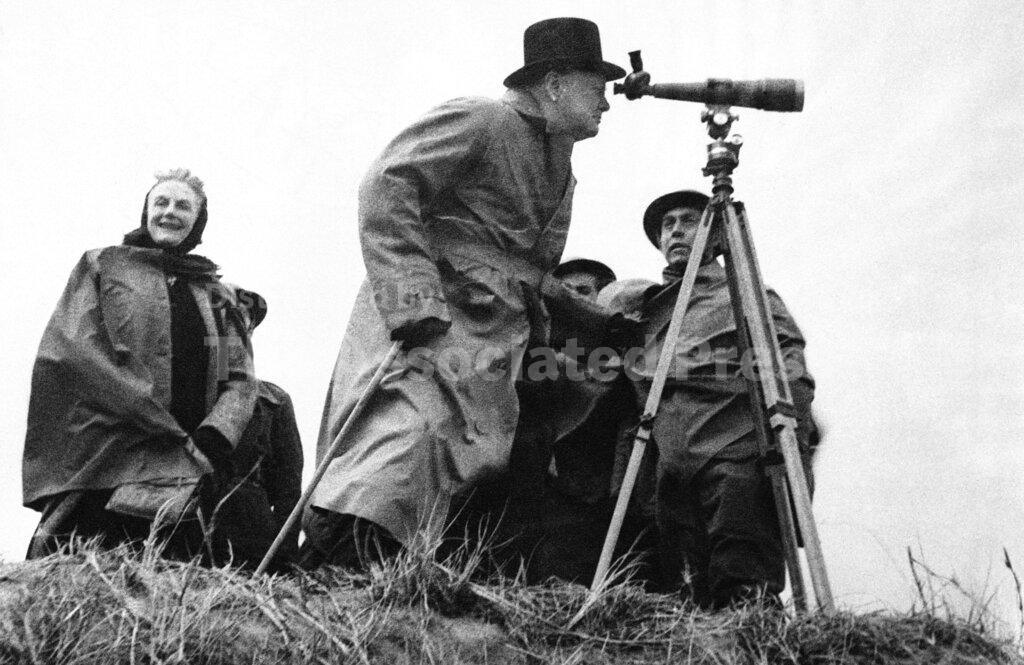
Surveying the “melancholy disasters” that have overtaken Britain since he was called upon to guide her destiny six months ago, Prime Minister Winston Churchill, in a speech today, found gratification in the nation’s mere survival. But between survival and lasting victory, he acknowledged, was a long, hard road, intimating that it might be four years before Germany’s great lead in preparation for war was finally overtaken. The Prime Minister spoke at the Lord Mayor’s luncheon at the Mansion House which, with its sandbags and barbed wire, he remarked, looked more like an army field. headquarters. The customary pomp and ceremony of the Lord Mayor’s show was omitted, but the large luncheon audience cheered lustily when Mr. Churchill declared that Britain had not given up one jot of the purpose for which she went to war. However, promising all help possible to Greece, the latest victim of aggression, and pledging an ever-increasing force in the attack on Italy, Mr. Churchill reminded his audience that Britain could not take the offensive until his peace-loving country had caught up with the advance preparations of the totalitarian powers.
Despite gallant propaganda about plucky Land Girls and “Miss England” being “busier than ever”, more British women are now out of work than before the war. Some women are finding work with the services, but even here their contribution to the war effort is less dramatic than the recruiting posters imply. Women help to plot enemy aircraft movements in RDF stations and can also be found in anti-aircraft batteries and naval command centers. They are always in non-combatant roles; women may track the targets, but men fire the guns. Lack of direct involvement is by no means the only complaint amongst women who answered the patriotic call to duty — and who overcame parental fears about presumed moral dangers. Many of those who signed up have been dismayed by the menial tasks which they are asked to perform. Though women can be trained to do anything which does not make them into combatants, in practice cooking and cleaning are the commonest assignments. Outside the services there are still vast numbers of women who were made redundant last autumn be non-essential industries who are still without jobs. Earlier this year a protest was made to parliament by the Federation of Business and Professional Women. More than half of the nearly 7,000 women registered with them were unemployed. The government has so far resisted any coordinated redirection of redundant women into war work. But pressure is growing for some form of intervention, possibly even compulsory female mobilization.
Questions are asked in British Parliament about the penalties that have been imposed upon member of the Congress Party in India who have been carrying out a civil disobedience campaign. Reginald Sorensen (Labour), described the sentence of four years imprisonment on Pandit Jawaharlal Nehru as “harsh in the extreme.”
German acoustic mines — detonated by the sound of passing propellers — are becoming an increasing problem. The British adopt several countermeasures, including using modified jackhammers to set them off.
The Germans start to expel 180,000 Frenchmen from Alsace-Lorraine, which they have annexed.
Union confederations were banned in Vichy France.
According to Goebbel’s diary, Hitler’s annual speech on the Day of National Solidarity (Blutzeuge) is “directed exclusively on the domestic population and finds little support.”
Rumania’s worst earthquake in history brought buildings crashing down in Bucharest early today and hundreds were feared killed. Among the buildings damaged were the American embassy, the royal palace, Rumanian army headquarters and a 10-story, 50-apartment building. The apartment building one of Bucharest’s tallest-collapsed in a mass of rubble amid the “horrible screams” of occupants shortly after the five-minute quake started at 3:39 a.m.
Ernest Urdareanu, former Rumanian court chamberlain, was arrested last night in Seville, Spain, and probably will be taken to Madrid. Rumania’s pro-Nazi government had asked for extradition of Urdareanu to face charges in connection with the suppression of the pro-Nazi Iron Guard organization in Rumania. Urdareanu came here with former King Carol and Magda Lupescu. The ex-king and Madame Lupescu remained at their hotel.
An announcement that Vyacheslav M. Molotov, Soviet Premier and Foreign Commissar, will visit Berlin “within a short time” was made in a communique tonight.
Turkey hopes for “benevolent” Russian neutrality but will fight if “vitally threatened” regardless of the outcome of Soviet Premier-Foreign Commissar Vyacheslav M. Molotov’s impending visit to Berlin, informed Turkish quarters disclosed today.
Free French forces entered Libreville, Gabon, French Equatorial Africa, engaging in street fighting with Vichy French forces. General Koenig’s Free French forces fight the Vichy French forces holding Libreville. Free French Westland Lysanders based in Douala, Cameroon bomb the airfield. The Free French Foreign Legion troops ultimately capture the airfield, which decides the battle. General Tetu formally surrenders to Free French Admiral Georges Thierry d’Argenlieu aboard the aviso Savorgnan de Brazza on the 10th.
Off Libreville, Free French sloop Savorgnan de Brazza sunk Vichy sloop Bougainville by gunfire (they two were sister ships of the same class), while Free French sloop Commandant Domine prevented Vichy armed merchant cruiser Cap Des Palmes’ crew from scuttling the ship and captured her.
The Luftwaffe only sends some lone raiders across the Channel during the day, with minor damage caused in London, the Home Counties, eastern areas of England, the Midlands, and Liverpool and nearby areas. After dark, the Luftwaffe hits the usual targets such as London and Liverpool.
The Luftwaffe continues consolidating its fighters in France. two groups of JG 77, 5 and 6, transfer south from Stavanger airfield to Brest. 4,/JG 77 also moves to Brest (from Herdla and Mandal). All of JG 77 now is in France except for III,/ JG 77, which remains for the time being in Norway.
RAF Bomber Command dispatches 10 Blenheims during the day. 1 aircraft bombed an airfield near Le Havre. No losses.
RAF Bomber Command dispatches 14 Blenheims and Hampdens overnight to airfields and to a seaplane base at Lorient. No losses. RAF Bomber Command and Coastal Command raid the U-boat pens at Lorient, the ports of Boulogne and Calais, and various airfields along the coast such as the one at Le Havre, where a Bf 109 is shot down.
The RAF raids Agordat, Assab, and Keren. Gibraltar Force H aircraft carrier Ark Royal launches aircraft to attack Cagliari.
At Malta, there are two air raids by Italian CR 42 biplane fighters. There are some bombers, but they turn back well short of the island. The Italian fighters strafe Hal Far airfield, damaging a Swordfish torpedo bomber. One Italian fighter is damaged by anti-aircraft fire. A Glenn Martin Maryland reconnaissance plane is lost at sea with the crew lost.
Italian submarine Marconi sank Swedish steamer Vingaland (2734grt), which had been damaged by bombing on the 8th, in convoy HX.84 in 55‑41N, 18‑24W. Six crewmen were lost from the Swedish steamer.
U-65 refueled at sea from German tanker Nordmark (7750grt) on 9 and 10 November. U-65 (Korvettenkapitän Hans-Gerrit von Stockhausen), on her fifth patrol, refuels at sea from German tanker Nordmark. The U-boat has been at sea since 15 October 1940. Since they have not sighted any targets, all U-65 and its crew need are some fuel and food/water and it can continue at sea for some time. In fact, this patrol will last into January, an extremely long patrol since most patrols are only about a month long.
Destroyers HMS Exmoor and HMS Pytchley departed Liverpool at 0900 escorting British steamer Adda (7816grt) to the Faroes. The destroyers arrived back at Scapa Flow at 1000/13th.
Anti-aircraft ship HMS Alynbank arrived at Scapa Flow at 2300 after escorting convoy WN.33 to the area of Stonehaven.
British steamer Baltrader (1699grt) was sunk on a mine in 51‑41N, 01‑18E. Two crewmen were lost on the British steamer.
The mine was laid by German torpedo boats on 29/30 October in minefield “ALFRED.”
British troopship Empress of Japan (26, 032grt) was damaged by German bombing in 53‑54N, 14‑28W. Luftwaffe Focke-Wulf Fw 200 Condors attack 26,032-ton liner RMS Empress of Japan off the west coast of Ireland. They drop two 250 kg bombs that hit the ship but deflect off of a stern railing and a lifeboat, respectively. The planes also strafe the ship, forcing the helmsman, Ho Kan, to steer the ship in evasive maneuvers from a prone position. The ship sustains non-critical damage in the same region where the Empress of Britain had been bombed and sunk two weeks earlier. Captain Thomas receives the CBE, Ho Kan receives the BEM.
British steamer Beal (504grt) was damaged by a mine off Tees.
British tanker Shelbrit II (695grt) was damaged by German bombing alongside Cleveland Wharf, Shoreham.
Greek trawler Vivi (489grt) was sunk on a mine at Patras.
Finnish steamer Minerva (2039grt) was sunk on a mine off the German North Sea coast.
Battleship HMS Ramillies with destroyers HMS Ilex, HMS Hyperion, and HMS Havock were detached with convoy MW.3 for Malta.
The cruisers of the 3rd and 7th Cruiser Squadrons were detached to sweep to the northward during the day.
A Swordfish of 815 Squadron forced landed near battleship HMS Warspite. The crew was picked up by destroyer HMS Jervis. This crash was later found to be due to contaminated fuel.
Free French liner Pasteur departed Gibraltar, escorted by destroyer HMS Wishart, to return to Liverpool.
After an unsuccessful attempt to scuttle herself, Vichy French armed merchant cruiser Cap Des Palmes (3081grt) was captured off Libreville by Free French sloop Commandant Domine.
Convoy OB.241 departed Liverpool escorted by destroyers HMS Hurricane, HMS Veteran, and HMS Witherington and corvettes HMS Clematis and HMS Primrose. Destroyer HMS Verity joined on the 12th and destroyer HMS Hurricane was detached on the 12th. The remainder of the escort was detached on the 14th.
Convoy FN.330 departed Southend, escorted by destroyers HMS Vanity and HMS Wolfhound. The convoy arrived at Methil on the 11th.
German bombers attacked convoys FN.330/FS.331 off Harwich. Escort vessel HMS Vanity was escorting the convoys at that time. There was no damage in the attacks.
Convoy FS.332 departed Methil, escorted bydestroyers HMS Vega and HMS Vimiera. The convoy arrived at Southend on the 11th.
Convoy SC.11 departed St Johns at 1200 escorted by Canadian armed yacht HMCS Elk and ocean escort, sloop HMS Enchantress. Battleship HMS Rodney covered the convoy on 12 to 15 November. On 21 November, destroyers HMCS Ottawa, HMCS Saguenay, HMCS Skeena, and HMS St Laurent joined the convoy. Destroyer St Laurent was detached on the 24th. The convoy arrived at Liverpool on the 26th.
The Boston Globe, in a copyrighted story, quotes Joseph P. Kennedy, ambassador to Great Britain, as saying today that democracy is finished in England” and that National Socialism would be the result. “People call me a pessimist,” the paper quotes Kennedy. “I say ‘What is there to be gay about? Democracy is all done.’” The ambassador was asked, “You mean in England or this country, too?” and was quoted by the Globe as replying: “Well, I don’t know. If we get into war it will be in this country too. A bureaucracy would take over right, off. Everything we hold dear would be gone. They tell me that after 1918 we got it all back again. But this is different. There’s a different pattern in the world.”
U. S. Senator Key Pittman, chairman of the senate foreign affairs committee, is gravely ill, his physician, Dr. A. J. Hood, reported tonight. The 68-year old senator from Nevada suffered a heart attack and is under an oxygen tent at the Washoe general hospital, Dr. Hood declared. Senator Pittman suffered a breakdown prior to last Tuesday’s general election, and was ordered to bed to recover from fatigue. He was unable to vote at his home town in Tonopah because of his illness.
President Roosevelt declared today that he would welcome “the cooperation of all citizens” in giving the country “four great years.”
President Roosevelt was entertained tonight by members of the National Press Club at a dinner at which scores of distinguished guests and stars of radio, stage and screen contributed to a good-natured satire, to which Mr. Roosevelt replied in equal good-fellowship.
Senator Arthur H. Vandenberg of Michigan urged national unity today, but not in the “sense of totalitarian government in which the voice of all opposition is silenced.”
President Roosevelt, in proclaiming Thursday, November 21, as Thanksgiving Day, remarked that “in a year which has seen calamity and sorrow fall upon many peoples elsewhere in the world may we give thanks for our preservation.”
Uruguay and the United States have reportedly reached an agreement for the establishment of naval and air bases on the Uruguayan coast.
Standing before Emperor Hirohito and Empress Nagako in front of their palace while 52,000 Japanese looked on, Prince Fumimaro Konoye, the Premier, today led the Japanese Empire in three shouts of “Banzai!” It was the culminating moment in ceremonies celebrating the date officially consecrated as the anniversary of the founding of the Japanese Empire by Hirohito’s distant ancestor, Jimmu Tenno, 2,600 years ago.
German armed merchant cruiser Atlantis, poising as armed merchant cruiser Antenor, captured Norwegian tanker Teddy (6750grt) in the Bay of Bengal in 5‑35N, 88‑22E. The Teddy was bound for Singapore from Abadan and was carrying fuel oil and diesel oil. A prize-crew was put on board and the Teddy was sent five hundred miles to the south where the precious diesel oil could be safely transferred into the Atlantis’ bunkers. The capture of the Teddy’s oil would effectively extend the Atlantis’ raiding cruise by two months. The thirty two man crew from the Norwegian tanker landed in Japan on 5 December.
Dow Jones Industrial Average: 138.12 (+1.48)
Born:
Don Loun, MLB pitcher (Washington Senators), in Frederick, Maryland.
Sergio Cervetti, Uruguayan composer (“The Bottom of the Iceberg”; “Lucet in Tenebris”), in Dolores, Uruguay.
Died:
Neville Chamberlain, 71, Prime Minister of the United Kingdom (Conservative, 1937-1940).
John Henry Kirby, 79, American businessman.
Naval Construction:
The Royal Canadian Navy Bangor-class (VTE Reciprocating-engined) minesweeper HMCS Chignecto (J 160) is laid down by North Vancouver Ship Repairs Ltd. (Vancouver, British Columbia, Canada).
The Royal Navy Fairmile B-class motor launch HMS ML 125 is commissioned.
The Royal Navy Fairmile B-class motor launch HMS ML 132 is commissioned.
The Royal Navy Bangor-class (Reciprocating-engined) minesweeper HMS Rhyl (J 36) is commissioned. Her first commanding officer is Lieutenant William Leslie O’Mara, RN.
The Royal Navy Flower-class corvette HMS Columbine (K 94) is commissioned. Her first commanding officer is Lieutenant Louis Alan Sayers, RNR.
The Royal Canadian Navy Flower-class corvette HMCS Collingwood (K 180) is commissioned. Her first commanding officer is Lieutenant Norman G. Bennett.
 History Diaries