Under orders from the military leadership, Portuguese soldiers blew up the transmitter of a radio station operated by the extreme left in Lisbon. The High Council of the Revolution, the supreme policy-making group of the ruling Armed Forces Movement, charged the station with “counter-revolutionary activities,” and with “provocations and disturbance of public order and tranquility.” For the military council, it was one of the most dramatic moves of what had been, so far, a cautious campaign to assert authority to counter demonstrations by the extreme left and lack of discipline in the armed forces. Previously, the government had ordered the station shut down, but soldiers had refused to carry out the orders. About 60 paratroops from unit loyal to the government seized the station’s transmitter, in a Lisbon suburb, early today, ordered technicians out and then planted explosives in the two‐story building.
The Soviet Union has responded to the latest American proposal on the talks to limit strategic arms, but administration officials said today that the new response essentially reaffirmed, Moscow’s previous stance. The officials conveyed the distinct impression that the Russians were still contending that their new supersonic bomber — called the Backfire by the North Atlantic Treaty Organization — should not be counted as a strategic weapon in the arms agreement. The Russians also reportedly had not changed their position, regarding limitations on cruise missiles. They hold that the subsonic low‐flying cruise missiles launched from aircraft or ships should be counted in the agreement if they exceed a range of about 375 miles; Washington’s position has been that only missiles with a much longer range should be counted.
Every building was streaked with red banners this morning. Across Red Square the troops stood in rigid ranks, dwarfed like toy soldiers beneath an immense portrait of Lenin. An open car entered the square. Marshal Andrei A. Grechko, the Defense Minister, stood in the back and reviewed the troops, and as he saluted they cheered him with deep, haunting chants that rolled out from their ranks and thundered against the Kremlin walls. So began the Soviet Union’s annual celebration of the Bolshevik Revolution. It was done this year in traditional pomp and pageantry, but with a sharply curtailed military display. As Western military analysts had predicted, the parade through Red Square, always a showcase for Soviet weaponry, omitted the longrange intercontinental ballistic missiles capable of striking the United States. It was the first time in at least 15 years that the missiles were not paraded.
High Administration officials expressed doubt today that the White House would agree to honor a subpoena from the House Intelligence Committee for documents concerning the conduct of the arms limitation talks with the Soviet Union. The subpoena, voted yesterday and delivered to the White House this morning, calls for documents produced over the last three years by Federal intelligence agencies responsible for monitoring Soviet compliance with the 1972 arms limitation accord and for preparing projections of the Soviet Union’s future production capacity. One White House aide, after noting that some of the subpoenaed materials concerned meetings that are still going on between American and Soviet arms experts in Geneva, said he thought that the House panel had gone “into a field where they ought not to range.” The aide said he believed under the circumstances that it was “very doubtful that we would be willing to disclose” to a Congressional committee information on current treaty negotiations being conducted by the Administration.
In the view of outgoing U.S. Secretary of Defense James R. Schlesinger, differences between him and Secretary of State Henry A. Kissinger on how to deal with Soviet violations of the first agreement on limitation of strategic arms were a major cause of Mr. Schlesinger’s dismissal, according to a close aide of the Secretary. Mr. Schlesinger has consistently been highly critical of the Secretary of State’s negotiating tactics in seeking détente with the Soviet Union, which he has characterized as “a strategy of pre‐emptive concession,” meaning, in his view, that Mr. Kissinger was making extensive concessions before the Russians asked for them. The reported criticism of the Secretary of State’s dealings with the Russians focused on two tactical aspects of negotiations: allegations that Mr. Kissinger was reluctant to accuse them of violations and that he was overly willing to make concessions to them.
Netherlands industrialist Tiede Herrema was released unharmed in Monasterevin in Ireland, after having been kidnapped and held captive for 36 days. It was the 18th day of a siege during which Mr. Herrema’s captors held him at gunpoint in a house surrounded by the police. Just before 10 P.M. the 53year‐old businessman walked out of the house and was driven away by Irish Army officers to a military hospital. A police spokesman said that he was in “good condition.” Fifteen minutes after his departure, the two kidnappers, 27‐year‐old Edward Gallagher and 19‐year‐old Marian Coyle, left the house in police custody. Mr. Gallagher was heavily bearded and disheveled. Miss Coyle looked tired and haggard. They were taken away to a Dublin police station.
Spanish Generalissimo Francisco Franco had most of his stomach removed tonight in the second emergency operation in five days to halt internal bleeding. The prognosis was “very grave.” The 82‐year‐old Spanish leader, battling one crisis after another for more than two weeks, was rushed to La Paz Hospital on the northern edge of Madrid this afternoon. His apparent recovery from an operation Monday night was suddenly halted by new and uncontrollable hemorrhaging in the stomach. Three‐quarters of an hour after the ambulance from the Pardo Palace reached the hospital, the Chief of State was placed on the operating table. During the four‐hour operation, the doctors reported that they had found new and multiple ulcers that were bleeding “profusely.”
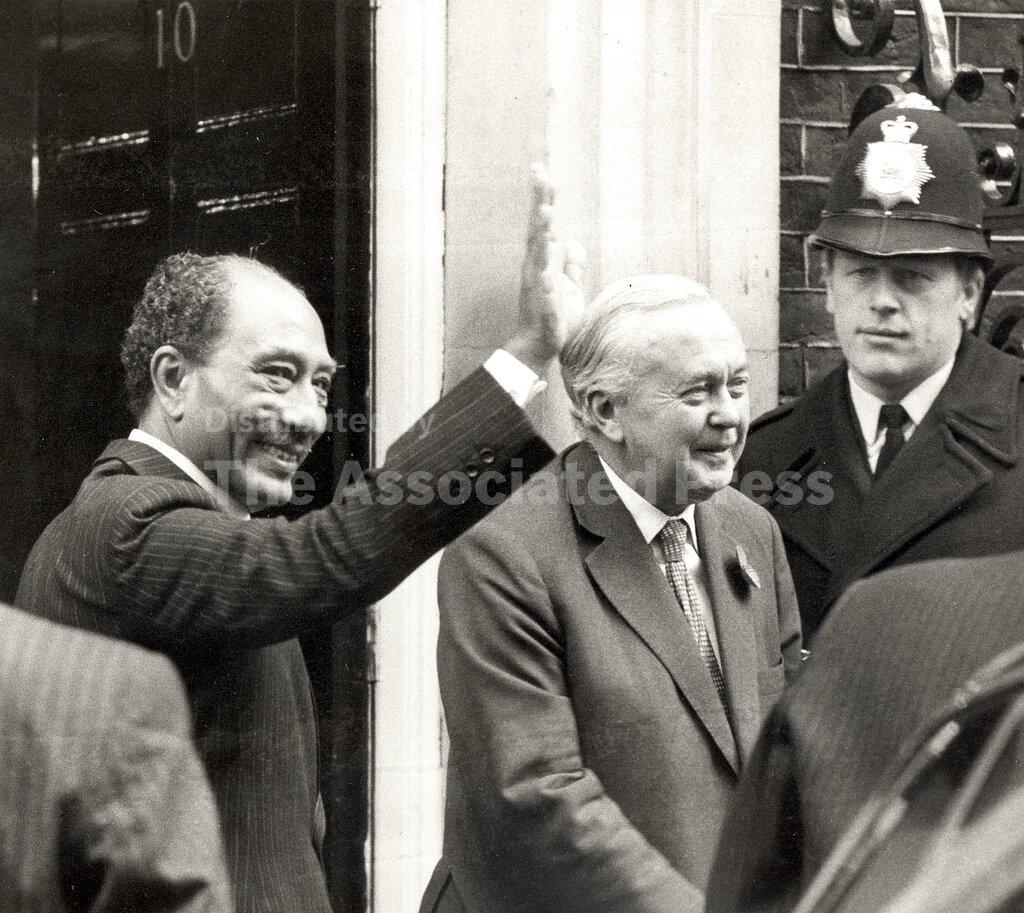
In the context of three decades of British Government policy that favored spending for public welfare over industrial development, the program that Prime Minister Harold Wilson unveiled this week is close to revolutionary. The Government, a Labor party Government at that, said that it now favored factories and profits over schools, hospitals, and full employment as an end in itself. “Profit,” proclaimed the tabloid Daily Mail, “is a dirty word no longer.”
A vapor cloud explosion at a petroleum cracking facility in Geleen, Netherlands killed 14 people and injured 109, with fires continuing to burn for five days.
The United, States pledged in the General Assembly today to work for a Middle East settlement taking account of the “legitimate interests” of the Palestinian people. However, Daniel P. Moynihan the chief American delegate said that the United States was still opposed to the Palestine Liberation Organization, which has refused to recognize Israel’s existence. The United States policy statement, at the end of week‐long Palestine debate, also underscored Washington’s position that the basis for future negotiations must remain the Security Council resolutions of 1967 and 1973, which affirmed Israel’s right to live in peace “within secure and recognized boundries” in exchange for an Israeli withdrawal from occupied Arab territories.
For the time being at least, the Moroccan march into Spanish Sahara has flagged. The marchers pitched tents and camped six miles from the Moroccan border. Gendarmes blocked the road in front of them and put up a whitewashed milestone to mark the limit of the advance. Spanish armored vehicles parked across a ravine about two miles ahead served as a further deterrent, as did the fear that the space separating the marchers from the vehicles might be mined. Meanwhile, more truckloads of Moroccans were reported to have crossed the border into the Spanish territory.
India’s Supreme Court reversed Indira Gandhi’s conviction on two electoral offenses in June, ending her long entanglement with the courts and removing the possibility of her having to step down as Prime Minister. The verdict was not based on any new interpretation of the case against her, but rather on a change in the law under which she had been convicted of two electoral improprieties. In August, Parliament, dominated by Mrs. Gandhi’s Congress Party, retroactively amended the election law in language specifically tailored to the circumstances of her case. The amendment provided that the things that Mrs. Gandhi was found to have done during the 1971 election campaign were no longer illegal. There was no immediate indication that the ruling would affect the sweeping state of emergency that the government declared on June 26, two weeks after her conviction by a lower court. Mrs. Gandhi has consistently maintained that the emergency, in which thousands of anti-government figures have been arrested, was necessitated by “a grave internal conspiracy,” and that it had almost nothing to do with her court case.
The British Governor of Belize said today that his country did not want a military confrontation with Guatemala over the self‐governing colony. As Governor Richard Posnett spoke at a news conference, British military transports landed here with troops and equipment, in a continuing build‐up that began Wednesday in response to reports of Guatemalan troop movements. “What we are hoping,” the governor said, “is that we have frightened them by this show of strength into not doing anything. The last thing we want is any involvement of British troops in clashes with the Guatemalans.”
A small opposition party with close military ties presented today a motion in the Chamber of Deputies for the impeachment of President Isabel Martínez de Perón. There seemed to be no likelihood that the motion would be adopted in view of the Peronist party majority in the Chamber. But it added to the pressure for Mrs. Perón to resign. The 44‐year‐old President remained in the private clinic that she entered Monday.
The nationalist faction that controls this capital broke its three‐day silence today on its battle with a mercenary column in the south and announced that “violent combat” was going on around the vital fort and railroad cities of Lobito and Benguela. A communiqué in today’s issue of Jornal de Angola, the organ of the Popular Movement for the Liberation of Angola, said that its forces had “impeded the progress of the mercenaries in the direction of Benguela.” The bulletin said that the column, which reportedly includes 26 military vehicles and 500 men, was assembled in South‐West Africa, the territory south of Angola (that is administered by South Africa. The message added that the Popular Movement’s fighting units had inflicted heavy losses on the “foreigners” and that its men had also suffered serilous casualties.
Four days before Angola was to become independent, the first two shiploads of Cuban soldiers, each carrying 4,000 troops, tanks and equipment, departed from Cuba.
The House Ways and Means Committee gave approval to legislation modifying and extending into 1976 and beyond the tax reductions that were voted earlier this year for 1975. The committee also prepared for a series of votes on amendments to its bill that would strengthen the tax reform provisions. It also agreed that Republicans should have a chance, on the House floor, to force a roll-call vote to adding a spending ceiling to the bill, as demanded by President Ford. The battle over tax reform, which has occupied the committee for days, was resolved with the committee’s agreement to an extraordinary procedure whereby the committee itself will recommend to the House Rules Committee that certain amendments be offered to the bill. Ordinarily, the Ways and Means Committee tries to prevent all amendments on the House floor to any tax bill that it approves.
President Ford told Massachusetts Republican supporters that he intended to enter all the Republican presidential primaries — about 30 — next year. He predicted he would be a winner through the primary campaign, at the party convention in Kansas City, and in the general election. Mr. Ford did not say he planned to campaign in all primary states.
President Ford declared today that the shift in Defense Secretaries and other national security advisers that he announced this week signaled no softening or change in the nation’s defense policies. Terming suggestions to the contrary “political potshots,” he said: “I want to be absolutely sure that these political potshots are not heard round the world. Our allies and adversaries must not be confused or misled. There will be no change in my lifelong devotion to America’s strength and vigilance as we seek a safer and saner world.” Mr. Ford, who spoke at the annual conference of the New England Council, a regional improvement organization, also sharply criticized Congress for its cuts in the defense budget and for what he called “reckless” attacks on the nation’s intelligence services. The President said he would continue to pursue a policy of détente and would seek “meaningful arms agreements.” But he added that “while peace is always crucial, freedom must come first.”
The Labor Department said that the nation’s unemployment rate rose from 8.3 percent to 8.6 percent in October, and that the number of unemployed people was over 8 million for the first time since May. The increase was the first in four months and seemed to indicate that the economic recovery, which began vigorously four months ago, was weakening. But a Labor Department economist said that “on balance, the evidence shows that the economic recovery continued in October.”
A team of psychiatrists concluded that former kidnap victim turned criminal, Patty Hearst, was competent to stand trial. Patricia Hearst was ruled competent to stand trial in San Francisco on federal charges of armed bank robbery and the use of a firearm to commit a felony. Federal Judge Oliver Carter ordered her to court at 2 PM Monday. The judge said that his decision was based on the law and court decisions as applied to three reports written by three psychiatrists and a psychologist. The four were appointed on September 25, one week after Miss Hearst was arrested with a pistol in her purse. Other weapons were found in the closet of the apartment where she lived with another woman fugitive and a young man now facing charges in Sacramento of committing a bank robbery in which a death occurred. “The court is of the opinion,” Judge Carter said in a written opinion released this afternoon, “that the defendant is at the present time competent to assist in her own defense and to stand trial on the charges listed in the indictment.”
Lynette Alice Fromme was barred from the courtroom today after the tiny, pale defendant, calling for “Manson and my family” to testify in her behalf, refused the judge’s ultimatum that she either behave herself or spend the duration of the trial in a closed room. Lynette Alice Fromme was barred from the courtroom today after the tiny, pale defendant, calling for “Manson and my family” to testify in her behalf, refused the judge’s ultimatum that she either behave herself or spend the duration of the trial in a closed room. “Manson and my family are my own heartbeat,” Miss Fromme said, her childlike voice rising to a near wail. “If they are not allowed to be here, if I am not allowed a fair trial, then lives will be lost all over the country. Your honor, it’s going to get bloody if they are not allowed to speak.”
Defense Secretary James R. Schlesinger will move into offices at the Johns Hopkins School for Advanced International Studies here when he leaves the Pentagon next Monday. Sources close to Mr. Schlesinger said that he would not join the staff of the “think tank” at this time, but that there was a possibility that he would later. The sources said the Johns Hopkins, institution had invited Mr. Schlesinger to use its offices during his transition from public to private life. Mr. Schlesinger was dismissed by President Ford last Sunday in a major shakeup of the leadership of the Government’s national security apparatus.
In the wake of Tuesday’s defeat of the proposed Equal Rights Amendment in New York, many feminists are questioning the direction of the women’s movement. They have no doubt about the movement’s strength and its future, but they are reappraising some of its tactics. Is the movement’s appeal sufficiently broad‐based? Are its goals being adequately communicated? Is its image, in the eyes of the uninitiated, an accurate one? A number of active feminists say “no.” They believe that despite an avowed commitment‐to “choice,” and despite efforts to gain financial rights for homemakers, the movement’s goals are not getting through to a good part of the 60 per cent of the female population who do not work outside the house. Some also question the effectiveness of its “outreach” to blue collar workers. The more positive‐minded believe that the E.R.A.’s defeat can be put to some constructive purpose.
Chemical “fingerprints” led environmental detectives on a four-month ship hunt that ended in Philadelphia with the arrest of a Greek sea captain on charges arising from the spill of more than 40,000 gallons of oil off the Florida Keys last July.
The 8th San Diego Comic-Con International opens at the El Cortez Hotel.
The television series, “Wonder Woman,” produced by Douglas S. Cramer and starring Lynda Carter as Wonder Woman, debuted as a mid-season replacement on the ABC and CBS networks in the United States.
The New York Rangers continued their full-scale house cleaning by trading their captain, Brad Park, and another top player, Jean Ratelle, to the Boston Bruins in exchange for Phil Esposito, one of the highest scorers in National Hockey League history. Esposito and Carol Vadnais went to the Rangers in exchange for Park, Ratelle and Joe Zanussi, a minor league player.
Dow Jones Industrial Average: 835.80 (-5.12, -0.61%)
Born:
Marcus Luttrell, American former Navy SEAL (“Lone Survivor”), in Houston, Texas.
Stephen Alexander, NFL tight end (Pro Bowl, 2000; Washington Redskins, San Diego Chargers, Detroit Lions, Denver Broncos), in Chickasha, Oklahoma.
Mitch Harris, MLB pitcher (St. Louis Cardinals), in Ocala, Florida.
Ryan Kraft, NHL centre (San Jose Sharks), in Bottineau, North Dakota.
 History Diaries