Outnumbered Greek troops are holding Italy’s invading forces at a standstill along tha Albanian border, an official communique said early today as British warships and troops rushed to the aid of stricken Greece. British naval forces were reported, to have arrived at Greece’s great Salonika naval base at the top of the Aegean. British forces speeding aid to Greece were also reported today to have gotten the jump on Italy by landing on Corfu Island, the old sentinel deemed important in control of both the Balkans and the Adriatic sea. The first British troops also arrived at Suda Bay, Crete in Greece; meanwhile, a fleet of 4 battleships, 2 carriers, and 19 destroyers departed from the British naval base at Alexandria, Egypt for Crete. To the north, the Italian invasion advanced slowly.
There are three main sectors of the Greek front with varying degrees of activity on 29 October 1940.
Along the coastal sector, the main Greek 8th Infantry Division force on the coast breaks contact and retires in good order to the Kalpaki line. This area has swamps at the mouth of the Kalamas River directly in front of Kalpaki which would retard any attack. Two Greek battalions under Major-General Nikolaos Lioumbas hold this area. Further inland, nine Greek battalions hold the Kalpaki pass. This line looks sturdy due to its natural advantages despite the presence of Italian warships offshore that can bombard the Greeks.
In the central sector, the Julia Division is moving forward in the critical Pindus Mountains sector of the front. Their goal is the crossroads of Metsovo, which would cut Greek lines of communications to their forces further north. The Greeks of the scratch Pindus Detachment (soon to be supplemented by the 1st Infantry Division) are retiring in good order to Samarina. It begins to snow in this area, which helps the defense.
The northern Macedonian sector is fairly static, with minimal Italian gains. Advances in this sector depend upon the Italian forces further south taking Metsovo, through which Greek supplies and reinforcements pass.
A planned Italian landing on Corfu is scrubbed due to poor weather.
The full mobilization of the Italian Blackshirt units began.
Greece formally requests British military assistance per the guarantee of 13 April 1939, which states:
“[I]n the event of any action being taken which clearly threatened the independence of Greece, His Majesty’s Government would feel themselves bound at once to lend all the support in their power.”
England already has offered its assistance, so this request is a mere formality.
The British occupied Crete and began to mine the waters around Greece. Pursuant to their mutual defense obligations to the Greeks, the British land troops on Crete. It is a reconnaissance party drawn from members of the Royal Navy, RAF, and the army. The men arrive at Suda Bay in a flying boat. The Royal Navy Mediterranean Fleet based at Alexandria, led by battleships HMS Warspite, Valiant, Malaya, and Ramillies along with aircraft carriers HMS Eagle and Illustrious sorties to the west of Crete to cover landing operations there. A convoy of troopships also depart for Suda Bay. Operation BN is planned to continue for the next week and land a large body of British troops. The initial force of battleships also carries an extempore initial landing force of 158 sailors from the crew of damaged HMS Liverpool to form a shore party at Suda Bay.
An underlying tension between the Italians and the Germans concerns North Africa. The Germans want to put their own troops there for a variety of reasons, including sheer imperialism. The Italians, however, consider North Africa their own private domain and want it to remain German-free. Mussolini has been uncertain about the ability of the Italian Army to advance past the British defensive line at Mersa Matruh and take Alexandria without German assistance. At the Brenner Pass meeting on 4 October, Mussolini had waffled on whether to allow German troops to participate in this “third stage” of the North Africa offensive, indicating that he “might be forced” to use German tanks to take the British base (which would lever the British completely out of the Middle East entirely).
In hindsight, it is fairly obvious that the Italian Army had absolutely no hope of reaching Alexandria by itself, much less capturing it. However, the Italians are full of themselves at this point and truly believe they are world-conquerors.
Italian Commander in Chief Marshal Badoglio — adamantly opposed to German involvement in North Africa — today convinces Mussolini that the “third stage” of the offensive, taking Alexandria, is completely impossible with or without German assistance. He convinces Mussolini to cancel any plans for an Italian advance beyond Mersa Matruh (which itself would be extremely difficult for the Italians to take). This eliminates any excuse for the Germans to intrude troops into North Africa. It cripples the “peripheral strategy” favored by many of Hitler’s Generals and Admirals — at least for the time being. Armchair historians who wonder why the Germans didn’t just boot the British out of Egypt and Gibraltar early on when it would have been feasible — here is your reason.
This is an eminently sensible conclusion for the Italians to draw from the situation. Italian troops have miserable morale and terrible equipment and supplies. The important thing to note, though, is that the Italians don’t make this decision at this time because of the British defenses or anything to do with the state of the Italian military — but because of their desire to keep the Germans out of North Africa.
Two Royal Naval Volunteer Reserve officers, Lieutenant Baker and Sub-Lieutenant Cummins, succeeded in recovering safely a German acoustic mine from the River Ogmore near Porthcawl, allowing its mechanism to be studied at HMS Vernon and counter-measures developed.
The names of twenty-three persons deprived of French nationality for fleeing France in the last few weeks of the war were issued after today’s Council of Ministers.
The Greek Minister conferred at the Foreign Office in Moscow today amid a flurry of diplomatic talks in that city, while the Red Army warned that it was ready at a moment’s notice to “hurl its entire might” at any enemy menacing the Soviet Union.
French Brigadier-General Paul Legentilhomme, who has been the Commander in Chief of the French military units stationed in French Somaliland, arrives in London to join Charles de Gaulle. Legentilhomme condemned the French Armistice on 18 June and left his command on 2 August.
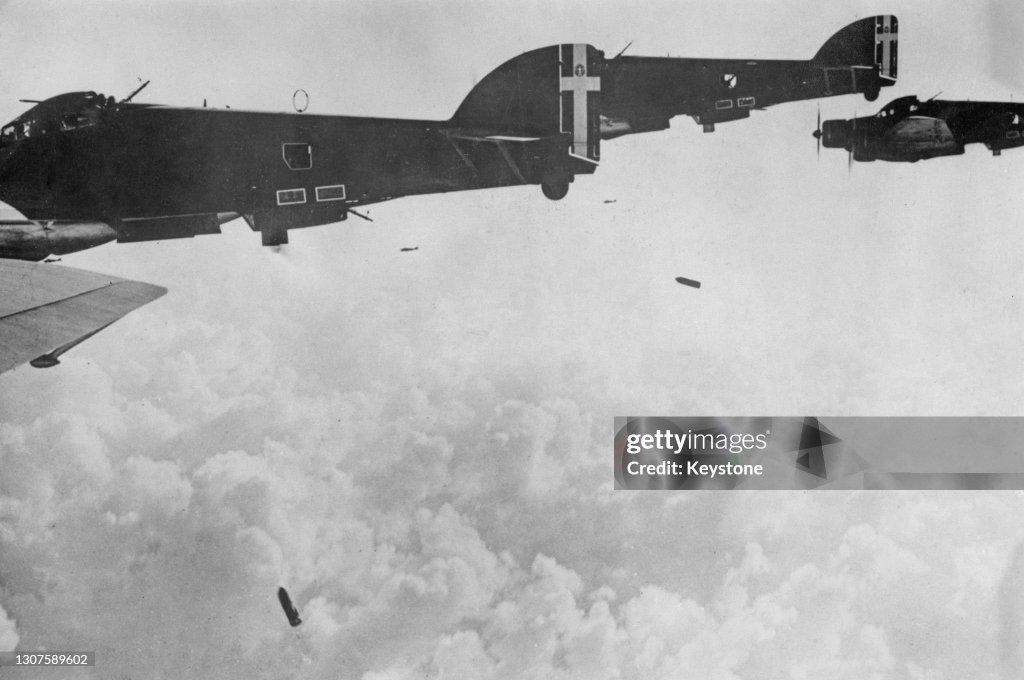
German bombers conducted several raids in southern England, United Kingdom all day, escorted by Bf 109 fighters, damaging areas of London and Portsmouth. At dusk, German Ju 88 aircraft, acting as dive bombers, attacked airfields in East Anglia, Lincolnshire, and Yorkshire. Italian BR20M bombers bombed Ramsgate in formation. During the day, the Germans lost 22 Bf 109 fighters, 3 Bf 110 fighters, and 2 Do 17 bombers; the British lost 7 fighters with 2 pilots killed; the Italians lost 5 bombers. Overnight, London, Birmingham, and Coventry were bombed.
The Luftwaffe steps up its raids today, requiring a maximum effort by the RAF. It is a bad day for the Luftwaffe’s fighter force, which suffers heavily. Today’s operations usually are considered the last major, or climactic, Luftwaffe daylight attacks over England, though the battle continues of course.
German fighter-bombers (Jabos) cross the coast around 10:30, with many evading interception and bombing central London. The Charing Cross bridge is hit. A Hurricane of RAF No. 213 Squadron bales out near Selsey but perishes.
Some Dornier Do 17s mount a rare daylight raid just past noontime. They are intercepted by RAF No. 1 Squadron and don’t accomplish much.
The largest operations of the day begin at 13:00 when 100+ Jabos and accompanying fighters head for central London and nearby airfields (Biggin Hill, Hornchurch, Maidstone). JG 51 runs into the main force of RAF fighters and is attacked from above, losing 8 fighters. The Jabos drop their bombs and scramble for home quickly.
Around the same time, a large formation approaches Portsmouth from the south. This includes a dozen Junkers Ju 88s, and they run into RAF Nos. 145 and 213 Squadrons. The Luftwaffe bombs cause 39 casualties, with three deaths, along with dozens of houses destroyed and damage to the railway line.
As these other raids are in progress, the Italian CAI force sends over 15 BR 20 bombers with 39 CR 42 and 34 G.50bis escorts to bomb Ramsgate. They stray off course and bomb the Royal Marines Barracks at Deal, killing 8 men and wounding a dozen others.
The Jabos have great success later in the afternoon, and they are accompanied again by Junkers Ju 88 bombers. These raids proceed against airfields across East Anglia. This is Operation Opernhall (Opera Hall). There are 71 Ju 88s and 52 Jabos escorted by well over 120 Bf 109s and Bf 110s. North Weald, Leeming, Linton, Wattisham, Honington, Leeming, Newmarket, West Raynham, and Linton-on-Ouse and other airfields take damage.
The fighting is wild and wooly all afternoon. There are Luftwaffe planes going every which way, including a diversionary attack on the London docks by Epr210. There were planes falling out of the sky in all directions, most of them German.
After dark, the main targets are London, Birmingham, Liverpool, and Coventry. The raids are spread out all across southern England. One bomber raids Bristol, another causes a fire at the Wrays Optical Works which destroys the factory. Junkers Ju 88s act as dive bombers (all Luftwaffe bombers are required to have some dive-bombing capability), attacking airfields in East Anglia, Lincolnshire, and Yorkshire.
The Luftwaffe drops mines in the Thames Estuary. These include new acoustic mines, which explode due to noise caused by ship propellers. One of the mines is recovered by two Royal Naval Volunteer Reserve officers in the River Ogmore for study.
Overall, as with most days when the Luftwaffe mounts a major effort, it is a bad day for the Germans. They lose over two dozen planes (22 Bf 109s, 3 Bf 110s and 2 Do 17s), and the RAF fewer than a dozen planes.
Werner Mölders claimed his 54th victory, keeping his lead over second-place Adolf Galland.
Major Helmut Wick of JG 2 files two claims for Hurricanes over Portsmouth, giving him 44 victories.
RAF Bomber Command dispatches 13 Blenheims on a daylight sea sweep and to France and Belgium. The docks at Rotterdam were bombed. 1 aircraft lost.
The British RAF conducted the 25th raid on Berlin, Germany. RAF Bomber Command dispatches 98 aircraft to many targets overnight. The largest raid, by 30 Hampden and Wellingtons, was to Berlin but, because of bad weather, only 4 aircraft reached that target. No losses. 5 Hampden minelaying off Copenhagen; 1 lost 1 O.T.U. sortie.
RAF bombers raid Italian positions in North Africa.
At Malta, the Malta Fighter Plane Fund is closed to contributions today, being announced a great success. A total of £12900 has been raised over three months, which is to be sent to the Minister for Aircraft Production, Lord Beaverbrook, in London.
German Kriegsmarine (German Navy) submarine U-31, commanded by Wilfried Prellberg, sank the drifting wreck of British ship Matina, which was damaged by U-28 on 26 Oct and had already been abandoned, at 2200 hours. At 0432 hours on 26 Oct 1940 the unescorted Matina (Master David Alexander Jack) had been hit in the stern by one torpedo from U-28 (Kuhnke) about 100 miles west of Rockall, after the ship had been missed by a first torpedo at 2150 hours the day before. The U-boat then surfaced and fired 28 rounds with her deck gun, achieved 15 hits and left the vessel in a sinking condition. At 2200 hours on 29 October, U-31 reported the sinking of a drifting wreck by a coup de grâce, this must have been the Matina. The first U-boat had observed that some survivors abandoned ship in lifeboats, but they were never seen again. The master, 67 crew members, two gunners and one passenger were lost. The 5,389 ton Matina was carrying bananas and was bound for Garston, England.
Italian submarine Scirè launched three manned torpedoes into Gibraltar harbor. The mission was a failure as one of the torpedoes broke down and the crew of the two torpedoes aborted due to breathing equipment issues.
German Kriegsmarine (German Navy) submarine U-29 made rendezvous with German armed merchant cruiser Widder, which was returning from her merchant raiding mission for repairs, in the Bay of Biscay west of France.
Australian heavy cruiser HMAS Australia on patrol west of the Hebrides rescued the crew of a Sunderland flying boat.
Destroyers HMS Duncan, HMS Fearless, and HMS Isis departed Liverpool at 1030 with aircraft carrier HMS Ark Royal for Greenock where they arrived at 0015 on the 30th.
Anti-aircraft cruiser HMS Curacoa departed Scapa Flow at 0900 to join convoy WN.26.
Destroyer HMS Electra departed Rosyth for the Tyne. Destroyer Electra escorted refit completed light cruiser HMS Edinburgh from the Tyne to Rosyth.
Destroyer HMS Cleveland departed Scapa Flow at 2345 to search for a Sunderland down in Moray Firth, three to four miles off the shore from Wick. The destroyer arrived back at 1600/30th when it was found the flying boat had crashed on the land.
S/Lt A. G. Blake, flying a Spitfire of RAF 19 Squadron from Fowlmere, was killed when he was shot down near Chelmsford.
Dutch submarine O-24 attacked a steamer unsuccessfully off the Norwegian coast.
Sludge vessel G. W. Humphreys (1500grt) was sunk on a mine two cables east, southeast of Oaze Buoy. Seven crewmen were lost on the British vessel.
Norwegian steamer Jamaica (3015grt) was damaged on a mine 51-22N, 03-08W.
German torpedo boats Iltis and Jaguar laid minefield ALFRED off Dover during the night of 29/30 October.
On this date, submarine HMS Parthian was on patrol off the Gulf of Taranto, submarine HMS Pandora was on patrol in Straits of Otranto, two Greek submarines were on patrol in the Ionian Sea. Submarine HMS Regulus was on patrol in the Gulf of Sydra and French submarine Narval was between Lampedusa and Kerkenah. Submarine HMS Proteus departed Alexandria on the 25th to relieve submarine Parthian.
In Operation BN, British forces landed on Crete. A joint reconnaissance party, drawn from all three services, arrived at Suda Bay on the 29th in a flying boat. Battleships HMS Warspite, HMS Valiant, HMS Malaya, and HMS Ramillies, aircraft carriers HMS Eagle and HMS Illustrious, destroyers HMS Hyperion, HMS Havock, HMS Hero, HMS Hasty, HMS Hereward, and HMS Ilex of the 2nd Destroyer Flotilla, HMS Dainty, HMS Decoy, HMS Defender, HMS Diamond of the 20th Destroyer Division, and HMS Jervis, HMS Nubian, HMS Mohawk, HMS Juno, and HMS Janus of the 14th Destroyer Flotilla departed Alexandria early on the 29th. Heavy cruiser HMS York and light cruisers HMAS Sydney, HMS Orion, and HMS Gloucester departed Alexandria late on the 28th and joined the Fleet off Crete. The Main Fleet swept to the west of Crete to cover the movements to Crete
On 29 October at 1400, a convoy of Royal Fleet Auxiliaries Olna and Brambleleaf, armed boarding vessels HMS Chakla and HMS Fiona, minesweeper HMS Fareham, and net layer HMS Protector escorted by anti-aircraft cruisers HMS Calcutta and HMS Coventry and destroyers HMAS Vampire, HMAS Voyager, HMAS Waterhen, and HMS Wryneck departed Alexandria. This convoy, less Calcutta, Wryneck, Olna, arrived at Suda Bay on the 31st at 1630. The Olna group arrived at 0630 on 1 November.
On board vessels HMS Chakla and HMS Fiona were eleven officers and one hundred and forty seven ratings, under the command of Lt Cdr J. N. Hicks, of a Base Defense Party. This party was composed of crew from damaged cruiser HMS Liverpool.
Light cruiser HMS Ajax departed Alexandria on the 31st and arrived at Suda Bay on 1 November. Destroyers HMS Juno and HMS Defender were detached from the Main Force to refuel at Suda Bay on the 31st. On 31 October, destroyers HMS Mohawk and HMS Nubian, detached from the Main Force, examined Navarin Bay. These destroyers rejoined the Main Force that afternoon. Destroyers HMS Juno and HMAS Voyager rejoined the Main Force from Suda Bay. Destroyer Voyager was a replacement for destroyer Defender, which had fouled the nets at Suda Bay.
Battleship HMS Warspite, aircraft carrier HMS Illustrious, heavy cruiser HMS York, light cruiser HMS Gloucester, destroyers HMS Jervis, HMS Hero, HMS Hereward, HMS Hasty, and HMS Ilex were detached at 1630/31st and returned to Alexandria, arriving at 1900 on 2 November. Light cruisers HMS Orion and HMAS Sydney arrived at Alexandria late on 2 November. Battleships HMS Malaya and HMS Valiant, aircraft carrier HMS Eagle, and the remaining destroyers arrived at Alexandria at daylight on 2 November.
On 2 November, tanker Olna, escort ship HMS Wryneck, and minesweeper HMS Fareham departed Suda Bay for Piraeus. Light cruiser Ajax, destroyers Vampire, Waterhen, Defender, oiler Brambleleaf, netlayer Protector, armed boarding vessels Chakla and Fiona departed for Alexandria. The movements to Crete continued into the first week of December.
Minesweeper HMS Huntley arrived at Alexandria for duty with the Mediterranean Fleet.
Convoy OB.236 departed Liverpool escorted by destroyer HMS Broke, sloop HMS Leith and corvettes HMS Arabis and HMS Heliotrope. The escort was joined on the 30th by destroyers HMS Malcolm and HMS Sardonyx. On 1 November, corvette HMS Gentian was with the convoy for the day only and the rest of the convoy escort, less sloop Leith, was detached. Sloop Leith was detached on 2 November.
Convoy FN.322 departed Southend, escorted by destroyers HMS Wallace and HMS Westminster. The convoy arrived at Methil on the 31st.
Convoy FS.322 departed Methil, escorted by destroyers HMS Vanity and HMS Wolfhound and anti-submarine trawlers HMS Agate and HMS Turquoise. Patrol sloop HMS Pintail joined on the 31st. The convoy arrived at Southend on 1 November.
Convoy SC.10 of fourteen merchant ships departed St Johns escorted by Sloop HMS Folkestone. The convoy was joined by destroyers HMS Vansittart and HMS Walker on 10 November. The convoy arrived at Liverpool on 13 November.
Convoy OG.45 of twenty two ships departed Liverpool, Milford Haven, Glasgow escorted by destroyers HMS Wanderer, HMS Wild Swan, and HMS Clare. Destroyers HMS Wild Swan and HMS Clare were detached on 2 November and Wanderer was detached on 3 November. The ocean escort was armed merchant cruiser HMS Salopian which departed the Clyde on the 31st and was with the convoy from 6 to 9 November. The convoy was joined by destroyer HMS Vidette, which departed Gibraltar on 8 November, on 9 November. The destroyer escorted the convoy until its arrival at Gibraltar on 13 November.
Peacetime conscription under the Selective Training and Service Act of 1940 went into effect in the United States. The first number was drawn in the Selective Service System lottery as Secretary of War Henry Stimson donned a blindfold and pulled out the first numbered capsule from a bowl. The U.S. government conducted the first peacetime draft lottery in American history as the first troops were selected for U.S. military service. Conscription, as allowed by the Selective Training and Service Act, began; it was the first military draft during peacetime in U.S. history. An estimated 6,175 men holding draft serial Number 158 will be the first called up for military service in the nation’s unprecedented peacetime conscription. That number was the first drawn in today’s historic draft lottery. Secretary of War Stimson drew it from a big glass bowl at 12:16 PM, a minute or so after President Roosevelt said in an opening speech that the purpose of raising a draft army is “the defense of our freedom.”
President Roosevelt spent about fifteen hours in Washington today, filling with normal Presidential duties this lull in his active campaign for re-election. He returned this morning from his one-day trip into New York and adjacent cities in New Jersey and left late this evening for an intensive political cultivation of twenty-five electoral votes in Connecticut and Massachusetts. Mr. Roosevelt’s schedule called for engagements which will fill about fifteen hours in the two important New England States tomorrow on a tour that Democratic leaders hope will offset an indicated rise in Republican strength. The climax of the tour will be a speech in Boston Garden at 10:15 o’clock tomorrow night. It will conclude a day which will be marked by personal appearances in the Connecticut valley, starting at 9 AM. Mr. Roosevelt will return here Thursday to dedicate a cancer institute in Maryland, but will be in New York City for a speech at the Brooklyn Academy of Music on Friday evening, unless foreign developments cause him to revise his campaign schedule.
U.S. Ambassador to Great Britain Joseph P. Kennedy tonight branded as “false” a charge that President Roosevelt was trying to involve this country in the war abroad and called for his reelection as the man who “can best serve the nation.” Kennedy, who made a hurried return by clipper plane Sunday from England, spoke over a nation-wide network of the Columbia Broadcasting system.
Wendell L. Willkie accused President Roosevelt tonight of responsibility for delay in building a national defense and of disregarding the warnings of his military advisers. Replying to the President’s speech of last night in a formal broadcast over the red network of the National Broadcasting Company, the Republican candidate declared that Mr. Roosevelt could not “pass the buck” on the issue of defense by seeking to place the blame upon a small group of Republicans in Congress.
In a speech in the City Auditorium before his radio address he cited the record to show that the President, despite his claim of foreknowledge of what was to happen. in Europe, and warnings from Army and Navy officers, the Secretary of War and the State Department, had failed repeatedly to take steps to put the Army and Navy in a state of preparedness. He declared that the armor-plate plant in South Charleston had been permitted to fall into disuse and was an illustration of the President’s failure to get ready for the production of needed defense material.
Mayor La Guardia of New York, in a speech in Chicago tonight, pictured the campaign conducted by Wendell L. Willkie as one of “threats, creating fear and money.” The Republican nominee’s “grand wind-up in the week before election,” Mr. La Guardia declared, “will attempt a war-scare, particularly in the Midwest, and will continue to create fear as to bank deposits, insurance policyholders and the Government Social Security plan.” An enthusiastic crowd of about 23,000 persons who packed the Stadium gave Mayor La Guardia loud ovations when he appeared on the platform, when other speakers mentioned his name, and when he concluded his address with the plea to the people of Chicago to unite with New Yorkers to “down the utility gang and put Franklin Roosevelt in the White House next Tuesday.”
Replying to John L. Lewis’s radio address last week endorsing Wendell L. Willkie, United States Senator Robert F. Wagner last night appealed to the workers of America to “discard” the advice of the chairman of the Congress of Industrial Organization and to beware of the Republican Presidential nominee’s reversion to the policies of Herbert Hoover. Finally, he urged labor to “keep America out of war by uniting behind Franklin Roosevelt.” Senator Wagner spoke over a Columbia Broadcasting System coast-to-coast network from 9:30 to 10 o’clock. He declared that the counsel of Lewis to the workers had “shocked the liberal and humanitarian sentiment of America.”
Alfred E. Smith told a cheering, laughing audience tonight that it was “childish” of President Roosevelt to blame the Republican party for the lack of national defense when “he didn’t require the votes of any Republican Congressmen” to obtain passage of needed defense legislation. Discussing the President’s Madison Square Garden speech of last night, the former New York Governor, speaking before about 2,500 persons in Town Hall at a Democrats for Willkie rally, cited Mr. Roosevelt’s references to specific appropriations measures. He said eight Republicans voted against one bill and twelve against. another,” Mr. Smith recalled. “It’s so childish I don’t blame anyone for smiling. Incidentally, while we are on the subject, all the bills he spoke of last night were passed anyway.”
An early “effective and satisfactory settlement of all pending questions” between the United States and Mexico was foreseen today by President Lazaro Cardenas in an interview granted to the Mexico City press.
Convoy BM.3 departed Bombay with steamers Amra (8314grt), Devonshire (11,275grt), El Madina (3962grt), Hosang (5698grt), Japapadma (3935grt), Karoa (7009grt), Pundit (5305grt), Ranee (5060grt), Talamba (8018grt), escorted by armed merchant cruiser HMS Westralia from 29 October to 4 November and light cruiser HMS Danae from 4 November to 11 November. The convoy arrived at Singapore on 11 November.
At the continuing Battle of South Kwangsi, the Japanese withdraw from Nanning as the Chinese advance. The Chinese capture Kaofengyi, Santang, and Chientaohsu.
W.C. Kent of Kentville, Louisiana, American civilian pilot, and six of eight Chinese passengers were killed yesterday when a China National Aviation Corporation plane crashed near Changyi, Yunnan Province, it was announced today. It was reportedly shot down by Japanese fighters.
The Japanese Cabinet’s attitude indicates that the government does not regard Japan as involved in the Near Eastern war under the triple alliance of Germany, Italy and Japan.
Light cruiser HMS Durban arrived at Singapore.
German auxiliary minelayer Passat laid thirty mines in Banks Straits during the night of 29/30 October, as German raider Pinguin and converted minelayer Passat continue laying mines off southeast Australia.
Dow Jones Industrial Average: 132.19 (+0.42)
Born:
Connie Mack III, American politician (U.S. Senator from Florida, 1989-2001; U.S. Representative from Florida, 1983-1989), in Philadelphia, Pennsylvania.
Galen Weston, English-Canadian multi-millionaire industrialist, in Marlow, England, United Kingdom.
Naval Construction:
The Nihon Kaigun (Imperial Japanese Navy) seaplane tender HIJMS Akitsushima (秋津洲), sole unit of her class to be completed, is laid down by Kawasaki Shipbuilding, Kōbe, Japan.
 History Diaries