British Prime Minister Winston Churchill made a broadcast in French directed to the radio audience in France. Churchill appealed to the French not to hinder Britain in the war against Germany. “… we do not forget the ties and links that unite us to France, and we are persevering steadfastly and in good heart in the cause of European freedom and fair dealing for the common people of all countries for which, with you, we draw the sword … Remember, we shall never stop, never weary, and never give in, and that our whole people and empire have bowed themselves to the task of cleansing Europe from the Nazi pestilence and saving the world from the new Dark Ages … We seek to beat the life, and soul out of Hitler and Hitlerism–that alone, that all the time, that to the end.”
In an angry tone, Churchill gets off some of his sharpest taunts at Hitler’s expense, who he at first calls “Herr Hitler,” but then “this evil man, this monstrous abortion of hatred and defeat”:
“We are waiting for the long-promised invasion. So are the fishes.”
As he is wont to do, Churchill references Napoleon in a sentimental manner — not exactly how England felt about the Emperor while defeating him, but times have changed — and casually throws in a mention of “our friends across the Atlantic Ocean” as a sort of ace in the hole. Referencing Hitler, he vows:
“If he does not destroy us, we surely shall destroy him and all his gang and all his works.”
Churchill also plays on French fears by hinting darkly that Italy intends to wrest away the best parts of France, including “Nice, Savoy, and Corsica — Napoleon’s Corsica.” He notes that there is little love lost between the Germany/Italy coalition and France at this point, and offers little subtlety in warning about how “these two ugly customers” intent to not only rape France but cause its “complete obliteration.”
Churchill has good reason to be angry. U-boat wolfpacks in the last few days have destroyed two convoys from Canada (SC 7 and HX 79), brushing aside the Royal Navy escorts as if they weren’t even there. Those weren’t the only losses at sea, either. Churchill, as former First Lord of the Admiralty, is extremely sensitive to naval developments, more so than events in the air. Despite the victories in the air, this is one of the darkest periods of the war for Great Britain.
But there are things going on behind the scenes that cast the situation in an entirely different light. Unbeknownst to anyone, Marshal Petain and Churchill secretly are negotiating through an intermediary. Petain, in fact, is in the process of sending his representative to London to see if some kind of reconciliation can be worked out between the two countries. This, of course, is particularly sensitive for Petain, because Hitler literally is on his way to meet Petain, Laval, and Franco (all separately) to discuss his own vision of forming a united front against England. If Hitler knew what Petain was doing behind his back, he would not be pleased. Churchill does, and he fairly gloats about it in this address without revealing why.
How much each side knows about the other’s plans is unclear, but Churchill has a habit of interjecting himself forcefully into the internal affairs of the Continent in quite unsubtle (in hindsight) ways. The timing of this France-friendly address appears a bit too coincidental. It is likely Churchill knows what Hitler has in mind and is throwing in his own two cents before the big meetings. We shall see more of this in the near future.
Separately, Britain institutes a purchase tax.
RAF drops the first anti-nazi pamphlets on the occupied Netherlands.
The British bombing raid on Berlin last night was denounced by Nazi spokesmen today as “organized terrorism on the population of Berlin” and the inspired press asserted that this “crime” would receive a “thousandfold” revenge.
Friedrich Ruge was awarded the Knight’s Cross of the Iron Cross medal.
Benito Mussolini sets a firm date for the invasion of Greece of 28 October.
Italy begins preparing for the invasion of Greece by forming a new naval command. The Maritrafalba will escort convoys from the Italian ports of Bari and Brindisi to Albania. British submarines have been targeting this area recently, with some success.
Two men of the 2nd Battalion Royal Irish Fusiliers on Malta are arrested and face dishonorable discharges for suspected IRA activities. Ultimately, one is repatriated, the other jailed for two years for “involuntary homicide.”
A redoubled German campaign to bring Hungary and Bulgaria into the Rome-Berlin-Tokyo axis and reports of British efforts to line up Greece, Turkey and Yugoslavia against further Nazi incursions into the Balkans drew the lines sharper today in the struggle between the rival powers for mastery of southeastern Europe. With the Rumanian army now under German tutelage and Yugoslavia pledged to unqualified economic and political cooperation with Berlin, signs multiplied that Hungary and Bulgaria already have been invited to join in outright military participation with the axis. Countering the German moves, British envoys to Yugoslavia, Greece and Turkey gathered in Ankara for a conference.
Soviet Foreign Minister Vyacheslav Molotov replies to German Foreign Minister Ribbentrop’s lengthy letter of 13 October about a New World Order. The letter, signed by Stalin, is considered so important that Gustav Hilger personally brings it to Berlin.
In his reply, Stalin agrees to Ribbentrop’s proposal that they meet in Berlin, to be followed by a meeting in Moscow:
“I agree with you that a further improvement in the relations between our countries is entirely possible on the permanent basis of a long-range definition of mutual interests.”
Molotov proposes 10-12 November as good dates for his visit. However, he carefully sets aside any possibility of involving Italy and Japan in the negotiations. Hitler’s grand idea is to get the USSR to sign on with the Tripartite Pact, and he remains confident that will happen. The Germans are extremely excited at what appears to be a thawing of relations between the two parties.
Both sides, meanwhile, have been busy crafting war plans to invade the other. Molotov, in particular, is greatly concerned by German activity in Finland, where the Finns have granted the Wehrmacht transit rights and engaged in trade agreements with Germany. In the paranoid minds of the Kremlin, this all seems directed at them — and to a large extent, they are right. The Soviet attitude on the recent matter is not nearly as rosy as the Germans assume or would like to believe.
Generalfeldmarschall Fedor von Bock’s Army Group B headquarters, now redesignated Army Group Center, moves to Posen. Field Marshal Wilhelm List takes temporary command when von Bock goes on medical leave.
The South African 2nd Infantry Brigade arrives at Mombasa in Kenya.
Between 1100 and 1400 hours, heavy fog limited Germans to small raids against southern England, United Kingdom and kept British fighters on the ground; as the result, bombs were successfully dropped on London, Lancashire, Gloucestershire, Wiltshire, Oxfordshire, Sussex, and Kent; 1 Ju 88 bomber was lost. Overnight, London, Birmingham, Coventry, Wolverhampton, Liverpool, and South Wales were bombed.
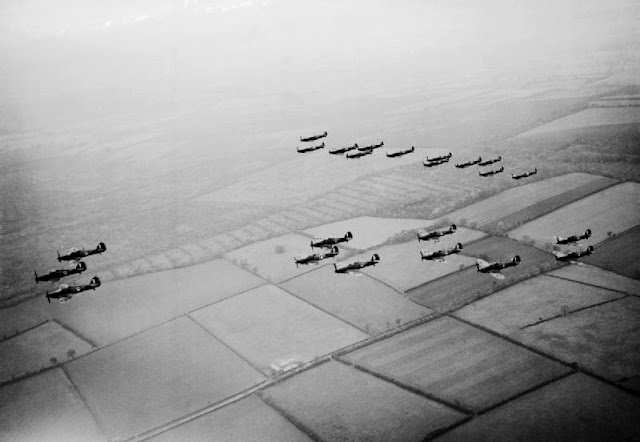
The weather on 21 October 1940 remains poor, with normal English fall weather: overcast, drizzly, low visibility. The Luftwaffe mounts mainly smaller raids by pirate bombers and other lone wolves.
During the morning, there are small raids in London, Liverpool, Northampton, Cambridge, and the Duxford area.
Some Junkers Ju 88s and Dornier Do 17s attempt bombing missions during the afternoon when the weather clears a bit. One odd incident takes place at Old Sarum when a Ju 88 poses as a Bristol Blenheim while attacking the airfield there. However, ultimately the bomber is shot down by RAF No. 609 Squadron.
After dark, there are raids on the usual targets: London, Liverpool and the Midlands with further raids on Sheffield, South Wales and Lancashire. The Luftwaffe also drops mines in the Thames Estuary and off Swansea. A particularly devastating hit is scored by a land mine at Strathmore Avenue, Beverley High Road, near the River Hull. It devastates the entire area, kills two, and injures many others.
Tonight counts as Liverpool’s 200th air raid, conducted by KGr 606 and III,/KG 27.
Coventry, home to many strategic factories, also gets hit again. This is a particularly devastating raid that devastates both businesses and infrastructure. A water main break floods the nearby Northern Line.
The day is pretty much a wash, with a handful of Luftwaffe planes lost and nary a single RAF plane — an extreme rarity during the Battle of Britain.
The coastal guns at Hellfire Corner (the Dover Strait) exchange fire between 14:00 and 16:00. Several of the six German shells fired fail to detonate, as was the case yesterday.
RAF Bomber Command dispatches 18 Blenheims on daylight sea and coastal sweeps. 5 aircraft found targets to bomb. No losses.
RAF Bomber Command dispatches 31 Wellingtons and 11 Whitleys overnight to Cologne, Hamburg, Reisholz and Stuttgart. 1 Whitley lost. Targets include the Skoda plant at Pilsen, the Hamburg dockyards, oil installations at Reisholz, and Stade Airfield near Hamburg. Wellingtons sent to Hamburg, attempting to bomb the battleship Bismarck, caused 12 fires of which 8 are classed as large in the Hamburg report. 17 people were injured in Hamburg.
A Vickers Wellington V is tested for altitude and reaches 20,000 feet.
The Luftwaffe night fighters get another victory when Hptmn Karl Hülshoff of 1./NJG2 damages an Armstrong Whitworth Whitley of RAF No. 58 Squadron. It almost makes it back to base but crashes into a hillside at Botton Head on Ingleby Greenhow Moor, North Yorkshire.
The Luftwaffe shuffles some of its personnel. Kommodore of KG 2 Generalmajor Johannes Fink becomes Inspector of Bomber and Ground Attack Flyers. Oberst Herbert Rieckhoff from KG 30 replaces him, and Oblt. Erich Blödorn replaces Rieckhoff.
At Malta, the Information Office announces that enemy air losses over Malta since the outbreak of the war have been 25 and badly damaged aircraft 20. RAF losses to date have totaled three fighters and two pilots. This is a rebuttal to Italian propaganda which has stated that the Regia Aeronautica has crushed RAF resistance on the island.
Light cruiser HMS Glasgow arrived at Rosyth. On 29 October, the cruiser departed Rosyth for the Clyde. Light cruiser Glasgow departed the Clyde for the Mediterranean on the 31st.
Anti-aircraft ship HMS Alynbank left convoy OA.232 and joined convoy WN.24 east of Pentland Firth.
Motor torpedo boat MTB.17 (Lt R. I. T. Falkner) was sunk in mining off Ostend.
In a group of four minesweepers, minesweeping trawler HMS Waveflower (550grt, Temporary Skipper R. M. MacDonald RNR) was sunk on a mine off Aldeburgh. MacDonald and fourteen ratings were lost on the trawler. Lt W. J. Curtayne RNVR, six ratings were rescued by trawler HMS Thomas Leeds of this group. Searching for trawler Waveflower, minesweeping trawler HMS Joseph Button (290grt, Skipper A. J. Cowie RNR) was sunk on a mine 5.75 miles 275° off Aldeburgh. Five ratings were lost on the trawler.
British minefield BS.42 was laid on 21 and 22 October by minelayers HMS Teviotbank and HMS Plover and destroyers HMS Icarus and HMS Impulsive.
British steamer Kerry Head (825grt) was sunk by German bombing five miles due south of Blackball Head, Eire. Twelve crewmen were lost on the British steamer.
British steamer Houston City (4935grt) was badly damaged by German bombing one half mile 225° from East Oaze Light Vessel. The steamer was beached. Steamer Houston City was bombed again on 1 November and damaged further. Salvage was abandoned.
Russian steamer Astrid (603grt) was sunk on a defensive minefield near Leningrad. Three crewmen were killed and ten drowned on the steamer.
Operation JUDGMENT, the British air strike on the Italian Fleet at Taranto, was scheduled originally for this date, but the fire on aircraft carrier HMS Illustrious on the 18th forced postponement. Aircraft carrier Illustrious was damaged by a fire on her hanger deck which destroyed four Swordfish of 819 Squadron and damaged one Swordfish of 815 Squadron. Two other aircraft were damaged. Repairs to aircraft carrier Illustrious were completed on the 29th.
Submarine HMS Parthian attacked and tried to ram an Italian submarine off Cape Colonna without success.
Convoy OB.232 departed Liverpool escorted by destroyer HMS Sabre, which was detached later that day, destroyers HMS Scimitar and HMS Skate, sloop HMS Enchantress, corvettes HMS Clarkia and HMS Gladiolus, and anti-submarine trawlers HMS Fandango, HMS Man O’war, HMS Stella Capella, and HMS Vizalma. On 23 October, sloop HMS Weston and corvettes HMS Campanula and HMS Peony joined the escort. On 25 October, destroyers Scimitar and Skate were detached and on the 26th, the remainder of the escort left the convoy.
Convoy FS.316 departed Methil and arrived at Southend on the 23rd.
Secret and personal for the President from Former Naval Person [Churchill]: “We hear rumors from various sources that the Vichy Government are preparing their ships and colonial troops to aid the Germans against us. I do not myself believe these reports, but if the French fleet at Toulon were turned over to Germany it would be a very heavy blow. It would certainly be a wise precaution, Mr. President, if you would speak in the strongest terms to the French Ambassador emphasizing the disapprobation with which the United States would view such a betrayal of the cause of democracy and freedom. They will pay great heed in Vichy to such a warning.”
Today in Washington, President Roosevelt returned from Hyde Park, sent to the Senate the nominations of Representative John J. Dempsey to be a member of the Maritime Commission and Wayne Chatfield Taylor to be Under-Secretary of Commerce, signed the bill permitting States to establish Home Guard units, conferred with Dr. Clarence A. Dykstra, National Director of Selective Service, and with Frank Kelly, Brooklyn political leader.
The Senate met at noon, transacted no business and recessed at 12:06 PM until noon on Thursday.
The House convened at noon and adjourned at 12:11 PM until noon on Thursday.
President Roosevelt rejected today the renewed challenge of Wendell L. Willkie to meet him in debate on the public platform by sharing an auditorium in Baltimore on October 30. The refusal was made known through Stephen T. Early, Presidential press secretary, soon after Mr. Roosevelt returned from Hyde Park to prepare the first of five addresses which he will make in the closing two weeks of the campaign, in what are described as “political” appearances. Frank Kelly, Brooklyn Democratic leader, conferred with the President this morning and indications were given that Mr. Roosevelt, instead of speaking in Baltimore, might speak November 1 in the Academy of Music in Brooklyn. The first “political” speech will be made Wednesday night in Philadelphia.
At noon on Tuesday, October 29, Secretary of War Stimson will draw the first number in a nationwide lottery in which nearly 17,000,000 young men hold tickets — 800,000 of them good for a year’s service in the army. Plans for the lottery were completed today at a conference of Dr. Clarence Dykstra, director of selective service, and President Roosevelt.
Henry A. Wallace, Democratic vice-presidential nominee, charged in a speech at Mason City, Iowa, that eastern financial interests control the majority of Republican votes in congress and said these interests would consent to no effective farm program. The Democratic vice-presidential nominee spoke at a political rally after a day of campaigning in which he accused Republican Presidential Nominee Wendell L. Willkie of misrepresentation and “distortion of truth.”
Declaring that the administration’s defense program rests “upon the insecure foundation of a bigger debt,” Wendell L. Willkie asserted tonight that new dealers should not claim a business revival based on the country’s “huge war machine.” The Republican presidential nominee, addressing a crowd which filled all 8,000 seats in the city auditorium and its two side halls, asked his frequently applauding listeners to “stop and think” how new work was being created under the defense program. “It is being created by money spent by the government taken out of the pockets of the people or added to the mounting national debt,” he said. Willkie rode to the Milwaukee auditorium in a parade through the business district, where the streets were lined with cheering men and women.
Mayor Fiorello H. La Guardia of New York tonight attacked a heckler who questioned his motive In coming here in support of President Roosevelt. Police forced the mayor to let go of Benjamin Owen, 51-year-old city employee, when Owen asked: “Did Boss (Edward J.) Flynn send you here?” They said La Guardia grabbed Owen by the collar, shook him, and cried out: “You take that back.” Police intervened and escorted Owen to headquarters for a statement. His shirt was torn. A charge that Wendell Willkie “cannot be trusted” to continue the social security benefits established for millions of workers by the Roosevelt Administration was made by La Guardia.
Organized and unified opposition to America becoming involved in the European war was urged tonight by Colonel Charles A. Lindbergh before the “Emergency Peace Conference” called by O.K. Armstrong of Springfield, Mo., a member of the American Legion’s foreign relations committee.
American citizens registered for removal from the Orient have already held at least one “indignant meeting” to protest passage rates on three steamships dispatched to the Far East by United States State Department order.
Flying to New York from his Summer home in Manchester, New Hampshire, to inspect naval facilities and industrial production for the Navy in the metropolitan district, Colonel Frank Knox, Secretary of the Navy, declared yesterday that the United States Navy, “both in personnel and equipment, is the best in the world.”
Advance detachments of the U.S. 27th Division entrained yesterday morning and last night for Fort McClellan, Anniston, Alabama, to prepare the camp for the reception of the division, which will spend its year of training in Federal service there.
U.S. Naval Squadron 40-T (Rear Adm. D. M. LeBreton) operating in the western Mediterranean area, is disbanded.
The Ernest Hemingway novel “For Whom the Bell Tolls” was published.
The U.S. Navy light cruiser USS St. Louis departed San Juan, Puerto Rico for a return visit to Hamilton, Bermuda with the Greenslade Board aboard.
The British authorities are working valiantly to prevent any civil war by nationalists. Today, Gandhi’s Congress Party begins non-violent protests. The British begin arresting the first of thousands of protesters for such acts as demonstrations and anti-war speeches.
Convoy BN.7 departed Bombay on the 10th escorted by armed merchant cruisers HMS Antenor and HMS Ranchi from 10 to 16 October. On 16 October, light cruiser HMS Leander and sloops HMS Auckland and HMAS Yarra took over the escort of the convoy. At Aden on the 19th, destroyer HMS Kimberley and Indian sloop HMIS Indus joined the convoy. The convoy was proceeding up the Red Sea on the 21st escorted by New Zealand Division light cruiser Leander, which departed Aden on the 18th, destroyer Kimberley, sloops Auckland and Yarra, minesweepers HMS Derby and HMS Huntley. Italian air attacks on the convoy on the 19th managed to near miss French liner Felix Roussel (17, 083grt) which was carrying New Zealand troops. Italian destroyers Manin, Sauro, Battisti, and Nullo sortied from Massawa on the 20th to attack the Convoy which they did at 0219 on the 21st. The convoy escorts drove the Italian destroyers away from the convoy. New Zealand light cruiser Leander fired 129 rounds of six inch gunfire in the engagement. Australian sloop Yarra was near missed by a torpedo fired from one of the Italian destroyers. Italian destroyer Nullo developed steering problems and headed back towards Massawa, pursued by destroyer Kimberley and sloop Yarra. Italian destroyer Nullo was badly damaged by their gunfire, but managed to reach Massawa. Destroyer Nullo ran aground on Hormi Island off Massawa and was later destroyed by British bombing. Destroyer Kimberley was drawn into the range of Massawa shore guns which damaged the destroyer at 16-29N, 40-13E. Kimberley sustained three men wounded and ruptured steam lines. Destroyer Kimberley was towed by light cruiser Leander which was relieved by destroyer Kingston that afternoon and they safely arrived at Port Sudan. The damage to Kimberley was temporarily repaired on the 30th. The destroyer departed Port Sudan on the 31st. She could to return to duty but was limited to 25 knots until a new steam pipe could be fitted at Bombay. On 6 November, destroyer Kimberley sailed for Bombay and the damage took ten days to repair. This allied group of escort vessels met convoy BS.7 on the 23rd. Minesweepers Derby and Huntley joined the convoy on the 19th. After 23 October, the minesweepers proceeded independently to Suez. Sloops HMS Grimsby and HMS Clive took over the convoy on the 23rd at Port Sudan. On 26 October, the convoy arrived at Suez.
Heitaro Kimura becomes chief of staff of Kenkichi Ueda, leader of the Japanese Kwantung Army in northeastern China.
Light cruiser HMAS Adelaide departed Sydney to patrol 120 miles south of Gabo Island to investigate raider reports.
New Zealand Division light cruiser HMS Achilles departed Auckland to patrol off North Cape. The light cruiser arrived back at Auckland on 4 November.
Dow Jones Industrial Average: 131.37 (-0.81)
Born:
Manfred Mann, [Michael Lubowitz], British rock keyboardist (“Mighty Quinn”; “Blinded By The Light”), in Johannesburg, Transvaal, Union of South Africa.
Julie Parrish, American actress (“Good Morning World”, “Capitol”), in Middlesboro, Kentucky.
Don Ritter, American politician (Rep-R-Pennsylvania, 1979-1993), in New York, New York.
Osamu Watanabe, Japanese freestyle wrestler (Olympic gold medal, 63kg, 1964), in Wassamu, Hokkaido, Japan (d. 2022).
Died:
William G. Conley, 74, American politician, Governor of West Virginia (1929-33).
Naval Construction:
The Royal Navy Dance-class ASW trawler HMS Veleta (T 130) is laid down by the Smith’s Dock Co., Ltd. (South Bank-on-Tees, U.K.).
The Kriegsmarine (German Navy) Type IXC U-boat U-157 is laid down by AG Weser, Bremen (werk 999).
The Regia Marina (Royal Italian Navy) Soldati-class (Second Group) destroyer Legionario is laid down by Cantieri Odero Terni Orlando (O.T.O.), (Livorno, Italy).
The Royal Navy Fairmile B-class motor launch HMS ML 171 is commissioned.
The Royal Canadian Navy Flower-class corvette HMCS Jonquil (K 68) is commissioned. Her first commanding officer is Lieutenant Commander Robert Edward Heap Partington, RNR.
 History Diaries