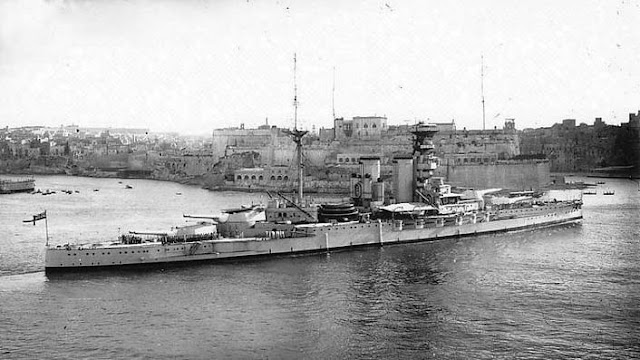
The United States concludes the “Destroyers for Bases” executive agreement with Great Britain; the United States to give Great Britain 50 World War I-vintage Caldwell, Wickes, and Clemson-class destroyers in return for 99-year leases on bases in the Bahamas, Antigua, St. Lucia, Trinidad, Jamaica, and British Guiana.
Generally referred to as the “twelve hundred-ton type” (also known as “flush-deck”, or “four-pipers” after their four funnels), the destroyers became the British Town class and were named after towns common to both countries. U.S. President Franklin Roosevelt used an executive agreement, which does not require congressional approval. He was sharply criticized by antiwar Americans, who took the position that the agreement violated the Neutrality Acts.
On 2 September 1940, as the Battle of Britain intensified, Secretary of State Cordell Hull signaled agreement to the transfer of the warships to the Royal Navy. On 3 September 1940, Admiral Harold Stark certified that the destroyers were not vital to U.S. security. In exchange, the U.S. was granted land in various British possessions for the establishment of naval or air bases with rent-free 99-year leases, on:
— Newfoundland
— Eastern side of the Bahamas
— Southern coast of Jamaica
— Western coast of Saint Lucia
— West coast of Trinidad (Gulf of Paria)
— Antigua
— British Guiana (now Guyana) within fifty miles of Georgetown
The agreement also granted the U.S. air and naval base rights in:
— The Great Sound and Castle Harbour, Bermuda
— South and eastern coasts of Newfoundland
No destroyers were received in exchange for the bases in Bermuda and Newfoundland. Both territories were vital to trans-Atlantic shipping, aviation, and the Battle of the Atlantic. Although an attack on either territory was unlikely, it could not be discounted and Britain had been forced wastefully to maintain defensive forces, including the Bermuda Garrison. The deal allowed Britain to hand much of the defence of Bermuda to the neutral U.S., which freed British forces for redeployment to more active theatres and enabled the development of strategic facilities at U.S. expense, which British forces would also use.
Britain had no choice but to accept the deal, but it was so much more advantageous to the United States than Britain that Churchill’s aide John Colville compared it to the USSR’s relationship with Finland. The destroyers were in reserve from the massive U.S. shipbuilding program during World War I, and many of the vessels required extensive overhaul because they had not been preserved properly while inactivated. One British admiral called them the “worst destroyers I had ever seen”, another called them “wretched little ships,” and only 30 were in service by May 1941. Churchill also disliked the deal, but his advisers persuaded him merely to tell Roosevelt,
“We have so far only been able to bring a few of your fifty destroyers into action on account of the many defects which they naturally develop when exposed to Atlantic weather after having been laid up so long.”
Roosevelt responded by transferring ten Lake-class Coast Guard cutters to the Royal Navy in 1941. The United States Coast Guard vessels were ten years younger than the destroyers and had greater range, which made them more useful as anti-submarine convoy escorts.
The Luftwaffe has found its groove, and it is driving the RAF into the ground with effective, relentless attacks. With the seasons moving along, this provides at least the possibility that Hitler will approve Operation SEA LION for later in the month. However, it is not just a question of airpower, the state of the Kriegsmarine versus the Royal Navy also is a huge part of the equation (as shown by today’s sinking of a German troopship by a Royal Navy submarine with the loss of 1,000 lives). Hitler is still considering his options, and nobody knows what he will decide, but the decision must be made soon.
Reichsmarschall Hermann Göring meets with the fighter commanders in France, including Major Adolf Galland of JG 26 and Major Werner Mölders of JG 51. When Göring asks Galland what he needs, Galland makes the famous response:
“Ich bitte um die Ausrüstung meines Geschwaders mit Spitfire. (I should like an outfit of Spitfires for my squadron).”
Göring recognizes the implied insult, but he has just enough of a sense of humor to let it pass and get even later in a clever way. When the Luftwaffe captures an intact Spitfire due to a disoriented RAF pilot landing by mistake in France, Göring has it sent to JG 26:
“He wanted Spitfires – Hah! Here is his first, let us see what Galland can do with it!”
Flying a Spitfire for the Luftwaffe at this point would be tantamount to suicide. Galland, for his part, has the Spitfire given Luftwaffe markings and sends a thank you note to Göring. It is unclear, though, if Galland ever actually used it in combat. More importantly, Galland and Göring now have established a relationship, each taking the measure of the other. Göring — a former fighter pilot himself — shows in later interactions with Galland that he actually likes this kind of swaggering machismo.
Weather over Great Britain: Areas of early morning mist with scattered areas of fog inland was expected to clear giving way to clear skies which was to continue for the rest of the day. Temperatures expected to be higher than average. Cloud was expected to drift in from the North Sea later in the afternoon in Northern England and Scotland.
0715 Hours: Up until now, the CRT screens at radar stations had remained clear of any activity. Normally, the Luftwaffe tactics was sending single early morning reconnaissance aircraft patrolling the southern and eastern coastlines. Instead, now what looked like a large buildup of aircraft was taking place in the Calais and Cape Griz Nez areas. The reason that the reconnaissance aircraft did not show was probably due to the fact that the Luftwaffe was going to take advantage of the perfect conditions.
0730 Hours: Radar stations from Foreness to Rye reported to Fighter Command HQ that two separate formations were heading towards Dungeness and the Thames Estuary and soon after the Observer Corps confirmed that 40 plus and 30 plus Do 17s had crossed the coast both with 50 plus Bf 110 aircraft in close escort and Bf 109s at higher altitude.
72 Squadron (Spitfires) Croydon which earlier had been stationed up north at Acklington were at Croydon for the time being were immediately into action over the northen coast of Kent and followed the Dornier bombers towards Biggin Hill. 92 Squadron Biggin Hill (Spitfires) were also sent to assist 72 squadron but fail in protecting Biggin from yet another attack but this time the British fighters done enough to put the Do 17s off their bombing run and little further damage was done.
222 and 603 Squadrons Hornchurch (Spitfires) and 249 Squadron North Weald (Hurricanes) engage the Dornier formation that head north-west inland from the Thames Estuary. Two of the Hurricanes are damaged by gunfire from Me110s and one is shot down in flames from gunfire from a Bf 110 but one of the Do 17s is shot down and another peels away belching smoke, but again, North Weald sustains only slight damage. One of the Spitfires of 603 Squadron engaged a Bf 110 over Hawkinge and had difficulty in lining up the 110 enough to get a clear aim, but the aircraft was hit by gunfire from the German fighter that smashed the perspex hood and the upper fuselage, but the pilot managed to return to base.
Of the two raids, only two targets sustained damage. Enough bombers managed to escape the marauding British fighters to make a strike on the Short Brothers aircraft factory at Rochester where a number of buildings were destroyed and a number of civilians were killed. Another formation managed to attack the old motor racing circuit of Brooklands near Weybridge where Vickers Wellington bombers were being produced.
Sources mention that Fighter Command put up eleven squadrons this morning, but records indicate that only the squadrons listed above made contact with the enemy. 603 Squadron Hornchurch (Spitfires) took the honors in this first combat action of the day when they took on the Bf 109s and after a spiraling, twisting dogfight over the North Kent coast they chased the 109s out to sea where they managed to shoot down four of them.
1300 Hours: With many aircraft at Fighter Commands airfields still rearming and refueling after the morning raid, another large formation was detected on the radar. The first detection was while the enemy was still over the French coast, but as they approached the Channel, more smaller formations joined in and soon a contingent of over 225 bombers were approaching the Kent coast. Park gave the order for his squadrons to “get up” as he was not going to be caught napping as he was earlier in the day. “Get to them before they split…..” he ordered, in the hope that his fighters could spread-eagle the bombers before they had a chance to form individual groups and head off in different directions.
Again, 72 Squadron Croydon (Spitfires) are back in action and sight the enemy to the north of Rochester. 603 Squadron Hornchurch (Spitfires) also find no rest as they too are “scrambled” and they make contact with the enemy just east of Sheerness and they are surprised when they get caught up in a dogfight with over 70 Messerschmitt Bf 109s. Other squadrons are released. 43 Squadron Tangmere (Hurricanes) are brought in from their Sussex base, 111 squadron Debden (Hurricanes) recently moved from Croydon and 253 Squadron Kenley (Hurricanes), but all a little late to stop the German bomber formations from splitting up over the coast near Dover.
One of the Bf 109s piloted by Oberlieutnant Ekkehard Schelcher in combat with 603 Squadron over the Isle of Sheppy, was shot down possibly by P/O J.S. Morton and crashed near Chilham. His body lay in the wreckage of his aircraft for 37 years which was classified by the German authorities as a recognized war grave before the body was interred at the German war cemetery at Cannock Chase.
1330 Hours: The Observer Corps estimate some 250 plus aircraft in total and keep track of them as they break into separate groups. 43 Squadron Tangmere and 253 Squadron Kenley are vectored to cover the Dungeness area while 613 Squadron was vectored a little more to the east. 72 Squadron Croydon, and 111 Squadron Debden are vectored to cover the Thames Estuary.
72 Squadron is one of the first to make contact. Intercepting a formation of Do 17s and Bf 110s over the Isle of Thanet a fierce combat takes place over the towns of Margate and Herne Bay. For nearly twenty minutes, the twisting and spiraling shapes of aircraft weaving this way and that fill the skies. It is now nothing new to the residents below. They were now used to the dogfights that were occurring almost daily above their towns.
F/L E. Graham of 72 Squadron swings around to line up a Dornier in his gunsight, suddenly a Bf 110 comes in from the side firing at the Spitfire. The Flight Lieutenant breaks off the engagement with the bomber and takes evasive action, pulling hard up as the 110 flies past below him and he pulls the stick hard to starboard and now finds himself hard on the heels of the twin-engined fighter bomber. The Bf 110 weaves left and then right but the Spitfire, more maneuverable sticks to him like glue and closing in starts a series of three to four second bursts. Pieces start to fly off the doomed 110 then another short burst and the bomber sheds smoke and descends sharply. The gunner is seen to bail out, but the pilot manages to make a crash landing at Hougham just north of Dover and sets fire to the aircraft before he is captured by the authorities.
In the meantime, one of the Spitfires is damaged by gunfire from one of the Dorniers. The action now is over Herne Bay. Another of 72 Squadron’s Spitfires is attacked by a Bf 110 and shot down, but this time is crashes into the ground and burst into flames. The dogfighting grows in intensity as more than 80 Bf 109s swoop down and into the combat over Herne Bay and Margate. 603 Squadron arrives to assist. By now, most of the action is between the fighters, the bombers managed to carry on leaving the fighters to break up into their own small groups and a series of individual dogfights emerged.
1345 Hours: The German fighters managed to hold the fighters of the RAF even though the casualty rate on the German side was the greater. Some started to retreat, and one of them was tailed by F/L R.H.Hillary back across the Channel and it is not until reaching the French coast that Hillary manages to damage the 109. Then on the way back he runs into a dozen patrolling Bf 109s. He comes down at full throttle and opens up hitting one 109 sending it blazing down into the Channel before he makes a quick exit back to base.
“When five miles off Sheppy I saw a formation of 109s. I chased one over to France and and fired at it. I saw the EA’s perspex hood break up but as it was a head on attack I was unable to see anything more of it. I then saw a squadron of 109s at the same height as myself, 23,000 feet…..I attacked the outside Bf 109 with three short bursts and saw it spin down emitting black and white smoke. After a few seconds it caught fire.”
- P/O R.H.Hillary 603 Squadron Fighter Command RAF
But there was still no let up. Another 200+ bombers were detected, and again Fighter Command and its tired pilots went into battle. Eastchurch, Detling, Kenley and Hornchurch were targeted and sustained minor damage. But it was the airfield at Brooklands that caused the gravest concern to Keith Park. Although not a Fighter Command airfield, the aircraft factories of Vickers and Hawker were based there, and any damage caused here would delay fighter and bomber production at a time when they could not afford it.
According to Park, the attack on Brooklands should never have happened. Dowding and Park had for some time thought that the Luftwaffe may turn from bombing the RAF airfields and turn their attention on aircraft factories. For this reason orders had been given for squadrons from Tangmere to patrol a line from Guildford to the south-west of London as far as the south coast. On this day, it was 234 Squadron St Eval (Spitfires) who were patrolling the line, but they were instructed to move forwards to engage the enemy over Dover and Margate leaving the way clear for Do 17s to fly direct towards Brooklands. Fortunately for Fighter Command, although the bombers were supposed to destroy the Hawker factory which was producing Hurricanes, they hit the Vickers factory instead and delayed temporarily the production of Wellington bombers.
The intense fighting was having a serious effect on both German fighter and bomber crews. Like the pilots of Fighter Command, no sooner had they landed, refueled and rearmed, they were up again having to prolong the long journey across the Channel before the RAF could be engaged. The Bf 109s, although operating from just across the narrowest part of the Channel, pilots were still staying too long in combat with the British that many ran out of fuel before reaching the coast of France, and the result was a crash landing in the choppy waters of the Channel.
For the first time, British losses were heavier than the Germans, but Germany could afford this as they had more planes and for a while, it seemed that victory was not in sight for the British and that Germany was at last getting the upper hand of the battle.
Biggin, Hornchurch, Croydon, North Weald, Debden, Detling, Eastchurch and Hawkinge were all damaged, and although still operational they were not at full capacity or working with the efficiency that was hoped, only Tangmere and Kenley had escaped much of the constant bombing.
Göring, Sperle and Kesselring could now see that, at long last the tide was turning in their favor. German intelligence reports had stated that a number of the British airfields were now, because of the constant bombing, non-operational.
“The tactics that we have now implemented in the last month, that is moving our fighter squadrons to the Pas de Calais so that they will have more time over enemy territory with our bombers. The culmination of larger formations of heavy bombers, that we have drawn from different advanced airfields and Gruppes. The added support of our Bf 110 squadrons that are doing damage in their bombing role as well as that of the fighter. All this, must be a formidable sight to the British as they, with a deteriorating Air Force try to penetrate our attacks.
“My fellow commanders, we are now on the brink of victory. An assault and an invasion of England is now more promising than ever before. Our intelligence has now informed us that the RAF is now down to less than a hundred fighter aircraft, the airfields protecting London are out of action because of the superb and accurate bombing of our bomber forces, their communications are in disarray, and now we are told, their air commanders are arguing with each other.
“Gentlemen, another phase is now almost complete. The RAF is now no longer the great threat that it used to be, and we can now draw every available fighter plane that the RAF has into the air, because the next target must be London itself…….”
- Generalfeldmarschal Herman Göring at The Hague, September 3rd 1940
Time, at this stage, was running out for the planned ‘Operation SEA LION ‘. Early estimates were that the Royal Air Force would be knocked out of the air and on the ground within two or three weeks. But that was over two months ago, and still Fighter Command, Dowding and Park were managing to hold on and fight back.
Kesselring agreed with Göring and accepted the reports of the German Intelligence. He had been all in favor of an all-out attack on London for some time, but Hitler’s instruction that London was not to be attacked curtailed any plan of bombing missions on the English capital. But since the bombers of RAF Bomber Command had bombed Berlin, the ban on London had now been lifted.
“If they send over a hundred bombers to bomb our cities…..then we shall send a thousand planes to bomb theirs. And if they think that they can destroy our cities…….then we shall wipe theirs from the face of the earth.”
- Adolph Hitler addressing a rally after the bombing of Berlin
Göring also stated to his commanders, that the time was right for a preparation to the forthcoming invasion. We must now continually bomb London and the surrounding aircraft factories, and the London Docks.
Kesselring gave his enthusiastic support to Göring’s plan; he had been pressing for some time for an all-out attack on London. But General Sperle, commanding Luftflotte 3, disagreed as usual with Kesselring. ‘Continue to attack their fighter bases by day’, he argued, ‘and by night, the London Docks’. His strategy, had it been followed, might well have given the Luftwaffe victory over the RAF fighters. But Göring, who had already made one fatal error in sparing the RAF’s radar stations, and Kesselring, an ex-soldier ill versed in air strategy, prevailed. London was to be the Luftwaffe’s new target; plans for the Zielwechsel (target change) now went urgently ahead.
The attack on London was code-named Loge, after the god who forged Siegfried’s sword. It only remained for the Führer to put the new offensive across to the German public.
“….Two further pilots have come to us straight from a Lysander squadron with no experience whatsoever on fighter aircraft. Apparently demand has now outstripped supply and there are no trained pilots available in the Training Units, which means that we will just have to train them ourselves. However, it remains to be seen whether we can spare the hours, as we are already short of aircraft for our own operational needs. It seems a funny way to run a war…….”
- Squadron Leader A.V.R.(Sandy) Johnstone 602 Squadron Fighter Command RAF
1700 Hours: Radar at Dover, Pevensey and Foreness picked up a number of formations building up across the Channel near Calais. As is often the case, they accumulate into one large formation then break away into smaller formations again with each going to its own designated target. 46 Squadron Stapleford (Hurricanes) are vectored to the Thames Estuary as is 72 Squadron Croydon (Spitfires), 111 Squadron Debden (Hurricanes), 222 Squadron Hornchurch (Spitfires), 603 Squadron Hornchurch (Spitfires) and 616 Squadron Kenley (Spitfires).
1715 Hours: A large dogfight started to develop over the Thames Estuary, but not before some of the bombers managed to get through the defenses and make their attack on the aerodromes of Detling and Eastchurch. Damage at Detling was considerable with an estimated 100 bombs being dropped on the airfield causing many craters and wrecking one of the main hangars. Detling was non-operational for the next three hours. Eastchurch, which earlier had administration buildings damaged, the NAAFI destroyed and water and sewage pipes ruptured, now came under another attack and this time another hangar was destroyed as well as more buildings. Suffering severe damage, Eastchurch was later declared nonoperational and while most of the station was moved to Wymswold Warden, the base hospital and sick bay was transferred into the village.
1725 Hours: Some 50 bombers and an escort of about 40 Bf 109s managed to get through to Hornchurch. 603 Squadron are pulled back to protect the airfield. Under the harassment, many of the bombs drop wide of their target and damage to the aerodrome is only minimal. P/O R.H.Hillary with already two destroyed, and one damaged lines up yet another and fire a series of short bursts, but is forced to return to base and can only claim it as a probable. 72 Squadron, already having become involved in the combat lands, refuels and rearms and is back again in the action calling it “a hell of a day” but squadron records show that it claims 18 victories.
303 Squadron Northolt (Hurricanes) have been pulled into the combat to assist tired and weary squadrons already in the air and are vectored to the Dover/Deal area. Many of the enemy aircraft have decided to turn back and 303 Squadron meet them on their return. They manage to damage a couple of Bf 109s and a Do 17 but one their own receives damage and has to make a forced landing in open ground outside Dover.
It had not been a kind day to Fighter Command. Just about every squadron in 11 Group had been airborne, some had been up three ot four times, and in all over 750 sorties had been flown. But the price was heavy. even though 35 German aircraft had been shot down, 33 RAF fighters had been shot down with 13 of these destroyed. The Bf 110s again take a beating, with elite formation Epr.Gr. 210 losing eight planes. The RAF, though, loses a number of very scarce experienced pilots.
But the day brought two remarkable achievements. That of P/O Richard Hillary that has been described above, and that of F/O Harborne Stephen flying with 74 Squadron who managed to claim five enemy shot down in one morning. At daybreak, he managed to shoot down to Bf 109s, then landed and went and had breakfast. An hour later he was involved with an attack on a formation of Bf 110s over the Channel where he claimed one more to his days tally. By mid-morning he downed another Bf 110 which was making an attack on a Spitfire. Then just prior to midday, he made an attack on Bf 109s escorting Ju 87s on a Channel raid and sent one crashing onto a south coast beach.
The German attacks continue into the night. The Luftwaffe conducts mine-laying operations in the Thames estuary, and attacks are made on Liverpool, Bristol, Birmingham, Wolverhampton, Manchester, and Sheffield. While many bombers pass over London, they do not bomb it. The attacks are scattered far and wide over the length and breadth of England. An attack on freighters off of Kinnairds Head, Scotland around 22:30 leaves two of them damaged.
But all was not yet finished. The evening brought a little relief, but just after midnight the bombers came over in small formations, first over the Essex coast, then later on the south coast. Swanage was attacked, bombs fell at Leighton Buzzard, and in the north Merseyside was attacked and in the Midlands the areas of Birmingham and Wolverhampton failed to escape bomb damage.
RAF Casualties:
1250 Hours: Thames Estuary. Hurricane P3875. 111 Squadron Debden
Sgt. W.L. Dymond Listed as missing. (Shot down while in combat. Body never found)
1330 Hours: Ivychurch (Kent) Hurricane V7420 43 Squadron Tangmere
P/O C.A. Woods-Scawen killed. (Aircraft caught fire after combat with Bf 109 and pilot bailed out too low)
1630 Hours: Dungeness. Hurricane L1578. 501 Squadtron Gravesend
F/O A.T. Rose-Price Listed as missing. (Failed to return to base after combat action)
1730 Hours: Thames Estuary. Hurricane P3067. 46 Squadron Stapleford
P/O J.C.L.D. Bailey killed. (Shot down while engaged in combat with enemy. Was not seen to bail out)
Luftwaffe pilot Hans-Joachim Marseille gets his second kill over Kent, England, but then runs out of fuel and barely makes it back to crash-land on a beach near Calais.
A Bf 109 of III,/JG54 piloted by Oblt. Ekkehard Schelcher is shot down over England. His body is found in 1979 and helps lead to the passage of the Protection of Military Remains Act of 1986. Schelcher is buried in the German war cemetery at Cannock Chase.
Overnight, German bombers attacked Liverpool, Manchester, and Sheffield.
Junkers 87 (Stuka) equipped 236a and 237a Squadriglia of 96 Gruppo, Regia Aeronautica attack British ships using this aircraft for the first time.
James Lacey shot down two German Bf 109 fighters and a Do 17 aircraft over Britain.
Josef Frantisek, flying a Hurricane fighter, scored his first kill, a German Bf 109E fighter, as a RAF pilot.
RAF Nos. 25 and 29 Squadrons receive deliveries of the new Beaufighter fighters.
RAF Bomber Command dispatches 4 Blenheims on a sea sweep during the day, forced back by bad weather.
RAF Bomber Command dispatches 84 Blenheims, Hampdens, Wellingtons and Whitleys overnight to a wide variety of targets. 2 Whitleys and 1 Blenheim lost. of particular interest was the effort by 30 Wellingtons to start fires in the Black Forest and the forests of Thuringia and the raid by 39 Hampdens to the U-boat base being established by the Germans at the French port of Lorient. The attack on Lorient was the first Bomber Command raid on this type of target. A report from Lorient says that in a series of 25 raids between September 1940 and July 1941 9 civilians were killed and 27 wounded and 25 civilian buildings were destroyed. There is no information on the effect of the bombing on the German base.
At Malta, there is a raid around noontime, but the bombers drop their bombs in the sea. The Hurricanes on the island scramble a few times to assist the fleet during its air attacks but make no contact.
The RAF bombs Assab, Eritrea.
German transport vessel M/S Pionier was sunk by a torpedo from the Royal Navy submarine HMS Sturgeon; about 340 troops were lost.
Hitler sends a military mission to Rumania.
Hitler meets with the Spanish and Portuguese ambassadors.
Hitler meets with the Iranian ambassador.
The British Government cuts the butter ration from 6oz. to 4oz. This does not affect margarine.
The French Settlements in Oceania (Polynesia), led by Tahiti, announces support for Free France.
U-46, commanded by Oberleutnant zur See Engelbert Endrass, sank steamer Thornlea in 55-41N, 16-40W. At 2204 hours U-46 attacked the convoy OB.206 about 200 miles west of Bloody Foreland and reported the sinking of a tanker and a freighter. However, only the Thornlea (Master John Robert Potts) was sunk in this attack. Three crew members were lost. The master and 18 crew members were picked up by HMCS Skeena (D 59) (LtCdr James C. Hibbard) and landed at Greenock. The chief officer and 13 crew members were picked up the next day by the Norwegian steam merchant Hild and landed at Sydney on 15 September. The 4,261-ton Thornlea was carrying of coal and was headed for Montreal, Canada.
U-47, commanded by Kapitänleutnant Günther Prien, sank Belgian steamer Ville De Mons in 58-20N, 12W. At 1635 hours the unescorted Ville de Mons (Master P. Robertson) was hit by one G7e torpedo from a spread of three torpedoes fired by U-47 northeast of Rockall. The ship sank after being hit by a G7a coup de grâce at 1701 hours. Of the ship’s complement, all 54 survived. The 7,463-ton Ville de Mons was carrying general cargo, pears, corn, and wheat and was headed for Glasgow, Scotland.
The battleship HMS Valiant and carrier HMS Illustrious arrive from Gibraltar to reinforce Admiral Cunningham’s Royal Navy Fleet.
Destroyer HMS Duncan departed Scapa Flow at 1330 to rendezvous with destroyer HMS Maori at 2100 off Aberdeen to escort steamers Ben My Chree and Lady of Mann to Kirkwall and Lerwick, respectively.
Submarine HMS Sturgeon sank German steamer Pionier (3285grt) northeast of Skagen in 57-50N, 10-46E. Over 300 German troops were lost in the sinking.
Submarine HMS Tigris unsuccessfully attacked U-58 in 47-29N, 4-24W.
In an air raid over Flushing, an Albacore of the 826 Squadron from HMS Peregrine was shot down. S/Lt (A) H. M. Howard, Probationary Midshipman (A) C. A Wright RNVR, and Naval Airman T. R. R. Harwood were captured and made prisoners of war.
German bombing attacks were launched again convoy WN.12. Steamer Lagosian (5412grt) was damaged 13 miles ESE of Peterhead, and her survivors rescued by anti-submarine trawler Southern Gem (593grt), steamer Ashby (4868grt) and the Dutch Delftdijk (10,220grt), both off Rattray Head. Destroyers HMS Duncan and HMS Holderness joined the escort to provide further anti-aircraft protection.
German anti-submarine whaler UJ.121 (whaler Jochen, 523grt) was sunk on a mine off Ostend. The hulk of the sunken ship blocked the channel for the 2nd S-Flotilla.
Battleship HMS Barham with destroyers HMS Inglefield, HMS Echo, HMS Escapade, and HMS Eclipse arrived at Gibraltar after departing Scapa Flow on 27 August. Echo had left on the 28th.
Destroyer HMS Velox attacked a submarine contact near Alboran Island.
Light cruiser HMS Enterprise departed Freetown.
German armed merchant cruiser Widder sank tanker Cymbeline (6317grt) in the Central Atlantic at 27-55N, 36-01W. Seven crewmen were lost, while 25 crew and one distressed British seaman were made prisoners of war.
Convoy OA.208 departed Methil escorted by destroyer HMCS Skeena, sloop HMS Lowestoft, plus anti-submarine trawlers HMS Drangey, HMS Fandango, and HMS Northern Gem.
Convoy FN.270 departed Southend, escorted by destroyer HMS Wolfhound, sloop HMS Black Swan, and patrol sloop HMS Widgeon, and arrived in the Tyne on the 4th.
Convoy MT.158 departed Methil, and arrived in the Tyne later that day.
Convoy FS.270 departed the Tyne and arrived at Southend on the 4th.
Convoy SC.3 departed St Johns, escorted by Canadian destroyer HMCS Assiniboine and armed yacht HMCS Reindeer in the local approaches. The local escorts were detached on the 4th. Sloop HMS Dundee was the ocean escort, but was lost on the 14th. On the 15th, destroyers HMCS Ottawa, HMCS Skeena, and HMS Witch, with anti-submarine trawler HMS Drangey joined the escort. The trawler was detached the next day. Destroyers HMCS St Laurent and HMS Wanderer joined on the 17th, and the convoy arrived at Liverpool next day on the 18th.
U.S. Secretary of State Cordell Hull and British Ambassador Lord Lothian exchanged notes concluding the agreement to trade destroyers for bases. The U.S. would provide, by executive agreement, 50 over-age (World War I Emergency Program) destroyers in return for 99-year leases on bases in the Bahamas, Antigua, St. Lucia, Trinidad, Jamaica, and British Guiana. The British provided bases at Newfoundland and Bermuda as outright gifts.
It is the Labor Day holiday in the States. Workers have the day off, and there are public celebrations and events. President Roosevelt presides at a ceremony dedicating the Great Smoky Mountains National Park.
National unity “for total defense” based on pride and sacrifice was asked of the country today by President Roosevelt as the means to “prepare in a thousand ways” to defend the United States and the freedom of its institutions and citizens against “the greatest attack that has ever been launched against freedom of the individual.” Speaking here, in dedication of 200,000 timbered acres of the Great Smoky National Park, he said the times called for rebirth of the pioneer spirit and alluded to the supplanting of the pioneer’s squirrel rifle and knife by new weapons of defense. It was the President’s second Labor Day address, his first public speeches since he was nominated for a third term. Earlier, he dedicated the $36,000,000 Chickamauga Dam and the artificial “Great Lakes of the South” of the Tennessee Valley Authority near Chattanooga, Tennessee.
Despite what was termed the nonpolitical character of the tour, Mr. Roosevelt entered Tennessee with all the atmosphere that characterized campaign trips in 1932 and 1936. His train carried an impressive array of national figures, including. Secretary Ickes, Paul V. McNutt, Federal Security Administrator, and Senators McKellar, Reynolds and Stewart, together with Bernard M. Baruch, chairman of the World War Industries Board, and James Lawrence Fly, Federal Communications Commissioner and former general counsel for the TVA. Bunting decked the streets of Chattanooga and crowds lined the way, cheering the President. At least 50,000 heard him at the dam and thousands more at Newfound Gap. Both speeches were broadcast over three major national networks and were rebroadcast in translations by short wave to foreign countries.
The nation’s workers, observing Labor Day under conditions unmatched since the early vears of the World war, heard C.I.O. and A.F.L. leaders join yesterday in vigorous opposition to peacetime conscription. A.F.L.’s William Green and C.I.O.’s John L. Lewis, rivals in the organization field, spoke alike against pending proposals to conscript men in peacetime for military training. Both pledged anew also that labor would work loyally for national defense. Other Labor Day orators called for the preservation of labor’s “social and legislative gains” in industry’s shift to arms-making, and a greater voice in the national defense councils. Fair Trial Asked for Voluntary Enlistment Both Green and Lewis advocated establishment of conditions which they said would make it easier to enlarge the armed forces by voluntary enlistments. They proposed shorter terms of enlistment and higher pay than those now in effect. Addressing a labor gathering in Denver, Green said that voluntary enlistment “must be given a fair trial first.” He called on President Roosevelt to make known the nation’s man power needs. “On a matter as vital as this to the nation’s welfare,” Green said, “we feel that it is the duty of the president of the United States to send a message to congress stating the man power needs of the nation’s military forces and recommending a definite program to fulfill these needs.”
Green, president of the American Federation of Labor, condemned the German, Russian and Italian dictatorships in his Labor Day address at the Western conference of the International Teamsters Union, largest of the A. F. L. affiliates. He urged that all aid short of war be given to Great Britain and warned that the United States must build up its internal defenses against possible invasion by the dictators, should they conquer England. Lest the defense program be hampered, Mr. Green advised workers and employers to avoid strikes by being “calm and patient” and to be governed “by fair play in human relationships in industry.” “Let both sides,” he said, “follow the peaceful and sensible policy of collective bargaining in the settlement of any disputes that may arise.”
Democratic Vice-Presidential Nominee Henry A. Wallace said today the unemployed constitute an economic threat to democracy and that through no fault of their own “may not be eager to defend a system which has no place for them.” The nation, he said, must fight “class, religious and race discrimination,” to prevent the spread of Fascism and Nazism in this country. Poverty, ill health, shiftlessness and ignorance, he said, are real threats to democracy, “threats just as real and perhaps as menacing in the long run as the Nazi armies.”
Present airplane production of “roughly 1,000 airplanes a month” wall be increased to 2,000 a month early neat year, and to 3,000 by the end of 1941, the National Defense Advisory Commission revealed today.
Administration economists made a Labor Day prediction today that the national defense program, with conscription included, would cut unemployment in half by July 1, reducing the number of jobless from 9,000,000 to 4,500,000.
Violent U.S. deaths from traffic accidents, drownings, and shootings increased steadily toward 400 Monday night as the Labor Day weekend came to a close. At least 198 died on the highways, 50 drowned, 22 committed suicide and 91 were killed in miscellaneous and freak accidents. Complete reports of the three-day holiday were expected to bring the total near 500.
A students’ anti-conscription organization tonight planned a mass meeting in Berkeley for tomorrow outside University of California’s Sather gate to protest the Burke-Wadsworth selective service bill, despite the indication by President Robert Sproul that the university intends to support conscription. Sproul last week told the student body no movements considered likely to hamper national defense would be tolerated on the campus. The campus’ committee to fight conscription, which has been seeking signatures for anti-draft petitions, went ahead with its protest meeting plans, while Editor Edmund Tackle of the student newspaper, The Daily Californian, wrote that “we are opposed to regimentation of the minds of Americans.”
Byron Nelson won the PGA Championship. Nelson wins his first PGA Championship, beating Sam Snead 1 up in the Monday 36-hole final
Major League Baseball:
The Dodgers split a twinbill with the Bees, dropping the opener, 7–6, then winning the second game, 6–2. Curt Davis and Joe Medwick homer for Brooklyn in the nightcap as Bill Posedel lost his 16th. The Bees won the first game ona Pete Coscarart error.
The league-leading Cincinnati Reds split a twin bill with the St. Louis Cardinals today, eking out a 2–1 triumph in the opener, then bowing, 7–4, in the nightcap. Paul Derringer out-pitched Mort Cooper in the opener for his 18th win of the year. Lon Warnecke won for the Cardinals in the second game.
Recent call-up Danny Litwhiler drives in 8 runs on 6 hits to lead the Phils to a sweep of the Giants at Shibe Park. Kirby Higbe wins the opener, 11–2, and Litwhiler has a grand slam. The Phils win the nightcap, 6–5, on Bobby Bragan’s 10th inning home run. The Giants have now lost six in a row.
The Pirates won the first game of a doubleheader from Chicago, 5–2, then tumbled back to fourth place as they dropped the nightcap, 7–1, while the Cards were losing, then winning from Cincinnati. Truett (Rip) Sewell pitched the Buccaneers to their fifth straight triumph and his thirteenth victory against three defeats in the opener. Vince DiMaggio aided Sewell with his sixteenth homer. Doubles by Frank Gustine, Virgil Davis and Arky Vaughan and Bob Elliott’s triple clinched matters in a four-run seventh inning.
With the decision to play all their September games at Municipal Stadium, the Indians promptly drop a Labor Day doubleheader to the 7th place St. Louis Browns. The Tribe loses 2–1 and 3–0 and now lead the Yankees by 3 ½ games. Vern Kennedy wins the opener, collecting 3 hits.
Washington’s Sid Hudson beats the Red Sox Lefty Grove, 1–0, in 13 innings in the first game of a doubleheader, then the Senators capture the second game as well, 5–4, in six innings. The nightcap was called on account of darkness.
The Yankees split with the Athletics, winning, 6–3, and then losing, 3–0, as they were held to five hits by Johnny Babich. Marius Russo won the opener, helped by Tommy Henrich’s two-run fifth-inning homer.
The White Sox swept the Detroit Tigers, 2–1 and 4–0. Bill Dietrich won the pitching contest in game one over Buck Newsom and Johnny Rigney shut out the Tigers in the nightcap.
Brooklyn Dodgers 6, Boston Bees 7
Brooklyn Dodgers 6, Boston Bees 2
Detroit Tigers 1, Chicago White Sox 2
Detroit Tigers 0, Chicago White Sox 4
St. Louis Cardinals 1, Cincinnati Reds 2
St. Louis Cardinals 7, Cincinnati Reds 4
St. Louis Browns 2, Cleveland Indians 1
St. Louis Browns 3, Cleveland Indians 0
Philadelphia Athletics 3, New York Yankees 6
Philadelphia Athletics 3, New York Yankees 0
New York Giants 2, Philadelphia Phillies 11
New York Giants 5, Philadelphia Phillies 6
Chicago Cubs 2, Pittsburgh Pirates 5
Chicago Cubs 7, Pittsburgh Pirates 1
Boston Red Sox 0, Washington Senators 1
Boston Red Sox 4, Washington Senators 5
A virtual ultimatum demanding that Japanese troops be permitted to pass through Indo-China in connection with Japanese military operations in China has been delivered to the Indo-China authorities in Hanoi by the Japanese, according to an intelligence report to a local foreign embassy last night. This report said that the Japanese had asked for an “immediate reply” to their demand for the right to move troops through the French colony. It is thought here that this reported Japanese insistence on transit privileges for these troops may be especially connected with the critical situation of the Japanese force at Lungchow, a Kwangsi city near the Indo-China border. Surrounded by the Chinese, the Lungchow contingent of a few thousand men is heavily besieged, and the Japanese may wish to extricate or reinforce them through Indo-China. Diplomatic sources at Hanoi say that Japanese wounded from Lungchow are already being brought into Indo-China.
Chinese forces in Kwangsi Province are driving toward Lungchow, a key transportation center near the border of French Indo-China, and Japanese garrisons in that area are withdrawing across the river, the Chinese Central News Agency reported today. The Chinese hope to gain possession of a considerable section of the Kwangsi-Indo-China border so that they will be able to frustrate new Japanese attacks and eventually to reopen their former munitions line to Haiphong, chief port of Indo-China, the news agency said. The Japanese were reported to have reinforced their garrison at Nanning, their chief base in Kwangsi, but to be withdrawing from some points west of that city. Chinese military informants here still believed that the Japanese planned a drive into Yunnan Province from Indo-China next month and said that the moment Japanese forces started moving through Indo-China a Chinese invasion of Indo-China would start.
New Zealand Division light cruiser HMS Achilles departed Melbourne and arrived at Auckland on the 5th.
Australian light cruiser HMAS Adelaide departed Sydney on the 2nd for Vila, New Caledonia, via Brisbane. On the 3rd, she was in a collision with steamer Coptic (8533grt). Neither ship was significantly damaged and Adelaide arrived at Vila on the 7th. She departed on the 16th escorting Norwegian tanker Norden (8440grt) carrying the new Free French government to Noumea, and arrived off there on the 19th
On Papeete in the Society Islands, the Provisional Government of the French Settlements in Oceania announces the colony’s adhesion to Free France.
Born:
Beverly Sanders, American actress (“Lotsa Luck”, “CPO Sharkey”), in Hollywood, California.
Harry Northup, American actor (“The Silence of the Lambs”, “Taxi Driver”), in Amarillo, Texas.
Jimmy Clanton, American rock vocalist (“Just A Dream”), in Baton Rouge, Louisiana.
Mick Pyne, British touring and session jazz pianist (Tubby Hayes; Georgie Fame; Charlie Watts), in Thornton Dale, North Yorkshire, England, United Kingdom (d. 1995).
Tony Stricker, AFL cornerback (New York Jets), in Lawton, Oklahoma (d. 1987, in an aviation accident).
Died:
Maude Abbott, 72, Canadian physician (world expert on congenital heart disease).
Naval Construction:
The Royal Navy Isles-class minesweeping trawler HMS Cumbrae (T 154) is laid down by Cochrane & Sons Shipbuilders Ltd. (Selby, U.K.); complleted by Amos & Smith.
The Royal Navy “U”-class (Third Group) submarine HMS P-38 is laid down by Vickers Armstrong (Barrow-in-Furness, U.K.).
The Nihon Kaigun (Imperial Japanese Navy) B1-type (I-15-class) submarine HIJMS I-35 is laid down by Mitsubishi (Kobe, Japan).
The Royal Navy Bangor-class (Reciprocating-engined) minesweeper HMS Blyth (J 15) is launched by Blyth Shipbuilding & Drydock Co. Ltd. (Blyth, U.K.); completed by Whites M.E..
The Royal Navy Flower-class corvette HMS Rhododendron (K 78) is launched by Harland & Wolff Ltd. (Belfast, Northern Ireland).
 History Diaries