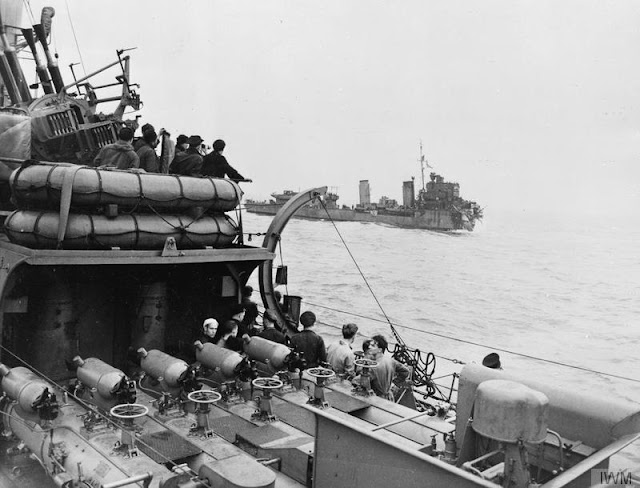
Fighter Command loses 30 fighters, and 14 pilots. The Luftwaffe loses 41 aircraft. The Royal Navy loses destroyers. The U-boats continue to find success. Not a good day for the United Kingdom.
Luftflotten 2 and 3 are ordered to prepare for attacks on cities.
Overnight, the British complete enough repairs to bring RAF Biggin Hill back to operational status.
Weather: Fair conditions were expected to prevail over most of the country with higher temperatures. Clear and fine in the south with hazy conditions in the Thames Estuary and Channel areas near Dover.
As the day dawns, all of the RAF airfields are operational — though Biggin Hill just barely. The raids begin around 08:00, an unusual hour for the Luftwaffe to mount major operations in recent weeks.
It was now felt that the Luftwaffe really now meant business. The forward airfields of Hawkinge, Lympne and Manston had received considerable damage the day before, but they were regarded as still being operational. The main airfields of Gravesend, Croydon, Kenley, Biggin Hill, Hornchurch and Duxford also had received serious damage. Biggin Hill, who had the day before, made a statement that they were temporarily out of action, but with an all-out effort by the ground crews (and some pilots) overnight and in the early hours of the morning, they declared themselves operational.
Movements within Fighter Command were 610 Squadron (Spitfires) who had been operation out of Biggin Hill were transferred north to Acklington where it was hoped they would indulge in a well-earned rest. 72 Squadron (Spitfires) under the command of S/Ldr A.R.Collins moved down from Acklington to Biggin Hill.
0755 hours: Radar picked up one plot over the Thames Estuary, another plot was picked up over the Channel and heading towards the Dover and Dungeness area and within a few minutes it was confirmed that three formations were approaching from the Thames Estuary while the fourth was approaching over Dover and many a remark was made, “…they just don’t give up do they.” and “…….blimey, not again.” But Park, realizing that he had dispatched his fighters far too late the previous day, was taking no chances this time.
Two squadrons were “scrambled” and were vectored to the Margate and Thames Estuary area. This first wave of enemy aircraft was identified as Bf 109s and flying at some 25,000 feet where their performance was better than that of the Spitfire. Park sent out the order for them to return to their bases as he was not wanting to involve fighter to fighter combat. 253 Squadron Kenley (Hurricanes) received the message and headed for home. But the other squadron 1st Canadian Squadron RCAF (they had not been allocated a RAF Squadron number at this time) did not receive the message and got caught up with the Bf 109s and three of their aircraft were destroyed. F/O G.C.Hyde Bailed out of his aircraft but sustained severe burns, F/Lt V.B.Corbett suffered the same fate. There is no information on the third Canadian pilot. Realizing that Fighter Command was not to be tempted, the Bf 109s decided to attack the barrage balloons around the Dover area and destroy all 23.
0815 hours: Three more waves of enemy aircraft had been detected by radar approaching the Thames Estuary again. The Observer Corps reported them to be a formation of 200+ enemy bombers, which consisted of a mixture of He 111s and Do 17s escorted by 60 Bf 110s. Keith Park makes the decision to “scramble” 13 squadrons from 11 Group in the London area, leaving only two or three squadrons to guard the city. But reaching the mouth of the Thames, the German aircraft break and go into several formations, each heading for a separate target. North Weald was hit and sustained considerable damage, Hornchurch also received a few hits, the RAF fighters here doing a swell job at keeping most of the bombers away from the airfield.
0825 hours: A formation of 40 Do 17s heads towards Duxford with the escorting Bf 110s as protection. 12 Group is taken by surprise and the Group Controller there sends out an urgent appeal to 11 Group for assistance. Park responded immediately and diverted 111 Squadron Croydon (Hurricanes) to make an interception. 111 Squadron flew due north-east in an effort to cut off the formation, then turning south met the Dornier Do 17s head on. They managed to scatter the formation but could only destroy only one bomber.
With most of the RAF fighters holding the bombers at bay around the London area, and 111 Squadron already dispersing the other formation from attacking Duxford, it left a third formation completely unopposed at attacking Debden airfield which suffered badly where over 100 bombs fell causing serious damage to three barracks, storerooms and pot holing the airfield badly. 18 personnel were injured in this attack as well as a number of aircraft parked on the base.
The returning Dorniers and Heinkels ran into 19 Squadron Fowlmere (Spitfires) where two enemy bombers are shot down at the expense of two of the Spitfires. One pilot, F/O J.B.Coward had his aircraft shot up by an Bf 109 and had his leg torn off just below the knee, but he managed to bale out and was safely taken to a base hospital.
0900hrs, The Luftwaffe launch another attack, this time two waves approach from the Thames Estuary again. One Dornier formation diverts to Eastchurch where the airfield receives minor damage, as does Detling airfield which was attacked by Bf 110s.
By this time, Fighter Command was feeling the strain of many days of hard combat. Fighters were being lost in greater numbers than they were being replaced, but what was more important was the fact that the pilots were becoming tired. Many were going up on four sorties a day and at the moment with 11 Group under constant attack they were not in a position to be given the rest that was so badly needed. From Group Headquarters, AVM Keith Park issues another order further cementing the order that no fighter aircraft are to be sent to intercept formations where the Observer Corps have recognized the enemy as being only formations of German fighter aircraft.
1215 hours: 100 bombers with a heavy escort was detected coming across the coast at Dungeness. Breaking into two separate formations but both seemed to be taking different routes towards London. Confirmation comes through that one of the formations consists of Dornier Do 17s while the other is made up of Heinkel He 111 which also splits up into two more formations. In this attack, Biggin Hill is again attacked just after 79 Squadron (Hurricanes) is “scrambled”. Hornchurch “scrambles” 603 Squadron (Spitfires) which had just recently come down from Scotland.
“One section attacked Croydon and Biggin Hill. At the former airfield twelve bombers came in at 2,000 feet demolishing a hangar, damaging other buildings and causing casualties. At Biggin Hill, the bombing came from high altitude and to the long suffering occupants of the airfield it seemed that they must be the A1 priority target for the whole Luftwaffe. Further extensive damage was done to hangars and buildings, the married quarters and the officers’ mess were bombed and the operations block received a direct hit, extinguishing the lights and filling the rooms with acrid fumes, dust and smoke from the fires which broke out. The temporary telephone lines and power cables put in after the raid on the 30th were destroyed.”
- Wood and Dempster The Narrow Margin Hutchinson 1961 p315
79 Squadron Biggin Hill (Spitfires) is ordered to patrol over Biggin Hill and to expect a raid by Heinkels on the airfield again. This time they cannot get to the bombers because of the strong cover by the fighter escort. Three Bf 109s are shot down, during the fierce combat but the bombers get through and again Biggin Hill suffers considerably. The airfield was cratered so badly that squadrons that had previously taken off there had to be diverted to Kenley and Croydon. Now, all the telephone lines at Biggin Hill had been put out of action.
The attack on Hornchurch continued. A squadron managed to take off before the approaching Dorniers dropped their first bombs, but three Spitfires didn’t make it:
“We were informed that a large enemy formation approaching our airfield, I looked out but could not see them. The Spitfires of 54 Squadron were scrambled and they just managed to get airborne and start to gain height before the first of the bombers became visible. I could see them now, it was like a lot of dots in the sky like a swarm of regimented bee’s coming straight for the aerodrome. It was still quiet when three more Spitfires began to gain speed across the airfield, I watch them as slowly and one by one they clear the ground almost at the same time as the Dorniers who were now above us had let their bombs go.
“There were terrific explosions and vibrations as the bombs made contact with the ground, and one of the bombs must have fell just in front of the leading Spitfire being piloted by Flight Lieutenant Alan Deere, because a huge explosion seemed to erupt directly below them. They all got caught up in the blast of this bomb, and I saw all of them being blown in different directions. Alan’s aircraft had one of its wings blown off and I saw his propeller spinning off in another direction as the Spitfire crashes to the ground. Another of the planes spins around as his wing tip hits the ground and he lands headfirst into the grass on his airscrew, while the other Spitfire had both wings completely sheared off. Luckily all three of the pilots were only slightly injured.
“The airfield is full of craters, and the station commander orders that the airfield be repaired at once. Everything is covered in dust and dirt including my aircraft that had been standing stationary, and after inspection found everything to be okay.”
F/Lt Richard Hillary 603 Squadron Fighter Command
1300 hours: During the afternoon, waves of Bf 110s come over the coast from Cape Griz Nez and attack the radar stations once again. Foreness CHL also came under attack, but although damage was caused, it was not enough to put any of them out of action and by nightfall, all radar stations were working as normal. The Observer Corps report that some 150 plus enemy aircraft and cross the coast between Dover and the Thames Estuary. Fighter Command were to release 85 Squadron Croydon (Hurricanes), 253 Squadron Kenley (Hurricanes),310 Squadron Duxford (Hurricanes), 501 Squadron Gravesend (Hurricanes) and 601 Squadron Debden (Hurricanes).
Squadron Leader Tom Gleave of 253 Squadron Kenley, who had the previous day shot down four enemy aircraft in as many minutes was now a casualty himself. When the squadron was scrambled, Tom Gleave led what was left of his squadron, just seven serviceable Hurricanes and attacked a formation of Ju 88 bombers. He was just about to return to Kenley, when a Bf 109 dived down behind him, then pulled up firing at the Hurricane. Gleaves machine was hit underneath the fuselage and in the tail section. Tom Gleave stated later that:
“It was all very quiet as I was returning back to base when suddenly the whole instrument panel disappeared with a terrifying crash, I knew at once that I had been hit.”
S/L T.P.Gleave 253 Squadron RAF Fighter Command
At the same time, the reserve fuel tank which was between the instrument panel and the engine burst into flames and some twenty-eight gallons of high octane fuel splashed all over Tom Gleaves body. With his clothing alight, and flames licking every part of the cockpit of the Hurricane, he rolled the aircraft over on its back and managed to unbuckle his harness and fall out of the open canopy which luckily was in the locked open position as he had been in the process of preparing to land. With his clothes on fire, he chose not to open his parachute in case the chute caught fire, and fell for at least 2,000 feet before deciding to pull the ripcord. His body had been badly burned, so too his face. His eyelids had practically been melted together and he was falling blind as he heard the closing sound of a Messerschmitt, then the sound of the Merlin engine of a Spitfire followed by the rat-a tat of Browning machine guns, and he knew he was safe as the Bf 109 pulled away. He landed in a wood, and with his eyelids now peeled open and his trousers burnt away he saw that his legs had terrible burns with the skin coming away like sheets of wafer thin pieces of paper. His gloves too had been burnt off revealing a pair of skinless hands and bloodstained flesh.
1515 hours: All available aircraft at Biggin Hill and Hornchurch are scrambled as another large formation makes its way in from the Thames Estuary. Hornchurch receives only slight damage and one of the personnel is reported killed. But as it had been in the past, heavier attacks seemed more prevalent at Biggin Hill where again the damage was more serious.
The operations room is hit and once again the telephone system is out of action. The concrete roof of the ops room caves in and the plotting table is smashed to pieces. Two hangars, the officers mess and a number of workshops are destroyed, as well as concrete runways and roads that had received direct hits.
Squadron Leader Peter Townsend of 85 Squadron (Hurricanes) was shot down on this day and he writes in his book:
“While the Luftwaffe were attacking more and more strategic targets under the cover of darkness, during daytime it was throwing everything it could into an all-out effort to destroy the RAF day-fighter bases defending London. On the 30th and 31st August the day battle reached an unprecedented ferocity. The 31st was our blackest day………
“I was one of the casualties on the 31st. As Dornier bombers swept over Croydon, demolishing hangars and technical buildings, I led my squadron off through the smoke and dust against the attackers. Twenty minutes later, after a sharp cut and thrust combat with a swarm of escorting Messerschmitts, my Hurricane was hit. So was I. Once again my parachute saved me. That night in Croydon General Hospital, the surgeon took a 20mm cannon-shell out of my foot, As I passed out under the anesthetic I could faintly hear the sirens wailing. The Luftwaffe were closing in on London.”
Later that evening, some 160 bombers again attacked the Merseyside cities of Liverpool and Birkenhead, this being the fourth successive night of bombing. There were a number of nuisance raids around the country. Duxford also was attacked, but with no serious damage.
In all, it had been a terrible day for the RAF. Since first light, the airfields of 11 Group had been under relentless attack. But the already tired pilots were hanging out, and as one pilot had said, “…..this is about as bad as it can get, because after today, it just cannot get any worse.”
By evening, the sun went down closing another month and Fighter Command was taking a rather grim view of the situation. The last couple of days had taken a toll on pilots, including many experienced commanders and now many squadrons were being led by junior officers and even in some cases by non-commisioned officer pilots. Sgt J.H (Ginger) Lacey of 501 Squadron was one of them. S/L P.W.Townsend of 85 Squadron was another experienced pilot that was a casualty of the battle, his place being taken by P/O G.Allard. Sgt A.(Archie) McDowell had his moment of glory when he took command of 602 Squadron. 151 Squadron that had lost six pilots in three days was now down to twelve pilots to fly ten serviceable aircraft and was withdrawn from 11 Group duties. 43 Squadron lost two of its commanders and by early September a third, S/L C.B.Hull, a South African was killed. From now on, it seemed that the Royal Air Force was to rely heavily on the young and inexperienced pilots of Fighter Command.
In all, the Germans had lost over sixty aircraft that had been shot down, and with most of them being fighters the amount of personel killed, injured or taken prisoner was a serious blow to the Luftwaffe.The German pilots like the British were becoming tired, and by now disillusionment was setting in. They had been promised by German High Command that the attacks on the British Fighter Command would be a swift action, and that to knock them out in the air as well as on the ground would be nothing but a formality. But the Luftwaffe had found that this was not to be so, they felt that on many occasions they were being misinformed by their own intelligence service because they were constantly underestimating the strength both in pilots and aircraft of Fighter Command. They also felt that the RAFs strength as the war progressed was in the skill of the fighter pilot, the young British pilots were learning tactics fast. But, the number of losses in the Luftwaffe was now causing great concern, not only to the German High Command, but to the pilots themselves.
But even moving the Bf 109s to Calais so that they could spend more time escorting the bombers was a good tactical move, it still did not allow them the amount of time over England as they would have liked. By the time that they had crossed the coast of England, and including take off, they had used up over a third of their fuel. If they had engaged in a dogfight and with throttles wide open excessive fuel would be used and this was one of the main reasons for having to break away and retreat from combat because they had to allow for enough fuel for the return journey. Many German fighters were shot down trying to get back to their bases because they could not afford to get involved in any more dogfights.
They knew, that in the last couple of days in August 1940, they had pounded the RAF airfields almost to oblivion, and they were being given figures that indicated that they were destroying more and more RAF fighters every day, but each time that they went in on a mission escorting the bombers, there always seemed to be more Hurricanes and Spitfires than ever before.
Many German fighter pilots had by now grown to “hate” the Channel, they started to call it the ‘sewer’ because any more time spent in combat than ten minutes, then they knew that a forced landing in the Channel was inevitable.
But even if they were tired and morale was at an all-time low, they were to prove in the month ahead that they still had enough strength to practically ‘set England alight’ with constant day and night raids that would, as Göring stated “for once and for all we will now pound them into submission”.
September will decide if an invasion of England would at all be possible.
RAF Casualties:
0825 hours: Grove Ferry. Hurricane L1830. 253 Squadron Kenley
S/L H.M. Starr killed. (Shot down by Bf 109s. Died beside crashed aircraft in brickworks at Eastry)
0850 hours: Fowlmere. Spitfire R6912. 19 Squadron Duxford
P/O R.A.C. Aeberhardt killed. (Crashed and burnt out on landing after flaps were damaged in combat)
0845 hours: Colchester. Hurricane V7378. 56 Squadron North Weald
F/L P.S. Weaver listed as missing. (Crashed into River Blackwater after being hit by Bf 109 gunfire)
0856 hours: Clacton. Hurricane P3175. 257 Squadron Debden
P/O G.H. Maffett killed. (Engaged in combat and shot down by Bf 110. Aircraft crashed at Walton-on-Naze)
1330 hours: Thames Estuary. Hurricane P3159. 310 Squadron Duxford
P/O J. Sterbacek listed as missing. (Shot down by Bf 109 while attacking a Do215)
1335 hours: Thames Estuary. Hurricane R4215. 601 Squadron Debden
F/O M.D. Doulton listed as missing. (Shot down by Bf 109 and crashed into sea)
1600 hours: Kenley. Hurricane V7200. 79 Squadron Biggin Hill
Sgt H.A. Bolton killed. (Crashed making forced landing with battle damage after combat action)
1830 hours: S.E.London. Spitfire X4273. 603 Squadron Hornchurch
F/O R.M. Waterston killed. (Shot down by Bf 109 and aircraft broke up before crashing in Woolwhich)
1910 hours: Staplehurst. Spitfire P9457. 72 Squadron Biggin Hill
F/O E.J. Wilcox killed. (Shot down by enemy aircraft over Dungeness)
The above casualty list does really not reflect on the ferocity of the days fighting. In addition to those killed are:
41 Hurricanes and Spitfires either written off of lost at sea.
11 Pilots who bailed out of their aircraft suffered from burns.
22 Pilots in total had to bail out of their damaged aircraft.
19 of the aircraft hit by enemy gunfire either returned to base of made a forced landing.
SUMMARY FOR AUGUST
The first few days of the month were a continuation of the July raids by the Luftwaffe. The weather controlled most of the activities but the raids continued onthe Channel convoys. Hitler issued his famous Directive No.17 in which he stated that he has decided to wage war against Great Britain. The plan was that an all-out air attack against Britain was planned for August 13th, but in the meantime the convoy attacks continued through until August 12th.
The day that “Adler Tag” was implimented, August 13th, got off to a clumsy start for the Luftwaffe. Some of the bomber formations had taken off before the actual order had reached their respective units. Some of these until managed to rendezvous with their fighter escort only to find that after a short period the fighters peeled away and returned to base. A communication breakdown had caused the bomber formations not to receive radio signals because the wrong frequency had been given to them. They continued their attack and a misunderstanding by British radar which advised of “a few bandits approaching” so only one fighter squadron was sent up. The Dorniers made a successful attack on Eastchurch aerodrome. The attacks on Fighter Command airfields was under way, although a large planned attack was supposed to have been made on the afternoon of the 13th, weather conditions did not permit this and Adler Tag was delayed.
Night activity was also increased by the Luftwaffe. Up until now they had been quite content with minelaying operations. Now they were venturing further and with more purpose. Attacks commenced on merseyside, in the Midlands, and towns along the east coast. By August 15th, formations of bombers from Luftflotte 5 based at Stavanger in Norway attempted an attack on the north east of England with disastrous results, so much so that no further attempts were made to attack from Scandinavia again. But during the afternoon, radar sations anong the southern coast as well as Lympne, Hawkinge and Manston airfields. It was clear by August 15th, that the Luftwaffe plans were to make all out attacks on Fighter Command airfields.
By the 18th of the month, The Battle of Britain was on in earnest. Biggin Hill, Kenley and Croydon were almost devastated. Poling radar station was almost destroyed, Coastal Command and naval aerodromes suffered damage, as was many areas in north Kent. Casualty figures started to rise on both sides. Göring thought that he would have inflicted enough damage to Fighter Command that the way would be clear for Hitlers planned invasion, but this was not to be so. They thought that this would be an easy victory, but after the day’s events, their moral lowered and such a high loss rate the invasion date was set back until September 17th.
Through until the end of the month, the Luftwaffe maintained its pressure on the RAF airfields. Hardly any of the aerodromes escaped severe bombing attacks. Fighter Command was losing pilots as well as aircraft, and Dowding acknowledged that he was losing pilots and aircraft quicker than they could be replaced. The Luftwaffe continued to make blunders that were to cost them more bombers as well as aircrew. They had not learned from earlier mistakes and a number of occasions saw fighter escorts ordered to turn back without notifying the bomber formations. Now Fighter Command were losing not only new and inexperienced pilots, they were losing pilots with many years’ experience and who held high rank. On a number of occasions junior officers were given command of squadrons because of the loss of squadron commanders.
CASUALTIES FOR AUGUST
R.A.F. Fighter Command
Hurricane: 211 destroyed, 44 damaged
Pilots: 85 killed, 1 missing, 68 wounded
Spitfire: 113 destroyed, 40 damaged
Pilots: 41 killed, 3 missing, 38 wounded
Blenheim: 13 destroyed, 10 damaged
Crew: 6 killed, 3 missing, 0 wounded
Defiant: 7 destroyed, 3 damaged
Crew: 7 killed, several missing, 4 wounded
TOTAL AIRCRAFT: 344 destroyed, 97 damaged
TOTAL PERSONNEL: 139 killed, 7 missing, 110 wounded
The Luftwaffe
Dornier Do 17: 71 destroyed, 30 damaged
Personnel: 70 killed, 129 missing, 57 wounded
Heinkel He 111: 89 destroyed, 15 damaged
Personnel: 113 killed, 204 missing, 35 wounded
Junkers Ju 88: 89 destroyed, 32 damaged
Personnel: 94 killed, 182 missing, 19 wounded
Junkers Ju 87: 57 destroyed, 16 damaged
Personnel: 35 killed, 58 missing, 19 wounded
Messerschmitt Bf 109: 217 destroyed, 45 damaged
Personnel: 54 killed, 91 missing, 39 wounded
Messerschmitt Bf 110: 119 destroyed, 40 damaged
Personnel: 80 killed, 113 missing, 22 wounded
Other: 27 destroyed, 4 damaged
Personnel: 17 killed, 27 missing, 10 wounded
TOTAL AIRCRAFT: 669 destroyed, 182 damaged
TOTAL PERSONNEL: 463 killed, 804 missing, 201 wounded
Werner Mölders claimed two victories today against British Hurricane fighters.
As a result of the day’s events, RAF No. 610 Squadron is transferred out of Biggin Hill to Acklington for a rest, and No. 72 Squadron replaces it.
James Lacey shot down a German Bf 109 fighter over Britain.
Brushing aside the misgivings of his generals and admirals, Hitler has given orders for Operation SEA LION, the invasion of England, to go ahead. Göring has promised to destroy the fighter defenses in the south of England in four days and the rest of the RAF in two or three weeks. So the Führer says that he will decide on the invasion date in the next fortnight. The transfer of shipping to the Channel ports is beginning, and plans for a feint attack against the east coast of Britain have been made. But Hitler has still not resolved a bitter dispute between the army and navy over the deployment of the invasion force. The army has planned a landing on a 200-mile front from Ramsgate to Lyme Regis, throwing into action 1,722 barges, 1,161 motor boats, 470 tugs and 155 transports. Grand Admiral Erich Raeder says that it is quite impossible for his navy to protect such a vast and widely dispersed force. He has told Hitler that the navy would risk having all its ships sunk by the British. Raeder, who was made a Grand Admiral by Hitler on 1 April 1939, says that the army should concentrate on a narrow front between Folkestone and Eastbourne, “Complete suicide,” General Halder, the chief of staff, responded furiously. The British would hit them with overwhelming force. “I might just as well put the troops through a sausage machine.” During a strategy meeting at Hitler’s Obersalzburg retreat, Hitler asked Raeder to give his opinion. “All things considered,” Raeder said, “the best time for the operation would be May 1941.” This certainly was not the answer the Führer wanted. By next year the British would have had even longer to prepare plans to counter an invasion, the British Army would have recovered from its Dunkirk defeat, and the German Kriegsmarine would still not be able to challenge the Royal Navy
The French colonies of French Equatorial Africa, Cameroon, and Tahiti join with Free France.
An Anglo-Free French task force under Admiral Cunningham and General DeGaulle departs Liverpool for Dakar, French West Africa.
By the end of August 1940, a little over 51,000 British citizens had registered as conscientous objectors.
Texel Disaster: Two British Royal Navy destroyers were lost by running into a minefield off the coast of the occupied Netherlands with the loss of around 400 men, 300 of them dead.
Royal Navy codes are changed and for the first time operational signals are secure from German interception and decoding. It will be three years before the convoy codes are made safe from the German B-Service.
The Tizard Mission continues its journey across the Atlantic, while Sir Henry himself is in Washington to coordinate the technology exchange.
American, British and Netherlands flags were mysteriously hung out today, the anniversary of Queen Wilhelmina’s birthday, from the largest theatre in the German-held city of Amsterdam. The theatre was then closed by the Germans.
German occupiers in Netherlands begin soap rationing.
Battleship Bismarck fired 46 3.7cm shells against raiding British aircraft without any hits.
The Ca.331 OA.prototype aircraft took its first flight at Ponte San Pietro, Italy with test pilot Ettore Wengi at the helm.
Upon learning of the Second Vienna Award that resolves territorial disputes between Romania and Hungary, Moscow, apparently miffed at not being involved, launches a diplomatic protest.
RAF Bomber Command dispatches 6 Blenheims on a daylight sea sweep and 1 to Paderborn, all abandoned their flights. No losses.
RAF Bomber Command dispatches 77 Blenheims, Hampdens, Wellingtons and Whitleys overnight to attack Berlin, Cologne, and airfields in Holland and Belgium, 1 Hampden lost.
New Italian air attacks on Haifa, important Holy Land oil port, were reported officially tonight. Several bombs were said to have fallen early this afternoon, injuring 25 persons, one gravely, but causing little material damage.
U-38 made an unsuccessful attack on a steamer in convoy OB.205 northwest of Ireland in 56N, 10W.
U-46 sank Belgian steamer Ville De Hasselt (7461grt) in 57N, 09W, west of Lewis. At 1601 hours the unescorted and unarmed Ville de Hasselt (Master G. Foy) was hit on the port side in hold #6 by one stern torpedo from U-46 while steaming on a non-evasive course at 13.5 knots about 100 miles northwest of Barra Head. The crew abandoned ship in four lifeboats and due to high seas were soon separated. The U-boat was observed to surface, circled the ship to identify her and then left without questioning the crew after the ship sank by the stern. The master and 13 crew members in one boat were picked up by the Belgian steam trawler Transport about 12 miles west of St. Kilda the next day and landed at Stornoway on 2 September. The survivors in the remaining lifeboats were picked up by the Icelandic steam trawlers Egill Skallagrímsson and Hilmir (Master Sigurdsson) northwest of Barra Head in the morning on 2 September. They were en route with fresh fish to Fleetwood and landed them there later that day. The 7,461 ton Ville de Hasselt was carrying general cargo and was headed for Boston, Massachusetts.
U-59, commanded by Korvettenkapitän Joachim Matz, sank the British steam merchant Bibury northwest of Ireland in the northern Atlantic Ocean. At 0206 hours, U-59 fired a spread of two torpedoes at a ship in a group of three freighters which were dispersed from convoy OB-205 on 30 August. The ship was hit by both torpedoes and sank by the bow in 5 minutes. This was most likely the Bibury (Master James Ellerby Hunter) that was reported missing after the convoy was dispersed. The master, 37 crew members and one gunner were lost. For a long time it was thought that she had been sunk by a German raider, but the body of a crew member was washed ashore at Tobermory on 21 September. The 4,616 ton Bibury was carrying coal and was headed for Buenos Aires, Argentina.
U-59 also sank British steamer Har Zion from convoy OB.205 in 56-20N, 10W. There was only one survivor. At 0615 hours the Har Zion (Master John N. Beighton), a straggler from convoy OB.205, was hit amidships by one of two G7e torpedoes from U-38 and sank by the stern northwest of Bloody Foreland. The master, 34 crew members and one gunner were lost. The sole survivor was seaman Osman Adem, who was picked up by ORP Blyskawica (H 34) (LtCdr S. Hryniewiecki, ORP) the next day. The 2,508 ton Har Zion was carrying alcohol and fertilizer and was headed for Savannah, Georgia.
U-60 damaged Dutch steamer Voldendam (15,434grt, Convoy Commodore) from convoy OB.205 in 56-04N, 09-52W. The Volendam (Master Wepster) had been assigned to the child evacuation programme and was carrying 879 people, 273 crew members, 320 children with their leaders and 286 other passengers. She was also the ship of the commodore in convoy OB-205 with Admiral G.H. Knowles on board. At 0000 hours the Volendam was hit by one torpedo from U-60 about 200 miles west of the Bloody Foreland. The torpedo struck in #1 hold and opened a hole of 16 by 10 metres that caused the flooding of #1 and #2 hold. Soon it was necessary to abandon ship, but this was no problem because this had been practiced in port and the children sang Roll out the Barrel until they were rescued by three other ships of the convoy (British steam merchant Bassethound, British steam tanker Valldemosa and Olaf Fostenes) and brought back to Britain. The only casualty was a crewman, who drowned when he fell overboard. The Volendam was taken in tow by HMS Salvonia (W 43) and beached on the Isle of Bute. Later she was refloated and repaired at Cammell, Laird. As she was docked a second unexploded torpedo was found embedded in the bow. The U-boat had fired a spread of two torpedoes with a short interval, the detonation of the first must have blown off the warhead from the second torpedo. The ship was converted to a troop transport and returned to service in July 1941. Until July 1945 she carried over 100.000 troops. The 15,434 ton Volendam was also carrying general cargo and was bound for New York, New York.
Battleship HMS Prince Of Wales, building at Birkenhead, was damaged by the near miss of a heavy German bomb.
20th Destroyer Flotilla, consisting of destroyers HMS Esk, HMS Express, HMS Ivanhoe, HMS Icarus, and HMS Intrepid departed the Humber escorted by destroyers HMS Kelvin, HMS Jupiter, and HMS Vortigern to lay minefield CBX.5 off Vlieland. Minesweeper HMS Salamander swept the Humber entrance before their departure. At 2250, an aircraft reported a large number of enemy vessels to the north of Terschelling steering west. The Destroyers were ordered to jettison their mines and attack the German vessels. At 2233 Home Fleet units at Scapa Flow were ordered to raise steam. Destroyers HMS Zulu, HMS Sikh, and HMS Punjabi were ordered to return to Scapa Flow where they arrived at 0345 on 1 September.
Forty miles northwest of Texel in 53-25N, 3-48E, destroyer HMS Express struck a mine at 2307 badly damaging the ship and mortally wounding Captain J. G. Bickford DSC, D.20, who died on 10 September. Lt Cdr D. W. Deane, Temporary S/Lt R. P. Lawrence RNVR, Temporary Surgeon Lt A. C. Shelford, MB, BCH RNVR, and fifty five ratings were killed on destroyer Express. Lt C. M. K. Bruton, Lt D. H. Maitland-Makgill-Crichton, and twenty ratings were wounded. Destroyers HMS Esk (Lt Cdr R. J. H. Couch) and HMS Ivanhoe (Cdr P. H. Hadow) going to her aid also struck mines, at 2325 and 0051 on 1 September, respectively.
Destroyer HMS Esk was sunk outright by the mine explosion. Only two crewmen from Esk were rescued by British ships. Lt Cdr Couch, Lt C. W. Carter, Acting S/Lt M. P. FitzGerald, Acting Gunner (T) H. M. Long, Temporary Surgeon Lt J. F. Newman RNVR,, Lt Cdr (E) E. W. Relph, Temporary S/Lt G. R. Weller DSC RNVR, and 128 ratings were lost.
Destroyer HMS Ivanhoe was badly damaged, but was able to proceed under her own power for a time. Eight ratings were lost in destroyer HMS Ivanhoe.
Destroyers HMS Jupiter, HMS Kelvin, and HMS Vortigern were at sea to support the 20th Destroyer Flotilla. At 0700 on 1 September, an aircraft report of two damaged destroyers was received. Destroyers Jupiter and Kelvin proceeded to assist, while destroyer Vortigern was left to mark the gap in the minefield for their return. Destroyers HMS Garth and HMS Hambledon, operating near Shipwash Light Vessel, were also dispatched.
Minesweepers HMS Leda and HMS Saltash, tugs HMS St Cyrus, HMS Irishman, HMS Norman, and HMS Wheeldon, motor torpedo boats MTB.29, MTB.30, MTB.31 went to assist destroyer Express. German aircraft were involved in the rescue of British survivors from the destroyers. They picked up seven ratings from HMS Express. Lt W. F. C. Elstob and Probationary Temporary S/Lt J. E. Proctor RNVR, twenty three ratings from destroyer HMS Esk were picked up. Gunner J. W. Goble and twenty three ratings from destroyer HMS Ivanhoe were picked up.
All but thirty seven of HMS Ivanhoe’s crewmen were transferred to motor torpedo boats MTB.14, MTB.16, MTB.17 which had arrived at 0800. At 1415, the remaining crewmen were transferred to MTB.15 and Ivanhoe was abandoned as she was rapidly sinking. However, later when Ivanhoe was reported as still afloat by a British aircraft, destroyer HMS Kelvin and MTB.30 were ordered to search for her. Destroyer HMS Garth was also dispatched to assist.
Destroyer HMS Jupiter also rescued the crew of a Swordfish of 812 Squadron which ditched returning from a raid on Vlaardingen oil tanks.
At 1619 on 1 September, destroyer HMS Garth sighted HMS Ivanhoe under bombing attack from a single German bomber. Destroyer HMS Kelvin arrived and after examining Ivanhoe, Kelvin scuttled Ivanhoe at 1700 with a single torpedo sinking in about a minute.
Destroyer HMS Express was taken in tow by destroyer HMS Kelvin at 0941 on 1 September, but when the towing line fouled Kelvin’s propeller Jupiter took over the tow. The tow was later given over to British tug St Cyrus (860grt) which was later joined by tugs Irishman (222grt), Norman (222grt), and Wheeldon (222grt). Destroyer HMS Jupiter turned over to destroyer HMS Vortigern the command of the towing operation and with destroyer Kelvin formed a support group. Destroyer HMS Hambledon provided anti-submarine protection. Destroyer Express was safely towed back to Hull and was repaired on 30 September 1941.
The Home Fleet at Scapa Flow reverted to one and a half hour’s notice at 0102 and at 0726 returned to four hours’ notice.
Destroyers HMS Tartar (D.6), HMS Bedouin, and HMS Ashanti departed Loch Alsh at 0600 to carry out an anti-submarine sweep which was soon cancelled due to weather conditions. Destroyer Tartar returned to Scapa Flow. Destroyers Bedouin and Ashanti met convoy HX.67 A to escort the convoy northward to Buchanness.
U.S. Destroyer Divisions 65 and 67 (eight ships) which had been called to Norfolk, Virginia, departed Hampton Roads this date. After loading torpedoes at Newport and Philadelphia, these ships arrived at Boston 3 September en route to Halifax.
The MENACE operation, Anglo French attack on Dakar, ships began to depart England for the forward base at Freetown. Heavy cruiser HMS Devonshire, destroyer HMS Harvester, French sloops Commandant Domine and Commandant Duboc departed the Clyde. This group rendezvoused with convoy “MP” north of Ireland. This convoy was composed of light cruiser HMS Fiji, destroyers HMS Ambuscade, HMS Antelope, HMS Wolverine, and HMS Volunteer and transports Ettrick (11,279grt), Kenya (9890grt), and Sobieski (11,030grt) which departed Scapa Flow at 1300/31st. Convoy “MP” had been brought from Liverpool departing at 1600/24th escorted by destroyers HMS Duncan and HMS Cattistock. The escort was joined by destroyers HMS Wolverine and HMS Volunteer at sea. The convoy arrived at Scapa Flow at 0700/26th. Transports Westernland (16,479grt), Pennland (16,082grt), and Karanja (9891grt) and store ship Belgravian (3136grt) with destroyers HMS Mackay and HMS Vanoc and corvette HMS Erica departed Liverpool on the 31st. On 26 August, convoy OB.204, escorted by destroyers HMS Arrow, HMS Achates, and HMS Viscount, sloop HMS Deptford, anti-submarine trawlers HMS Northern Gem (655grt) and HMS Lady Elsa (518grt), with freighters Anadyr (5278grt), Casamance (5817grt), Fort Lamy (5234grt), and Nevada (5693grt), carrying vehicles for the operation, British tanker Ocean Coast (1173grt), escorted by French sloop Savorgnan De Brazza and patrol vessel President Honduce, departed Liverpool. On 30 August, the MENACE units were detached as convoy “MS”.
Submarine HMS H-50 on patrol in the North Sea was attacked by German S-boats. In depth charge attacks, H-50 had one engine put out of action, but was able to escape.
In a raid over Rotterdam, a Swordfish of 812 Squadron from HMS Peregrine was shot down. Acting Lt G. Villiers was killed and Midshipman (A) M V Driver taken prisoner. A second Swordfish crashed in the sea returning and the crew rescued by destroyer HMS Jupiter.
S/Lt J G. Vaughan and Air Mechanic E C Woodley were killed when their Roc of 759 Squadron stalled on a climbing turn and crashed at Crawley, near Worthy Down.
Beginning on the 31st and through 2 September, German minelayers Tannenberg, Cobra, and Roland laid minefield “SW.3” escorted by destroyers Steinbrinck, Galster, and Jacobi of the 5th Destroyer Flotilla, T.5, T.6, T.7, T.8 of the 2nd Torpedo Boat Flotilla, Falke, Iltis, Jaguar, and Greif of the 5th Torpedo Boat Flotilla.
Dutch motor vessel Marne (175grt) was lost on a mine five cables 106° from North Tyne Pier Light. Three crewmen were lost.
British tanker British Energy (7209grt) was damaged by German bombing at Birkenhead.
British tanker Athelviscount (8882grt) was damaged by German bombing at the Cammell Laird yard in the River Mersey.
Armed yacht HMS Emelle (43grt) was lost, cause and location not known.
Submarine HMS Parthian off Taranto sighted the Italian Fleet departing port at 0600. Italian battleships Littorio, Veneto, Cesare, Cavour, and Duilo departed Taranto with heavy cruisers Pola, Zara, Fiume, and Gorizia of the 1st Cruiser Division, light cruisers Abruzzi and Garibaldi of the 8th Cruiser Division, and twenty-seven destroyers. Battleship Cesare suffered condenser problems and returned to Taranto, escorted by torpedo boats Pleiadi and Partenope, arriving on 1 September. Italian heavy cruisers Trento, Bolzano, and Trieste of the 3rd Cruiser Division and eight destroyers departed Messina. Italian light cruisers Eugenio, Aosta, Attendolo, and Montecuccoli of the 7th Cruiser Division and four destroyers departed Brindisi.
Admiral Cunningham’s reconnaissance sighted the Italian Fleet and reported two battleships, seven cruisers, eight destroyers on the 31st. Submarines HMS Rainbow and HMS Parthian also reported units of the Italian Fleet at sea. Submarine Parthian attacked a group of four cruisers, which included Abruzzi and Garibaldi, five destroyers in 37-48N, 18-30E and reported two hits. However, after a very heavy storm on the 31 August/1 September in which very many destroyers suffered storm damage, the Italian Fleet returned to port before ever nearing the British Mediterranean Fleet.
Convoy OA.207 departed Methil escorted by destroyer HMCS St Laurent which stayed with the convoy until 6 September and corvette HMS Godetia.
Convoy FN.268 departed Southend, escorted by destroyer HMS Vivien and sloop HMS Londonderry. Patrol sloop HMS Guillemot joined on 1 September. The convoy arrived in the Tyne on 2 September.
Convoy MT.156 departed Methil. The convoy arrived in the Tyne later that day.
Convoy FS.268 departed the Tyne, escorted by sloops HMS Egret and HMS Weston. These escorts were detached on 1 September and destroyers HMS Cattistock and HMS Winchester joined. The convoy arrived at Southend on 2 September.
At the end of August, the following destroyers were under repair or refit — HMS Boreas at London repairing, HMS Brilliant at Chatham repairing, HMS Cossack at Rosyth repairing, HMS Diana at London refitting, HMS Douglas at Portsmouth repairing, HMS Electra at Greenock repairing, HMS Eskimo at Barrow repairing, HMS Fame at Rosyth repairing, HMS Fearless at Glasgow repairing, HMS Foxhound at London refitting, HMS Havock at Suez repairing, HMS Isis at Plymouth repairing, HMS Mashona at Liverpool repairing, HMS Montrose at Chatham repairing, HMS Quorn at Southampton docking, HMS Somali at Liverpool repairing, HMS Vanessa at Sheerness repairing, HMS Vivacious at Chatham repairing, HMS Watchman at Hull repairing, HMS Whitshed at Chatham repairing, HMS Windsor at London repairing.
President Roosevelt said in a Labor Day statement tonight that wage earners, farmers and businessmen could view with satisfaction the improvement in their lot and that of the nation “in the last seven years.” That improvement has come, he asserted, “largely as a result of a far-reaching economic and social program conceived in democratic principles and dedicated to the common good.” Because of the defense program, Mr. Roosevelt said, this Labor Day calls for a more than ordinary observance, and for the dedication of labor, management, farmers and government to a common purpose of protecting and continuing “this great democracy.” He assured wage earners their contribution would not be “at the cost of lowered labor standards or impaired social advances.” These wage earners, he said, are well aware of the great economic and social gains they have made “in the last seven years.”
President Roosevelt released today a Labor Day statement, appealing to labor, management, farmers and government for dedication of their efforts to the common purpose of preserving democracy.
U.S. President Franklin D. Roosevelt tonight signs the order calling 60,000 National Guardsmen into federal service.
Military committee members said today informal surveys showed the house would pass the Burke-Wadsworth conscription bill next week, but there was considerable opposition to proposals to permit the government to condemn and take over private industrial plants for defense. Some legislators went so far as to predict privately the industry provision would be omitted from the house bill on final vote. They said, however, a modification permitting government operation of these facilities would stand at least an even chance of being accepted.
Lovettsville air disaster: A new Pennsylvania Central Airlines Douglas DC-3 passenger plane crashed near Lovettsville, Virginia during a storm, killing all 25 aboard. U. S. Senator Ernest Lundeen of Minnesota and 24 other persons were killed today when a shiny new Pennsylvania Central airlines transport crashed and exploded during a severe thunderstorm. Some witnesses reported having seen indications of fire aboard the plane before it hit into a muddy field and burst into flame. Also on board were “a Special Agent of the FBI, a second FBI employee, and a prosecutor from the Criminal Division of the U.S. Department of Justice.” At the time of the crash, the FBI was investigating Sen. Lundeen’s ties to George Sylvester Viereck, a top German agent working in the U.S. to spread pro-Nazi and antisemitic propaganda. At the time, the crash was the deadliest disaster in the history of U.S. commercial aviation. The CAB found that the probable cause of the accident was the disabling of the pilots by a severe lightning discharge in the immediate neighborhood of the airplane, with resulting loss of control.
Storm warnings were hoisted along the Atlantic Coast from Cape Hatteras to New England today because of a hurricane centered at 8:30 o’clock tonight about 150 miles south southeast of Hatteras and moving slowly northward. In its possible path hundreds of thousands of persons were taking a three-day holiday at the beaches, in the hills and in the cities. The United States Weather Bureau said that the tropical disturbance probably would pass near and slightly east of Hatteras early this morning, attended by winds of hurricane force near the center. While shipping in the New York area was not greatly affected, it was at a virtual standstill along the Carolina and Virginia coasts. In Manteo, North Carolina; Norfolk, Virginia, and other coastal cities preparations were made to meet the storm if, and when, it came.
The “emergency peace mobilization” meeting at the Chicago Stadium, which has been under fire as a Communist front demonstration, opened three hours late today with a crowd of about one-tenth of the 15,000 expected. The conference, which is to last three days and is sponsored by the Committee to Defend America by Keeping out of War, drew about 11,000 at the night session. The program, weakened in the last few days by the withdrawal of two of the principal speakers, was further broken up by the refusal of Representative Fries of Illinois to appear before the meeting because of “participation of communistic groups.”
President Roosevelt announced this afternoon the appointment of Frank C. Walker as Postmaster General to succeed James A. Farley, “who has made such a splendid record in that office.”
Six persons were killed and nine others injured today when two huge water tanks collapsed and crashed through a wall of a two-story brick bathhouse on the Atlantic City Boardwalk. Police said they believed the body of another victim still was in the wreckage of the building.
Football player and coach Vince Lombardi (27) weds Marie Planitz at Our Lady of Refuge Church in Bronx, New York.
British “Wuthering Heights” actor Laurence Olivier (33) weds British”Gone With The Wind” actress Vivien Leigh (26), at the San Ysidro Ranch in Santa Barbara, California; second marriage for both; ends in divorce in 1960
Major League Baseball:
Dolf Camili draws a walk with the bases loaded in the seventh inning, and the run proves to be the deciding one, as the Dodgers edge the Giants, 7–6. Both Brooklyn manager Leo Durocher and pitcher Freddie Fitzsimmons are ejected during a fifth-innning incident.
The Reds beat the Cubs, 5–4, as Ernie Lombardi drives in Bill Werber with the winning run in the bottom of the ninth. The Cubs had scored two in the top of the frame to tie it.
The Bees outslugged the Phillies today to take a 9–4 decision in the first of a three-game series. Boston jumped into a four-run lead in the first when Albie Glossop opened with a pass, was sacrificed by Johnny Cooney and came home on Max West’s double. West scored ahead of Chet Ross as the latter belted his fifteenth home run out of the park. Eddie Miller followed with another circuit smash.
Atley Donald hurls a three-hitter and the Yankees top the Senators, 7–1. Joe Gordon puts the Yankees on top in the third with a homer, and Tommy Heinrich adds another in the eighth. Frankie Crosetti scores two runs, one by stealing home.
The Indians, battling desperately to retain their league-leading margin, defeated the White Sox, 5–4, today in twelve innings after they had been shut out for eight innings. The Indians then rallied for four in the ninth to tie it.
Tommy Bridges fanned eleven and yielded only six hits to lead the Detroit Tigers to a 6–1 victory over the St. Louis Browns. The Tigers got homers from Barney McCosky and Charley Gehringer.
The Red Sox landed on George Caster for four runs in the first inning and went on to a 10–6 victory today over Philadelphia despite a pair of homers rapped out by the Athletics’ Bob Johnson. For Boston, Bobby Doerr poled one over the fence in the ninth inning with the bases clear. The Red Sox scored two runs in the second and added three in the third, sending Caster to the showers. Chubby Dean finished for the A’s.
New York Giants 6, Brooklyn Dodgers 7
Philadelphia Phillies 4, Boston Bees 9
Cleveland Indians 5, Chicago White Sox 4
Chicago Cubs 4, Cincinnati Reds 5
Washington Senators 1, New York Yankees 7
Boston Red Sox 10, Philadelphia Athletics 6
Detroit Tigers 6, St. Louis Browns 1
The conclusion of four months of negotiations for a Chinese-Japanese “peace treaty” was announced today by the Japanese envoy and Wang Ching-wei, president of the Japanese-dominated “Central Government of China.”
Chen Cheng was relieved from his position as the head of the political bureau of the Nationalist Chinese military.
Dow Jones Industrial Average: 129.42 (+0.54)
Born:
Wilton Felder, American jazz saxophonist and bassist (The Crusaders), in Houston, Texas (d. 2015).
Jack Thompson, Australian actor (“Breaker Morant”, “The Man from Snowy River”), in Sydney, New South Wales, Australia.
Alain Calmat, French figure skater (Olympic silver medal, 1964), in Paris, France.
Ramón Hernández, Puerto Rican MLB pitcher (Atlanta Braves, Chicago Cubs, Pittsburgh Pirates, Boston Red Sox), in Carolina, Puerto Rico (d. 2009).
Cleo James, MLB center fielder (Los Angeles Dodgers, Chicago Cubs), in Clarksdale, Mississippi.
Nat Whitmyer, NFL and AFL safety (Los Angeles Rams; San Diego Chargers), in Washington, District of Columbia.
Died:
Ernest Lundeen, 62, American politician and U.S. Senator from Minnesota (killed in the Lovettsville plane crash).
George Gauthier, 68, French Canadian Roman Catholic Bishop of Montreal and rector of the Université de Montréal.
Naval Construction:
The Royal Navy Bangor-class (Turbine-engined) minesweeper HMS Bootle (J 143) is laid down by the Ailsa Shipbuilding Co. Ltd. (Troon, Scotland).
The Kriegsmarine (German Navy) Type VIIC U-boats U-579 and U-580 are laid down by Blohm & Voss, Hamburg (werk 555 and 556).
The Royal Canadian Flower-class corvette HMCS Prescott (K 161) is laid down by the Kingston Shipbuilding Co. (Kingston, Ontario, Canada).
The Kriegsmarine (German Navy) Type VIIB U-boat U-74 is launched by Bremer Vulkan-Vegesacker Werft, Bremen-Vegesack (werk 2).
The Kriegsmarine (German Navy) Type VIIC U-boat U-98 is launched by F. Krupp Germaniawerft AG, Kiel (werk 603).
The Royal Canadian Flower-class corvette HMCS Napanee (K 118) is launched by the Kingston Shipbuilding Co. (Kingston, Ontario, Canada).
The Koninklijke Marine (Royal Netherlands Navy) (ex-French Marine Nationale) La Melpoméne-class torpedo boat HrMs (HNMS) Bouclier (H 20) is commissioned. Her first commanding officer in Dutch service is Luitenant ter zee 1e klasse (Lt.Cdr.) Heinrich Witte, RNN.
The Вое́нно-морско́й флот СССР (ВМФ) (Soviet Navy) “M” (Malyutka)-class (3rd group, Type XII) submarine M-30 is commissioned.
The Kriegsmarine (German Navy) Type VIIC U-boat U-95 is commissioned. Her first commanding officer is Kapitänleutnant Gerd Schreiber.
The Forces Navales Françaises Libres (Free French Naval Forces) (ex-Marine Nationale) Chacal-class contre-torpilleur (large destroyer) Léopard is commissioned.
The Nihon Kaigun (Imperial Japanese Navy) Kagerō-class destroyer HIJMS Hayashio (早潮, “Swift Tide”) is commissioned. Her first commanding officer is Commander Yamazumi Wakito.
The Nihon Kaigun (Imperial Japanese Navy) Kagerō-class destroyer HIJMS Natsushio (夏潮, “Summer Tide”) is commissioned. Her first commanding officer is Commander Nagai Sumitaka.
For the month of August 1940, German U-boats sink 57 ships for a total of 287,311 tons and damage 9 more ships (69,982 tons).
 History Diaries