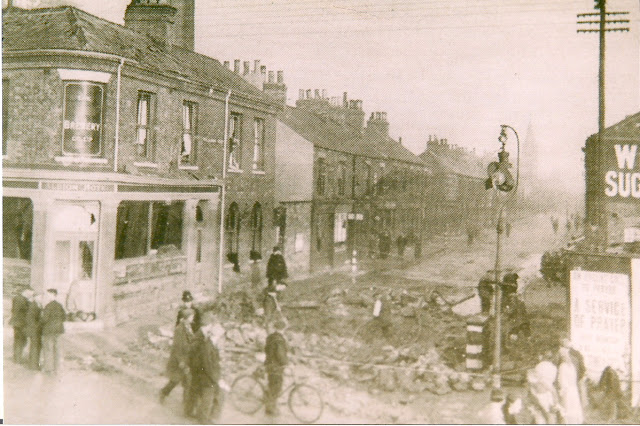
More heavy attacks on Great Britain. For the first time, RAF fighters make over 1,000 sorties.
In some ways, 30 August 1940 is the most encouraging day of the entire Battle of Britain for the Luftwaffe. There are several rays of sunshine in what has been a bleak campaign for it to date.
The Luftwaffe Luftflotten commanders in France (Sperrle and Kesselring) are changing tactics on a daily basis. Their orders are to destroy the RAF, but they can’t do it if the British fighters stay on the ground. The British, for their part, are wise to this game and refuse to offer combat (as on 29 August) unless there are bombers operating over British targets. The Luftwaffe knows that the bombers are vulnerable, so Sperrle and Kesselring are trying to minimize their operations during the day but still draw up Spitfires and Hurricanes to be shot down. It is an intricate dance that requires “baiting” the RAF fighters into battle — something they won’t do unless there is sufficient “bait.”
Weather: Much improved conditions would prevail throughout the British Isles. Temperatures should be slightly higher than the previous days and conditions are expected to remain fine with cloud periods in all Channel areas.
This day, Germany launched a total of 1,310 sorties against Britain. It appeared that Kesselring was intent on attacking with everything that he had. One direct hit on the power supply line took out the radar stations at Dover, Rye, Pevensey, Foreness, Beachy Head and Whitstable and they they were off the air for a critical three hours. Biggin Hill was attacked twice by 109s and Ju 88s within a few hours and major damage was done with the result that some 40 people were killed. Kenley, Shoreham, Tangmere and Rochford were also targeted where the story was much the same. Hangars, buildings and the airfields themselves receiving devastating damage.
The Luftwaffe has slightly new tactics, a close escort and another group of fighters much higher (25,000 feet). The RAF gets a little too cute and keeps its fighters on the ground as long as possible, waiting for the escorts to run low on fuel and turn back. Partly as a result, the bombers get through and cause great damage to RAF airfields at Biggin Hill, Detling, Kenley, Rochford, Shoreham, and Tangmere. There are 40 deaths at Biggin Hill, and there are casualties all across the area.
While the radars are only offline for a few hours, this leaves the RAF blind and provides an opening for the Luftwaffe. It also shows what might be accomplished but for Reichsmarschall Hermann Göring’s insistence that the radar stations are not worthwhile targets.
Many times, fighter sweeps by Bf 109s failed to attract Fighter Command into the air, Park was not going to be drawn into unnecessary fighter combat. So Kesselring sent over fast Ju 88 bombers and working in conjunction with the Bf 109s was adamant that somehow he would get the RAF fighters into the air. At one time, a mass formation of over 200 bombers droned over the Kent coast only to break into separate formations with each one targeting the RAF airfields. Biggin Hill was attacked again, as was Kenley, Gravesend, Hornchurch, Debden, North Weald, in fact every RAF airfield from Duxford to the south coast was attacked in one way or another.
Fighter Command was forced to get some of its fighters into the air. The selective targets were to ‘get the bombers’. The skies over the south coast became a pattern of vapour trails as some of the RAF fighters got tangled up with 109s, it was impossible to avoid them. Most of the fighters tried in vain to straffe the bombers, but it all became a melee of all sorts. The casualties started to fall from the sky, Spitfires, Bf 109s, Hurricanes, Heinkels and Dorniers. Many were badly shot up, others just collided into each other.
“I saw his contortions, then I saw him straighten and fly straight into the German aircraft; both crashed and Percy was killed. I was close enough to see his letters, as other pilots must have been and who also confirmed this incident, which in itself caused me to realize my young life and its future, if any, had jumped into another dimension”
- Sgt. G.Pallister 249 & 43 Squadrons on P/O P.Burton ramming a German aircraft.
Deliberate, or accidental, the ramming and/or colliding with aircraft was a common occurrence, especially when many of the pilots were adopting the head on attack attitude. Carried out correctly, it was a successful method of attack. Mostly used on attack on bombers, it was also used frequently in fighter combat.
“There are several advantages to the frontal attack when in combat, providing that you can get into the right position. You avoid the concentration of fire from a bombers rear gunners and as the twin engined aircraft has no guns firing forward, the pilot and crew are more vulnerable from the front, and perhaps above all it makes it very difficult for the escorting fighters to carry out their protective role. Of course, the disadvantage is that there is so little time. The relative closing speed would be something approaching 600 mph this is almost nearly 300 yards per second. The optimum range of our guns was about 300 yards, so if you could effectively get your sights on the target at 600 yards, you could press the button for one second and this would leave you with one second to break away, many had this tactic down to a fine art, many didn’t, but the effect on the enemy formation was devastating.”
Flight Lieutenant D.L.Armitage 266 Squadron
Despite the fine weather of the morning period, the only raids were on shipping in the Thames Estuary. These shipping strikes had been left alone for the last couple of weeks and Fighter Command regarded them as once again being lures to attract RAF fighters into the air. Park was in no way going to be tempted, sending up squadrons of fighters would weaken his defences of his airfields that seemed to be the targets of enemy action of the last few days. The first sign of action took place during mid-morning.
1030 hours: First sign of activity occurred when a formation was picked up off the coast near Cape Griz Nez. Three separate groups were detected which turned out to be separate formations of He 111s and in all totaled about 120 aircraft. The cloud base was down to about 7,000 feet and the Observer Corps had difficulty in estimating their numbers as the German formation was flying at about 14,000 to 15,000 feet, and reported a small escort of Bf 109s. The Luftwaffe were now, for the first time using a smaller number of Bf 109s as close escort, and with a larger number flying at about 25,000 feet.
1050 hours: 43 Squadron Tangmere (Hurricanes), 79 Squadron Biggin Hill (Hurricanes), 85 Squadron Croydon (Hurricanes), 111 Squadron Debden (Hurricanes), 222 Squadron Hornchurch (Spitfires) 253 Squadron Kenley (Hurricanes), 603 Squadron Hornchurch Spitfires), 610 Squadron Biggin Hill (Spitfires) and 616 Squadron Kenley (Spitfires) were released by Fighter Command cope with the incoming formations. Park dispatched his squadrons in two waves, as the German bombers were coming across the Channel in three separate formations.
43, 79, 253, and 603 Squadrons went in first to intercept the first wave of bombers just prior to them reaching the English coast between Deal and Folkestone. 85 Squadron Croydon (Hurricanes) met up with the leading Heinkels and decided on a head on attack. This was a maneuver that AVM Hugh Dowding did not agree with, stating that it was far too dangerous and that many of the more novice pilots would want to copy their more experienced counterparts with possible fatal results. But nevertheless, squadron commanders generally encouraged it, because performed properly, it allowed the bomber formation to scatter in all directions, while at the same time a squadron following would then attack the bombers while they were pre-occupied with avoiding hitting the first squadron that caused them to scatter in the first place.
South African pilot, Pilot Officer E.J.Morris went into a head on attack with a Heinkel. He knew this form of attack although he himself had never tried it. 79 Squadron Biggin Hill (Hurricanes) engaged a formation of Heinkel 111s and while some peeled of to exhert their attack from above, many decided to make a head on attack. Morris was one of them. He pressed the firing button, banked sharply only for the Heinkel to ram the underbelly of his Hurricane. His aircraft was cut to pieces, but Morris, still strapped in his seat managed to pull the ripcord and parachuted to safety. His injuries were just a broken leg…and a bit of confidence. He said afterwards, “I thought they were supposed to break formation if we pressed home a frontal attack”. He was told that ‘…not if the pilot is dead, you are supposed to make allowances for that’. Morris replied, “Then how the hell are you supposed to know if he is dead or not?” The way you did, he was politely told.
“S/L Tom Gleave of 253 Squadron was another who saw action this day. At 32 years of age, Gleave wanted to command the squadron, but was told politely that RAF regulations did not permit commanding officers above the age of 26. But somehow, Tom Gleave managed to get part of his way by smooth talking his way into sharing the command with the newly appointed commanding officer. It seemed that this day Tom Gleave was ‘Hun Hungry’;
“Detached from the rest of the squadron, his vee of three aircraft was vectored on to an enemy formation. Ahead of him and about 500 feet above Gleave saw line-astern formations of Bf 109s riding above the haze, well-spaced out and stretching as far as the eye could see. It was the culmination of all Gleave’s ambitions. Unhesitating, he flew right through the enemy fighters. He remembered the scene clearly, and described the smell of the cordite, the hiss of the pneumatics, and the way the Hurricane’s nose dipped as the guns recoiled.
“He gave the first Bf 109 a four-second burst and saw his bullets hitting the engine. He saw the Perspex of the hood shatter into fragments that sparkled in the sunlight. The Bf 109 rolled onto its back, slewed, and then dropped, nose down, to the earth. Another enemy aircraft came into his sights. Gleave turned with him, firing bullets that brought black smoke from the wings before the Bf 109 dropped vertically, still smoking. Gleave narrowly missed colliding with his third victim, and then gave him a three-second burst as the Messerschmitt pulled ahead and turned into the gunfire. The cockpit seemed empty; the pilot slumped forward out of sight. The Messerschmitt fell. The German pilots were trying to maintain formation and by now there was so much gunfire curving through the air that Gleave had the impression of flying through a gigantic golden bird-cage. A fourth Messerschmitt passed slightly above Gleave, and he turned and climbed to fire into the underside of its fuselage. But after two or three seconds’ firing Gleave heard the ominous clicking that told him he had used up all his bullets. But already the fourth victim was mortally hit, and rolled on its back before falling away.
“In spite of his age and rank, Gleave possessed the one quality that distinguished the ace pilots on both sides. It was something more important than flying skill, more important than keen eyesight, even more important than quick reaction times and the ability to “aim off” for the correct deflection. Such men as Gleave had the nerve to fly on collision courses (that forward-facing guns require) very, very close to the enemy. Gleave was 175 yards from his first victim (very close by 1940 standards) and 120 yards from the second one. But the third and fourth Messerschmitts were hit from only 60 and 75 yards respectively. At such close quarters the eight machine guns did terrible damage.”
- Len Deighton Fighter Jonathan Cape 1977 p200
Afterwards Tom Gleave learned of the RAF hierarchy “Bullshit” for want of a better word as he calls it. When he made his claim for the four Bf 109s, they stated that it was an impossibility to shoot them down in as many minutes. As a compromise, they allowed his claim as four probables.
1115 hours: Observer Corps further reported that 40 plus Heinkel He 111s and 30 Do 17s escorted by 100 plus Bf 109s and Bf 110s were approaching the coast. By now, the first wave over bombers had pushed on over Ashford still in combat with the British fighters. With the first wave of He110s and Do 17s crossing the Kent coast, what radar was working was picking up sightings that stretched right back to the French coast. Keith Park at Fighter Command Group HQ decides to act, and places nearly sixteen squadrons at readiness with two squadrons from 12 Group sent in to give cover to Biggin Hill and Kenley.
1130 hours: One of the first squadrons to intercept the enemy formation is 79 Squadron Biggin Hill (Hurricanes). Green section and Blue section move in to attack the Heinkel’s:
“Green section from Biggin Hill attacks an estimated 30 Heinkel He 111s, one of which is shot down. The four Hurricanes of Blue section are led by F/O Ted Morris and Blue 2 is Bill Milligan. Instructing Blue 3 and Blue 4 to keep the fighters off, Morris leads Millington down into a vertical dive through another bomber formation to split it up. Millington opens fire as a Heinkel looms up in front of him but at the edge of his vision he sees a collision — Morris has crashed into a Heinkel. There is no time to watch as he hurtles through, narrowly missing a collision himself. As he pulls out of his dive the Australian can see that the Heinkels have split up and over the radio Blue 4 calls that he has seen Morris bail out. To one side, a Heinkel goes down with both engines on fire.”
- Dennis Newton A Few of the Few Australian War Memorial 1990 p135
1145 hours: The second wave of German bombers and their Bf 109 escorts were now entangled with more RAF fighters. 85, 111, 222 and 616 Squadrons, just like the first squadrons to engage the bombers they were to have their hands full. Keith Park now had to act, and dispersed sixteen squadrons. But by the time that they managed to take off and gain height, the German bomber formation was well over Kent and heading towards London. The He 111s and the Do 17s break into two formations, and once again Park is quick to realize that his Sector Stations are under attack once more. One eyewitness said of this day, that no matter where you looked over Kent, Surrey or South London, you could see nothing but bombers and fighter planes fighting it out. Vapour trails were everywhere and it was believed that Germany had sent over the whole dammed Luftwaffe. S/Ldr Tom Gleave of 253 Squadron achieved the remarkable feat of destroying four Me109s in just a matter of minutes.
1200 hours: With squadrons engaging the first wave of bombers, and also the second wave, reports were still coming in to Fighter Command that more formations were over the Channel and heading for the Kent coast. Park had no option but to put all his squadrons into the air. Two squadrons that had been covering Biggin Hill were moved forward into the attack, and Park called on 12 Group to send squadrons down covering Biggin Hill and Kenley.
1215 hours: Once again, Biggin Hill was hit, the two squadrons from 12 Group fail to sight the Ju 88s coming in from the south, but only few of the bombs actually fall on the airfields doing damage to a hangar and putting the telephone system out of action. Many of the bombs fall wide and the town of Biggin Hill suffered as did the village of Keston. Kenley suffered much the same fate with many buildings hit and many stationery wounded aircraft on the ground received further damage. 79 Squadron Biggin Hill (Hurricanes) along with 74 Squadron Hornchurch (Spifires) are pulled back to guard the aerodromes of Biggin and Kenley because once again, the 12 Group squadrons had failed to show. Two sections of Hurricanes try to keep the Bf 109s occupied, while two sections engage the bombers. One Hurricane is lost as it fails to pull out of a dive on its target and collides with a He 111 which goes down in flames. The pilot of the Hurricane was seen to bail out. 79 Squadron, as well as 610 Squadron, both from Biggin Hill between them, claim 10 enemy aircraft shot down. As well as Biggin Hill and Kenley suffering badly in the raid, the airfields of Croydon and Detling were also hit.
1300 hours: It had been one of Fighter Commands busier days, every squadron in 11 Group had at least been called up for one sortie. Again Keith Park was on the phone to 12 Group asking “…where in the hell were your fighters that were supposed to have protected my airfields.” The answer was that the 12 Group fighters could not find the enemy, to which Park ‘politely’ told them that they were not supposed to be going looking for the enemy, they were supposed to be at the South London airfields waiting for the enemy to come to them.
1315 hours: Many of the original He 111s, Do 17s and Bf 109s were heading for home, that is, if they hadn’t been shot down, as another wave of bombers crossed the coast between Deal and Dungeness again. This time, their strength was much smaller. Coming in in three waves ten minutes apart, they all veered into different direction once over the Kent coastline heading for their own particular target. These attacked the forward airfields of Hawkinge and Manston. 43 Squadron Tangmere (Hurricanes) engaged the bombers and many of the British fighter pilots see the He113 fighter for the first time. Although the airfield received minor damage, all the bombers made just the single run before turning back over the Channel. F/L R.C.Reynell of 43 Squadron is caught between five He113 fighters who have the advantage of height. Reynell evades the German fighters with an extraordinary display of combat aerobatics with more maneuverable Hurricane, but because the German tactics was to send one He113 into a combat dive after Reynell’s Hurricane, the others positioned themselves to block any exit Reynell may have had in mind. This cat and mouse action continued for eight to ten minutes before the enemy had to break off the engagement because of their fuel situation and return for home, and a relieved Reynell flies back to base.
1600 hours: More waves of heavy German bombers came across the Kent countryside and from the direction of the Thames Estuary. 56 Squadron North Weald (Hurricanes), 79 Squadron Biggin Hill (Hurricanes), 222 Squadron Hornchurch (Spitfires) 253 Squadron Kenley (Hurricanes), 501 Squadron Gravesend (Hurricanes) and 603 Squadron Hornchurch (Spitfires) were among the squadrons dispatched to intercept, many of these squadrons had been in combat practically nonstop since 1030 hours. Now for the first time, as Keith Park for the second time this day had every one of his squadrons airborne, called in 12 Group and this time requested them to engage in combat and not just protect 11 Group airfields. One of the squadrons to be sent down in the combat area was 242 Squadron Duxford (Hurricanes) led by S/L Douglas Bader who had just brought his squadron down from Coltishall that morning. Bader, had been longing for action for months, but up until now had not seen any, well, with the exception of intercepting a lone aircraft while on patrol, but according to Douglas Bader, “….that is not action, my twelve Hurricanes against fifteen or so of theirs, that’s what I call action.” So if Bader called fifteen enemy aircraft action, then he was now going to be thrown right into it, because, being vectored close to North Weald there were seventy enemy aircraft to be met.
1800 hours: For the second time that day, Biggin Hill was bombed and almost put out of action Detling airfield was the first to get hit by at least fifty H.E. bombs. Oil tanks were hit and set ablaze, the main electricity cable was hit and cut the power to all buildings and with hangars and roadways cratered it was anticipated that the airfield would be out of action for at least two days. Nine Ju 88 bombers manage to get though the British defenses and took everybody by surprise and struck Biggin Hill with a low level bombing attack dropping 1000 lb bombs causing mayhem. The transport yard was destroyed, storerooms, the armory and both officers and sergeants messes were severely damaged, two hangars were wrecked earlier in the day and now another hanger was almost flattened, and on top of all that telephone and communication lines were severed, gas and water mains were ruptured. Casualties amounted to thirty-nine personnel killed and thirty five injured.
“At 4.00 p.m., again without pause, the third and perhaps heaviest group of raids is plotted building up. During the next two hours large and small formations of enemy aircraft flood in over Kent and the Thames Estuary. The Junkers Ju 88s which appear over Biggin Hill at 6.00 p.m. only number nine but the havoc caused by their bombs is far worse than that of any previous attack. The airfield is taken completely by surprise. Six of 79 Squadron’s Hurricanes manage to scramble before the bombs start falling but 610 Squadron, already up, is too far away to help defend its own base.
“There is wholesale destruction as workshops, cook houses, the sergeants’ mess and WAAF quarters are wrecked and 90% of the station’s transport is damaged or destroyed.
“All electricity, water and gas mains are cut: and two parked aircraft are reduced to scrap. The airmen’s shelter is pulverized by a direct hit and all those who had crammed in a few moments earlier are killed. Another bomb hits the airwomen’s shelter and the concrete walls cave in, crushing and smothering those inside.
Everyone outside pitches in and digs furiously to free the trapped women. Ambulance and stretcher parties stand by. One-by-one the women are carried out: some are barely recognizable because of dirt and blood on their faces. Others are dazed and bruised but all, except one, are alive. Lena Button from Tasmania is the only casualty. Altogether, 39 personnel have been killed and 26 injured.”
Dennis Newton. A Few of the Few Australian War Memorial 1990 p136
It had been a busy day for Fighter Command, over 22 squadrons had been in action for most of the day, many of them doing up to four sorties. But as night fell, there was to be no let up. Göring this time had meant business. It appeared that this was an all-out effort to destroy Fighter Command in one way or another.
130 plus Ju 88s and He 111s of Luftflotte 3 made a night attack on the City of Liverpool, Do 17s and He 111s made raids on London and Portsmouth, Manchester was bombed as was Worcester and Bristol. In another unexpected raid, the Vauxhall Motor Works at Luton was hit resulting in over fifty people being killed.
It had been one of the worst days for the RAF, 39 aircraft were destroyed, eight of these were Spitfires from 222 Squadron Hornchurch, over 50 RAF personnel had been killed (39 of these at Biggin Hill) with nearly 30 seriously injured. Some 200 civilians had been killed in the air raids and along with the radar stations of Pevensey, Beachy head and Foreness sustaining damage, Biggin Hill was made virtually unoperational, and the control of its sector was transferred over to Hornchurch.
On the German side, a total of 41 fighters and bombers had been destroyed. But they too, during the hours of darkness felt the brunt of an Bomber Command offensive as well. More that 80 Hampdens, Wellingtons and Whitleys attack cities in Holland and Belgium. Berlin is attacked by 149 Squadron Bomber Command. 50 Squadron attacked oil refineries near Rotterdam. Of these, only four RAF bombers are lost.
Almost lost in the day’s events, the British attack Berlin again with No. 149 Squadron. However, they cause little damage, attacks on Berlin at this point are more nuisance raids than anything else.
RAF Casualties:
1115 hours: W of Maidstone. Hurricane L1965. 253 Squadron Kenley
P/O C.D. Francis killed. (Shot down during combat with Bf 109 )
1120 hours: Redhill. Hurricane P3921. 253 Squadron Kenley
P/O D.N.O. Jenkins killed. (Bailed out when aircraft hit by gunfire from Bf 109, but shot at by enemy)
1150 hours: Nr Bognor. Hurricane P3179 43 Squadron Tangmere
Sgt. D. Noble killed. (Shot down by Bf 109 in combat over Sussex coast. Crashed near Brighton/Hove)
1151 hours: Stroud (Kent). Hurricane V7369. 151 Squadron Stapleford
S/L E.B. King killed. (Crashed and exploded in flames during routine patrol. No cause known
1202 hours: West Malling. Spitfire X4248. 616 Squadron Kenley
F/O J.S. Bell killed. (Shot down during attack on Bf 109. Crashed and aircraft burnt out)
1715 hours: Dungeness. Hurricane P3213. 253 Squadron Kenley
Sgt. J.H. Dickinson killed. (Shot down by Bf 109, Bailed out but was killed)
1735 hours: Woodchurch (Kent). Hurricane V6548. 43 Squadron Tangmere
S/L J.V.C. Badger died of wounds 30.6.1941 (Shot down by Bf 109 over Romney Marshes)
1802 hours: Bishopsbourne. Spitfire R6628. 222 Squadron Hornchurch
Sgt. J.I. Johnson killed. (Shot down by Bf 109. Crashed and burnt out)
No. 303 (Polish) Squadron RAF was deemed operational in Britain.
Douglas Bader’s No. 242 Squadron RAF was moved from RAF Coltishall at Norwich, England, United Kingdom to RAF Duxford at Duxford, England. On the same day, the squadron claimed downing 10 German aircraft, with two of which, Bf 110 heavy fighters, claimed by Bader.
After shooting down a German He 111 bomber and damaged a Bf 110 fighter over the Thames estuary in southern England, United Kingdom, James Lacey’s Hurricane fighter was badly damaged, but he was able to successfully glide the aircraft and crash land the aircraft at Gravesend to the north.
Overall, while not a completely catastrophic day for the RAF, it is perhaps the worst of the entire campaign. The one silver lining for it is that the Germans don’t really understand their good fortune, and why it happened. Fighter Command can only hope that things return to “normal” on the morrow and that there are no more lucky hits on the power plants supplying the radar chain.
Losses for the day are estimated at around 41 for the Luftwaffe and 39 for the RAF — an almost equal score for one of the very few times in the entire campaign. Some accounts even give the Luftwaffe the absolute advantage. If one includes the RAF planes lost on the ground and on the raids over Europe during the night (four bombers), the day almost certainly is a big win for the Luftwaffe in terms of planes lost — let alone the ground damage.
More troubling for the RAF is that well over 50 of its men perish during the day and there are numerous badly wounded and other casualties. Biggin Hill is all but out of action and its operations transferred to RAF Hornchurch — already hard-pressed in its defense of the Thames estuary.
RAF Bomber Command dispatches 18 Blenheims against airfields in daylight, but no bombs are dropped.
RAF Bomber Command dispatches 87 Blenheims, Hampdens, Wellingtons and Whitleys overnight to 5 targets in Germany and to airfields in France, Holland and Belgium. Four aircraft, 2 Whitleys, 1 Hampden, and 1 Wellington, are lost.
The Second Vienna Award was rendered. In exchange for a German guarantee of security, Rumania ceded the region of Dobrudja to Bulgaria and ceded Transylvania to Hungary. This move was forced on Rumania by Hitler in an effort to prevent a possible war between Rumania and Hungary.
The events of the Second Vienna Award are unique. It is one of the only times when Adolf Hitler intervenes to prevent a war (between Hungary and Rumania), rather than to start one.
Hungary has been demanding territory from Rumania. Rumania, on the other hand, has been losing territory to seemingly everyone (the Soviet Union and Bulgaria have grabbed big chunks recently), and resents any more loss of territory. This sets up the (Second) Vienna Award.
The Hungarian argument goes like this: the Treaty of Trianon which ended World War I in the East had split Hungary apart, and these divisions did not reflect ethnic reality. Hungary feels that it has been given a raw deal by the victors of World War I — a very common feeling during that time — and wants some of its former territories now lying in northern Rumania back. This particular territory is the province of Transylvania.
Rumania, for its part, is trying hard to ingratiate itself with Germany to protect itself from the colossus to the northeast, the Soviet Union, which already has extorted large portions of its territory. Rumania knows that it stands no chance against the USSR without German help. Thus, they have consented to binding arbitration by Germany and its Italian ally over the Transylvanian question. The Germans, it need hardly be said, are no fans of any of the agreements that ended the Great War, so the whole issue presents itself as an open question with no regard to the Treaty of Trianon, the “Victors’ Peace.”
Foreign Ministers Joachim von Ribbentrop of Germany and Galeazzo Ciano of Italy meet at the Belvedere Palace in Vienna and decide to strike a compromise. Hungary has been demanding 69,000 km², but Ribbentrop and Ciano cut the area down to 43,492 km². Significantly, there are no population transfers. This is the Second Vienna Award.
Neither the Hungarians nor the Rumanians are happy, because Hungary does not achieve its wish of scooping up all the Magyars to the south, and Rumania loses well over a million Rumanians in the north. These latter people are particularly unhappy, as they fear the Hungarian government under Regent Admiral Miklós Horthy, which fulfills those qualms by quickly committing various atrocities against their new Rumanian subjects.
The Rumanian government, however, quickly approves the decision during the night, realizing that it has no choice and that half a loaf is better than none at all. The Rumanians get the one thing that they absolutely require: a promise from the Germans to defend their borders from here on out. Given that the Soviets have been aggressive with their territorial seizures lately, this creates a potentially unstable situation in a very critical part of Europe. It also shows how confident the Germans are and what they are willing to give as guarantees in the face of Soviet power.
The Second Vienna Award is hardly forgotten in years to come. It remains a huge issue in the region throughout the war. A common joke within the Wehrmacht with a large element of truth is that the Rumanians and Hungarians would rather fight each other than fight the Soviets and need to be separated. This mutual hatred and resentment cause a detrimental effect on troop dispositions, particularly during the Stalingrad campaign.
Rumanian King Carol narrowly escaped overthrow of his Cabinet, and perhaps a wrecking of an Italo-German plan of Balkan peace, when his Crown Council early today approved the surrender of about 19,300 square miles of territory to Hungary.
Adolf Hitler sets 10 September as his own personal deadline for making a decision on Operation SEA LION (with an actual operation to follow at least a week later). The day’s successes against the RAF are breathing just a modicum of life into the dormant plans for the operation. The OKM (German Naval Command) tells him that they can’t be ready before 20 September anyway.
The brand-new armored aircraft carrier, HMS Illustrious, and a powerful escort left Gibraltar. Although her air group was small (only 15 fighters and 18 bomber aircraft), Illustrious was one of the first warships to be fitted with air-warning radars which gave her a big advantage in fleet defense, as she could detect and track hostile aircraft and give her aircraft time to gain altitude. With both Illustrious and Eagle under his command, Admiral Cunningham could now take the offensive.
At Malta, there are no air raids or alerts. Governor Dobbie sends a telegram to the War Office expressing his concern that the island’s air defenses remain inadequate to repel attacks that might occur if Malta is chosen to lead heavy offensive operations against Italy.
The Vichy French government, alarmed at recent successes by the Free French in Africa, dispatches submarine Sidi Ferruch from patrol to Libreville to shore up the Vichy authorities there.
The British Admiralty is on high alert because military intelligence suggests that the Germans will be invading today. Cruisers Birmingham and Manchester put to sea with a flotilla of destroyers, but it is a false alarm. The Admiralty is torn between defending against an invasion and defending the convoys. Having to defend against threats in opposing directions causes an intolerable strain, as the Royal Navy has only so many ships at Scapa Flow to divert to flashpoints.
Partly as a result, two U-boats have big days today. It is a demonstration that the Royal Navy escorts for convoys are inadequate, and illustrates why British Prime Minister Winston Churchill is so covetous of the 50 US destroyers that he is trying to get. It also is an illustration that any attempted German invasion could have unforeseen beneficial results for them, as it would weaken already poorly defended convoys as scarce ships are diverted to the east. Even the mere threat of an invasion is helping the U-boats.
U-32, commanded by Oberleutnant zur See Hans Jenisch, in attacks on convoy HX.66 A, escorted by British escort vessel Jason and corvette Hibiscus, sank British steamers Mill Hill (4318grt) in 58-48N, 06-49E and Chelsea (4804grt) in 59-45N, 07-00W and Norwegian steamer Norne (3971grt) in 58-48N, 06-49W. Between 0220 and 0248 hours, U-32 attacked the convoy HX.66A 58 miles west-northwest of Cape Wrath and sank the Mill Hill, Chelsea and Norne and missed a fourth ship.
At 0220 hours, the Mill Hill (Master Robert Du Buisson) was hit in the stern by one torpedo and sank with a heavy list in a few minutes. The master and 33 crew members were lost. The 4,318-ton Mill Hill was carrying pig iron and steel and was headed for Middlesbrough, England.
The Chelsea (Master Robert Harrison) was hit by one torpedo amidships and settled by the bow, but remained afloat. The ship foundered later in 59°45N/04°00W. The master, 22 crew members and one gunner were lost. Eleven crew members were picked up by the British armed trawler HMS Lord Cecil and landed at Scrabster, Caithness. The 4,804-ton Chelsea was carrying maize and was headed for London, England.
The Norne (Master Leif Hauge) was hit on the port side amidships by one torpedo, just forward of the engine room and sank within a minute following a boiler explosion. The crew tried to launch the starboard lifeboat, but it was crushed as the ship sank rapidly, pulling down the men on deck. The master and 16 crew members were lost. Eleven survivors were picked up from debris and a raft by HMS Hibiscus (K 24) (LtCdr R. Phillips, RNR) and landed in Scotland on 31 August. The 3,971-ton Norne was carrying scrap iron and was headed for Grangemouth, England.
U-59, commanded by Korvettenkapitän Joachim Matz, in attacks on convoy OB.205 damaged Greek steamer San Gabriel (4943grt) in 56-04N, 09-54W and British tanker Anadara (8009grt) in 56-15N, 09-10W.
At 2134 hours, U-59 fired one torpedo at a ship in the second line of convoy OB.205 and missed, but the torpedo struck the San Gabriel proceeding behind the target. The survivors abandoned ship and were picked up by HMS Warwick (D 25) (LtCdr M.A.G. Child, RN). The ship was later taken in tow by the tug HMS Thames, arrived at the River Clyde on 3 September and was beached near Cardross, where she was declared a total loss. The 4,943-ton San Gabriel was carrying ballast and was headed for Buenos Aires, Argentina.
At 2153 hours, the Anadara in convoy OB.205 was torpedoed and damaged by in position 56°15N/09°10W. The ship was en route from Liverpool to Corpus Christi in ballast. There were no casualties. The tanker was towed to the Clyde by HMS Schelde (W 156), later to Falmouth where she was repaired and returned to service in May 1941. The 8,009-ton Anadara was carrying ballast and was bound for Corpus Christi, Texas.
Due to the attacks on the convoys, destroyers HMS Wolverine and HMS Volunteer were ordered to leave convoy SL.43 A and join convoy SL.66 A. Destroyers Wolverine and Volunteer arrived at Scapa Flow at 0600/31st after the escort duty. Destroyers HMS Kashmir and HMS Kipling departed Scapa Flow at 1843 to join convoy SL.43A. Destroyers Kashmir and Kipling returning from convoy SL.43 A duty were ordered to Rattray Head to search for an open boat reported by air at 1738 in 58-18N, 00-24E. The destroyers located five Norwegian refugees in the boat and arrived at Scapa Flow at 1800/31st.
Captain Leicester Charles Assheton Curzon-Howe was named the commanding officer of HMS Mauritius.
Light cruisers HMS Birmingham and HMS Manchester departed Scapa Flow for Rosyth at 0135 for anti-invasion duties. No destroyers were mentioned in the movement. East coast convoys were instructed to put into the nearest port. The report of enemy vessels approaching the coast later proved to be an enemy convoy of seven or eight vessels. The cruisers arrived at Immingham on 5 September.
Destroyers HMS Zulu, HMS Sikh, and HMS Punjabi departed Scapa Flow at 2300 to reach position 60-00N, 4-00W by 0400/31st. The destroyers were to carry out anti-submarine sweeps in a direction 50° to intercept a German submarine reported by aircraft at 0720 in position 60-29N, 1-08E, steering course 300°.
Destroyers HMS Versatile and HMS Vimy departed Scapa Flow at 0800 escorting Fleet Tenders A, B, C to Rosyth.
Polish destroyers ORP Blyskawica and ORP Burza departed Scapa Flow at 0900 to provide additional escort for convoy OA.206 from Pentland Firth to the North West Approaches. The Polish destroyers then proceeded to Portsmouth to join the 1st Destroyer Flotilla.
Destroyer HMS Witch was out of service with engine defects.
Destroyer HMS Wallace was out of service with damage to her port propeller.
Lt (A) I. G. Williamson RNVR, Leading Airman R. C. Burden, Leading Airman J. Hare were killed when their Shark of 753 Squadron collided with another aircraft and crashed near St Vigeans.
British hopper barge SH 3 (389grt) was damaged by German bombing at Victoria Dock at Hull.
Norwegian steamer Marstenen (1832grt), in convoy WN.11, was sunk by German bombing in 58-23N, 03-37W, off Duncansby Head. The entire crew was rescued by destroyer HMS Cattistock. The crew was later transferred to examination vessel Minna.
In Operation HATS, the British Mediterranean Fleet, including every single operational destroyer of the Fleet,departed Alexandria to escort a convoy to Malta. The convoy departed Alexandria at 2045 on the 29th. It was composed of British steamer Cornwall (10,603grt), escorted by destroyer HMS Jervis and HMS Juno and steamer Volo (1587grt) and Fleet Auxiliary Plumleaf escorted destroyers HMS Dainty and HMS Diamond. The convoy was covered by battleships HMS Warspite and HMS Malaya, aircraft carrier HMS Eagle, light cruisers HMS Orion and HMAS Sydney, destroyers HMAS Stuart, HMAS Voyager, HMAS Vampire, HMAS Vendetta, HMS Decoy, HMS Defender, HMS Hereward, HMS Imperial, and ORP Garland which departed Alexandria at 0445. Cruiser Squadron 3, heavy cruiser HMS Kent and light cruisers HMS Gloucester and HMS Liverpool, with destroyers HMS Hyperion, HMS Hasty, and HMS Ilex departed Alexandria late on the 29th to sweep in the southern Aegean.
British Force H departed Gibraltar with battlecruiser HMS Renown, aircraft carrier HMS Ark Royal, light cruiser HMS Sheffield, destroyers HMS Faulknor, HMS Firedrake, HMS Foresight, HMS Forester, HMS Fury, HMS Fortune, and HMS Encounter. Force H covered the movement of battleship HMS Valiant, aircraft carrier HMS Illustrious, anti-aircraft cruisers HMS Calcutta and HMS Coventry, Mediterranean Fleet destroyers HMS Mohawk, HMS Janus, and HMS Hero which departed Malta on the 27th and HMS Nubian which departed Malta on the 28th, and Force H destroyers HMS Gallant, HMS Greyhound, HMS Griffin, and HMS Hotspur accompanied the Valiant force to Malta.
Diversion for this operation, designated Operation SQUAWK, was by two of Somerville’s destroyers HMS Velox and HMS Wishart north of Balearic Island with radio deception making it seem Force H was about to bombard the Genoa area.
Heavy cruiser HMS Kent with light cruisers HMS Gloucester and HMS Liverpool were detached from the Main Fleet at 1554 on the 31st to give anti-aircraft protection to the convoy.
British steamer Cornwall (10,603grt) was damaged by Italian bombing six miles 258° from Elephonisi Island, south of Crete at 1635 on the 31st.
Destroyer HMS Decoy was detached at 1815 to join the heavy cruiser HMS Kent group protecting the convoy. Destroyer ORP Garland was also slightly damaged near misses of bombing on the 31st.
Italian destroyers Battisti and Manin operated in the Red Sea during the night of 30/31 August without success.
Due to Free French successes in the Congo, the Cameroons, Chad, Vichy submarine Sidi Ferruch, which had been at Duala from 10 to 25 August, arrived at Libreville on the 30th to boost failing support for the Vichy government.
Light cruiser HMS Emerald departed Bermuda.
Convoy OB.206 departed Liverpool escorted by destroyer HMS Vanoc and corvette HMS Erica, which remained with the convoy until 4 September, anti-submarine trawlers HMS Berkshire and HMS St Apollo. The convoy was joined on 2 September by destroyers HMS Active, HMS Arrow, HMS Shikari, and HMS Skate which stayed with the convoy until 4 September.
Convoy FN.267 departed Southend. The convoy arrived in the Tyne on 1 September.
Convoy MT.155 departed Methil. The convoy arrived in the Tyne later that day.
Convoy FS.267 departed the Tyne, escorted by destroyer HMS Wolfhound and sloop HMS Black Swan. The convoy arrived at Southend on 1 September.
Over Republican protests, administration allies in the House decided today to limit general Burke-Wadsworth compulsory military training bill debate to two days and to seek final vote before the next weekend. The Rules Committee and Democratic chieftains agreed the controversial measure be called up at noon Tuesday, general discussion be permitted until Wednesday night, and amendments considered starting Thursday. Democratic Leader Sam Rayburn of Texas said he hoped for final vote Friday but told the house he was prepared to devote a fifth day to the legislation if necessary.
The first draft of 400,000 men, if the selective service bill becomes law, will fall most heavily on communities which have supplied the smallest number of voluntary enlistments, War Department officials said today.
Wendell L. Willkie, again demanding President Roosevelt’s opinion of conscription of industry, said today it was the chief executive’s “clear duty” to state his position on important pending bills. The Republican presidential nominee was commenting on Mr. Roosevelt’s refusal to announce his views on the Overton-Russell amendment to the senate-approved draft bill. This amendment would permit government operation of plants needed for defense when the secretaries of war and navy could not reach agreements with their owners.
Dodging what he termed an attempt to get him into a political discussion, President Roosevelt rejected today Wendell L. Willkie’s demand that he state his position on government commandeering of private plants for defense purposes. The Republican presidential nominee, in a statement at Rushville, Ind., yesterday, visualized a “potential dictatorship” in an amendment to the conscription bill which under certain conditions would enable the government to take over industrial establishments and make defense materials. He called on the president to say whether he was for or against the amendment. But when reporters sought an answer at the president’s press conference today, Mr. Roosevelt cited what he said was a 1933 rule that the chief executive does not comment on matters pending in congress. “Sometimes he does,” a reporter remarked, but there the discussion ended.
Awards of contracts for 687 combat planes were announced today by the War Department, which at the same time reported the completion of an agreement for the production of 20,000 Wright airplane engines and 14,000 propellers.
The 11,000-ton liner Eastern Prince, which formerly operated in the passenger-cargo trade between New York and South American ports, arrived here yesterday from England with ninety-seven passengers. There were forty-seven children on the vessel, all of them refugees who will live with relatives in the United States for the duration of the war.
The U.S.S. Pennsylvania, flagship of the navy’s Pacific battle fleet, returned to Pearl Harbor today in advance of other battleships maneuvering in Hawaiian waters. The aircraft carrier Enterprise was standing by here to receive Admiral James O. Richardson, commander-in-chief of the fleet, when he transfers his flag Saturday. Admiral Richardson will go aboard the Enterprise while the Pennsylvania goes to Bremerton, Washington, for an overhaul in the Puget Sound Naval Shipyard, during which she will receive an experimental RCA CXAM-1 radar set.
Rear Admiral Charles S. Freeman relieved Rear Admiral Edward B. Fenner as the Commandant of the US Navy Thirteenth Naval District and as the Commandant of the Puget Sound Navy Yard in Bremerton, Washington, United States.
Film stars Laurence Olivier and Vivien Leigh were married in Santa Barbara, California early today. Actress Katharine Hepburn and Garson Kanin, youthful film director, were their attendants. The ceremony was conducted by Municipal Judge Fred Harsh at San Ysidro ranch, resort popular with motion picture celebrities, in suburban Montecito.
American CBS news correspondent Mike Wallace (22) weds Norma Kaphan in Brookline, Massachusetts; they divorce in 1948.
Major League Baseball:
Bob Feller, pitching air-tight ball in the pinches, racked up his twenty-third victory tonight as the Cleveland Indians defeated the Chicago White Sox, 4–2, before 44,877 spectators. Jeff Heath’s three-run homer for Cleveland in the first inning provided all the runs Feller needed.
The Red Sox gained a half game on the idle third-place Yankees today by capturing the opener of a four-game series with the Athletics, 5–4. A light drizzle kept a ladies’ day crowd at Shibe Park down to 5,000. Doe Cramer’s double and Ted Williams’s triple broke a 4–4 deadlock in the seventh to give Boston the decision. The Sox got eleven hits off three Philadelphia pitchers.
The game between the Senators and Yankees in New York was rained out. The game will be made up on September 24.
Coming back to earth once more, the Dodgers today beat the Reds, 6–2, in the finale of this disastrous western tour and then boarded a train instead of a couple of airplanes to head for home. Home runs by Pete Reiser and Dolf Camili backed the pitching of Luke Hamlin, who earned his 8th victory of the year. Gene Thompson (13–8) took the loss for the Reds.
Rain also scrubbed the game between the Phillies and Pirates in Pittsburgh.
Cleveland Indians 4, Chicago White Sox 2
Brooklyn Dodgers 6, Cincinnati Reds 2
Boston Red Sox 5, Philadelphia Athletics 4
The Japanese-sponsored puppet state Manchukuo established a flight school in Fengtien Province to train military and civilian pilots.
French Ambassador to Tokyo Arsène Henry announced to the Japanese that the French government would allow 6,000 Japanese troops to station in Indochina and would allow the military use of ports, airfields, and railroads in the region. However, the French government attempted to delay on the implementation of the plan as long as they could. From here on, however, the Vichy French are only in nominal control of the country.
Light cruiser HMS Durban arrived at Hong Kong.
Australian Lieutenant General Vernon Sturdee (rank restored from Major General) becomes the new Chief of the General Staff. He replaces General Sir. Brudenell White, who perished in the tragic airplane crash near Canberra on 13 August.
Dow Jones Industrial Average: 128.88 (+2.01)
Born:
Clyde Brock, NFL tackle (Dallas Cowboys, San Francisco 49ers), in Los Angeles, California.
Died:
J. J. Thomson, 83, English physicist and Nobel laureate (1906).
Naval Construction:
The Royal Navy “U”-class (Third Group) submarine HMS Unbending (P 37) is laid down by Vickers Armstrong (Barrow-in-Furness, U.K.).
The Kriegsmarine (German Navy) Type IXC U-boat U-165 is laid down by Deutsche Schiff und Maschinenbau AG, Bremen (werk 704).
The Royal Canadian Navy Flower-class corvette HMCS Dunvegan (K 177) is laid down by Marine Industries Ltd. (Sorel, Quebec, Canada).
The Вое́нно-морско́й флот СССР (ВМФ) (Soviet Navy) “S” (Stalinec)-class (2nd group, Type IX-modified) submarines S-51 and S-51 are launched by Dalzavod (Vladivostok, U.S.S.R.) / Yard 202.
The Royal Navy Dance-class ASW trawler HMS Pirouette (T 39) is commissioned. Her first commanding officer is T/Lieutenant Eric Robert Pate, RNR.
The Royal Navy Dance-class ASW trawler HMS Foxtrot (T 109) is commissioned. Her first commanding officer is T/Lieutenant Arthur Leonard Defrates, RNR.
The Royal New Zealand Navy armed merchant cruiser HMNZS Monowai (F 59) is commissioned. Her first commanding officer is A/Captain Hubert Victor Perry McClintock, RN.
 History Diaries