General Vasco Gonçalves, opposed for weeks by overwhelming military and political forces for trying to promote Communist rule in Portugal, was dismissed today as Premier by President Francisco da Costa Gomes. He was replaced by Vice Admiral Jose Batista Pinheiro Azevedo, the 58-year-old Chief of Staff of the navy. The sudden break in the long and increasingly violent crisis came after four days of intensive negotiation. General Gonçalves, fighting to keep his post and save the socialist revolution from what he considered a fascist threat, finally, yielded in the face of warnings of force. But a new conflict was seen possible: General Gonçalves has been appointed Chief of Staff of the armed forces, a move his opponents also resisted.
Earlier in the day, President Costa Gomes conferred with Brigadier General Carlos Charais, commander of the central military region, who had indicated last night that his troops were prepared to stop efforts to establish a Communist dictatorship in Portugal. While military leaders conferred in the Presidential Palace of Belém last night, General Charais issued a statement denouncing the “manipulation” of the people by “political forces that have the historic mission to prepare the working class for its elevated mission of leading the revolution, but are more bent on the immediate seizure of power.” He was assumed to be referring to the Communists, whom he criticized for jeering President Costa Gomes at a demonstration here Tuesday night.
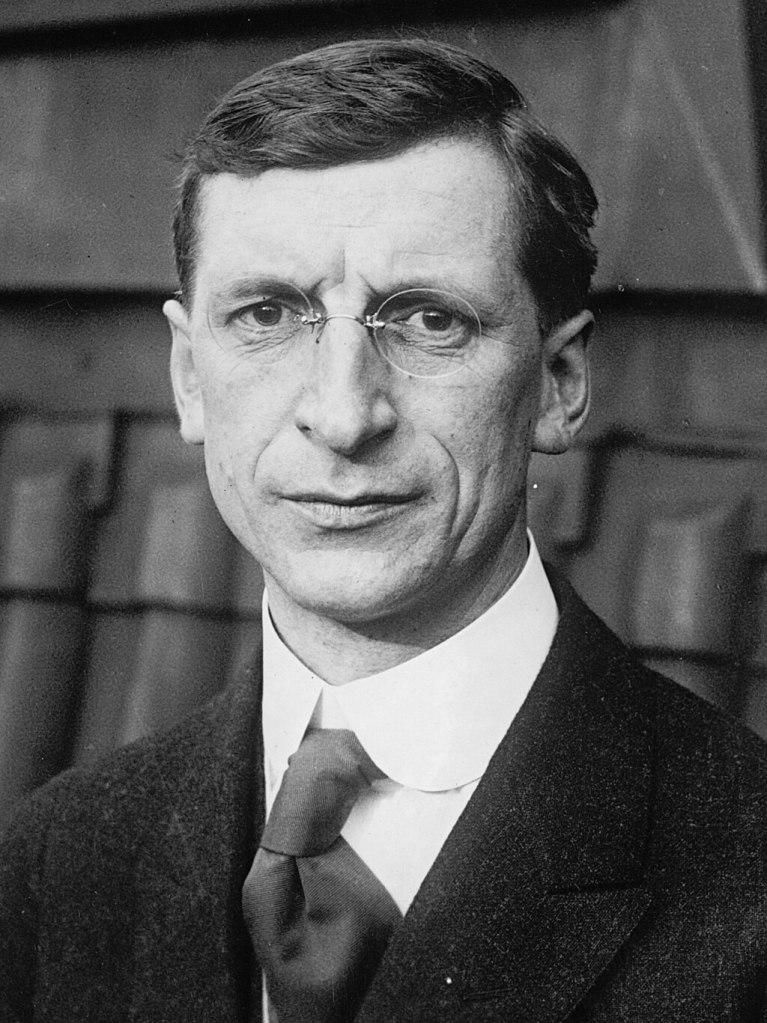
Eamon de Valera, a chief strategist and fighter in the cause of Irish independence, who had a key role in the Easter Monday Rebellion of 1916, died in a Dublin nursing home at the age of 92. He had been three times Prime Minister of the Republic of Ireland, and had served two consecutive seven-year terms as President, the last expiring in 1966.
Two Basque nationalist guerrillas in Spain were condemned to death today as a wave of protest demonstrations and strikes swept the Basque country. The guerrillas, José Antonio Garmendia Artola, 23 years old, and Angel Otaegui Echeverria, 33, were sentenced by a military court in Burgos for killing a policeman in April last year. Basque sources said two persons were wounded today by police fire in the northern beach resort of Zarauz, east of Bilbao, and three last night in San Sebastián and nearby Hernani.
The Agriculture Department today cut by five million tons its estimate of the Soviet Union’s drought-ravaged grain crop, but officials indicated that they did not expect the Russians to seek more United States grain to make up the shortage. The department said that forecasts of the 1975 Soviet crop, which were trimmed to 180 million tons August 11, had been revised again to 175 million tons because Soviet authorities had reported their acreage was lower than United States experts previously believed. The new estimate is 41 million tons below the Soviet goals, and 35 million tons under the initial early‐season United States estimate made before the extended drought.
The West German Government, running out of money to stimulate the flagging economy, decided today on what Finance Minister Hans Apel called a “painful” package of budget cuts and tax increases for 1976 and 1977. The same Cabinet that decided on Wednesday to put $2.2‐billion into the stricken building industry decided today to keep planned expenditures next year down by $1.4‐billion and to increase taxes and unemployment insurance rates by $1.6‐billion. Mr. Apel said the Government’s hope was that the recession would be over by 1976 and that more budget cuts and tax increases later on would not choke off a recovery. Next year is an election year here, as it is in the United States.
Foreign Minister Yigal Allon of Israel said that the presence of American technicians in the Sinai passes was “one of the central conditions” of Israel’s willingness to agree to a new disengagement accord with Egypt. He called on Congress and the American public to support it. Mr. Allon and Secretary of State Kissinger said that they expected the accord to be initialed by Egyptians and Israelis “early next week.” With the final text of the complex agreement now in the last stages of drafting, Mr. Allon and Secretary of State Kissinger said separately that they expected the accord to be initialed by Egyptians and Israelis “early next week.” Monday is the new target date, but more will be known after Mr. Kissinger returns to Israel tomorrow night after spending the day in Alexandria discussing last minute details with President Anwar el‐Sadat.
Under the accord being worked out, the United States has agreed to have a small detachment of civilian technicians at early‐warning posts operated by Israel and Egypt in the area of the Gidi and Mitla Passes that Israel will vacate. The Israeli station is at Umm Khisheib west of the Gidi Pass. The Egyptian station will be built with American help. In addition, Americans are to operate a total of six observation posts in the passes, some manned and others unmanned. The proportion has not yet been worked out. A total of about 150 Americans, fewer than 100 of them technicians and the rest support personnel, would be involved, American officials have said. The Americans agreed to this unusual procedure after the Israelis insisted that they could not agree to the new Sinai pact unless there was an American presence in the passes. The United Nations peacekeeping force that will be in the area was not deemed reliable enough, given the anti-Israeli character of many United Nations actions.
A number of former members of the so-called third force opposition in South Vietnam have quietly begun appearing in the governing bodies being set up by the Communist Government, according to intelligence reports, broadcasts and reports from travelers from Vietnam.
The Indonesian Government said today that it wanted to help end the fighting on Portuguese Timor and was seeking Portuguese authorization to hold talks on the island. Speaking to reporters after a two‐hour meeting with a special envoy from Lisbon, Acting Foreign Minister Muchtar Kusmaatmadja said the Indonesian Government wanted a mandate for meetings “with local authorities or officials to help seek a settlement” in the embattled Portuguese colony. The colony, where rival liberation movements have been battling for power, is in the eastern half of a mountainous island north of Australia that is 300 miles long and 10 to 60 miles wide. Indonesia holds the western part.
Secretary of Defense James R. Schlesinger criticized the Japanese today for having been “too much a passive partner” in security and urged them to assume a more active role. Mr. Schlesinger told reporters, after meeting with Japanese leaders, that the United States considered “Japan an indispensable partner and ally in the Pacific.” He said that “we do not wish our partner Japan to be a passive partner.” In the most forthright statement of American official views of Japan’s defensive posture in many years, Mr. Schlesinger urged the Japanese to improve their maritime forces, especially those employed against submarines, their air force, and their logistic base. But he emphasized that the United States was not encouraging the Japanese to assume a military role outside of Japan itself. “Japanese forces,” he said, “will continue to fullfill their selfdefense role.”
Juan Velasco Alvarado was deposed as President of Peru by a military coup, after seven years of dictatorial rule. His prime minister, General Francisco Morales Bermudez, who is widely regarded as a more conservative and pragmatic leader, was installed as Velasco’s successor. A statement broadcast at frequent intervals said the coup had been initiated by the army with the support of the other armed forces and of the police but that the deposed leader’s “revolutionary process” would be continued. Then in an oblique criticism of General Velasco, who was pictured as having established a personality cult, the statement said there would no longer be “the deviations or personalistic actions that have sidetracked” the revolutionary process that had begun October 3, 1968, with his accession.
President Carlos Andrés Pérez of Venezuela signed into law today a bill ordering the nationalization of the country’s petroleum industry, with the government taking complete control on January 1, ending more than half a century of dominance by foreign oil companies. Affected by the nationalization are 21 privately owned concerns, most of them subsidiaries of American petroleum companies, with plants and equipment in which almost $5‐billion has been invested. The parent companies will receive compensation in Government bonds according to the net book value of their assets. A Government agency recently put this figure at $1.28‐billion, but negotiations between oil‐company representatives and Venezuelan officials have not yet produced an agreement on indemnification.
Two of Angola’s three rival independence movements have reached an agreement on a cease-fire and an exchange of prisoners, official Portuguese sources announced today. The accord was reached during secret talks here this week between the Marxist Popular Movement for the Liberation of Angola and the leftof center National Union for the Total Independence of Angola. At the same time Portugal formally suspended the Alvor Agreement, signed last January, which set November 11 as the date for Angolan independence.
President Ford proposed a 5 percent pay increase for all federal employees, including members of Congress. This would assure members of Congress, under a law enacted last month, the same pay increase granted other federal employees each year. Mr. Ford rejected the recommendation of his federal pay advisers of an 8.66 percent salary increase on the ground that it would be inflationary. But Congress will make the final decision on the size of the increase. If a simple majority in either the Senate or House rejects the 5 percent figure as inadequate, the 8.66 percent raise recommended by the President’s pay advisers would go into effect. The pay increase would go into effect in early October. A 5 percent increase would raise the present $42,500 Congressional salary to $44,625; an 8.66 percent increase to $46,180.50. Under a law enacted some years ago, Federal employes are entitled each year to a pay increase comparable to salary increases in the private sector. The 8.66 percent figure proposed by the president’s advisers represents the national average in salary increases for workers outside of government during the year that ended last March.
Following a meeting with President Ford, Mike Mansfield, the Senate Democratic leader, said that Mr. Ford was willing to sign into law next month a 30-to-45 day revival of oil price controls. In that period, Mr. Mansfield said, the Democratic-controlled Congress would try to work out with the administration a mutually acceptable formula for a further extension of controls combined with a gradual phaseout. That would require a second piece of legislation. Mr. Mansfield told the President, by letter and in person, that members of Congress in both parties feared the economic and political consequences of outright decontrol. The Administration itself, he noted, has said that gradual decontrol would be preferable. It was understood that Administration officials feel Mr. Ford would benefit politically in going along with the Mansfield approach — if Democrats in both houses of Congress will agree to it. Mr. Ford could present himself as conciliatory, it was said, and might get from Congress substantially the same decontrol plan he proposed earlier this year, which was rejected by House Democrats last month.
Despite some sharp nudging by his supporters, former Governor Ronald Reagan is still biding his time about making a final decision on whether he will challenge President Ford for the Republican nomination next year. But his closest political advisers insist that Mr. Reagan will run. They contend that the delay in his announcement reflects his own sense of timing rather than any real reluctance to get in the race. Yesterday, three Reagan supporters spent the day at the former California Governor’s Pacific Palisades home briefing him on the work and findings of the Citizens For Reagan Committee since it was formed six weeks ago. The three were Senator Paul D. Laxalt, Republican of Nevada, who is chairman of the Washington‐based committee; John P. Sears, a 35‐year‐old veteran of the 1968 Nixon victory who already bears the title of campaign manager, and Lyn Nofziger, a political strategist and spokesman for the organization.
The Federal Bureau of Investigation has released to a professor of history at Smith College the first of its secret material on the espionage investigation of Ethel and Julius Rosenberg, a 725-page portion of the bureau’s 48,000-page file. The professor, Allen Weinstein, who petitioned the agency for the material three years ago and later filed suit under the Freedom of Information Act said that the bulk of the material he received yesterday was very substantive.” Mr. Weinstein was also given 350 pages on the agency’s investigation of Alger Hiss, about whose case he is completing a book. He said in a telephone interview that he was “encouraged” receiving the material and hoped that it indicated the speedy release of the rest of the file.
The interest ceiling on government-backed home mortgage loans will be raised to 9 percent Tuesday. Carla Hills, the Housing Secretary, said the rise from 8.5 percent, the rate effective since April, was necessary because home sellers were being charged excessively high penalties by mortgage lenders. By easing the effect of the penalty on the home seller, the burden of higher borrowing costs will be transferred to the homebuyer.
Two Federal judges ordered Alabama prison authorities today to stop accepting any new prisoners until the inmate population of the state’s penal institutions reached a manageable proportion. Judges Frank M. Johnson Jr. of Montgomery and W. Brevard Hand of Mobile, who have been hearing separate suits by inmates charging constitutional violations in the state prison system, issued the injunction. They acted a day after a hearing before Judge Johnson came to an abrupt end with attorneys for the state conceding that incarceration in Alabama prisons violated United States constitutional prohibitions against cruel and unusual punishment.
A juror in the Kent State damage trial said today that the deciding factor in the case had been film and tape recordings made during the seconds before Ohio National Guardsmen opened fire on antiwar demonstrators on May 4, 1970. Jurors have been reluctant to talk since Wednesday’s verdict clearing the national guardsmen and state officials who were defendants in the case of liability. But a juror, Richard Williams, said in an interview with Joe Mosbrook of television station WKYC that he was not completely convinced until, near the end of deliberations, the jurors viewed a short film and listened again to two tapes. “In the tapes it showed … a few seconds before the shooting there was a charge and you could hear them [the protesters] hollering out, ‘Lay down your guns, you’re surrounded.’ That is what convinced me. I figured the guard panicked. According to the law, if they fear for their lives, they can fire.”
Vice President Rockefeller, arriving in Warsaw, New York to testify before a grand jury investigating the prison uprising at Attica four years ago, said today that guards and state police should have been sent in at the outset of the rebellion to retake the prison. Mr. Rockefeller testified for nearly three hours. Before he entered the courthouse, he said “We should have gone right through in the beginning.” Mr. Rockefeller, who was Governor at the time, said his chief regret about how the retaking of the prison was handled was that it came after the inmates had had an opportunity to arm themselves.
Manufacturers who produce 94 percent of all the home appliances sold in the nation have pledged to take part in a voluntary program aimed at conserving energy and helping consumers pick the most effective products. Announcing this yesterday, the Commerce Department said that a Washington, D.C., family of four could save $22.50 of the $250 it annually spends to operate an electric hot‐water heater, for example, if the goals are met. The department estimated that the program could save the nation the equivalent of 500,000 barrels of oil or $2‐billion a year by 1985.
Most industrial users of natural gas in the Northeast can substitute other fuels and can probably ride out this winter’s expected gas shortage without major losses of production or jobs, according to a government analysis. However, the report says that gas dependent industries could suffer, particularly if the winter is unusually cold. Processing plants in southern New Jersey and southern Pennsylvania are most threatened, the report said, with those in New York less so. New England makes little use of natural gas, and consequently is less vulnerable.
United Airlines announced yesterday that its directors, at a meeting on Thursday, had deferred indefinitely a decision on purchasing 50 Boeing 727300 three-engine jet planes, costing $600-million.
Five major art exhibitions will be exchanged between the Metropolitan Museum of Art in New York and the Soviet Union between now and 1980, it was announced in Moscow by Thomas Hoving, the Metropolitan’s director.
The nova V1500 Cygni was first observed on Earth, reaching a magnitude of 1.7 the next day, making it bright enough to be visible with the naked eye. It would remain visible for about a week. It was the second brightest nova of the 20th century, exceeded only by CP Puppis in 1942. The distance of the V1500 Cygni was calculated at 1.95 kiloparsecs (6,360 light years), so the nova occurred in roughly 4400 BC.
Major League Baseball:
Switch-hitting Ken Henderson homered from each side of the plate, accomplishing that feat for first time in his major league career, and Deron Johnson and Bob Coluccio also hit for the circuit to power the White Sox to a 4–2 victory over the Orioles. Batting righthanded, Henderson ripped his first homer of the game off Ross Grimsley in the first inning. Johnson, who was the next batter, followed with a round-tripper. Coluccio added his circuit clout in the second. Henderson, swinging lefthanded, then capped the White Sox scoring with a homer off Wayne Garland in the eighth. Paul Blair had a round-tripper for the Orioles off Jim Kaat, who gained his 19th victory with the assistance of Rich Gossage.
With the bases loaded in the 10th inning, Thurman Munson beat the throw home on a grounder by Walt Williams to give the Yankees a 6–5 victory over the Royals. The winning rally started with one out when Munson singled and took third on another single by Graig Nettles. After an intentional pass to Chris Chambliss, Williams batted for Ed Herrmann and hit a grounder to Cookie Rojas, who made an off-balance throw that was wide of the plate as Munson slid across with the winning run.
Cecil Cooper, batting in the leadoff spot as the Red Sox’ designated hitter, smashed a homer, two doubles and a single to support the pitching of Rick Wise, who defeated the Athletics, 6–1, for his 17th victory, matching his previous major league high.
Frank Tanana struck out nine, raising his season’s total to 206, while pitching the Angels to an 8–1 victory over the Tigers. John Balaz batted in two of the Angels’ runs with a double in the fourth inning and Dave Collins accounted for two more with a homer in the eighth.
The first grand slam of Rick Manning’s major league career enabled the Indians to defeat the Twins, 9–6. The Indians were leading, 5–4, when a single by Alan Ashby, double by Frank Duffy and intentional pass to pinch-hitter Frank Robinson loaded the bases in the eighth inning for Manning’s homer off Vic Albury. The blow proved decisive because the Twins rallied for two runs in the ninth before Bob Reynolds retired the last two batters to save the game.
Winning for only the second time in their last 12 games, the Brewers pounded out 16 hits and defeated the Rangers, 13–1, behind the five-hit hurling of Jim Colborn. The game was close with the Brewers holding a lead of only 3–1 before they put across four unearned runs on only two singles plus an error, hit batsman, passed ball and two walks in the seventh inning. A six-run outburst in the ninth made it a rout.
The Cubs took advantage of an obstruction call on Carl Morton to score four unearned runs in the third inning, leading to an 8–3 victory over the Braves. With one out, Rick Monday singled and Bill Madlock doubled. Monday was tagged out in a rundown on a grounder by Jose Cardenal, but Morton impeded his progress. Monday was allowed to score. Madlock took third and crossed the plate on a sacrifice fly by Jerry Morales. Andre Thornton then capped the inning with a homer. The Cubs, who snapped a five-game losing streak, added three runs in the fifth on a homer by Cardenal, triple by Thornton, single by Rob Sperring and double by Steve Swisher.
Cesar Geronimo, who had gone hitless against St. Louis pitching in five previous games, smashed a homer with two men on base in the fourth inning to pace the Reds to a 6–2 victory over the Cardinals. Geronimo’s drive followed singles by Tony Perez and George Foster.
Don Carrithers, who was on the disabled list for five weeks after coming to the Expos from Memphis (International) in June, posted his second shutout and second victory, defeating the Padres, 4–0. Mike Jorgensen started the Expos’ scoring with a homer in the fourth inning.
The Mets expoded for six runs in the first inning, three scoring on a homer by Dave Kingman, and that was more than Jon Matlack needed to defeat the Dodgers, 6–1. Kingman’s clout completed a cycle for the Mets’ slugger, who had hit for the circuit in every National League park this season. Matlack, who gained his career high 16th victory, surprised himself at bat with two hits, one of them driving in two runs. The Dodgers averted a shutout with a homer by Lee Lacy in the ninth inning.
Making first start since pitching a no-hitter, Ed Halicki had his spell broken by the Phillies, who defeated the Giants, 3–1. Tommy Hutton singled with one out in the second inning for the first hit off Halicki, who had posted his gem against the Mets August 24. However, the Phillies did not score against the 6–7 righthander until the sixth when Garry Maddox was safe on an error, stole second and crossed the plate on a single by Larry Bowa. The Giants tied the score with a triple by Chris Speier and single by Dave Rader in the seventh. Halicki walked Johnny Oates with one away in the eighth and fanned Tim McCarver for his 12th strikeout of the game, but Dave Cash doubled to drive in Oates with the tie-breaking run.
The game between the Astros and Pirates at Three Rivers Stadium is rained out. This game will not be made up.
Chicago White Sox 4, Baltimore Orioles 2
Oakland Athletics 1, Boston Red Sox 6
Atlanta Braves 3, Chicago Cubs 8
St. Louis Cardinals 2, Cincinnati Reds 6
Minnesota Twins 6, Cleveland Indians 9
California Angels 8, Detroit Tigers 1
New York Mets 6, Los Angeles Dodgers 1
Kansas City Royals 5, New York Yankees 6
Montreal Expos 4, San Diego Padres 0
Philadelphia Phillies 3, San Francisco Giants 1
Milwaukee Brewers 13, Texas Rangers 1
Dow Jones Industrial Average: 835.34 (+5.87, +0.71%)
Born:
Kyle Cook, American rock guitarist, and banjo player (Matchbox Twenty — “Bent”; “Unwell”), in Frankfort, Kentucky.
Dante Basco, Filipino-American actor (Steven Spielberg’s “Hook”), in Pittsburg, California.
John Riedling, MLB pitcher (Cincinnati Reds, Florida Marlins), in Fort Lauderdale, Florida.
Hannes Hyvönen, Finnish NHL right wing and defenseman (San Jose Sharks, Columbus Blue Jackets), in Oulu, Finland.
Died:
Charles C. Bass, American physician and medical researcher (b. 1875).
Éamon de Valera, 92, Irish statesman who served as President of Ireland from 1959 to 1973, and as Prime Minister 1937–48, 1951–54 and 1957–59
 History Diaries