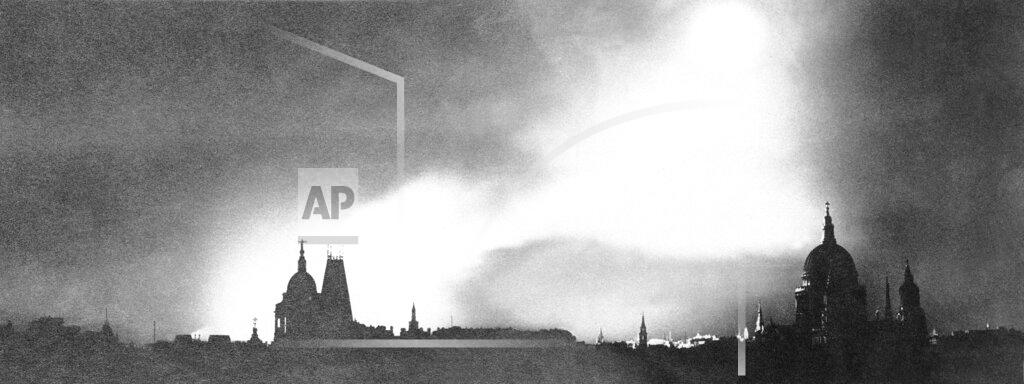
The Battle of Britain: The Luftwaffe sent three major raids against RAF airfields and one on Portsmouth. One of the airfield raids got through almost undamaged but all the others were heavily engaged by the RAF.
Weather: Most of the country could expect a cloudy day, but little or no rain was expected. The north should be dull, but dry while in the south brighter conditions with higher cloud , good visibility and dry. Mild condition should persist throughout the day in all areas.
From first light, German aircraft on reconnaissance patrols had been picked up by radar throughout the Kent and Sussex areas. 11 Group kept a watchful eye but they came to the conclusion that these aircraft were only on photographic missions and posed no threat.
1120 hours: Fighter Command was a little hesitant at first when a build-up of enemy aircraft was detected coming from the direction of Lille. This was joined by further aircraft from Luftflotte 2 and the force was estimated at 150 plus. Fighter Command had no option but to take defensive action.
11 Group “scrambled” 616 Squadron Kenley (Spitfires) who had not long come down from Church Fenton, and the very depleted 264 Squadron Hornchurch (Defiants) operating from Manston.
1200 hours: 616 Squadron was one of the first squadrons of the day that was “scrambled” and according to reports, far too late, a flight of Bf 109s were almost on top of them as they desperately tried to gain height. They tangled desperately, but the 109s had the upper hand. Seven of the squadron’s Spitfires were shot down, all of them destroyed, while two pilots were killed and the other five either bailed out or crash landed their aircraft.
1230 hours: Although six squadrons were involved, it was only 264 Squadron Hornchurch (Defiants) that did suffer further casualties. The Defiants have never been successful in combat operations, and why these aircraft should constantly be used in combat will always be questioned. On this occasion, they lost three aircraft destroyed with one managing to return to base that was to live to see another day. All the Defiant’s were shot down while over the Herne Bay-Margate area soon after 1230 hours. The Dorniers managed to bomb Dover and Folkestone as well as the seaside resorts of Margate and Broadstairs. Some of the Do 17s went on to drop bombs on the airfields of Biggin Hill and Kenley again. But opposition from Fighter Command was strong, and all the bombers and the escorts were flying back over the Channel by 1250 hours.
The first couple of hours after midday seemed like a break for lunch as no combat activity was recorded. But two hours into the afternoon, it was back to… business as usual:
1400 hours: Radar again detected enemy activity off the Belgian coast. A large build-up was forming over the Channel and heading towards the Thames Estuary. This formation consisted of about 50 Do 17s from 1/KG2 and 11/KG3 escorted by 120 Bf 109s and Bf 110s. A formation coming in from the direction of Lille was the first to be detected, but within minutes, another formation was detected coming from St Omer. The Observer Corps made a visual sighting off the coast at Deal, made a far more accurate assessment regarding strength and height of the enemy. One formation took a wide berth around the Thames Estuary, the bombers and their escorts turning east and approaching the Essex coast just south of Harwich. The other formation came in through the Estuary and took the usual course along the River Thames.
1515 hours: Fighter Command put 10 squadrons into action. Among them were 1RCAF Squadron Northolt (Hurricanes), 85 Squadron Croydon (Hurricanes), 111 Squadron Debden (Hurricanes), 310 Squadron Duxford (Hurricanes) and 615 Squadron Kenley (Hurricanes). The flight path of the enemy bombers could give them a possibility of three targets: The aerodromes of Hornchurch and North Weald, or another attack on London. Debden could also be a possibility but was located just a little to the north of the flight path.
Air Vice-Marshal Keith Park had not failed to notice that in the attacks of the last few days, the Bf 109 escorts were actually flying at the same height as the bombers that they were escorting, and not at the extreme heights as they had done so before. Bf 109 pilots used to like flying at between 20,000 and 25,000 feet, but were not in favor of flying at lower speed and only at ten to fifteen thousand feet with the bombers. It was becoming a known fact, that although the Observer Corps were doing a grand job, their estimations of enemy aircraft height and strength were far from accurate. Park therefore instructed squadron flight leaders to report the strength of the enemy and exact height and position as soon as contact was made.
Keith Park’s tactic now, was to release half of his required squadrons leaving the other half on standby at their respective bases. Looking at the overall situation, he could possibly pinpoint the obvious targets of the Luftwaffe. Once the airborne squadron flight leaders reported the enemy strength, height and position, Park would vector the squadrons that had been on standby to allocated positions to cut the enemy off.
1515 hours: First interception was made by the Czech’s of 310 Squadron Duxford (Hurricanes). Being the first squadron on the scene, they found it difficult to get at the bombers because of the Bf 109 escorts, so they matched their Hurricanes against the Messerschmitt fighters. Weaving in and out of enemy aircraft, and in many cases….themselves, 310 squadron went in full of exuberance and enthusiasm. It was not until the arrival of 56 Squadron North Weald (Hurricanes) and 111 Squadron Debden (Hurricanes) that the first enemy aircraft were shot down. 56 Squadron claimed the first Bf 109 over the beaches of Clacton, then 111 Squadron and 310 Squadron claimed Bf 110’s in the same area. But 310 Squadron was to lose two Hurricanes although both pilots bailed out and sustained only minor injuries, and two others were damaged and managed to return to base. 111 Squadron Debden (Hurricanes) also had two of their aircraft damaged with no loss of life.
1530 hours: The German bomber formation and their escorts were over the area between Clacton and Colchester when they were intercepted by 1RCAF Northolt (Hurricanes). At this stage, some of the Bf 109s had turned back, but Fighter Command still had to contend with the Bf 110s as well as the Do 17s. Soon, the German formation turned nor’ west and it became apparent that the target was Debden. With 56 and 111 Squadrons still involved, the three squadrons managed to steer many of the Dorniers off their intended bombing run. One of the Do 17s fell to the guns of a Hurricane of 1RCAF Squadron, then another Bf 110 went down in flames crashing at Great Bentley, and believed shot down by P/O P.J.Simpson of 111 Squadron.
F/O R.L.Edwards of 1RCAF Squadron was killed in this combat, while the 1RCAF commander S/L E.McNab was hit by return gunfire from a Do 17 and returned to base. Although all three Fighter Command squadrons managed to disperse the bombers, six Do 17s managed to get through to Debden and release about 100 bombs doing considerable damage to the landing area, one hangar, the sergeants’ mess, the transport and equipment depots and the NAAFI. Water mains and the electricity were hit and were out of action for a short period and it is reported that six people at the airfield were killed. Although Hornchurch and North Weald may have been targets, they were spared on this day.
“The Czechs really did a fine job despite their aggressive attitude. I think their only problem was that as soon as they saw an enemy that would make for a possible target, nothing else mattered. On that day, I picked out a Dornier that was not in formation and made him my target. I fired a short burst, then another, and the bomber started to wobble a bit. Just then, I smelt burning, and it wasn’t long before the starboard fuel tank burst into flame. I undid my harness and the oxygen tube, opened the hood and turned the aircraft upside down and fell out.
One of the Czechs, Emil Fechtner, managed to get in one of our first success of the day. By all accounts he started his firing way too early, but kept his finger on the button, and at about 100 yards a 110 belched smoke from one of its engines. But then he was jumped on by half a dozen 109s, so discretion being better than valour, he went up into the cloud cover and disappeared from sight.”
- S/L G.D.M.Blackwood 310 Squadron RAF Fighter Command
1530 hours: At the same time as combat operations were taking place inland from Harwich, 85 Squadron Croydon (Hurricanes) and 615 Squadron Kenley (Hurricanes) intercepted the formation that was approaching up the Thames. Interception was made just off the coast near Margate. A number of Bf 109s were shot down over North Kent, and the Do 17s fared no better. One of them being shot down by newly promoted P/O G.Allard of 85 Squadron. The Dornier, with both engines stopped, decided he could make a wheels up landing at nearby Rochford aerodrome, a satellite of Hornchurch. P/O Allard followed him all the way down. The Dornier slid on its belly almost the whole length of the grass covered airfield before coming to rest. “Now that’s one way to give yourself up” was one remark from the ground staff at Rochford, “door to door service, things must be bad over the other side.” as they waved at P/O Allard’s Hurricane who flew overhead, then went back to join in the rest of the action.
1600 hours: Attention was now turned to the Portsmouth area where 50 plus He 111 bombers and 100 plus Bf 109 fighters came in from over the Solent. 11 Group released 43 Squadron Tangmere (Hurricanes) and 602 Squadron Westhampnett (Spitfires), while 10 Group released 234 Squadron Middle Wallop (Spitfires), 152 Squadron Warmwell (Spitfires) and 213 Squadron Exeter (Hurricanes). The weather was by now closing in with low cloud covering much of southern England, and a number of squadrons failed to make contact with the enemy. Those that did, managed to cause havoc amongst the Heinkel’s dispersing them in different directions. Coupled with the fact that the weather situation was getting worse, the bombers turned back towards home with most of them jettisoning their bomb loads over the Channel. Three He 111s were shot down, and two, crippled by accurate gunfire from British fighters limped home in damaged condition.
It had been a bad day for both sides on a day when fierce combat was the order of the day, although Fighter Command fared better than the Luftwaffe. Although the RAF lost 27 fighters destroyed in combat, only six pilots lost their lives. German fighter pilots blamed the new order of flying close to the bombers as the main reason that some forty-one German aircraft had been shot down. They claimed that they lost the element of surprise, and that we were spotted by British fighters as soon as the bomber formation was seen. The German High Command had for some time had reservations of these daylight bombing raids on British airfields and naval bases even though the new strategy was working, and this latest mission failure from Hugo Sperles Luftflotte 3 was now to prove a point and subsequently major daylight raids were suspended indefinitely, despite the fact that the British are suffering almost equally. (This suspension was to last about four weeks.)
RAF Casualties:
1215 hours: Dover. Spitfire R6633. 616 Squadron Kenley
Sgt. M. Ridley killed. (Hit by gunfire from Bf 109 over Kent coast. Crashed near town)
1215 hours: Dover. Spitfire N3275. 616 Squadron Kenley
F/O G.E. Moberley killed. (Shot down over Channel by Bf 109. Pilot did not bail out of aircraft)
1226 hours: Off Herne Bay. Defiant L6985. 264 Squadron Hornchurch
Sgt. B. Baker listed as missing. (Crashed into Thames Estuary after hit by gunfire from Bf 109. Pilot safe)
1226 hours: Off Herne Bay. Defiant L7025. 264 Squadron Hornchurch
Sgt. W. Maxwell listed as missing. (Crashed into Thames Estuary after hit by gunfire from Bf 109. Pilot safe)
1240 hours: Folkestone. Spitfire R6595. 610 Squadron Biggin Hill
P/O F.K. Webster killed. (Badly damaged by Bf 109. Crashed in flames attempting to land at Hawkinge)
1530 hours: Essex. Hurricane P3874. 1RCAF Squadron Northolt
F/O R.L. Edwards killed. (Shot down by gunfire from Do 17 during attack on Debden Airfield)
No. 1 Fighter Squadron RCAF became the first Royal Canadian Air Force unit to engage enemy planes in battle when it encountered German bombers over southern England. The squadron has its first taste of battle and loses one man killed.
Adolf Hitler ordered the transfer of 10 infantry divisions and 2 armored divisions from France to Poland. To avoid Soviet suspicion, he made plans to make this transfer appear as if these fresher troops were coming in to relieve older men who were going to be released back into the work force. The Wehrmacht, under Hitler’s orders, transfers a dozen divisions, including two armored formations, to Poland. This is a pretty clear signal that he is giving up the idea of Operation SEA LION. The troop transfer is camouflaged as normal troop movements so as to avoid any Soviet questions — of which there are none. This the first large troop movement related to Operation BARBAROSSA.
The Luftwaffe bombed the town of Wexford on the south-east coast of neutral Ireland, killing three women. Ireland protested to Germany over the incident.
The Greeks may be afraid that the Italians are going to invade their territory any day, but officials in Rome insist they are making no preparations to do so and have no such intention for the present.
The Rumanian Government, up until this evening, had not intimated whether or not they wished to resume the interrupted negotiations on Transylvania with the Hungarian Government.
Haj Amin, the Grand Mufti of Jerusalem, says that he desires better diplomatic relations with Germany.
The first harsh warning that if Egypt gives Britain military support she will be considered an enemy of Italy was given today by Virginio Gayda in an editorial in the Giornale d’Italia.
The French colony of Chad joined the Free French side and declared war on Germany and Italy. Chad is the first French colony to join the Allies, under the administration of Félix Éboué, France’s first black colonial governor
RAF Bomber Command dispatches 16 Blenheims to Dutch airfields in daylight, only 2 bombed. 6 Blenheims on sea sweep, 1 of these lost.
RAF Bomber Command dispatches 99 Blenheims, Hampdens and Wellingtons overnight to Hannover, Leipzig, Leuna and Nordhausen; 1 Hampden lost. 11 Whitleys sent to Turin and Milan, 2 lost.
Bomber Command avoids Berlin during the night after the raid of the 25th.
Italian bombers attack Alexandria during the night.
A Short Sunderland flying boat conducts reconnaissance over the Aegean during the night and suffers mechanical issues, forcing it to land near Kythera. The Greeks intern the crew.
Destroyers HMS Versatile, HMS Vimy, HMS Antelope, and HMS Ambuscade departed the Nore to reinforce the Home Fleet. Destroyers Versatile and Vimy proceeded to Rosyth. Destroyers Antelope and Ambuscade proceeded to the Tyne to relieve destroyers of the 4th Destroyer Flotilla for release to Scapa Flow.
Destroyer HMS Eglinton arrived at Scapa Flow at 0930 to work up after providing additional escort for convoy OA.204.
After a German air raid on the Orkneys, mines were found and exploded in the Fleet anchorage. No movements of ships was permitted.
Italian submarine Dandolo sank British steamer Ilvington Court (5187grt) in 37-14N, 21-52W. The entire crew was rescued.
German air attacks on convoy HX.65A off Kinnaird Head.
British steamer Remuera (11,445grt) was sunk at 57-50N, 01-54W. The entire crew of the steamer Remuera was rescued.
British steamer Cape York (5027grt) was badly damaged 10 miles 45° from Kinnaird Head. The entire crew of the steamer Cape York was rescued. Steamer Cape York was so badly damaged that she was abandoned. The steamer sank on the 27th under tow, eight miles 55° from Rattray Head in 57-42N, 1-33-05W.
British steamer City Of Hankow (7360grt) was badly damaged by German bombing off Peterhead.
Greek steamer Nellie (4826grt) was damaged fifteen miles northeast of Kinnaird Head.
Destroyers HMS Javelin and HMS Jaguar departed Scapa Flow at 0320 to escort the convoy past Cape Wrath to Pentland Firth due to U-boat attacks on the convoy at 2254 on the 25th. The destroyers were detached at dawn on the 27th for Lerwick. Destroyers Javelin and Jaguar departed Lerwick at 1730 with British steamer Lochnagar for Aberdeen.
German steamer Lisbeth Cords (907grt) was sunk ten miles from Kiel Light Ship on a mine.
Norwegian coastal steamers Avield (127grt) and Odda (835grt) were lost on mines off the Norwegian coast.
Destroyer HMS Jervis escorting British tanker Myriel (3560grt) and French tanker Phenix arrived at Port Said. The destroyer then proceeded to Alexandria, arriving that day.
Submarine HMS Perseus attacked Italian steamer Filippo Grimani (3431grt) off Durazzo without success.
Light cruiser HMS Delhi departed Freetown for Lagos to relieve sloop HMS Bridgewater. She arrived at Lagos on the 29th.
Convoy FN.263 departed Southend, escorted by sloops HMS Black Swan and HMS Hastings. The convoy arrived at the Tyne on the 28th.
Convoy MT.151 departed Methil. The convoy arrived in the Tyne later that day.
Convoy FS.263 departed the Tyne, escorted by destroyers HMS Vega and HMS Wolsey. Patrol sloop HMS Guillemot joined on the 27th. The convoy arrived at Southend on the 28th.
Convoy SL.45 departed Freetown escorted by armed merchant cruiser HMS Cathay to 14 September. The armed merchant cruiser proceeded to Glasgow for refitting. The convoy arrived at Liverpool on 15 September.
President Roosevelt conferred with legislative leaders and received a report from the National Defense Advisory Commission on the progress of rearmament. The White House announced that the President had accepted the resignation of Daniel J. Tobin, one of his administrative assistants, and that Congress would be asked to empower Jesse Jones to hold office both as Secretary of Commerce and as Federal Loan Administrator.
The Senate heard Senator Wheeler charge that Sir George Paish had been lobbying among Senators for legislation which would aid Great Britain; and continued into a night session debate on the Burke-Wadsworth Compulsory Military Training Bill, after adopting the Lodge amendment to limit conscription to 900,000 men while the United States is at peace.
The House adjourned at 12:35 PM until noon tomorrow out of respect for the late Representative George N. Seger. The Ways and Means Committee reached unanimous agreement on an excess profits tax bill.
The first meeting of the Joint Board of Defense, United States and Canada, set up by U.S. President Franklin D. Roosevelt and Canadian Prime Minister W.L. MacKenzie King on 18 August 1940, convened in Ottawa, Canada. The Joint Board of Defense was a commission of representatives from the United States and Canada with responsibility for the defense of the northern half of the Western Hemisphere from possible attacks from sea, land, or air. U.S. representatives were Fiorello H. LaGuardia (President, U.S. Conference of Mayors), Lieutenant General Stanley D. Embick, USA, (Commanding Fourth Corps Area), Captain Harry W. Hill and Commander Forrest P. Sherman (War Plans Division, Office of the Chief of Naval Operations), Lieutenant Colonel Joseph T. McNarney, USAAC, and John D. Hickerson (Assistant Chief, Division of European Affairs, Department of State).
President Roosevelt will be asked to help oust certain key governmental officials who allegedly have supported subversive organizations, Representative Martin Dies, Texas Democrat, chairman of the committee investigating un-American activities, announced tonight. Dies, conducting a star-chamber investigation here, said he would forward Mr. Roosevelt the names of persons holding important governmental positions who have contributed money, speeches, or have in other ways supported groups “under the direct or indirect control of, foreign governments.” “We have information,” he added, “of a few congressmen and perhaps a senator who have used information obtained from ‘Facts in Review,’ a Nazi publication published here in New York.” This information will be included in a letter to the president tomorrow, asking support for a bill to be introduced by Dies outlawing subversive organizations, the chairman said. He added that he plans to write Wendell Willkie at the same time to learn the Republican presidential candidate’s attitude toward organizations controlled by foreign governments. He refused to name any of the governmental officials allegedly connected with alien organizations, and said he had no definite plan for removing them from the public payroll. He hoped that with Mr. Roosevelt’s cooperation something could be done about it.
Representative Martin Dies, Texas Democrat, chairman of the house committee investigating un-American activities, said today there were 6,000,000 sympathizers of Communist, Fascist and Nazi organizations in this country. Here to inquire into subversive groups, “particularly German,” Dies said his committee was in unanimous agreement on the figure. He quoted Earl Browder, Communist party presidential candidate, as estimating that nearly 2,000,000 Americans were sympathetic to the party program. Among the other 4,000,000 “totalitarian sympathizers” Dies listed 100,000 German-American bundsmen in New York State alone and 100,000 attendants at Fascist functions, as well as “gullible Americans.”
Unanimous agreement was reached by the Ways and Means Committee today on an excess profits tax bill, designed to prevent the creation of “war millionaires” out of the new defense program, while allowing corporations to recapture within five years the new capital invested in extra plants for rearmament. The measure would levy the tax generally on all corporations, but permit the taxpayer to use either the “invested capital” or “average profits” method for figuring his excess earnings. It was approved in principle also by the Treasury officials who have been working with the legislators on this new revenue problem. No conclusive forecast could be made of the bill’s probable yield, although unofficial estimates for a full year’s operation ran as high as $300,000,000. It is expected to produce upward of $160,000,000 from excess profits accruing from this year’s business operations.
The Senate restricted the service of conscripts under the peace-time draft bill to the western hemisphere tonight after rejecting, 39 to 32, an opposition proposal that the service-area be limited to the continental United States and its possessions.
The National Defense Advisory Commission met Senate criticism of delays in the rearmament program by submitting a report to President Roosevelt today showing that orders have been placed for 6,747 Army and Navy planes which are “in the process of production” as contrasted with the comparatively few mentioned by critics. The planes ordered up to August 17 by the Army and Navy included 3,250 combat and observation craft. Many additional contracts have been let since August 17. The commission’s report was regarded as a response in particular to the charge of Senator Byrd on Saturday that the program was lagging and his threat of a Congressional investigation unless conditions were remedied. Mr. Byrd stated at that time that only 343 combat planes had been ordered in the last 100 days. Aircraft production for all except small commercial planes is running at the rate of 10,000 a year at the moment, it was stated, and, according to the schedule of the commission, it will be at the rate of 18,000 by January 1, 1941, and of 36,000 by December, 1941.
Senator Wiley, Republican, of Wisconsin, made public today a letter from Secretary Knox outlining Navy plans to contract for a fleet of motor torpedo boats, patrol craft and sub-chasers.
Major League Baseball:
The Red Sox overcame a three-run deficit today to defeat the Browns, 7–6, with Manager Joe Cronin’s hitting and Jim Bagby’s relief pitching dominating the contest. Cronin has a double and a single and three RBIs. Bagby allows just two hits over the last 6 ⅔ innings.
Bob Feller rescues Mel Harder in the 7th and the Indians top the Senators, 4–3. Hal Trosky’s two-run homer off Dutch Leonard is the big blow for the Tribe. Cleveland leads the idle Tigers by three games.
The Game between the White Sox and New York at Yankee Stadium is rained out. So is the game in Philadelphia between the Tigers and the Athletics.
Bucky Walters pitches the first-place Reds to a 3–2 win over the lowly Phillies. Bucky wins his 18th, driving in two runs with a homer and single. The Phillies’ ancient – 40 in December – Syl Johnson then holds the Reds to three hits to win the nitecap, 6–1.
Another old man — 38-year-old Carl Hubbell — comes out of the bullpen in the fourth inning and shuts down a Cubs rally that was cutting into a 8–1 New York lead. The Giants go on to win, 10–5. Frank Demaree paces the Giant offense with three hits, one of them a triple.
Nick Strincevich scattered five hits tonight as the Bees defeated the Cardinals, 3–1. The setback dropped St. Louis from undisputed possession of third place into a tie for that position with the Giants.
The game between the Brooklyn Dodgers and Pittsburgh Pirates is also rained out.
St. Louis Browns 6, Boston Red Sox 7
New York Giants 10, Chicago Cubs 5
Philadelphia Phillies 2, Cincinnati Reds 3
Philadelphia Phillies 6, Cincinnati Reds 1
Boston Bees 3, St. Louis Cardinals 1
Cleveland Indians 4, Washington Senators 3
A joint communique by the Japanese-backed Manchukuoan Government and the Soviet-supported Outer Mongolian Government, issued today at Hsinking, Manuchukuo, states that the commission appointed to fix their boundary has reached an agreement and the commissioners have left Chita for the frontier.
New tariffs favoring Japanese goods and greater supplies of raw materials are Japan’s immediate objectives in the Netherlands Indies, as editorially expounded in today’s Japanese newspapers. Japan’s intensive drive for the products of this colony and its “friendship” is interpreted as a reply to America’s actual and potential embargoes. All writers agree that Japan’s long range policy still requires that the Netherland and French colonies fit themselves into Japan’s plans for a “greater East Asia” bloc. Yakachiro Suma, Foreign Office spokesman, today pointed out that Ichizo Kobayashi, as the Minister of Commerce, member of the Cabinet, was empowered to negotiate for the Japanese Government on political as well as economic matters.
Dow Jones Industrial Average: 125.71 (+0.23)
Born:
Don LaFontaine, American voice actor known as “the King of movie trailers”, in Duluth, Minnesota (d. 2008).
Nik Turner, British jazz-rock fusion saxophonist, flute player, singer, and composer (Hawkwind), in Oxford, England, United Kingdom (d. 2022).
Naval Construction:
The Nihon Kaigun (Imperial Japanese Navy) No.13-class submarine chaser HIJMS Ch-15 is laid down by the Osaka Iron Works (Sakurajima, Japan).
The Kriegsmarine (German Navy) Type VIIC U-boat U-704 is laid down by H C Stülcken Sohn, Hamburg (werk 763).
The Royal Canadian Navy armed yacht HMCS Lynx (Z 07) (ex-Ramona) is commissioned. Her first commaning officer is Lieutenant Joseph Louis Alfred Levesque, RCNR.
The Royal Navy Flower-class corvette HMS Fleur de Lys (K 122) is commissioned. Her first commanding officer is Commander (retired) Robert Tatton Bower, RN. She was launched as La Dieppoise for the French Navy, but completed as HMS Fleur de Lys for the Royal Navy after France was invaded by Germany.
 History Diaries