The Beginning of the Blitz
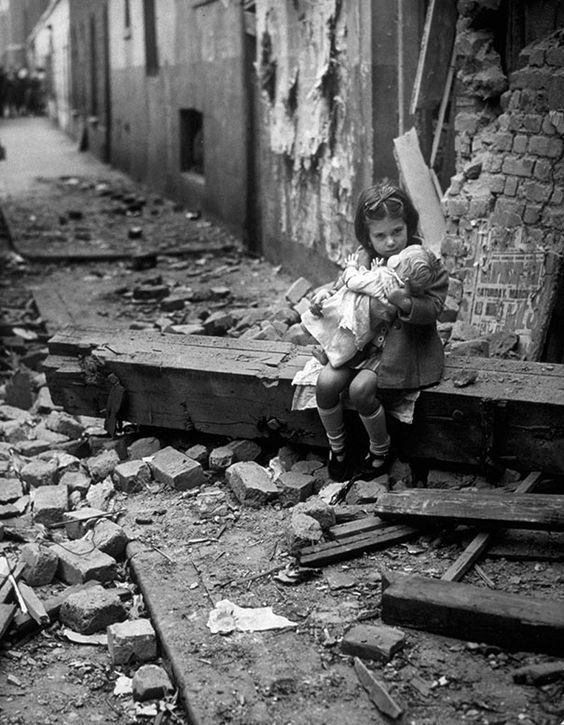
The Luftwaffe dropped bombs on the financial heart of London and Oxford Street in the West End, probably unintentionally as the German bomber pilots had likely made a navigational error and did not know they were over the city. Winston Churchill was outraged at what he perceived to be a deliberate attack and ordered the RAF to bomb Berlin in retaliation.
Prime Minister Winston Churchill cannot know that the London attack was unintentional. He demands a quick reprisal raid, and one is prepared for the following night on Berlin. To say that this is playing with fire is a vast understatement. However, the Germans have left him no choice, and whether or not it was against standing Wehrmacht orders to bomb London (it was) and the attack was the result of a mistake in navigation (it was again) is beside the point. If nothing else pure politics demands retaliation, and even former Prime Minister Chamberlain launched similar retaliatory raids against nearer attacks during the Spring.
Before dawn, the London Blitz began as a misguided group of German bombers of KG1 unloaded their bombs London’s Thames Haven oil terminal, which also damaged the church of St. Gile in East End; Göring demanded to know the crews that did this so to punish them.
On the 22nd of August, a flight of Luftwaffe bombers had bombed a western suburb of London. It wasn’t even London proper — but it was London as far as the British were concerned. It isn’t clear if that flight meant to bomb that particular spot — probably not. But it did, and there weren’t any apologies from the Germans about bombing a movie theater, other nearby businesses, and some flats within the London Civil Defense Zone.
The British noticed the attack, of course, but gave the Germans a pass that one time. Some accounts say that the RAF bombed Berlin immediately in retaliation, but there isn’t any evidence of that. So far, everything remained as it was.
However, on the night of the 24th, another flight of Luftwaffe bombers ordered to attack a factory of the Short aircraft company at Rochester in Kent and the Thameshaven oil storage tanks uses the Knickebein (“Crooked Leg”) radio guidance system to guide their way as usual. The British, also, as usual, employ countermeasures which throw the Luftwaffe navigator off. The Knickebein system already has been superseded within the Luftwaffe for being obsolete and easy to jam, but the more advanced system is only used within one special Luftwaffe squadron — and not this one.
Instead of bombing the proper industrial targets, the navigator relies on the false radio signals and instructs the pilots to release their bombs a bit early. It seems ok, as there is a built-up area below anyway, so the bombs won’t be dropped to no purpose. It’s not like they’ll be dropped in the countryside or ocean.
Below lies central London and the East End. The bombs start numerous fires. In addition, perhaps coincidentally, separate Luftwaffe raids drop bombs on residential areas of Portsmouth and Ramsgate — also most likely in error. The British take note of this. There are “reports” that the London raid was actually the result of a sustained attempt to bomb the city which only succeeded in the second attempt. The RAF starts planning a little raid of its own.
This seemingly minor incident sets in motion the greatest wave of destruction of the century, the destruction of the major cities of Europe… which all begins on 24 August 1940.
Portsmouth suffered the most casualties sustained in a single raid up to this point in the Battle of Britain. Over 100 were killed and 300 injured.
Since August 18th, things generally were relatively quiet, the lull of the last five days had allowed both sides to regroup and re-establish themselves. So far, all the Luftwaffe had been doing was to cause inconvenience to Fighter Command. The radar stations had been damaged, but in nearly all cases they were back in operation within 24 hours. Some airfields had been damaged, but again, the damage was not enough to make them non-operational. Both sides were losing both pilots and aircraft, and withThe Battle of Britain: now over two months old, the Luftwaffe had not yet achieved the advantage that it had hoped for, and Göring’s plan that the Royal Air Force would be wiped out in two weeks were hopelessly dashed.
“…….To continue the fight against the enemy air force until further notice, with the aim if weakening the British fighter forces. The enemy is to be forced to use his fighters by means of ceaseless attacks. In addition the aircraft industry and the ground organization of the air force are to be attacked by means of individual aircraft by night and day, if weather conditions do not permit the use of complete formations.”
- Hermann Göring. Directive issued August 23rd 1940.
Göring went on to add that concentrated attacks were to be made on Royal Air Force airfields. The tactic of trying to lure the fighters of Fighter Command into the air would continue, as “…these fighters must be destroyed if we are to succeed.” German fighter pilots were still opposed to the fact that they were not being given ‘free hunt’ instructions and that they could fly above the bombers that they were escorting. The instruction to stay close to the bombers thus giving them full protection continued.
At 11 Group Fighter Command, the controllers were instructed by AVM Keith Park:
“……Against mass attacks coming inland, despatch a minimum number of squadrons to engage enemy fighters. Our main object is to engage enemy bombers, particularly those approaching under the lowest cloud layer.
“If all our squadrons are off the ground engaging enemy mass attacks, ask No.12 Group or Command Controller to provide squadrons to patrol aerodromes Debden, North Weald and Hornchurch.”
- Air Vice Marshal Keith Park August 20th 1940. PRO Air41 16
It seemed now, that it was going to be a battle of tactics. Previously, the bombing had become far more widespread. In the early stages bombing was only concentrated on the radar stations and some of the production factories in the Southampton and Portsmouth areas with an occasional attack on the midlands, but now destruction by bombing was getting far more intense. Most of the airfields had received some sort of damage, bombing was getting closer to London and in some cases the suburbs had been hit, inland towns and cities in the industrial midlands were now sustaining bomb damage. The air Ministry and the War cabinet were very concerned at the close proximity the bombing was on the capital itself. Göring had issued instructions that London was not to be bombed except only upon his orders, which was a directive that had been passed down from Adolph Hitler.
London was ringed by the Sector Stations that were there to protect it. These were Kenley to the south in the county of Surrey, Biggin Hill also in the south in the county of Kent both just a short drive away from London. Hornchurch to the east, which was a vital airfield because it protected the London Docks, the Thames and the Thames Estuary as well as the large factories at Dagenham and Tilbury. North Weald to the north-east protected much of the Home Counties as well as providing back up for the busy Hornchurch. Northolt in the west of London completed whatever protection London needed.
Weather: Most of the cloud cleared by dawn and was expected to be clear skies and warmer in the south. Cloud was expected to persist in the north of England with many areas expecting continuing drizzle patches.
It was with a tired and exhausted German Air Fleet, that Göring unleashed a savage all out bombing attack on Britain. August 24th was to be the start of a campaign of sustained bombing, sending over the Channel more aircraft that the RAF could cope with. On the night of 23rd/24th August, over 200 heavy bombers made a night raid on the Dunlop Fort rubber works at Birmingham in the midlands seriously affecting tyre production.
0830 hours: The radar at Pevensey and Dover picks up an enemy formation off the coast of Calais. A short pause follows as they try to ascertain its flight path, Fighter Command HQ are alerted and the Observer Corps are ordered to keep a sharp look out. The formation consisted of over 40 Do 17s and Ju 88s with 60 plus Bf 109s as escort.
610 Squadron Biggin Hill (Spitfires) intercepted. The Spitfires had position and height, and dived into the middle of the formation making the bombers scatter and the Bf 109 escort initially had problems with acceleration because of the new orders in keeping with close contact with the bombers.
“…….Sergeant Ronnie Hamlyn, a dashing twenty-three year old of 610 squadron, veteran of Dunkirk. Soon after 8.00 am on August 24th, Hamlyn’s Spitfire, off Ramsgate, was diving from 12,000 feet onto a Junkers 88, hosing it with fire, watching it rip like a hydrofoil along the waters surface. Banking, he fastened on the tail of an Me109, firing until this too, fell, trailing a garland of flame.”
- Richard Collier, Eagle Day — Battle of Britain Hodder & Stoughton 1966 p132
There is no account of bomb damage in this area at the time and it is presumed that the formation was turned back on another unsuccessful mission.
1130 hours: Sgt R.F.Hamlyn and the rest of 610 Squadron had barely had enough time to have breakfast after touching down back at Biggin Hill, when the call went out for 610 Squadron to ‘Scramble’.
“I was at the door of the station commander’s office about a little misdemeanor at Gravesend a few days earlier, when I heard over the tannoy system for 610 Squadron to scramble. I was being escorted by a Warrant Officer to whom I politely told him that it looks like I was being called and that I would be back.”
- Sergeant Ronald Hamlyn 610 Squadron Biggin Hill
An enemy formation had been detected coming across the Channel from Cape Griz Nez which consisted of Ju 88s and an escort of Bf 109s. 264 Squadron Hornchurch (Defiants) had also been deployed as was 151 Squadron North Weald (Hurricanes) and 501 Squadron Gravesend (Hurricanes). Deploying the Defiant squadron was a devastating move, especially as 141 Squadron (Defiants) had almost been decimated about a month previous.
At the time, 264 squadron was at Manston, now after so many attacks was being used mainly as a refueling station rather than a base. 610 Squadron Biggin Hill (Spitfires) had been vectored to Dover, where they saw nothing for the first 40 minutes.
1215 hours: The Defiants made contact with the bombers who made their first attack on Manston airfield. Although they managed to claim one Ju 88 shot down and another damaged, they suffered in the usual way, even in combat with the Ju 88s. Three Defiants were destroyed while two others sustained damage. 610 Squadron managed to intercept a flight of six Bf 109s, but they turned away and headed back towards France having a head start on the pursuing Spitfires. 610 Squadron broke off the engagement, except for Sgt R.F.Hamlyn, who chased one back across the Channel, despite orders not to chase enemy aircraft back across the Channel. Most of the way he was too far distant to open fire, until reaching the French coast where at a range of 150 yards he sent two short bursts of machine gun fire into the Messerschmitt and watched it dive out of control into the ground below.
Although Manston had many tunnels and underground shelters, it was now rapidly becoming useless, the result of regular and constant bomb attacks. In three days, 264 Squadron had lost some twelve Defiants, fourteen pilots and gunners including the Commanding Officer were killed with most of the others being wounded. (Just as the Ju 87 was withdrawn from the Luftwaffe, Fighter Command decided that the end had now come for the Defiant as a front line fighter, and what was left of 264 Squadron was transferred back to Kirton-on -Lindsay.)
1500 hours: During the afternoon, more waves of bombers were detected heading towards London. But then a change in course, and the bombers took on a course that placed them in a straight line for the Sector Stations of Hornchurch and North Weald. With many other squadrons attending skirmishes around the south eastern coastline and with the possibility of more to come, 11 Group was stretched to the limit. 32 Squadron Biggin Hill (Hurricanes) had been scrambled, as was 54 Squadron Hornchurch (Spitfires), 65 Squadron Hornchurch (Spitfires), 151 Squadron North Weald (Hurricanes), 264 Squadron Hornchurch (Defiants), 501 Squadron Gravesend (Hurricanes), 610 Squadron Biggin Hill (Spitfires) and 615 Squadron Kenley (Hurricanes) Park sent out a request for assistance from Leigh-Mallory’s 12 Group.
Air Vice-Marshal Keith Park requests assistance from Air Vice Marshal Trafford Leigh-Mallory, commander of 12 Group. Leigh-Mallory doesn’t particularly like Park, because he resents Park being in charge of the more prestigious No. 11 Group, and he only sends one formation, RAF No. 19 Squadron. Meanwhile, Leigh-Mallory takes his time forming a “Big Wing,” an especially large formation. By the time this “Big Wing” arrives over Hornchurch, the Luftwaffe is long gone. This creates a huge rift between Park and Leigh-Mallory and also, incidentally, allows the bombers to bomb the area around the Thames estuary and start massive fires.
Richard Hough and Denis Richard’s in the book Battle of Britain mentioned that 12 Group sent in 19 Squadron Fowlmere with their cannon armed Spitfires, while three squadrons at Duxford attempted to form a ‘big wing’, but by the time that they had reached the target area the enemy bombers were already on their way home leaving a trail of blazing fires around the Thames Estuary, some caused by hastily jettisoned bombs giving an indication as to the ferocity of combat.
1500 hours — 1630 hours: The combat action continued throughout this period over the Thames Estuary and the north coast towns of Kent. Manston had taken the brunt of the attack, but a number of German bombers managed to get through to their targets of North Weald and Hornchurch where, although considerable damage was done, operations were not affected. Damage to North Weald and Hornchurch suffered considerable damage, but not enough to make them un-operational. But with this attack, and the other raids around south-eastern England, the toll once again began to mount. The RAF was to lose 20 aircraft and 18 of those damaged were repairable, to the 39 destroyed of the Luftwaffe.
1700 hours: The day was not over yet. Most of the action during the morning was in the Dover, Ramsgate, Thames Estuary and East London area, but by midafternoon although Ventnor Radar was not in operation, a formation of 50+ heavy bombers were detected east of Cherbourg. Another formation was also detected coming from the south-east. Several squadrons were scrambled, but only 609 Squadron Middle Wallop (Spitfires) found contact with the enemy in most unpleasant circumstances. They spotted the bomber formation 5,000 feet above them, just as the AA coast guns started to fire at the bombers. It was like being caught between ‘the devil and the deep blue sea’ except in this case it was the thick cloud of a bomber formation and the chilly waters of a cold and bleak English Channel.
The Spitfire of American Pilot Officer Andy Mamedoff was hit and fighting with broken controls just managed to land the plane in a field. (Andy was to lose his life later in the war after dying from sustained wounds.) With only a single squadron against 70+ bombers, it was too much to ask that 609 force the bombers into retreat, and the formation continued on to the City of Portsmouth where the let loose over 200 250 kg bombs. This raid resulted in the largest amount of casualties so far in a single raid during the Battle of Britain. Over 100 people in the city were killed on that afternoon, and 300 sustained serious injuries. Houses, shops, factories, the naval barracks and the dockyards were all seriously damaged, and for the first time, the newspapers had to print the grim reality of truth in their headlines. For months previously Britons were reading newspaper headlines, “144 down out of 1,000″, 25 Spitfires stop 70 Bombers” and “115 Raiders out of 600 Destroyed” figures were very much exaggerated. Now the headlines were to read “Portsmouth Suffers Heavy Bombing”, simply that, in an effort to maintain morale the amount of dead and injured was only placed in small print.
2250 hours: But the bad news was not to stop there. No sooner had the bombers began their return journey, another radar station detected another large formation building up off the Cherbourg Peninsular. This was joined by another formation from the south east again and radar tracked them across the Channel. But by this time darkness had fallen and it was impossible for any squadron to be ‘scrambled’. With the small amount of night fighters that Fighter Command possessed it would be a disaster to allow them to go up and fly the flag for the RAF. Instead, Britain’s only defense for the oncoming bombers would be the searchlights and AA groundfire. This time, the target was London itself. A target that was not to be attacked unless ordered to do so by Göring himself from instruction direct from Adolph Hitler.
2300 hours: So far for the period of the war, Londoners although often hearing local gunfire, seeing vapour trails of dogfights in the sky and hearing about the war in newspapers and on the radio, and the only experience of bombing was when Croydon was mistakenly identified as Kenley and just a couple of bombs dropped on nearby Croydon and Purley, the target hear was naturally the aerodrome at Croydon. The other instance was earlier in the morning when bombs were dropped on the docks and outskirts of East London. But that was in daylight. This was to be a new experience, a frightful experience, for this was the first time that London would be bombed at night. London had never been bombed since the Gotha bombing raids of 1918, and this was to be far more frightening, and spectacular than anything Londoners had seen before. Bombs fell at Aldgate in the city, at Bloomsbury, Bethnal Green, Finsbury, Hackney, Stepney, Shoreditch and West Ham. Fires covered the whole of London’s East End, the night sky glowed blood red, fountains of flame bellowed out of factory windows, and wall structures came crashing down.
“A baby cried. A woman woke, comforted it, opened her dress and gave it her breast. The woman looked up, ‘Awful ain’t it, but we can’t get in to them big shelters and those ones on the street are terrible dangerous.’
“When I came out I saw Micky’s small figure standing by the door of his shelter. There was the rumbling roar of a stick of bombs falling across the river and that never-to-be-forgotten, belly-turning rustling, crackling and cracking sound of a building crashing. ‘Someone’s copped it,’ said Micky.
“As I left he said; ‘Tell them we’re not crying about it. It’s like Churchill said, “It’s up to us. But tell ’em it’s no bloody picnic.”
- Drew Middleton, The Sky Suspended:The Battle of Britain: May 1940-April 1941 Secker & Warburg 1960
On this first night of night bombing by the Luftwaffe, had one experienced not only what they saw, but the sounds, terrible human sounds, cries of despair and terror. For the people of not only London, but Birmingham, Portsmouth and Manchester and many other cities…..their battle was just about to begin. The seaside town of Ramsgate suffered badly this day. A broad mixture of people, wardens, policemen and civilians were amongst 24 people killed in the town in what has been described as ‘the worlds worst assault from the air’when 1,200 houses were destroyed and damaged.
Churchill knew of Hitler’s instruction, ‘……that London was not to be bombed…unless on my sole instruction’. This attack on the August 24th 1940, was this another blunder by the Luftwaffe bombers. Most reports state that the bombing of London was an accident, and that it was not a planned raid. The explanation was that the Luftwaffe bomber crews that were involved, were to bomb the storage oil tanks at both Rochester and at Thameshaven, but they had overshot the target area and continued on towards the City of London. While most of the bombs landed in the dockland area of East and West Ham and others fell in North London and as far west as Esher and Staines, one of the Heinkels left his release of bombs far too late , and it was these that landed in Central London that was to have immediate consequences in the days following.
Within twenty four hours Bomber Command was to launch its first attack on the city of Berlin. This was a reprisal raid for the sudden attack on London. We wonder now as to whether this was a good move or not, for the bombing of Berlin only provoked the Luftwaffe into a series of regular night raids on the British capital. This was to be the warning that the Blitzkrieg on London had now begun.
RAF Casualties:
1015 hours: NW of Dover. Hurricane P3141. 501 Squadron Gravesend
P/O P. Zenker listed as missing. (Failed to return to base after combat with Do 17s and Bf 109s)
1240 hours: Off Ramsgate. Defiant N1535. 264 Squadron Hornchurch
S/L P.A. Hunter listed as missing
P/O F.H. King listed as missing. (Last seen chasing Ju 88 out to sea after attack on Manston)
1240 hours: Off Ramsgate. Defiant L6966. 264 Squadron Hornchurch
P/O J.T. Jones listed as missing
P/O W.A. Ponting listed as missing. (Last seen in combat with Ju 88s & Bf 109s over the Channel)
1245 hours: Off Manston. Defiant L7027. 264 Squadron Hornchurch
F/O I.G. Shaw listed as missing
Sgt A. Berry listed as missing. (Possibly shot down by Bf 109 into Channel after raid on Manston)
1600 hours: Manston. Defiant L6965. 264 Squadron Hornchurch
Sgt W.H. Machin died of wounds. (Shot down by Bf 109 over base. Pilot was slightly injured)
1645 hours: W of Selsey. Blenheim T1804. 235 Squadron Thorney Island
P/O D.N. Woodger listed as missing.
Sgt D.L. Wright killed. (Shot down by Hurricanes of 1RCAF and crashed into Bracklesham Bay)
The day has a lasting effect on the RAF aside from the attack on London. Even if losing the Defiants themselves is not important, the pilots flying them are invaluable. Losing talented pilots in inferior equipment is a poor choice. Fighter Command finally makes the painful decision to withdraw the Defiants completely from combat and relegate them to training purposes. When people point to the withdrawal of the Stukas and Bf 110s from most missions as evidence of the Luftwaffe’s “defeat,” they usually forget to mention that the RAF also had to withdraw some classes of planes.
As for the Luftwaffe, the attack on London has brought a noticeable result for a change, unlike the raids on airfields which are quickly repaired. The blazing fires can be seen for miles and act as a beacon. The new policy of close escorts for the bombers appears to be working.
Losses for the day are roughly equal when figuring in all losses such as planes destroyed on the ground and such. Combat losses are usually given as roughly 30 for the Luftwaffe and 25 for the RAF. Exact figures are difficult to pinpoint because some damaged planes are write-offs, others are out of action for long periods and so on.
The cross-Channel guns at Cap Gris Nez fire again today. This time, they focus exclusively on Dover and Folkestone but don’t hit anything significant.
James Lacey shot down a German Ju 88 aircraft and a Do 17 bomber over Britain.
Hans-Joachim Marseille scored his first kill, a British Hurricane Mk I fighter, over Kent, England, United Kingdom. While he was congratulated by his commanding officer, he was also reprimanded because he achieved the kill after abandoning his wingman to pursue the target. Later that evening, in his diary, he noted great sadness when he thought about the enemy pilot’s mother not being able to see his son again.
RAF Bomber Command dispatches 15 Blenheims on coastal raids and sweeps; 4 aircraft bombed Dutch airfields and shipping at Zeebrugge. No losses.
RAF Bomber Command dispatches 68 Wellingtons and Whitleys overnight to 5 targets in Germany. 2 Whitleys lost. One of the targets was Stuttgart, which recorded its first casualties on this night. 4 people being killed and 5 wounded when bombs dropped into suburbs of the city, hitting some houses and a garage. 28 Wellingtons went minelaying, 25 Blenheims attacked targets in France and 10 further Whitleys attacked Milan.
A team of pathologists at Oxford University including Howard Florey, Ernst Chain and Norman Heatley published laboratory results in The Lancet describing methods for the production of penicillin and the effects of its chemotherapeutic action on lab mice. This, in fact, might be the day’s most farthest-reaching event.
King George VI met Major General Charles de Gaulle for the first time today when he visited French troops under the general’s command in the South England district.
Border negotiations between Hungary and Rumania collapsed briefly, and delegates prepared to return home. But pressure from King Carol’s Palace, reported to have originated in Berlin, appeared tonight to have opened the possibility for a resumption of the Hungarian-Rumanian conference over Transylvania.
War tensions are high and rising in the Aegean, which should be quiet since Greece is not at war with anyone. At noon tomorrow the Greek fleet will mine the entrance of the Gulf of Arta, between Preveza and Actium, the southernmost region believed to be coveted by Italy in her as-yet-unannounced claims against this country.
A small British force bombards Bardia again, led by gunboat HMS Ladybird.
At Malta, there this an air raid around noontime on Hal Far airfield and nearby areas, which damages a Swordfish torpedo bomber. The Italians definitely lose one CR.42 fighter in the attack and perhaps others.
Convoy SC.1 south of Greenland was attacked by U-37, commanded by Kapitänleutnant Victor Oehrn. Sloop HMS Penzance which was escorting the convoy was sunk in 56-16N, 27-19W. At 2038 hours, HMS Penzance (L 28) (Cdr A.J. Wavish, RN) was hit by one torpedo from U-37, broke in two and sank in a few minutes southwest of Iceland. When the stern section sank the unsecured depth charges detonated, killing some of the survivors swimming in the water and slightly damaging the U-boat. Nevertheless two ships from the convoy stopped to pick up survivors. Twelve men were picked up by the British steam merchant Fylingdale, but one of them later died of injuries and was buried at sea. Seven men were picked up by the Blairmore, which was torpedoed and sunk by the same U-boat later that night. All men from the sloop survived the second sinking, were rescued after about 17 hours by the Swedish motor merchant Eknaren (Master Erik Kallstrom) and landed at Baltimore. Wavish, Lt J. H. Smyth, Probationary Temporary S/Lt G. C. Courtney RNR, Commissioned Engineer C. T. Gaughan, Acting Gunner F. G. Hunt, Temporary Paymaster S/Lt R. A. S. MacDonald RNVR, eighty-four ratings were lost in the sloop. S/Lt J. W. T. Draisey was wounded, but was rescued.
U-37 also sank British steamer Brookwood in 54-40N, 27-57W. At 0222 hours the Keret (Master Knut Knutsen Jøsok), dispersed from convoy OA.200 on 20 August, was hit amidships near the engine room by one torpedo from U-37 and sank within eight minutes. The ship had been spotted during the chase for Severn Leigh at 2000 hours the day before and missed by a first torpedo at 0110 hours. The eight men on watch below were killed and five others went down with the ship. The survivors managed to launch a lifeboat, but it capsized. Four survivors sat on the overturned lifeboat and three others on a raft, when the U-boat came alongside and asked for the name of the ship. Later the survivors righted the lifeboat and were picked up the next day by the British steam merchant Trident and taken to Sydney, Nova Scotia. The 5,100-ton Brookwood was carrying ballast and was headed for Sydney, Nova Scotia.
U-48, commanded by Korvettenkapitän Hans Rudolf Rösing, sank British tanker La Brea in 57-24N, 11-21W. At 1424 hours the unescorted and unarmed La Brea (Master George Edward Firth), a straggler from convoy HX.65 since 19 August due to problems with the fuel, was hit on the port side by one G7a torpedo from U-48 west-northwest of Rockall. The torpedo was a surface runner, but nevertheless hit between #10 and #11 tank, right at the break of the poop, opening the deck and causing a fire astern. It went out when the tanker rapidly settled by the stern on an even keel and sank suddenly with her bows in the air after 20 minutes, leaving wreckage and two rafts on the surface. The master had refused to leave as he thought she would remain afloat and was lost as was one crew member on watch below. The survivors abandoned ship in two lifeboats in bad weather with rough seas and observed the U-boat nearby, but were not questioned. The chief officer and 16 men in one of the boats sailed 130 miles and reached South Uist, Outer Hebrides on 25 August. The second officer and 13 men in the other boat made landfall at Islivig Bay, Isle of Lewis on 26 August. The 6,666-ton La Brea was carrying fuel oil and was headed for Dundee, Scotland.
U-57, commanded by Oberleutnant zur See Erich Topp, in an attack on convoy OB.202 sank British steamers Saint Dunstan (5681grt) and Cumberland (10,939grt) in 55-44N, 07-32W.
At 0042 hours, U-57 attacked the convoy OB.202, 25 miles northeast of Malin Head, sinking the Saint Dunstan and Cumberland. The Saint Dunstan (Master Thomas Gordon Cookes) was hit by one torpedo but remained afloat. The ship was abandoned by the crew on 25 August and she was taken in tow the next day, but sank on 27 August between Pladda Point and Holy Island, Irish Sea. 14 crew members were lost. The master and 48 crew members were picked up by the British rescue ship Copeland (Master J. McKellar, OBE), transferred to HMS Witch (D 89) (LtCdr J.R. Barnes, RN), later transferred to HMS Wanderer (D 74) (Cdr J.H. Ruck-Keene, DSC, RN) and landed at Belfast on 25 August. The 5,681-ton Saint Dunstan was carrying ballast and was headed for Baltimore, Maryland.
The Cumberland (Master Edwin Arthur J. Williams) remained afloat and tried to reach port, but sank 8 miles 5° from Inishtrahull. Four crew members were lost. The master and 53 crew members landed at Moville, Co. Donegal. The 10,939-ton Cumberland was carrying general cargo including metal and was headed for Port Chalmers, New Zealand.
U-57 in the same attack on convoy OB.202 also badly damaged British steamer Havildar (5407grt) in 55-39N, 07-18W. The 5,407-ton Havildar was carrying general cargo and was bound for Rangoon, Burma.
Pilots Acting S/Lt (A) A. G. Day RNVR, Naval Airman 1/c H. Newton and Acting S/Lt (A) A. L. Ayres RNVR, Petty Officer Airman S. H. Gould of the 806 Squadron of aircraft carrier HMS Illustrious were lost when their Fulmars of 806 Squadron collided in the Mediterranean.
Destroyer HMS Mashona departed Scapa Flow at 1830 for Liverpool for docking and repair.
Destroyer HMS Kashmir departed the Humber at 1430 for Scapa Flow to join the Home Fleet.
British monitor HMS Erebus was attacked by a German motor torpedo boat eleven miles east of Lowestoft. There was no damage in the attack.
Destroyer HMS Acheron in Portsmouth Harbor was badly damaged by German bombing. Two ratings were killed and three crewmen were wounded. Destroyer HMS Bulldog, which was moored alongside, was damaged by splinters and her commanding officer, Cdr J. P. Wisden, was mortally wounded and died on the 29th. French torpedo boat Flore’s bridge in Portsmouth Harbor was damaged by falling masonry in this attack. Destroyer Bulldog was repaired at Portsmouth completing on 2 September. Destroyer Acheron was repaired at Portsmouth completing on 2 December.
Heavy cruiser HMS Kent, light cruiser HMS Gloucester, and destroyers HMS Hyperion, HMS Hereward, and HMS Defender departed Alexandria to cover the movements of two steamers from Piraeus to Port Said. Destroyer HMS Janus sailed with this force and was detached to arrive at Malta at 0600/26th. Heavy cruiser Kent and light cruiser Gloucester, escorting two merchant ships from Piraeus to Port Said, were attacked by Italian torpedo bombers in 32-53N, 27-00E on the 27th. There was no damage in the attack. The cruisers arrived at Alexandria on the 27th. Destroyers Hyperion and Defender were escorting British steamer Palermo (2928grt) and Spanish steamer Vasco (1193grt). Destroyer Hyperion arrived at Alexandria on the 28th. Destroyer Defender and the merchant ships arrived at Port Said on the 28th.
Early on the 24th, gunboat HMS Ladybird, escorted by Australian destroyer HMAS Waterhen, bombarded Bardia in Operation MB-1. This bombardment was covered by Australian light cruiser HMAS Sydney and destroyers HMAS Stuart, HMS Diamond, HMS Ilex, and HMS Juno. Destroyer Waterhen later rejoined the covering force and the entire covering force arrived back at Alexandria on the 24th. Gunboat Ladybird arrived at Alexandria on the 25th.
Italian destroyers Nullo and Sauro operated without contact in the Red Sea during the night of 24/25 August.
Armed merchant cruiser HMS Asturias departed Freetown and after full caliber firings proceeded to rendezvous with armed merchant cruiser HMS Alcantara for patrol.
Convoy OB.203 departed Liverpool escorted by destroyer HMS Mackay and corvette HMS Heartsease from 24 to 27 August and anti-submarine trawlers HMS Angle and HMS King Sol from 24 to 28 August.
Convoy MT.149 departed Methil. The convoy arrived in the Tyne later that day.
Convoy FS.261 departed the Tyne, escorted by destroyer HMS Winchester and sloop HMS Weston. The convoy arrived at Southend on the 26th.
Convoy HX.68 departed Halifax escorted by Canadian destroyer HMCS Assiniboine and auxiliary patrol vessel HMCS French at 1600. At 2030, the local escort left the convoy to ocean escort, armed merchant cruiser HMS Aurania, returned to Halifax. The armed merchant cruiser was detached on 4 September.
Convoy BHX.68 departed Bermuda on the 23rd escorted by ocean escort armed merchant cruiser HMS Montclare. The convoy rendezvoused with convoy HX.68 on the 28th and the armed merchant cruiser was detached. On 7 September, anti-aircraft cruiser HMS Cairo, destroyer HMCS St Laurent, corvette HMS Fleur de Lys joined the convoy and remained with it until its arrived at Liverpool on 8 September.
Convoy BN.3A departed Aden, escorted by light cruiser HMS Caledon and sloops HMAS Parramatta and HMS Shoreham. The convoy was dispersed on the 27th.
President Roosevelt accepted the resignation of Harry L. Hopkins as Secretary of Commerce and announced that the post had been offered to Jesse H. Jones. He conferred with the American members of the United States-Canadian Joint Defense Board and discussed tax legislation with Representatives Doughton and Cooper. Later he left the White House for a weekend fishing cruise on Chesapeake Bay.
The Senate debated the Burke-Wadsworth Compulsory Military Training Bill, heard Senators Byrnes and McKellar criticize statements of Wendell Willkie regarding WPA employment, received Senator King’s minority report on the deportation of Harry Bridges and recessed at 2:33 PM until 11 AM on Monday.
The House of Representatives was in recess.
Protesting that the delay in defense preparations was menacing national security, Senator Byrd, Virginia Democrat, demanded tonight the U.S. Senate “stay in session day and night until a vote is obtained on the Burke Wadsworth compulsory military training bill. In a statement, the Virginian also called on defense chieftains to explain why “the placing of orders for delivery of mechanized military equipment is lagging.” “If red tape is to blame,” he said, “the country should know it. If the blame is due to inefficient bureaucratic administration, it should be known. If it is due to the refusal of business enterprise to accept contracts from the government, we should know it.” Prospects for a final vote next week on the Burke-Wadsworth bill brightened when the senate agreed to restrict debate on a pending amendment.
The American section of the Canadian-American joint Board on Defense received final instructions from President Roosevelt today, organized and elected Mayor La Guardia of New York as chairman. Tomorrow the board members will leave for Ottawa, where they will hold their first meeting with the Canadian section on Monday. At the board meeting with the President today, which was held in the Executive offices at the White House, Mr. Roosevelt spoke briefly and then they conferred for more. than an hour on the program which envisages the utilization of naval and air bases and other measures designed to provide for the cooperation of the United States in repelling any attack on Canada. Afterward the members met in another room and effected their organization.
To further cooperation in the defense of the Western Hemisphere, General George C. Marshall, Chief of Staff, has invited the chiefs of staff of the armies of the other American republics to visit the principal military installations of the United States in October.
President Roosevelt asked Jesse H. Jones, 66-year-old Texan and Federal loan administrator, today to take over the post of secretary of commerce, succeeding Harry L, Hopkins in the cabinet. Announcement of the offer was made by the White House in making public a letter of resignation from Hopkins who said because of his health he felt he should not continue in office. Jones’ associates presumed he would accept, but there was no direct word from him. Hopkins was understood to have no plans for the immediate future except to rest.
The Navy granted contracts today to five companies to construct $30,000,000 worth of air bases and other defense structures in the mid-Pacific area. At the same time it was reported that Navy authorities had begun preliminary work on a $5,000,000 underground fuel storage project adjacent to the Pearl Harbor Navy Yard. Contracts were awarded on a cost-plus, fixed-fee basis for projects on the Island of Oahu, of which Honolulu is the capital, and at Wake and Midway Islands, lying to the west on the route to Guam, America’s most westerly outpost. Sharing in the contracts were the Hawaiian Dredging Company, the Raymond Concrete Pile Company pany of Honolulu, J. H. Pomeroy and the Turner Construction Com& Co. of San Francisco and the Morrison-Knudsen Company of Boise, Idaho.
A big floating drydock yesterday reached Pearl Harbor Navy Yard from New Orleans after an uneventful 6,100-mile voyage of five months.
Asserting “the military strength of a nation now rests primarily upon its air power,” Wendell L. Willkie suggested today creation of a new cabinet office to handle defense aviation. “The primary reason Germany was able to crush France and other countries and presently bring England to such distress was her development of planes,” the Republican presidential nominee told reporters. He said as a long range objective there should be a Secretary of Defense with assistants in charge of air, sea and land forces. He said however, it would take time to organize such a setup.
President Roosevelt, in a message to the Young Democrats of Pennsylvania, warned today that the Democratic party had “failed whenever its leaders have sought to diverge from a democratic course.”
The House Ways and Means Committee was said by some of its members today to be in a state of confusion over terms of the proposed excess profits tax bill, a situation which prompted two developments. First, the committee directed that its own experts of the Joint Committee on Internal Revenue Taxation and Treasury experts get together over the week-end to try to work out some of the many admitted inequalities of the proposed bill. Secondly, Representative Doughton of North Carolina, chairman of the committee, and his second in command. Representative Cooper of Tennessee, were invited to the White House for a conference. As to the second development, only one thing was made clear. This was that the two Representatives went there at the request of President Roosevelt. Neither member would say anything further than that the President wanted a tax bill and that he was depending on the committee to get one out.
The State Department announced today that the body of Leon Trotsky would not be permitted to be brought to the United States from Mexico.
Reopening of the entire legal question of the possible deportation of Harry R. Bridges, West Coast C.I.O. labor leader, on the general ground that he is a subversive alien, was ordered by the Justice Department today.
Fire laid waste to one of Treasure Island’s most beautiful buildings today in San Francisco Bay, but several hundred firemen and more than 50 pieces of equipment kept the blaze from spreading over the rest of the Golden Gate International exposition. Only the flame-shot walls of the California building remained after the seething furnace had consumed everything in the interior. The huge hall cost $350,000 to build, and housed valuable art, much of which was saved.
Major League Baseball:
The pennant-contending Detroit Tigers pasted four Boston Red Sox pitchers for a 12-to-1 victory in the first game of a doubleheader today, but then choked up and dropped the nightcap, 8 to 7, when Al Benton let in the deciding run on a wild pitch before almost 30,000. Red Sox left fielder Ted Williams pitches the last 2 innings in the 12–1 first game loss to the Tigers. Williams allows 3 hits & 1 run at Fenway Park in Boston.
Held hitless by Bob Feller for seven and one-third innings, the Yankees scored twice in the eighth on Red Rolfe’s bases-loaded double, and once in the ninth after a Joe DiMaggio triple, to down the Indians, 3–2, for their sixth straight victory. The game attracted 50,964 to Yankee Stadium. The Yanks are now only six games behind the league-leading Cleveland team.
A brace of seven-hit pitching performances by Jack Knott and Edgar Smith today propelled the Chicago White Sox to 4-2 and 2-1 victories over Washington in a doubleheader.
George McQuinn scored in the tenth today on Nelson Potter’s wild pitch to give the St. Louis Browns a 6-5 victory over the Philadelphia Athletics. Bill Trotter got the victory for St. Louis.
At Wrigley Field in Chicago the Dodgers bagged eight runs in the second inning to overpower the Cubs, 11–3. Joe Gallagher started the big inning with a towering homer to left-center, and capped it off by doubling and scoring again in his second at bat of the inning. Curtis Davis got the win for Brooklyn.
At Pittsburgh the Giants won from the Pirates, 7–6. A wild pitch decided the issue in the ninth, permitting Jo-Jo Moore to spurt home with the winning run on the left-handed Ken Heintzelman. Johnny Rucker’s sharp eighth-inning single had propelled the Glants into a 6-all tie following an uphill struggle.
Gene Thompson, the sophomore star, has seen the light-hitting Reds blow too many close ball games, so he took no chances today and shut out Cincinnati’s jinx team, the Bees, 5–0.
Chalking up the Cardinals’ ninth victory in a row, Lon Warneke pitched a four-hitter today to beat the Phillies, 1–0, and tie the year’s longest winning streak in the major leagues.
Detroit Tigers 12, Boston Red Sox 1
Detroit Tigers 7, Boston Red Sox 8
Brooklyn Dodgers 11, Chicago Cubs 3
Boston Bees 0, Cincinnati Reds 5
Cleveland Indians 2, New York Yankees 3
St. Louis Browns 6, Philadelphia Athletics 5
New York Giants 7, Pittsburgh Pirates 6
Philadelphia Phillies 0, St. Louis Cardinals 1
Chicago White Sox 4, Washington Senators 2
Chicago White Sox 2, Washington Senators 1
The German commerce raider Atlantis, disguised as the Dutch freighter MV Tarifa, fired upon, stopped and sank the 4,744-ton British freighter King City with gunfire in the Indian Ocean at 16-53S, 65-17E. The King City was bound for Singapore from Cardiff and was carrying a cargo of coal and coke. Six crewmen were lost on the steamer.
Dow Jones Industrial Average: 125.48 (+0.14)
Born:
Francine Lalonde, Canadian politician (Member of Parliament for La Pointe-de-l’Île), in Saint-Hyacinthe, Quebec, Canada (d. 2014).
Tony Secunda, English rock band manager (The Moody Blues), in Epsom, Surrey, England, United Kingdom (d. 1995).
Died:
Paul Gottlieb Nipkow, 80, German technician and inventor, television technology pioneer (Nipkow disk).
Naval Construction:
The Royal Canadian Navy corvette HMCS Sorel (K 153) is laid down by Marine Industries Ltd. (Sorel, Quebec, Canada).
The U.S. Navy Raven-class minesweepers USS Raven (AM-55) and USS Osprey (AM-56) are launched by the Norfolk Navy Yard (Portsmouth, Virginia, U.S.A.).
The Kriegsmarine (German Navy) Type IID U-boat U-144 is launched by Deutsche Werke AG, Kiel (werk 273).
The Royal Navy Fairmile B class motor launch HMS ML 114 is commissioned.
The Royal Navy British Power Boat 70 foot-class motor anti-submarine boat HMS MA/SB 13 is commissioned.
The Royal Navy Dance-class ASW trawler HMS Gavotte (T 115) is commissioned. Her first commanding officer is Lieutenant Cyril Stewart Tennent, RNVR.
The Kriegsmarine (German Navy) battleship Bismarck, lead ship of her class of 2, is commissioned into service. Her first commanding officer is Kapitän zur See Ernst Lindemann.
 History Diaries