The Greek army, alarmed by recent Italian provocations such as the sinking of the light cruiser Helle, takes anti-invasion precautions. King George II of Greece met with his ministers and defense leaders in a hurriedly-summoned conference at 2:15 AM today as unconfirmed reports spread that both Italian and British warships were cruising off the Greek island of Crete. The emergency conference at the foreign office gave rise to rumors of impending grave developments in the mounting tension between Greece and Italy. The Greek foreign office and press ministry denied that Italy had served an ultimatum or other kind of demand that Greece renounce Great Britain’s anti-aggression guarantee. Many observers here, especially the British, doubted that any such demand would be made by Premier Benito Mussolini because with Britain and Italy at war the British would “naturally” help Greece if she were attacked by the Italians.
At 11 o’clock this morning Premier John Metaxas convoked a full Cabinet meeting and informed his Ministers that he was resolved to put up a fight if Greece was attacked.
British Prime Minister Churchill officially changes the name of the local volunteer defense forces to Home Guard. The Home Guard now (finally) is receiving uniforms, weapons, ammunition, and some training to make it a somewhat more professional force.
King George VI commanded that the names of all Germans and Italians be stricken from the lists of British titles and decorations. The order affected Benito Mussolini, who had been made a member of the Order of the Bath in 1923, as well as King Victor Emmanuel III who had been a member of the Order of the Garter. No prominent Nazis were affected as few Germans held any British titles.
German propaganda chief Joseph Goebbels launched a new campaign that stressed the British fighting spirit in an attempt to rally Germany behind the war effort.
Queen Wilhelmina of the Netherlands dismisses Dutch Prime Minister Dirk Jan de Geer.
A virtual agreement has been reached between Spain and Britain whereby Spain will comply with the regulations of the British blockade and be permitted to resume importing gasoline in October.
All Rumanian reserve officers and non-commissioned officers were unexpectedly called up tonight and all army leaves were canceled indefinitely.
The Rumanian press again carried a German-inspired report that the Russians have sent Turkey a note, demanding free passage for the Russian fleet through the Dardanelles in the event of war.
One year old, the Soviet-German partnership was declared today by the official organ of the Russian Government to stand with” unshakable firmness” in the face of efforts to break it that continue “up to this day.”
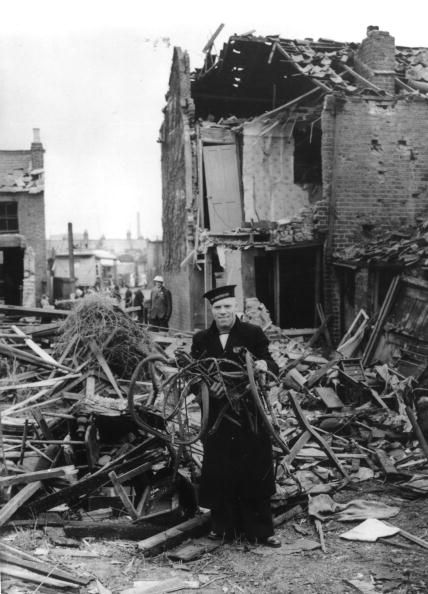
Battle of Britain: Rain and clouds prevented the Germans from mounting large raids against Britain, giving the British airmen a chance to rest and crews a chance to repair airfields. Single-aircraft raids were, however, mounted against southern and central England, as were raids against shipping; two merchant ships were sunk and one was damaged by He 115 torpedo bombers. Overnight, German bombers raided British cities; British fighters shot down two of the night raiders with no losses of their own, while anti-aircraft gunners claimed a third.
Weather: Bright intervals were expected with the possibility of showers over most of Britain. Cloud and overcast could persist over the Channel and the south coast.
The typical English summer was behaving in its usual unpredictable way which again meant that any major assault was out of the question. Overnight, the Luftwaffe targeted Filton again and up to sixteen tons of high explosive fell on the airfield causing some damage, but although hangars and machine shops were hit it was not enough to put them out of action. An occasional German patrol aircraft was detected off the coast, but Fighter Command was not going to waste time on these, and those enemy aircraft that did cross the coast and penetrate inland managed to avoid interception in the low cloud cover.
The afternoon was still clear of any enemy activity due to the inclement weather. A few single aircraft managed to cross the coast, but they stayed very close to the cloud base and they done little or no damage. Again, with combat operations virtually nonexistent, Attention was given to the repair of airfields and telecommunications.
Friendly fire incidents continue to bedevil the RAF. Anti-aircraft fire downs a Hurricane of RAF No. 73 Squadron operating out of Church Fenton. It crashes west of Beverley, Yorkshire at 01:30, but the pilot bails out safely. Another Hurricane force-lands at Withyham, Kent after running out of petrol, and that pilot is ok as well.
RAF Casualties:
There were no casualties on August 23rd 1940.
After dark, the Luftwaffe once again attacks the Bristol and South Wales sector, with Cardiff and RAF Filton taking damage. There are solo raids all along the coast up to York, with a raid on Aberdeen as well.
Heinkel He 115 seaplanes of Küstenfliegergruppe (KGr) 506 (based at Stavanger, Norway) torpedo and sink 5035 ton British cargo ship Llanishen in the Moray Firth and 6680 ton Makalla in the Pentland Firth. There are eight deaths on the Llanishen. Both the Llanishen and Makalla have been travelling with Convoy OA 203. This is a change in tactics by the seaplanes, which heretofore have been dropping bombs to little purpose. Using torpedoes seems to be a much more effective plan. Heinkel He 115 seaplanes are the largest in action during the war (as opposed to flying boats, which are much larger).
James Lacey was awarded the Distinguished Flying Medal.
The British RAF flew a retaliation strike against Berlin, Germany.
RAF Bomber Command dispatches 19 Blenheims to Holland and Germany in daylight; 7 aircraft bombed airfields in Holland, Flushing docks and a railway bridge over the Dortmund—Ems Canal, 1 aircraft lost. 6 Blenheims on a sea sweep.
RAF Bomber Command dispatches 40 Hampdens overnight on the largest minelaying operation so far. 35 Blenheims sent to attack airfields in Belgium and Holland. 10 Wellingtons attacked the oil refinery at Sterkrade/Holten. There were no losses from any of these operations.
The Luftwaffe drops mines in the Thames estuary and outside ports along the eastern coast.
Pilot Officer Petrus Hendrik Hugo, of RAF No. 615 Squadron is awarded the DFC for downing five Luftwaffe planes in June and July.
RAF No. 304 (Polish) Squadron forms at RAF Bramcote. This takes the name “Land of Silesia” and is led by Wing Commander William Graham.
RAF No. 307 (Polish) Squadron forms to fly night fighters.
RCAF No. 1 Squadron is operational and sorties against some Luftwaffe planes today, but has no victories or losses.
U-37, commanded by Kapitänleutnant Victor Oehrn, sank British steamer Severn Leigh (5242grt) in 54-31N, 25-41W and Norwegian steamer Keret (1718grt) in 54-16N, 23-08W.
At 1250 hours the Severn Leigh (Master Robert George Hammett, OBE), dispersed from convoy OA.200 on 20 August, was hit in the bow by one torpedo from U-37 south of Iceland. The ship had been spotted at 1145 hours the day before and missed with a first torpedo at 1822 hours. During the chase, the Keret was sighted and sunk before the U-boat again located the ship at 0815 hours on 23 August. When the crew abandoned ship in four lifeboats, Oehrn observed how the stern gun was manned and they heard how the radio operator sent distress signals, so he decided to surface and to silence the radio with the deck gun and to accelerate the sinking with shots into the waterline. Unfortunately two of the lifeboats were still alongside of the ship when the U-boat opened fire and were hit by shrapnel from the shells that exploded on the hull and killed almost all occupants. 32 crew members and one gunner were lost. The master and nine crew members made landfall at Leverburgh, South Uist on 5 September. The master Robert George Hammett was awarded the Lloyds War Medal for bravery at sea. The 5,242-ton Severn Leigh was carrying ballast and was headed for St. John, New Brunswick.
At 0222 hours the Keret (Master Knut Knutsen Jøsok), dispersed from convoy OA.200 on 20 August, was hit amidships near the engine room by one torpedo from U-37 and sank within eight minutes. The ship had been spotted during the chase for Severn Leigh at 2000 hours the day before and missed by a first torpedo at 0110 hours. The eight men on watch below were killed and five others went down with the ship. The survivors managed to launch a lifeboat, but it capsized. Four survivors sat on the overturned lifeboat and three others on a raft, when the U-boat came alongside and asked for the name of the ship. Later the survivors righted the lifeboat and were picked up the next day by the British steam merchant Trident and taken to Sydney, Nova Scotia. The 1,718-ton Keret was carrying ballast and was headed for Sydney, Nova Scotia.
Destroyer HMS Hostile (Lt Cdr A. F. Burnell-Nugent DSC) struck a mine at 0317 and was badly damaged off Cape Bon in 36-53N, 11-19E. Cdr A. P. Gibson, aboard for passage to Gibraltar, four ratings were lost in the destroyer and three ratings were injured. Destroyer Hostile was scuttled by HMS Hero. Destroyers Hero and HMS Mohawk took the survivors back to Malta. On 24 August, destroyer HMS Janus departed Alexandria to replace destroyer Hostile. On the 27th, destroyers Janus, Hero, Mohawk departed Malta for Gibraltar. Destroyer HMS Nubian followed on the 28th after her defects were corrected. All four ships arrived at Gibraltar on the 29th.
In Operation MB.1, destroyers HMAS Stuart, HMS Diamond, HMS Ilex, and HMS Juno bombarded the Italian seaplane base at Bomba. Australian destroyer Battleship HMS Rodney departed Scapa Flow at 0640 escorted by destroyers HMS Inglefield, HMS Echo, HMS Escapade, and HMS Javelin. They arrived at Rosyth on the 23rd.
In Operation DR, heavy cruiser HMS Norfolk (Captain A J L Phillips) and Australian heavy cruiser HMAS Australia (Captain R R Stewart RN) departed Scapa Flow at 1939 to operate in the area of Bear Island to capture German fishing vessels. No contact was made and they arrived back at 0728/29th.
Destroyer HMS Amazon departed the Clyde with British steamer Royal Ulsterman (3244grt). The destroyer arrived back in the Clyde on the 28th.
Destroyer HMS Punjabi departed Scapa Flowat 1130 for Aberdeen where she picked up British steamer Lochnagar (1619grt). The steamer with troops was escorted to Lerwick.
Probationary Midshipman (A) J. A. McShane RNVR, Probationary Temporary Acting S/Lt (A) R. H. Read RNVR, were killed when their Swordfish of 767 Squadron crashed near Dunnichen while on exercises.
Midshipman (A) A. Taylor, lent to the RAF and flying a Battle of 142 Squadron, was shot down near Boulogne on a mission to attack German S.boats. He and one of the RAF were captured and made a prisoner of war; the third RAF crewman was killed.
German torpedo launching aircraft sank two British ships of convoy OA.203 in Moray Firth. British steamers Makalla (6677grt) and Llanishehn (5053grt) were torpedoed and sank in 58-17N, 02-27W. Tugs Buccaneer and Salvage King were sent to assist the steamers. Eight crewmen were lost on the steamer Llanishehn. There were twelve crewmen lost on steamer Makalla. The survivors from Makalla were picked up by sloop HMS Leith. The survivors from steamer Makalla were landed in the Orkneys.
British steamer Beacon Grange (10,119grt) was damaged by German bombing in 58-39N, 02-27W and taken in tow by tug Buccaneer which was later relieved by tug Marauder. Destroyer HMS Kipling departed Scapa Flow at 1230/24th to screen Beacon Grange from Clythness to Kirkwall, where the steamer was beached.
British steamer Overton (426grt) was damaged by German bombing off Bardsey Island.
British drifter New Royal Sovereign (68grt) was sunk by German bombing in Bridlington Harbor. There was no crew aboard at the time.
German auxiliary ship Schiff 13 (trawler Dusseldorf, 259grt) was sunk by a mine off Dieppe. The ship was later salved and recommissioned as auxiliary patrol boat Vp.607.
HMAS Waterhen, which had departed with these destroyers the day before, had been detached to cover the retirement of Gunboat HMS Ladybird, which departed Alexandria for Mersa Matruh on the 20th.
Heavy cruiser HMS Cumberland departed Simonstown on patrol, and arrived at Freetown on 6 September.
Convoy OB.202 departed Liverpool escorted by destroyers HMS Winchelsea and HMS Witch and corvette HMS Primrose from 23 to 25 August.
Convoy FN.261 departed Southend. The convoy arrived at the Tyne on the 25th.
Convoy MT.148 departed Methil. The convoy arrived in the Tyne later that day.
Convoy FS.260 departed the Tyne. The convoy arrived at Southend on the 25th.
In Washington today, President Roosevelt signed the Investment Company Act of 1940 and the Investment Advisers Act of 1940 giving the Securities and Exchange Commission power to regulate investment trusts and investment counselors. At a press conference he asked for the enactment of conscription legislation within two weeks, asserting that delay jeopardized the defense program.
The Senate approved the conference report on the National Guard Mobilization Bill and sent the measure to the White House, continued debate on the Burke-Wadsworth Compulsory Military Training Bill, received the Walsh resolution to summon Secretary Stimson before a secret session of the Senate to answer questions as to the state of national defense, and the Sheppard bill to prevent sabotage of the defense program; confirmed the nominations of Claude B. Wickard as Secretary and Paul H. Appleby as Under-Secretary of Agriculture, and recessed at 4:56 PM until 11 AM tomorrow. The Interstate Commerce Committee completed public hearings on the renomination of Thad H. Brown to the Federal Communications Commission.
The House was in recess and its committees inactive.
President Roosevelt demanded quick passage of conscription legislation today lest, he said, the national defense program be seriously delayed but his appeal had no discernible effect upon the senate’s ardent band of anti-draft members. To the latter, In fact, Mr. Roosevelt’s statement constituted a challenge, promptly accepted. They rushed to defend their tactic of exhaustive debate. They asserted no filibuster was in progress but such a “revolutionary” proposal demanded thorough examination. Senator Wiley, Wisconsin Republican, said three more weeks’ discussion would hardly be too much. Senator Wiley delivered a speech highly critical of the civilian draft bill, and Senator Nye, North Dakota Republican, denounced the measure as an “insult to our American boys,” a “serious departure from the American way,” and a proposal that might “help crack our democracy.” The bill was proposed, he said, in “response to a hysteria that can definitely lead to dictatorship.”
Senator Walsh, chairman of the Naval Affairs Committee, introduced a resolution today which would require the appearance of Secretary Stimson before a secret session of the Senate for the purpose of stating what steps should be undertaken to protect the United States against all potential enemies. He announced that he would introduce another resolution to summon Secretary of the Navy Knox, if the Senate approves the proposed procedure. The Massachusetts Senator’s plan is exceptional in that such appearances of Cabinet officers are usually made before the appropriate committees of the Senate or the House. The most recent comparable procedure took place more than a year ago when Joseph P. Kennedy, Ambassador to Great Britain, and William C. Bullitt, Ambassador to France, testified before a joint session of the Military and Naval Affairs Committees of the Senate and House.
To expedite the production of defense materials, the National Defense Advisory Commission has formulated a plan whereby the government would reimburse private industry over a five-year period for amounts spent on emergency plant expansion.
Senator Hiram W. Johnson, speaking here tonight in his campaign for reelection, outlined what he called “the creed of the Isolationist.” This creed, he said, “wants no war, urges fullest possible national defense against war, and insists upon the preservation, untouched and undefiled, of America’s bill of rights.” He pledged this country to fight danger from without “until our wealth is dissipated and our man power exhausted, and then to fight on.” He referred also to “the more sinister menace from within,” which he described as the danger of encroachment upon liberties guaranteed under the bill of rights. “I will not yield without a struggle to the death, if need be the good old American way of living, and the freedom we have always enjoyed,” he said, adding: “I want no dictator, either temporary or permanent. Temporary would soon yield to permanent.”
With approach of the November election, Wendell L. Willkie said today, “There is already definite proof that the Roosevelt administration is planning again to pack the relief rolls, especially in those states which are politically doubtful ” At a press conference, the Republican presidential nominee said relief rolls had increased in election years and declined in others and termed this “a very interesting and striking coincidence.”
Wendell L. Willkie, Republican nominee for president, had lunch with Archbishop Francis J. Spellman at the latter’s residence in New York.
Secretary of Commerce Harry L. Hopkins plans to resign from the cabinet shortly before Labor Day, it was learned tonight. When asked about the reported resignation plan, White House Secretary Stephen T, Early said that a statement probably would be issued tomorrow. Hopkins has been ill for more than a year. Reports have circulated frequently that he planned to resign because his health would not permit him to assume active duties, but he never has carried through that intention. It was learned that his new decision was based on a desire to leave office before the presidential campaign enters its final stages. This, it was said, is the reason why he has set Labor Day as the deadline.
The U.S. Senate confirmed today the nomination of Claude R. Wickard of Indiana to be Secretary of Agriculture, succeeding Henry A. Wallace. The senate confirmed at the same time the nomination of Paul H. Applesby of Maryland to be Undersecretary of Agriculture.
The British Purchasing Commission takes over a French order for 53 Grumman G-36a Martlet Is, and 6 Grumman G-36a Martlet IIIs. In U.S. Navy service these are known as the F4F Wildcat. They now will go to various RAF units when they arrive in the UK in the following months.
The musical drama film “Young People,” starring Shirley Temple premiered at the Roxy Theatre in New York City. This was Temple’s final film for her 20th Century Fox contract and it was thought that it might be her last film ever.
Major League Baseball:
Perhaps growing bored with losing games in only nine innings, the Dodgers today varied the monotony by dropping their fifth straight in eleven innings, once again failing to capitalize on an opportunity to gain upon the losing Reds. The Cubs beat them, 5–4, Stan Hack sliding home with the winning run while Blimp Phelps tried vainly to salvage a bouncing throw from young Pete Reiser, who was only playing his first-ever game at shortstop because of injuries to Pee Wee Reese and Leo Durocher.
The Cincinnati Reds, National League leaders, dropped another ball game, 7–2, to the Boston Bees. It was Paul Derringer’s fifth straight defeat. With Jim Tobin pitching well and Derringer and Milburn Shoffner a trifle generous with home run balls to Max West and Chet Ross, the Reds didn’t have a chance.
The rampant Cardinals sliced another game off the Cincinnati Reds’ first-place advantage today as they won their eighth in a row, beating Philadelphia, 5–2, while the Reds lost to Boston. Johnny Mize doubled and scored twice for St. Louis.
The Giants bow to the Pirates, 13–10. Carl Hubbell, working on three days’ rest, is shelled for four runs before anyone is out in the first inning. Four Giant relievers do not fare much better. The Giants rally for four runs in the eighth to come within three, but can get no closer.
The New York Yankees topped the American League-leading Cleveland Indians, 5–3. Joe DiMaggio homered on the day he received his 1939 A.L. MVP award, tieing the game in the fourth. Steve Sundra was the winning pitching and also singled in the winning runs. Al Smith (13-6) took the loss for the tribe.
Jimmy Bloodworth, Senators’ first baseman, drove a single against the left-field fence with two mates on base in the last of the thirteenth inning today, scoring Johnny Welaj and giving Washington a 3–2 victory over the Chicago White Sox. Ken Chase went the route for the Senators, scattering eleven hits and fanning twelve. Bill Dietrich was removed in the thirteenth, and Clint Brown came in to throw one ball — the one Bloodworth hit.
George Caster turned in a brilliant three-inning relief performance today as the Athletics came from behind to beat the Browns, 6–4. Caster replaced Rookie Southpaw Porter Vaughan at the start of the seventh and pitched three hitless innings. Vaughan previously had given up six hits and four runs. All the runs were batted in by Chet Laabs.
The Tigers-Red Sox game at Fenway Park is postponed due to wet grounds. They will play two tomorrow.
The Reds purchase Jimmy Ripple from the Dodgers.
Brooklyn Dodgers 4, Chicago Cubs 5
Boston Bees 7, Cincinnati Reds 2
Cleveland Indians 3, New York Yankees 5
St. Louis Browns 4, Philadelphia Athletics 6
New York Giants 10, Pittsburgh Pirates 13
Philadelphia Phillies 2, St. Louis Cardinals 5
Chicago White Sox 2, Washington Senators 3
An estimated 15,000 persons of the islands’ 20,000 population attended a reception for the Duke and Duchess of Windsor at Clifford Park in Nassau this afternoon in what was perhaps the most colorful and enthusiastic demonstration in the colony’s history.
The U.S. Navy heavy cruisers USS Wichita (CA-45), under command of Rear Admiral Andrew C. Pickens, and USS Quincy (CA-39) arrived at Montevideo, Uruguay. These ships were visiting South America “to furnish a reminder of the strength and the range of action of the armed forces of the United States.”
U.S. Navy destroyers USS Walke and USS Wainwright departed Pará, Brazil for the Guantanamo Bay Naval Base.
All factions in the Argentine Congress decided today to reject the resignation of ailing President Roberto M. Ortiz, thus easing a crisis over an army land purchase that had threatened to split the country.
After several months with no military action in North China the Chinese forces flared into action Tuesday when the Eighth Route Army attacked three Japanese-controlled railways, causing severe damage and cessation of traffic. The railways affected were the Pelping-Hankow, Shihkiachwan-Taiyuan and Tatung-Pukow lines. All were simultaneously attacked at night. The Japanese garrisons along the routes were immediately called out and after fighting repulsed the raiders. The attacks apparently were designed to disrupt communications and supplies because meager official statements declare telegraph and telephone lines and tracks were repaired within twenty-four hours except on the Shihkiachwan-Taiyuan line, which still is crippled. Simultaneously with the cutting of the lines the Chinese shelled the town of Shunteh with trench mortars, causing such heavy damage that the official spokesman at Peiping said the Chinese evidently were achieving better staff work to carry out such widespread effective attacks.
Reports of renewed Chinese military activity in North China coincided today with unconfirmable but detailed Chinese accounts of an extensive withdrawal of Japanese troops from North China during the past month. These reports, which placed the number of Japanese troops involved at 100,000, said they had been removed from Hopeh, Honan and Shansi Provinces through the port of Tangku, where they were said to have boarded south-bound transports. Some of these troops were said to have been replaced by Manchukuoan soldiers under Japanese officers. The same sources reported that the wives and children of Japanese railway workers were being removed from North China areas, presumably because of the shortening and thinning of Japanese defense lines caused by the troop movements.
Japanese planes bombed the Chinese capital again today for the third time this week and the thirty-eighth time this year, killing and wounding a number of Chinese and bringing the year’s casualties to an estimated 2,051 civilians killed and 3,479 wounded. So devastating have been the recent raids, which have brought the number of houses destroyed to more than 17,000, that foreign diplomats are convinced the Japanese Intend to destroy the capital in their effort to force Generalissimo Chiang Kai-shek to make peace.
Today’s Japanese raids came at noon, with the heaviest bombing on the south bank of the Yangtze River, where large fires were started. Germans were described as “indignant” because twenty bombs fell near the new German Embassy, damaging the main building, under construction, and wrecking the roofs, walls and windows of adjacent German-owned structures. A bungalow belonging to the British China Inland Mission was damaged. There were about a dozen Chinese casualties in this area.
Estimates of the number of homeless in the capital area ranged from 15,000 to 50,000. The Generalissimo ordered the creation of more fire lanes, destruction of buildings made of easily inflammable materials and the establishment of nursery and maternity homes for motherless children and expectant mothers. Officials estimated the Japanese have spent the equivalent of $46,000,000 in this year’s ralds. They said sixty-four Japanese planes had been shot down and 448 airmen killed or captured. They estimated the Japanese had dropped a ton of explosives for every Chinese killed.
The Chinese government considered the compulsory evacuation of all civilians except high officials and those directly serving war needs here because of Japanese bombings.
The United States Government has delivered a new and drastic warning to Japan that a time of reckoning must come if Japan persisted in her present course in East Asia, reliable informants told The United Press today. The warning was said to have been delivered personally to Japanese Ambassador Kensuke Hurinouchi in Washington by Under-Secretary of State Sumner Welles. It was in the form of an “aide memoire” and was forwarded to Foreign Minister Yosuke Matsuoka in Tokyo, who has not replied to it and probably will not do so, the informants said. Mr. Horinouchi was called to the State Department about a fortnight ago, according to the informants, and heard a long review of the American viewpoint, after which the written memorandum was handed to him for the information of his government.
Dow Jones Industrial Average: 125.34 (-1.12)
Born:
Thomas A. Steitz, American Biochemist (2009 Nobel Prize in Chemistry for ribosome discoveries), in Milwaukee, Wisconsin.
Richard Sanders, American actor (‘Les Nessman’ — “WKRP in Cincinnati”), in Harrisburg, Pennsylvania.
Tony Bill, American actor (“What Really Happened to the Class of ’65”), in San Diego, California
Tom Baker, American actor (“I, a Man”), in West Virginia (d. 1982).
Vicki Brown, British pop, rock session vocalist, and contemporary classical singer, in Liverpool, England, United Kingdom (d. 1991).
Naval Construction:
The Royal Navy Dance-class ASW trawler HMS Tango (T 146) is laid down by the Smith’s Dock Co., Ltd. (South Bank-on-Tees, U.K.).
The Royal Canadian Navy Flower-class corvette HMCS Edmundston (K 106) is laid down by Yarrows Ltd. (Esquimalt, British Columbia, Canada).
The Royal Navy minesweeping trawler HMS Lord Darling (FY 1774) is commissioned. Her first commander is T/Skipper Thomas Wilfred Morgan, RNR.
The U.S. Navy Sampson-class destroyer USS Allen (DD-66) is recommissioned (originally commissioned on 24 January 1917) as part of the Pacific fleet now based at Pearl Harbor. It is the oldest destroyer in the fleet. Her commanding officer on recommissioning is Lieutenant Commander Frederick Paul Williams, USN.
 History Diaries