Weather: Cloud and winds continuing to come down from the north, much cooler and conditions expected to deteriorate during the day. Rain periods are expected in the south during the afternoon especially in coastal districts.
The weather, which was slowly getting worse from the previous day was expected to continue. Fighter Command knew that large scale operations would be out, but they were not stupid enough to acknowledge the fact that the Luftwaffe would not attempt the occasional mission to possibly airfields and/or industrial targets. This was borne out just after midday when the day’s events started to unfold.
1215 hours: Radar picks up a small to medium formation out over the North Sea off Norfolk. The formation is tracked for a while before Fighter Command dispatched any aircraft. This was due to the possibility that the formation may have been on a reconnaissance mission and not causing any particular threat. The formation breaks into two groups. One comes inland and flies on a south-westerly course, the other continues north past the Wash and the Humberside region. Newly formed 302 Squadron Leconfield (Hurricanes) and 242 Squadron Coltishall (Hurricanes) were instructed to intercept.
The Dorniers are from KG2 and head towards Norwich crossing the coast near Great Yarmouth. The other formation also consisted of Do 17s were from KG3 and continued their flight path along the east coast towards Hull.
1230 hours: 242 Squadron Coltishall (Hurricanes) make first contact and throw the Dornier formation into disarray. As the bombers twist and turn, Blue Section led by Fl/Lt G.F.Powell-Sheddon, tear into the front part of the formation and with two of his section hit one of the Dorniers. The Do 17 of KG2 goes down and crashes in flames in Norfolk. Many of the formation seek cover in the low cloud and abort the mission. 302 squadron, a new Polish squadron was returned to base.
1235 hours: As the other portion of the formation flying north-west pass Hull, they are closer to the coast and Fighter Command release 611 Squadron Digby (Spitfires) and interception is made just off the coast at Skegness. P/O J.W.Lund claims first blood when he shoots down a Do 17 that crashes into the sea killing all on board.
1240 hours: The next casualty is one of the Spitfires of 611 squadron, when P/O M.P.Brown launches in to attack a Dornier, but as he pulls away his Spitfire his hit by gunfire from the Do 17 which damages the tailplane and one of the ailerons on his starboard wing and he is forced to return to base with a very unresponsive Spitfire. More Spitfires go into the attack, F/O D.H.Watkins lines up a Dornier in his gunsight and gives it a five second burst. Smoke trails from the stricken bomber and it goes down crashing into the sea off Scotts Head killing all the crew.
1245 hours: Within five minutes, his Spitfire is hit, but damage is only minor. F/O D.H.Watkins tries to stay with the combat but his crippled aircraft is just a burden in the affray so he decides to return to base.
1300 hours: A section of 242 Squadron led by S/L D.R.S. Bader was coming in to land at Coltishall just to the north of Norwich from a normal practice flight when Bader heard over the R/T that an enemy aircraft had been spotted near Yarmouth. The call was actually not for 242 Squadron, but for 66 Squadron also based at Coltishall. Bader could not resist the temptation, Yarmouth was only minutes away and he could be there within minutes.
He heard over the R/T a voice saying: “Rusty Red Leader calling. Rusty Red section airborne.”
And then the controller: “Hallo, Rusty Red Leader. Bandit angels seven over Yarmouth. Vector one-one-zero.”
Yarmouth lay fifteen miles to the south-east and Rusty was the call sign of Rupert Leigh’s 66 Squadron. As soon as it had registered, Bader’s throttle was wide open and he streaked for Yarmouth.
He came to the coast north of the town but saw nothing else in the air. Rusty section had not arrived yet. A layer of stratocumulus cloud covered the sky at about 8,000 feet. Might be something above that! He lifted his nose and bored into the cloud; twenty seconds later he lifted out of the grey foam into brilliant sunshine and there unbelievably in front of his eyes flew a Dornier 17 with a glistening pale-blue belly. She was about 700 feet above, going from left to right only a couple of hundred yards in front. As he wheeled up, the Dornier spotted him and dived for the cloud, but Bader was between the cloud and the enemy.
Closing fast, he fired, seeing the tracer flick out. The rear gunner was firing. He was straight behind now and something came suddenly away from the Dornier like a little chain with weights on, ** and then it had whipped past under him. He had his thumb on the button in a long burst when the Dornier slid into the cloud and he followed, still hosing bullets into the greyness.
S/L Douglas Bader lost the aircraft in the cloud, he stayed just under the cloud base twisting and turning, but the Dornier eluded him. Bader returned to base exceptionally annoyed and in a state of rage.
1305 hours: The combat action continues and moves off the coast at Skegness, the Dorniers have been foiled in their attempt in attacking a coastal convoy coming down the coast. Many of the bombers try to gain height and take cover in the cloud. The Spitfire of P/O J.W.Lund takes a hit from gunfire from a Dornier and decides to return to base only to crash on landing with the pilot escaping any injury.
1320 hours: Another Spitfire takes a hit in the glycol system and it is believed that he also sustained damage to the hydraulic system, and returned to base. With 611 Squadron losing half of its aircraft the rest attempt to block access to the cloud cover forcing many of the Dorniers to take evasive action.
1330 hours: In a desperate attempt to seek the safety of the clouds, one Do 17 collides with another receiving damage that forces the bomber to make a forced landing between Skegness and Maplethorpe. The crew was believed to have been captured. The other Do 17 is immediately attacked by 611 Spitfires and crashed in the vicinity of Maplethorpe.
In the southwest, German bombers made several attacks targeting 10 Group airfields and oil installations.
1425 hours: 234 Squadron Middle Wallop (Spitfires) intercepted and attacked a Ju 88. Possibly shot down by P/O R.F.T.Doe. The bomber crashed and burst into flames killing all on board.
1615 hours: An attack was made on Brize Norton airfield and also at Middle Wallop. 17 Squadron Tangmere (Hurricanes) intercepted a formation of Ju 88s making the attacks. One of which was shot down, the Junkers crash landed at Earnley and the crew captured. 17 Squadron sustained no casualties. One Blenheim bomber was damaged at Middle Wallop during the raid.
RAF Casualties:
No casualties were reported on this day.
Johann Schalk, an Austrian Zerstörer ace, receives the Ehrenpokal der Luftwaffe (Honor Goblet). The Honor Goblet goes to someone who already has the Iron Cross First Class and does something to deserve special recognition, but is not seen to merit the Ritterkreuz at this point. Schalk is the first airman to receive this award.
Reichsmarschall Hermann Goering continues the Luftwaffe purge that he began on 20 August. The changes include appointing Adolf Galland as Geschwaderkommodore of JG 26 in place of Gotthard Handrick and appointing Oblt. Gunther Lützow as Kommodore of JG 3 in place of Oblt. Karl Vieck. Galland is still at Carinhall to receive an award (where he has been lobbying against the new close escort doctrine to no avail). He is due to return to JG 26 tomorrow, 22 August, when the command change takes effect.
The general tenor of the command changes is to replace older Luftwaffe officers with younger, more aggressive pilots who have proven themselves in this war. Many of the rank and file pilots truly like their older commanders, though, and these changes usually do not help unit performance anyway because the older commanders don’t fly much (and the changes often hurt morale). The changes are not arbitrary, and in many instances make extremely good sense (as in the promotion of Galland), but there is a large element of scapegoating, too.
RAF Bomber Command dispatches 26 Blenheims on daylight coastal sweeps from Zuider Zee to Channel Islands; 6 aircraft bombed various targets. No losses.
RAF Bomber Command dispatches 42 Hampdens to widely spread targets in Germany and Holland overnight; only 29 bombed and 1 was lost.
At Malta, there is an attempted air raid at 15:20 which results in no bombs dropped.
The United Kingdom House of Commons authorized foreign troops of occupied nations to conduct training in Britain under their own flags.
The “tree of liberty”, planted in Saverne after Alsace was restored to France at the end of World War I, was chopped down by members of the Hitler Youth.
A long-range Junkers Ju 88A of 9,/KG 30 performs reconnaissance over Ireland as a form of training, but its engines fail and it crashes into the sea off Berwick. Two of the four crew survive.
The Rumanian government agrees to cede more territory to a neighbor, this time giving up Southern Dobruja to Bulgaria. It does this under German pressure, and perhaps some off-the-record promises of what may happen in the future.
The government announced last night that Rumania, one of Europe’s great granaries and source of food supplies for Germany, faced a 1,000,000-ton wheat shortage because of unfavorable weather and war conditions.
The British air force is intensifying its attacks on Italian positions throughout Ethiopia following the Italian occupation of British Somaliland, the Italian High Command admitted in its communiqu today.
U-48 made two unsuccessful torpedo attacks on two different steamers west, northwest of Ireland.
Minelayers HMS Southern Prince, HMS Port Napier, HMS Port Quebec, and HMS Menestheus departed Loch Alsh at 1140/21st escorted by destroyers HMS Inglefield (D.3) and HMS Echo to lay minefield SN.2, which was an extension of minefield SN.1. Destroyers HMS Escapade and HMS Eclipse departed Scapa Flow at 2230/20th and met the minelayers off Loch Alsh. The minefield was laid on 21/22 August north, northwest of Cape Wrath. The destroyers arrived at Scapa Flow at 2040/22nd after the minelay.
Anti-aircraft cruiser HMS Coventry arrived at Greenock and joined anti-aircraft cruiser HMS Bonaventure, which had arrived there earlier in the day.
Italian submarine Dandolo damaged Dutch tanker Hermes (3768grt) in 38-57N, 13-50W.
British steamer Letty (339grt) was lost en route from Liverpool to Buncrana in Lough Swilly, Ireland, to unknown agent.
British hulk Kendal (178grt) was sunk by German bombing at the Woolston Barge Dock, Southampton.
Netlayer Kylemore (319grt) was sunk by German bombing off Harwich.
British hopper barge James No. 70 (182grt) was sunk by German bombing at Southampton.
British steamer Alacrity (554grt) was damaged by German bombing at Falmouth.
British trawler Wolseley (159grt) was damaged by German bombing nine miles west of Smalls Light.
Danish trawler Ano (189grt) was sunk on a mine off the Danish coast.
Five miles northwest of Ras Hilal, submarine HMS Rorqual attacked Italian steamers Verace (1219grt) and Doris Ursino (891grt) in Italian convoy escorted by Italian torpedo boat Papa and was heavily counterattacked in return.
Destroyer HMS Vidette arrived at Gibraltar escorting patrol ship HMS British Coast from England.
Sloop HMS Bridgewater departed Lagos for Victoria with de Gaulle’s representatives. The sloop arrived on the 22nd and departed later that day to rendezvous with Free French transports. When the Sengalese troops refused to sail for the Duala operation, the sloop returned to Victoria arriving on the 23rd. Sloop Bridgewater departed Victoria at 1700/23rd towards Takoradi to meet a possible troop convoy, but was then ordered to return and arrived at Victoria on the 25th.
Armed merchant cruiser HMS Carthage and convoy RS.5 departed Durban for Aden.
Armed merchant cruiser HMS Asturias and troopship Orion arrived at Freetown from the UK at 1300. At 1715, the troopship and Dutch light cruiser HNLMS Sumatra departed Freetown for the Cape. on the 25th, the Dutch cruiser was relieved by Heavy cruiser HMS Dorsetshire which took the troopship to Capetown, arriving on the 30th.
German armed merchant cruiser Widder sank British steamer Anglo Saxon (5594grt) in the Central Atlantic at 26-12N, 34-08W. Survivors in lifeboats were machine gunned. In total, 34 crew members were killed. 7 survivors got away in a lifeboat, but would not reach land, Eleuthera Island in the Bahamas, 2,500 miles away, for 71 days; by that time, only 2 were still alive. One of the survivors, Able Seaman Robert Tapscott, would later provide testimony to convict Captain Ruckteschell of Widder as a war criminal. The other of these survivors was lost aboard the Swedish steamer Valapariso on 31 December.
The Widder uses its machine guns on the survivors as they are evacuating the ship, with the intention of leaving no survivors in the open ocean (this is later confirmed by examining the wreckage). In addition, the Widder is alleged by a survivor (there are only two out of a crew of 41) to have fired on the lifeboats after being launched. Widder Captain Ruckteschell later lamely claims to have given an order to cease fire but further alleges that the crew could not hear it over the noise of battle. This is a clear war crime (so a court later finds). It is the only time a German raider commits a war crime that results in prosecution and conviction. The British military court convicted Ruckteschell on three of the four charges and sentenced him to 10 years imprisonment. Three years were later remitted from his sentence on 30 August 1947, when he was acquitted of one more of the charges. Ruckteschell died in the Hamburg-Fuhlsbüttel prison on 24 June 1948, shortly after he had been informed that he was going to be released due to his deteriorating heart condition.
Convoy OA.202 departed Methil escorted by sloop HMS Fowey and corvette HMS Perwinkle until 25 August.
Convoy FN.259 departed Southend. The convoy arrived in the Tyne on the 23rd.
The Senate debated the compulsory training bill, ruling the Lee amendment to conscript wealth out of order but accepting the Lodge amendment to limit the number of men who can be called under the measure to 800,000.
The House passed a bill increasing the capital of the Export-Import Bank and the Reconstruction Finance Corporation. It gave final Congressional approval to the Neutrality Act amendment to permit United States ships to evacuate children from the war zones, and received the Coffee resolution for investigation of alleged interference with the Anti-Trust Laws. Its Military Affairs Committee considered the compulsory military training bill, rejecting an amendment to postpone the draft until war is declared.
U.S. State, Justice, War, and Navy Department officials today were believed to have discussed the proposed sale of 50 overage U. S. destroyers to Great Britain in a long conference held behind closed doors. Attorney General Robert H. Jackson cut short a Canadian vacation to preside at the meeting. Afterward he said that the only topic of discussion was legal questions involved in American acquisition of off-shore naval and air bases in the Atlantic. Another justice department official admitted, however, that legal obstacles to transfer of the destroyers were reviewed. Attending in addition to Jackson were acting Secretary of State Sumner Welles, Secretary of War Henry L. Stimson, Army Chief of Staff Gen. George C. Marshall, Secretary of Navy Frank Knox, Chief of Naval Operations Admiral Harold R. Stark, and Green Hackworth, State Department legal adviser. Jackson refused to amplify his statement and the other conferees evaded questions by saying the Attorney General had been chosen conference spokesman. Jackson’s announcement regarding the naval and air bases gave no indication of the problems involved or what sites are under consideration. It is known, however, that the army and navy would like to have bases in Britain’s Trinidad Island which guards Atlantic approaches to the Panama Canal. Sites in French and Dutch possessions also may be sought, it was reported. The fact that Jackson returned hastily, plus the pre-arranged bond of secrecy among the conferees, led to the belief the controversial destroyer issue was discussed.
Senator Barkley, majority leader, informed the Senate late today that the American people wanted action one way or another on the Burke-Wadsworth selective service bill and that he intended to hold the Senate in session Saturday if a vote was not reached before that time. Debate, which at times became acrimonious, delayed action today on all amendments except one of Senator Lee of Oklahoma, proposing the conscription of capital as well as manpower. This was ruled out of order by a vote of 54 to 23 as a revenue measure which should originate in the House. Senator Burke agreed to an amendment offered by Senator Lodge to limit the number of conscripts who could be called under the bill to 800,000 as indications grew that the Administration would not oppose, in more than formal fashion, the Maloney amendment which would delay any draft to January 1, and make one impossible thereafter until the new Congress might appropriate funds for it. Senators Holt, Wheeler, and Walsh again bitterly attacked the principle of peacetime conscription. Senator Holt asserted that “international bankers” and “wealthy attorneys” were promoting the selective service measure. He said he saw something sinister in what he said was the fact that most of them were “Harvard men.”
Senator Clark of Missouri demanded on the floor of the Senate today that the Attorney General determine whether William C. Bullitt, Ambassador to France, violated the Criminal Code of the United States in Philadelphia Sunday night when he advocated in a public speech that the public send telegrams and letters to members of Congress to induce them to take measures to help Great Britain. The Missouri isolationist declared also that Sumner Welles had violated the statutes by endorsing the Ambassador’s speech. Senator Clark’s charges that Mr. Bullitt violated Section 201 of the Criminal Code came after Senator Holt of West Virginia voiced the opinion that the Ambassador “was brought back to this country for no other purpose than to incite a wave of hysteria and get America into war.” Senator Lee of Oklahoma defended Mr. Bullitt for doing “his patriotic. duty,” and Senator Barkley, majority leader, also defended him.
The House of Representatives tonight passed the administration bill authorizing $500,000,000 in Export-Import bank loans to help in the “orderly marketing” of surplus products of western hemisphere nations. The legislation, still to be acted on by the senate, also increases the borrowing power of the Reconstruction Finance Corp. by $1,500,000,000. One-third of this would go to the bank for a revolving fund for loans to Canada and Latin-American nations. The remaining $1,000,000,000 would be used by the R.F.C. for loans to domestic industries for plant expansion to meet defense orders. Just before the final vote the house defeated, 185 to 140, a move by Representative Wolcott, Michigan Republican, to return the bill to committee for elimination of the $500,000,000 provisions. Action came after an all-day debate that ran past the dinner hour.
A sharp division in the House Ways and Means Committee was reported today over provisions of the proposed excess profits tax bill, admittedly delaying it a week and raising the possibility that unless it is changed materially, it will face a nonpartisan fight in the House.
Moving to break the bottleneck impeding military airplane production, Federal Loan Administrator Jesse Jones today announced plant expansion loans totaling $78,500,000 to the Boeing Aircraft Co., the Bendix Aviation Corp., and the Curtiss-Wright Manufacturing Co. The loans supplement $32,000,000 already allotted to the Wright Aeronautical Corp., to build a huge production plant in Hamilton County, Ohio. The Boeing Company receives $10,500,000 to enlarge its plants in Seattle, Washington, and Wichita, Kansas, the Seattle plant getting $7,000,000 to $8,000,000. Curtiss-Wright gets $51,000,000 to be used in the expansion of “several different plants” and to build a new one.
An overall-clad dummy labeled “Claude ‘Benedict Arnold’ Pepper” was hanged, kicked and then dragged across the Capitol lawn today in a demonstration by women foes of conscription.
Wendell L. Willkie, accompanied by members of his staff and newspapermen, arrived at La Guardia Field at 11:40 PM tonight after a direct flight on a TWA stratoliner from Indianapolis. During his visit here, scheduled to last over the weekend, he will confer with Republican party managers on his itinerary and on general campaign plans. Today he will have luncheon with Governor Arthur H. James of Pennsylvania and will spend the afternoon and evening with Joseph W. Martin Jr., Republican National Chairman; Samuel F. Pryor Jr., Eastern campaign director, and others.
Major League Baseball:
Snappy hitting and fielding by Ray Mack and Lou Boudreau, Cleveland’s young second-base combination, and Mel Harder’s effective hurling in the clinches gave the American League leaders a 4–2 decision today over the Red Sox.
The Yankees held on, barely, to hand the Tigers their sixth consecutive defeaat, 6–5. George Selkirk put New York on top early with a first inning grand slam. But the Tigers tied it in the top of the ninth before a bases-loaded walk gave the game to the Yankees.
Dutch Leonard today whitewashed the Browns, 3–0, to win his thirteenth game of the year and break a Washington losing streak. Before the big knuckle-baller’s victory the Senators had dropped five straight, but he was the master today, scattering eight hits and fanning seven. Howard Mills and Willis Hudlin gave Washington only eight hits, but they were bunched.
Bill Beckman’s five-hit pitching gave the Athletics a 3-0 victory over the White Sox today. Beckman didn’t let a Chicagoan get beyond first base in winning his sixth game of the season. Johnny Rigney matched him with a five-hitter, but the A’s made the most of them.
Unable to overcome a six-run Redbird assault in the fifth inning, the Dodgers lost, 7–5, thus running the Cardinal winning streak to six games. Thanks to the Giants’ treatment of the Reds, Brooklyn lost no more ground to the league leaders. Pete Reiser and Dixie Walker hit home runs, the latter’s blow in the seventh off Carl Doyle bringing the Flatbush boys within two of a tie.
Rookie pitcher Charlie Frye belts a 2-run pinch homer to give the Phils a 7–5 win over the Cubs and an event split in the two-game series. Zeke Bonura had tied the score for the Cubs and sent the game into extra innings by homering with one on in the ninth. He also accounted for two doubles in the Cub collection off three Philly hurlers.
Vince DiMaggio’s eighth-inning double, scoring Arky Vaughan from first base, gave the Pirates their second straight victory over the Bees today, 3–2. Young Ken Heintzelman limited Boston to eight hits, with the Bees scoring in the second on Phil Masi’s infield out and again in the fourth when Masi doubled, sending in Sebastian Sisti. Gene Moore was tagged out at the plate when he also tried to score.
The Giants edged the Reds, 5–4, at Crosley Field in eleven innings. Walter Brown pitched for innings of relief, yielding just two hits, to earn the win. Nick Witek singled in Mel Ott from second base with the winning run.
Cleveland Indians 4, Boston Red Sox 2
Philadelphia Phillies 7, Chicago Cubs 5
New York Giants 5, Cincinnati Reds 4
Detroit Tigers 5, New York Yankees 6
Chicago White Sox 0, Philadelphia Athletics 3
Boston Bees 2, Pittsburgh Pirates 3
Brooklyn Dodgers 5, St. Louis Cardinals 7
St. Louis Browns 0, Washington Senators 3
Nearly one million unmarried Canadian men between the ages of 21 and 45 will be shown as available for military training by the national registration that closed tonight, officials estimate.
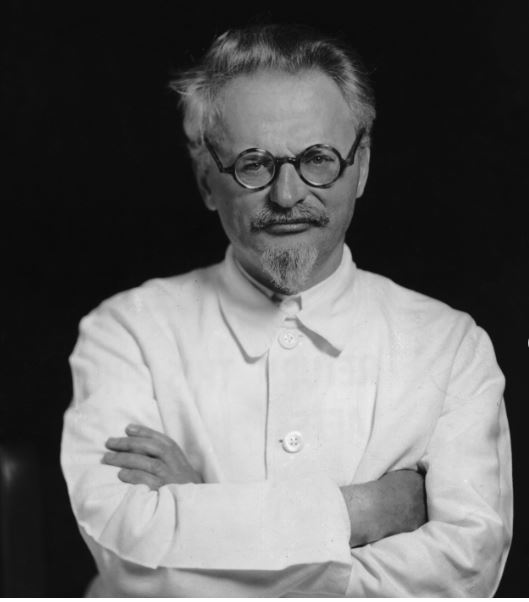
Leon Trotsky, a central leader of the Bolshevik-led revolution in Russia in October 1917 in exile in Mexico City, died of wounds he suffered the previous day after being stabbed with an ice pick by Jacques Mornard alias Frank Jacson. Leon Trotsky died tonight after whispering an accusation that his pickax assailant “most likely” was a member of the OGPU, the Soviet secret police. A savage attack by a confidant felled the 60-year-old guiding genius of the Russian revolution in his home late yesterday. An emergency operation and administration of oxygen were futile. He died at 7:25 PM, before brain surgeons from the United States could reach him by chartered plane. The attacker was identified at the time by police as Jacques Mortan Vandendreischd, 36-year-old native of Iran. Bodyguards stopped the assault but not until he had driven the ax into the exiled revolutionist’s skull.
The U.S. Navy destroyers USS Walke and USS Wainwright arrived at Pará, Brazil.
Reports circulated tonight that Roberto M. Ortiz, Argentina’s sick President, and his Cabinet might resign at any moment as the aftermath of a long-developing political crisis precipitated by an airdrome land purchase scandal.
Fires surpassing in size and destructiveness any heretofore inflicted on Chungking by Japanese air raiders followed the bombing of the capital yesterday by Japanese planes. The Japanese again showered incendiary bombs on the crowded walled city area and within an hour after the attackers had departed fires had sprung up that covered half of the square mile business district. The area bombed yesterday adjoins the district set ablaze in Monday’s attack and bears out the belief here that the Japanese have now set about to burn the entire city. August normally is the hottest, driest month in Chungking and the capital’s buildings, a majority of which have been damaged or wrecked by explosive bombs, are like tinder especially stacked for burning. The attacking bombers yesterday numbered eighty-nine and came in three squadrons. The first dropped a hail of phosphorous bombs in the center of the city; the others smashed the suburban districts with demolition bombs.
The United States-Canadian joint defense agreement seems to the Japanese Government justified by the geographical relations of the two countries, according to Yakichiro Suma, Foreign Office spokesman. He suggested today that the action justi fied in principle many measures Japan was taking in the Far East.
Gun running on a considerable scale is reported to be adding to worries of authorities concerned with the fate of this isolated and wealthy Netherland territory. The Dutch colonial administration already fears Japanese encroachment, even outright attack.
Australian Prime Minister Robert G. Menzies has informed the House of Representatives that Parliament will be dissolved immediately for a general election on September 21.
Dow Jones Industrial Average: 125.07 (+1.9)
Born:
Robert Camac, American horse trainer, in Wilmington, Delaware (d. 2001).
Dick Stafford, NFL defensive end (Philadelphia Eagles), in Matador, Texas.
Died:
Ernest Thayer, 77, American writer and poet (famous baseball poem “Casey”).
Leon Trotsky, 60, Russian Marxist revolutionary and politician (assassinated).
Naval Construction:
The Kriegsmarine (German Navy) Type VIIC U-boat U-133 is laid down by Bremer Vulkan-Vegesacker Werft, Bremen-Vegesack (werk 12).
The Kriegsmarine (German Navy) Type IID U-boat U-141 is commissioned. Her first commanding officer is Oberleutnant zur See Heinz-Otto Schultze.
The U.S. Navy Tambor-class submarine USS Thresher (SS-200) is commissioned. Her first commanding officer is Lieutenant Commander William Lovett Anderson, USN.
 History Diaries