Now 48 hours into the Fall Rot offensive, the Germans have not made any major breakthroughs. The Germans have been largely “stopped in their tracks”. On the Aisne, Erich Hoepner’s XVI Panzerkorps employed over 1,000 AFVs, two Panzer Divisions and a motorized division against the French. The assault was crude, and Hoepner soon lost 80 out of 500 AFVs in the first attack. The German 4th Armee succeeded in capturing bridgeheads over the Somme river, but the Germans struggled to get over the Aisne. Weygand had organized a defense in depth and frustrated the crossing. In a series of examples at Amiens, the Germans were repeatedly driven back by powerful French artillery concentrations and came to recognize improved French tactics.
A dull rumble can be heard north and east of Paris, the rumble of heavy guns. The broken glass from Paris’s first air raid four days ago still tinkles under the feet of the refugees moving east along the boulevards. The restaurants are empty, the Ritz deserted. For the third time in a lifetime, Paris prepares for a siege.
Rommel’s troops avoid and bypass the French defensive hedgehogs, and march 28 miles down the French coast to Forges-Les-Eaux, 25 mils from Rouen, while Kleist’s troops were held up by French defensive lines between Amiens and Péronne. General Erwin Rommel of XVI Panzer Corps, 4th Army finds a seam in the Allied defenses and advances nearly 30 miles to Forges-les-Eaux. This puts him within striking distance of both Rouen and Le Havre. He is accompanied on the thrust by 5th Panzer Division (which never gets any credit….) “Other troops,” i.e. 5th Panzer Division, take Noyon and Fores-les-Eaux in the same general vicinity. An incidental effect of Rommel’s leap forward is that the British 51st (Highland) Division is cut off along the coast.
Rommel is fully aware of the historic nature of his successes, noting: “We have broken past the Maginot line- it’s like some beautiful dream!” The Germans have lived in fear of the French since 1918, and today marks a key turning point in that attitude.
The French 10th Army (General Robert Altmayer) has its front broken by the Rommel thrust and has to retreat to Rouen and behind the Seine River. Already, the French are looking at Paris over their shoulders. The Weygand Line is holding in places, but overall the hedgehog strategy is turning into a disaster. By the evening part of the French 10th Army was cut off on the Bresle and the Germans had made a serious gap in the line, but the French still held the Avre at Moreuil, their second line at Montdidier to Noyon and both the Oise and the Aisne.
Between Amiens and Peronne, the French line holds firm, with von Kleist’s Panzer Group making minimal gains. The French artillery at Amiens is decisive in frustrating the Wehrmacht attack.
Further east, the tanks of Panzer Group Guderian seize bridgeheads across the Aisne. Guderian’s goal is to advance south behind the Maginot Line by heading to the Swiss border, thereby enveloping the fortresses and making their actual capture academic.
A major problem for the French is that the Luftwaffe is establishing air supremacy. The French Air Force (Armée de l’Air) has reasonably good equipment, but it does not have enough of anything. More fundamentally it is completely lacking in organization and tactics. Whereas the fight over Dunkirk against the RAF was reasonably equal, the air battle over France is turning into no contest at all.
RAF Fighter Command sweeps over northern France.
RAF Bomber Command dispatches aircraft to attack German troops and lines of communication.
The British continue evacuating troops from Narvik, 4,600 leaving at Harstad. The Allies no longer have air cover in northern Norway. General Dietl has noticed the easing of pressure against his troops and is moving back towards Narvik. A Royal Navy convoy heads for Great Britain.
The troop transports of British Group II arrived at Narvik, Norway and embarked 5,200 men overnight. Nearby, British pilots without proper carrier landing training safely land 10 Gladiator and 8 Hurricane aircraft aboard HMS Glorious, completing the evacuation of 46 and 263 Squadrons RAF from Norway. Out at sea, troop transports of Group I which had departed Narvik on the previous day were spotted by German aircraft, but they were mis-identified as empty supply ships heading back to Britain, thus spared from attack.
King Haakon VII and the rest of the Norwegian government board the Royal Navy heavy cruiser HMS Devonshire at Tromsø and depart at 20:00 for exile in the UK. They are accompanied to England by thirteen ships, five aircraft and 500 men of the Royal Norwegian Navy.
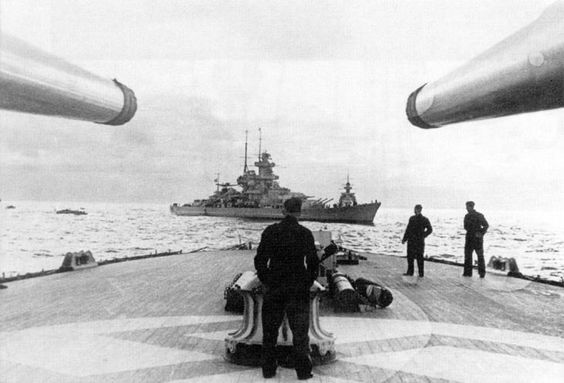
Kriegsmarine Admiral Marschall, commanding the flotilla led by Scharnhorst and Gneisenau, stops to refuel despite being informed by Luftwaffe reconnaissance planes of some nearby “supply ships” (which actually are troopships carrying RAF soldiers home from Norway) that would be easy targets. This keeps his flotilla from coming to British attention, a factor which will prove decisive for coming operations. Marschall is after bigger game.
Early on the 7th, Troopship Group I units leaving Harstad after evacuating allied troops were sighted by one of Admiral Marschall’s scouting planes. However, Marschall, at first, gave them no attention thinking them to be empty troopships returning to England. Later on the 7th, German aircraft sighted and reported units of Troopship Group II at the entrance to Andfjord escorted by anti-aircraft cruiser HMS Coventry (Flagship Vivian, Rear Admiral 1st Anti-Aircraft Squadron) and destroyers HMS Walker and HMS Firedrake. Group II was composed of troopships Oronsay (20,043grt), Ormonde (14,982grt), Arandora Star (15,501grt), Duchess Of York (20,021grt), Royal Ulsterman (3244grt), Ulster Prince (3791grt), and Ulster Monarch (3791grt). Troopship Duchess Of York was not in the group leaving the Clyde on 31 May. On 1 June, she departed Liverpool and joined the group en route. Troopship Orama (19,840grt) had arrived at the ocean rendezvous for the evacuation, but was short of fuel and fresh water. Since sufficient accommodation was already at hand, Orama was sent home with hospital ship Atlantis. Armed boarding vessel HMS Vandyck remained at sea at the ocean rendezvous in case she was required while the troopships embarked the troops. Group II troopships arrived at Andfjord in turn and embarked 5200 troops on the 7th and 4600 troops on the 8th.
Aircraft carrier HMS Glorious and destroyers HMS Ardent and HMS Acasta departed the Narvik area at 0300/8th.
Group II leaving the ocean rendezvous was escorted at sea by aircraft carrier HMS Ark Royal with destroyers HMS Acheron, HMS Diana, and HMS Highlander, light cruiser HMS Southampton (Lord Cork’s Flagship), anti-aircraft cruiser HMS Coventry, and destroyers HMS Firedrake, HMS Havelock, HMS Fame, HMS Beagle, HMS Campbell, HMS Delight, and HMS Echo.
A convoy of slow auxiliaries departed Harstad late on the 7th. This group consisted of British Blackheath (4637grt), Oligarch (6897grt), Harmattan (4558grt), Cromarty Firth (538grt), Theseus (6527grt), Acrity (403grt), Coxwold (1124grt), and Conch (8376grt) escorted by anti-submarine trawlers HMS St Cathan (565grt) and HMS Loch Monteith (531grt) of the 18th Anti-submarine Striking Force. The convoy was joined by destroyer Arrow, sloop Stork, trawlers Strathdevon (212grt), Strathderry (193grt), Eldorado (180grt), Shandwick (166grt), and Newhaven (182grt) after they had completed assisting Group II during embarkation.
Destroyers HMS Veteran and HMS Vanoc escorted the convoy away from the coast and then were detached to join the escort for aircraft carrier HMS Glorious, but the aircraft carrier was lost before they could join the escort. Destroyer HMS Veteran, short of fuel, was ordered to Sullom Voe at 1115/9th. Destroyers Veteran and Vanoc arrived at Sullom Voe at 2350/9th.
This convoy was under German air attack from 2345/9th to 0100 by six aircraft in 67-55N, 2-10E. There was no damage. Destroyer HMS Campbell was ordered at 1900/8th to join the convoy but could not locate it until 1730/10th. Then, she was too low on fuel and had to proceed independently, later accompanied by destroyer HMS Mashona, to Sullom Voe, arriving at 0745/12th. Destroyer HMS Walker did successfully locate and join the convoy. Destroyers HMS Firedrake, HMS Fame, HMS Beagle, and HMS Walker all sustained minor damage from near misses of air bombing on the 12th. Destroyer HMS Firedrake arrived in the Clyde on the 13th and was out of service one week. Destroyer HMS Fame arrived in the Clyde on the 12th and was out of service on week. Destroyer HMS Beagle arrived at Greenock on the 12th was out of service four days. Destroyer HMS Walker arrived at Scapa Flow on the 14th with the starboard dynamo out of action. She departed Scapa Flow on the 15th for the Clyde. She arrived at Glasgow for repairs completed on the 28th.
At 0500/14th, the convoy with heavy cruiser HMS Sussex, light cruiser HMS Newcastle, destroyers HMS Arrow and HMS Walker, sloop HMS Stork safely arrived at Scapa Flow. A convoy departed Tromsø at 1700/7th with British tankers Oil Pioneer (5666grt) and Yewmount (859grt) and ammunition ships Arbroath (553grt) and Ngakoa (507grt) escorted by anti-submarine trawler HMS Juniper (530grt). Destroyers HMS Campbell and HMS Walker and anti-submarine whalers HMS Ellesmere and HMS Thirlmere were to rendezvous with the Tromsø units. The whalers met Yewmount, Arbroath, and Ngakoa later on the 7th. On the 10th, destroyer Campbell reported she was a serious fuel loss and was returning to Sullom Voe. On the 12th, whalers Ellesmere and Thirlmere were relieved by destroyer HMS Viscount. The whalers took ammunition ship Ngakao with engine troubles into Scapa Flow. Destroyer Viscount arrived at Scapa Flow at 0400/14th with the Narvik store ships.
Anti-submarine trawler HMS Northern Gem departed Lodigen escorting Norwegian steamer Ranen (463grt), which was being used as HMS Raven (Cdr Sir Geoffrey Congreve).
British trawlers departing Norway at this time were HMS Lilac, HMS Sycamore, HMS Hawthorn, HMS Willow of Minesweeping Group 1, HMS Ullswater of the 10th Anti-Submarine Striking Force, HMS Northern Spray, HMS Northern Dawn, and HMS Northern Wave of the 12th Anti-Submarine Striking Force, HMS King Sol of the 18th Anti-Submarine Striking Force, HMS Man O’ War of the 21st Anti-Submarine Group, and HMS Preston North End and HMS Lincoln City of the 30th Anti-Submarine Group.
Anti-submarine whalers HMS Ellesmere and HMS Thirlmere of the 10th Anti-submarine Striking Force transferred 435 men and twenty six women to heavy cruiser HMS Devonshire at Tromsø.
Heavy cruiser HMS Devonshire departed Tromsø with the King of Norway, his government, allied legations. She was accompanied by Norwegian submarine HNoMS B-1, fishery protection vessels Nordkapp and Fridtjof Nansen, armed auxiliaries Syrian (298grt), Thorood (422grt), Nordhav II (425grt), Hval V (248grt), Bortind (328grt) and captured German trawler Honningsvaag (487 tons: ex German Malangen captured on 13 April). Heavy cruiser Devonshire arrived in the Clyde on the 10th.
Destroyer HMS Veteran departed Thorshavn at 0600/16th with submarine HNoMS B-1, fishery protection vessel Fridtjof Nansen, and five minor warships through Pentland Firth for Rosyth. Destroyer HMS Kelvin was ordered at 2349/16th by Rear Admiral, destroyers, to join destroyer Veteran and the Norwegian ships. The Norwegian ships escorted by destroyers Kelvin and Veteran and two trawlers arrived at Rosyth on the 18th. Both destroyers proceeded to Commander in Chief, Nore, on completion of the escort duty.
HMS Ark Royal and HMS Glorious are still located at sea WNW of Narvik, the former providing air cover for the Allied evacuation of Norway and the later preparing to embark the surviving aircraft of 263 Squadron, RAF (Gladiator) and 71 Squadron, FAA (Walrus).
For the carriers, the moment of truth had arrived. With the Allied ground forces steadily being pulled out, the time was finally at hand when the RAF landing ground at Bardufoss had to be evacuated prior to its demolition. Since May 21 the Gladiators of 263 Squadron had provided the first semblance of air cover over the Allied troops. Then, on 26 May, 46 Squadrons Hurricanes had arrived with the providing the first modern Allied fighter planes in the theatre. For the prior 12 days the two Squadrons had done Yeoman service, basically winning control of the air. But now, the end of their gallant effort was in sight. As it stood, 46 Squadron was to destroy their aircraft before being evacuated, while 263 Squadron was to destroy the lame ducks and then fly their serviceable Gladiators (10) out to HMS Glorious.
At 0200, HMS Ark Royal in position 70.14 N, 16.14 W, she dispatched an A.D.A. patrol (one 810 Squadron Swordfish) as well as a fighter patrol to Risoy (two 800 Squadron Skuas led by Lt. K. V. V. Spurway, RN). This was followed, at 0435, by a weather flight (one Swordfish, 810 Squadron), another fighter patrol (three Skuas, Capt. R. T. Partridge, RM), and a three-plane bombing mission of 820 Squadron (with the usual 4 x 250 GP, 4 x 20 Cooper and 4 x 25 incendiary bombs each) led by CO Lt.Cdr. G. B. Hodgkinson, RN on the Flak positions at Hundallen. Weather forced the flight to seek an alternate target, and the trio opted to plaster the railway at Sildvik.
0540 saw the A.D.A. patrol relieved, this time with two Swordfish, one each ahead and astern of the task force. At 0800, another trio of Skuas set off for Risoy (800 Squadron, Lt. G. E. D. Finch-Noyes) At 0900 the A.D.A. patrol was relieved by a single 810 Squadron Swordfish, while another is dispatched to Bardufoss to communicate the Navy’s intentions for the evacuation. This is followed, at 0930, by another trio of fighters (800 Squadron, Lt. G. R. Callingham). They report the evacuation convoy is putting to sea.
At 1205, a relief A.D.A. patrol (single Swordfish, 820 Squadron) sets off. At 1350 this aircraft reports a snooper. Five minutes later, 803 Squadrons Lt. C. W. Peever, RN took a trio of Skuas aloft in pursuit, but by the time they got to altitude the German was gone.
Meanwhile, the earlier communication with the RAF at Bardufoss had, more or less, stunned the naval staff. SL.Kenneth B. B. Cross, RAF [later KCB, CBE, DSO, DFC], 46 Squadrons CO had sent back a message proposing that, instead of destroying his ten serviceable Hurricanes, his pilots be allowed to fly them out to the task force and try to land them aboard Glorious. Considering that fact that, to date, no Hurricane had ever been landed on a carrier, the pilots involved had never landed any aircraft on a carrier, and that, even if it were possible to land a properly navalized Hurricane on a carrier (and the Naval experts said is wasn’t), his planes were not fitted with any arrestor gear!
At 1430, HMS Glorious dispatched 4 Swordfish to Bardufoss to lead the RAF planes back when the effort was made. Meanwhile, after due consideration was given to Cross request (and not to be out done by the junior service), the Navy agreed to let a section of Hurricanes fly out to Glorious and give it a go and, at 1615, Ark flew off another Swordfish to Bardufoss with the latest navigational dope, and permission for Cross to fly out.
At 1800, New Zealand FL Patric Geraint Jameson, RAF [later CB, DSO, DFC+bar] led his forlorn hope (FO Herbert Harold Knight, RAF, Sgt. Bernard Lester Taylor, RAF) aloft. Struggling to follow their slow Swordfish guide to the carrier, they arrived shortly before 1900. The three pilots was literally stunned at how small that floating matchbox looked on the sea. Not to be discredited in the attempt, Glorious worked up to 30 knots into the wind to give the maximum wind over the deck, her decks visibly pitching and rolling with the ship in the moderate sea. Signalling an in-flight emergency, Sgt. Taylor cut off Jameson in the pattern and became the first Hurricane to successfully land on a carrier. Following right behind, the other two landed safely as well. That accomplished, the Swordfish was sent back to Bardufoss to pass the word and deliver the plans for the upcoming embarkation. At the same time, 701 Squadrons Walrus amphibians, having flown out from Harstad, landed aboard Ark Royal.
The plan called for Arks Skuas would fly top cover for the effort. Once on station, the Swordfish of 823 Squadron would lead RAF boys back to the carriers, at which point the Gladiators were to embark first, and then the Hurricanes. At 2305, Ark commenced launching the fighter patrols, three sections of 800 Squadron, nine Skuas led by Capt. R. T. Partridge, RM (Narvik), Lt. G. E. D. Finch-Noyes, RN (Skaanland), and Lt. K. V. V. Spurway, RN (Bardufoss), and an A.D. A. patrol of two 810 Squadron Swordfish.President Roosevelt applauded a newspaper editorial demanding compulsory military training for the United States today, while his aides joined with Henry Ford in a preliminary move toward possible mass production of warplanes on a gigantic scale. In addition, President Roosevelt asked Congress for specific authority to turn old United States Army guns back to manufacturers, a procedure expected to place them quickly, if indirectly, in the hands of beleaguered French and British soldiers. Fifty navy planes already are following such a route to the allies. Highly placed persons said tonight the administration plans to release, all told, more than 500 army and navy planes.
Captain B. A. W. Warburton-Lee of the First Battle of Narvik (10 April 1940) is posthumously awarded the first V.C. awarded during the way.
Pursuant to Hitler’s edict of the previous day, church bells are ringing throughout Germany. Unlike during World War I, however, there is not much public enthusiasm about the Wehrmacht’s victories. US journalist in Berlin William Shirer reports that “Church bells ring and flags are out today to celebrate victory in Belgium, but no real elation here.”
The government institutes a smoking ban for female students at German universities, noting: “Your cigarettes should go to the army; also, science has proven smoking bad for women.”
U.S. Ambassador to the Court of St. James Joseph Kennedy informs President Roosevelt that defeat in France is only a matter of time: “They have nothing to fight with but courage.”
The output of new aircraft has increased by 62 percent since the week that ended May 11, the week in which the Churchill government took over, Lord Beaverbrook, Minister of Aircraft Production, said in an interview today.
With the knowledge that Great Britain’s soil will have to yield more food if a shortage is to be averted, every possible worker that can be spared from the armed forces, auxiliary services and factories is being drawn into agriculture.
The far-reaching network of the Italian merchant marine was ordered withdrawn from all seas yesterday, apparently as another “final” move toward the country’s active participation in the war.
Italy remained at the sidelines today watching the result of the battle in France. Once that great struggle reaches its climax, the danger of Premier Mussolini’s moving will obviously be great.
A probable heavy bombardment of Malta by Italian planes and abandonment of the island as a naval base by Britain were predicted today as a likely early result of Italian entry into the war by Admiral Sir Sydney Fremantle, who commanded Britain’s World War squadron in the Aegean Sea.
Irish Government declares a State of Emergency due to situation on the continent.
Warning Sweden that her danger of being involved in the war was not over, King Gustaf yesterday urged his people to stand united for the defense of their independence and their future.
Soviet Russia was reported tonight to have assured Turkey of Russian “benevolence” and possibly direct military aid if Italy, entering the war on Germany’s side, should threaten either the Dardanelles or the Black Sea.
RAF Bomber Command dispatches 24 aircraft to attack Hannover overnight.
At 3:00 PM one of the French Navy’s three Farman 223.4 long-range naval reconnaissance aircraft, the Jules Verne, left Bordeaux-Merignac airfield carrying 2 tons of bombs, target: Berlin. This was the first bomb assault of the war against Berlin. The mission was successful but damage was of course minimal.
Bombs were dropped near a Lincolnshire town in northeastern England today as German warplanes conducted sweeping raids for the second time in 24 hours. No serious damage was reported from the raids which caused alarms from Durham County in the north east to the southeastern tip of the island along a seaboard of 250 miles. No one was killed when the bombs fell near the Lincolnshire town but three workmen were injured. The bombs fell about 40 minutes before an air raid warning was given.
Destroyer HMS Vega departed Chatham and called at Dover before proceeding to Le Havre with the XD.H (Cdr R. W. Stirling-Hamilton) Dieppe demolition party. Off Le Havre, the XD.H party was transferred to a French trawler because the port was closed. The party travelled overland to Dieppe. On her return to Dover, destroyer Vega was ordered to Portsmouth to pick up the CP (Dieppe) blockships.
French large destroyer Gerfaut departed Brest escorting steamers Koningin Emma and Princess Beatrix to Plymouth, arriving on the 8th. On return, the destroyer departed on the 8th escorting steamers General Metzinger and Meknes, joined by torpedo boat L’impetueuse. They arrived at Brest on the 9th.
Destroyer HMS Encounter departed Scapa Flow at 2100/7th to search for a German seaplane down in the sea 43° from Wick. Destroyer Encounter was later recalled. Attempting to enter harbor at 0300/8th, the destroyer went ashore on Cantick Head. The destroyer was later refloated with only slight damage. She arrived at Scapa Flow at 1245/8th. Destroyer Encounter departed Scapa Flow at 0300/14th escorting British steamer Foss Beck (4876grt) and tanker British Lady (6098grt) to Rosyth, arriving on the 14th. Destroyer Encounter departed Rosyth on the 16th in convoy MT.89, escorted by escort ship HMS Woolston and sloop HMS Flamingo, arrived on the 17th in the Tyne. The destroyer departed the Tyne on the 17th in convoy FS.97 with escort ship Woolston and sloop HMS Fleetwood. Destroyer Encounter arrived at Chatham where she was under repair and refit until 20 July.
French tanker Salome (13,291grt) was lost at Dunkirk to unknown causes. She was later salved by German forces and renamed Breisgau.
U-48, commanded by Korvettenkapitän Hans Rudolf Rösing, sank British steamer Francis Massey (4212grt) and damaged British steamer Eros (5888grt) 14 to 15 miles 52° of Tory Island in 55 33N, 08 26W. Frances Massey (Master Walter Whitehead) was hit in the foreship by one G7a torpedo from U-48 at 0213 hours 14 miles northwest of Tory Island. At 0007 hours, the ship had been missed by a first torpedo which passed underneath her. The vessel sank within 30 seconds, taking 33 crew members and one gunner with her. The sole survivor, the master, was picked up by HMS Volunteer (D 71) (LtCdr N. Lanyon, RN). Destroyer HMS Volunteer and tug HMS Bandit was detached from the armed merchant cruiser HMS Carinthia mission. The destroyer was guided to the raft by aircraft. Of the ship’s complement, 34 died and 1 survivor was picked up by the destroyer HMS Volunteer. The 4,212-ton Francis Massey was carrying iron ore and was headed for Glasgow, Scotland.
After picking up steamer Francis Massey’s survivor, destroyer Volunteer proceeded to assist steamer Eros. At 0322 hours on 7 June 1940, U-48 had fired a torpedo at the unescorted Eros about 15 miles 52° of Tory Island and scored a hit after 4 minutes 34 seconds. The shot fell from a distance of about 3000 metres because the vessel was fast and the proximity of land prevented a chase on the surface. The U-boat left the area after the crew abandoned the burning ship. Destroyer HMS Berkeley took steamer Eros in tow. Of the Eros’s complement, all 62 survived and were picked up by the ASW trawler HMS Paynter. The 5,888-ton Eros was carrying copper, ferro chrome, and small arms and was bound for Liverpool, England. The Eros was later beached at 2230 on Tory Island, assisted by tug Bandit.
After this operation, destroyer Volunteer arrived at Scapa Flow at 2145/8th and secured alongside depot ship HMS Woolwich. Destroyer Berkeley was sent off on other duties.
Aircraft carrier HMS Argus and her attendant destroyer HMS Sturdy, escorted by destroyer HMS Keppel arrived from the Gulf of Lyons at Gibraltar en route to the United Kingdom.
French armed merchant cruiser Ville D’Oran arrived at Casablanca in French Morocco with 212 tons of gold from the French reserves.
French light cruiser Emile Bertin departed Halifax to return to Brest for another gold evacuation mission.
French submarine Archimede, which had come from Brest, via Casablanca, arrived at Gibraltar escorted by sloop Elan. The submarine sailed later that day escorted by sloop Annamite and arrived at Toulon on the 11th. Submarines Archimede and Beveziers departed Brest on the 1st in convoy 47 BF, escorted by sloop Elan. The convoy arrived at Casablanca on the 5th.
New Zealand Division light cruiser HMS Leander departed Port Sudan to patrol off that port. On 8 June, she joined sloop HMS Grimsby escorting Italian liner Umbria (9349grt) to Port Sudan.
Convoy MT.84 departed Methil, escorted by sloops HMS Lowestoft and HMS Hastings. The convoy arrived at the Tyne later that day.
Convoy FS.190 departed the Tyne, escorted by sloops HMS Lowestoft and HMS Hastings. The convoy arrived at Southend on the 9th.
The War at Sea, Friday, 7 June 1940 (naval-history.net)
Destroyer VEGA departed Chatham and called at Dover before proceeding to Le Havre with the XD.H (Cdr R. W. Stirling-Hamilton) Dieppe demolition party.
Off Le Havre, the XD.H party was transferred to a French trawler because the port was closed.
The party travelled overland to Dieppe.
On her return to Dover, destroyer VEGA was ordered to Portsmouth to pick up the CP (Dieppe) blockships.
French large destroyer GERFAUT departed Brest escorting steamers KONINGIN EMMA and PRINCESS BEATRIX to Plymouth, arriving on the 8th. On return, the destroyer departed on the 8th escorting steamers GENERAL METZINGER and MEKNES, joined by torpedo boat L’IMPETUEUSE. They arrived at Brest on the 9th.
Destroyer FEARLESS departed Middlesborough at 1030 for Rosyth en route to Scapa Flow.
At 1300, destroyer FEARLESS reported the breakdown of both feed pumps. The destroyer returned to Middlesborough for repairs.
At 1900 0n 10 June, the destroyer departed for Sullom Voe.
Destroyer ENCOUNTER departed Scapa Flow at 2100/7th to search for a German seaplane down in the sea 43° from Wick.
Destroyer ENCOUNTER was later recalled. Attempting to enter harbour at 0300/8th, the destroyer went ashore on Cantick Head.
The destroyer was later refloated with only slight damage. She arrived at Scapa Flow at 1245/8th.
Destroyer ENCOUNTER departed Scapa Flow at 0300/14th escorting British steamer FOSS BECK (4876grt) and tanker BRITISH LADY (6098grt) to Rosyth, arriving on the 14th.
Destroyer ENCOUNTER departed Rosyth on the 16th in convoy MT.89, escorted by escort ship WOOLSTON and sloop FLAMINGO, arrived on the 17th in the Tyne.
The destroyer departed the Tyne on the 17th in convoy FS.97 with escort ship WOOLSTON and sloop FLEETWOOD.
Destroyer ENCOUNTER arrived at Chatham where she was under repair and refit until 20 July.
Anti-submarine trawlers LE TIGRE (516grt) and ELM (530grt) arrived at Scapa Flow escorting British oiler INVERSHANNON (9154grt) and steamers KIRKWOOD and ST CLAIR (1637grt).
British steamer REDCAR arrived at Scapa Flow from Harstad.
French tanker SALOME (13,291grt) was lost at Dunkirk to unknown causes. She was later salved by German forces and renamed BREISGAU.
Convoy MT.84 departed Methil, escorted by sloops LOWESTOFT and HASTINGS. The convoy arrived at the Tyne later that day.
Convoy FS.190 departed the Tyne, escorted by sloops LOWESTOFT and HASTINGS. The convoy arrived at Southend on the 9th.
U-48 sank British steamer FRANCIS MASSEY (4212grt) and damaged British steamer EROS (5888grt) 14 to 15 miles 52° of Tory Island in 55 33N, 08 26W.
Destroyer VOLUNTEER and tug BANDIT was detached from the armed merchant cruiser CARINTHIA mission.
The only survivor from steamer FRANCIS MASSEY was the Master of the vessel, rescued by destroyer VOLUNTEER. The destroyer was guided to the raft by aircraft. After picking up steamer FRANCIS MASSEY’s survivor, destroyer VOLUNTEER proceeded to assist steamer EROS.
Destroyer BERKELEY took steamer EROS in tow. Anti-submarine trawler PAYNTER (472grt) took the survivors off EROS, which was later beached at 2230 on Tory Island, assisted by tug BANDIT.
After this operation, destroyer VOLUNTEER arrived at Scapa Flow at 2145/8th and secured alongside depot ship WOOLWICH.
Destroyer BERKELEY was sent off on other duties.
Aircraft carrier ARGUS and her attendant destroyer STURDY, escorted by destroyer KEPPEL arrived from the Gulf of Lyons at Gibraltar en route to the United Kingdom.
Submarine SEVERN arrived at Rosyth after patrol.
Early on the 7th, Troopship Group I units leaving Harstad after evacuating allied troops were sighted by one of Admiral Marschall’s scouting planes. However, Marschall, at first, gave them no attention thinking them to be empty troopships returning to England.
Later on the 7th, German aircraft sighted and reported units of Troopship Group II at the entrance to Andfjord escorted by anti-aircraft cruiser COVENTRY (Flagship Vivian, Rear Admiral 1st Antiaircraft Squadron) and destroyers WALKER and FIREDRAKE.
Group II was composed of troopships ORONSAY (20,043grt), ORMONDE (14,982grt), ARANDORA STAR (15,501grt), DUCHESS OF YORK (20,021grt), ROYAL ULSTERMAN (3244grt), ULSTER PRINCE (3791grt), and ULSTER MONARCH (3791grt).
Troopship DUCHESS OF YORK was not in the group leaving the Clyde on 31 May. On 1 June, she departed Liverpool and joined the group en route.
Troopship ORAMA (19,840grt) had arrived at the ocean rendezvous for the evacuation, but was short of fuel and fresh water. Since sufficient accommodation was already at hand, ORAMA was sent home with hospital ship ATLANTIS.
Armed boarding vessel VANDYCK remained at sea at the ocean rendezvous in case she was required while the troopships embarked the troops.
Group II troopships arrived at Andfjord in turn and embarked 5200 troops on the 7th and 4600 troops on the 8th.
Aircraft carrier GLORIOUS and destroyers ARDENT and ACASTA departed the Narvik area at 0300/8th.
Group II leaving the ocean rendezvous was escorted at sea by aircraft carrier ARK ROYAL with destroyers ACHERON, DIANA, and HIGHLANDER, light cruiser SOUTHAMPTON (Lord Cork’s Flagship), anti-aircraft cruiser COVENTRY, and destroyers FIREDRAKE, HAVELOCK, FAME, BEAGLE, CAMPBELL, DELIGHT, and ECHO.
A convoy of slow auxiliaries departed Harstad late on the 7th. This group consisted of British BLACKHEATH (4637grt), OLIGARCH (6897grt), HARMATTAN (4558grt), CROMARTY FIRTH (538grt), THESEUS (6527grt), ACRITY (403grt), COXWOLD (1124grt), and CONCH (8376grt) escorted by anti-submarine trawlers ST CATHAN (565grt) and LOCH MONTEITH (531grt) of the 18th Anti-submarine Striking Force. The convoy was joined by destroyer ARROW, sloop STORK, trawlers STRATHDEVON (212grt), STRATHDERRY (193grt), ELDORADO (180grt), SHANDWICK (166grt), and NEWHAVEN (182grt) after they had completed assisting Group II during embarkation.
Destroyers VETERAN and VANOC escorted the convoy away from the coast and then were detached to join the escort for aircraft carrier GLORIOUS, but the aircraft carrier was lost before they could join the escort.
Destroyer VETERAN, short of fuel, was ordered to Sullom Voe at 1115/9th. Destroyers VETERAN and VANOC arrived at Sullom Voe at 2350/9th.
This convoy was under German air attack from 2345/9th to 0100 by six aircraft in 67-55N, 2-10E. There was no damage.
Destroyer CAMPBELL was ordered at 1900/8th to join the convoy but could not locate it until 1730/10th. Then, she was too low on fuel and had to proceed independently, later accompanied by destroyer MASHONA, to Sullom Voe, arriving at 0745/12th.
Destroyer WALKER did successfully locate and join the convoy.
Destroyers FIREDRAKE, FAME, BEAGLE, and WALKER all sustained minor damage from near misses of air bombing on the 12th.
Destroyer FIREDRAKE arrived in the Clyde on the 13th and was out of service one week.
Destroyer FAME arrived in the Clyde on the 12th and was out of service on week.
Destroyer BEAGLE arrived at Greenock on the 12th was out of service four days.
Destroyer WALKER arrived at Scapa Flow on the 14th with the starboard dynamo out of action. She departed Scapa Flow on the 15th for the Clyde. She arrived at Glasgow for repairs completed on the 28th.
At 0500/14th, the convoy with heavy cruiser SUSSEX, light cruiser NEWCASTLE, destroyers ARROW and WALKER, sloop STORK safely arrived at Scapa Flow.
A convoy departed Tromsø at 1700/7th with British tankers OIL PIONEER (5666grt) and YEWMOUNT (859grt) and ammunition ships ARBROATH (553grt) and NGAKOA (507grt) escorted by anti-submarine trawler JUNIPER (530grt).
Destroyers CAMPBELL and WALKER and anti-submarine whalers ELLESMERE and THIRLMERE were to rendezvous with the Tromsø units.
The whalers met YEWMOUNT, ARBROATH, and NGAKOA later on the 7th.
On the 10th, destroyer CAMPBELL reported she was a serious fuel loss and was returning to Sullom Voe.
On the 12th, whalers ELLESMERE and THIRLMERE were relieved by destroyer VISCOUNT.
The whalers took ammunition ship NGAKAO with engine troubles into Scapa Flow.
Destroyer VISCOUNT arrived at Scapa Flow at 0400/14th with the Narvik store ships.
Anti-submarine trawler NORTHERN GEM departed Lodigen escorting Norwegian steamer RANEN (463grt), which was being used as HMS RAVEN (Cdr Sir Geoffrey Congreve).
British trawlers departing Norway at this time were LILAC, SYCAMORE, HAWTHORN, and WILLOW of Minesweeping Group 1, ULLSWATER of the 10th Anti-Submarine Striking Force, NORTHERN SPRAY, NORTHERN DAWN, and NORTHERN WAVE of the 12th Anti-Submarine Striking Force, KING SOL of the 18th Anti-Submarine Striking Force, MAN O’ WAR of the 21st Anti-Submarine Group, PRESTON NORTH END and LINCOLN CITY of the 30th Anti-Submarine Group.
Anti-submarine whalers ELLESMERE and THIRLMERE of the 10th Anti-submarine Striking Force transferred 435 men and twenty-six women to heavy cruiser DEVONSHIRE at Tromsø.
Heavy cruiser DEVONSHIRE departed Tromsø with the King of Norway, his government, allied legations. She was accompanied by Norwegian submarine B 1, fishery protection vessels NORDKAPP and FRIDTJOF NANSEN, armed auxiliaries SYRIAN (298grt), THOROOD (422grt), NORDHAV II (425grt), HVAL V (248grt), and BORTIND (328grt) and captured German trawler HONNINGSVAAG (487 tons: ex German MALANGEN captured on 13 April).
Heavy cruiser DEVONSHIRE arrived in the Clyde on the 10th.
Destroyer VETERAN departed Thorshavn at 0600/16th with submarine B 1, fishery protection vessel FRIDTJOF NANSEN, five minor warships through Pentland Firth for Rosyth.
Destroyer KELVIN was ordered at 2349/16th by Rear Admiral, destroyers, to join destroyer VETERAN and the Norwegian ships.
The Norwegian ships escorted by destroyers KELVIN and VETERAN and two trawlers arrived at Rosyth on the 18th.
Both destroyers proceeded to Commander in Chief, Nore, on completion of the escort duty.
French light cruiser EMILE BERTIN departed Halifax to return to Brest for another gold evacuation mission.
French submarine ARCHIMEDE, which had come from Brest, via Casablanca, arrived at Gibraltar escorted by sloop ELAN. The submarine sailed later that day escorted by sloop ANNAMITE and arrived at Toulon on the 11th.
Submarines ARCHIMEDE and BEVEZIERS departed Brest on the 1st in convoy 47 BF, escorted by sloop ELAN. The convoy arrived at Casablanca on the 5th.
New Zealand light cruiser HMNZS LEANDER departed Port Sudan to patrol off that port. On 8 June, she joined sloop GRIMSBY escorting Italian liner UMBRIA (9349grt) to Port Sudan.
In Washington, President Roosevelt outlined to his press conference government plans for making available to the Allies more guns, ammunition and planes. He said he was asking Congress for “trade in” authority applying to guns. He declared that he liked The New York Times editorial demand of this morning for compulsory military service.
The House passed the Smith bill to amend the National Labor Relations Act with amendments suggested by the American Federation of Labor. Majority Leader Rayburn told the House that an adjournment resolution would be offered within ten days and challenged the Republicans to try to defeat it. A Ways and Means subcommittee completed its draft of the new defense tax bill, sending expected new revenues over the $1,000,000,000 mark. The House adjourned at 5:28 PM until noon Monday.
The Senate was in recess. Its Military Affairs Committee approved a bill to enlarge certain military bases.
President Roosevelt outlined plans today for trading in old weapons for new under a program which would make the old ones immediately available for resale by manufacturers to France and Great Britain. It was reliably reported in military circles that a French airplane carrier had been ordered to a Canadian port to take on the fifty Curtiss-Wright scout bombers which the Navy Department dispatched to Buffalo yesterday under “the trade-in program” for transshipment by the manufacturer to France.
Armed with an opinion from the Solicitor General establishing the legality of the “trade-in” program for ammunition and the resale of World War ordnance, the President said at his regular press conference he would ask Congress for authority to extend the exchange procedure to this country’s store of thousands of French 75’s, the only weapon with which the French have been able to halt the Germans’ big tanks.
Indicative of the speed with which the “trade-in” policy is moving was the disclosure that the War Department had completed arrangements with a subsidiary of the United States Steel Corporation for turning back World War cannon, originally costing about $200,000,000, in return for a federal government credit of about $400,000,000 on new big guns. Consisting almost entirely of 75-mm. guns, the supply turned back would be available immediately for Allied purchase.
In his press conference discussion of national defense plans President Roosevelt refused the role of prophet when asked how far this government was prepared to go in supplying the Allied powers with guns, ammunition and aircraft. Having denied any intention of releasing “brand new” planes, Mr. Roosevelt remarked that military planes had a way of becoming obsolete and out of date very fast.
Meanwhile, Secretary Morgenthau closed United States borders to securities brought in by foreigners and others. Orders were issued to customs and postal inspectors to watch for attempts to bring into this country evidence of investment which might have been seized in conquered territories and might be cashed to finance German military operations.
Draft of a tax bill to raise $1,006,000,000 annually in new revenue to help finance the national defense program was completed in tentative form by a House Ways and Means subcommittee today.
Wide interest in which appeared considerable favorable reaction and little direct opposition greeted the proposal of The New York Times today that compulsory military training be set up as part of this nation’s defense program. President Roosevelt set the pace for much of the comment by saying at his press conference that he found the editorial, of which he had read only a part, most interesting. He declined to commit himself as to the proposed program, but declared he liked that part of the description of the plan which he had read. Secretary Woodring remarked that the plan was something “the people of the country must discuss and decide upon in view of the situation that confronts this country.”
“The editorial urging universal conscription,” Secretary Wallace said, “shows that the American people are waking up to the realities of the situation.” In War Department circles, the editorial was widely commented upon by officers. They would not speak on the record, but indicated the belief that the proposal only pointed up a situation which must be faced sooner or later.
British and French orders for American-built warplanes are now approaching the $1,000,000,000 mark, spokesmen for the Anglo-French Purchasing Commission said yesterday at their press conference.
In speeches at Knoxville in the afternoon and Chattanooga tonight, Senator Robert A. Taft of Ohio, on a swing over Tennessee, Georgia and Alabama in his contest for the Republican Presidential nomination, stressed “preparedness.”
By a vote of exactly two to one, the U.S. House or Representatives passed and sent to the Senate today a series of Wagner Act amendments to create a new, three-man national labor relations board and make sweeping changes in its present procedure. The same coalition of Republicans and Democrats which had held the upper hand for three days of preliminary fighting rolled up a 258 to 129 vote for the revisions, although all factions agreed amendments would wind up in a senate pigeon-hole.
In a unanimous decision on a test case, the Appellate Division ruled yesterday that the Federal Wage and Hour Act does not apply to service employes of buildings whose tenants are engaged in interstate commerce. About 50,000 building employes in New York City are said to be affected by the ruling.
Red Cross chapters in all Eastern seaboard ports have mobilized nurses and volunteers to meet ships carrying American refugees from Europe, the American Red Cross announced today.
The character of Daisy Duck first appeared in the Disney cartoon “Mr. Duck Steps Out.”
The comedy-horror film “The Ghost Breakers” starring Bob Hope and Paulette Goddard had its world premiere in Detroit.
Major League Baseball:
Hal Newhouser, Detroit’s native son southpaw, moved the Tigers within two games of the American League’s top place today by holding the Red Sox to seven hits for a 7–1 victory. With the Yankees beating the Indians, the setback did not affect Boston’s precarious hold on first place. Joe Cronin’s sluggers were held scoreless until the ninth. The Tigers virtually clinched the game against Bill Butland with a three-run rally in the fifth.
For eight innings at Yankee Stadium yesterday Bob Feller had himself a time embarrassing Red Robert Rolfe in the game between the Yanks and the Indians. The fastball thrower fanned Rolfe twice, and on two other occasions Red Robert couldn’t hit the ball out of the infield. But in the ninth, with the score tied, two on base, the Bronx ballyard echoing the shouts of 31,430 fans, 7,393 of them ladies’ day guests, Rolfe banged the first pitch to him to center for his only hit of the day, a single that let Babe Dahlgren lope home from third with the run that gave the Yanks the ball game, 5–4. Rolfe’s blow snapped a six-game winning streak for Feller, gave Irving (Bump) Hadley his first victory of the campaign and cut the distance between the first-place Red Sox and fourth-place Yanks to three and a half games.
Al Brancato, rookie third baseman, drove in all the Athletics’ runs today as Philadelphia defeated the Browns, 3–2, behind the six-hit pitching of Nelson Potter. In four trips to the plate, Brancato got a triple, double, and single, his hit in the ninth scoring Dick Siebert with the winning tally. Siebert had singled, was sacrificed to second and then stole third.
Dutch Leonard, the Senators’ knuckleball specialist, held the White Sox to nine hits today as Washington registered a 3–2 triumph. Cecil Travis, Senators’ shortstop, who returned to action after an absence of twelve days due to a gashed leg. obtained two hits. His triple in the seventh inning led to the run which sent Washington ahead, 2–1, when Jimmy Bloodworth singled to score him.
With the Cardinals starting badly (14–24), owner Sam Breadon fires Ray Blades as manager. Bill Southworth is brought back from Rochester to replace him. Mike Gonzales is the interim manager until Southworth arrives.
The Cardinals respond by beating the Giants, 3–2. The Giants amass ten hits — but also hit into five double plays. The Cards use four singles and a walk to score three in the first inning.
After 9 straight wins, Bucky Walters suffers his first defeat as the Dodgers beat the Reds, 4–2, in 11 innings. Dolf Camilli’s two-run homer in the 11th provides the winning margin.
The Pirates today smothered the Phillies under a deluge of eighteen hits, including six doubles and three triples, to win 10 to 4 for their third consecutive victory. The triumph raised the Pirates into seventh place in the National League standings while the Bees, who lost to Chicago, dropped into the cellar, which the Bucs had occupied for weeks. Rookie outfield Maurice Van Robays paced the Pittsburgh batting spree with four hits: two singles, a double, and a triple. Shortstop Arky Vaughan contributed three doubles.
Jimmy Gleeson’s single and doubles by Billy Herman and Bob Collins broke up a 3–3 tie in the eighth inning today and gave the Cubs a 5–3 decision over the Bees and their fourth victory in a row. Dick Coffman relieved Dick Errickson at the start of the inning and was charged with the defeat. Claude Passeau went the route for the Cubs.
Detroit Tigers 7, Boston Red Sox 1
Boston Bees 3, Chicago Cubs 5
Brooklyn Dodgers 4, Cincinnati Reds 2
Cleveland Indians 4, New York Yankees 5
St. Louis Browns 2, Philadelphia Athletics 3
Philadelphia Phillies 4, Pittsburgh Pirates 10
New York Giants 2, St. Louis Cardinals 3
Chicago White Sox 2, Washington Senators 3
The Canadian Department of External Affairs is discussing with the American State Department the new regulation, effective July 1, under which Canadian residents entering the United States will be required to present passports and visas.
The Chilean passenger vessel Copiapo struck the breakwater while entering the port of Cristobal at 11:30 last night but was held up by rocks and did not sink. All 90 passengers disembarked safely. There was no loss of life in the accident and the canal entrance was not endangered by the mishap. The passengers were removed in small boats. The vessel is aground on a channel shoal inside the harbor. She will be taken off and towed to a Cristobal dock at 9 AM.
Fierce fighting raged today on the west bank of the Han River, as Chinese troops resisted the efforts of Japanese forces to advance on Ichang and Shashi. Dispatches from the front maintained that the Japanese were being held near points on the river. The fighting was said to be marked by struggles for control of ferry landings between Tsienkiang and Chiukow.
Japanese forces who have been battling in Western Hupeh Province this evening were reported only about twelve miles from Ichang and the same distance from Shashi, important cities on the middle Yangtze, while in the vicinity of the town of Tangyang, only twenty-five miles from Ichang, a force of 70,000 Chinese, comprising remnants of fourteen divisions, was said to be virtually encircled. Ichang is an important city on the lower end of the famous Yangtze gorges and is 168 miles west of Hankow on an air line, but 4001 miles up the river from Hankow if the tortuous windings of the Yangtze are followed. Ichang has served as an important transshipment point for Chungking for rice and other foodstuffs procured in the fertile Hupeh plains.
Chinese forces were reported tonight to be making a desperate final stand on a fifty-mile front linking Ichang and Shaal. Japanese naval aircraft were reported cooperating with ground forces in the drive. The dispatches asserted that bombings by the naval planes caused huge fires in a half-dozen towns along the Yangtze between Shashi and Ichang.
Attempts at reversing Japan’s international policies came into the open today. Fusanosuke Kuhara, “resident of a faction of the Seiyukai, leads the move. His three-plank program is:
- Alteration of the present foreign policy of subservience to the United States and Britain.
- Vigorous measures to terminate the China war, including the invocation of belligerent rights, the withdrawal from China of all French and British forces and maritime action east of Singapore against ships and cargoes of countries hostile to Japan.
- An immediate increase in airplanes, tanks and submarines.
Mr. Kuhara presented this platform to Admiral Mitsumasa Yonai, the Premier, yesterday, demanding a definite answer by 11 AM today. At 11 o’clock the chief secretary of the Cabinet telephoned Mr. Kuhara that the Premier had no reply to make. Mr. Kuhara immediately resigned as Cabinet counselor and disclosed his action to the press. Mr. Kuhara has thus constituted himself the leader of the Extremists and developments will depend on the extent of the support he can attract, particularly in military circles. He has already obtained the cooperation of a majority of his own party and minor Nationalist groups including the Social Mass party, but that is not enough for success.
The Cabinet will not fall unless It is undermined from within. Its weakness is that it has not achieved anything. Relations with the United States are no better, and the embargo talk in the United States reminds the Extremists that their supplies are still on a twenty-four-hour basis.
The Cabinet came to power on a platform for settling the China war and its policies still hang fire. The official scheme for establishing Wang Ching-wei, recognizing his government and making a peace treaty with him stands up like a monumental facade but skepticism as to whether that facade will become a permanent structure cannot be entirely repressed.
Behind the official facade two alternatives are being discussed in whispers. Japan may throw away all hesitations and approach Chiang Kai-shek on the grounds that he is the only Chinese who can make peace, or she can intensify efforts to subjugate him and embark on a political offensive against all countries who oppose her ambitions. Mr. Kuhara represents the latter school.
Dow Jones Industrial Average: 115.67 (+1.19)
Born:
Tom Jones, Welsh pop singer (“What’s New, Pussycat?”; “Delilah”), in Treforest, Wales, United Kingdom.
Ronald Pickup, English actor, in Chester, England, United Kingdom (d. 2021).
Died:
James Hall, 39, American film actor (“Hell’s Angels”, “Four Sons”), of cirrhosis.
Hugh Rodman, 81, American admiral.
Naval Construction:
The U.S. Navy 70-foot Elco patrol motor torpedo boat USS PT-19 is laid down by the Electric Launch Company Ltd. (Elco), (Bayonne, New Jersey, U.S.A.).
The Royal Navy Hunt-class (Type II) escort destroyer HMS Burton (L 08) is laid down by Swan Hunter and Wigham Richardson Ltd. (Wallsend-on-Tyne, U.K.); completed by Wallsend. Renamed HMS Exmoor (L 08) before being commissioned.
The Royal Navy Hunt-class (Type II) escort destroyer HMS Croome (L 62) is laid down by A. Stephen & Sons Ltd. (Glasgow, Scotland).
The Royal Navy Hunt-class (Type II) escort destroyer HMS Wilton (L 128) is laid down by Yarrow Shipbuilders Ltd. (Scotstoun, Scotland).
The Royal Navy “U”-class (Second Group) submarine HMS Usk (N 65) is launched by Vickers Armstrong (Barrow-in-Furness, U.K.).
The Royal Navy Hunt-class (Type I) escort destroyer HMS Meynell (L 82) is launched by Swan Hunter and Wigham Richardson Ltd. (Wallsend-on-Tyne, U.K.); completed by Wallsend. Renamed HMS Exmoor (L 08) before being commissioned.
The Marinha do Brasil (Brazilian Navy) Carioca-class minelayer Camocim (C 3) is commissioned.
The Marinha do Brasil (Brazilian Navy) Carioca-class minelayer Cabedelo (C 4) is commissioned.
The Marinha do Brasil (Brazilian Navy) Carioca-class minelayer Caravelas (C 5) is commissioned.
The Marinha do Brasil (Brazilian Navy) Carioca-class minelayer Camaqua (C 6) is commissioned.
 History Diaries