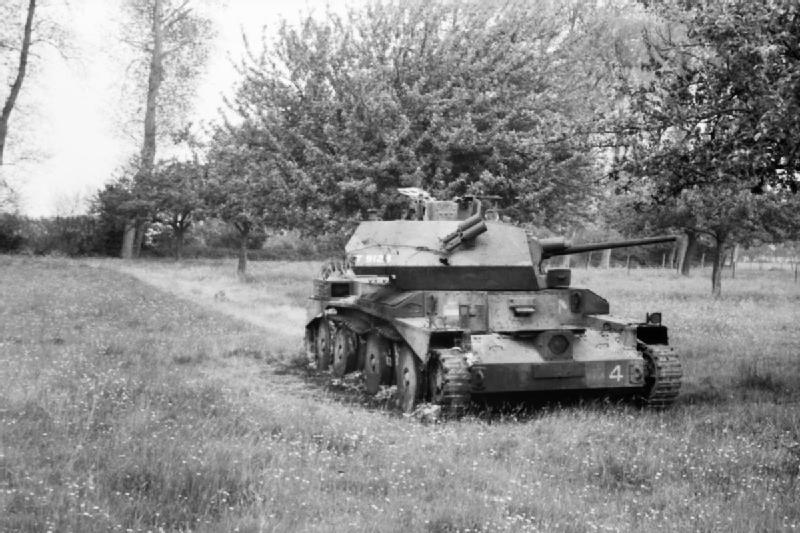
It is Day Four of the Dunkirk Evacuation. On the 30th, another 53,823 troops were evacuated from Dunkirk. The most notable was General Alan Brooke, who had commanded the British 2nd Corps with distinction. For the first time, some French troops are picked up. In the wake of the previous day’s losses, the British Admiralty ordered all modern destroyers to depart Dunkirk and leave 18 older destroyers to continue the evacuation.
The land battle around Dunkirk abated because of confusion and disagreement in the German command. The panzer forces began to withdraw from the front line to take up positions to the south for the next stage of the battle of France.
The Germans are close enough to start scoring artillery hits on the rescue ships. Despite a constant RAF presence, the Luftwaffe is getting through just enough to cause problems.
Conditions within the beachhead are orderly, but crude. Hospital Services for the wounded are sketchy at best. Many badly wounded men (lost arms or legs) are given morphine or heroin and allowed to drift off.
General Alan Brooke evacuated to Dover overnight in order to meet with Dill and assume new command.
General Bernard Montgomery assumes command of British 2 Corps.
Poor weather conditions limit air activity over Dunkirk area.
General de Gaulle calls off his attack on Abbeville. The French have recovered about half the ground of the bridgehead, but lost 105 tanks in the process. One must chalk the victory up to the strength of the German artillery and the clever way in which it is handled.
RAF Bomber Command dispatches 68 aircraft to attack German positions around Dunkirk during the day.
RAF Bomber Command dispatches 28 aircraft to attack German positions around Dunkirk overnight.
On the 30th, the covering patrol station north of Dunkirk was assigned to destroyers HMS Vega and ORP Blyskawica and patrol sloops HMS Sheldrake and HMS Widgeon. Destroyer HMS Vanquisher was sent over to Dunkirk by Admiral Ramsay to confirm the situation there. French destroyers Cyclone, which was having engine troubles limiting her speed to sixteen knots, and Sirocco departed Dover to operate off Dunkirk. At 1530, destroyers HMS Harvester and HMS Havant of the 9th Destroyer Flotilla and HMS Ivanhoe, HMS Impulsive, HMS Icarus, and HMS Intrepid of the 20th Destroyer Flotilla were ordered back into DYNAMO after having been withdrawn the day before to prevent their losses. French destroyers Foudroyant and Bourrasque and torpedo boats Bouclier and Branlebas embarked troops at Dunkirk. French torpedo boat Branlebas was damaged in a collision while embarking troops.
French destroyer Bourrasque, with 880 men on board, struck a mine and then was sunk by German artillery within sight of Ostend. Sixteen crewmen from the destroyer were lost. French torpedo boat Branlebas rescued one hundred survivors and other ships in the area picked up two hundred more. The rest of the 880 were killed or captured.
Destroyers HMS Esk, HMS Express, which lifted 1,431 troops this date, HMS Sabre, which lifted 1,700 men in two trips, HMS Vanquisher, which lifted 1,204 men, HMS Vimy, which lifted 1,472 men, HMS Vivacious, which lifted 1023 men, HMS Whitehall, which lifted 1,248 men, HMS Windsor, HMS Wolsey, which lifted 1,677 men in three trips on this date, and HMS Worcester, which lifted among many others British General Brook, were among the ships lifting troops from Dunkirk and delivering them to Dover on the 30th.
Destroyers HMS Anthony and HMS Sabre were damaged at 1800 by German bombing at Dunkirk. Destroyer Anthony had damage to her engine room machinery. Destroyer Anthony departed Dover at 1850 on 1 June with destroyer Wolsey and was repaired at Portsmouth in two weeks. Destroyer Sabre had no casualties, except Acting Gunner A.F. Coombe, who was wounded by splinters. Her damage was limited to her gyrocompass. She spent no time out of action. Destroyer HMS Icarus reported German motor torpedo boats off Bray at 2209. Destroyer HMS Harvester was missed by torpedoes at 2306 in Zuydcote Pass. The destroyer reported these were fired by an enemy motor torpedo boat. Destroyer Wolsey was in a collision off Dunkirk with British steamer Roebuck (776grt). Destroyer Wolsey was able to proceed at a reduced speed. At 1850 on 1 June, destroyer Wolsey departed Dover in the company of destroyer Anthony for repair and refit at Portsmouth completing on 21 June.
Minesweeper HMS Kellet was damaged by the near miss of German bombing at Dunkirk. Minesweeper Kellet was leaking slightly. She was taken to Sheerness for repairs, then on 19 June was moved to Grimsby to complete the repairs. Minesweeper Kellet returned to service on 28 June.
Minesweeper HMS Sharpshooter was damaged in a collision with British personnel ship St Helier (1952grt) off Dunkirk. The two ships were locked together and continued towards Dover in that way for forty minutes. The minesweeper was cut from the forecastle deck to the keel. Minesweeper Sharpshooter was towed to Dover by tug HMS Empire Henchman (391grt). Minesweeper Sharpshooter departed Dover for Sheerness on 2 June.
Minesweeper HMS Dundalk departed Grimsby and proceeded independently to Dunkirk.
Flare drifters Golden Gift (89grt) and Shipmates (82grt) went ashore on the Goodwins. Both drifters were later refloated.
Armed boarding vessel HMS King Orry (1877grt, Cdr J. Elliot, RD RNR) was damaged by German bombing near misses. The ship cleared the harbor and foundered at 0300 one half mile north of Dunkirk. The drifter Vivacious, trawler Lord Grey, and other small ships picked up the survivors.
British steamer Princess Maud (2883grt) was damaged by German shell guns midday near Gravelines. The damage was not serious.
British steamer St Julien (1952grt) was damaged by German bombing midday at Dunkirk. The damage was not serious.
British steamer Normannia (1567grt) was badly damaged by German bombing four miles 271° from the Dunkirk breakwater. The steamer was taken in tow, beached, and abandoned. There were no casualties on the steamer Normannia.
Second group of British forces is evacuated by sea from Bodø to Harstad, Norway. The British continue the evacuation of Bodø, taking another group of men off to Harstad. Colonel Gubbins remains in the port. The German 2d Mountain Division is still working its way up the lengthy road which the British were able to skip by using the ferry.
General Dietl and his mountain troops remain in the middle of nowhere in northern Norway. The Allies continue to press them, and the German mountain troops are retreating slowly toward the Swedish border at Bjørnfjell, which is only 18 miles away. During the day, Dietl receives another 57 men of the 1st Fallschirmjaeger Regiment. His main hope is the slow, painful advance of the 2nd Gebirgsjäger Division.
Once at the border, Dietl will have to make a decision whether to stand and fight to the end or cross the border and be interned – and cloud the entire campaign. Hitler is not giving him the option to be interned – the Fuhrer is focusing as much on Narvik as on the much more vital campaign in France. From the broadest possible perspective, Dietl’s troops have served as a capital decoy to divert attention away from the main front in France – on both sides.
Aircraft carrier HMS Glorious with destroyers HMS Highlander and HMS Wren arrived off Scapa Flow from patrol off Norway at 1600/29th, but could not enter due to fog. Destroyer HMS Electra was ordered to join the aircraft carrier off Sule Skerry to relieve destroyer HMS Wren which was detached for refueling at Scapa Flow. HMS Glorious finally enters Scapa at 1515 to refuel.
Destroyer HMS Beagle was damaged by the near miss of a German air bomb near Narvik. The destroyer spent no time of out action.
Destroyer HMS Veteran departed Scapa Flow at 0030 with British steamers Arbroath (553grt) and Ngakoa (507grt) for Harstad, in Norway. Leaving Scapa Flow, destroyer Veteran was in a minor collision in thick fog at Switha Gate with steamer Ngakoa. The convoy returned to Scapa Flow at 0200, but all ships were able to depart at 1545 that day for Harstad. Destroyer HMS Antelope departed the Clyde on the 29th at 2030 with Norwegian steamer Marita (1931grt) and British steamer Yewmount (859grt) for Harstad. This group arrived at Stornoway at 1615/30th to await destroyer Veteran’s departure from Scapa Flow. The destroyer Antelope group departed Stornoway and rendezvoused off Cape Wrath with the Veteran group at 0300/31st. After the two groups rendezvoused, destroyer Antelope was detached to Scapa Flow.
Operation Fish is implemented on this day. This is the shipment of British gold and securities to the Bank of Canada in Ottawa. Battleship HMS Revenge carries £40 million in gold, while troopships Antonia and Duchess of Richmond carry £10 million in gold apiece.
Food rationing in Germany is easing due to an influx of supplies from Denmark, Norway, and the Low Countries. The first effects of the economic domination of the Reich over former neutral nations now embroiled in the war will be realized in the immediate future in the form of increased rations of butter; cheese and eggs, the food ministry announced.
Mussolini informs Hitler that Italy will enter the war on the side of the Axis on 5 June 1940.
Italy’s internal war of nerves went on unabated today with all the propaganda resources of the government behind it, but the situation still remains that intervention is not imminent, although more than probable at some future date.
Duke of Aosta ordered to bring Italian troops in East Africa to full battle readiness. The Duke of Aosta is in command of Italian forces in Addis Ababa. He is instructed to mobilize his forces.
RAF Bomber Command dispatches 18 aircraft to attack Hamburg and Bremen overnight.
Aircraft carrier HMS Ark Royal with destroyers HMS Ardent, HMS Acasta, and HMS Acheron departed the Clyde at 0545 for Scapa Flow where they arrived on the 31st at 0529.
Battleship HMS Revenge and destroyers HMS Escort and HMS Westcott departed the Clyde at 2315 for Operation FISH to escort British troopships Duchess Of Richmond (20,022grt) and Antonia (13,867) which departed Liverpool at 1845 with destroyers HMS Wolverine, HMS Warwick, and HMS Witch. Battleship Revenge was carrying 40 million pounds sterling in gold bullion and Antonia and Duchess Of Richmond each carried another 10 million pounds sterling in gold. At 15W, Revenge and her group met the troopships. The destroyers were detached and HMS Escort and HMS Wolverine arrived at Scapa Flow at 1800 on 1 June and HMS Warwick, HMS Westcott, and HMS Witch arrived in the Clyde at 1800 on 1 June. Battleship HMS Revenge and the troopships safely proceeded to Halifax.
Destroyer HMS Brazen, which departed Rosyth on the 29th for Harwich, struck a sunken wreck on the 30th which badly damaged her and flooded both boiler rooms. Destroyer Brazen was able to reach the Humber at 1030/30th and she was under repair at Hull until 30 June. Her completion was delayed due to machinery defects.
U-56 attacked British troopship Ulster Prince (3791grt), returning to the Clyde escorted by destroyer HMS Witherington, at 59 32N, 06 23W. Prematurely exploding torpedoes prevented any damage. At 0425, destroyer Witherington attacked U-56 without result.
Belgian steamer Egypte (2568grt) was seized as a prize off Cape Bon in the Mediterranean.
German steamer Finkenau (916grt) was sunk on a mine south of Drogden near Copenhagen.
U-101 sank British steamer Stanhall (4831grt) off Cape Finisterre at 48 59N, 05 17W. One crew was lost on the steamer Stanhall. At 1925 hours the unescorted Stanhall (Master William Ewart Herbert) was hit on the starboard side under the bridge by one torpedo from U-101 and sank within eleven minutes. The survivors were picked up by British steamer Temple Moat (4427grt), formerly in convoy HX.43. The Stanhall was carrying raw sugar and onions and was bound for Liverpool, England. Canadian destroyers HMCS Restigouche and HMCS St Laurent, on passage from Canada, were ordered to search for the submarine after detaching destroyer HMCS Skeena to Plymouth for fuel. Destroyers Restigouche, ST Laurent, and Skeena attacked a submarine contact in 48-51N, 5-04W off Ushant on the 31st.
Boom defense vessel HMS Cambrian (338grt, Temporary Boom Skipper A. L.Wood RNR) was sunk on a mine off Spithead. Wood and Temporary Boom Engineer A.F. Ross RNR, were lost in the vessel.
British steamer Fulham IV (1584grt) was damaged by German bombing off Orfordness.
British trawler Correnie (203grt) was lost in the North Sea.
Convoy OA.158GF departs Southend.
Convoy OB.158 departs Liverpool.
Convoy FN.184 departed Southend, escorted by sloop HMS Weston. The convoy arrived in the Tyne on 1 June.
Convoy MT.77 departed Methil, escorted by destroyer HMS Vivien. The convoy arrived in the Tyne later that day.
Convoy FN.183 departed the Tyne, escorted by destroyer HMS Vivien. The convoy arrived at Southend on 1 June.
The War at Sea, Thursday, 30 May 1940 (naval-history.net)
Aircraft carrier ARK ROYAL with destroyers ARDENT, ACASTA, and ACHERON departed the Clyde at 0545 for Scapa Flow where they arrived on the 31st at 0529.
Aircraft carrier GLORIOUS with destroyers HIGHLANDER and WREN arrived off Scapa Flow from patrol off Norway at 1600/29th, but could not enter due to fog.
Destroyer ELECTRA was ordered to join the aircraft carrier off Sule Skerry to relieve destroyer WREN which was detached for refueling at Scapa Flow.
The aircraft carrier arrived in Scapa Flow at 1515/30th.
Destroyer BEAGLE was damaged by the near miss of a German air bomb near Narvik. The destroyer spent no time of out action.
Battleship REVENGE and destroyers ESCORT and WESTCOTT departed the Clyde at 2315 to escort British troopships DUCHESS OF RICHMOND (20,022grt) and ANTONIA (13,867) which departed Liverpool at 1845 with destroyers WOLVERINE, WARWICK, and WITCH.
Battleship REVENGE was carrying 40 million pounds sterling in gold bullion and ANTONIA and DUCHESS OF RICHMOND each carried another 10 million pounds sterling in gold.
At 15W, REVENGE and her group met the troopships. The destroyers were detached and ESCORT and WOLVERINE arrived at Scapa Flow at 1800 on 1 June and WARWICK, WESTCOTT, and WITCH arrived in the Clyde at 1800 on 1 June.
Battleship REVENGE and the troopships safely proceeded to Halifax.
Destroyer BRAZEN, which departed Rosyth on the 29th for Harwich, struck a sunken wreck on the 30th which badly damaged her and flooded both boiler rooms.
Destroyer BRAZEN was able to reach the Humber at 1030/30th and she was under repair at Hull until 30 June. Her completion was delayed due to machinery defects.
Destroyer VETERAN departed Scapa Flow at 0030 with British steamers ARBROATH (553grt) and NGAKOA (507grt) for Harstad.
Leaving Scapa Flow, destroyer VETERAN was in a minor collision in thick fog at Switha Gate with steamer NGAKOA. The convoy returned to Scapa Flow at 0200, but all ships were able to depart at 1545 that day for Harstad.
Destroyer ANTELOPE departed the Clyde on the 29th at 2030 with Norwegian steamer MARITA (1931grt) and British steamer YEWMOUNT (859grt) for Harstad. This group arrived at Stornoway at 1615/30th to await destroyer VETERAN’s departure from Scapa Flow.
The destroyer ANTELOPE group departed Stornoway and rendezvoused off Cape Wrath with the VETERAN group at 0300/31st.
After the two groups rendezvoused, destroyer ANTELOPE was detached to Scapa Flow.
U-56 attacked British troopship ULSTER PRINCE (3791grt), returning to the Clyde escorted by destroyer WITHERINGTON, in 59 32N, 06 23W.
Prematurely exploding torpedoes prevented any damage.
At 0425, destroyer WITHERINGTON attacked U-56 without result.
Belgian steamer EGYPTE (2568grt) was seized as a prize off Cape Bon in the Mediterranean.
German steamer FINKENAU (916grt) was sunk on a mine south of Drogden near Copenhagen.
U-101 sank British steamer STANHALL (4831grt) off Cape Finisterre in 48 59N, 05 17W.
One crew was lost on the steamer STANHALL. The survivors were picked up by British steamer TEMPLE MOAT (4427grt), formerly in convoy HX.43.
Canadian destroyers HMCS RESTIGOUCHE and HMCS ST LAURENT, on passage from Canada, were ordered to search for the submarine after detaching destroyer HMCS SKEENA to Plymouth for fuel.
Destroyers RESTIGOUCHE, ST LAURENT, SKEENA attacked a submarine contact in 48-51N, 5-04W off Ushant on the 31st.
On the 31st, U-101 attacked Convoy HG.31 and sank British steamer ORANGEMOOR (5775grt) in 49 53N, 03 23W before being slightly damaged and driven away from the convoy by escorting British corvette ARABIS.
Eighteen crew of the steamer ORANGEMOOR were missing. The survivors were rescued by British steamer BRANDENBURG (1473grt).
Canadian destroyer HMCS RESTIGOUCHE was ordered to hunt for the submarine. Destroyer FERNIE was ordered to join corvette ARABIS.
Boom defense vessel CAMBRIAN (338grt, Temporary Boom Skipper A. L. Wood RNR) was sunk on a mine off Spithead.
Wood and Temporary Boom Engineer A.F. Ross RNR, were lost in the vessel.
Destroyers FURY and FORESIGHT arrived at the Humber from the Home Fleet.
Destroyer BASILISK arrived at Dover after repairs at Plymouth.
On the 30th, the covering patrol station north of Dunkirk was assigned to destroyers VEGA and BŁYSKAWICA and patrol sloops SHELDRAKE and WIDGEON.
Destroyer VANQUISHER was sent over to Dunkirk by Admiral Ramsay to confirm the situation there.
French destroyers CYCLONE, which was having engine troubles limiting her speed to sixteen knots, SIROCCO departed Dover to operate off Dunkirk.
At 1530, destroyers HARVESTER and HAVANT of the 9th Destroyer Flotilla and IVANHOE, IMPULSIVE, ICARUS, and INTREPID of the 20th Destroyer Flotilla were ordered back into DYNAMO after having been withdrawn the day before to prevent their losses.
French destroyers FOUDROYANT and BOURRASQUE and torpedo boats BOUCLIER and BRANLEBAS embarked troops at Dunkirk.
French torpedo boat BRANLEBAS was damaged in a collision while embarking troops.
French destroyer BOURRASQUE, with 880 men on board, struck a mine and then was sunk by German artillery within sight of Ostend.
Sixteen crew from the destroyer were lost. French torpedo boat BRANLEBAS rescued one hundred survivors and other ships in the area picked up two hundred more. The rest of the 880 were killed or captured.
Destroyers ESK, EXPRESS, which lifted 1431 troops this date, SABRE, which lifted 1700 men in two trips, VANQUISHER, which lifted 1204 men, VIMY, which lifted 1472 men, VIVACIOUS, which lifted 1023 men, WHITEHALL, which lifted 1248 men, WINDSOR, WOLSEY, which lifted 1677 men in three trips on this date, and WORCESTER, which lifted among many others British General Brook, were among the ships lifting troops from Dunkirk and delivering them to Dover on the 30th.
Destroyers ANTHONY and SABRE were damaged at 1800 by German bombing at Dunkirk.
Destroyer ANTHONY had damage to her engine room machinery. Destroyer ANTHONY departed Dover at 1850 on 1 June with destroyer WOLSEY and was repaired at Portsmouth in two weeks.
Destroyer SABRE had no casualties, except Acting Gunner A.F. Coombe wounded by splinters, her damage was limited to her gyrocompass. She spent no time out of action.
Destroyer ICARUS reported German motor torpedo boats off Bray at 2209.
Destroyer HARVESTER was missed by torpedoes at 2306 in Zuydcote Pass. The destroyer reported these were fired by an enemy motor torpedo boat.
Destroyer WOLSEY was in a collision off Dunkirk with British steamer ROEBUCK (776grt).
Destroyer WOLSEY was able to proceed at a reduced speed. At 1850 on 1 June, destroyer WOLSEY departed Dover in the company of destroyer ANTHONY for repair and refit at Portsmouth completing on 21 June.
Minesweeper KELLET was damaged by the near miss of German bombing at Dunkirk. Minesweeper KELLET was leaking slightly.
She was taken to Sheerness for repairs, then on 19 June was moved to Grimsby to complete the repairs. Minesweeper KELLET returned to service on 28 June.
Minesweeper SHARPSHOOTER was damaged in a collision with British personnel ship ST HELIER (1952grt) off Dunkirk. The two ships were locked together and continued towards Dover in that way for forty minutes.
The minesweeper was cut from the forecastle deck to the keel.
Minesweeper SHARPSHOOTER was towed to Dover by tug EMPIRE HENCHMAN (391grt).
Minesweeper SHARPSHOOTER departed Dover for Sheerness on 2 June.
Minesweeper DUNDALK departed Grimsby and proceeded independently to Dunkirk.
Flare drifters GOLDEN GIFT (89grt) and SHIPMATES (82grt) went ashore on the Goodwins.
Both drifters were later refloated.
Armed boarding vessel KING ORRY (1877grt, Cdr J. Elliot, RD RNR) was damaged by German bombing near misses. The ship cleared the harbour and foundered at 0300 one half mile north of Dunkirk.
The drifter VIVACIOUS, trawler LORD GREY, other small ships picked up the survivors.
British steamer PRINCESS MAUD (2883grt) was damaged by German shell guns midday near Gravelines.
The damage was not serious.
British steamer ST JULIEN (1952grt) was damaged by German bombing midday at Dunkirk.
The damage was not serious.
British steamer NORMANNIA (1567grt) was badly damaged by German bombing four miles 271° from the Dunkirk breakwater.
The steamer was taken in tow, beached, abandoned.
There were no casualties on the steamer NORMANNIA.
British steamer FULHAM IV (1584grt) was damaged by German bombing off Orfordness.
British trawler CORRENIE (203grt) was lost in the North Sea.
On the 30th, 53,823 troops were evacuated from Dunkirk.
Mine destructor ship CORFIELD was damaged by mining and fire late on the 30th in the Dover area. salvage tug DAPPER came to her assistance and she repaired at Chatham completing on 25 July.
French submarine RUBIS arrived at Dundee.
Convoy FN.184 departed Southend, escorted by sloop WESTON. The convoy arrived in the Tyne on 1 June.
Convoy MT.77 departed Methil, escorted by destroyer VIVIEN. The convoy arrived in the Tyne later that day.
Convoy FN.183 departed the Tyne, escorted by destroyer VIVIEN. The convoy arrived at Southend on 1 June.
Light cruisers DURBAN and DANAE departed Singapore.
President Roosevelt discussed defense problems in Washington today with the Defense Advisory Commission, members of the Cabinet and the naval, military and Congressional leaders, and conferred with William McC. Martin, president of the New York Stock Exchange. At a press conference he said he would send to Congress tomorrow a request for an appropriation of $1,000,000,000 to train 1,000,000 civilians in non-combatant activities designed to support the armed forces.
The Senate considered the resolution advancing the effective date of the Fifth Reorganization Order; returned the Agriculture Department Appropriation Bill to conference; confirmed the nomination of Jay Pierrepont Moffat to be Minister to Canada; approved the Wagner-George Hospital Development Bill; heard arguments over the motion to consider the Logan-Walter bill, and recessed at 5:28 PM until noon tomorrow.
The House recommitted to conference the $1,474,000,000 Naval Appropriations Bill for the 1941 fiscal year; received the Doughton Emergency Defense Tax Bill; rejected certain provisions in the conference report on the War Department Civil Functions Bill, but accepted the Senate amendment for a third set of looks at the Panama Canal, and adjourned at 6:19 PM, until noon tomorrow.
On a somber Memorial Day, President Roosevelt, busy with the greatest peace-time armament program in the history of the United States, sent Major Horace B. Smith, a military aide, to Arlington National Cemetery, across the Potomac from Washington, to lay a wreath of spring flowers on the tomb of the Unknown Soldier. There was a Memorial Day parade in the capital, and in it was 93-year-old Col. John M. Kline, commander of the department of the Potomac, Grand Army of the Republic.
Also at Arlington, Paul V. McNutt warned a Memorial Day throng that the ideals and the work of the nation’s heroic dead were threatened with annihilation by “totalitarian aggression.” “America must meet the threat of total war with total preparedness,” the federal security administrator said. “We will not equal our potential enemies in military strength; we will outdo them. We will show the world what a vigilant, alert, and free people can do .when danger is recognized.” McNutt went on to add that “the nation’s welfare, now dependent upon total preparedness to avert the threat of total war, requires that President Roosevelt continue as the chief executive.” “It is true,” he said, “that there are able men in both parties who are capable of directing the affairs of the nation under ordinary circumstances. But the emergency which faces us is so critical that it requires the strong leadership and wealth of experience in world affairs that the president alone can provide.”
President Roosevelt almost doubled the emergency rearmament program today and made known the national defense commission, created to carry it out, had been clothed with the authority of its World war predecessors. To the approximately $1,250,000,000 already recommended, Mr. Roosevelt added another billion dollars, to buy equipment, the need for which was unforeseen, he explained, as recently as a fortnight ago. World conditions have changed vastly in a very short time, he told reporters at a special press conference. Although he did not say he was referring specifically to the smashing success of German mechanized forces, he made it clear the additional money would be spent largely for weapons on which the Germans relied. Tanks and planes will be bought, guns of all kinds, and fixed ammunition, he said, and for the most part they will be purchased in quantities considerably greater than those thought necessary when estimates were drawn for the $1,182,000,000 emergency program he laid before congress two weeks ago. Some smaller items have been added to the $1,182,000,000 in the past few days. The billion dollars added today would bring the nation’s immediate defense program to a total of $4,300,000,000, including regular appropriations for the army and navy. The billion-dollar recommendations are to go to congress tomorrow in a special message, the president announced.
Great Britain and France were reported today to have placed large orders for additional American airplanes in the last 10 days. The new orders, it was said, were for $250,000,000 of the latest type pursuit and bombing planes. They are in addition to those placed recently by the Anglo-French purchasing mission which has completed a $1,000,000,000 plane-buying program here. Aviation experts, watching developments abroad, conceded that Germany has won air supremacy in Europe and described the Allied situation in that arm as “very grave.”
A major event bearing on defense plans occurred late today on Capitol Hill when the House voted, 187 to 141, to make funds available to build a third set of locks for the Panama Canal, at an ultimate cost estimated at $277,000,000. The project’s advocates have emphasized it as a necessary defense measure.
U.S. President Franklin D. Roosevelt (through U.S. Secretary of State Cordell Hull) rejected U.S. Ambassador to France William C. Bullitt Jr.’s request of May 28, 1940 to send the fleet to the Mediterranean. “The presence of the fleet in the Pacific at this time,” Hull reminded the ambassador, “is a very practical contribution to the maintenance of peace in the Pacific.”
Construction on four naval ships and five merchantmen and oil tankers at the yards of the Federal Shipbuilding and Dry Dock Company at Kearny was halted at midnight tonight as a result of a strike voted at a meeting here this morning by more than 5,000 of the company’s 6,000 employees. The naval craft affected by the strike, which followed three weeks of negotiations with employers, include two 6,000-ton cruisers, which are to cost $25,000,000, and two 1,500-ton destroyers to cost $11,000,000. Other ships under construction are three merchantmen, each of 5,500 net tonnage, and two oil tankers of 8,500 net tonnage. The cost of all the work is estimated at $43,000,000. The current work program of the shipyard was being rushed under a three-shift, twenty-four-hours-a-day schedule to make way for new naval, Maritime Commission and private contracts totaling $125,000,000.
Indianapolis 500: Wilbur Shaw drives same Maserati 8CTF he had driven to victory in 1939; first driver in the history to win at Indy in consecutive years.
Major League Baseball:
The Giants sweep the Dodgers 7–0 and 12–5 in 12 innings dropping Brooklyn out of 1st place. The Giants tally 34 hits in the two games. In the opener, Carl Hubbell uses just 81 pitches and gives up only a 2nd inning single to Johnny Hudson, who is erased on a DP. Hubbell faces the minimum (27 batters). Only Lavagetto gets to a 3–2 count. Bill Lohrman wins the second game in 12 innings as the Giants score 8 runs in the top of the 12th.
The Reds meanwhile went into the league lead by downing the Cubs, 4–2 and 9–8, the second game going twelve innings before Johnny Rizzo singled home Frank McCormick with the winning run.
The Phillies and Bees swap 5–1 decisions, with Philadelphia taking the opener. Kirby Higbe is the winner as Boston collects 5 hits. In the second game, Boston wins in 11 innings as Eddie Miller ends it with a grand slam, off Syl Johnson.
An even break was gained by the Yankees. They defeated the Red Sox, 4–0 on Red Ruffing’s two-hit gem in the opener of their doubleheader, then lost, 11–4, in the nitecap. Lou Finney had five hits for Boston in the second game, and Joe Cronin added a three-run homer.
In Philadelphia, the A’s score 2 runs in the bottom of the 9th to edge the Senators, 7–6 in the first of 2. In the second game, called on account of darkness after 7, the Senators score 9 runs in the top of the 7th to win, 14–2. Zeke Bonura hits a grand slam for the Senators, connecting in the 7th off Bill Beckmann.
The Cleveland Indians today took both ends of a double-header with the Chicago White Sox, by the same score, 3–1. A crowd of 18,162 saw two left-handers’ pitching duels.
The Detroit Tigers strengthened their hold on third place in the American League by sweeping a double-header today from the St. Louis Browns. The Bengals won the opener, 2–1, although outhit, 7 to 5, and outslugged the Brownies for a 15–6 decision in the second engagement before 33,461 fans. Rudy York’s double scored Hank Greenberg from first in the ninth to decide the opener.
New York Giants 7, Brooklyn Dodgers 0
New York Giants 12, Brooklyn Dodgers 5
Philadelphia Phillies 5, Boston Bees 1
Philadelphia Phillies 1, Boston Bees 5
Cincinnati Reds 4, Chicago Cubs 2
Cincinnati Reds 9, Chicago Cubs 8
Chicago White Sox 1, Cleveland Indians 3
Chicago White Sox 1, Cleveland Indians 3
St. Louis Browns 1, Detroit Tigers 2
St. Louis Browns 6, Detroit Tigers 15
Boston Red Sox 0, New York Yankees 4
Boston Red Sox 11, New York Yankees 4
Washington Senators 6, Philadelphia Athletics 7
Washington Senators 14, Philadelphia Athletics 2
U.S. Minister in Uruguay Edwin C. Wilson reported on the “deteriorating situation in Montevideo,” in a telegram to U.S. Secretary of State Cordell Hull. Wilson described the Uruguayan government as “well meaning but weak, undecided and confused,” with things “drifting” and “people… climbing on the Nazi band wagon.” Wilson also warned that an “armed movement is a possibility.” Wilson added that “if the situation in the Far East permits,” sending a “large U.S. naval force, 40 or 50 vessels…to the east coast of South America.” A naval visit of that nature, the diplomats believed “would strengthen the position of those who desire to combat Nazism, as well as restore the confidence of those who are now wavering” and that the stationing of a U.S. naval squadron “more or less permanently in these waters would be an added assurance that we are prepared to give effective and immediate assistance if required.”
The U.S. Government is holding conversations with Ecuador looking toward elimination of the German operated Sedta Airline there.
Japanese planes again raided the Chungking area, twenty-six bombers in two squadrons attacking an objective five miles east of the capital. An official Japanese statement at Hankow to the effect that daily bombings of Chungking would be continued until the “spirit of resistance is crushed and broken” was noted here with dread, but without evidence that it had shaken Chinese morale. Having survived two years of Japanese air raiding, Chungking is pervaded with the feeling that it can endure more. The recent bombings have caused extensive damage, but so far have not produced a mood of defeatism. A Chinese military spokesman stated that through yesterday Japanese casualties in the Hupeh-Honan campaign during May had totaled 70,000, the largest in any single campaign of the war. Chinese casualties were much fewer, he said. Admitting that the Japanese continued to hold Tsaoyang, their major base in Northern Hupeh, he claimed that encircling attacks by the Chinese forces there were costing the Japanese 2,000 men daily in a force of fewer than 22,000 men.
The keel of unnamed transport ship No. 74 was laid down at Kawasaki Shipbuilding Corporation’s shipyard at Kobe, Japan. This will become the Imperial Japanese Navy food supply ship Irako.
Born:
David Ackroyd, American actor (“I Come in Peace”, “Memories of Me”), in Orange, New Jersey.
Gilles Villemure, Canadian NHL goaltender (NHL All-Star, 1971, 1972, 1973; New York Rangers, Chicago Black Hawks), in Trois-Rivieres, Quebec, Canada.
John Postley, ABA power forward (Pittsburgh Pipers), in Philadelphia, Pennsylvania (d. 1970).
Died:
Ronald Cartland, 33, second British Member of Parliament killed in World War II (killed during retreat to Dunkirk).
Naval Construction:
The U.S. Navy Barnegat-class small seaplane tender USS Casco (AVP-12) is laid down by the Puget Sound Navy Yard (Bremerton, Washington, U.S.A.).
The Royal Navy Flower-class corvette HMS Tulip (K 29) is laid down by the Smiths Dock Co., Ltd. (South Bank-on-Tees, U.K.).
The Royal Navy Hunt-class (Type II) escort destroyer HMS Wheatland (L 122) is laid down by Yarrow Shipbuilders Ltd. (Scotstoun, Scotland).
The Вое́нно-морско́й флот СССР (ВМФ) (Soviet Navy) “ShCh” (ShChuka)-class (6th group, Type X-modified) submarine ShCh-216 is launched by 61 Kommunara (Nikolajev, U.S.S.R.) / Yard 200.
The Kriegsmarine (German Navy) Type VIIB U-boat U-100 is commissioned. Her first commander is Kapitänleutnant Joachim Schepke.
The Kriegsmarine (German Navy) Type IXB U-boat U-123 is commissioned. Her first commander is Kapitänleutnant Karl-Heinz Moehle.
 History Diaries