The German panzer divisions cross the Meuse River in two places at Sedan and Dinant. The French troops opposing them have not prepared their positions properly and are quickly demoralized and terrorized by heavy dive-bomber attacks. At Sedan Guderian is right at the front, urging his troops on and at Dinant the young commander of the 7th Panzer Division, General Rommel, is also doing well. Farther north the Germans take Liege and in Holland the defense has now been totally disrupted. The advancing German ground troops have linked with the paratroops at Moerdijk. French 7th Army (Giraud) is in full retreat.
Rommel’s 7th “Ghost” Panzer Division is the first Wehrmacht unit across the Meuse near Dinant. He personally finds a weir and lock gate across the river that his troops can use to establish a bridgehead, and sends over motorcycle troops. His troops spend the rest of the day slowly expanding the bridgehead against scattered French opposition. Taking the broadest view, Rommel’s troops threaten to separate the BEF from France if they eventually reach the coast at Abbeville.
The other German formations further south are also across during the day. Generals Guderian and Reinhardt make crossings at Sedan and Monthermé, respectively. Guderian’s crossing by XIX Corps includes portions of 1st Panzer Division, 2nd Panzer Division, 10th Panzer Division, and (SS) Infantry Regiment Großdeutschland. This part of Panzer Group Kleist’s breakout threatens a penetration into good tank country in the French heartland and is a serious breach of the Allied line. Guderian’s men take a more traditional approach than Rommel’s, with their initial crossing in rubber boats. There are still some French holdouts in Sedan, but many are beginning to surrender as the Luftwaffe launches mass raids at them (1000 bombers, including Stukas, engage in hours of bombing). Guderian is the first General firmly on French territory, and he gains the nickname “Fast Heinz.”
This is true Blitzkrieg stuff, with the Stukas blasting holes through the French lines for the German troops to capitalize on. All of the German bridgeheads quickly put up pontoon bridges by evening. Tanks are able to cross and help expand the slender German footholds. French General Huntzinger has brave words about the penetrations: “That will just mean we take more prisoners.”
However, the nearby French troops are not nearly as sanguine. The French troops begin to panic – in fact, the situation is known as the “Panic of Bulson” due to French troops fleeing a portion of the line on Bulson ridge 10 km (6.2 miles) behind the river. Any French chance to pierce the German bridgehead or even contain it is lost within the opening hours due to this panic and slow reflexes by the Supreme Allied Headquarters.
At Sedan, the Meuse Line consisted of a defensive belt 6 km (3.7 mi) deep, laid out according to the modern principles of zone defense on slopes overlooking the Meuse valley and strengthened by 103 pillboxes, manned by the 147th Fortress Infantry Regiment. The deeper positions were held by the 55th Infantry Division. This was only a grade “B” reserve division. On the morning of 13 May, the 71st Infantry Division was inserted to the east of Sedan, allowing 55th Infantry to narrow its front by one-third and deepen its position to over 10 km (6.2 mi). Furthermore, it had superiority in artillery to the German units present.
The German XIX Korps forced three crossings near Sedan, executed by the 1st, 2nd and 10th Panzer Divisions, reinforced by the elite Großdeutschland infantry regiment. Instead of slowly massing artillery as the French expected, the Germans concentrated most of their air power (as they lacked strong artillery forces) to smash a hole in a narrow sector of the French lines by carpet bombing and by dive bombing. Hermann Göring had promised Guderian that there would be extraordinarily heavy air support during a continual eight-hour air attack, from 08:00 AM until dusk. The Luftwaffe executed the heaviest air bombardment the world had yet witnessed and the most intense by the Germans during the war. The Luftwaffe committed two Sturzkampfgeschwader (Dive Bomber Wings) to the assault, flying 300 sorties against French positions. A total of 3,940 sorties were flown by nine Kampfgeschwader (Bomber Wings).
Some of the forward pillboxes were unaffected and repulsed the crossing attempts of the 2nd and 10th Panzer Divisions. The morale of the deeper units of the 55th Infantry, however, had been broken by the effect of the air attacks. The French supporting artillery batteries had fled. The German infantry, at a cost of a few hundred casualties, had penetrated up to 8 km (5.0 mi) into the French defensive zone by midnight. Even by then most of the infantry had not crossed, much of the success being due to the actions of just six platoons, mainly assault engineers. The disorder that had begun at Sedan spread down the French lines. At 19:00, the 295th regiment of 55th Infantry Division, holding the last prepared defensive line at the Bulson ridge 10 km (6.2 mi) behind the river, was panicked by the false rumor that German tanks were already behind its positions. It fled, creating a gap in the French defenses, before even a single German tank had crossed the river. This “Panic of Bulson” also involved the divisional artillery. The Germans had not attacked their position, and would not do so until 12 hours later, at 07:20 on 14 May. Still, the French had several hours to launch a counter offensive before the Germans consolidated the bridgeheads, but failed to attack soon enough. By the evening, pontoon bridges were set up for the German tanks to cross.
Recognizing the gravity of the defeat at Sedan, General Gaston-Henri Billotte, commander of the 1st Army Group, whose right flank pivoted on Sedan, urged that the bridges across the Meuse be destroyed by air attack, convinced that “over them will pass either victory or defeat!” That day, every available Allied light bomber was employed in an attempt to destroy the three bridges, but failed to hit them while suffering heavy losses. Some 44 percent of the Allies’ bomber strength was destroyed. Heinz Guderian, the commander of the German XIX Armeekorps, indicated that he wanted to enlarge the bridgehead to at least 20 km (12 mi). His superior, Ewald von Kleist, ordered him on behalf of Hitler to limit his moves to a maximum of 8 km (5.0 mi) before consolidation.
Northeast of Namur, Belgium, the French 2nd and 3rd Light Mechanized Divisions fight the 3rd and 4th Panzer Divisions of the German XVI Corps of the 6th Army. There is fierce fighting with many destroyed tanks throughout the day. The French tanks line up in a long line to cover the Gembloux gap, a strategy that fails. The Germans prevail through sheer numbers. While many German tanks are disabled, the Wehrmacht retains possession of the battlefield and many of them can be repaired; the French, however, incur staggering tank losses (roughly 105 tanks lost), with all complete write-offs. The French retreat to a defensive position at Gembloux. While on the previous day the inferior German tanks suffered against their French counterparts in Belgium, German tank commanders amassed their tanks (while the French commanders decided to divide their tanks to cover a wider front) and punched a hole in the French lines; French troops began falling back toward Gembloux; the Battle of Hannut ended with the French losing 105 tanks and the Germans 160. Queen Wilhelmina of the Netherlands departed for London at 1200 hours aboard HMS Hereward, while the Dutch government would leave at 1720 hours aboard HMS Windsor; meanwhile, the German 9th Division reached the outskirts of Rotterdam, which was a part of the final Dutch defensive line.
Germans forces take Liege, Belgium.
French armies and British Expeditionary Force complete occupation of Dyle Line positions in Belgium. The Allies, ensconced on the Dyle Line, have taken some prisoners. Some 900 German POWs are transported to Britain aboard Dutch ship Phrontis.
Advancing German ground troops linked up with the paratroopers at Moerdijk in the Netherlands. German ground troops link with the paratroopers holding the bridges at Moerdijk, a rare success for the airborne troops. The 9th Panzer Division of 18th Army breaks into “Fortress Holland” and is approaching Rotterdam from the south. The 22nd Flieger Division holds key bridges in the city. The Germans are approaching the Nieuwe Maas River.
At the Afsluitdijk in the far north, German troops advance after 62 Luftwaffe planes bomb Fort Kornwerderzand, losing four of their number. The assault fails completely, with heavy German casualties.
The Battle of the Grebbeberg ended in German victory. At Grebbeberg, the Germans shift their axis of attack to the north of the main hill. The Dutch are hampered by the withdrawal of support aircraft to fight the German penetrations across the Meuse to the south. Attacking first, the Dutch make some gains, but the Germans begin their own preparatory bombardment for an attack, and this, combined with rampant confusion and much friendly fire, destroys the Dutch attack. The Germans seize upon the confusion, mount attacks all along the line, and in the end, the entire Dutch line falls. In the process, Obersturmbannführer (Lieutenant Colonel) Hilmar Wäckerle and his battalion of the SS brigade, who had impetuously advanced through the Dutch lines on the 12th and then been surrounded in a factory, are relieved.
Dutch defensive positions crumbling as 9th Panzer Division of German 18th Army crosses the Maas River and approaches Rotterdam from the south.
British 2nd Battalion of Irish Guards Regiment arrives by sea at Hook of Holland.
Dutch vessel Phrontis transports 900 German POWs to UK.
New French fighters appear over the front. Dewoitine D-520 fighters, which match any other fighters in the world, engage Bf 109s over the Meuse front and have a great debut, destroying four Luftwaffe planes without loss to themselves.
[Ed: If only the French had them sooner, and in numbers…]
RAF Bomber Command dispatches aircraft to attack bridges and roads around Maastricht and Eindhoven overnight. Bomber Command switches to tactical missions, attacking bridges and roads around the German breakouts near Maastricht and Eindhoven.
The Royal Netherlands Navy K-class torpedo boat HNLMS Christiaan Cornelis was scuttled at Rotterdam, South Holland following severe battle damage.
The Royal Netherlands Navy M-class minesweeper HNLMS M 2 struck a mine in the North Sea off IJmuiden, North Holland and sank.
The German troopship Anhalt struck a mine and was beached off the coast of Sweden. She was later repaired and returned to service.
The Dutch cargo ship Bussum was bombed and damaged in the North Sea off the Noord Hinder Lightship. She was abandoned by her 29 crew, who were rescued by the Bouclier (French Navy). Bussum was towed to London, United Kingdom and was subsequently repaired and returned to service.
The Belgian cargo ship Gorm struck a mine in the North Sea off Zeebrugge, West Flanders (approx. 51°22’12 N 3°12’59 E) and sank.
The Dutch steamer Perseus (1307grt), carrying gold bullion, departs Ijmuiden at 0400 escorted by destroyer HMS Vimy.
Destroyer HMS Hereward, escorted by destroyer HMS Vesper, evacuated Queen Wilhelmena of Holland from Hook of Holland at noon and took her to Harwich, arriving at 1700.
Six destroyers began the evacuation of Hook of Holland at 1800/13th. Destroyer HMS Windsor evacuated the Dutch government, British, Belgian, Norwegian legation staffs, 400 refugees from Hook of Holland during the evening. Destroyer HMS Versatile followed destroyer HMS Mohawk’s turn at the pier. Destroyer Versatile, while alongside the pier, was damaged by one bomb hit at 2140 from German bombing off Hook of Holland. Her engine room was put out of action and the destroyer could neither steer nor steam. Acting Gunner (T) G. L. Turner, Midshipman C. S. T. Shiach RNR, five ratings were killed and thirteen wounded on the destroyer. Destroyer Versatile was towed away from the jetty by destroyer HMS Malcolm and escorted by destroyer HMS Hyperion. Destroyer Versatile was taken in tow by destroyer Janus outside the harbor. Destroyer HMS Janus was later relieved by a rescue tug and a motor torpedo boat. Destroyer Versatile with one engine working arrived at Sheerness at 1900/14th and was repaired at Chatham completing on 20 June. The last party of refugees was embarked on destroyer Malcolm at 2240/13th. These were transferred to destroyer Janus outside the harbor and destroyer Malcolm returned to the Hook arriving at 0120/14th. Destroyers HMS Windsor, HMS Vivien, and HMS Mohawk arrived early the next morning from Hook of Holland at Southend.
Destroyer HMS Walpole evacuated from Ijmuiden the Dutch industrial diamonds, brought from Amsterdam to prevent their falling into German hands. Also, at Ijmuiden that evening were destroyers HMS Vivien, which arrived back at Southend on the 14th, and HMS Kimberley.
Late on the 13th, Dutch submarines O.23 and O.24 departed Rotterdam. Submarine O.24 had just begun her trials and had never dived, but both submarines safely arrived at Dover. They arrived at Portsmouth on the 16th.
British steamer City Of Brussels (629grt) was seized by German forces at Brussels.
Danish steamer Gorm (2156grt) was sunk on a mine, bearing 20°, 1.3 miles from the South Mole Light at Zeebrugge.
Dutch steamer Bussum (3636grt) was damaged by German bombing north of the West Hinder Light Vessel. She was abandoned and French torpedo boat Bouclier rescued the survivors. BUSSUM was taken in tow by minesweeper HMS Harrier, later relieved by tug HMS Lady Brassey.
Norwegian steamer Hird (4950grt) was badly damaged at Dunkirk by German bombing. She did not depart Dunkirk until 28 May and was constantly bombed in that period, but did not receive any more significant damage.
The Allied forces start their advance toward Narvik from Harstad. The first landings on the way, at Bjerkvik 10 miles north of Narvik, are successfully carried out by French troops.
British No. 2 Independent Company reinforces Bodø, Norway.
French 13th Demi-Brigade Legion Etrangere lands, attacks, and captures Bjerkvik outside Narvik.
Norwegian 6th Infantry Brigade attacks southward toward Narvik.
At midnight, which was light due to the latitude, British cruiser HMS Aurora, cruiser HMS Effingham, and battleship HMS Resolution bombarded Narvik, Norway in preparation of the 0100-hour amphibious operation at Bjerkvik, which was the first of the European War. French Foreign Legion and light tanks came ashore at Bjerkvik in landing craft, suffering 36 casualties, then reached and captured Øyjord unopposed. Many Norwegian civilians died during the attack.
German vessel Widder and RN submarine Clyde conduct inconclusive engagement along Norwegian coast.
Late on the 13th, battleship HMS Resolution, light cruiser HMS Effingham, repair ship HMS Vindictive, destroyers HMS Havelock, HMS Somali, HMS Fame, HMS Basilisk, and HMS Wren, assisted by aircraft from aircraft carrier HMS Ark Royal, bombarded Narvik. This operation was named OB.
HMS Ark Royal, in position 69.47 N, 15.38 E, continues to support Operation “OB”. Following a reconnaissance, when the weather was too bad to land on the Ark Royal, a Skua of 800 Squadron forced landed south of Harstad in the sea. Petty Officer L. E. Burston and Naval Airman G. W. Halifax were picked up by destroyer HMS Brazen. A second Skua of this operation force landed at Sandsoy, north of Harstad. Lt J. A. Rooper and Petty Officer W. Crawford were not injured.
A Swordfish of 810 Squadron from Ark Royal landed on a forzen lake near Reisenvann. S/Lt A. N. Dixon, Midshipman H.B. Dangerfield, Naval Airman V. Labross were unhurt. The plane was later taken to Harstad and returned to the UK in French steamer Albert Lebougne. A second Swordfish with Lt N. R. Corbet-Milward, Captain K. L. Ford, RM, Leading Airman J. Black force landed at Skaanland.
A Swordfish of 820 Squadron force landed during a bombing raid of Silvik. Captain A. C. Newson, RM, Lt Cdr G. B. Hodgkinson and Leading Airman R. H.McColl were unhurt. A second Swordfish with Lt H.de G. Hunter and Leading Airman D. Smith force landed two miles south of Harstad.
Swedish steamer Edda (1652grt) was seized by German forces at Stavanger.
Submarine HMS Clyde, on patrol in the North Sea near Raudoy Island in 62-46N, 03-57W, at 1345 sighted German armed merchant cruiser Widder. Submarine Clyde fired sixty rounds from her deck gun, but did not hit Widder. Merchant cruiser Widder returned fire and kept submarine Clyde out of range until she could escape into a rain squall. Armed merchant cruiser Widder arrived at Trondheim to avoid further contact.
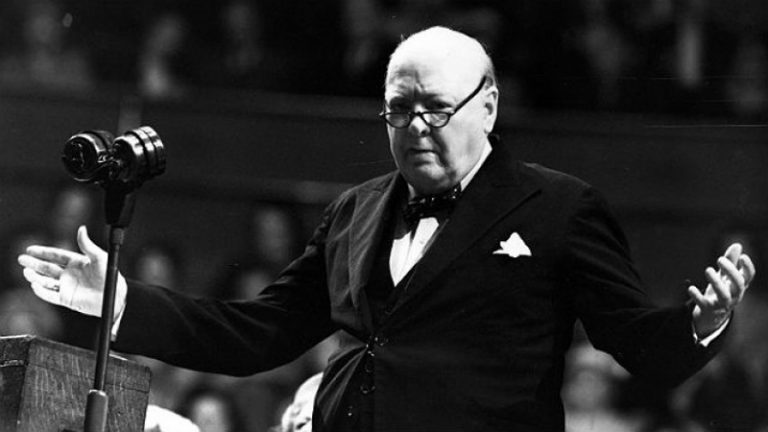
Winston Churchill made his first speech to the House of Commons as Prime Minister. He famously said, “I have nothing to offer but blood, toil, tears, and sweat.” His aim is, “Victory at all costs, victory in spite of all terror, victory however long and hard the road may be, for without victory, there is no survival.”
Winston Churchill appointed Leo Amery as Secretary of State for India and Burma.
Tackling his first job as War Minister, Anthony Eden today started recruiting a special corps of riflemen to guard against German parachute troops.
Queen Wilhelmina of the Netherlands arrived in London in exile.
Refugees of all ages from the invaded provinces of Belgium and Luxembourg streamed through the Paris stations in increasing numbers today. All had tales of misery and privation, many of them told of having been machine-gunned or bombed during their flight.
There were demonstrations all over Italy this morning under the Fascist party’s direction to arouse patriotic sentiments for war and hatred for Great Britain. The reason given is popular reaction to the publication of the Foreign Office report showing how the British blockade is harming Italian trade. In Rome the hostility toward the British has become even more manifest, with an attempted demonstration against the British Embassy and another protest by the embassy to the Italian Government.
As a precautionary measure the British and Egyptian forces in Egypt have taken up emergency stations, it was learned today. While the Mediterranean position remains uncertain, the fullest precautions are being taken throughout the country.
The British cargo ship Kyle Firth ran aground on Holy Island, Anglesey and was wrecked.
French auxiliary minesweeper Ville Du Bizerte (32grt) was sunk on a mine near Cape Guardia in the Bizerte area, Algeria.
Convoy FN.170 departed Southend, escorted by sloop HMS Egret. The convoy arrived at the Tyne on the 15th.
Convoy NS.3 escorted by destroyers HMS Firedrake and HMS Foxhound departed Scapa Flow at 0800 with tankers Oleander (7048grt) and Oil Pioneer (5666grt), collier Carminster, and French patrol boat Belfort. The Clyde section had departed the day before at 0200/12th escorted by destroyers HMS Walker and HMS Beagle with steamers Cyprian Prince (1988grt), Rutland (1437grt), Dromore Castle (5242grt), Gunvor Maersk (1977grt), Pembroke Coast (625grt), Heilo (989grt), and Cowrie (8197grt). Tanker Athelsultan (8882grt) joined the convoy in North Channel. Norwegian steamer Marina (9898grt) departed Stornoway with cargo that had been on British steamer Balzac (5372grt), which had run aground on the 7th, joined in the Minches. Steamer Cowrie and tanker Athelsultan were detached to Scapa Flow. The Rosyth section departed Leith at 0800/12th escorted by destroyers HMS Hero and HMS Foxhound. This convoy included British steamer Redcar (1475grt). However, this section was delayed due to Redcar’s slow speed. Destroyer Foxhound was detached to arrive at Hoxa Gate at 0700/13th to escort the Scapa Flow section. When the two sections rendezvoused, destroyer Foxhound was detached to Greenock and arrived in the Clyde at 1100/14th. The convoy was split for the passage into fast and slow sections at 1100/14th. The fast convoy escorted by Firedrake and Walker consisted of British tankers Oleander and Oil Pioneer and steamers Pembroke Coast, Cyprian Prince, and Dromore Castle, Norwegian Marina, and Danish Gunvor Maerske. The slow convoy was escorted by destroyer HMS Beagle and two minesweeping trawlers and was composed of Rutland, Redcar, and Sarita (5824grt), and Norwegian steamers Heilo, Gro (3825grt), and Ingerfire (3835grt). In Pentland Firth, destroyer HMS Hero escorting the steamer Redcar joined Norwegian steamers Gro, Ingerfire, and Spica (500grt) from Kirkwall to join the convoy. This section was delayed by steamer Redcar’s slow speed, but rendezvoused with the convoy at 1900/13th. Destroyer Hero was detached in 63N on the 14th and proceeded to Plymouth. Destroyers Walker and Firedrake with steamers Marina, Dromore Castle, Pembroke Castle, and Gunvor Maersk arrived at Harstad at 0700/17th. The rest of the convoy remained at sea to await orders.
Convoy NP.3 departed Scapa Flow for Narvik with Polish troopships Batory (14,287grt) and Sobieski (11,030grt) and escorted by destroyers HMS Delight and HMS Antelope and French destroyer MILAN. The convoy arrived at 2000/17th escorted by destroyers Antelope, Delight, and Milan. At 2300/13th, British steamer Royal Ulsterman (3244grt), escorted by destroyer HMS Matabele, arrived at Bodo and landed 290 troops in a SCISSORS landing. These ships had departed the Firth of Forth at 1900/10th.
The War at Sea, Monday, 13 May 1940 (naval-history.net)
Convoy NS.3 escorted by destroyers FIREDRAKE and FOXHOUND departed Scapa Flow at 0800 with tankers OLEANDER (7048grt) and OIL PIONEER (5666grt), collier CARMINSTER, and French patrol boat BELFORT.
The Clyde section had departed the day before at 0200/12th escorted by destroyers WALKER and BEAGLE with steamers CYPRIAN PRINCE (1988grt), RUTLAND (1437grt), DROMORE CASTLE (5242grt), GUNVOR MAERSK (1977grt), PEMBROKE COAST (625grt), HEILO (989grt), and COWRIE (8197grt).
Tanker ATHELSULTAN (8882grt) joined the convoy in North Channel.
Norwegian steamer MARINA (9898grt) departed Stornoway with cargo that had been on British steamer BALZAC (5372grt), which had run aground on the 7th, joined in the Minches.
Steamer COWRIE and tanker ATHELSULTAN were detached to Scapa Flow.
The Rosyth section departed Leith at 0800/12th escorted by destroyers HERO and FOXHOUND. This convoy included British steamer REDCAR (1475grt). However, this section was delayed due to REDCAR’s slow speed.
Destroyer FOXHOUND was detached to arrive at Hoxa Gate at 0700/13th to escort the Scapa Flow section.
When the two sections rendezvoused, destroyer FOXHOUND was detached to Greenock and arrived in the Clyde at 1100/14th. The convoy was split for the passage into fast and slow sections at 1100/14th.
The fast convoy escorted by FIREDRAKE and WALKER consisted of British tankers OLEANDER and OIL PIONEER and steamers PEMBROKE COAST, CYPRIAN PRINCE, DROMORE CASTLE, Norwegian MARINA, and Danish GUNVOR MAERSKE.
The slow convoy was escorted by destroyer BEAGLE and two minesweeping trawlers and was composed of RUTLAND, REDCAR, and SARITA (5824grt), Norwegian steamers HEILO, GRO (3825grt), and INGERFIRE (3835grt).
In Pentland Firth, destroyer HERO escorting the steamer REDCAR joined Norwegian steamers GRO, INGERFIRE, and SPICA (500grt) from Kirkwall to join the convoy.
This section was delayed by steamer REDCAR’s slow speed, but rendezvoused with the convoy at 1900/13th. Destroyer HERO was detached in 63N on the 14th and proceeded to Plymouth.
Destroyers WALKER and FIREDRAKE with steamers MARINA, DROMORE CASTLE, PEMBROKE CASTLE, and GUNVOR MAERSK arrived at Harstad at 0700/17th. The rest of the convoy remained at sea to await orders.
Convoy NP.3 departed Scapa Flow for Narvik with Polish troopships BATORY (14,287grt) and SOBIESKI (11,030grt) and escorted by destroyers DELIGHT and ANTELOPE and French destroyer MILAN. The convoy arrived at 2000/17th escorted by destroyers ANTELOPE, DELIGHT, and MILAN.
At 2300/13th, British steamer ROYAL ULSTERMAN (3244grt), escorted by destroyer MATABELE, arrived at Bodø and landed 290 troops in a SCISSORS landing.
These ships had departed the Firth of Forth at 1900/10th.
Late on the 13th, battleship RESOLUTION, light cruiser EFFINGHAM, repair ship VINDICTIVE, and destroyers HAVELOCK, SOMALI, FAME, BASILISK, and WREN, assisted by aircraft from aircraft carrier ARK ROYAL, bombarded Narvik. This operation was named OB.
Following a reconnaissance, when the weather was too bad to land on the ARK ROYAL, a Skua of 800 Squadron forced landed south of Harstad in the sea. Petty Officer L. E. Burston and Naval Airman G. W. Halifax were picked up by destroyer BRAZEN.
A second Skua of this operation force landed at Sandsoy, north of Harstad. Lt J. A. Rooper and Petty Officer W. Crawford were not injured.
A Swordfish of 810 Squadron from ARK ROYAL landed on a frozen lake near Reisenvann. S/Lt A. N. Dixon, Midshipman H.B. Dangerfield, Naval Airman V. Labross were unhurt. The plane was later taken to Harstad and returned to the UK in French steamer ALBERT LEBOUGNE. A second Swordfish with Lt N. R. Corbet-Milward, Captain K. L. Ford, RM, Leading Airman J. Black force landed at Skaanland.
A Swordfish of 820 Squadron force landed during a bombing raid of Silvik. Captain A. C. Newson, RM, Lt Cdr G. B. Hodgkinson and Leading Airman R. H.McColl were unhurt. A second Swordfish with Lt H.de G. Hunter and Leading Airman D. Smith force landed two miles south of Harstad.
Destroyers JUNO, JAGUAR, GRAFTON and Polish destroyer ORP BURZA departed Scapa Flow at 1030 for Harwich.
Destroyer JUNO was detached en route to run the D. G. range at Inchkeith.
Destroyer GRENADE departed Liverpool at 1145 after boiler cleaning for Harwich.
At 2036 a periscope was sighted by a shore battery at Holm and at 2045 a report of a crossing on the indicator loops outside the eastern entrance to Scapa Flow.
Destroyers JACKAL and JAVELIN departed Scapa Flow at 2315 to patrol on the line Roseness to Grimness.
Destroyers NUBIAN, AMAZON, and ACASTA searched inside Scapa Flow near Water Sound and Kirk Sound.
Destroyers JACKAL and JAVELIN attacked several contacts later determined to be the wreck of tanker DAGHESTAN sunk on 25 March.
At 0800/14th, all destroyers were ordered to return to harbour, leaving destroyer AMAZON patrolling to seaward.
Swedish steamer EDDA (1652grt) was seized by German forces at Stavanger.
Submarine CLYDE, on patrol in the North Sea near Raudoy Island in 62-46N, 03-57W, at 1345 sighted German armed merchant cruiser WIDDER. Submarine CLYDE fired sixty rounds from her deck gun, but did not hit WIDDER. Merchant cruiser WIDDER returned fire and kept submarine CLYDE out of range until she could escape into a rain squall.
Armed merchant cruiser WIDDER arrived at Trondheim to avoid further contact.
Minesweeping trawlers SATA and RUNSWICK BAY departed Scapa Flow for the Harstad area. En route, they assisted in the escort of a “Narvik convoy”.
Destroyer MALCOLM (Captain T. E. Halsey, D.16) departed Dover at 2330/12th arrived at Hook of Holland at 0537/13th to relieve destroyer WILD SWAN as senior naval officer and take charge of the evacuation of that port.
In Operation HARPOON, British steamers CANTERBURY (2910grt) and MAID OF ORLEANS (2386grt) escorted by destroyers KEITH, WOLSEY, WIVERN, and BOREAS arrived at Hook of Holland early on the 13th.
The steamers carried a composite battalion of Guards to support the Royal Marines in the port.
After unloading, the force returned to Dover arriving on the 13th.
Destroyers VALENTINE and WINCHESTER departed Dunkirk at 0330/13th for Nieuport.
Destroyer WINCHESTER was detached six hours later to complete replenishing ammunition brought to Dunkirk by destroyer WHITLEY, which had departed Dover at 0400 and arrived at Dunkirk at 0700.
At 1430, destroyer WINCHESTER departed Dunkirk to relieve destroyer WESTMINSTER as SNO off Flushing.
Dutch steamer PERSEUS (1307grt), carrying bullion, departed Ijmuiden at 0400 escorted by destroyer VIMY.
Destroyer HEREWARD, escorted by destroyer VESPER, evacuated Queen Wilhelmena of Holland from Hook of Holland at noon and took her to Harwich, arriving at 1700.
Six destroyers began the evacuation of Hook of Holland at 1800/13th.
Destroyer WINDSOR evacuated the Dutch government, British, Belgian, Norwegian legation staffs, 400 refugees from Hook of Holland during the evening.
Destroyer VERSATILE followed destroyer MOHAWK’s turn at the pier.
Destroyer VERSATILE, while alongside the pier, was damaged by one bomb hit at 2140 from German bombing off Hook of Holland.
Her engine room was put out of action and the destroyer could neither steer or steam. Acting Gunner (T) G. L. Turner, Midshipman C. S. T. Shiach RNR, five ratings were killed and thirteen wounded on the destroyer. Destroyer VERSATILE was towed away from the jetty by destroyer MALCOLM and escorted by destroyer HYPERION. Destroyer VERSATILE was taken in tow by destroyer JANUS outside the harbour.
Destroyer JANUS was later relieved by a rescue tug and a motor torpedo boat.
Destroyer VERSATILE with one engine working arrived at Sheerness at 1900/14th and was repaired at Chatham completing on 20 June.
The last party of refugees was embarked on destroyer MALCOLM at 2240/13th. These were transferred to destroyer JANUS outside the harbour and destroyer MALCOLM returned to the Hook arriving at 0120/14th.
Destroyers WINDSOR, VIVIEN, and MOHAWK arrived early the next morning from Hook of Holland at Southend.
Destroyer WALPOLE evacuated from Ijmuiden the Dutch industrial diamonds, brought from Amsterdam to prevent their falling into German hands.
Also, at Ijmuiden that evening were destroyers VIVIEN, which arrived back at Southend on the 14th, and KIMBERLEY.
Destroyer WHITSHED arrived back at Dover from Dunkirk at 0245.
Destroyer WHITSHED departed again at 0430/14th with more ammunition for the FA ships at Dunkirk and minesweeping gear for the minesweepers working off the Dutch coast from Zeebrugge.
Destroyer WHITLEY, which had arrived during the evening of 12 May, departed Dover for Dunkirk at 0445 with ammunition and to operate with Force FA.
Destroyer WILD SWAN arrived at Dover at 0700 from Hook of Holland with a broken propeller blade on her starboard propeller.
Destroyer WILD SWAN departed Dover at 1607/14th for Blackwall for repairs completed on the 17th.
The 6th Mine Sweeping Flotilla was sweeping mines off the Dutch coast.
After the operation, minesweeper HARRIER proceeded to Dover for boiler cleaning.
The rest of the Flotilla proceeded to Harwich arriving at 1930.
Dutch steamer PHRONTIS (6181grt) departed Ijmuiden on the 13th with 800 prisoners of war. She met her escort of two French destroyers, but they immediately went off on other duty.
Steamer PHRONTIS proceeded unescorted to the Downs arriving on the 14th. She then proceeded to Dover where the prisoners were landed.
Late on the 13th, Dutch submarines O.23 and O.24 departed Rotterdam.
Submarine O.24 had just begun her trials and had never dived, but both submarines safely arrived at Dover. They arrived at Portsmouth on the 16th.
Convoy FN.170 departed Southend, escorted by sloop EGRET. The convoy arrived at the Tyne on the 15th.
British steamer CITY OF BRUSSELS (629grt) was seized by German forces at Brussels.
Danish steamer GORM (2156grt) was sunk on a mine 1. 3 miles 20° from the South Mole Light at Zeebrugge.
Dutch steamer BUSSUM (3636grt) was damaged by German bombing north of the West Hinder Light Vessel. She was abandoned and French torpedo boat BOUCLIER rescued the survivors. BUSSUM was taken in tow by minesweeper HARRIER, later relieved by tug LADY BRASSEY.
Norwegian steamer HIRD (4950grt) was badly damaged at Dunkirk by German bombing. She did not depart Dunkirk until 28 May and was constantly bombed in that period, but did not receive any more significant damage.
Minesweeper FERMOY departed Gibraltar for Malta to rejoin the Mediterranean Fleet.
French destroyer VOLTA passed Gibraltar en route from Brest to Oran, where she arrived on the 14th.
French auxiliary minesweeper VILLE DU BIZERTE (32grt) was sunk on a mine near Cape Guardia in the Bizerte area.
Following repairs at Hong Kong, submarine GRAMPUS departed Hong Kong on 13 April, Singapore on 19 April, Colombo on 25 April, Aden on the 3rd, arriving at Suez on the 7th. Submarine GRAMPUS then departed Alexandria on the 9th and arrived at Malta on the 13th for duty with the Mediterranean Fleet.
During the night of 13/14 May, French submarine ACHILLE during an attack approach on two German transports near Lindesnes was near missed by five bombs dropped from a German aircraft.
On 13 to 16 May, U-38 refueled from German tanker EGERLAND (9798grt).
In Washington, President Roosevelt sent to Congress a message asking for deficiency appropriations of $63,000,000, of which $15,400,000 would be earmarked for national defense, and planned a future request for defense funds which might go as high as $500,000,000, according to White House sources.
The Senate agreed to vote tomorrow on the McCarran resolution to disapprove President Roosevelt’s Fourth Reorganization Order, including the transfer of the Civil Aeronautics Authority to the Commerce Department; received the Lodge resolution calling for a joint Congressional committee on national defense and recessed at 4:54 until noon tomorrow.
The House passed the Rankin bill to provide for dependents of World War veterans without regard to service connection of injuries or disabilities, heard Representative Fish of New York oppose repeal of the Johnson Act, received the Bulwinkle bill to permit extension of credit to foreign governments and adjourned at 4:56 until noon tomorrow.
President Roosevelt acted today to speed up America’s armament, working with military and fiscal officials on a request to congress for an extraordinary defense fund which reliable sources said would probably exceed $500,000,000. Initial reaction to the news of his intention indicated that, as a result of the total war now raging in Europe, his recommendation would have many supporters in both house and senate no matter how large it might be. Chairman May, Kentucky Democrat, of the house military committee, who with Chairman Vinson, Georgia Democrat, of the house naval group was called to confer with Mr. Roosevelt tomorrow, told reporters he favored an additional $1,000,000,000 for the army and navy combined. Adding that he was for “anything the president asks,” May declared: “We ought to have a national defense set up or quit talking about it.”
Demands for heavy increases in army. and air corps personnel and equipment were voiced today in a Senate debate. Senators Lodge, Tydings, Barkley and Lee agreed on the general principle of need after Mr. Lodge had said that studies by an appropriations subcommittee dealing with the Military Supply Bill had shown that the United States could not put more than 75,000 fully equipped. troops in the field if called upon to defend itself. The Massachusetts Senator introduced a resolution to set up a joint committee of the House and Senate to study defense needs and formulate a policy for presentation to Congress. The committee would contain spokesmen for the Appropriations and Military Affairs Committees of the House and Senate.
Senator Lodge brought on the debate by stating that the army and National Guard had an authorized strength of 423,000 men, and added: “At the present time we have weapons for only 75,000 men, if we count tanks, semi-automatic rifles, artillery, and other essentials. If we had to procure weapons for 400,000 we would be up against a delay which might last anywhere from a year to eighteen months. We not only would face the problem of not having plants to produce the weapons but we have not got the personnel trained to make them. The effect of this kind of delay on the fortunes of Great Britain in the current European war has, I think, impressed us all.”
Public sentiment for the Allied cause menaced by the Nazi drive was reflected in Congress today by renewed discussion of the possibility of loans to the Allies, which would involve revocation or modification of the Johnson and Neutrality Acts. A bill to waive some of the terms of the Johnson Act, which prohibits loans to nations in default on their war debt, and of the Neutrality Act, which forbids credits to belligerents, was introduced by Representative Bulwinkle, Democrat, of North Carolina.
It would permit loans to the Allies to finance purchase of materials other than those used directly in warfare as defined in the Neutrality Act. Word reached here from London that the Netherland Government was considering the floating of a huge war loan on the New York market. Such a loan would not be barred under the Johnson Act, since the Dutch owe the United States nothing, but would involve the Neutrality Act once President Roosevelt has declared the Netherlands to be a belligerent.
Senator Townsend introduced a bill to forbid the Treasury from purchasing gold seized by armed force. “Refusal to buy gold that is the plunder of war,” he said, “will work no privation on this country since the United States already holds nearly $19,000,000,000 of the yellow metal.” Referring to Representative May’s proposal yesterday that the Johnson Act be repealed, Representative Fish declared that the statement had “let the New Deal cat out of the bag.”
“I anticipate an active campaign from now on,” Mr. Fish added, “to undermine and destroy the Johnson Act so that we may have the privilege of financing Europe’s new war as we did the last.”
Representative Snyder of Pennsylvania, chairman of the Appropriations Subcommittee on Military Expenditures, outlined today an armament program to make the United States “prepared for any eventuality.”
The House of Representatives voted today to pay a pension to all dependent widows, children and parents of dead World war veterans, no matter what the cause of death might be. The vote was an overwhelming 247 to 31 but the legislators did not go on record individually on the measure which one opponent, Representative Costello, California Democrat, said would cost “a cold billion dollars a year” by 1968. Representative Rankin, Mississippi Democrat, sponsor of the legislation, asked for “the yeas and nays” a roll call vote when the debate was concluded but other members throughout the chamber shouted “No, no,” and passage was based only on a standing vote. The measure now goes to the senate. For the dependents of all veterans who served 90 days or more during the World war, the bill would provide a pension of $12 a month for an orphan, $20 for a parent or childless widow, and up to $56 for widows and children. The test of dependency would be that usually applied by the veteran’s administration whether the applicant has less than $50 a month income. A total of 4,700,000 men wore the nation’s uniform in the World war. Costello protested that the bill was “only a starting point” for further demands of the war veterans.
The world is threatened with “an orgy of destruction not only of life and property but of religion, of morality, of the very bases of civilized society,” Secretary of State Cordell Hull declared tonight.
Secretary Hull today denounced nations which have reduced science “to the sorry estate of a handmaiden of oppression and brute force” and called upon the scientists of the Western Hemisphere to persevere in their “loyalty to the human race and the destiny of man.”
The War Department estimated today that 310,000 officers and men of the regular Army, National Guard and Reserve Corps would be under arms during the August maneuvers.
New York Mayor La Guardia told 16,000 wildly cheering clothing workers yesterday that he would vote for President Roosevelt if the President sought a third term. His endorsement was coupled with a warning to the Republican and Democratic parties that a third party would be formed if both nominated “political palookas” for the Presidency.
Delegates to the convention of the Steel Workers Organizing Committee, which will open a four-day meeting here tomorrow, are reported to have brought resolutions favoring a third term for President Roosevelt.
A ruling by Federal Judge Ralph E. Jenney, cancelling the citizenship of Herman Max Schwinn, west coast German-American Bund leader, has been upheld by the United States circuit court of appeals, Assistant U. S. Attorney Russell K. Lambcau was advised today.
The Allies have ordered an additional $150,000,000 of fighting planes and engines from the United States since April 25, Rend Plevin, French member of the Allied Purchasing Board, announced today.
Major League Baseball:
In a replay of their washed-out game of April 23rd called on account of darkness, the Reds and the Cards neglect to inform the league office, and no umpires are assigned to Crosley Field. Coach Jimmy Wilson and pitcher Lon Warneke are pressed into service as umpires before umpire Larry Goetz, at home in Cincinnati on a day off, arrives to officiate. Warneke will later become a full-time umpire, while Wilson will return to active duty at the end of the year and star in the World Seires. Johnny Mize of the St. Louis Cardinals hits 3 home runs, and the Reds Bill Werber has 5 hits and collects 4 consecutive doubles in a 14–inning, 8–8 tie with the Reds. Werber is the only one to do it in both leagues. Mize’s is his 3rd 3–homer game, breaking the tie for the National League record he shared with George Kelly. After 1910, there will be only 5 games this century in which active players umpire: Besides today these are: 1912: Ham Hyatt (Pit-N) and Ed Phelps (Bro-N); 1935: Jocko Conlan (Chi-A); 1941: Johnny Cooney (Bos-N) and Freddie Fitzsimmons (Bro-N); and 1978: Don Leppert (coach, Tor-A) and Jerry Zimmerman (coach, Min-A). (as noted by historian Wayne McElreavy).
Brooklyn’s stocky southpaw, Vito Tamulls, a change-of-pace stylist who is usually at his best when the going is roughest, blanked the Phillies in four innings of relief work at Ebbets Field yesterday. A distinct improvement over Hugh Casey, who went out for a pinch hitter in the fifth, Tammy went on to earn his first 1940 triumph as the Dodgers subjected Ike Pearson to a 6–3, eleven-hit setback and moved within a half-game of the Reds. Leo Durocher had four hits for the Dodgers.
Boston Bees reliever Jim Callahan walks seven, including 5 straight Giants batters after 2 are out in the 4th. He throws 18 straight balls in the inning, though the Giants just score 2. Harry Gumbert is the winner for the Giants in relief, 11–5.
Philadelphia Phillies 3, Brooklyn Dodgers 6
New York Giants 11, Boston Bees 5
St. Louis Cardinals 8, Cincinnati Reds 8
Robert Manion, whose leadership of the Canadian Conservative Party has been disastrous and who even was defeated in his own seat, formally resigns as leader of the party.
On the eve of the meeting of the Canadian Parliament the new disposition to criticize the government for failure fully to realize the critical situation reached in the European war and intensify measures to advance Canada’s war effort in consequence is becoming marked. There are those who do not consider this tendency justified, in view of the fact that it is not considered wise for the government to reveal all it is doing.
U.S. Secretary of State Cordell Hull was cautious in discussing at his press conference today the suggestion of the Argentine Government for revision of the neutrality policies of the twenty-one American republics to convert them to a status of nonbelligerency.
Indian Nationalist newspapers condemn the German invasion of the Low Countries with an emphasis that proves the sincerity of the nationalists’ opposition to Nazism. No previous Nazi adventure has elicited such outspoken criticism.
The U.S. Navy river gunboat USS Tutuila (PR-4), stranded on a reef in the Yangtze River off Chungking, China, since May 8, was refloated.
Reported collapse of Japanese lines in Central China in the Honan and Hupeh border areas was hailed by Chinese dispatches today as a major Japanese setback, one of the worst of the war. They asserted that Chinese advance guards had pushed to within a few miles of Sinyang, Japanese base north of Hankow, to which the Japanese were striving to bring reinforcements. Japanese casualties were estimated by the Chinese Sunday at 20,000. The Chinese claimed booty seized Sunday included 64 armored cars, more than 300 trucks, 52 Japanese field guns, 2,000 horses and ammunition and rifles. They said the haul was one of the richest of the war.
Chungking’s official claims that 130,000 Japanese out of a total of 150,000 engaged in battle northwest of Hankow had been slain within the last week were subjected to derisive comment by a Japanese Army spokesman tonight. He declared the claims were an “excessive taxation of the credulity of the foreign public mind and evidence of the extent to which the Chinese will go to cover up their disastrous defeat.”
The battle, which does not rank as one of the greatest of the last thirty-four months’ hostilities, has been definitely won by the Japanese, the spokesman insisted, and now only mopping-up operations are proceeding. Last Friday, detailed reports from Japanese headquarters said the Chinese had abandoned upward of 13,000 dead and that 1,500 prisoners had been taken. The list of captured material grew as the mopping up continued, the Japanese spokesman said.
Great Britain and the Netherlands both assured Japan today they had no intention of altering the status quo in the Netherlands’ rich East Indies possessions.
Unnerved by the swift developments of European war, the New York stock market went into a headlong plunge today, the most severe in two and one-half years. The slump, ranging from $2 to more than $9 a share in leading issues, completely wiped out the war boomlet of last autumn, and reduced average prices to the lowest since August. Selling was evidently touched off by liquidation of Dutch marginal accounts in the early dealings. Unable to get in touch with their clients in the Netherlands, brokers had no alternative but to liquidate impaired accounts of Dutch speculators.
Dow Jones Industrial Average: 137.63 (-7.22)
Born:
Richard Brooks, American soul singer (Impressions — “Gypsy Woman”), in Chattanooga, Tennessee.
Bruce Chatwin, writer, near Sheffield, England, United Kingdom (d. 1989).
Naval Construction:
The U.S. Navy 70-foot Elco patrol motor torpedo boat USS PT-16 is laid down by the Electric Launch Company Ltd. (Elco), (Bayonne, New Jersey, U.S.A.).
The Marine Nationale (French Navy) Élan-class aviso dragueur de mines (minesweeping sloop) Commandant Dominé is commissioned.
The Koninklijke Marine (Royal Netherlands Navy) O 21-class submarine HrMs (HNMS) O 23 is commissioned. Her first commanding officer is Luitenant ter zee 1e klasse (Lt. Commander) Gerard Koudijs.
The Koninklijke Marine (Royal Netherlands Navy) O 21-class submarine HrMs (HNMS) O 24 is commissioned. Her first commanding officer is Luitenant ter zee 1e klasse (Lt. Commander) Gerardus Bernardus Michael van Erkel.
 History Diaries