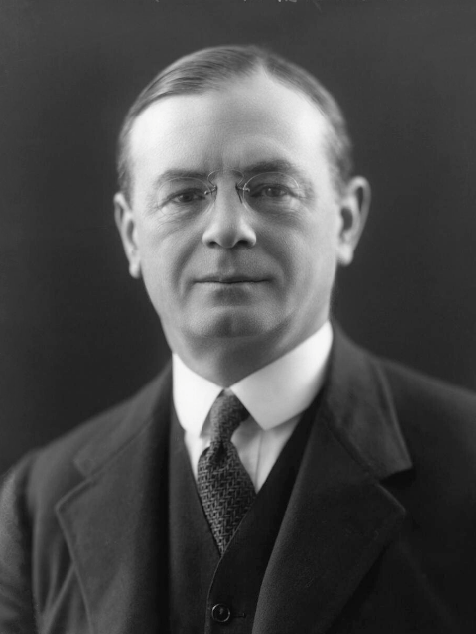
Norway Debate: The British House of Commons began a contentious debate on the conduct of the war. Sir Roger Keyes dramatically appeared dressed in full military uniform with six rows of medals and described in detail the government’s mishandling of the Norwegian campaign.
The Norwegian 6th Division tries to block the German 2nd Mountain Division relief column rushing to help General Dietl’s regiment at Narvik. Essentially, the Allies have Narvik surrounded, and all they have to do to take the town is to block that one relief attempt.
Almost 5,000 Polish mountain troops — the Polish Podhale Brigade (Chasseurs du Nord) — arrived at Harstad.
German Luftwaffe aircraft attacked British cruiser HMS Aurora off Narvik, Norway at 1641 hours, putting A and B turrets out of action and killing 7 Royal Marines. Aurora, required for operations around Narvik, was not withdrawn from the area for repairs until 25 May when she was relieved by light cruiser HMS Southampton. Four Marines were killed and four Marines were wounded by the bomb. Light cruiser Aurora arrived at Portsmouth on the 29th and was under repair until 28 June. Polish destroyer Blyskawica was damaged by splinters from near misses in the same attack. Destroyer HMS Faulknor was near missed but not damaged.
The Norwegian steamer Folden (316grt) was sunk by German bombing off Helgeland.
HMS Ark Royal, in position 70.17 N, 16.08 E, recovers a Walrus from Harstad at 0610. Per instructions, she implemented standing fighter patrols over the Harstad area, the first patrols leaving 0800 and 0830. One of the later crashed on landing, the aircraft requiring a major overhaul. At the same time, two Swordfish were dispatched on a photo reconnaissance mission in the Bogen area. After a period of inactivity due to poor weather, fighter patrols are dispatched at 1330, two Skuas of 801 Squadron (Lieutenant T. E. Gray, RN), and a trio from 803 (Lieutenant W. P. Lucy, RN). They clashed with two pairs of He-111s over Ofotfjord, claiming two probably downed, though in reality only one 8/KG 26 machine was damaged though it managed to make it back to Vaernes and make a crash landing. One of the Skua pilots, Lieutenant (A) G. F. Russell, RN of 803 was wounded by return fire. Reports placed German troop carrying aircraft in the area, so two further fighter patrols were dispatched at 1700 and 1900, but nothing was sighted. Finally, the day’s activity ended when the Walrus was dispatched to Harstad to join HMS Effingham.
Debate opened in British parliament on the conduct of the war and especially of the Norwegian campaign. Prime Minister Neville Chamberlain was ridiculed by opposition parties taunting him with his statement that Hitler had “missed the bus” in Norway. Opposition to the Chamberlain cabinet in Great Britain united tonight behind the challenging leadership of a national naval hero who shook the British Conservative citadel to its foundations by blaming the government’s “shocking ineptitude” for the admitted failure of the Norwegian venture. Admiral of the Fleet Sir Roger Brownlow Keyes, a National Conservative (government) member of parliament, led the assault with the declaration the admiralty rebuffed his plan to force Trondheim fjord with sea power, an action which he said might have brought land and sea triumphs over Germany, instead of defeat and withdrawal. His declaration tonight capped the first momentous and stormy day of a two-day House of Commons debate on the Norwegian affair. Sir Roger, his uniform glistening with the medals he won in the World war, made his attack on the cabinet, and especially on First Lord of the Admiralty Winston Churchill, only a few hours after Prime Minister Chamberlain had announced new powers for Churchill in an effort to save the government. Only the stocky Churchill figure and the popular magic of the Churchill name remained between the Chamberlain cabinet and disaster. The first lord, on whose shoulders the prime minister unequivocally placed the burden of henceforth personally directing grand strategy on land, sea, and in the air, is to reply tomorrow to the government critics.
Backbencher Conservative Leo Amery stood and uttered the famous words, “Somehow or other we must get into the government men who can match our enemies in fighting spirit, in daring, in resolution and in thirst for victory.” After quoting Oliver Cromwell, he continued: “I will quote certain other words. I do it with great reluctance, because I am speaking of those who are old friends and associates of mine, but they are words which, I think, are applicable to the present situation. This is what Cromwell said to the Long Parliament when he thought it was no longer fit to conduct the affairs of the nation: ‘You have sat too long here for any good you have been doing. Depart, I say, and let us have done with you. In the name of God, go!’”
The British press, which generally has stood stanchly behind Prime Minister Chamberlain’s government, largely deserted his banner tonight with bitter expressions of dissatisfaction over his explanation of the Norwegian debacle.
In fact the errors of the Norwegian campaign have been at least as much Churchill’s as any others. However, in a wider sense the responsibility is Chamberlain’s for failing to to establish a coherent decision-making structure to see that plans were properly coordinated and that subordinates worked sensibly and efficiently.
France, as Prime Minister Neville Chamberlain pointed out in the British House of Commons today, has given proof of remarkable calm in regard to the campaign in Norway and is accepting the British leader’s explanations as if they had been made in the French Parliament.
Prime Minister Chamberlain’s speech in the House of Commons today was regarded in Berlin as a poor attempt to apologize for Great Britain’s defeat in Norway. It was considered significant chiefly for what it omitted to say regarding the Allies’ plans for the future.
Two German columns are advancing through Germany toward the Netherlands from Bremen and Dusseldorf, a highly reliable source said tonight, adding they were the cause of intense military preparations and disruption of the Low Countries’ international communications. This source, kept informed from Europe despite rigid restrictions against communications in the area involved, was the same which advised the Associated Press a short time previously the Netherlands minister in Washington had been ordered to take control of Holland’s interests outside the mother country in event of a clash with Germany. This latter report was confirmed in Washington within a few minutes. The German troops were reported advancing rapidly, and this source stated flatly they were heading “for Leeuwarden and Arnhem.” This would mean the actual German objective is believed known in Holland, since Leeuwarden is in Fries-land province, not far from the northeast coast and Frisian Islands, which would provide jumping off places for planes attacking England. Arnhem, on the other hand, inside southern Holland, about 10 miles north of the Belgian border, is connected with Germany by rail.
Adolf Hitler again pushes the decision date for the invasion of France to the following day. General Jodl notes that “Hitler is greatly agitated.”
Allied aerial reconnaissance is beginning to detect signs of the Wehrmacht build-up, but reports are haphazard. A French pilot returning from a leaflet raid on Düsseldorf happens to see a 60-mile-long German motorized column heading toward the Ardennes.
General Charles Huntziger, commanding French 2nd Army in the Sedan sector, explains “I do not expect that the Germans will ever consider attacking in the region of Sedan”.
The Dutch Army cancels all leaves and orders frontier and coastal troops to occupy defensive positions in full strength. Responding to fragmentary reports of German troop movements and various clandestine sources such as the Vatican, the government cancels all leaves, mobilizes the reserve and begins strengthening/occupying its frontier and coastal defenses. The Dutch have various sources of information about Fall Gelb that the Allies do not. However, they are under no obligation to disclose this information, and they don’t. As Dutch civil servant Snouck Hurgronje says, “They’re not our Allies.”
The official Hungarian news agency published a report today that Germany has asked the Hungarian government for the right to send troops through the country. This report was circulated shortly after diplomats in the Balkans had reported a strong British drive to line up a Balkan “defensive alliance” of Yugoslavia, Rumania, Bulgaria, Greece, and Turkey to stand together against any aggression. Simultaneously, the newspaper Utro in Sofia, Bulgaria, which has been called the mouthpiece of Nazi Germany in Bulgaria, printed a Berlin dispatch declaring Germany and Italy were prepared to send huge forces into southeastern Europe at the first sign of British-French action in that area.
Kliment Voroshilov stepped down as the People’s Commissar for Defense of the Soviet Union. Voroshilov is being demoted to Deputy People’s Commissar of Defense due to the failures in Finland. Chief of General Staff Boris Shaposhnikov is promoted to Marshal of the Soviet Union. Semyon Timoshenko replaced Kliment Voroshilov as the Soviet Union’s Minister of Defence.
A Bristol Beaufort torpedo bomber of RAF Coastal Command dropped the first 2,000-lb bomb during an attack on a German cruiser of the Nuremberg class which had been reported between the German isles of Norderney and Juist.
Belgian fishing vessel Saint Pierre (15grt) was sunk by a mine off Kwinte Bank in the North Sea.
Minelayers HMS Teviotbank and HMS Princess Victoria escorted by patrol sloops HMS Widgeon, HMS Puffin, HMS Pintail, and HMS Shearwater laid minefield BS 2 extending minefield LB. Sloops Widgeon and Puffin were released from the escort after the minelay to escort Danish trawlers found to Yarmouth. The destination was changed en route and they arrived in the Humber. After the minelaying, preparing for operation BS 3, minelayer Princess Victoria burnt out her main switchboard and was delayed.
Convoy FN.165 departed Southend, escorted by destroyer HMS Whitley and sloop HMS Egret. The convoy arrived at the Tyne on the 9th.
Convoy MT.65 departed Methil, escorted by sloops HMS Grimsby and HMS Hastings. The convoy arrived in the Tyne later that day.
Convoy FS.165 departed the Tyne, escorted by sloops HMS Grimsby and HMS Hastings. The convoy arrived at Southend on the 9th.
Convoy HG.29 with forty five ships departed Gibraltar. The ocean escort was Sloops HMS Sandwich from 7 to 17 May and HMS Bideford from 7 to 10 May. In Home Waters, the convoy was escorted by British corvette HMS Clarkia from 15 to 17 May. The convoy arrived at Liverpool on the 17th.
The War at Sea, Tuesday, 7 May 1940 (naval-history.net)
Near Narvik in 68-30N, 14-15E, light cruiser AURORA was damaged at 1641 by a German bomb which landed forward of B-turret.
A and B turrets were put out of action, but AURORA, required for operations around Narvik, was not withdrawn from the area for repairs until 25 May when she was relieved by light cruiser SOUTHAMPTON.
Four Marines were killed and four Marines were wounded by the bomb.
Light cruiser AURORA arrived at Portsmouth on the 29th and was under repair until 28 June.
Polish destroyer ORP BŁYSKAWICA was damaged by splinters from near misses in the same attack. Destroyer FAULKNOR was near missed but not damaged.
Destroyers FAULKNOR (D.8), AMAZON, IMOGEN, and WHIRLWIND departed Bjervik at 1930 with liners MONARCH OF BERMUDA 22,424grt), EMPRESS OF AUSTRALIA (19,665grt), and VILLE D’ALGER (10,172grt) for Scapa Flow arriving at 1400/9th, less destroyer WHIRLWIND.
Destroyer FAULKNOR departed Scapa Flow at 0001/10th Grimsby for repair at Grimsby of damage sustained on the 5th. She arrived at Grimsby at 1645. Repairs were completed on 13 June.
Destroyer IMOGEN had been ordered to return to England for overdue repairs.
Destroyer IMOGEN departed Scapa Flow at 0745/15th for Chatham for damage repairs. She arrived at 1500/16th and the repairs were completed on 12 June.
Polish troopship CHROBRY (11,442grt) departed Leith at 2200 for Narvik escorted by destroyers KANDAHAR and HOSTILE.
The destroyers were soon relieved by destroyers SOMALI (D.6) and ESCORT which departed Scapa Flow at 1230/8th.
Destroyers KANDAHAR and HOSTILE returned to Rosyth at high speed.
Troopship CHROBRY and destroyers SOMALI and ESCORT arrived at Harstad at 1100/11th.
British troopship ROYAL ULSTERMAN (3244grt) escorted by destroyer MATABELE departed Scapa Flow at 1330 for Leith.
Destroyers GALLANT and BULLDOG departed Greenock at 0800 to escort British troopship ALMANZORA (15,551grt) to Scapa Flow, arriving at 1100/8th.
Minesweeper SHARPSHOOTER arrived at Scapa Flow from Scrabser with Vice Admiral Orkneys and Shetlands embarked.
Norwegian destroyer DRAUG departed Scapa Flow at 1800 for Portsmouth.
French destroyer MISTRAL arrived in the Clyde with French tanker TARN (4500grt).
Submarine NARWHAL departed the Humber on minelaying mission FD.10.
British paddle minesweeper QUEEN OF THANET sighted a periscope in 56 07N, 02 28W in the Firth of Forth.
Anti-aircraft cruiser COVENTRY, which was departing Rosyth, was recalled. Destroyer VALENTINE and sloop WESTON attacked a contact 12 miles 072° from May Island that day.
The next day, VALENTINE and WESTON were relieved by anti-submarine trawlers BRIMNESS (413grt) and THORNWICK BAY (437grt).
Minelayers TEVIOTBANK and PRINCESS VICTORIA escorted by patrol sloops WIDGEON, PUFFIN, PINTAIL, and SHEARWATER laid minefield BS 2 extending minefield LB.
Sloops WIDGEON and PUFFIN were released from the escort after the minelay to escort Danish trawlers found to Yarmouth. The destination was changed en route and they arrived in the Humber.
After the minelay, preparing for operation BS 3, minelayer PRINCESS VICTORIA burnt out her main switchboard and was delayed.
Convoy FN.165 departed Southend, escorted by destroyer WHITLEY and sloop EGRET. The convoy arrived at the Tyne on the 9th.
Convoy MT.65 departed Methil, escorted by sloops GRIMSBY and HASTINGS. The convoy arrived in the Tyne later that day.
Convoy FS.165 departed the Tyne, escorted by sloops GRIMSBY and HASTINGS. The convoy arrived at Southend on the 9th.
Norwegian steamer FOLDEN (316grt) was sunk by German bombing off Helgeland.
Belgian fishing vessel SAINT PIERRE (15grt) was sunk by a mine off Kwinte Bank.
Convoy HG.29 with forty-five ships departed Gibraltar.
The ocean escort was Sloops SANDWICH from 7 to 17 May and BIDEFORD from 7 to 10 May.
In Home Waters, the convoy was escorted by British corvette CLARKIA from 15 to 17 May. The convoy arrived at Liverpool on the 17th.
French submarines MEDUSE and AMPHITRITE departed Oran for Brest. They passed Gibraltar on the 8th and joined convoy 23 RS, escorted by sloop L’IMPETEUSE.
On arrival at Brest, both submarines began refitting.
Today in Washington, President Roosevelt conferred with Congressional leaders on the legislative program, with Sumner Welles, Under Secretary of State, on foreign affairs, with Nathan Straus, administrator of Housing Authority, on the low-cost housing program, with Governor John Moses of North Dakota on relief in that State, and with James W. Gerard, former Ambassador to Germany. He signed the bill authorizing the freezing of credits in this country of belligerent nations.
The Senate completed Congressional action on the State-Commerce-Justice Department Appropriation bill, approved the nomination of Herbert Goodrich as Judge of the Third Circuit Court of Appeals, heard Senator Norris criticize the Federal Bureau of Investigation, considered the bill to repeal the provisions of the Silver Purchase Act applying to foreign silver, and recessed at 5:29 PM until noon tomorrow. The Naval Affairs Committee heard Secretary Edison on the Naval expansion bill.
The House debated the President’s fourth reorganization order, Heard Representative Sumners discuss the Hatch bill, and adjourned at 5:50 PM until noon tomorrow.
California Democrats spoke overwhelmingly tonight for a Roosevelt third term nomination, giving little attention to the bids of three other tickets in the presidential primary election. A harmony ticket headed by Gov. Culbert L. Olson was running 3 to 1 ahead of the combined totals of the other three slates as returns from all but two small counties contributed to the totals. Incomplete returns from 11,380 out of 13,511 precincts pushed the Roosevelt vote to 497,810. The Garner ticket, second in the state, was third, with the Ham and Egg ticket headed by Willis E. Allen running second to the Roosevelt. The second “left wing” ticket, headed by Lieut.-Gov. Ellis E. Patterson polled less than 1,000 votes.
The popularity of Wendell Willkie, “dark horse” Republican Presidential candidate, has shown an increase among Republican voters in the comparatively short time since the Willkie-for-President boom started, a survey by the American Institute of Public Opinion shows, according to Dr. George Gallup, its director.
The House Judiciary Committee restored to life today the Hatch “clean politics” bill, voting 14 to 11 to reverse its action of last week in tabling the bill. Representative Sumners of Texas, the committee chairman, indicated the measure would be considered on its merits in the House, although he denounced it vigorously. The action of the committee, and the inferentially expressed opposition of the House leadership to the measure in the face of President Roosevelt’s declaration for it, catapulted the legislation into the position of number one controversial subject in the House. In contrast with the committee’s action last week in voting secretly, 14 to 10, to table the bill, Mr. Sumners announced at the end of an executive meeting today not only the result but the roll-call of the membership.
President Roosevelt cuts short a vacation due to what he describes as a “case of nerves.” He is concerned about the situation vis-à-vis Japan.
U.S. President Franklin D. Roosevelt ordered U.S. Pacific Fleet to remain in Hawaiian waters indefinitely. Rear Admiral James O. Richardson was ordered to issue a press release saying that he had asked to keep the fleet in Hawaii. Richardson is actually firmly opposed to the move. The U.S. Pacific Fleet was scheduled to return to its West Coast bases on May 9, 1940. This action was made in an attempt to deter Japanese aggression.
The battleship for many years to come will be the backbone of the national defense, Secretary of the Navy Edison asserted today before the Senate Committee on Naval Affairs. The Secretary was called by the committee to explain in greater detail his statement made last week that under certain conditions the airplane has the advantage over surface craft, including battleships. That statement, he said, had been erroneously interpreted to mean that the battleship, in his opinion, is nearing obsolescence, a view which he vigorously rejected. Under certain conditions, situations may arise which may give the advantage to aircraft, but such conditions “do not obtain very often,” Mr. Edison said.
Contrary to opinions held in some quarters, British naval losses chargeable to attack from the air have not been large, he added. He had reliable information, he said, that Nazi war planes have not sunk a single British battleship. Only four British warships, all destroyers, have been sunk as a result of aerial bombardment, he told the committee. “Battleships were, are and will continue for many years to come the backbone of our national defense,” Mr. Edison asserted.
President Roosevelt was informed today by Congressional leaders that Congress may still be expected to adjourn by the first week in June unless the $985,000,000 relief bill, now before the House Appropriations Committee, upsets calculations.
The Federal Bureau of Investigation was attacked in the Senate today by Senator Norris as a threat to liberty in the United States so long as it continues to conduct its operations with the aid of publicity on the one hand, and, on the other, is “an object of universal adulation.” The veteran Senator, in a four-hour speech, termed the FBI a necessary instrument of law enforcement which has accomplished many excellent results. He denounced without qualification, however, the manner in which J. Edgar Hoover has conducted its operations, and some of the methods, which the Senator said had been approved not only by Mr. Hoover but by the Attorney General.
The United States Circuit Court of Appeals for the Ninth District today asserted in an opinion that the National Labor Relations Board was “grasping for power,” which was “to be expected” in a philosophy of “administrative absolutism.”
Television on a screen measuring 4 by 6 feet was demonstrated before the annual meeting of the stockholders of the Radio Corporation of America today as President David Sarnoff forecast that “in time, television is bound to revolutionize the broadcasting industry.” Detail on the enlarged images, which compared with the 8 by 10 inch screen used on receivers now on the market, was excellent. In fact, viewers in the rear of the NBC studio where the meeting was held could see perfectly despite the distance of nearly 80 feet from the screen. In introducing the test, Mr. Sarnoff said that the 4 by 6 foot screen was an intermediate step, the next, ready in three months, to be on a 9 by 12 foot screen, full theater size.
Major League Baseball:
The Dodgers are drubbed by the Cardinals, 18–2 when St. Louis totals 49 bases on 20 hits. The Cards have 13 extra base hits, 7 of them home runs to set a National League mark for extra bases on long hits (29). Eddie Lake and Johnny Mize each have a pair. Brooklyn then becomes the first National League team to fly, going from St. Louis to Chicago on two planes. The Red Sox flew the same route July 30, 1936, but for reasons of cost and risk, no other teams try the airlines. The Dodgers will fly to New York from Chicago. Today was only the second loss of the season for the Dodgers.
Ike Pearson, 23-year-old righthander who jumped from the Mississippi State University campus to the Phillies last June, whitewashed the Cubs with a four-hitter today, 1 to 0, in the rubber game of their series.
With Eddie Miller furnishing the big punch, the revamped Boston Bees collected sixteen hits off four Pittsburgh hurlers today to hand the Pirates their seventh straight defeat. The score was 11 to 9.
The Reds score two in the eighth to beat the New York Giants, 7–6. Harry Danning has two home runs and four rbis for the Giants but also makes a critical error in the first inning, when the Reds scored three times.
Five-hit pitching by Jack Knott and Pete Appleton, helped along by four Philadelphia errors, gave Chicago a 6-to-3 triumph over the Athletics today and two games out of their three-game series. Four of the White Sox runs were unearned.
The timely hitting of Lou Finney and Gene Desautels was more effective than the vicious barrage aimed at the veteran Bob Grove today and the Red Sox strengthened their grip on first place in the American League by defeating the Indians, 6—4.
The Detroit Tigers downed the Yankees, 4–2, completing a sweep of their three-game series. Rookie southpaw Harold Newhouser scatters eight hits in his eight innings of work for the win.
Johnny Whitehead’s wild pitch with the score tied and the bases full in the tenth inning today gave the Senators a 6-5 victory over the up-and-coming St. Louis Browns. It was Washington’s first triumph in its last six starts.
The press reports the impending sale of the New York Yankees by the Ruppert estate to political bigwigs Jim Farley and Jesse Jones. The Sporting News declares the sale will be for $4 million. The imminent sale will resurface on the front page several times during the next year, but it will never happen.
Cleveland Indians 4, Boston Red Sox 6
Philadelphia Phillies 1, Chicago Cubs 0
New York Giants 6, Cincinnati Reds 7
Detroit Tigers 4, New York Yankees 2
Chicago White Sox 6, Philadelphia Athletics 3
Boston Bees 11, Pittsburgh Pirates 9
Brooklyn Dodgers 2, St. Louis Cardinals 18
St. Louis Browns 5, Washington Senators 6
The Mexican Government announced tonight it had agreed to pay the Consolidated Oil Company (Sinclair) $8,500,000 for properties it expropriated on March 18, 1938. Eduardo Suarez, Mexican Treasury Secretary, said the $8,500,000 represented the “total payment” to the company for its expropriated properties. The deal is the first Mexico has made with any of the firms whose properties were expropriated. The firms have valued their properties that were taken as high as $400,000,000.
Battle of Tsaoyang-Ichang: Japanese 11th Army captures Suiyangtien, Wuchiatien, and Tangho and attacks Shuangkou.
A general counter-offensive against 60,000 Japanese troops who launched last week a drive westward in Southern Honan Province and northward in Northern Hupeh Province was begun this morning by Chinese armies according to the day’s military communiqué. The Chinese were said to have halted the Japanese drive all along the front and to be threatening the Japanese flanks and rear by attacks from the north and south against Japanese bases along the PeipingHankow railway. The Chinese are synchronizing their operations in the front line zone with harassing assaults on Japanese strongholds west and east of Hankow. The outcome so far has been inconclusive.
The Japanese offensive is being carried out with Chunghsiang, Suihsien, and Sinyang as main bases. The Japanese right-wing forces from Sinyang and points immediately north have swung westward, capturing Tungpeh and Miyang in the Tungpeh Mountains while troops from Suihsien have skirted the more Southern Tahung Mountains and reached Tsaoyang. The Japanese left wing has pushed up the Han River more than forty miles. The Chinese report the use by the Japanese of artillery and gas. Casualties running into thousands are reported by both sides. The Japanese tried a similar offensive in April last year, but withdrew after heavy losses.
The formation of a Labor party with democratic principles was prohibited today by Home Minister Count Hideo Kodama on the ground that it would arouse class consciousness and impair national unity in wartime.
Dow Jones Industrial Average: 147.74 (+0.41)
Born:
Jerry Harkness, College Basketball HOF and NBA and ABA point guard (Loyola [Illinois]; New York Knicks; Indiana Pacers), in Harlem, New York, New York (d. 2021).
John Irvin, English actor (“Moment in Time”), in Newcastle upon Tyne, Northumberland, England, United Kingdom.
Angela Carter, novelist (“Magic Toyshop”) and journalist, in Eastbourne, England, United Kingdom (d. 1992).
Jim Connors, disc jockey, in Pawtucket, Rhode Island (d. 1987).
Died:
George Lansbury, 81, British Labour Party politician and social reformer.
Naval Construction:
The Royal Navy “U”-class (Second Group) submarine HMS Una (N 87) is laid down by the Chatham Dockyard (Chatham, U.K.).
The Royal Navy “T”-class (Second Group) submarine HMS Trooper (N 91) is laid down by the Scotts Shipbuilding & Engineering Co. (Greenock, Scotland).
The Royal Navy Dance-class ASW trawler HMS Gavotte (T 115) is launched by Cook, Welton & Gemmill (Beverley, U.K.); completed by Holmes.
The Royal Navy “N”-class destroyer HMS Nerissa (G 65) is launched by the John Brown Shipbuilding & Engineering Company Ltd. (Clydebank, Scotland). She will be transferred to the Polish navy before completion, in October 1940, and be commissioned as the Polish Navy destroyer ORP Piorun.
 History Diaries