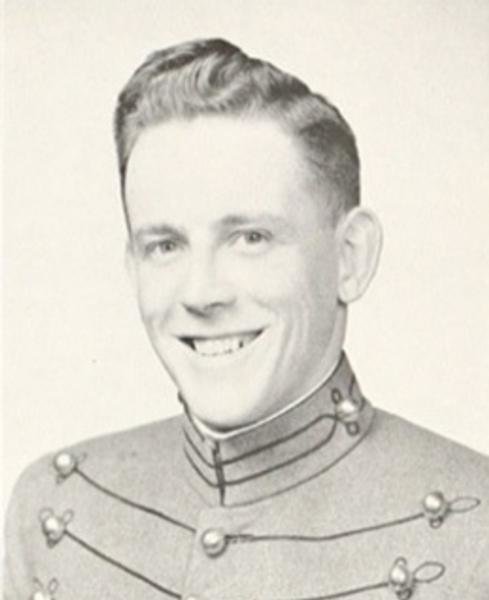
During the early hours of February 7, 1965, an attack occurred on Camp Holloway, a helicopter facility constructed by the United States Army near Pleiku, RVN. At around 11:00 PM on February 6, 1965, about 300 Việt Cộng soldiers of the 30th Company, 409th Battalion, assembled at positions outside Camp Holloway where they began breaking through the wire fences. The Việt Cộng’s mission nearly turned into a disaster when their combat engineers accidentally tripped an electrical wire after breaking through the third fence barrier, but the U.S. Military Police patrolling the area did not detect it. At 1:50 AM on February 7th, the Việt Cộng attackers opened fire with their AK-47 rifles, having successfully penetrated Camp Holloway. Shortly afterwards, the Việt Cộng mortared the airfield and the U.S. advisory compound, while sections of the 30th Company attacked their respective targets with small arms fire. In a raid that lasted only five minutes, the Việt Cộng quickly began retreating from the facility. Later that morning, they claimed victory, having caused the death of nine U.S. soldiers, and leaving another 125 wounded. In addition, ten aircraft were destroyed and 15 more were damaged. The lost U.S. personnel included PFC Joseph K. L. Belanger, SP4 Ralph W. Broughman, SP5 David Craig III, SP5 Gerald D. Founds, PFC Theodore Lamb, CPT George Markos, and PFC Alvin G. Parker. PVT Norman R. Garrett was evacuated to Fort Sam Houston, TX, for treatment of a severe head injury from which he died February 15, 1965. MAJ Sayward N. Hall Jr. died in the Philippines where he was flown after being critically injured in the attack. He died April 21, 1965.
Major Sayward Newton “Pete” Hall Jr. is buried in the Thomaston Village Cemetery in Thomaston, Maine. He is honored on the Wall at Panel 1E, line 106.
United States and South Vietnamese aircraft flew round-the clock bombing missions today in an attempt to tie up North Vietnamese supply routes. The effectiveness of the air strikes, which began on a regular basis March 2, was hailed by Major General Trần Văn Minh, Commander in Chief of the South Vietnamese armed forces. General Minh — who is often called Little Minh, to distinguish him from Lieutenant General Dương Văn Minh, the former military chief — remarked at a reception that he considered the strikes and the dropping of propaganda leaflets into the North as turning points in the war.
In action inside South Vietnam, unconfirmed estimates have raised to 300 the number of Việt Cộng guerrillas killed by airstrikes in Quảng Tín Province. Fifty-three bodies have been counted. Twenty-four American jet sorties were made again today over the area, about 25 miles southeast of Đà Nẵng. United States airpower has not been decisive because the Việt Cộng guerrillas are well dug in. Reports from the battlefield also indicated that South Vietnamese Marine units broke off the fighting at one point on Monday rather than continue their offensive against the well-fortified Communist troops. Twenty three South Vietnamese soldiers have. been killed since the action started last Sunday. Thirty-four more have been wounded, and 18 are missing.
The round the clock air strikes against North Vietnam involved the United States Navy, the United States Air Force and the South Vietnamese Air Force. The Navy led off at 2 AM with a mission by two Skyhawk fighter-bombers along Highway 1. They made passes over two trucks south of Đồng Hới with 20-mm. cannons, but the pilots said they could not evaluate the damage. At 3:30 PM, four more fighter-bombers moved over the same route and struck at more trucks. At noon four South Vietnamese Air Force propeller-driven fighter-bombers, accompanied by 10 United States Air Force jets, flew over the route. They hit four large buildings and six smaller buildings and damaged four 75-foot boats along the coast.
The South Vietnamese Air Force announced later that a second sortie, by four planes, had knocked out two bridges. The United States Air Force planes — 15 F-105 fighter-bombers accompanied by 20 jet fighters — flew a 30-minute reconnaissance mission over two other routes, beginning after 2 P.M. They cut the road at one point on Route 8, which runs west from Vĩnh to the Laotian border, and surveyed Route 12, which runs southwest from Vĩnh to the 18th Parallel and then due south. At Mụ Giạ Pass, near the Laotian border, the planes inflicted moderate damage on a barracks. The pilots also reported having destroyed two boxcars.
United States Marines fought their first infantry clash with Việt Cộng guerrillas today. One marine was wounded. The fighting was still underway this afternoon. It was not immediately known whether the Việt Cộng had suffered losses. The guerrillas attacked a reconnaissance patrol of 41 marines and 38 South Vietnamese in the village of Bình Thái, nine miles from the Đà Nẵng air base. The marines quickly returned the fire and called for a reserve company that had been standing by in case enemy forces were found.
To protest the conduct of the war by his government, a 16-year-old novice Vietnamese Buddhist monk immolates himself on 21 April; another Buddhist monk sets himself aflame three days later.
Communist China rejected today President Johnson’s renewed offer of “unconditional discussions” for a peace settlement in Vietnam. Peking said the offer was unacceptable because the President in his statement on Saturday had insisted on secure independence for South Vietnam. An authoritative editorial in Jenmin Jih Pao, the party organ, asserted that “this most essential point” was proof of the United States’ intention to perpetuate the division of Vietnam and to keep troops there indefinitely.
President Tito of Yugoslavia and President Ahmed Ben Bella of Algeria joined today in attacking “United States interference’ in South Vietnam. They called for “immediate negotiations” for a “peaceful solution.”
The Johnson Administration, disappointed by the absence of positive reaction to the President’s offer of “unconditional discussions” on Vietnam, will apparently shift its concentration to a greater effort to win the ground war in South Vietnam. This conclusion emerged from discussions with informed sources and from developments here today. Secretary of Defense Robert S. McNamara, just returned from a strategy conference in Honolulu, outlined plans for building up South Vietnamese strength. He said American military aid would be increased from $207 million to $330 million a year and that air and logistical support for the South Vietnamese forces would be stepped up. Mr. McNamara, who had just reported to President Johnson, said the level of American forces in South Vietnam was “presently adequate.”
An enlarged effort in South Vietnam does not mean that the air bombardment of North Vietnam will be stopped or that it is regarded here as having failed. But the long series of attacks, even when coupled with Mr. Johnson’s Baltimore speech offering to negotiate, has not produced even “subterranean” indications of a positive response from any of the Communist capitals concerned. Informed sources emphasized today the Administration’s puzzlement at this lack of response. They said public disparagement of the speech had been anticipated. But they said that expectations of more hopeful private contacts had not been realized.
India renewed her support today for an international conference to discuss measures to guarantee Cambodia’s neutrality and territorial integrity. Foreign Minister Swaran Singh said in Parliament that it was India’s “earnest hope and desire that it will be possible to hold a conference of interested parties immediately.” However, he stressed that such a conference should be confined to the Cambodia issue because, he said, Cambodians “resent any suggestion that the conference might be used for other purposes.” The proposal for the conference was made by the Cambodian head of state, Prince Norodom Sihanouk.
Premier Aldo Moro of Italy held a second round of talks with President Johnson today and expressed “full understanding for the position and responsibilities of the United States” in Southeast Asia.
The United Nations Secretary General, U Thant, reaffirmed a “willingness and desire” yesterday to help find “some basis for mutual accommodation, if not for a permanent solution,” in Vietnam.
The CIA and the Defense Inelligence Agency report a “most ominous” development: a regiment of the 325th PAVN (People’s Army of Vietnam) division is now part of the enemy’s forces in South Vietnam.
Defense Secretary Robert S. McNamara reported that increased military aid to South Vietnam will cost an extra $123 million in this fiscal year.
In words of dark foreboding, Senate Democratic Leader Mike Mansfield of Montana appealed for serious consideration of a Soviet-backed plan to reconvene the Geneva conference as a step toward ending the Vietnam war.
Northrop, Douglas and Lockheed, all major Southland aircraft firms, have been alerted for possible crash production of warplanes.
A Laotian military rebellion by perhaps 300 to 500 troops at Paksane, a Mekong River town 70 miles northeast of Vientiane, is still under way, but little information about it is available. The rebels have apparently divided into two columns north of Paksane and are being pursued by government troops. A third group of rebels is on the Thai side of the Mekong River at Boonkhon. The immediate motive for the rebellion appeared to be the uncertainty of officers over their future. These officers had sided with General Phoumi Nosavan, the rightist leader, when he attacked Vientiane in February. That attack failed and the general is now in exile in Thailand.
Soviet planes scattered metal chaff in the Berlin air corridors in an attempt to jam Western radar. Soviet planes endangered allied commercial and military aircraft in the Berlin corridors Monday by scattering radar-jamming strips of metal known as chaff, it was disclosed Wednesday. A Western spokesman said the United States, Britain and France’ promptly protested against the new Soviet harassment of the vital air lanes connecting Berlin with the West. In a verbal protest delivered to the Soviet controller at Berlin’s four-power safety center, the Western Allies denounced the action as a potential hazard to allied military and civilian flights.
The chaff was dropped south of Berlin. It floated across the three 20-mile-wide air corridors above East Germany that link the isolated city of West Berlin with West Germany. Two weeks ago, Soviet fighter planes harassed Western flights in protest against the meeting in Berlin of the West German Parliament. The Western Allies tried to keep the new Soviet harassment secret and confirmed the story only after it had leaked out. However, officials said the Russians were not “saturating” the corridors with chaff and radar operators were able to distinguish between the planes and the metal strips.
U Thant called on the 114 members of the United Nations today for greater efforts to avoid an impending crisis in the nuclear arms race. At the first meeting of the Disarmament Commission since August, 1960, the Secretary General said: “There is evidence that we may be approaching yet another crucial point in the nuclear arms race.” He laid particular stress on the importance of keeping nuclear weapons out of the hands of countries that do not yet have them. Pending agreement on doing away with nuclear arms, the recent emphasis has been on preventing such “proliferation.”
Habib Bourguiba, the President of Tunisia, outraged the other leaders within the Arab League after he proposed that the Arab nations should give recognition to Israel, albeit within the boundaries that had been proposed in the 1947 United Nations Partition Plan for Palestine. Borguiba’s proposal was based on his position that Israel would never agree to the borders that the UN had voted on in Resolution 181, and that “If Israel refuses to apply the UN decisions, the legality of the UN will be on our side, which will strengthen our position in approaching a solution by force,” but the strategy was viewed by the other Arab states as a betrayal of the Palestinian people.
Parliamentary elections were held within those parts of Sudan that were not disrupted by the civil war in Southern Sudan. Fourteen persons, including four policemen, were killed in election violence today in the new eastern Sudan city of Khashm el Girba. The police opened fire when attacked by supporters of the Peoples Democratic party who tried to carry out their threat to prevent voting in the general elections, which began today in five northern provinces. The party is boycotting the elections for the Constituent Assembly, contending the voting in the north will lead only to the “separation” of the southern provinces, where there has been agitation for greater autonomy for some years. The agitation has its roots in the traditional enmity between the predominantly Black southern population and the Arab north. The violence echoed the civil disorders late last year that impelled the civilian Cabinet to force out the President, Lieutenant General Ibrahim Abboud, after six years of military rule.
The White House sought today to make amends for an increasingly embarrassing diplomatic snub by again putting out a welcome mat for Prime Minister Lal Bahadur Shastri of India. The White House said that, as far as President Johnson was concerned, the invitation to Mr. Shastri still stood. The President is still hopeful, the White House added, that the Indian leader will visit Washington in the late summer. The renewed welcome was extended in answer to the announcement in New Delhi yesterday that Mr. Shastri was canceling plans to visit the United States, instead of just postponing his trip as proposed by President Johnson. If Mr. Shastri had come in early June, 35 originally planned, his visit would have coincided with the annual Congressional battle over foreign aid appropriations. There was Presidential concern, therefore, according to officials, that during his visit Mr. Shastri might make some criticism of United States policy in Vietnam that in turn would have prompted Congressional reprisals against continuing American aid to India.
Soviet industrial production in the first spring of the post-Khrushchev era appeared to be off to a good start as the Government reported that the decline of the growth rate in the last two years had been checked.
President Makarios announced tonight that Greek Cypriot armed posts and road checkpoints would be removed in western and southwestern Cyprus, except “defenses against an external attack.”
Thirty-one African countries called tonight for the Security Council to meet “urgently” on the plan for an election May 7 in Rhodesia. The election could guarantee continued white control of the self-governing British colony and therefore threatens peace, the Africans asserted.
The authority of Yemen’s President, Abdullah al-Salal, has been diluted in a six-man Presidency Council, which is to “plan, direct and supervise the execution of state policy,” the Sana radio announced last night.
The second round of municipal elections was held in France. The Communist party made gains, and began co-operating with other parties of the parliamentary left.
The Government said today that it was determined to complete the Congo’s marathon election on schedule next week.
Phillips Talbot, United States Assistant Secretary of State for Near Eastern and South Asian Affairs, arrived in Jerusalem today for brief talks on the Middle Eastern situation with Israeli leaders.
The British government is expected to announce on Monday plans to take over 12 major steel firms in a government program of renationalization.
Communist China has begun a crash program to convert Hainan Island “into the most modern all-purpose strategic base,” an Indian Government publication says.
A county grand jury in Alabama, after hearing a “hairy tale” of a Ku Klux Klansman’s six-year role as informant for the FBI, voted to return murder indictments in the slaying of Mrs. Viola Liuzzo of Detroit. A grand jury investigating the slaying of Mrs. Liuzzo completed its deliberations in Hayneville, Alabama today. It was reported to have voted three murder indictments. The all-white panel considered the Liuzzo killing for 52 minutes this afternoon. It then adjourned to report to Judge T. Werth Thagard at 9 AM tomorrow. No announcement was made of the jury’s action. The panel could theoretically reverse its action by another vote before it reports to Judge Thagard. Under Alabama law, the names of the indicted persons cannot be disclosed until the defendants are arrested and booked. Three men have been indicted by a federal grand jury for conspiracy to violate the Detroit housewife’s civil rights in the shooting. They are Eugene Thomas, 43 years old, and William O. Eaton, 41, both of Bessemer, Alabama, and Collie Le Roy Wilkins Jr., 21, of Fairfield, Alabama.
The grand jury action set the stage for an intriguing trial; here. The case includes the involvement of an informant for the Federal Bureau of Investigation. Gary Thomas Rowe, 34, of Birmingham, who was a helpless witness to the shooting. Mr. Rowe is reported to have been a paid informant for the bureau on Ku Klux Klan activities for the last six years. He is also reported to have been in the car from which the fatal shots were fired into Mrs. Liuzzo’s automobile,
He is reported to have told the bureau the slaying was a spur-of-the-moment happening. after the Klansmen’s car pulled besides Mrs. Liuzzo’s car at a traffic light and the men inside saw a young Black, Leroy Moton, 19, in the front seat with her. However, Mr. Rowe reportedly also told the bureau the car had cruised through the streets of Selma looking for Blacks and trouble before the shooting and several times passed Browns Chapel, command post for Black demonstrators. Trying to prevent bloodshed, Mr. Rowe is reported to have suggested leaving the Browns Chapel area, shortly before the car approached Mrs. Liuzzo’s vehicle on U.S. Highway 80 in Lowndes County.
Since young Moton is reported to be unable to identify the occupants of the other car, Mr. Rowe’s testimony could be crucial. However, sources close to the prosecution say there is additional evidence based on ballistics. It is reported that the pistol that fired the fatal shot, and a matching bullet that struck Mrs. Liuzzo will be placed in evidence. A trial could be conducted here as early as May 3, the first day of the next criminal trial term. Under Alabama law a felony defendant has a right to have a trial separate from that of other accused accomplices. Judge Thagard said yesterday: “We could try three cases within six weeks, and be through before the real hot weather sets in.”
Signs that Senate liberals may make some concessions on controversial provisions of the voting rights bill brightened prospects for early passage.
A group of Blacks expressed their growing dissatisfaction with Bogalusa’s city administration by picketing City Hall for more than an hour today. Thirty-six young Blacks, weaving through an acrid cloud of smoke from the nearby Crown-Zellerbach paper mill, carried signs saying, “Unjust Mayor Must Go.” “Police Force Very Sorry,” “We Want Jobs” and “We Want Freedom.” A few white men watched from across the street. Two whites joined the pickets briefly as counter-pickets, carrying signs saying, “We Have Good Policemen” and “Best Police Force — No Trouble.” The Blacks drew a few jeers as they left, but there was no violence. Close observers of the local scene believe that the leaders of the Black movement and the administration of Mayor Jesse H. Cutrer Jr. are drifting further apart.
The Rev. Dr. Martin Luther King Jr. urged the nation’s 260,000 lawyers last night to help do away with unjust laws that are “out of harmony with the moral law of the universe.”
The United Steelworkers of America and the steel industry moved closer today to a possible strike May 1. The union rejected the industry’s latest proposal calling for improvement in pension and insurance benefits and postponing the earliest possible strike date to next March 1. The industry then asked the union to extend the contracts on a day-to-day basis while continuing negotiations. Under the industry’s plan, the contracts could be terminated and a strike called on 15 days’ notice.
The Goodyear Tire and Rubber Company came to terms with the United Rubber Workers tonight after Firestone Tire and Rubber and B. F. Goodrich had reached similar agreements with the union during the day. The tentative two-year settlement by the industry’s big three is expected to set a pattern for all rubber-worker contracts. The cost of the package was estimated at about 28 cents an hour.
South Carolina Governor Donald S. Russell announced today that he would resign tomorrow to be appointed to the Senate seat vacated by the death of Olin D. Johnston.
The 1964 New York World’s Fair in Flushing Meadows, New York, reopened for its second six-month season. The fair had operated from April 22 to October 19, 1964, then closed for six months, before reopening for 1965. It would close permanently on October 17, 1965.
The Long Island Lighting Company announced today that it planned to build a $75 million nuclear-powered plant in Suffolk County, New York.
The Mississippi River lay siege to La Crosse, Wisconsin, with an all-time record flood stage and sent a mighty torrent downstream toward a rendezvous with the Ohio River.
Paul Jung, 65, a top clown with Ringling Bros. circus for 31 years, was beaten to death in his New York hotel room. He had performed at the circus Tuesday.
A neighbor who turned in the alarm for the fire in which actress Linda Darnell lost her life told a coroner’s jury that firemen who responded were “negligent, confused and incompetent.”
Leopold Stokowski conducted the first complete performance of Charles Ives’s Symphony No. 4, more than ten years after the composer’s death.
The songwriting team of Andrew Lloyd Webber and Tim Rice was created when musician Webber, attending Oxford University, received a letter from lyricist Rice, that said, “I’ve been told you’re looking for a “with it” writer of lyrics for your songs… I wonder if you consider it worth your while meeting me.” The two would team up on numerous rock musicals, starting with the unsuccessful The Likes of Us, followed by the hits Joseph and the Amazing Technicolor Dreamcoat, Jesus Christ Superstar, and Evita.
Jerry West and Gene Wiley led the Los Angeles Lakers to a 126-105 victory over the Boston Celtics in the third game of the National Basketball Association playoffs tonight. The Celtics now lead the series, two games to one.
Major League Baseball:
At Yankee Stadium, Mantle puts New York ahead with a two-run homer in the first off Camilo Pascual, but the Twins come back to win 7–2.
Moose Skowron’s home run, with two out and a man on base in the 11th inning, gave the Chicago White Sox a 3–1 victory over the Boston Red Sox.
Johnny Orsino smashed a two-out home run tonight in the 11th inning, giving the Baltimore Orioles a 3–2 victory over the Washington Senators.
The Houston Astros scored four runs in the eighth inning and five in the ninth tonight and routed the Philadelphia Phillies, 11–4.
A two-run homer by Willie McCovey and Juan Marichal’s tight pitching gave the San Francisco Giants a 3–2 victory over the Pittsburgh Pirates tonight.
Chicago White Sox 3, Boston Red Sox 1
Cincinnati Reds 9, Chicago Cubs 2
California Angels 5, Cleveland Indians 6
Kansas City Athletics 0, Detroit Tigers 1
New York Mets 1, Los Angeles Dodgers 5
Minnesota Twins 7, New York Yankees 2
Houston Astros 11, Philadelphia Phillies 4
Pittsburgh Pirates 2, San Francisco Giants 3
Milwaukee Braves 3, St. Louis Cardinals 6
Baltimore Orioles 3, Washington Senators 2
Dow Jones Industrial Average: 910.71 (-1.25)
Born:
Ed Belfour, Canadian National Team and NHL goaltender (Hockey Hall of Fame, Inducted 2011; Olympic gold medal, 2002, NHL Champions, Stanley Cup-Stars, 1999; Vezina Trophy, 1991, 1993; NHL All-Star, 1992, 1993, 1996, 1998, 1999; Chicago Blackhawks, San Jose Sharks, Dallas Stars, Toronto Maple Leafs, Florida Panthers), in Carman, Manitoba, Canada.
Gary Grant, NBA point guard (Los Angeles Clippers, New York Knicks, Miami Heat, Portland Trailblazers), in Canton, Ohio.
Gerald Paddio, NBA small forward (Cleveland Cavaliers, Seattle SuperSonics, Indiana Pacers, New York Knicks, Washington Bullets), in Lafayette, Louisiana.
Fiona Kelleghan, American academic and critic specializing in science fiction and fantasy; in West Palm Beach, Florida.
Died:
Paul Jung, 64, billed as “The King of Clown Alley” by the Ringling Brothers and Barnum & Bailey Circus, was found beaten to death in Room 1211 at the Hotel Forrest in New York City, near the circus venue at Madison Square Garden. On June 5, police would arrest a man and woman and charge them with robbery and murder. Marian De Barry would later testify against her boyfriend, Allen Jones, in return for reduced charges. Jones would be convicted of first-degree murder and sentenced to life imprisonment.
Sir Edward Victor Appleton, 72, English physicist and 1947 Nobel Prize laureate known for his work proving the existence of Earth’s ionosphere.
Pedro Albizu Campos, 73, advocate for Puerto Rican independence from the United States.
 History Diaries