The British began to implement Operation WILFRED by mining Norwegian waters. The United Kingdom informed Norway and Sweden of its intent to mine Norwegian waters; the British minelaying ship HMS Teviotbank departed Scapa Flow for Norway at 1830 hours, commanded by Vice-Admiral Whitworth on the battle cruiser HMS Renown, with eight destroyers as escorts and four destroyers to lay more mines across the Leads outside Narvik Fjord, as Operation WILFRED, the British mining of Norwegian waters, began.
German warships are on their way to Norway, many carrying armed troops. They are disguised as UK vessels, including actual false flags and manning their radio sets with English speakers who identify themselves as “British ship.”
Numerous persons sympathetic to the Allies have learned of Operation Weserubung and try to warn the Norwegian/Danish governments and/or the Allies. The Norwegian ambassador in Berlin warns both his own government and Copenhagen. The British also receive quite specific warnings, including the key information that Narvik is on the docket.
Danish Ambassador in Berlin Herluf Zahle sends a memorandum to his Foreign Minister dated 5 April 1940 and marked “strictly confidential” which notes that there is “disturbing circumstantial evidence” of German war preparations aimed at the neutral Danish and Norwegian states.
Norwegian ambassador in Berlin warned Danish and Norwegian capitals of a possible invasion, as did British intelligence. Britain and France also advised Norway that they had the right to act to deprive Germany of access to Norwegian raw materials.
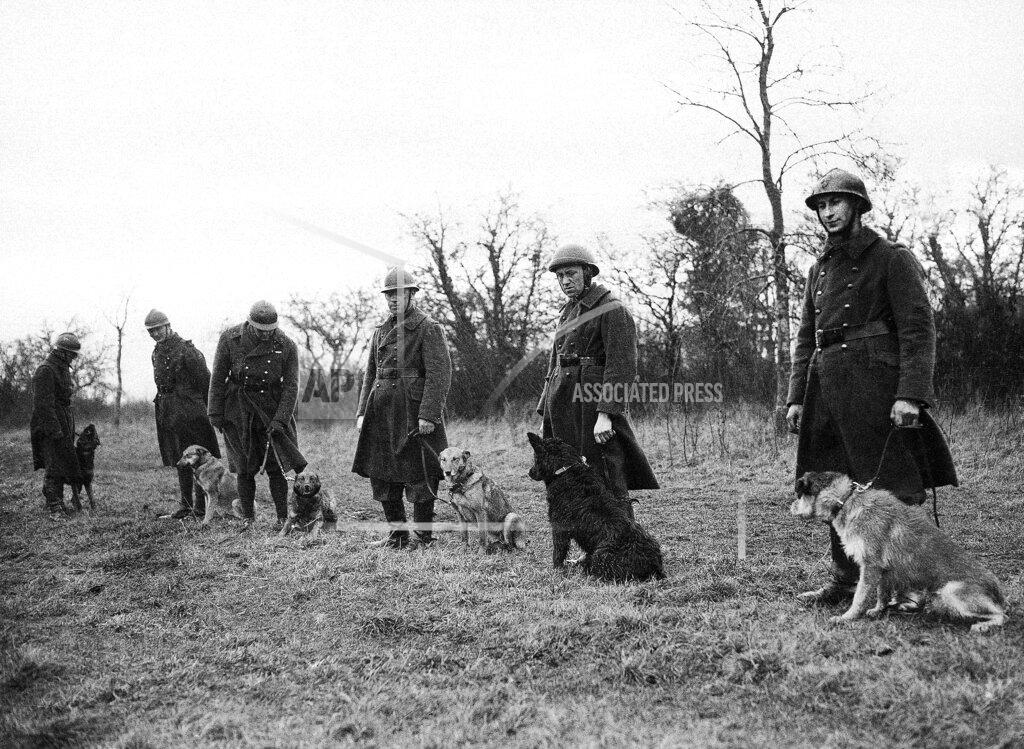
Some fifteen French soldiers were killed in a skirmish with German shock troops who raided an enemy position near Saarlautern on the Western Front, the German High Command reported today.
British Prime Minister Neville Chamberlain states that a German invasion of Western Europe would not be successful.
General Ironside, Chief of the Imperial General Staff, echoes Prime Minister Chamberlain’s “missed the bus” speech of 4 April at a press conference: “Thank goodness Germany didn’t attack in the first 7 months of the war – we’ve now made a fine army.” He also gives some unsolicited advice: “German army must do something, or its morale will crack. I believe the great silence is worse to the Germans than anything else.”
On the eve of the twenty-third anniversary of the United States’ entrance into the World War, the British government tonight put the “hush-hush” on any suggestions that it is America’s duty to enter the present war on the side of the allies. Nevertheless, American sentiment on the question of entering or staying out of the war is one of the chief topics of discussion and that is why thousands of Britons are following the course of the presidential race in the United States with almost as much interest as if they were electing their own prime minister. They want to know whether President Roosevelt will seek a third term.
99th Grand National: 25/1 shot Bogskar ridden by Royal Air Force sergeant Mervyn Jones wins by 4 lengths from MacMoffat; last true Aintree Grand National before a 5-year break due to World War II.
Georges Monnet, the French Minister of Blockade, arrives in London for talks with the British Minister of Economic Warfare, Ronald Cross.
Italian newspapers began writing today almost as if they were trying to convince the public that Italy is going to enter the war. Anti-Allied propaganda is increasing.
The Swedish Anti-Profanity League donates 1500 signs for barracks, which state: “Don’t curse. Cursing proves a lack of culture.”
All Turkish high school girls are required to obtain military training before graduation, with 11-16 year olds to study sharpshooting, tactics and first aid.
The Katyn Forest Massacre by Soviet troops against Polish officers is under way. Polish officers leaving prisons believe that they are being taken home to Poland. Instead they are taken by train and bus to the Katyn Forest at bayonet point. Some prisoners are killed in their cells and then their corpses are taken to the forest. The corpses are stacked like wood, feet to head, until they fill each van. About 1,000 are killed on the first day, over 20,000 left. Pits are dug, and the corpses are thrown into them.
The first flight is made of the Mikoyan-Gurevich I-200, prototype of the MiG-1 fighter-interceptor aircraft, at the Khodynka Aerodrome in Moscow with chief test pilot Arkadij Ekatov at the controls.
British RAF aircraft attacked German shipping at Wilhelmshaven.
British submarine HMS Spearfish departed Blyth for the Danish coast in search for potential German invasion fleets for Denmark and Norway.
It is another quiet day on the Atlantic as the U-boat fleet has been re-oriented to protect Kriegsmarine transports around Norway.
The German submarines U-2, U-5 and U-6 departed Wilhelmshaven for patrols off southern Norway. U-4 had departed Wilhelmshaven on the 4th and U-1 departed Wilhelmshaven on the 6th. U-3 departed Wilhelmshaven on the 13th when U-2 left patrol with defects for Wilhelmshaven.
In the North Sea, the British submarine HMS Unity attacked the German U-boat U-2 with three torpedoes, but all missed.
German fishing trawler Blankenburg (344grt) was captured by destroyer HMS Fearless northeast of North Cape in 71 05N, 26 49E. She was escorted by destroyer Fearless as far as North Cape, then departed under prize crew for Kirkwall arriving on the 11th. Trawler Blankenburg was renamed HMS Recoil for use by the Royal Navy as an anti-submarine trawler.
Destroyer HMCS Assiniboine was damaged in a collision with the merchantman MS Lairdswood in the Irish Sea. Assiniboine was under repair at Greenock until 22 May 40. Assiniboine (ex-HMS Kempenfelt) was the flotilla leader for the four British C-class destroyers purchased before the war. She was purchased and commissioned into the RCN after the start of the Second World War.
The 6th Mine Sweeping Flotilla was formed with minesweepers HMS Halcyon, HMS Speedwell, HMS Skipjack, HMS Harrier (SO) and HMS Hussar at Dover.
The Norwegian cargo ship Bjørnhaug ran aground at Fife Ness, Fife, United Kingdom and was wrecked. Her twelve crew survived.
Convoy ON.25 with nine British, sixteen Norwegian, nine Swedish, four Danish, four Finnish, and one Estonian ship for Norway and two ships for Aberdeen, departed Methil at 1200 escorted by destroyers HMS Javelin, HMS Juno, HMS Eclipse, and HMS Grenade and submarine HMS Thistle. Light cruisers HMS Manchester, HMS Southampton and anti-aircraft cruiser HMS Calcutta provided close support. The convoy was composed of British steamers Nyanza (4974grt), Magrix (454grt), Dalveen (5193grt), Orangemoor (5775grt), Cree (4791grt), and Swainby (4935grt), Norwegian steamers Eros (974grt), Forsvik (1248grt), Inger (1409grt), Roy (1768grt), Diana (1154grt), Einvik (2000grt), Sjofna (619grt), Ibis (1367grt), Hjalmar Wessel (1742grt), Vard (681grt), and Vestland (1934grt), Swedish steamers Nordost (1035grt), Caledonia (1268grt),Haga (1296grt), Magdalena (1265grt), and Frey (1296grt), Danish steamers Lotte (1420grt), Mette (1909grt), and Sophie (945grt), Finnish steamers Delaware (2441grt), Veli Ragnar (2158grt), and Ascania (838grt), Dutch steamer Helder (3629grt), and Estonian steamer Begonia (1591grt).
Off Aberdeen, submarine Thistle was detached from the convoy with anti-submarine trawler HMS Coventry City (546grt) and British steamer Magrix (454grt) for Scapa Flow. On the 6th, the convoy was joined at sea by destroyers HMS Janus, which departed Scapa Flow at 1300/5th and HMS Jupiter, which had departed Scapa Flow at 0830/6th, escorting the ten ships of the Kirkwall section of the convoy. These steamers are detailed in the breakdown of the Methil sailing. Upon joining the convoy, destroyer Janus remained with the local escort and destroyer Jupiter was ordered to search for British drifter Seabreeze.
The merchant ships of the Kirkwall section were British steamers North Devon (3658grt) and Imperial Valley (4573grt), Norwegian steamers Stanja (1845grt), Sarpfoss (1493grt), Star (1531grt), Elna E (1174grt), Ringulv (5153grt), Solhavn (1630grt), and Topdalsfjord (4271grt), Swedish steamers C. F. Liljevalch (5492grt) and Bullaren (5722grt), and Finnish steamer Wappu (1513grt). On the 8th, the Admiralty recalled ON.25 due to German naval activity in the North Sea. Steamers Dalveen, Caledonia, Delaware, Roy, Diana, Einvik, Inger, Vestland, Hjalmar Wessel, Orangemoor, Frey, Cree, Bullaren, Wappu, Star and Ringulv arrived on the 9th at Kirkwall, Nordost on the 10th at Kirkwall, Solhavn at Kirkwall and Bertha at Methil on the 11th, Topdalsfjord at Kirkwall and North Devon at Methil on the 12th, Helder at Kirkwall and Nyanza at the Tyne on the 13th, and Imperial Valley at Methil on the 16th.
On the 10th, escort vessels HMS Vivien, HMS Woolston and HMS Wolsey, which departed Rosyth on the 9th, escorted ON.25 from Kirkwall being joined en route by Sloop HMS Bittern. The convoy arrived at Methil on the 11th. Sloop Bittern was detached en route to round up Danish fishing vessels in Moray Firth on the 10th.
Steamers Magdalena, Lotte, Mette, Begonia, Eros, Sjofna, Ibis, Vard, Ascania, Haga, Sophie, Swainby, Sarpfoss, C. F. Liljevalch and Stanja of ON.25 were lost or captured when the convoy was recalled on the 8th and twenty-four ships lost touch continuing towards Bergen. Steamers Veli Ragnar safely arrived in the Kirkenes and Forsvik at Gothenburg.
Convoy FN.138 departed Southend, escorted by destroyer HMS Wallace and sloop HMS Flamingo. The convoy arrived at the Tyne on the 7th.
Convoy MT.45 departed Methil, escorted by destroyer HMS Valorous, sloop HMS Lowestoft, and anti-submarine trawlers of the 1st Anti-Submarine Group. The convoy arrived in the Tyne on the 6th.
Convoy HG.25 with thirty-seven ships departed Gibraltar escorted by destroyer HMS Watchman from the 5th to 7th. The ocean escort was sloops HMS Fowey (escort SO) and HMS Bideford which escorted the convoy from the 5 to 15th. Destroyers HMS Verity, HMS Vivacious and HMS Broke joined the convoy in Home Waters on the 12th and escorted the convoy until the 15th, when it arrived at Liverpool.
The War at Sea, Friday, 5 April 1940 (naval-history.net)
NORWEGIAN CAMPAIGN
PLANNED BRITISH MINELAYING OPERATIONS
The original British plan was to lay mines in Norwegian waters on the 5th and the first contingent of British troops for Narvik were to sail from the Clyde on the 8th. However, several factors caused the schedule to be put back three days.
Minelayer TEVIOTBANK (Cdr R. D. King-Harman Rtd) of Force WS with destroyers INGLEFIELD, ILEX, IMOGEN, and ISIS departed Scapa Flow at 1930 to lay mines off Stadlandet in 62N, 05E between Aalesund and Bergen. This was the first of three minelays planned under operation WILFRED. Screening forces for these operations were battlecruiser RENOWN (Flagship Vice Admiral W. J. Whitworth CB, DSO, Capt C E B Simeon) and destroyers GREYHOUND, GLOWWORM, HYPERION, and HERO sailing from Scapa Flow at 1830 with the TEVIOTBANK force. Light cruiser BIRMINGHAM, which had departed Scapa Flow on 31 March to search for German fishing vessels, was to have escorted the minelaying force, but on the 5th reports were received that all four Norwegian coastal defense ships were at Narvik. At the last moment, the Admiralty decided to send RENOWN and have BIRMINGHAM rendezvous with her off the Norwegian coast. However, BIRMINGHAM was unable to make the rendezvous due to bad weather.
GERMAN SUPPLY SHIPS MOVEMENTS
German supply ship ALSTER (8514grt) and tanker KATTEGAT (6031grt), escorted by Norwegian torpedo boat STEGG, arrived at Kopervik at the pilot station. The station could not provide sufficient pilots and the German ships’ progress north was delayed. The German ships spent the night at Kopervik and left the next morning towards Narvik. German steamers MAIN (7624grt) and BARENFELS (7569grt) experienced similar delays and spent the night of 6/7 April at Kopervik. German steamer SAO PAULO (4977grt) was forced to spend the night of 7/8 April at Kristiansand.
UK-NORWAY CONVOY ON.25
Convoy ON.25 with nine British, sixteen Norwegian, nine Swedish, four Danish, four Finnish, one Estonian ship for Norway and two ships for Aberdeen, departed Methil at 1200 escorted by destroyers JAVELIN, JUNO, ECLIPSE, and GRENADE and submarine THISTLE. Light cruisers MANCHESTER and SOUTHAMPTON and anti-aircraft cruiser CALCUTTA provided close support. The convoy was composed of British steamers NYANZA (4974grt), MAGRIX (454grt), DALVEEN (5193grt), ORANGEMOOR (5775grt), CREE (4791grt), SWAINBY (4935grt), Norwegian steamers EROS (974grt), FORSVIK (1248grt), INGER (1409grt), ROY (1768grt), DIANA (1154grt), EINVIK (2000grt), SJOFNA (619grt), IBIS (1367grt), HJALMAR WESSEL (1742grt), VARD (681grt), VESTLAND (1934grt), Swedish steamers NORDOST (1035grt), CALEDONIA (1268grt),HAGA (1296grt), MAGDALENA (1265grt), FREY (1296grt), Danish steamers LOTTE (1420grt), METTE (1909grt), SOPHIE (945grt), Finnish steamers DELAWARE (2441grt), VELI RAGNAR (2158grt), ASCANIA (838grt), Dutch steamer HELDER (3629grt), and Estonian steamer BEGONIA (1591grt).
Off Aberdeen, submarine THISTLE was detached from the convoy with anti-submarine trawler COVENTRY CITY (546grt) and British steamer MAGRIX (454grt) for Scapa Flow. On the 6th, the convoy was joined at sea by destroyers JANUS, which departed Scapa Flow at 1300/5th and JUPITER, which had departed Scapa Flow at 0830/6th, escorting the ten ships of the Kirkwall section of the convoy. These steamers are detailed in the breakdown of the Methil sailing. Upon joining the convoy, destroyer JANUS remained with the local escort and destroyer JUPITER was ordered to search for British drifter SEABREEZE.
The merchant ships of the Kirkwall section were British steamers NORTH DEVON (3658grt) and IMPERIAL VALLEY (4573grt), Norwegian steamers STANJA (1845grt), SARPFOSS (1493grt), STAR (1531grt), ELNA E (1174grt), RINGULV (5153grt), SOLHAVN (1630grt), TOPDALSFJORD (4271grt), Swedish steamers C. F. LILJEVALCH (5492grt) and BULLAREN (5722grt), and Finnish steamer WAPPU (1513grt). On the 8th, the Admiralty recalled ON.25 due to German naval activity in the North Sea. Steamers DALVEEN, CALEDONIA, DELAWARE, ROY, DIANA, EINVIK, INGER, VESTLAND, HJALMAR WESSEL, ORANGEMOOR, FREY, CREE, BULLAREN, WAPPU, STAR and RINGULV arrived on the 9th at Kirkwall, NORDOST on the 10th at Kirkwall, SOLHAVN at Kirkwall and BERTHA at Methil on the 11th, TOPDALSFJORD at Kirkwall and NORTH DEVON at Methil on the 12th, HELDER at Kirkwall and NYANZA at the Tyne on the 13th, and IMPERIAL VALLEY at Methil on the 16th.
On the 10th, escort vessels VIVIEN, WOOLSTON, and WOLSEY, which departed Rosyth on the 9th, escorted ON.25 from Kirkwall being joined en route by Sloop BITTERN. The convoy arrived at Methil on the 11th. Sloop BITTERN was detached en route to round up Danish fishing vessels in Moray Firth on the 10th. Steamers MAGDALENA, LOTTE, METTE, BEGONIA, EROS, SJOFNA, IBIS, VARD, ASCANIA, HAGA, SOPHIE, SWAINBY, SARPFOSS, C. F. LILJEVALCH and STANJA of ON.25 were lost or captured when the convoy was recalled on the 8th and twenty-four ships lost touch continuing towards Bergen. Steamers VELI RAGNAR safely arrived in the Kirkenes and FORSVIK at Gothenburg.
#
Destroyers CODRINGTON (D.1) and JANUS departed Scapa Flow at 1300 to search for a reported German submarine bombed by aircraft (presumably RAF Coastal Command) in 59-00N, 0-52W at 1020. The destroyers made six attacks on a submarine contact in 59-11N, 1-03W.
Submarine UNITY at 0848 fired three torpedoes at U-2 in 56-02N, 6-35E. All the torpedoes missed.
Convoy FN.138 departed Southend, escorted by destroyer WALLACE and sloop FLAMINGO. The convoy arrived at the Tyne on the 7th.
Convoy MT.45 departed Methil, escorted by destroyer VALOROUS, sloop LOWESTOFT, and anti-submarine trawlers of the 1st Anti-Submarine Group. The convoy arrived in the Tyne on the 6th.
U-2, U-5 and U-6 departed Wilhelmshaven for patrols off southern Norway. U-4 had departed Wilhelmshaven on the 4th and U-1 departed Wilhelmshaven on the 6th. U-3 departed Wilhelmshaven on the 13th when U-2 left patrol with defects for Wilhelmshaven.
German fishing trawler BLANKENBURG (344grt) was captured by destroyer FEARLESS northeast of North Cape in 71 05N, 26 49E. She was escorted by destroyer FEARLESS as far as North Cape, then departed under prize crew for Kirkwall arriving on the 11th. Trawler BLANKENBURG was renamed RECOIL for use by the Royal Navy as an anti-submarine trawler.
Destroyers WALPOLE, WITHERINGTON, and HESPERUS which were en route to meet convoy HX.30 and destroyer HAVANT, escorting OA.122 were ordered to hunt a German submarine reported in Dingle Bay.
The 6th Mine Sweeping Flotilla was formed with minesweepers HALCYON, SPEEDWELL, SKIPJACK, HARRIER (SO), and HUSSAR at Dover. Minesweeper HARRIER was boiler cleaning on the 5th. The minesweeper completed boiler cleaning on the 6th.
Minesweepers GOSSAMER, SALAMANDER, and NIGER spent the night of 4/5 April in the Downs. On the 5th, minesweeper NIGER proceeded directly to the Humber. The other two minesweeper stopped at Harwich for work in connection with a minelaying operation off Dover. Following the operation, minesweepers GOSSAMER and SALAMANDER proceeded to the Humber. Minesweeper LEDA was to proceed to the Humber after boiler cleaning.
Convoy HG.25 with thirty-seven ships departed Gibraltar escorted by destroyer WATCHMAN from the 5th to 7th. The ocean escort was sloops FOWEY (escort SO) and BIDEFORD which escorted the convoy from the 5 to 15th. Destroyers VERITY, VIVACIOUS, and BROKE joined the convoy in Home Waters on the 12th and escorted the convoy until the 15th, when it arrived at Liverpool.
The U.S. Senate, by a vote of 42 to 37, passed a three-year extension of the trade agreements program today, there by giving President Roosevelt a major victory over Vice-President Garner, who had striven to limit the bill to one year. The senate’s action sent the key administration legislation to the white house, the house having previously approved an identical measure. Besides being a triumph for the president in what had been heralded as perhaps this congressional session’s biggest test, the result also elated Secretary of State Hull, because the program of reducing tariffs and other trade barriers in return for concessions from other nations is the cornerstone of his foreign policy. Some considered the result might enhance his chance for the Democratic presidential nomination, although others thought the sharp divisions of opinion within the Democratic Party on the trade issue might have the opposite effect.
Hull said: “The passage through congress of the act continuing the trade-agreements program in force for the next three years will afford profound satisfaction to all those who have been observing and appraising the operation of the program from the standpoint of our best national interest.” On the final roll call all Republicans present voted against continuation of the program and were joined by 15 Democrats, mostly from the west. The Garner-Roosevelt skirmish, resulting in a 46-to-34 administration victory, came on an amendment offered by Senator Walsh, Massachusetts Democrat, to limit extension or the program to only one year.
Declaring that American industry had become a “whipping boy” for government, Wendell Willkie, utilities executive, asserted today that the current economic ills in the United States were primarily the fault of the government. “By its sinister rumors the government has created a government-made depression,” the president of the Commonwealth and Southern said in a prepared address before the Boston Chamber of Commerce. The economic suffering of the American people today is not the fault of industry; it is primarily the fault of government. We shall not provide jobs for the workers of America, new products for the consumers of America, and new expanding industries for the investors of America until the dark legend against American business is destroyed.”
President Roosevelt indicated today that he had little enthusiasm for the Logan-Walter bill, which would permit court reviews of rulings of Federal quasi-judicial agencies, and said any measure aiming to codify procedure in such agencies should be written to guard against possibilities of long delays in handling business before the government. If quasi-judicial agencies, such as the Interstate Commerce Commission or the National Labor Relations Board, had to follow the procedure used in courts of law, he said, the result would be a slowing up of administrative machinery and giving an advantage to the litigant having the most money.
The growing struggle between the Dies committee and the Communist party resulted today in the jailing of two party members and issuance of complaints against two committee agents.
In Philadelphia today, Judge George A. Welsh of the Federal District Court ordered, after a four-hour hearing, the arrest of two agents of the Dies Committee and a Philadelphia detective lieutenant who led a raid on local Communist party headquarters Tuesday. Warrants charging “conspiracy to violate the Bill of Rights and the civil liberties statutes” were issued after a plea by Judge Welsh for “tolerance on all sides” and for the retention of freedom of speech in this country. He was visibly shaken as he said he thought the purpose of the Dies Committee to Investigate un-American Activities was a “good one,” but that if any of its agents violated civil liberties “that calls for an inquiry.”
Norman Thomas, apparently about to undertake another presidential campaign as Socialist Party candidate, criticized John L. Lewis’ third party threat today as “political romanticism.” Thomas came to Washington to attend the biennial Socialist party convention, which begins tomorrow and, at a press conference, made it plain the Socialists would have nothing to do with such an effort by the C.I.O. leader. Lewis said several days ago unless the nominee and platform of the Democratic Party were suitable he probably would call a convention of youth, Negro, old age, and labor groups to take appropriate action.
Questioning the wisdom of such a step, Thomas said it would be so late in the campaign by the time Lewis could get into action that he would be unable to get his party entered on the ballots of more than a few states. The convention opens tomorrow. Delegates already on the scene indicated the convention would nominate Thomas for a fourth time, and pass resolutions condemning war, calling for American non-participation, denouncing the Dies committee, and the Communists, and deploring the split in organized labor.
The $265,000 which Justice Oliver Wendell Holmes left “to the United States of America” at his death in 1935 will be used to preserve his writings in a specially edited volume.
Judge John J. Freschi in General Sessions yesterday imposed a State prison sentence of thirty years to life on Louis (Lepke) Buchalter, 42 years old, after denouncing him as a dangerous criminal and the “directing genius” of labor union extortion racketeering in New York for the last thirteen years.
The fantasy film “One Million B.C.” starring Victor Mature was released.
At Greensboro, North Carolina, a spring training game between the Cincinnati Reds and Boston Red Sox is called at the end of 8 innings because the supply of balls is exhausted. The Reds win 12–10. The same happened to the two teams on April 6, 1939 in Florence, South Carolina.
Arbitration of the expropriation of American oil properties by Mexico has been formally requested in a note delivered to Dr. Francisco Castillo Najera, the Mexican Ambassador, by U.S. Secretary of State Cordell Hull.
The big British liner RMS Mauretania, believed to be en route to Australia to serve as a troopship, sailed out of Pearl Harbor today. It was understood the Mauretania had clearance papers for Hong Kong.
The attack on Secretary of State Cordell Hull’s statement concerning the Wang Ching-wei regime, issued Thursday in Nanking by Tang Liang-li of the Wang Foreign Office, was applauded today by the Japanese Embassy spokesman in Shanghai.
“Tang Liang-li was very clever,” the spokesman said, “for, aside from his pointing out Hull’s diplomatic discourtesy, he raised many pertinent points, including Japan’s readiness to surrender extraterritoriality and return concessions to China. Is the United States prepared to do the same? Is the American Government ready to terminate racial discrimination and permit Chinese free entry besides granting China the open door in America which America demands in China?”
Dow Jones Industrial Average: 150.36 (-0.05)
Born:
Aliza Kashi, Israeli actress and singer (Merv Griffin regular), in the British Mandate of Palestine (today Israel).
Ron Campbell, MLB second abseman, shortstop, and third baseman (Chicago Cubs), in Cleveland, Tennessee.
Died:
Charles Freer Andrews, 69, Church of England priest, missionary, educator and social reformer in India; Song Zheyuan, 54, Chinese general.
Naval Construction:
The Royal Canadian Navy Tribal-class destroyers HMCS Athabaskan (ex-Iroquois) (G 07), HMCS Iroquois (ex-Athabaskan) (G 89), HMCS Huron (G 24), and HMCS Haida (G 63) are ordered from Vickers-Armstrong Ltd., Newcastle-on-Tyne, U.K.
The Kriegsmarine (German Navy) Type IXC U-boat U-67 is laid down by AG Weser, Bremen (werk 986).
The Royal Navy Flower-class corvette HMS Arabis (K 73) is commissioned.
 History Diaries