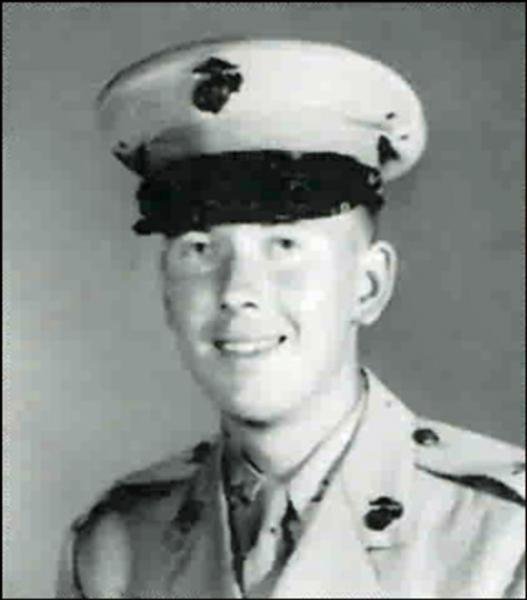
On March 31, 1965, the U.S. Marine Air Group 16 (MAG-16) at Đà Nẵng in Quảng Nam Province, RVN, flew helicopter support for an Army of the Republic of Vietnam (ARVN) operation called Quyet Thang 512. A force of MAG-16 helicopters was assigned to lift 465 troops of the ARVN 5th Airborne Battalion. The air task force was to move the ARVN paratroopers from the vicinity of Tam Kỳ in Quảng Tín Province to a landing zone (LZ) about 25 miles south of Đà Nẵng. The helicopters encountered heavy antiaircraft fire as they approached the landing zone.
Pilot 1LT Wendell T. Eliason was killed in the landing zone, but his co-pilot managed to fly the badly damaged craft back to Đà Nẵng. Four other helicopters in the first lift also had to be returned to Đà Nẵng for battle damage repair. The enemy shot down one of the Marine UH-34Ds, whose pilot was wounded in the neck and initially believed killed. The co-pilot, 1LT James E. Magel, was also wounded and able to make his way to another helicopter, but then died. Magel’s crew chief, himself wounded, dismounted his M60 machine gun and joined the firefight on the ground. Another Marine pilot landed his craft in the face of the heavy enemy fire and rescued Magel’s co-pilot.
The crew chief of the rescue craft somehow found the strength to singlehandedly lift the conscious but paralyzed six-foot, 200-pound pilot out of the downed craft. He was awarded the Silver Star medal for bravery. Despite heavy enemy opposition, Marine aircraft continued to make three lifts into the LZ until the entire 5th Airborne Battalion was landed. All told, 25 Marine helicopters and 10 U.S. Army helicopters took part in the operation. Nineteen of the aircraft sustained battle damage. Two Army UH-1s, in addition to the Marine UH-34D, also were shot down. The Army craft were later recovered but the UH-34D was a complete loss. The Marines suffered a total of 19 casualties including the two killed while two U.S. Army personnel required hospitalization.
Wendell is buried at Burwood Cemetery, Escalon, San Joaquin County, California. He is honored on the Wall at Panel 1E, line 98.

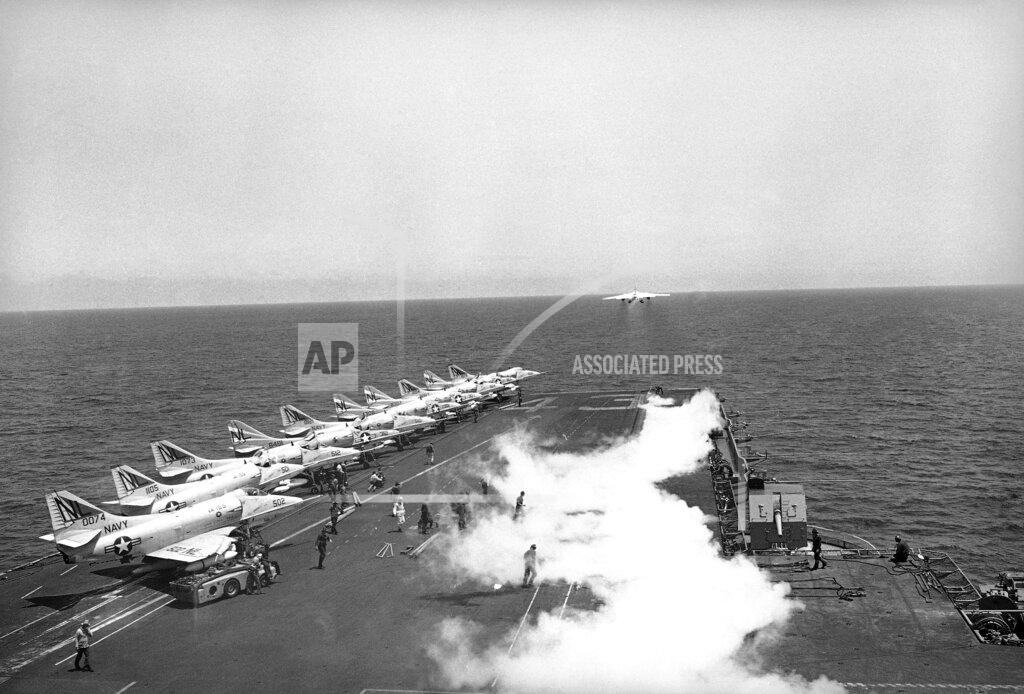
Over 70 U.S. Air Force planes make the largest incendiary attack to date, code-named Operation Sherwood Forest, on a Việt Cộng concentration in the Boi Loi Forest, 25 miles northwest of Saigon. To establish that this is not a retaliatory raid for yesterday’s bombing of the embassy, U.S. spokesmen state that the raid was planned for months, and that preparations included spraying to defoliate trees and using leaflets and loudspeakers to warn the civilian population to leave the area.
At the same time, waves of United States and South Vietnamese fighter-bombers pounded six radar installations in North Vietnam and on islands off its coast. In another action, two United States Marine officers were killed and 14 Marine officers and enlisted men and two United States Army enlisted men were wounded in a helicopter operation in Quảng Túi, 50 miles south of Đà Nẵng. Participating South Vietnamese paratroopers suffered heavy casualties. A spokesman for the United States Air Force and Navy said all the raids were planned before the United States Embassy in Saigon was devastated by a terrorist bomb. All the Navy planes returned safely to the aircraft carriers USS Hancock and USS Coral Sea. One Air Force F-100 on weather reconnaissance was shot down but the pilot bailed out over friendly territory without injury.
Major General Joseph H. Moore, commander of the Second United States Air Division, said that large fires were burning when he flew over the area that was the target of the incendiary attack. It is in Boi Loi Forest and is known as Zone D, an assembly, training and storage area of the Việt Cộng. General Moore said preparations for the fire raid got under way in January when Air Force C-123’s began spraying trees to defoliate them. Recently more than three million leaflets were dropped on the area warning the population to leave. For 40 hours, American loudspeaker planes flew over the forest repeating the warning. Before today’s raid 2,000 Vietnamese left the target area, General Moore said.
The planes dropped incendiary bombs and bombs filled with incendigel, which General Moore described as “a successor to napalm.” They were followed by C-123’s dropping drums of fuel oil. A strong wind quickly spread flames through the 100-foot-high trees, whose leaves had been killed by defoliation spray. The area, which includes more than 330,000 acres of woodland, has been used for years by the Communist guerrillas. General Moore said it was known to contain caves and ammunition dumps and facilities for at least a regiment. General Moore declined to say whether similar raids would be made against other suspected hiding places and assembly areas where South Vietnamese troops have been unable to penetrate in force.
The raid north of the 17th Parallel involved more than 120 planes of the United States Air Force and Navy and the South Vietnamese Air Force. They swooped down on radar sites along the North Vietnamese coast and on islands in the South China Sea. Four of the installations are in the vicinity of Vinh, 120 miles north of the parallel. Two others are near Vĩnh Sơn, 75 miles north of the parallel, which divides North and South Vietnam. The sites at Vĩnh Sơn were hit before. The raid marked the 14th day of attacks against military installations in North Vietnam since February 7.
Eighty percent of an installation on Hon Matt, 40 miles east of Vĩnh, was destroyed. General Moore said. The results of strikes at Chu Lào, 10 miles) northeast of Vinh, and Hon Nieu, 18 miles east, were termed “questionable” because of cloud cover. The South Vietnamese Air Force, which sent 20 A-1H Skyraiders against Hà Tĩnh, 40 miles southeast of Vĩnh, claimed 80 percent of the target destroyed.
Captain George Whisler Jr., a Navy spokesman, described the damage to the Vĩnh Sơn radar station as moderate. Damage to installations at Cap Mũi Ròn, south of Vĩnh, was heavy, he said. More than 50 Navy fighter-bombers took part in these two raids. Captain Whisler said ground fire at Vĩnh Sơn was moderate and at Cap Mũi Ròn nonexistent. At least 30 Air Force F-105’s and 12 F-100’s attacked targets near Vĩnh and on islands east and northeast of there. The Air Force and Navy planes used conventional bombs, cannon and machine guns in their attacks.
The helicopter attack was one of the costliest Americans have participated in. All those killed or wounded were pilots or gunners. The helicopters were carrying the South Vietnamese on a search mission when they were hit by heavy ground fire. Three helicopters were downed.
The war in South Vietnam is beginning to divert funds, weapons, and equipment from other United States commands, according to military sources. One authority described the fighting in Vietnam as “unprogrammed”; that is, the specific expenditures to support it had not been planned or included fully in the budget. Therefore, he said, many of its needs “were coming out of everybody else’s hide.” Because the United States military command in South Vietnam knows this, the authority said, it has been “reluctant” to ask for weapons and support it knows will be diverted from other commands.
Senator John Stennis, chairman of the Preparedness Investigating Subcommittee of the Senate Armed Services Committee, in a statement last week. about arms and equipment in Vietnam, hinted that past programming had been inadequate. The Mississippi Democrat said that sufficient modern equipment was now being furnished to United States personnel in Vietnam, although there had been some deficiencies, particularly in aircraft. But increased support for Vietnamese units needs further inquiry, he said, adding that “communications, firepower, naval support, and air support” were the main areas that “required further study.”
The Navy’s air strikes against North Vietnam, combined with its patrol duties along the Vietnamese coast, are straining the capacity of the Seventh Fleet, according to United States Navy officials.
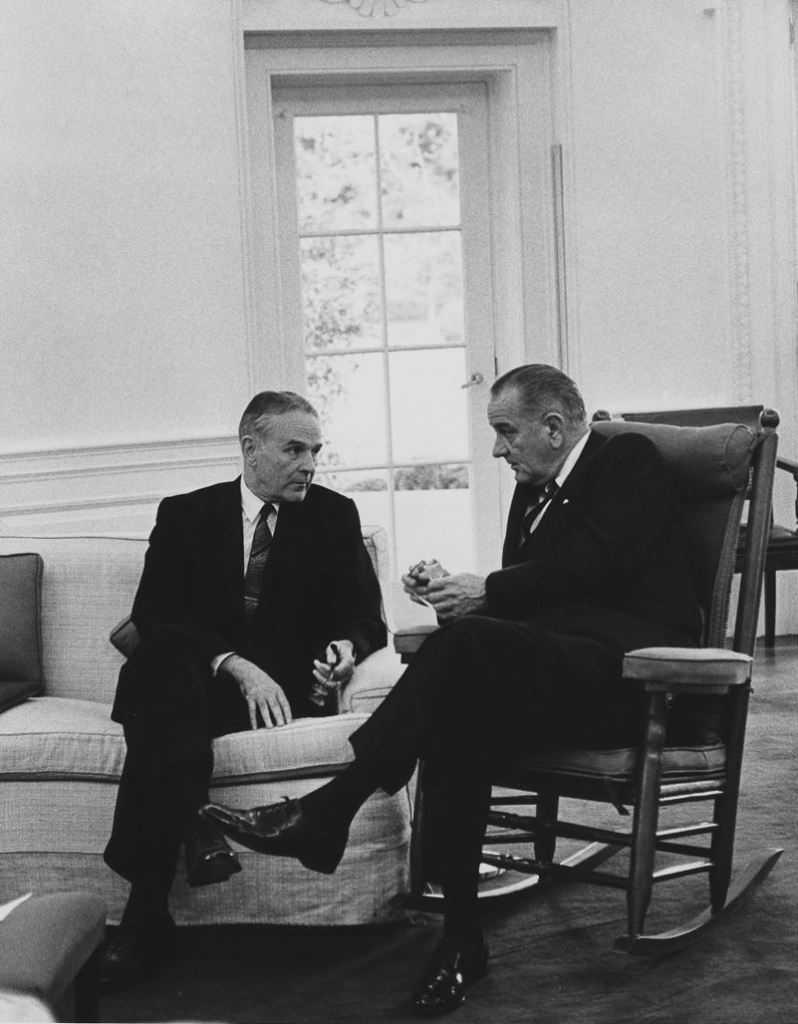
Responding to questions from reporters — following meetings with Ambassador Maxwell Taylor, who is in Washington — President Johnson says, “I know of no far-reaching strategy that is being suggested or promulgated.” In fact, he is ready to authorize U.S. troops to go from defensive to offensive tactics in Vietnam. Ambassador Maxwell D. Taylor held the first of several meetings with President Johnson today to present what he called some “more definitive proposals” for United States operations in Vietnam.
Secretary of State Dean Rusk agreed today to receive four Ambassadors who will speak for 16 nonaligned governments tomorrow. The envoys will present an appeal for Vietnamese peace negotiations without any strings attached.
Diplomats from a nonaligned country reported today that North Vietnamese officials had indicated that their government might be willing to agree to a new Geneva conference on Indochina.
Harlan Cleveland, Assistant Secretary of State for International Organization Affairs, asserted last night that there was a role for the United Nations in any future settlement in Vietnam. He also suggested that the “good offices” of the Secretary General, U Thant, could be used in the case of Berlin.
South Vietnamese troops marched in front of the United States information center today in a demonstration against the Việt Cộng. Light planes swept over Saigon dropping leaflets advertising the demonstration against the Communist guerrilas.
An Iberia airliner crashed into the Mediterranean Sea as it was making its approach to Tangier, Morocco on a flight from Málaga. Fifty of the 53 people on board were killed, but three passengers were rescued. Almost all of the passengers had been Scandinavian tourists who were on vacation; the three survivors, a Danish couple and a Swedish woman, were rescued by a Spanish fishing boat operating eight miles from the Moroccan coast.
Spain’s campaign against Britain’s control of Gibraltar reflects in part her desire to extend her influence in North Africa, particularly in Morocco, according to qualified observers. Francisco Franco’s meeting with King Hassan is held to be noteworthy.
The Soviet Union made a surprise request that the 114-nation U.N. Disarmament Commission be reconvened during April. The Soviet Union asked today for a full-scale disarmament debate by the entire United Nations membership, 114 states, in early April. The debate would be held here in the Disarmament Commission, which last met in 1960.
Communist China has embarked on a new diplomatic offensive in Africa, Asia and the Middle East, apparently to try to undermine Soviet influence.
Turkey charged tonight that the United Nations Cyprus mediator, Galo Plaza Lasso, had exceeded his authority and said his status as mediator “should be considered as terminated.”
A series of earthquakes killed four persons, injured dozens and destroyed or damaged as many as 1,500 homes in Greece.
French President de Gaulle today made talks on political “cooperation” between leaders of the European Common Market conditional on a favorable outcome of negotiations on agricultural prices.
Indonesia’s President Sukarno announced a Cabinet shuffle today that severely weakened the position of two leading anti-Communist ministers and strengthened that of Foreign Minister Subandrio and the Indonesian Communist party.
The World’s Fair Corporation seized the Indonesian pavilion yesterday and notified the Indonesian Government that all its rights “to the premises are here-by terminated, effective immediately.”
The Chilean Government ordered a broad inquiry today into the possibility that a French-controlled copper company or mining safety authorities or both were negligent in the earthquake-triggered disaster that wiped out El Cobre workers’ camp Sunday.
Belgium, the Netherlands and Luxembourg signed a treaty creating the Benelux Court of Justice, to give advisory opinions on “uniform interpretation of common rules of law” within the three nations. Ratification of the treaty by all three was still required, and the Court would not hold its first session until May 11, 1974.
A South African school teacher was executed in Pretoria for setting off a bomb in Johannesburg last July that killed an elderly woman. He was protesting the Apartheid regime. Twenty more people were injured.
Pope Paul VI has made further revisions in Holy Week prayers to eliminate degrading references to Jews and atheists.
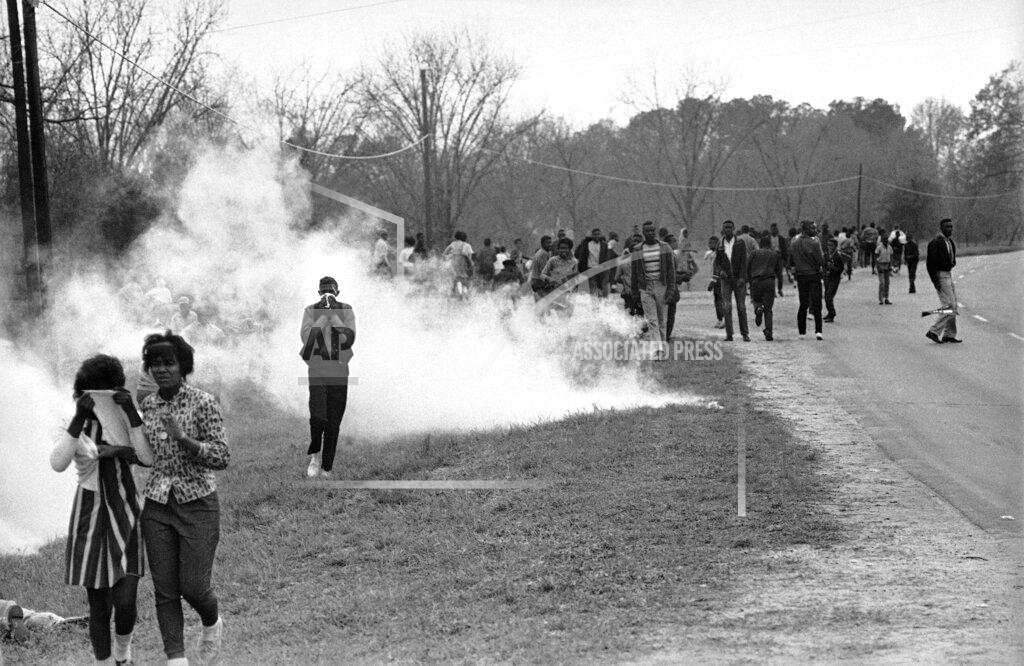
About 120 Black students demonstrating at the city limits of Camden, Alabama today were dispersed by policemen using smoke bombs. No one was hurt. The demonstrators are seeking a school boycott in connection with a vote-registration drive. Mayor F. R. Allbritton and a group of policemen and volunteer officers stopped the demonstrators as they walked into town from a Black church two and a half miles away. The Mayor told them they could not enter the city without a parade permit. The youngsters, most in their teens but some as young as 9 or 10 years, stood singing freedom songs for an hour and a half. As they sang, they edged closer to the city limits sign.
The Mayor warned them again as they moved toward him, inching along. Finally one boy stepped over the line and the Mayor responded by throwing a smoke canister at his feet. Two of his volunteer officers each threw a canister into the marchers as they ran down the highway. Three or four teenage girls fell on the grassy roadside and screamed that they could not see. They were helped away. Most of the smoke was swept away by the wind before the youngsters could breathe it. The students then regrouped and resumed singing.
The Mayor told them to go home, that no one was going to hurt them. The students stayed about five minutes, then returned to St. Francis Baptist Church, from which they had started. Mayor Allbritton turned to newsmen and said: “We could have beaten them with sticks, but we didn’t want to do that.” The reason for using smoke, he said, was “to get them out of here before somebody did beat them.”
Assistant Secretary of Labor Daniel Patrick Moynihan submitted a groundbreaking and controversial report for President Johnson, entitled The Negro Family: The Case For National Action, for limited circulation within government. “From December through March,” a historian would later write, “Moynihan and his staff put together the document and in the process worked out a strategy of placement and presentation. At the same time, he laid the groundwork for the reception of the report by speaking from time to time to those he wished in the end to persuade. In March, the document was formally cleared by Secretary of Labor Wirtz and one hundred nicely printed and bound copies run off in the basement of the Department of Labor.” After a reference by President Johnson to Moynihan’s statistics and commentary concerning the roots of African-American poverty in a speech on June 4, interest in what would become known simply as “The Moynihan Report”, would lead to its mass publication.
A Wall Street investment banking house yesterday notified Alabama that it would no longer buy or sell bonds issued by the state or any of its political subdivisions.
Pan American World Airways’ pilots struck last night in a dispute over new contract terms. The walkout was expected to shut down Pan American’s entire operation here and abroad within 24 hours. A round-the-world jet that left at 7:06 PM for London with 97 passengers was the last of the line’s flights to leave John F. Kennedy International Airport.
The House Rules Committee gave reluctant clearance today to a Senate-passed constitutional amendment on Presidential succession. The action came after members had assailed it as unwise, unworkable and a possible tool for a coup.
Ray C. Bliss officially takes over today as Republican national chairman and reportedly will soon make sweeping changes at Republican national headquarters.
Rep. John Dowdy (D-Texas) touched off a storm when he charged that Attorney General Nicholas D. Katzenbach cleared the administration voting bill with members of the Supreme Court.
The nation’s steelmakers will be faced with a union request for a pay hike and other benefits totaling nearly $1 an hour.
The Senate Armed Services Committee added $82 million to President Johnson’s defense budget requests for development of a new manned bomber and made other changes.
Two new mapping satellites were launched secretly into orbit from Vandenberg Air Force Base during March, the Army disclosed.
Dow Jones Industrial Average: 889.05 (+0)
Born:
Jean-Christophe Lafaille, French mountaineer, best known for his solo self-rescue on Annapurna with a broken arm; in Gap, Hautes-Alpes, France (d. 2006).
Tom Barrasso, NHL and Team USA goaltender (Hockey Hall of Fame, 2023; Olympics, silver medal, 2002; NHL Champions, Stanley Cup-Penguins, 1991, 1992; Calder Memorial Trophy, Vezina Trophy, 1984; NHL All-Star, 1985; Buffalo Sabres, Pittsburgh Penguins, Ottawa Senators, Carolina Hurricanes, Toronto Maple Leafs, St. Louis Blues), in Boston, Massachusetts.
Serge Roberge, Canadian NHL right wing (Quebec Nordiques), in Quebec City, Quebec, Canada.
Keith Tinsley, NFL wide receiver (Cleveland Browns), in Detroit, Michigan.
William McNamara, American actor (“Texasville”, “Beat”, “Stealing Home”), in Dallas, Texas.
Died:
Mario Mafai, 63, Italian painter and founder of the Scuola Romana movement.
 History Diaries