Soviet Foreign Minister Vyacheslav Molotov pledges Soviet neutrality in the European war. Molotov addressed the Sixth Session of the Supreme Soviet of the U.S.S.R. Molotov reported that political and economic relations with Finland had been fully restored. Molotov accused Britain and France of planning to use Finland as a staging ground to attack the USSR and said that the pacts with the Baltic states were “being carried out in satisfactory manner and this creates premises for a further improvement in relations between the Soviet Union and these states.” With regards to Romania he said “there exists a non-settled controversial issue, the question of Bessarabia, whose seizure by Rumania the Soviet Union has never recognized…” Molotov also reported that relations with Japan had produced mixed results. A Soviet-Japanese fisheries treaty had been signed and the Japanese had paid the last installment for the Chinese-Eastern Railway. However the determination of the frontier line in the area of the military conflict of 1938 remained unsettled.
Molotoff, Premier and Foreign Commissar, charged tonight in a forceful declaration of Russian foreign policy that the Allies sought to extend the war to the Soviet Union to get at Germany and break the stalemate on the Western Front.
Relations between Britain and Soviet Russia became increasingly shaky tonight as the British handed their French ally two confiscated Soviet freighters and got ready to round up German ships attempting to dash from The Netherlands East Indies to Vladivostok. Soviet sources, on the other hand, outlining the Russian position, emphasized two factors: 1. Foremost, “despite the newspapers,” Russia has no political or military commitment with Germany and is not her ally. 2. Russia is eager for “increased trade and friendly relations with Great Britain,” although no pact is being formulated. But it seems to be evident, the Russian sources added, Britain and France have embarked on a “treat Russia rough” campaign and a deliberate attempt is being made to “blacken Soviet Russia In the eyes of the British people and the world.” The two Russian merchantmen, disposition of which lay at the heart of the controversy, are the 2.492-ton Selenga and the 3,972-ton Vladimir Mayakovsky, released by the British today to the French navy “for administrative reasons” and expected to be taken from Hong Kong to Hanoi or some other French Indo-China port.
The following message was sent by Norwegian Foreign Minister Halvdan Koht to the Germans: “The British apparently did not want to take upon themselves the responsibility for openly violating Norwegian territory and Norwegian territorial waters without cause, and for carrying out warlike operations in them.”
Dr. Curt Breuer, the German Foreign Minister’s representative in Norway submitted the following report: “The future will show whether Foreign Minister Koht sees things quite right. It definitely appears, however, as I have frequently pointed out, that the British have no intentions of landing, but that they want to disturb shipping in Norwegian territorial waters perhaps, as Koht thinks, in order to provoke Germany. Of course, it is also possible that the British behavior of last week, which I have pointed out as well, will grow into more or less regular and increasing interference in territorial waters to attack our ore traffic off the Norwegian coast. The firm intention of Norway to maintain her neutrality and to insure that Norway’s neutrality rules be respected can be accepted as a fact.”
Nobody outside of Oslo really cares too much about Norway’s neutrality at this point.
The German foreign office today published a white book which represented a Polish ambassador as advising his government, prior to the European war, that U. S. Ambassador William C. Bullitt had said the United States would participate in war against Germany after England and France had started it. The white book, based on Polish documents purportedly seized after the fall of Warsaw, was described in authorized German quarters as showing “the role played by United States policy in bringing about the war.” The report was denounced by the Roosevelt Administration as a Nazi fabrication.
The White Book is labeled “Polish Documents Bearing on Events That Led Up to the War.” They comprise chiefly the purported exchange of communications of the Polish Ambassadors in Washington, Paris, London, and Stockholm with their home government. Probably the most striking contributions in the present collection comprise references to the alleged diplomatic activities of William C. Bullitt and Joseph P. Kennedy, United States envoys to France and Britain, respectively, and predictions of American official policy in the event of war, as reported back to Warsaw by Polish envoys in the shape of interviews with both American Ambassadors since September, 1938.
Mr. Bullitt, the documents reveal, made it clear to Count Potock! that the United States would “finish” any war in Europe on the side of the Allies, while Mr. Kennedy is revealed as having promised to urge British leaders to aid Poland with “cash.” The German White Book represents Mr. Bullitt as the chief spokesman in Europe for the Washington government, and leaves no doubt that he spoke with the full authority of the White House in the course of several alleged interviews with Polish Ambassadors Count Jerzy Potock! in Washington and Jules Lukasiewicz in Paris.
Mr. Kennedy is represented in the collection of documents as playing a minor but nonetheless significant role, and is put on record with an interview in March, 1939, with Count Edward Raczynski, Polish Ambassador in London, and one with the Polish commercial attaché, Jan Wazelaki, who was assured in June, 1939, according to the White Book’s text: “You won’t believe,” the Ambassador is reported to have told Mr. Wszelaki, “to what extent my oldest son, Joe, who was recently in Poland, commands the ear of the President. I might almost say that maybe the president believes him more than me.”
Only Jewish doctors may now treat Jewish patients. Dr. Zygmunt Klukowsk in Poland ponders the obvious: “What do we do when there are no Jewish doctors? I had a difficult situation…”
Based upon the decisions taken at the Allied Supreme War Council on 28 March, the British General Staff begins furious planning. Plan R4 covers the reaction to a German attempt to invade Norway. It provides that the British will:
- Use the 1st Cruiser Squadron to land an infantry brigade at Navik and another battalion at Trondheim, both to come from Rosyth;
- Other, regular transport ships will take a battalion to Stavanger and another to Bergen;
- The RN ships will be screened by other RN ships but have no air cover whatsoever.
The possibility that the Germans might arrive at Narvik before the British, and in greater force, is not part of Plan R4.
William Shirer, writing from Berlin, notes that “Germany can’t stay in war without Swedish iron, shipped via Norway — which the UK may cut off.”
Air Marshal Charles Portal named to lead Bomber Command.
There is a laudatory article in the UK magazine “Flight” saying that the new Supermarine Spitfire is “popular with pilots, dreaded by Germans.” The Spitfire is only just now arriving in a few RAF front-line squadrons, the main defending RAF fighter is the Hawker Hurricane.
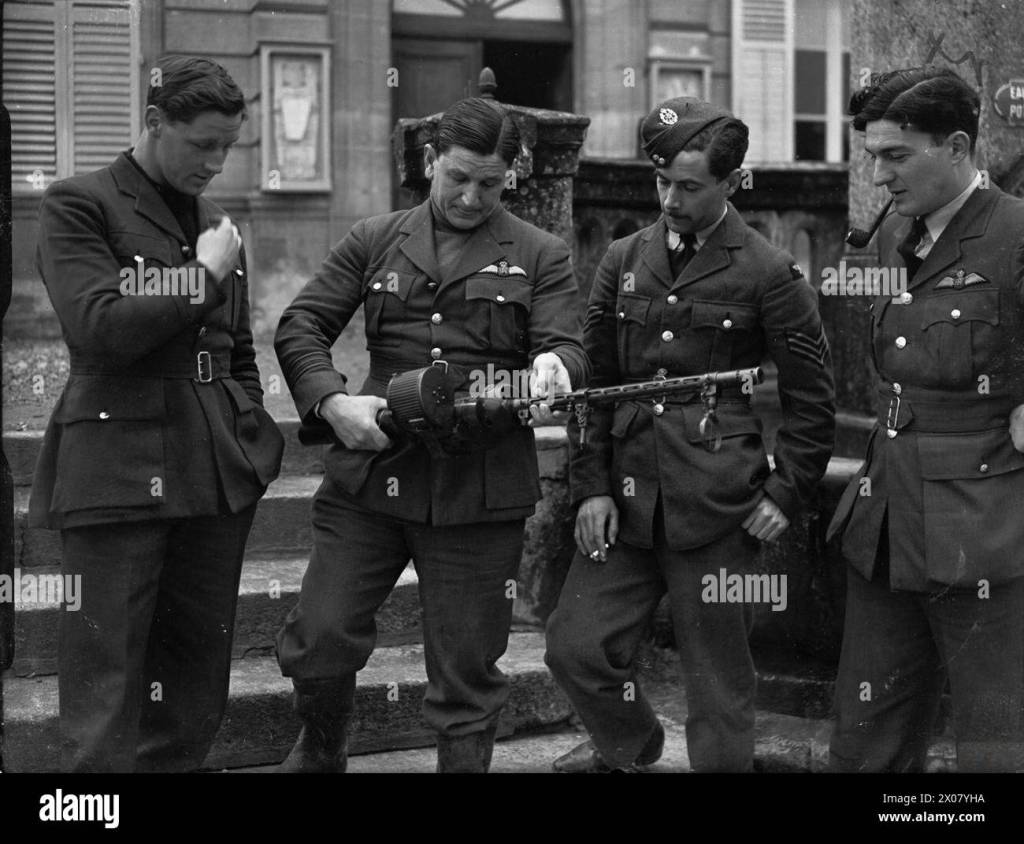
RAF fighters shoot down a Luftwaffe Bf 109, part of a larger formation, near Metz.
RAF pilot Prince Alexander Obolensky, a famous rugby star, perishes during a crash-landing of his plane in East Anglia.
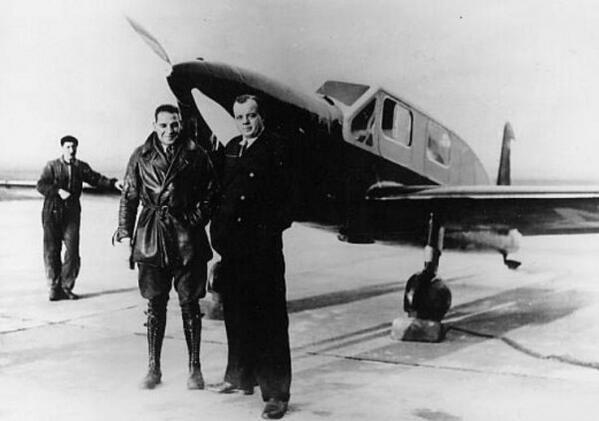
French author Captain Antoine de Saint-Exupéry, an experienced pilot, makes the first reconnaissance flight over Germany in a Bloch 174 light bomber.
Luftwaffe bombers make a sweep across the North Sea but make no successful attacks.
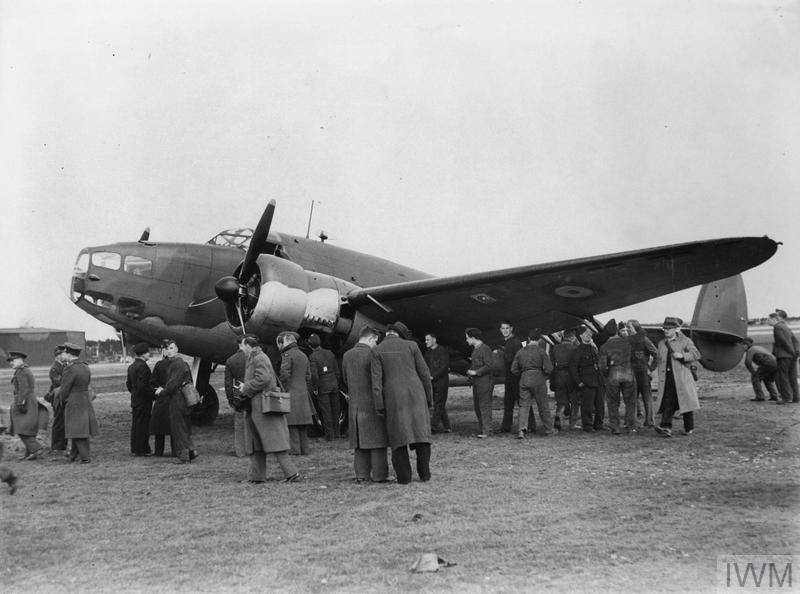
To prepare for the planned mining of Norwegian waters, the British General Staff prepared Plan R4 to react against a possible German intervention by invading Norway. It called for the 1st Cruiser Squadron to deliver an infantry brigade to Narvik and a battalion to Trondheim and for transports to deliver a battalion to each of Stavanger and Bergen.
The armed merchant cruiser HMS Transylvania (F 56), commanded by Captain Francis N. Miles, intercepted the 4,007 ton German steam merchant Mimi Horn in the Denmark Strait. Before the German ship could be captured she was scuttled by her own crew at 65°50′N 28°30′W. All 41 crew were rescued by HMS Transylvania.
In the North Sea U-30 rescued four crewmembers from a crashed German Do 18 airplane.
Convoy OB.119 departs Liverpool.
Convoy OG.24F forms at sea for Gibraltar.
Convoy TM.35 departed the Tyne escorted by sloops HMS Auckland and HMS Hastings, destroyer HMS Brazen, and anti-submarine trawlers of the 23rd Anti-submarine Group.
Convoy FN.132 departed Southend escorted by sloop HMS Lowestoft and destroyer HMS Valorous. The convoy arrived in the Tyne on the 31st.
Convoy SA.35 of two steamers departed Southampton, escorted by sloops HMS Foxglove and HMS Rosemary. The convoy arrived at Brest on the 31st.
Convoy HX.31 departed Halifax at 0800 escorted by Canadian destroyers HMCS Ottawa and HMCS St Laurent, which were detached on the 30th. The two destroyers arrived back at Halifax at 1135/30th. The ocean escort for the convoy was armed merchant cruiser HMS Alaunia, which detached on 9 April. Destroyer HMS Warwick and sloop HMS Folkestone joined the convoy on 9 April and destroyers HMS Campbell and HMS Vesper on 10 April. Vesper and Warwick were detached on 11 April, Folkestone on 12 April, and Campbell on 13 April, when the convoy arrived at Liverpool.
Two vessels carrying American-built warplanes and escorted by French cruiser Algérie depart Halifax for France.
The War at Sea, Friday, 29 March 1940 (naval-history.net)
Armed merchant cruiser FORFAR arrived in the Clyde after Northern Patrol.
Armed merchant cruiser SCOTSTOUN departed the Clyde on Northern Patrol.
Armed merchant cruiser TRANSYLVANIA on Northern Patrol in the Denmark Strait intercepted German merchant ship MIMI HORN (4007grt) which had departed Curacoa on 5/6 March with German steamers HANNOVER and SEATTLE. Steamer MIMI HORN scuttled herself in 65 50N, 28 30W, and 41 crew were picked up by the British ship.
Destroyers AFRIDI (D.4), MOHAWK, and SIKH departed Scapa Flow for Bergen at 1930 to pick up convoy HN.23 A. Destroyers GURKHA and ENCOUNTER were delayed, but were able to follow at 0200/30th.
Destroyers INGLEFIELD (D.3), ILEX, DELIGHT, ISIS, IMOGEN, and ENCOUNTER and submarine SPEARFISH were engaged in anti-submarine exercises from Scapa Flow.
Destroyer HAVOCK departed Scapa Flow at 1230 to reinforce destroyer GRIFFIN on Moray Firth patrol after an aircraft sighted a periscope in 58-00N, 2-30W at 0725. The search was unsuccessful and HAVOCK returned to Scapa Flow at 2000. GRIFFIN returned to Invergordon arriving at 1740 with a leak at her rudder head.
Destroyers JANUS arrived at Scapa Flow.
Destroyer KELVIN arrived at the Clyde from Liverpool.
Submarine UNITY arrived at Rosyth, landed the survivors of the Dutch trawler PROTINUS and departed later in the day with submarine TRITON. Submarine TRITON proceeded on patrol and UNITY headed for Blyth, where she arrived on the 30th.
Submarine L.23 departed Blyth for Southend, and on the 31st, left for Portsmouth.
Polish submarine ORP ORZEL was docked at Rosyth.
Destroyer MALCOLM completed her refitting at Cardiff.
Convoy TM.35 departed the Tyne escorted by sloops AUCKLAND and HASTINGS, destroyer BRAZEN, and anti-submarine trawlers of the 23rd Anti-submarine Group.
Convoy FN.132 departed Southend escorted by sloop LOWESTOFT and destroyer VALOROUS. The convoy arrived in the Tyne on the 31st.
Convoy SA.35 of two steamers departed Southampton, escorted by sloops FOXGLOVE and ROSEMARY. The convoy arrived at Brest on the 31st.
Armed boarding vessel KINGSTON BERYL (356grt) attacked a submarine contact off Brough of Birsay in 59-15.5N, 3-18W.
Steamer NORTHERN COAST (1211grt) was damaged by German bombing ten miles north, northeast of Kinnaird Head.
U-30 rescued the crew of a downed German aircraft.
Anti-aircraft cruiser CARLISLE arrived at Gibraltar after working up in the Mediterranean, and left on the 29th for duty in Home Waters.
French battleship BRETAGNE and heavy cruiser ALGERIE departed Halifax escorting French merchant ships LOUIS L.D. (5795grt) and WISCONSIN (8062grt). The merchant ships were carrying aircraft to France. French destroyers VAUTOUR, ALBATROS, and AIGLE departed Oran on 1 April to escort the French ships, and destroyers VERDUN and VALMY came from Brest. The five destroyers departed Casablanca on 4 April and joined on 6 April. Destroyers LA PALME, LE MARS, and FORBIN departed Casablanca on 5 April and joined on 7 April. The steamers and VAUTOUR, VERDUN, VALMY, and ALBATROS proceeded to Casablanca. The steamers subsequently proceeded to Brest departing in convoys 90 KF on 20 April and 89 KF on 17 April, respectively. The battleship, heavy cruiser and destroyer AIGLE departed Oran on 9 April and arrived at Toulon on 10 April.
French destroyer ORAGE was damaged in a collision with tug TABARCA at Sidi Abdallah, but repaired and returned to service on 8 April.
Convoy HX.31 departed Halifax at 0800 escorted by Canadian destroyers HMCS OTTAWA and HMCS ST LAURENT, which were detached on the 30th. The two destroyers arrived back at Halifax at 1135/30th. The ocean escort for the convoy was armed merchant cruiser ALAUNIA, which detached on 9 April. Destroyer WARWICK and sloop FOKESTONE joined the convoy on 9 April and destroyers CAMPBELL and VESPER on 10 April. VESPER and WARWICK were detached on 11 April, FOLKESTONE on 12 April, and CAMPBELL on 13 April, when the convoy arrived at Liverpool.
In Washington, President Roosevelt discussed with Secretary Hull and Sumner Welles, Undersecretary of State, the latter’s European mission and issued a statement summarizing the results of it.
The Senate defeated the Pittman amendment for Senate approval of reciprocal trade agreements and recessed at 5:05 PM until Monday noon.
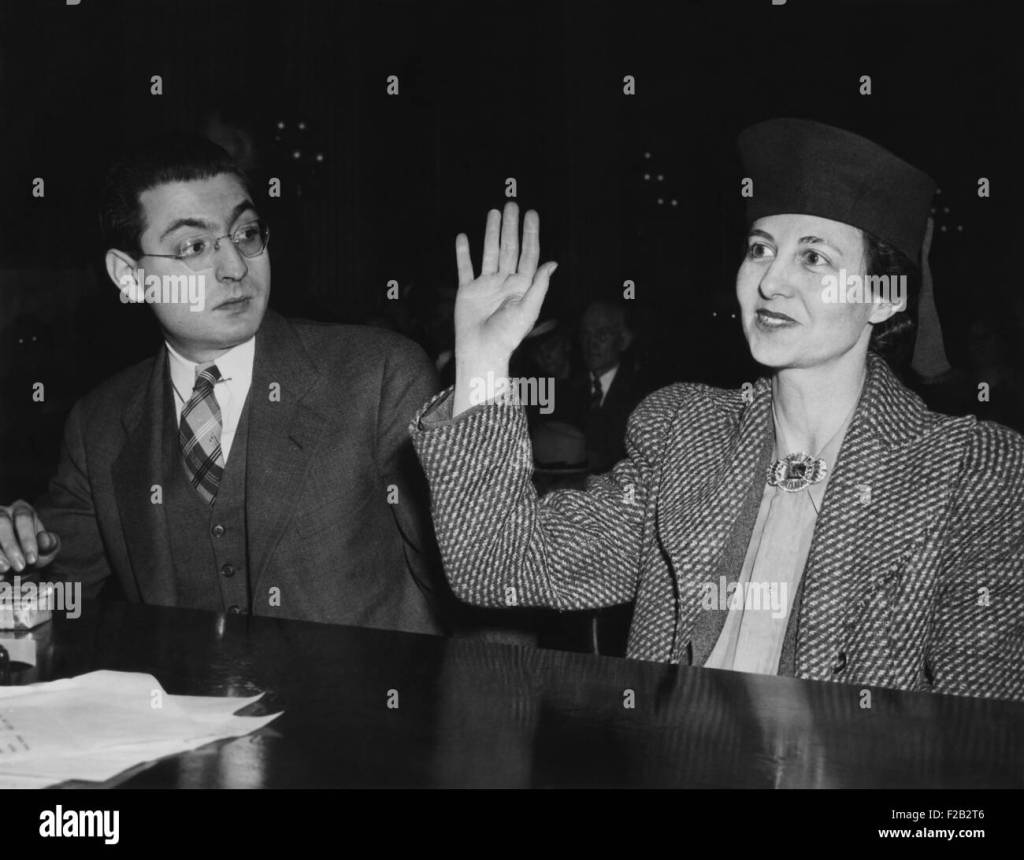
The House adopted a resolution bringing a contempt citation against James H. Dolsen on request of the Dies Committee, passed the District of Columbia annual appropriation bill and adjourned at 4:10 PM until noon tomorrow.
Secretary Hull issued a statement repudiating alleged statements of policy of the American. Government contained in the German white paper.
A German White Book issued today concerning alleged American machinations for war was branded by President Roosevelt as sheer propaganda. It was repudiated by Secretary of State Cordell Hull as not representing in what it set forth “in any way at any time the thought or policy of the American Government.” It was flatly denied both by William C. Bullitt, United States Ambassador to France, and by Count Jerzy Potocki, Polish Ambassador to the United States, whom Mr. Bullitt was alleged by the German Foreign Office today to have assured that American aid would be given to the Allies.
The President made his observation at his regular Friday afternoon press conference. He warned that the charges intended to involve Mr. Bullitt and Count Potocki should be taken, not with one or two, but with three grains of salt. Secretary Hull set forth his attitude in a formal statement in which he said that neither he nor any of his associates in the State Department had ever heard of the alleged conversations between the two Ambassadors and that they did not give the reports “the slightest credence.”
A three-vote majority in the U.S. Senate today saved the Roosevelt trade pacts program from an amendment which, administration spokesmen leaders had said, would “nullify” the effort to lower trade barriers by agreements with foreign nations. By a vote of 44 to 41, the chamber rejected an amendment by Senator Key Pittman, Nevada Democrat, requiring future reciprocal trade pacts be submitted to the Senate for ratification by a two-thirds vote. The defeat cleared the way for action next week upon pending legislation authorizing a three-year continuation of the present trade agreements act, under which the administration can reduce tariffs as much as 50 per cent in return for concessions from other nations. The agreements embodying these mutual concessions are not subject to senate action. Today’s vote encouraged administration forces to believe the continuation bill would go through without difficulty.
The decision on the Pittman resolution was taken amid scarcely-concealed excitement. After a week of cloak room maneuvering all had known for days the vote would be close. Chairman Harrison, Mississippi Democrat, of the finance committee, in charge of the bill, filled out a senate tally sheet as the vote proceeded in seesaw fashion, giving the advantage first to one side and then to the other. Pittman, sensing defeat, sat red-faced and erect in his chair, his hands folded before him. Democratic Party lines were split on the tally. Eighteen Democrats supported the Pittman amendment, while 43 were against. Republicans voted solidly for the amendment. So important did the administration consider the issue that there had even been talk of a presidential veto should the amendment be approved. Senate ratification had been denounced by administration spokesmen as offering so many opportunities for delay and obstruction as to make a continuation of the program useless. Pittman demanded ratification as the only constitutional procedure.
President Roosevelt reported to the nation today that there was “scant immediate prospect for the establishment of any just, stable and lasting peace in Europe.” This was in response to the report of Sumner Welles on his diplomatic mission to Europe.
A British-French joint purchasing commission has placed new orders with American manufacturers for $200,000,000 worth of warplanes, the largest order in history, according to reports in aircraft circles. Although the order must be officially sanctioned by the War Department; it was learned that more than 2,500 planes have been jointly ordered for service in Europe. It was reported the order would include 800 Douglas aircraft light attack bombers, 800 twin-engined Lockheed pursuit ships, another 400 Lockheed planes, 1,000 Curtiss Wright pursuit planes and 500 Bell pursuit craft.
Faced with a mounting volume of exports to belligerent and neutral countries in Europe and South America, the leading export companies of the United States steel industry have been forced to expand offices and personnel in some cases by as much as 100 percent to handle the flood of buying.
The House approved today a resolution bringing a contempt citation against James H. Dolsen, Pittsburgh Communist, for refusal to answer questions of the Dies committee investigating un-American activities. With almost no date the House acted by voice vote.
President Roosevelt refused today to endorse a $1,000,000,000 relief appropriation as adequate for the coming fiscal year and indicated that if a larger amount was not provided the new Congress in January would face a request to increase the fund.
Thomas E. Dewey carried his campaign for the Republican Presidential nomination into Wisconsin today, attacking the New Deal as an administration with “a vested interest in continued unemployment” and opposed to national recovery.
Oklahoma’s twenty-two delegates would be pledged to President Roosevelt for a third term if the rank and file had “a free choice,” Senator Lee of Oklahoma asserted today.
American boxer Joe Louis TKOs Johnny Paycheck in 2 rounds to retain his heavyweight boxing title.
The Canadian schooner Hebridean was rammed by another vessel and sank at at the entrance of the port of Halifax, Nova Scotia. There were nine fatalities.
Second Battle of Wuyuan: Chinese 8th War Area attacking around Patzepu, Hsishantzu, Hsichiao, and Mankosu.
Chinese President Lin Sen in a broadcast tonight called for destruction of the new Japanese-sponsored government in Nanking and informed. the Chinese people that he would not accept the offered Presidency of the new regime. The President’s address followed day-long demonstrations during which Mr. Wang and his followers were burned in effigy and denounced as “traitors.” Lin Sen, in his radio address, said the Japanese Army in China was near exhaustion and therefore had been forced to rely on “traitors.”
Shanghai was converted into an armed camp tonight to prevent outbreaks by Nationalist terrorists protesting against the inauguration of the Japan-sponsored “National Government” in Nanking. Roads and streets were blocked off with barbed wire barricades.
Officials in Washington anticipate no change in the United States non-recognition policy following the inauguration at Nanking tomorrow of the Japanese-sponsored regime headed by Wang Ching-wei.
Interpreting the forthcoming United States fleet maneuvers in the Pacific as a demonstration for the benefit of the Japanese, the Tokyo press discusses them with an elaborate show of unconcern under which may be detected Japan’s old confidence that an actual break with the United States is highly improbable.
Dow Jones Industrial Average: 147.54 (+0.29)
Born:
Astrud Gilberto [née Weinert], samba and bossa nova singer (“The Girl From Ipanema”), in Salvador, Bahia, Brazil (d. 2023).
Ray Davis, bass singer and one of the founding members of the doo-wop group The Parliaments, in Sumter, South Carolina (d. 2005).
Eden Kane [Richard Graham Sarstedt], British pop singer (“Well I Ask You”), in New Delhi, British India.
Dunc McCallum, Canadian NHL and WHA defenseman (New York Rangers, Pittsburgh Penguins; WHA: Houston Aeros, Chicago Cougars), in Flin Flon, Manitoba, Canada (d. 1983, of complications from a malignant brain tumor).
Died:
Alexander Obolensky, 24, Russian-born British footballer (plane crash).
Naval Construction:
The Kriegsmarine (German Navy) Type IID U-boat U-145 is laid down by Deutsche Werke AG, Kiel (werk 274).
The Royal Navy Flower-class corvette HMS Fennel (K 194) is laid down by Marine Industries Ltd. (Sorel, Quebec, Canada). She is transferred to the Royal Canadian Navy before completion.
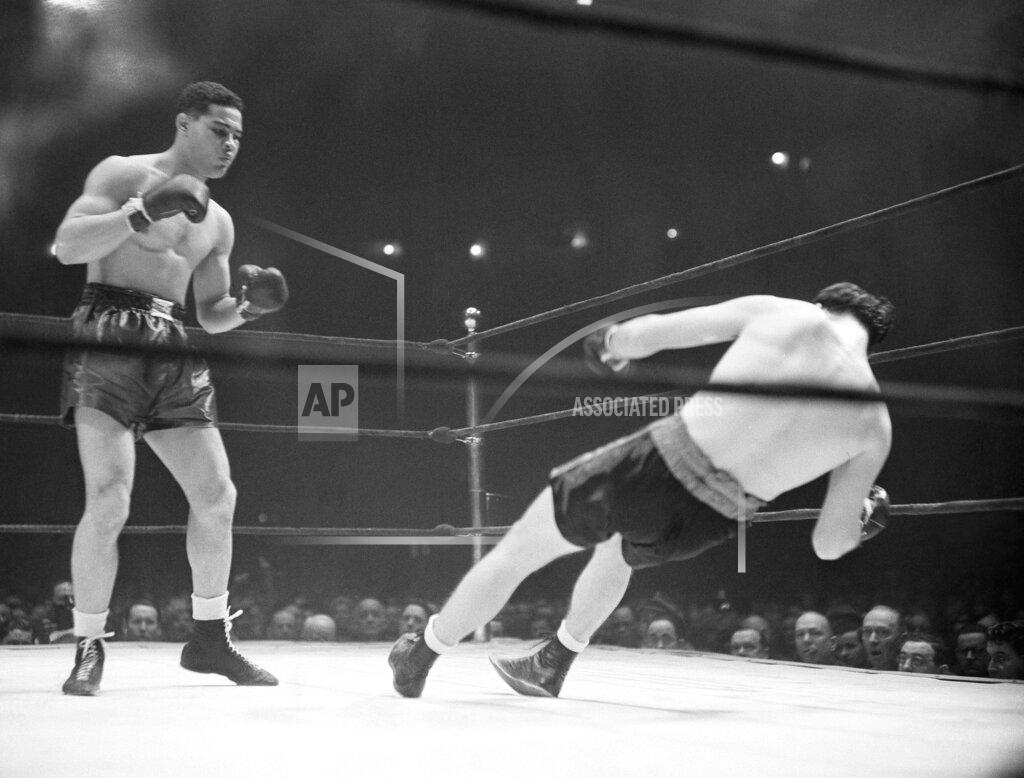
[Ed: Country singer Johnny Paycheck later took his stage name as a tribute or reference to Paychek.]
 History Diaries