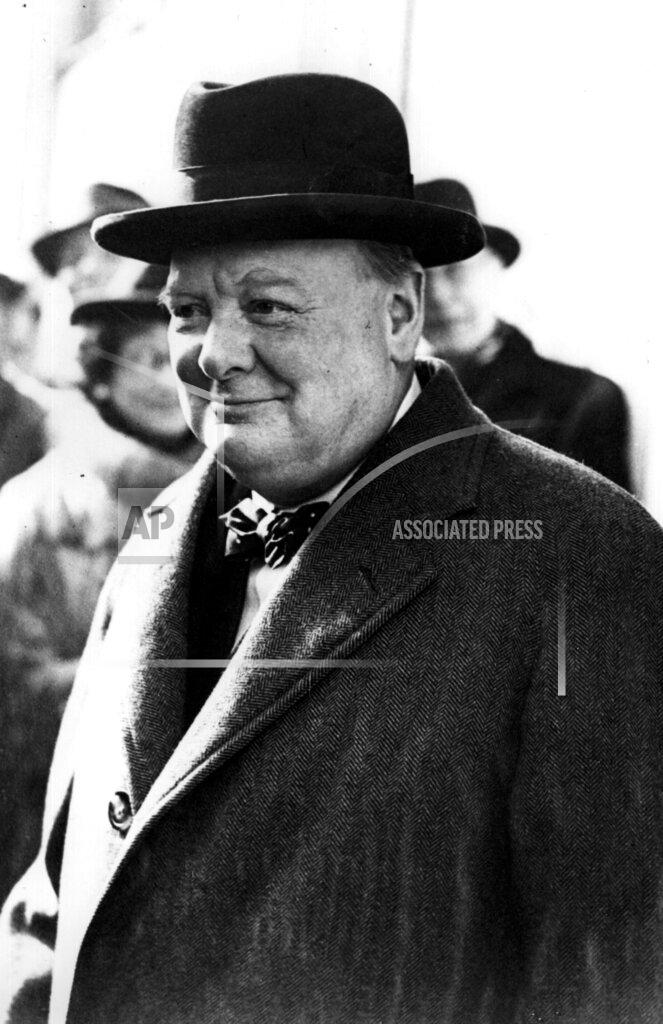
At a meeting in London the Allied Supreme War Council resolved that neither Britain nor France would make a separate peace with Germany. As a compromise to initiate some aggressive action, the Allies decide to lay mines in Norwegian coastal waters (Operation WILFRED) starting April 5. Churchill hoped to provoke a German response and legitimize Allied “assistance” to Norway with the goal of interrupting Swedish iron ore shipments to Germany. The French agree in principle to Churchill’s plan to drop mines in the River Rhine (Operation ROYAL MARINE) also starting on April 5, pending ratification by the French War Committee.
While an Allied landing in Norway would have been legal under the League of Nations resolutions pertaining to the Winter War, that authorization now is gone due to the Moscow Peace Treaty. An Allied invasion would be a hostile incursion on a neutral nation’s territory, just as would a German invasion. Norway has given no indication that it would accept foreign troops of any nation on its soil. Churchill, though, sees an added benefit from throwing a spanner in the works: “No people are more completely upset when their plans miscarry than the Germans. They cannot improvise.”
The Germans, of course, are thinking along identical lines, and their planned invasion has been set for roughly the same time. First Lord of the Admiralty Winston Churchill hopes to provoke the Germans into some rash action with the mining of Norwegian waters, thus justifying Allied “protection” of Norway and Sweden. This would cripple the German war effort, which is based upon Swedish iron ores shipped through Norway.
Allied Supreme War Council also studies plans for bombing Soviet oilfields in the Caucasus Region. The United Kingdom ultimately rejected the French suggestion to expand the war by attacking the Soviet Union. French ideas to attack Soviet shipping and oilfields are rejected to avoid bringing the U.S.S.R. into the war against the Allies.
The issue of German propaganda is on everybody’s mind. Churchill notes that “Reynaud spoke of the impact of German propaganda on French morale. The radio blares each night…”
The British Foreign Office calls six ambassadors from southern and central Europe back to London for consultations.
Herbert Morrison, President of the London County Council and one of the leaders of the Labor party, estimated today that only 1 per cent of Britain’s population was behind the “end-the-war” movement.
Author H.G. Wells called the British Government “grossly incompetent” today and said that Prime Minister Chamberlain and the Foreign Secretary, Viscount Halifax, were “just playing about with the war.”
Construction begins of the exhibition center to host the Thessaloniki International Trade Fair
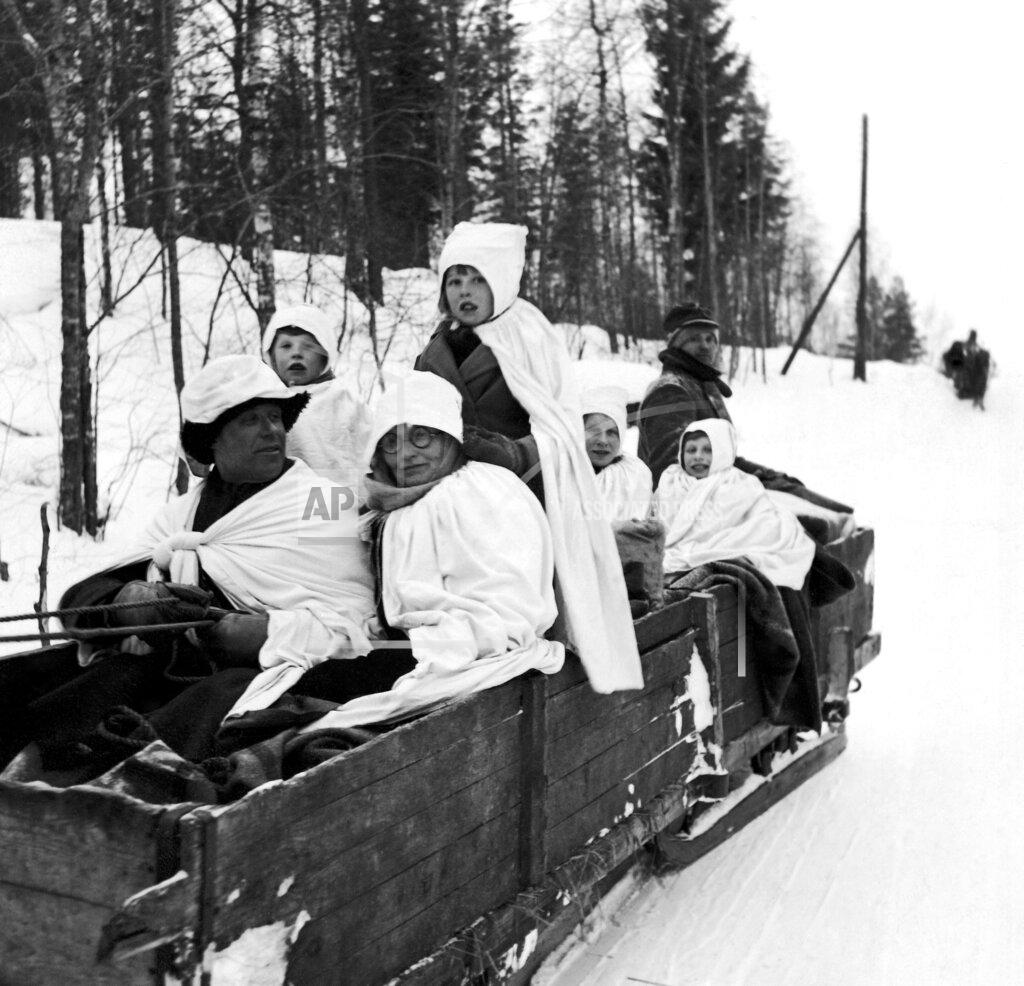
While Finland lost territory during the Winter War in the Moscow Peace Treaty, the country is full of pride for the outstanding showing of its military against an overpowering opponent. Finnish ski soldiers march in Helsinki in a parade, complete with their reindeer.
The Moscow radio tonight quoted an article from Izvestia, Soviet Russian government organ, advising the United States not to go too far in supplying war materials to Britain and France. “Continuation even of the cash and carry policy could involve the United States in war,” the newspaper was quoted as saying.
1,600 Jewish refugees fleeing the Germans arrive in Palestine after a journey that took six months. UK troops intern them for illegal entry.
Luftwaffe aircraft on an anti-shipping mission are intercepted by RAF fighters. One German bomber is shot down off the northeast coast of Scotland and another is damaged by fighters over the North Sea. The trawler Princess Royal (213 GRT) is damaged in an attack by 8 German aircraft in the North Sea 40 miles SSW of Bressay Light, Shetlands; two crewmen are wounded.
Overnight, the RAF sent reconnaissance flights over northwest Germany. Three aircraft of the New Zealand No. 75 Squadron take part in the flights for the first time. Three aircraft never return. One bomber makes a forced landing in Holland after being attacked by two Dutch Fokker fighters.
Destroyer HMS Brazen conducted I.F.F. trials in the Firth of Forth.
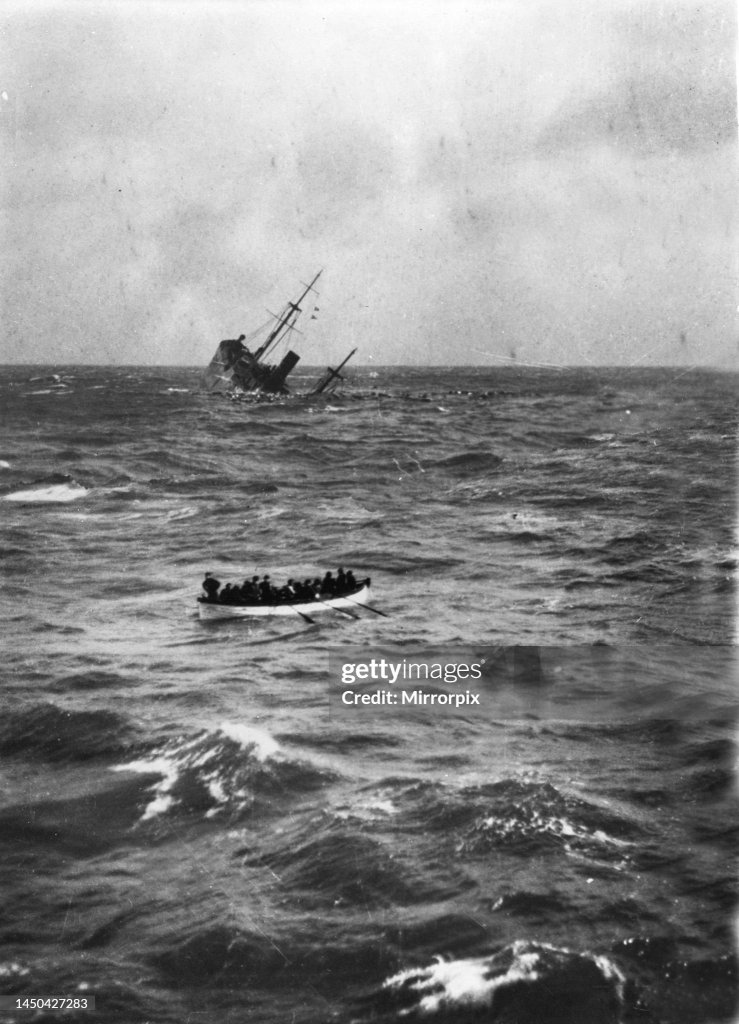
The 4,007-ton German freighter Mimi Horn is scuttled by its crew after being intercepted in the Denmark Strait (65°50′N 28°30′W) by the armed merchant cruiser HMS Transylvania. All 41 crewmen were rescued by the Transylvania.
Norwegian steamer SS Burgos in Convoy FS.31 hit a German mine and sank in the North Sea, 30 miles west of Skegness, England. All 33 crew were rescued by Royal Navy sloop HMS Pelican.
Convoy OA.119 departs Southend.
Convoy OG.24F was formed with 28 ships from convoys OA.118GF, which departed Southend on the 27th escorted by destroyers HMS Wakeful and HMS Broke, and OB.118GF, which departed Liverpool 26 March with destroyer HMS Mackay and sloop HMS Folkestone. The convoy was escorted by destroyers HMS Vortigern and HMS Watchman, from Portsmouth and Devonport, respectively, from 29 March to 4 April. On 2 April, destroyer HMS Wishart joined the escort. The convoy arrived on 4 April at Gibraltar.
Convoy FN.131 of 25 ships departed Southend escorted by sloop HMS Flamingo and destroyer HMS Wallace. German aircraft attacked convoy FN.31 at 1950/29th in 54-25N, 00-23W. Flamingo was struck by machine gun fire but sustained no casualties or damage.
Convoy MT.39 of 17 ships departed Methil escorted by the 23rd Anti-submarine Group and destroyers HMS Vega and HMS Woolston. On the convoy’s arrival off the Tyne, the destroyers escorted convoy FS.132, departing later that day. Woolston attacked a submarine contact on the 29th off Spurn Point in 53-48N, 1-30E, which was later assessed as not a submarine.
Convoy HG.24 departed Gibraltar with 40 ships, with ocean escort provided by sloops HMS Sandwich and HMS Enchantress from 28 March to 7 April. Destroyer HMS Wakeful escorted the convoy from 4 to 7 April and destroyer HMS Venetia on 7 April. The convoy arrived at Liverpool on 7 April.
French submarines Doris, Thetis, Calypso,and Circe departed Oran with convoy 17.R, escorted by auxiliary patrol vessel Cyrnos. The submarines passed Gibraltar on the 29th and proceeded to Brest for operations from England.
The War at Sea, Thursday, 28 March 1940 (naval-history.net)
Battlecruiser HOOD departed Scapa Flow at 1200, escorted by destroyers FORESTER, FOXHOUND, and FORTUNE for the Clyde. Destroyer FORESIGHT departed Scapa Flow with the HOOD, but was storm damaged on the 28th with damage to her gun shield and forecastle, and had to return to Scapa Flow. On the 30th, she departed Scapa Flow for Grimsby where she was under repair until 1 May. En route on the 28th, FORTUNE made a submarine contact off North Minch in 58 11N, 05 43W, but the search was unsuccessful. The battlecruiser and her escorts arrived in the Clyde at 0700/29th. Destroyer KELVIN arrived in the Clyde at 1800/29th after completing repairs at Liverpool, and was ordered to escort HOOD to Devonport. The ships departed at 0340/30th for Devonport arriving at 1100/31st. However, defects delayed KELVIN and she did not leave until 1430 and then for Scapa Flow. After retubing, HOOD was to be deployed in the Mediterranean, but she was refitting until 27 May when she sailed for Liverpool for final repairs ending on 12 June 1940.
Heavy cruiser DEVONSHIRE arrived in the Clyde.
Light cruisers MANCHESTER and BIRMINGHAM arrived at Scapa Flow from Northern Patrol.
Destroyer FIREDRAKE going alongside destroyer ICARUS at Invergordon was damaged, with ICARUS receiving superficial damage. FIREDRAKE was seaworthy except in heavy seas. Submarine TRIBUNE departed Scapa Flow on the 28th and was joined off Switha Gate at 1400 by FIREDRAKE which departed Invergordon at 0900/27th, and escorted her to Greenock for repairs of further defects. Arriving on the 30th, the submarine’s repairs were completed on 10 May. FIREDRAKE went on to Cardiff for repairs and refit.
Destroyer HASTY departed Scapa Flow at 2015 to pick up the crew of a Skua aircraft 14 miles 132° from Copinsay. They were picked up at 2200 and HASTY returned to Scapa Flow.
Destroyer GRIFFIN arrived at Invergordon from Moray Firth Patrol.
Destroyers IMPULSIVE, ICARUS, and ESK departed Invergordon for the Humber, where they arrived on the 29th.
Destroyers NUBIAN, DIANA, and FAME reported damage from heavy weather.
Destroyer IVANHOE departed Invergordon for conversion to minelayer at Chatham.
Submarine TRIAD arrived at Rosyth after patrol.
Submarine NARWHAL was undocked at Rosyth.
Convoy OG.24F was formed with 28 ships from convoys OA.118GF, which departed Southend on the 27th escorted by destroyers WAKEFUL and BROKE, and OB.118GF, which departed Liverpool 26 March with destroyer MACKAY and sloop FOLKESTONE. The convoy was escorted by destroyers VORTIGERN and WATCHMAN, from Portsmouth and Devonport, respectively, from 29 March to 4 April. On 2 April, destroyer WISHART joined the escort. The convoy arrived on 4 April at Gibraltar.
Convoy FN.131 of 25 ships departed Southend escorted by sloop FLAMINGO and destroyer WALLACE. German aircraft attacked convoy FN.31 at 1950/29th in 54-25N, 00-23W. FLAMINGO was struck by machine gun fire but sustained no casualties or damage.
Convoy MT.39 of 17 ships departed Methil escorted by the 23rd Anti-submarine Group and destroyers VEGA and WOOLSTON. On the convoy’s arrival off the Tyne, the destroyers escorted convoy FS.132, departing later that day. WOOLSTON attacked a submarine contact on the 29th off Spurn Point in 53-48N, 1-30E, which was later assessed as non-submarine.
Destroyer BRAZEN conducted I.F.F. trials in the Firth of Forth.
Destroyer VALENTINE was completed as a fast escort vessel. Following working up at Portland, she joined Convoy C at Rosyth.
Destroyers HAVANT and WILD SWAN investigated a submarine contact in 50 45N, 07W.
French torpedo boats LA CORDELIERE, BRANLEBAS, and L’INCOMPRISE of the 11th Destroyer Division were bombed by German aircraft north of Ostend, but were not damaged.
Norwegian steamer BURGOS (3219grt), formerly from convoy HN.21, in convoy FS.31 was sunk by a German destroyer-laid mine in 53 18N, 01 09E. Sloop PELICAN rescued the entire crew.
Trawler PRINCESS ROYAL (213grt) was damaged by German bombing 40 miles SSW of Bressay Light, Shetlands.
Convoy HG.24 departed Gibraltar with 40 ships, with ocean escort provided by sloops SANDWICH and ENCHANTRESS from 28 March to 7 April. Destroyer WAKEFUL escorted the convoy from 4 to 7 April and destroyer VENETIA on 7 April. The convoy arrived at Liverpool on 7 April.
French submarines DORIS, THETIS, CALYPSO, and CIRCE departed Oran with convoy 17.R, escorted by auxiliary patrol vessel CYRNOS. The submarines passed Gibraltar on the 29th and proceeded to Brest for operations from England.
In Washington, President Roosevelt conferred with Secretary Hull and Undersecretary Welles on the latter’s conversations in Rome, Paris, London and Berlin. He also discussed administrative affairs with Harold D. Smith, budget director, and Jesse H. Jones, Federal Loan Administrator.
The Senate considered the resolution to extend the reciprocal trade treaty program, heard Senator Connally criticize Thomas E. Dewey for his attack on the Administration’s foreign policy and recessed at 5:24 PM until tomorrow. The Military Affairs Committee rejected the La Follette resolution for an investigation of the sale of airplanes to foreign governments.
The House passed the $1,021,639,700 Labor-Social Security Appropriation Bill and adjourned at 5:07 PM until noon tomorrow. The Dies committee voted to seek citation for contempt of George Powers after he had refused to answer questions concerning Communist activities.
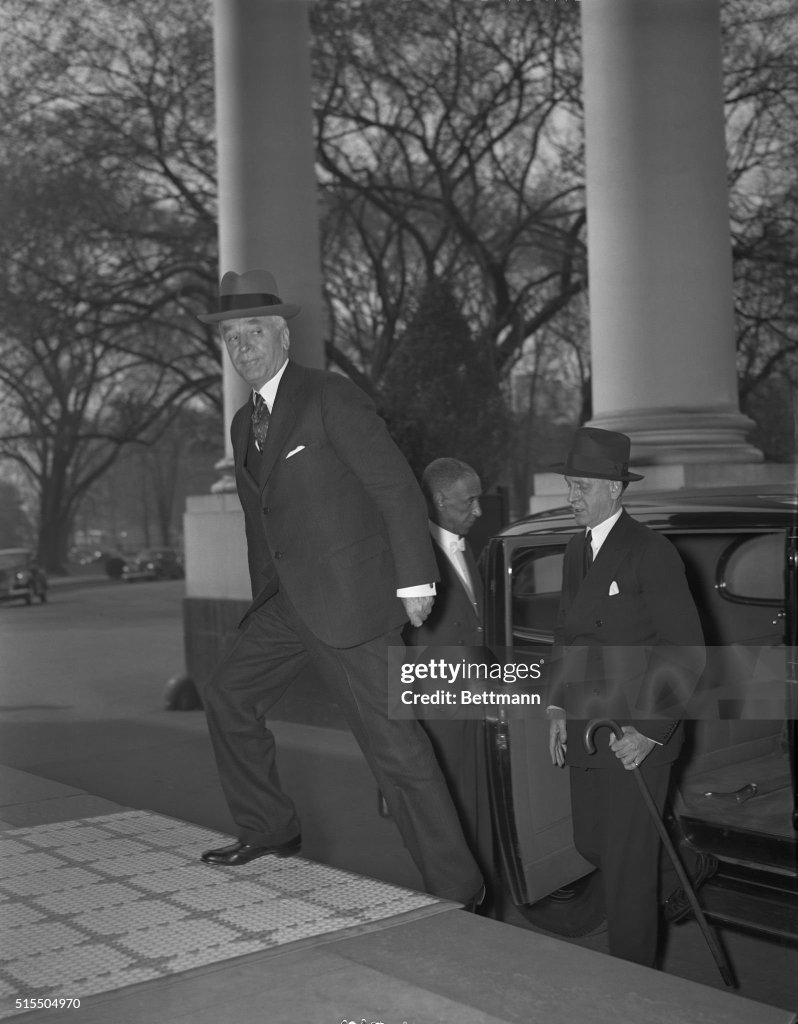
President Roosevelt today received the results of Sumner Welles’ fact-finding mission to Europe and the general opinion here tonight was the talk could have raised no early peace hopes. Extraordinary secrecy was observed as the president, Secretary of State Hull and Undersecretary Welles put their heads together in the president’s second-floor, White House study. All others, even the closest of White House aides, were excluded. The only interruption was when Stephen Early, presidential secretary, looked in a moment to obtain the president’s approval of a statement drawn up for reporters.
This statement said: “Neither the president, the secretary of state nor the undersecretary of state will have any word to say, following their conference, to the press or to any of their friends or to anyone anywhere.” The Information that Welles brought apparently was considered too delicate to entrust even to coded cables. Hull had indicated Welles had sent none of it ahead of him, but brought it back personally, in his small, brown dispatch case, or In his head. The undersecretary, looking much better than when he left the capital six weeks ago still suffering from the effects of an attack of bronchitis, told reporters “I am very glad to be back again” and then turned aside all queries.
Representative Warren Magnuson, Washington Democrat, member of a naval affairs subcommittee which returned this week from a flying inspection of Panama Canal defenses, said tonight that new off-shore bases on the Pacific side were necessary to protect the canal from easy destruction. He urged immediate negotiations with Ecuador and Costa Rica for the leasing of islands belonging to those governments, to serve as naval patrol and supply bases. He said he had in mind the Galapagos Islands group, belonging to Ecuador, and Cocos Island, owned by Costa Rica. Magnuson pointed out that President-elect Rafael Calderon Guardia of Costa Rica is in Washington and easily could be approached for a rental arrangement covering the strategic Cocos Island, just 500 miles away from the canal.
Construction of a third set of locks for the canal is another immediately essential defense measure, the naval affairs committeeman told the United Press He urged that the house reconsider its action earlier this session in slashing $15,000,000 from a war department appropriation bill for work on the third set of locks “Work can be started at once,” Magnuson said. “Plans are sufficiently far advanced to permit excavation and other preliminary work. It’s as much a commercial proposition as it is military. “The new locks would relieve the congestion of commercial vessels which now tax the capacity of the present locks. And in case of an emergency, the new locks would be invaluable.”
The Senate Military Affairs Committee voted, 5 to 4, today against reporting favorably the La Follette resolution to order an investigation into the sale of military planes to other powers.
Senate leaders on both sides agreed tonight that the Administration would be able to defeat, by a narrow margin, the Pittman amendment to the trade-agreements resolution when it came to a vote at 4 o’clock tomorrow afternoon.
Senator Connally angrily retorted today to Thomas E. Dewey’s assertion last night that the Roosevelt Administration could not be relied upon to keep this country out of war. The Texan declared that “we have kept out of war without any assistance from Mr. Dewey.”
The Dies Committee investigating un-American activities voted unanimously today to cite George Powers, Russian-born secretary of the Communist party in Western Pennsylvania, for contempt of the House. At a stormy hearing this morning the witness refused to answer many questions and failed to produce his party records which were under subpoena. Shouting that the committee was blacklisting “our people in industry,” the Communist leader refused to reveal the names of members of the party with whom he was associated and, supported by his counsel, Sol H. Cohn of New York, refused to answer other questions on the ground that they were “personal.”
The 35-year-old witness said he could not remember the last names of his father and mother or his own name before he changed it to Powers soon after he arrived in this country at the age of 18. He also failed to remember in what court he changed his name and many pertinent facts about the business of his Communist group. He said he was an American citizen because his father was naturalized but could not recall when or where his father obtained citizenship.
Earlier in the week the committee agreed to cite James H. Dolsen, another Communist, for contempt after party membership credentials bearing the name “Franklin D. Roosevelt” were found in his room and he had refused to answer committee questions. As a result of the refusal of the two witnesses to answer questions Mr. Dies was prepared to ask the House to instruct the attorney of the District of Columbia to bring action against both for contempt, probably tomorrow.
Nicholas Dozenberg, former roving secret agent of the Soviet Russian Army, appeared in Federal court yesterday a humbled man, pleading for a chance to rehabilitate himself as a citizen in the American tradition. His repentance came too late, however. Judge Samuel Mandelbaum sent him to prison for a year and a day for falsifying his American passport.
Local 3 of the International Brotherhood of Electrical Workers and five associations of electrical and plumbing contractors were accused in a Federal indictment yesterday of maintaining a virtual monopoly of a phase of the electrical industry in New York City for their mutual benefit.
During a 10–1 loss to the Cubs at Wrigley Field in Los Angeles, White Sox vet second baseman Jackie Hayes catches a cinder in his eye. The eye will become infected and though he finishes the season, he loses the sight in the eye. In 1943 he will lose the sight in both eyes.
The United States replaced Great Britain as the chief source of Argentina’s import trade in the first two months of this year, supplying 27.1 percent of the total, compared to Britain’s 20.9 percent, according to the monthly report of the National Statistical Bureau published today.
Second Battle of Wuyuan: Chinese 8th War Area attacking around Patzepu, Hsishantzu, Hsichiao, and Mankosu.
With the Japanese-sponsored regime headed by Wang Ching-wei scheduled to be inaugurated at Nanking on Saturday, Shanghai was buzzing tonight with the wildest rumors and conjectures, which received added circulation and credence because it was definitely known that this week at least fourteen apparently empty Japanese transports had gathered outside Woosung and steamed up the Yangtze to undisclosed destinations. The latest report is that the total of empty transports up the river is twenty-six, but this cannot be confirmed. Some quarters conjecture that the movements of the transports, coupled with fortifications in the vicinities of Shanghai, Hangchow, Soochow, Chinkiang and Tsingtao, signify a Japanese intention to make a wholesale military withdrawal from Central China to give the new Nanking regime “face” with the Chinese populace.
These quarters believe that the key cities of Hankow, Kiukiang, Anking, Wuhu, and Nanking and cities of the Yangtze delta will continue to be held by a few regiments each, with added protection by Japanese gunboats and destroyers to ward off any Chinese attacks. Such a withdrawal, however, seems extremely unlikely unless Japan’s economic position is more desperate than is generally believed or unless there is a secret agreement by Tokyo, Nanking and Chungking for eventual peace parleys instead of hostilities between Wang Ching-wei and Generalissimo Chiang Kai-shek. A large-scale withdrawal would lead to a widespread increase of guerrilla warfare and general disorders as well as political assassinations.
Britain’s ambassador told an audience of highly-placed Japanese today, “it is not beyond the powers of constructive statesmanship to bring the aims” of British and Japanese policy Into “full harmony.” Delivered against the background of months of bitter British-Japanese hostility, especially in China, Ambassador Sir Robert Leslie Craigie’s speech aroused comment by its conciliatory tone. He said there had been serious differences of purpose and outlook between the two great maritime empires, “but what has struck me most is the extent to which the real differences have been overlaid by a mass of misunderstanding, misrepresentation and all too often fostered by the unwelcome attentions of interested third parties.”
The ambassador’s speech, most notable British effort in recent months to placate the Japanese, was interpreted in diplomatic circles as an extension into the far eastern field of the diplomatic phase of the European war. It was expected to impress profoundly the Japanese government, which would welcome any British tendency to lessen support for the recognized Chinese government under Chiang Kai-shek. Some Japanese believed it indicated willing ness to discontinue opposition to Japan’s consolidation of gains in China provided Japan refrains from encroaching on British concessions and vital interests. Foreign office sources in London said Sir Robert’s speech did not foreshadow British recognition of the new regime Japan is establishing in the conquered parts of China under Wang Ching-wei.
After seventy-five days’ detention for contraband inspection, the Russian ship Selenga was released tonight with her cargo of wolframite, antimony and coffee intact. The Selenga was intercepted between Manila and Vladivostok and brought to Hong Kong on January 13. She was released a day after the renewal of Russian protests in London.
Soviet cargo ship Vladimir Mayakovski, carrying a load of copper, is taken to a French Indo-China port by a French cruiser.
Dow Jones Industrial Average: 147.25 (-0.22)
Born:
Michael Plumb, American equestrian (Olympic 2 gold medals and 4 silver, 1976, 1984), in Islip, New York.
Kevin Loughery, NBA shooting guard and point guard (Detroit Pistons, Baltimore Bullets; Philadelphia 76ers) and coach, in Brooklyn, New York, New York.
Jerry Hillebrand, NFL linebacker (New York Giants, St. Louis Cardinals, Pittsburgh Steelers), in Davenport, Iowa.
Lonnie Farmer, AFL linebacker (Boston Patriots), in Steubenville, Ohio (d. 2016).
Tony Barber, English-Australian television personality, in Oldham, Lancashire, England, United Kingdom.
Naval Construction:
The Royal Navy Shakespeare-class minesweeping trawler HMS Macbeth (T 138) is laid down by Goole Shipbuilding & Repairing Co. Ltd. (Goole, U.K.); completed by Amos & Smith.
The Kriegsmarine (German Navy) Type VIIC U-boats U-77 and U-78 are laid down by Bremer Vulkan-Vegesacker Werft, Bremen-Vegesack (werk 5 and 6).
The Kriegsmarine (German Navy) Type VIIC U-boat U-203 is laid down by F. Krupp Germaniawerft AG, Kiel (werk 632).
The Royal Navy “O”-class destroyer HMS Opportune (G 80) is laid down by Thornycroft (Southampton, U.K.).
 History Diaries