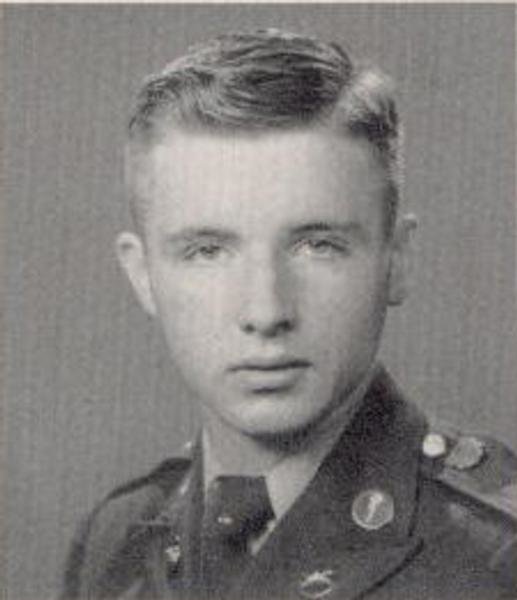
On March 28, 1965, a U.S. Marine Corps helicopter UH-34D (tail number 148812), call sign Stinger 2 (5-2), from Marine Medium Helicopter Squadron-163 (HMM-163) was on a troop insert in Quảng Nam Province, RVN. During the mission, the aircraft received hostile ground fire and took a round in the carburetor causing the engine to quit. The aircraft commander, CAPT William D. Reynolds, autorotated the aircraft into the front yard of a home in a rural area. Upon landing, the right main landing gear broke, causing the aircraft to tilt to the right. Reynolds, in the right seat, immediately exited the aircraft while the main rotor was still turning. His co-pilot attempted to stop Reynolds from departing the helicopter but was unsuccessful. Reynolds was subsequently hit by the main rotor blades causing fatal injuries. The lead mission helicopter, Stinger 1 (5-1), landed and picked up Reynolds and one of the 5-2 crew plus ammo and weapons from the downed aircraft. A maintenance helicopter later arrived to haul out the other crew members and armament from the aircraft.
William is buried at Odd Fellows Cemetery, Ponca City, Kay County, Oklahoma. He is honored on the Wall at Panel 1E, line 97.

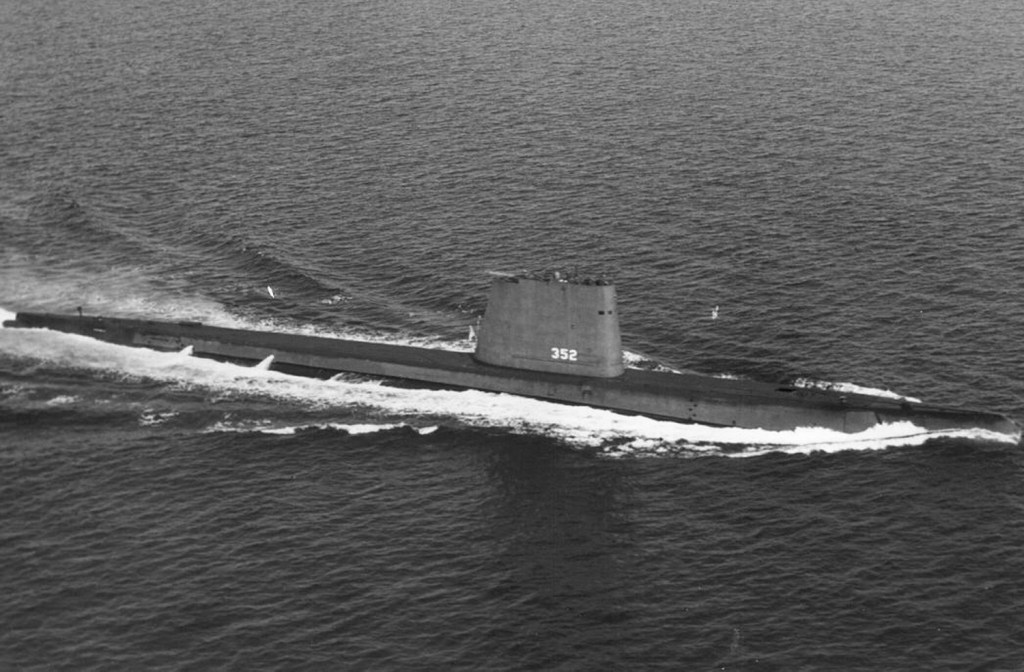
Twelve destroyers and minesweepers from the United States Seventh Fleet are known to have begun patrolling the entire South Vietnamese coast to prevent North Vietnamese supply boats from reaching the Việt Cộng. Navy patrol aircraft are also flying daily surveillance missions along the coast and out to sea. The duties of the aircraft and ships at present are limited to surveillance. Any reports of enemy sea movement are forwarded to Vietnamese military commanders for action. The United States ships and planes have been instructed, however, to shoot back if fired upon.
When the South Vietnamese Government gives formal permission for the ships to operate within three miles of the coast, the American Navy will then begin search-and-destroy operations against the Communist supply vessels. That permission is expected soon. The air and sea patrols along the 1,100-mile coast from the 17th Parallel to the Cambodian border in the Gulf of Siam began about two weeks ago. No announcement of the patrols has been issued by the United States Government. Seventh Fleet vessels are also engaged in surveillance of the North Vietnamese coast north of the 17th Parallel, but details are highly classified.
The decision to use the Seventh Fleet ships is known to have been heavily influenced by information developed over the last five weeks that large shipments of arms have been brought into the South by sea from North Vietnam. As the United States moves into the coastal waters, the Seventh Fleet will probably be provided with small diesel-powered gunboats and patrol craft. Informed military sources said the necessary vessels could be taken out of mothballs for that use.
The Communist ships are believed to have been going far out to sea from their North Vietnamese ports before cutting sharply to the coast and staying within the three-mile limit while seeking a cove. The existing patrols, with ships equipped with far-ranging radar, have already spotted one such boat headed for the Việt Cộng. The American crew relayed the information to the South Vietnamese Air Force, which bombed and strafed the ship, killing 11 crew members. Nine others drowned. An arms shipment was found aboard.
The Navy planes now being used fly at least two observation missions each during a 24-hour period from the Tân Sơn Nhứt Air Base in Saigon. They are the P-2 model, carrying elaborate radar equipment. The aircraft are also fitted for ordnance, photographic equipment and rockets. Naval authorities would like to establish a permanent United States installation at Cam Ranh Bay, south of Nha Trang. This is considered one of the finest natural anchorages in the world. However, lack of ground security around the base has made the development of such a port impossible.
At a Special Forces camp north of Pleiku, an investigation was underway today into the accidental explosion last night of 40 mines. The blast killed 14 Vietnamese soldiers and their dependents and wounded 74 other persons, including an American enlisted man. A spokesman in Saigon said that a lightning flash apparently had activated the electrically controlled series. The mines threw out plastic pellets that penetrated housing and barracks in the camp’s inner defense perimeter.
The question being asked most frequently in Vietnam today is, What has happened to the war in the Mekong Delta? Until February 1, this highly productive triangle at the southwest corner of South Vietnam was known as “the hot area.” More than 40 per cent of the country’s population live in the delta. Virtually all South Vietnam’s exports are in the form of surplus rice grown in the fields here. In a Communist Vietnam the output of the delta would be enough to feed the hard-pressed people of the North with enough rice left to sell to China. Strategists have always said that whoever controls the delta controls the wealth of Vietnam. For two years the Việt Cộng guerrillas have made this area their primary target, but in the last two months, government troops have had no contact with organized Communist units. In this period there have been only small raids and harassment attempts by guerrilla groups operating from their own villages.
Việt Cộng representatives still collect taxes in many parts of the delta. They still cut off roads in some areas. But attacks by “hard core” Việt Cộng units — those organized in companies and battalions and led by Communist zone commanders — have stopped. In the last month there has; been a marked increase in such activity in the areas of the I and II Corps in Central Vietnam, where Việt Cộng forces are apparently trying to cut the country in two. There is no firm indication that guerrilla units have been moved north to. participate in this drive.. Intelligence officers of the IV Corps, which commands three divisions in the delta area, have kept a careful watch on Việt Cộng activities since the year began. The number of Việt Cộng attacks on villages has dropped from 124 in January to 34 so far in March. The number of ambushes has dropped from 66 to 13. The number of sabotage or minor harassment incidents fell from 289 in December to 157 in March.
In the last week, there has been a drop of 52 percent in all Việt Cộng activities. On the other hand, the number of guerrillas who have surrendered to government forces has risen steadily. There were 78 in November and 141 in February. Most intelligence officers in the IV Corps link the drop in activity to Communist defeats in three major engagements with government troops in December and January.Việt Cộng regulars lost 595 men in these actions, and a larger number were believed wounded. In the last month, American and South Vietnamese Air Force bombers and fighters have made several strikes against suspected Việt Cộng positions and hiding places. The IV Corps intelligence officers speculate that Việt Cộng troops are still hiding in several deltà areas that have long been used as secret bases. Planning for IV Corps operations is still based on the possibility that the Việt Cộng may stage large attacks any day.
Communist China has declared it “will exert every effort” to send arms and war supplies to the Việt Cộng in South Vietnam and stands ready to send troops if the Red guerrillas need help.
Chinese Communist obstruction was reported today to be delaying Soviet arms shipments to North Vietnam. According to persistent reports from Communist sources, the Chinese have refused to grant permission for the shipment of Soviet arms to Hanoi by air through Peking. The reports could not be confirmed. The Chinese were reported also to be dragging their feet in negotiations with the Soviet Union on the transshipment of arms through China by rail. The Chinese negotiators are insisting on the right to inspect shipments that are believed to include anti-aircraft missiles, the sources of these reports said.
They added that some shipments that had crossed the border were being delayed on the Chinese side by railroad authorities.Rumors of Chinese delays of Soviet arms shipments have been circulating in the diplomatic community here and in Eastern European capitals for more than a week. Today’s reports were the first to come from sources to be taken seriously. These sources quoted Soviet officials as having said that the negotiations with the Chinese were “unnecessarily complicated” and “very long.” Peking has been accusing the Soviet leadership of lacking the courage to give effective military help to the North Vietnamese.
Troops in Laos proclaiming loyalty to General Phoumi Nosavan, a former Deputy Premier of Laos, who fled to Thailand in February, revolted and took over the Mekong River town of Thakhek this morning, according to informed Western sources.
Maxwell D. Taylor, United States Ambassador to South Vietnam, arrived in Washington today for a week of consultations to determine future steps in the Southeast Asian war.
Prime Minister Harold Wilson announced tonight that Patrick Gordon Walker, his former Foreign Secretary, would visit Southeast Asia during the next month for a survey as a special representative of the British Government.
An estimated 470 people were killed in the El Cobre dam burst and landslide that followed a 7.1 magnitude earthquake in central Chile. The 220-foot (67 m) high El Cobre Dam broke and water and debris poured down into the valley below, where employees of the El Soldado copper mine and their families lived. The town of El Cobre, near La Calera, was swept away along with more than 60 homes. The earthquake struck at 12:38 p.m. on a Sunday, when public places and churches were filled, and shook the area for more than 60 seconds.
Men standing in the rear of a church stopped the stampede of about 800 persons in Santiago, Chile, many of whom might have been killed if they had rushed into the street.
A ship carrying Soviet anti-aircraft missiles from Egypt to Cyprus was turned back by the 6th U.S. Fleet, a Greek Cypriot newspaper reported. The United States Sixth Fleet turned back a Greek freighter carrying Soviet anti-aircraft missiles from the United Arab Republic to Cyprus, the Greek Cypriot newspaper Tharros said today. It said the ship was intercepted Saturday night and forced to return to her Egyptian port of departure.
In Cyprus, a Greek Cypriot national guardsman was reported to have been critically wounded by Turkish Cypriot fire yesterday near the village of Ambelikou.
An authoritative Greek source asserted today that “most of the Soviet missiles are now in Cyprus with only a few remaining abroad.” By “abroad” he apparently meant the United Arab Republic, where the missiles are known to have been stockpiled.
Meanwhile, a Greek Defense Ministry spokesman told of intelligence reports that 2,000 Soviet Army trucks loaded with war materials crossed into Turkey a week ago.
The voters of Leopoldville massed at polling stations from sunrise to sundown today without getting a chance to vote. As the hours wore on, it became clear that there had been an almost complete breakdown in the complicated election machinery that had made it necessary to stagger over a six-week period the Congo’s first general election since before she became independent from Belgium in 1960. Late in the afternoon, many polling stations still had not received their ballots; others were waiting for ballot boxes, voting booths, election officials or lists of eligible voters. But still the voters stayed on, squatting in long lines that stretched across the hot, dusty schoolyards where the voting was to have taken place.
The electoral failure overshadowed the most cheering military news the Congolese Government has received in months. Reports from the northeast said troops. had taken the rebel stronghold at Ala, near the Sudanese border, and surrounded Faradje, 40 miles away. This meant that the major supply line to the rebels in the northeastern Congo, which ran from Yei in the Sudan across the frontier to Aba, had been severed. Last Thursday the same Government force — 250 white mercenaries and a battalion of Katangese gendarmes — took the town of Aru, 105 miles south of Aba. That gave them control of the main rebel route to Uganda.
The Tunisian press charged today that a malicious, dishonest and mendacious” campaign against the Government was being waged by the United Arab Republic. It said Cairo was retaliating with demagogy” because President Habib Bourguiba had spoken favorably of West Germany’s position in its dispute with the United Arab Republic.
A coordinating body of 24 national Jewish groups charged yesterday that an article in a prominent Soviet newspaper reviles Judaism as an enemy of the Soviet people.
Former West German Chancellor Konrad Adenauer implied tonight that the United States might not be paying enough attention to Western Europe because of its involvement in Indo-China.
The leader of a leftist Brazilian guerrilla group was reported captured by army forces today after a sharp gunfight.
Attendance at Roman Catholic churches in Cuba has increased 15 percent since liturgical reform became effective March 7, the island’s religious hierarchy has reported to the Vatican.
The Princess Royal, the aunt of Queen Elizabeth, died today at her home, Harewood House, near Leeds. She would have been 68 years old on April 25. Princess Victoria Alexandra Alice Mary was the only daughter of the late King George V and Queen Mary. She was known as Princess Mary until 1932 when she was styled the Princess Royal — a title borne by the eldest daughters of Britain’s sovereigns for 200 years. The title is expected to be bestowed eventually on the Queen’s daughter, Princess Anne, who is 14 years old.
The famed Burma surgeon, American Dr. Gordon Seagrave, 68, died at Namhkam, Burma, where he had operated a hospital for local tribesmen for 44 years.
Erland Kops of Denmark won the men’s singles title at the 1965 All England Open Badminton Championships at Wembley Arena, London.
A national boycott of Alabama, including a refusal to buy its products and a withdrawal of federal support for activities in the state, was called for last night by the Rev. Dr. Martin Luther King Jr. The Nobel Peace Prize-winner and president of the Southern Christian Leadership Conference, in a telephone interview; from San Francisco, said the effort should have two aims. One would be to commit Alabama to register at least 50 percent of its Blacks of voting age; the other would be to get a vigorous state stand against police brutality.
Dr. King’s boycott call was made first in an interview on the National Broadcasting Company’s television program “Meet the Press.” Afterward, he told a news conference in San Francisco that the plan would be discussed Thursday and Friday with board members of his group in Baltimore, but he did not expect action within the next two weeks. He added that he did not intend an “eternal boycott,” but “would call first for something like a 10-day withdrawal” and then “if nothing was done, I’d call for a repeat of the boycott.”
On the telecast, he said Alabama conditions had sagged to a low level of “social disruption” and “man’s inhumanity to man.” He called on the nation for a “creative, firm action program” to induce the state’s business leaders and “decent people” to bring pressure on Governor George C. Wallace “and other officials who are responsible for this reign of terror.”
“I think that it is necessary” for the nation to rise up and engage in a massive economic withdrawal program on the state of Alabama,” Dr. King went on. “To put it another way, I think the time has come for all people of goodwill to join in an economic boycott of Alabama products. So I’m in a few days planning to call on the trade unions to refuse to transport or use Alabama products. I hope to call on all Americans to refuse to buy Alabama products. I hope to call on the Secretary of the Treasury of the United States to withdraw all Federal funds that it has on deposit in Alabama banks. And finally I think it is necessary to call on all Federal agencies in line with the 1964 civil rights bill to withdraw support from a society that has refused to protect life and the right to vote.”
A Protestant congregation was racially desegregated for the first time in modern history in Selma today. St. Paul’s Episcopal Church, one of the city’s oldest and most respected churches, seated four Blacks at its morning worship service. Three of the Blacks were from Selma and the fourth was from Boston. None was an Episcopalian. Other Protestant churches here are expected to follow the lead of St. Paul’s and adopt open-door policies. The Church of the Assumption, the city’s predominantly white Roman Catholic Church, has accepted Black worshipers for a year.
The ushers at St. Paul’s had turned away mixed groups of whites and Negroes the last two Sundays. Then last Monday the vestry adopted a resolution complying with a canon of the Protestant Episcopal Church requiring member churches to accept worshipers without regard to race. The Black visitors and half a dozen whites with them, including several Episcopalians, were greeted courteously by several members of St. Paul’s after the service. The Rev. T. Frank Mathews, the rector, shook hands and spoke to them as he stood in his black and white robes in front of the church saying goodbye to his parishioners.
The event was marred by one incident, but most of the worshipers were not aware of it. Wilson Baker, the City Commissioner of Public Safety, was outside the church to see that no trouble erupted. A white man identified as Woodrow Long, 48 years old, a member of the volunteer posse of Sheriff James G. Clarke Jr., approached the church during the service and began using profanity. Mr. Baker arrested him and charged him with disorderly conduct. He was released during the afternoon on $100 bond.
Fire bombs were thrown at two Black churches in the Meridian area of Mississippi today, slightly damaging one of them. The Fire Department said there was “very minor damage” to the front of the Mount Pleasant Baptist Church. Officers found fragments of a broken bottle, which apparently had been filled with a flammable liquid, at the front entrance. Policemen called to the Bethel Baptist Church near Meridian found a burning bottle of kerosene and extinguished it before it damaged the church. A resident of the area told the police he had seen four men in a car toss the fire bomb at the church. Mayor Henry Burns later issued a statement saying: “Acts of this nature will not be tolerated in Meridian.”
Vice President Humphrey visited the home of a slain civil rights worker in Detroit tonight to convey his sympathy and that of President Johnson. The Vice President spent six minutes talking to the family of Mrs. Viola Gregg Liuzzo, who was shot to death Thursday night while driving between Selma and Montgomery, Alabama. He arrived at 6:36 PM, accompanied by former Governor John B. Swainson. Charles L. O’Brien, administrative assistant to the president of the International Brotherhood of Teamsters, said afterward that Mr. Humphrey had conveyed messages of sympathy from himself and from Mr. Johnson. He said the Vice President told the family that Mr. Johnson had declared the “whole country was with them” in their grief. Mrs. Liuzzo, the 39-year-old mother of five children, was the wife of Anthony J. Liuzzo, a Detroit official of the teamsters’ union.
The Birmingham News, in a strong editorial, urged a reasonable and positive approach to Alabama’s racial problems. A statewide group of white moderates has gained new adherents since marching in Selma three weeks ago to support the Black drive there.
Leaders of the Ku Klux Klan in Georgia and Alabama asked President Johnson if they might confer with him to discuss the President’s attacks on their organization.
Congressional attention will be focused this week on two Presidential requests: a timetable for speedy Senate action on school aid legislation and possible investigation of the Ku Klux Klan.
Treasury Secretary Douglas Dillon told Congress the United States must discontinue its present silver coins.
Treasury Secretary Douglas Dillon has taken the unprecedented action of urging a $4-million increase in the appropriation which President Johnson recommended for his own security.
The head of a 72-year-old major women’s educational and service organization last night termed the antipoverty programs “as yet highly inadequate.”
Born:
Jeff Beukeboom, Canadian NHL defenseman (NHL Champpions, Stanley Cup, Oilers-1988, 1990; Rangers, 1994; Edmonton Oilers, New York Rangers), in Ajax, Ontario, Canada.
Tom Tilley, Canadian NHL defenseman (St. Louis Blues), in Trenton, Ontario, Canada.
Dave Goertz, Canadian NHL defenseman (Pittsburgh Penguins), in Edmonton, Alberta, Canada.
Anthony Dilweg, NFL quarterback (Green Bay Packers), in Washington, District of Columbia.
Greg Moore, NFL linebacker (New England Patriots), in Cartersville, Georgia.
Steve Turner, American grunge rock guitarist (Mudhoney), in Houston, Texas.
Died:
Dr. Gordon Seagrave, 68, Burmese surgeon and missionary who built dozens of hospitals and trained hundreds of residents as nurses and surgical aides.
Mary, Princess Royal and Countess of Harewood, 67, third child and only daughter of King George V and aunt of Queen Elizabeth II.
Jack Hoxie, 80, American Western film star (“The White Outlaw”).





 History Diaries