
French Prime Minister Reynaud broadcasts a speech to the public urging the nation to carry on a “total war” against the Germans. This is an old phrase from World War I.
On the Western Front, artillery actions still tend to increase, with the French using mostly heavy weapons. This has been especially the case in the Bitche sector south of Zweibruecken.
Along the Rhine the Germans continue their propaganda by loudspeaker and placard. Three men. were shot as they were launching a small boat bearing anti-British inscriptions.
Today’s French communiqués follow:
“No. 409 (morning): One of our posts repulsed a local attack in the region south of the Warndt Forest. The air force continued its activity during the night.”
“No. 410 (evening): Local activity of our scouting units.”
Military circles said today that Allied long-range artillery fire against the German lines on the Western Front was being directed and “controlled” from French airplanes. There was no definite indication whether the Allied artillery was opening up with more intensive bombardment of the Westwall or merely continuing the sporadic fire of recent weeks. German patrol attacks were repulsed west of the Saar River, an informant said, and there were sporadic artillery exchanges between the Saar and the Vosges Mountains.
Reliable Finnish sources reported today that Russia had protested to Finland because Soviet troops occupying Hanko Peninsula, leased from the Finns under terms of the peace treaty, have not been able to obtain electricity, water and food from adjacent Finnish territory. The Finns have not yet answered the Russian demand that such supplies be made available at once. Meanwhile, the Russians are forced to rely on supplies brought in by icebreakers, including coal brought all the way from the Donetz Basin.
Stalin refused to meet Hitler to discuss an issue regarding a border dispute in occupied Poland. Hitler enjoys personal diplomacy — he will travel far and wide to meet a fellow dictator — and asks Stalin to meet to discuss their mutual border. The two have never met — Hitler has even met the British and French leaders — but Stalin declines to meet anyway.
The Kremlin recalls its ambassador to France after French complaints about him. Soviet Ambassador to Paris Jakob Suritz sent Stalin a message congratulating for him his victory over “Anglo-French warmongers.”
An indication that if Russia or Germany should violate the neutrality of another country France and Great Britain would consider themselves justified in intervening was given by a Foreign Office spokesman today in discussing neutrality from the Allied position in this war.
British 51st Highland Division moves into the front line in the French sector. They replace French soldiers in the line, which is a first.
First Lord of the Admiralty Winston Churchill has a flash of inspiration: “Memo: More backgammon sets on warships – quicker game than cards.”
Morale is high in Britain as the long Easter Weekend ends, with long queues at the train stations and an impromptu sing-a-long at Waterloo Station.
Wilhelm Solf, an Austrian undergraduate at Oxford University, is interned after he photographs a crashed RAF plane. As reported in the London Times, many citizens feel that the government is treating Germans caught in the country by the war harshly. This is buttressed by a newsreel being shown in cinemas which details the recent incident of an RAF bomber accidentally landing in Germany, the crew meeting with local farmers there on good terms, and then taking off again before being caught.
Count Pál János Ede Teleki, Prime Minister of Hungary, visits with Mussolini in Rome. Mussolini tells Teleki and Ciano, who attends the meeting, that Italy will join the Germans in the war at some point.
The Type IIB German U-boat U-21 ran aground off Mandal, Vest-Agder, Norway (58°01′N 7°29′E) after a navigational error. The Norwegians later refloated and interned the boat and tow it to Mandal, Norway, thence Kristiansand-Sud until 9 April 1940. She was then used as a training boat until 1944..
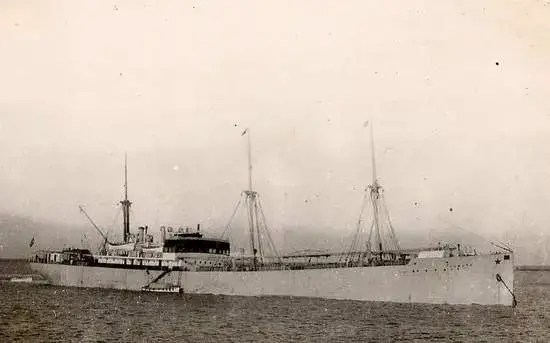
At about 0100 hours, the neutral and illuminated Norwegian motor merchant Cometa was stopped by the U-38, commanded by Kapitänleutnant Heinrich Liebe, about 65 miles northwest of Noup Head, Orkneys in the North Sea (60°06′N 4°36′W). The Norwegians explained that the ship had been she had been stopped by the trawler HMS Kingston Peridot (4.69) and ordered by the British authorities to go to Kirkwall for examination accompanied by one officer and four ratings that were placed aboard. The Germans ordered the 31 crewmembers and six Swedish passengers to abandon ship within one hour and then fired one torpedo at 0220 hours. She was struck amidships and broke in two. The stern sank immediately and the forepart was sunk by a coup de grâce at 02.57 hours. Of the ship’s complement and passengers, all 42 survived and were picked up by the trawler HMS Northern Sky. The 3,794 ton Cometa was carrying general cargo and paper and was bound for Buenos Aires, Argentina.
Convoy OA.117 departed Southend escorted by destroyer HMS Whitehall on 26 and 27 March and destroyer HMS Vanessa on the 27th. The convoy dispersed on the 29th.
Convoy OB.117 did not sail. OB.118GF departed Liverpool on the 26th and merged as OG.24F.
Convoy OB.119 departed Liverpool on the 26th escorted by destroyers HMS Versatile and HMS Winchelsea.
Convoy FN.129 of 21 ships departed Southend escorted by destroyers HMS Whitley and HMS Westminster. The convoy arrived in the Tyne on the 28th.
MT.38 departed Methil escorted by the 1st Anti-submarine Group, sloop HMS Lowestoft, and destroyer HMS Valorous. On convoy MT.38’s arrival off the Tyne, convoy FS.130, which included minelayers HMS Teviotbank and HMS Princess Victoria, departed the Tyne escorted by HMS Lowestoft and HMS Valorous. The minelayers arrived at the Humber on the 27th. The convoy arrived at Southend on the 28th.
The War at Sea, Tuesday, 26 March 1940 (naval-history.net)
Light cruiser NEWCASTLE departed Scapa Flow for refitting in the Tyne.
Light cruiser SOUTHAMPTON departed Scapa Flow on Northern Patrol.
Armed merchant cruisers DERBYSHIRE, WOLFE, and LETITIA departed the Clyde on Northern Patrol, and were given air escort from the Clyde.
Destroyer IVANHOE departed Invergordon to relieve destroyer ICARUS on Moray Firth patrol.
Submarine TRUANT arrived at Rosyth after patrol.
Submarine URSULA was docked at Blyth for repairs of ice damage sustained on her patrol.
Destroyer BEDOUIN, escorting the Home Fleet, attacked a submarine contact at 0959 ENE of the Faroes in 63-33N, 4-56W. This contact was later assessed as probably a wreck.
At 1400, destroyers HERO and HOTSPUR, after a search for a German submarine, joined the Home Fleet in 63-00N, 4-00W.
Destroyer FIREDRAKE attacked a submarine contact ESE of Copinsay in 58-49N, 2-16W. The contact was found to be non-submarine.
Destroyer ELECTRA departed Scapa Flow at 1500 for a full calibre shoot southwest of the Orkneys, and then proceeded to Rosyth.
Destroyer ESK, after repairs, departed Scapa Flow at 1945 for a patrol station between Copinsay and Brough Head, before joining the Moray Firth Patrol at 0800/27th.
Convoy OA.117 departed Southend escorted by destroyer WHITEHALL on 26 and 27 March and destroyer VANESSA on the 27th. The convoy dispersed on the 29th.
Convoy OB.117 did not sail. OB 118GF departed Liverpool on the 26th and merged as OG.24F (q.v.)
Convoy OB.119 departed Liverpool on the 26th escorted by destroyers VERSATILE and WINCHELSEA.
Convoy FN.129 of 21 ships departed Southend escorted by destroyers WHITLEY and WESTMINSTER. The convoy arrived in the Tyne on the 28th.
Convoy MT.38 departed Methil escorted by the 1st Anti-submarine Group, sloop LOWESTOFT, and destroyer VALOROUS. On convoy MT.38’s arrival off the Tyne, convoy FS.130, which included minelayers TEVIOTBANK and PRINCESS VICTORIA, departed the Tyne escorted by LOWESTOFT and VALOROUS. The minelayers arrived at the Humber on the 27th. The convoy arrived at Southend on the 28th.
Anti-submarine trawler LADY ELSA (518grt) at 1550 attacked a submarine contact off Grimness, South Ronaldsay in 58-47-24N, 2-46-12W. The contact was non submarine.
Anti-submarine trawler DANEMAN (516grt) attacked a submarine contact at 2359/25th east of Halero Head, South Ronaldsay in 58-45-30N, 2-48-42W. Anti-submarine trawler MAN O’ WAR (517grt) also attacked the contact. At 1440, anti-submarine trawler MAN O’ WAR attacked a submarine contact off Burray Ness in 58-51N, 2-52W.
U-21 ran aground off Oddknuppen Island in 58 28N, 07 20E, near Ryvinga, southeast of Mandel. U-1 was ordered to assist, but was unable to locate her. U-22 was also ordered to assist, but had already been lost. U-21 was refloated by a German trawler and taken to Evjemoen in Mandalsfjord where she arrived on the 27th. She was interned on the 31st, but was only in Norwegian hands for a short time as she returned to German control on 9 April when Kristiansand fell.
U-38 at 0100 sank Norwegian steamer COMETA (3749grt) 67 miles 315° from Noup Head in 60 06N, 04 36W. COMETA had been stopped earlier by armed boarding vessel KINGSTON PERIDOT and a prize crew of one officer and four ratings put on board for the passage to Kirkwall. The survivors were picked up by armed boarding vessel NORTHERN SKY.
Light cruiser DUNEDIN arrived at Kingston.
Destroyer ACTIVE arrived at Gibraltar escorting steamer SEVILLA, carrying whale oil from Freetown.
Destroyer DIAMOND covered cable ship MIRROR repairing the St Vincent to Bathurst cable five to nine miles south of St Vincent Verde Island.
Today in Washington, President Roosevelt conferred with Senator Harrison on executive matters and sent to the Senate the nomination of Hugh Grant to be Minister to Thailand [Siam].
The Senate considered the resolution to extend the Reciprocal Trade Agreements program and recessed at 4:45 PM until noon tomorrow.
The House considered the Labor-Social Security Appropriation Bill and adjourned at 5:27 PM until 11 AM tomorrow. The Labor Committee resumed consideration of proposed amendments to the National Labor Relations Act.
On the first test of its attitude toward revamping the Wages and Hours and the National Labor Relations Acts the House voted overwhelmingly today against an increase in travel funds for the Labor Department, which would be used in part by the Wages and Hours Administration.
Representative Dies, Texas Democrat, warned tonight that he would seek have every Communist leader in United States sent to jail for contempt unless they furnished his committee on un-American activities with a complete list of Communist party members. He said he had information that members of the party were acting secret agents for Moscow, and sending American military and industrial secrets to Soviet authorities. To halt such activities, he held, was necessary that the nation know the names of the estimated 100,000 party members in this country. “It’s a mighty strange thing that this government can’t get the information on people within its own boundaries when a foreign government already has it,” Dies said. “We’re going to try to get all the Communist leaders to come before our committee, and they will be asked to supply the names. If they don’t, we will institute contempt proceedings against them. The law will permit the government to keep them in jail if they don’t talk.” The Texan said that he proposed follow the same course with reference to Nazi and Fascist groups.
Rejecting any idea that trade unions enjoy a blanket exemption from the Sherman anti-trust law, Federal District Judge Peyton Gordon today upheld the action of the justice department in invoking the law against a union alleged to have restrained trade during a jurisdictional dispute. Leaders of the American Federation of Labor who have been critical of methods used by the justice department in its anti-trust campaign in the building construction field have contended that unions are exempt from the antitrust law, though subject to prosecution under other laws.
Hundreds of persons tonight were rushed into the fire lines to battle a prairie fire near Hutchinson, Kansas, fanned by a 50-mile wind in the worst dust storm of the year. Principal hope of the firefighters lay in thunderstorms expected to follow the dust storm which today swept out of the Texas Panhandle, across northwest Oklahoma and into central Kansas. Dust was most severe between Wichita and Garden City. Transcontinental & Western Airlines reported it reached 10,000 feet. Visibility at Pratt was 100 feet. Highway traffic slowed to a crawl.
At least nine persons in Santa Rosa, California, two of them women, were crushed to death beneath 350 tons of prunes today in the collapse of a warehouse floor under which they sought shelter from a driving rainstorm. Authorities, struggling to clear away debris before the buckling walls of the structure gave way, said they did not know how many more victims might be trapped. Rescue workers continued the hunt for more victims tonight. The walls of the building, severely jarred when the floor suddenly gave way, threatened to collapse. The building was raised two and a half feet from the ground on post foundations.
General Motors officially cancels the LaSalle nameplate in the Cadillac division. While LaSalles have sold reasonably well (often better than Cadillacs), the thinking apparently is that the company should focus on the more prestigious Cadillac brand. Production of LaSalles ceases in August. Final LaSalle designs are incorporated into new Cadillac models.
The net inflow of capital into the United States in 1939 was $1,118,799,000, or about three times that of 1938, according to the first statement of the capital movement for the full year 1939, made public today by the Treasury.
U.S. commercial airlines completed a full year without a fatal accident or serious injury to a passenger or crew member.
An explosion in an after deckhouse of the U. S. Navy’s neutrality destroyer USS King (DD-242) today left one sailor missing apparently blown overboard and six others burned, one critically. Captain William S. Farber, commander of the neutrality patrol unit to which the King was assigned, said the blast appeared to have been caused by some form of gas, which ignited in an undetermined manner. Naval sources said that Richard Carl Oehlert of Denver, Colo., fire man first class, was missing and that he probably had been thrown over the ship’s side by the force of the explosion. Farber said destroyers carry small tanks of oxygen, and that it was possible some were stored in the deckhouse, which was used as a storeroom for spare chemicals and other materials. The “terrific force” of the explosion demolished the forward bulkhead of the deckhouse. So far as was known, none of the injured was in the house. It was believed they were walking on deck nearby and flames spurted through the crushed bulkhead and burned them.
A new government policy, which is expected to speed delivery on prospective Allied orders for $1,000,000,000 in war planes, is to be laid before American plane and engine manufacturers tomorrow.
The Curtiss CW-20T, prototype of the C-46 Commando, makes its first flight. The C-46 is a low-wing, twin-engine aircraft derived from the Curtiss CW-20 pressurized high-altitude airliner design. Early press reports used the name “Condor III” but the Commando name was in use by early 1942 in company publicity. It was used primarily as a cargo aircraft during World War II, with fold-down seating for military transport and some use in delivering paratroops. Mainly deployed by the United States Army Air Forces, it also served the U.S. Navy/Marine Corps, which called it R5C. The C-46 filled similar roles as its Douglas-built counterpart, the C-47 Skytrain, with some 3,200 C-46s produced to approximately 10,200 C-47s.
After World War II, a few surplus C-46 aircraft were briefly used in their original role as passenger airliners but the glut of surplus C-47s dominated the marketplace and the C-46 was soon relegated to cargo duty. The type continued in U.S. Air Force service in a secondary role until 1968. The C-46 continues in operation as a rugged cargo transport for arctic and remote locations with its service life extended into the 21st century.
The new U.S. Navy torpedo boat PT-6 achieves a speed of 46 miles per hour in tests on Lake Pontchartrain, in Louisiana.
“The Fifth Column”, a play by Ernest Hemingway and adapted by Benjamin Glazer premieres in NYC courtesy of the Theater Guild
After being released by the Pirates, Chuck Klein signs for his third stint with the Phils.
A federal election was held in Canada. The Liberal government of William Lyon Mackenzie King was re-elected to another majority government. The Liberal Party under the leadership of Mackenzie-King wins 178 seats, the Conservative Party 39 and all others 28.
Completing a cautious, 9-hour and 15-minute trip through the Panama canal, the somber, gray-camouflaged British liner Mauretania tied up at Balboa in the Canal Zone at 7 p.m. E.S.T., today on her way on a secret war mission in the Pacific. The 35,739-ton liner Britain’s fifth largest will pause there long enough to replenish her fuel supplies before heading into the Pacific for what many believe ultimately will be the job of ferrying troops between Australia and the near east.
Bolivian General Anterior Ichazo, army chief of staff, took two machine guns and a handful of loyal officers and smashed a budding military revolt which government sources said was aimed at the assassination of Provisional President Carlos Quintanilla and three other high officials and the capture of Presidentelect Enrique Penaranda del Castillo.
Second Battle of Wuyuan: Japanese 26th Infantry Division, reinforced in recent days, recaptures Wuyuan from Chinese 8th War Area. The Chinese fall back to the banks of Fan-chi-chu and launch attacks at Xin’an, Xishanzui, Xixiaozhao, and Manko.
After the Easter fighting in South China, the Chinese have regained Lingshan in Kwangal Province but lost Siulam, northwest of Shekki. The recapture of Lingshan is hailed as checking the Japanese campaign east of the Nanning-Yamchow highway. Nanning, despite many rumors, remains in Japanese hands. In the Heuneshan district the Japanese are endeavoring to set up a new administration. The people are being urged to return and the Japanese have appointed a head man for each village, though often it is difficult to persuade men to accept office. One thousand Japanese troops who landed at Namtow for a drive on Shumchun were compelled to re-embark by Chinese regulars under General Wang Tuk-chau. It is alleged that British waters were violated by the Japanese in an unsuccessful landing at Shatow, between Namtow and Shumchun.
The Diet (Japanese Parliament) closed its session tonight, having passed 108 government bills and the budget, which in final form totals 10,833,000,000 yen. The yen was quoted in New York yesterday at 23.43 cents. Parliament’s most noteworthy achievement was the enactment of an extensive scheme of taxation reform designed to produce additional revenue of 800,000,000 yen annually.
Philippine President Manuel Quezon tentatively suggested today that continued relations with the United States might be arranged if treaty-making powers were vested in the Philippines. His statement aroused new discussion over the question of independence.
Dow Jones Industrial Average: 145.86 (-0.39)
Born:
Nancy Pelosi, American Politician (Rep-D-California, 1987–), 52nd Speaker of the U.S. House of Representatives, in Baltimore, Maryland.
James Caan, American actor (“Brian’s Song”, “The Godfather”, “Misery”), in the Bronx, New York (d. 2022).
Braulio Baeza, Panamanian-American HOF jockey who was the 1st Latin American to win the Kentucky Derby 1963; Belmont Stakes 1961, 1963, 1969; 5 x US Champion Jockey in earnings, in Panama City, Panama.
Rod Lauren, American rocker (“If I Had a Girl”) and actor, in Fresno, California (d. 2007).
Died:
Spyridon Louis, 67, Greek runner, winner of the marathon at the 1896 Summer Olympics.
Naval Contruction:
The Royal Navy Bar-class boom defense vessel HMS Barlake (Z 39) is laid down by the Blyth Shipbuilding & Drydock Co. Ltd. (Blyth, U.K.).
The Royal Navy Flower-class corvette HMS Larkspur (K 82) is laid down by Fleming & Ferguson Ltd. (Paisley, Scotland). This will be transferred in 1942 under reverse lend lease to the U.S. Navy and become the USS Fury (PG-69).
The Royal Navy Tree-class minesweeping trawler HMS Deodar (T 124) is launched by Goole Shipbuilding & Repairing Co. Ltd. (Goole, U.K.); completed by Amos & Smith.
The Royal Navy Dance-class ASW trawler HMS Fandango (T 107) is launched by Cochrane & Sons shipbuilders Ltd. (Selby, U.K.); completed by Amos & Smith.
The U.S. Navy Benson-class destroyer USS Mayo (DD-422) is launched by the Bethlehem Shipbuilding Corp. (Quincy, Massachusetts, U.S.A.).
The Royal Navy modified Illustrious-class aircraft carrier HMS Indomitable (92) is launched by Vickers Armstrong (Barrow-in-Furness, U.K.).




 History Diaries