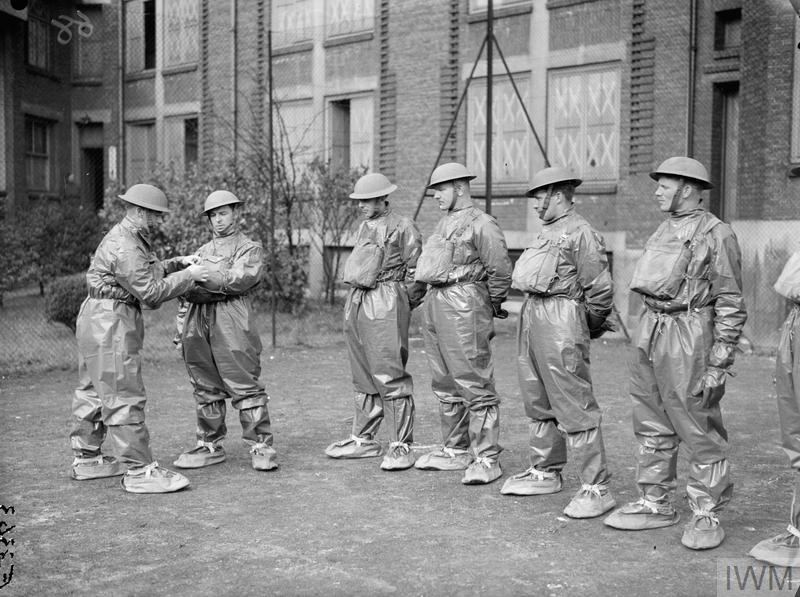
Swiss intelligence warned Norway regarding evidence of a German invasion, but Norway chose to ignore the warning.
Mass arrests of Polish intellectuals and professional people, lawyers, clergymen, teachers and engineers, are reported from Warsaw. More than 2,000 Jews and non-Jews are said to have disappeared from their homes in the last fortnight.
Pressure grew heavier in Great Britain today for a rebuilt government, concentrating the nation’s economic, maritime and military power in fewer hands. A war cabinet of five ministers, instead of the present nine, was suggested. The London Star quoted “well-informed political circles” as saying a five-man cabinet would be formed to replace the present nine-man group. Under this plan First Lord of the Admiralty Winston Churchill would gain a greater voice, speaking for the land, sea and air forces as well as the ministries of supply and shipping. The five-man cabinet would be composed of Prime Minister Neville Chamberlain, Churchill, Chancellor of the Exchequer Sir John Simon, Foreign Secretary Lord Halifax and Lord Privy Seal Sir Samuel Hoare. Question of Labor Under Consideration The present war cabinet, formed Sept. 3, 1939, the day Britain declared war on Germany, and reorganized Jan. 5 when War Minister Leslie Hore-Belisha was ousted, includes the above five and these four as well: Air Minister Sir Kingsley Wood, War Minister Oliver Stanley, Minister Without Portfolio Lord Hankey and Minister for Coordination of Defense Lord Chatfield.
The British government ordered its troops not to participate in German radio broadcasts if they became prisoners of war. Britons had been tuning in to German radio to learn of the capture of family members by hearing their voices, long before information of their capture could reach the British government.
Stop-the-war advocates in Great Britain showed remarkable strength during the weekend at labor and political conferences. So loud are their voices, so insistent their demands and so heavy their votes that Prime Minister Chamberlain is expected to examine this facet of ever-increasing complications of the war situation immediately on his return from his Easter holiday.
[Ed: They are mostly communists taking their orders from Moscow. The same vermin will be demanding a “SECOND FRONT NOW,” no matter the cost to Britain, in late 1941 and 1942, when their precious USSR is threatened.]
Simultaneously The Daily Mail in an outspoken editorial draws the attention of the government to the “extent with which German broadcasts are influencing not only the civilian population of Britain but also our armed forces” and warns that “yet another new German broadcasting station was opened last week-end with a fresh range of insidious propaganda in English.”
Foreign Minister Lord Halifax pledges the nation to protect Romanian neutrality, and adds pointedly that the Allies “will not shrink from war with the Soviet Union” to do so.
The British navy intensified its North Sea blockade, apparently determined to halt important shipments of iron ore from Sweden to Germany even if it is necessary to invade neutral waters. British warships were reported active off Scandinavian shores. Norway already has protested to Great Britain against violation of her neutrality by royal air force planes and was reported preparing protests against alleged violation of her territorial waters by British warships.
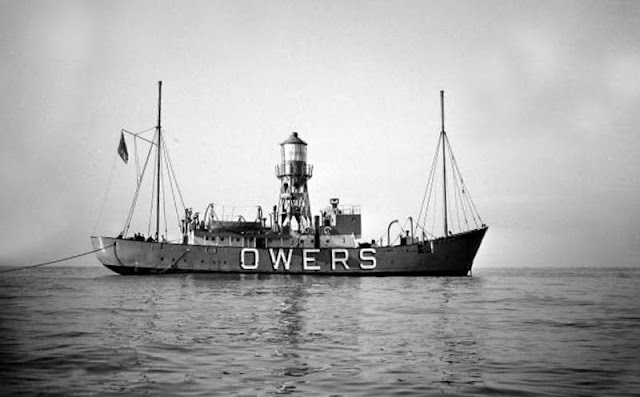
The Admiralty decides to replace lightships bombed by the Germans with automatic light floats.
The ration for butter is set to rise beginning 26 March 1940 to one-half pound per week.
French Prime Minister Reynaud wrote to the British War Cabinet, proposing ideas to undermine any possibility of further Soviet expansion in Scandinavia, and proposes attacking Soviet shipping. British Prime Minister Chamberlain refused to cooperate as he refused to contribute to hostility with the Soviet Union. British Prime Minister Chamberlain instantly rejects the idea. One of the British government’s consistent rules during the first six months of the war has been to alienate the Soviet Union as little as possible. Such attacks also would be of dubious value to the war effort. He concludes that Reynaud is just fishing for something to make him look good in public eyes during his first days as Prime Minister.
New French Premier Paul Reynaud announced his first speech to the nation would be broadcast tomorrow at 8 p.m. A plea for national union was voiced by the powerful newspaper Le Temps. Its editorial warned France that this is no time to return to the “peacetime error” of playing politics.
Hungarian Prime Minister Pál Teleki met with Italian Foreign Minister Galeazzo Ciano; Teleki advocated neutrality for Hungary.
Eight French aircraft attacked by Luftwaffe fighters near Saarbrucken.
At 0540 hours, the Danish steam merchant Britta was hit in the forepart by one torpedo from U-47, commanded by Kapitänleutnant Günther Prien, sank slowly about 55 miles north of Sule Skerry (60°00′N 4°19′W). The ship had been spotted at 0430 and missed by a first torpedo at 0519. Five of her crew were killed. The 13 survivors were rescued by the Danish SS Nancy of the same company that sailed together with the ship and were taken to Swansea. The 1,146-ton Britta was in ballast, heading for Liverpool.
At 2011, the damaged tanker Daghestan (Master John Rutherford) in convoy HN.20 (bombed yesterday) was sunk by a coup de grâce by U-57, commanded by Kapitänleutnant Claus Korth, nine miles east of Copinsay, Orkneys (59°21′N 1°48′W). The ship caught fire, was abandoned by the crew and later sank. The master, two crew members and one gunner were lost. 25 crew members were picked up by the HMS Northern Wave (FY 153) (Lt L.C. Head, RNVR) and HMS Brontes (FY 118) (Cdr T.St.V.F. Tyler, RN) and landed at Lyness, Orkneys. The 5,742-ton Daghestan was carrying crude oil, bound for Sullom Voe, in the Shetlands.
Convoy OG.23 forms at sea for Gibraltar. Convoy OG.23 was formed with fifty one ships from convoys OA.115G, which departed Southend on the 23rd, and OB.115G, which departed Liverpool on the 23rd escorted by destroyers HMS Walker, HMS Wanderer, and HMS Volunteer. Destroyers HMS Wakeful and Volunteer escorted the convoy from 25 to 26 March and were then detached to convoy HG.23. Wanderer also escorted the convoy from 25 to 26 March. Sloop HMS Aberdeen escorted the convoy from 25 to 27 March. Destroyer HMS Campbell escorted the convoy from 25 to 27 March. French destroyer Tigre and patrol vessel Vikings escorted the convoy from 26 to 31 March. Destroyer HMS Douglas joined the convoy on the 31st. The convoy arrived at Gibraltar later on the 31st.
Convoy HX.30 departed Halifax at 0900 escorted by Canadian destroyers HMCS Saguenay, HMCS Restigouche, HMCS Skeena, which were detached on the 26th. Ocean escort for the convoy was battleship HMS Revenge. At 0950/26th, Skeena was detached to join battleship HMS Malaya at 0750/27th. The battleship was returning to Halifax after escorting convoy HX.26. Revenge was detached on 3 April while destroyers HMS Acasta, HMS Viscount, HMS Whitehall, and HMS Witch escorted the convoy from 6 to 9 April, when it arrived at Liverpool.
Convoy FS.129 departed the Tyne at 2100 escorted by sloop HMS Flamingo and destroyers HMS Wallace and HMS Juno. The convoy arrived at Southend on the 27th.
The War at Sea, Monday, 25 March 1940 (naval-history.net)
Light cruiser GLASGOW departed the Clyde on Northern Patrol.
Heavy cruiser YORK departed Rosyth for Scapa Flow, where she arrived on the 26th in preparation of setting out on Northern Patrol.
Aircraft carrier FURIOUS departed Plymouth at 1600/25th escorted by destroyers ISIS, HAVOCK, and IMOGEN arrived in the Clyde at 1800/26th. The destroyers, joined by destroyer MOHAWK, went on to Scapa Flow.
Destroyer ESK arrived at Scapa Flow at 0015 for repair to her bow protection gear.
Destroyer ESKIMO arrived at 1700 at Scapa Flow with tankers BELGOL and WAR PINDARI.
Destroyer IMPULSIVE departed Invergordon to relieve destroyer IVANHOE on Moray Firth Patrol.
Destroyer BRAZEN departed Rosyth for exercises, and returned later in the day.
Submarines THISTLE and SEAL arrived at Rosyth from patrol.
Submarine TRIDENT departed Rosyth on patrol.
Submarines URSULA and L.23 arrived at Blyth after patrol.
Convoy OG.23 was formed with fifty-one ships from convoys OA.115G, which departed Southend on the 23rd, and OB.115G, which departed Liverpool on the 23rd escorted by destroyers WALKER, WANDERER, VOLUNTEER. Destroyers WAKEFUL and VOLUNTEER escorted the convoy from 25 to 26 March and were then detached to convoy HG.23. WANDERER also escorted the convoy from 25 to 26 March. Sloop ABERDEEN escorted the convoy from 25 to 27 March. Destroyer CAMPBELL escorted the convoy from 25 to 27 March. French destroyer TIGRE and patrol vessel VIKINGS escorted the convoy from 26 to 31 March. Destroyer DOUGLAS joined the convoy on the 31st. The convoy arrived at Gibraltar later on the 31st.
U-47 at 0600 sank Danish steamer BRITTA (1146grt) in 60 00N, 04 19W, off Sule Skerry. Five survivors were picked up by Danish steamer NANCY (1153grt) which was in company, but thirteen crew went missing.
Destroyers ELECTRA and ENCOUNTER, returning to Scapa Flow, proceeded to the location and ELECTRA stood by the rescue area. At 1241, ELECTRA and ENCOUNTER were ordered to return to Scapa Flow where they arrived at 1830. Destroyers HOTSPUR and HERO from Sullom Voe and SOMALI, MATABELE, FAME, FORESIGHT, SIKH, and FOXHOUND from anti-submarine operations east of the Orkneys were sent to the area. Destroyers COSSACK (D.4), ESKIMO, and PUNJABI departed Scapa Flow at 0700. The wreckage of BRITTA was later found eighteen miles from the reported position.
In anti-submarine operations on 25 and 26 March, COSSACK, SIKH, FOXHOUND, HOTSPUR, and HERO were searching in the area 61N to 60N, 2W to 4W. They were joined by destroyer NUBIAN after escorting submarine TRIBUNE and destroyer FIREDRAKE after repairs from destroyer depot ship WOOLWICH. Destroyer FIREDRAKE was then ordered to join destroyers ICARUS and IVANHOE and the anti-submarine trawlers on the Moray Firth patrol. In anti-submarine operations on 25 and 26 March, destroyers SOMALI (D.6), ESKIMO, and PUNJABI searched the eastern half of a patrol area from 60N to 59N, 3W to 5W. MATABELE, FAME, and FORESIGHT searched the western half of this area.
Destroyer NUBIAN, which had completed refitting and degaussing at Rosyth on the 24th, rendezvoused off Rosyth at 1900/24th escorting submarine TRIBUNE. Both ships arrived safely at Scapa Flow at 1400/25th. NUBIAN departed Scapa Flow and joined the destroyers searching for the U-47 which had sunk Danish steamer BRITTA. The hunt was unsuccessful and NUBIAN damaged her asdic dome. TRIBUNE departed Scapa Flow on the 28th and was joined off Switha Gate at 1400 by destroyer FIREDRAKE which departed Invergordon at 0900/27th. FIREDRAKE escorted TRIBUNE to Greenock for the repair of further defects, arriving on the 30th, and completing on 10 May. FIREDRAKE then went on to Cardiff for repairs and refit. Returning to Scapa Flow, NUBIAN brushed destroyer MASHONA while changing berths requiring that NUBIAN go back into the dockyard for repairs. NUBIAN departed Scapa Flow on the 30th for the Tyne, and left the dockyard there on 11 April for duty with the Home Fleet.
Minelayers PRINCESS VICTORIA and TEVIOTBANK departed Rosyth for the Tyne, escorted by sloop FLAMINGO and destroyer WALLACE. The ships arrived in the Tyne on the 26th and joined convoy FS.130 for passage to Immingham. PRINCESS VICTORIA had some damage to her mine chutes to be repaired at Immingham.
Convoy FS.129 departed the Tyne at 2100 escorted by sloop FLAMINGO and destroyers WALLACE and JUNO. The convoy arrived at Southend on the 27th.
U-57 sank tanker DAGHESTAN (5742grt), en route from Scapa Flow to Sullom Voe escorted by armed boarding vessel NORTHERN DAWN and anti-submarine trawler BRONTES (428grt), nine miles 212° from Copinsay. She had been lightly damaged on the 20th in the German air attacks on convoy HN.20.
Destroyers ICARUS, IMPULSIVE, and FIREDRAKE and the 19th and 21st Anti-submarine Striking Forces were sent to search for the submarine. Tugs BUCCANEER and KROOMAN were sent to assist the tanker, which lost three crew and one gunner. Nineteen survivors rescued by anti-submarine trawler NORTHERN DAWN and six by anti-submarine trawler BRONTES.
Destroyer ACASTA left her convoy at 0800/25th to search for a submarine off Bude, and met VIVACIOUS at noon on the 26th. ACASTA attacked a submarine contact off Bull Point in 51 20N, 4 55W.
Anti-submarine trawler KIRKELLA (436grt) attacked a submarine contact at 1420/25th off Bull Point in 51-19-48N, 04-20-20W. Anti-submarine trawler BANDOLERO (440grt) was in company, and ACASTA and VIVACIOUS joined the trawlers at this location. On 1 April, destroyer HAVANT searched a wreck at this location.
Destroyer KEITH brought the British Chief of the General Staff (CIGS) back from Boulogne.
Dutch steamer DRECHTDIJK (9338grt) went ashore on the Varne, and anti-submarine trawler KINGSTON CRYSTAL (433grt) was sent to investigate. The steamer was refloated under her own power before midnight, and tug LADY BRASSEY escorted her to one mile northeast of Folkestone Gate to anchor.
Convoy HG.24F departed Gibraltar with twenty-seven ships. French destroyer CHACAL and auxiliary patrol vessel CAPITAINE ARMAND escorted the convoy from 25 to 31 March. Destroyers BROKE and VANSITTART escorted the convoy from 31 March to 3 April when it arrived at Liverpool.
Convoy HX.30 departed Halifax at 0900 escorted by Canadian destroyers HMCS SAGUENAY, HMCS RESTIGOUCHE, HMCS SKEENA, which were detached on the 26th. Ocean escort for the convoy was battleship REVENGE. At 0950/26th, SKEENA was detached to join battleship MALAYA at 0750/27th. The battleship was returning to Halifax after escorting convoy HX.26. REVENGE was detached on 3 April while destroyers ACASTA, VISCOUNT, WHITEHALL, and WITCH escorted the convoy from 6 to 9 April, when it arrived at Liverpool.
French destroyer FORBIN stopped Portuguese steamer LIMA (3881grt) off Lisbon. A German citizen, accused of espionage, was taken off the steamer and taken into custody.
President Roosevelt in Washington today discussed power policies with Leland Olds of the National Power Policy Committee, entertained at tea the President-elect of Costa Rica and accepted the invitation of Matt Adams, president of the Young Democratic Clubs of America, to address by radio that organization’s Jefferson Day dinners April 20.
The Senate debated the resolution to extend the trade treaty program and recessed at 4:53 PM until noon tomorrow. The Judiciary Committee reported favorably the Anti-Lynching Bill.
The House sent to conference the Agriculture Department Appropriation Bill, considered other legislation and adjourned at 5:55 PM until noon tomorrow. The Dies committee questioned James H. Dolsen about Communist party activities and cited him for contempt for refusing to answer questions.
President Roosevelt was understood in diplomatic circles today to be planning a formal statement in the near future covering the results of conversations undertaken by Sumner Welles, Under-Secretary of State, with representatives of European powers during his recently completed tour of the Continent. Mr. Welles is scheduled to return to this country on Thursday. The President is reported as anxious to head off any speculation that the occasion might provoke to the effect that the Administration was contemplating any “new offensive for peace.”
The White House has been at pains recently to discourage acceptance of reports creating the impression that termination of European hostilities was likely at any time in the near future. It described as “very empty” newspaper headlines last week about peace terms reported to have been sent to the Pope by Chancellor Hitler through Foreign Minister von Ribbentrop. In view of this White House attitude and the Allied antipathy toward any peace settlement short of complete victory, it is said in diplomatic circles that the President’s statement, if and when it comes, will hold out little optimism for an early termination of hostilities.
The Senate appeared tonight to be headed toward a filibuster over the Anti-Lynching Bill unless its members proved unwilling to mar plans of leaders for an early adjournment and submitted to the cloture rule to limit debate and force a vote at a specified time. Threat of a filibuster came from Southern Senators after the Senate Judiciary Committee voted out, 12 to 4, the measure, already approved by the House, which seeks to penalize peace officers for falling to protect prisoners and provides for damages against them and the counties they serve. Senator Connally of Texas, who led the successful filibuster against a similar bill in the special session of 1937 and the regular session of 1938, said that the measure would be “resisted to the utmost” and that “the Mannerheim Line won’t even be a starter for the fight we’ll put on.” Similar expressions came from others of the twenty-five, Southern Senators.
Connally issued the following statement: “Feeling that the bill is a deliberate affront to the people of the Southern States and to all local State governments, Senators from the Southern States will resist and oppose its enactment to the uttermost. If the Federal Government can penalize State officers and lay penalties upon county governments, the Federal Government can destroy the counties within the States and the States themselves.”
Invitations reportedly went down the line today for an old-fashioned Congressional log-rolling over farm and relief appropriations, while friends of labor and youth put in their bids for upward revision of Items pending before the House in the Labor Department-Federal Security Administration Appropriation Bill. The economy bloc, which has been in the saddle so far this session in the House, has shown that It could withstand an assault from either the farm bloc or any of the others, but economy leaders were not at all certain that they could hold their lines against a coalition of the farm members with one of the other pressure groups. Nevertheless, while there appeared every indication that the farm bloc had offered its support to obtain added relief funds in return for aid from the relief bloc, the economy leaders prepared for a finish fight not only to prevent a runaway spending drive but also to keep expenditures at least within the Bureau of the Budget figure of $8,464,000,000 for 1941.
The cry so far has been that the budget had cut too deeply, or even unfairly, into this benefit or that.. The Senate put $299,000,000 additional upon the House-approved Farm Bill with that reason assigned. The House sent that measure to conference with the Senate today under a promise of Representative Clarence Cannon of Missouri, the head of the House conferees, to keep in mind the House attitude on economy. Few believe, however, that the conferees can agree within less than two weeks. Before the end of that period the relief appropriation bill will be before the House, presenting the best setting for log-rolling seen in Congress in many years. The Budget Bureau’s recommendation for the Work Projects Administration for 1941 was $1,000,000,000, a sum deplored by Mayor Fiorello H. La Guardia of New York and others as inadequate to meet the relief needs.
It has been reported on high authority that Administration spending advocates have been urging President Roosevelt to send to Congress a supplemental estimate for relief, running between 300 and 500 million dollars. While Mr. Roosevelt was reported as having stood firm on his original estimate for relief, he left the way open for a new estimate in his budget message which was based on conditions last December. Representative Woodrum of Virginia, the Democratic economy leader, declared that he would fight to preserve the House savings of about $300,000,000 to date on appropriation bills and to prevent a spending drive. But he expressed doubt that the House would turn down, in an election year, the “blandishments” offered by Senate increases to the Farm Bill. Representative Taber of New York, the Republican economy leader, said he felt confident that the added farm benefits could be defeated.
Senator Pepper, Florida Democrat, requested “facts” today to support a plea that all citrus growers be covered by his bill proposing cancellation of approximately $566,000 of the indebtedness of the Florida Citrus exchange and affiliated corporations. He said, the United Growers & Shippers association had proposed the bill’s provisions be extended to include all growers. “If they can present me with any facts which would justify getting the government to cancel any obligations I will be glad to do what I can,” Pepper added.
The U.S. Supreme Court decided Helvering v. Bruun, 309 U.S. 461 (1940), which holds that improvements to a property made by a tenant are taxable to the landlord when the landlord repossesses the property.
Acting on instructions from the White House, Secret Service agents tonight were trying to find a Communist who used the name “Franklin D. Roosevelt” on his Communist party membership credentials. Meanwhile, the House Committee on un-American Activities decided to institute contempt proceedings against James H. Dolsen, a Communist who acknowledged that a member of his party had used the President’s name, but who refused to identify the man or to answer several other questions asked by the committee. The credentials in question, a book containing records of dues payments and other data, were found in Dolsen’s room in Pittsburgh. Dolsen said the unidentified Communist gave the book to him so that stamps showing the payment of dues and assessments could be affixed. He said he had tried to dissuade the man, a Pittsburgh resident, from using the pseudonym because President Roosevelt “never was a member of the Communist party and never would be.”
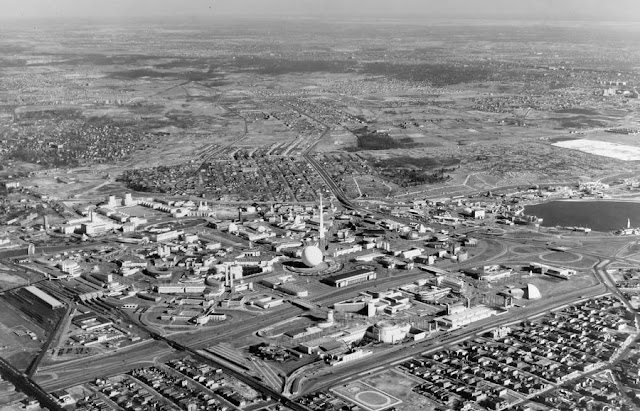
Organizers of the San Francisco World’s Fair on Treasure Island (the Golden Gate International Exposition) continue to work toward reopening the Fair for its second year. General Manager W. W. Monahan promised “an entirely new show, more brilliant and vivid, more stimulating and entertaining.” He said admittance costs, parking fees and bridge tolls had all been “stream lined” for modest pocketbooks. The fair ticket sale opened today, and Ted Rosequist, director of sales, reported 80,000 of the 200,000 special souvenir tickets, for $2.50 each, were sold within a few hours.
A series of freakish explosions hit the vicinity of Louisiana State University’s campus in Baton Rouge, Louisiana, today when gas somehow got into city water mains. There were no injuries. Waterworks officials quickly cut off the water in the section and sent workmen to find how the gas got crossed up. One resident flushed a toilet and it blew up, ripping doors loose and wrecking furniture.
The United States gave contractors to the U.S. Army Air Corps the authority to sell to anti-Axis governments the most modern types of combat aircraft. But the U.S. industry does not yet have the production capacity to match the French and British orders.
President Roosevelt issues an executive order increasing security in the Panama Canal Zone.
Sunspot activity interferes with short-wave radios across the western hemisphere.
The 35,739-ton British liner Mauretania anchored tonight in Cristobal Bay, presumably in preparation for making transit of the Panama Canal tomorrow. The great ship, which sailed under sealed orders from New York five days ago, was dark except for her running lights. Presumably she will remain in the bay overnight. The British consul and agents for the ship were silent concerning plans for the Mauretania’s transit of the canal and the ship’s ultimate destination, but it was believed generally in the Canal Zone that she was en route to Australia for use as a troopship. The Mauretania, which ordinarily can carry 1,500 passengers, sailed from New York only one day ahead of the Queen Mary, her big sister. Despite complete secrecy as to the destination of the ships, both were reported in New York to be en route for troopship duty, probably from Australasia to the near east. (Because of her size, the 81,235-ton Queen Mary cannot be taken through the canal and, if she is en route to Australasia, probably would go around the Cape of Good Hope).
Battle of South Kwangsi: Chinese 46th Army captures Lingshan, with Japanese forces retreating to the west toward Nanning.
Second Battle of Wuyuan: Japanese 26th Infantry Division counterattacking Chinese 8th War Area around Wuyuan. The Japanese attacking along the Wuchia river at Ta-Tsai-chu 10 km (6.2 miles) north of Wuyuan receive 3,000 men in reinforcements in addition to the 600 with which they began the battle. With the support of artillery and air support, they finally cross the river after three previous days of futility against the Chinese 8th War Area.
Chinese forces succeeded in recapturing Wuyuan in western Suiyuan last Friday, a communiqué announced here today. The recapture of Wuyuan is regarded here as of strategic importance since it frees the Ordos region within the north bend of the Yellow River from the threat of Japanese action. The Japanese, after having lost 3,300 men in two days at Lunghingchang, say the Chinese reports, withdrew toward the Paotow railhead on the Peiping-Suiyuan railway, which is their permanent base in this area. It is believed here that the Japanese retreat is prompted by the approach of the Spring thaw on the Yellow River and the difficulty of maintaining communications. With the Japanese abandonment of Wuyuan, which was captured two months ago, the battle lines in China revert to the positions held at the beginning of the year.”.
Chinese reported successes today on war fronts as far separated as Southern China and Inner Mongolia, in the far north. Near Wuyuan, in western Suiyuan, where the Japanese are retreating, they said that Chinese troops had seized a large quantity of Japanese war material, including several field pieces and twenty-seven military trucks.
In the southern province of Kwangsi, recently the main war theatre, the center of fighting was said to have shifted south of Lingshan where Chinese said a “Japanese remnant is surrounded.” They previously had reported stopping a Japanese thrust northeast from Lingshan.
The Chinese Central News Agency said about 500 Japanese had been killed or injured when two troop trains collided on Friday at Suchow, junction of the Lung-Hai and Tientsin-Pukow railroads. Guerrillas, it said, ambushed one train on the Lung-Hai line east of Suchow and in attempting to escape at top speed, it crashed into the other, telescoping several coaches.
Japan’s hold upon the city of Swatow, despite her claims of adequate control, proves upon investigation to be extremely tenuous. Actually, except for the fact that the Japanese Navy could effectively shell attackers, the Chinese forces could easily drive the invaders into the sea. Instead of holding and effectively occupying a thirty to fifty-mile semi-circle around Swatow, as the Japanese assert, they actually have only about 5,000 of their own troops in the city and adjacent areas. They have the slenderest measure of control of the highway from Swatow thirty miles inland to the city of Chaoan.
This highway runs between the Swatow-Chaoan Railway and the Han River along a strip of the delta varying in width from two to five miles. Chinese troops continuously raid this stretch across the ruined and dynamited railway. The Chinese also occupy the opposite bank of the river. Along this narrow corridor, the Japanese maintain numerous village garrisons of from fifty to a few hundred men. It is estimated that the Japanese garrison in Swatow is only about 2,000 and that the other 3,000 in the Swatow area are distributed on this line of communications and in the garrison at Chaoan.
The town of Senghai, only ten miles northeast of Swatow, was until recently garrisoned by 3,000 Chinese puppet troops, but their loyalty was so doubtful that they were herded aboard a Japanese transport and sent to southern Fukien Province. After that Tenghai was briefly held by a force of 300 Chinese police that the Japanese paid, but these surrendered to Chinese guerrillas without fighting and the guerrillas now hold Tenghai. Opposite the city of Swatow the Japanese forces hold the Island of Kakchiao but otherwise do not enjoy any footholds in the Swatow area. About March 10, 7,000 Japanese reinforcements arrived and launched an attack to the northwest on March 14, toward the city of Kityang, thirty miles from Swatow. They never reached their objective and when they retreated the Chinese forces automatically reoccupied the evacuated areas.
U.S. Navy heavy cruiser USS Augusta (CA-31) is damaged in collision with underwater obstacle in Coron Bay, Philippine Islands.
Dow Jones Industrial Average: 146.25 (-0.48)
Born:
Anita Bryant, American singer and anti-gay rights activist, in Barnsdall, Oklahoma.
Mina, Italian singer, in Busto Arsizio, Italy.
Naval Construction:
The Royal Navy Flower-class corvette HMS Aconit (K 58) is laid down by the Ailsa Shipbuilding Company Ltd. (Troon, Scotland). She is transferred to the Forces Navales Françaises Libres (Free French Naval Forces) in 1941 before completion.
The Royal Navy Tree-class minesweeping trawler HMS Pine (T 101) is launched by Hall, Russell & Co. Ltd. (Aberdeen, Scotland).
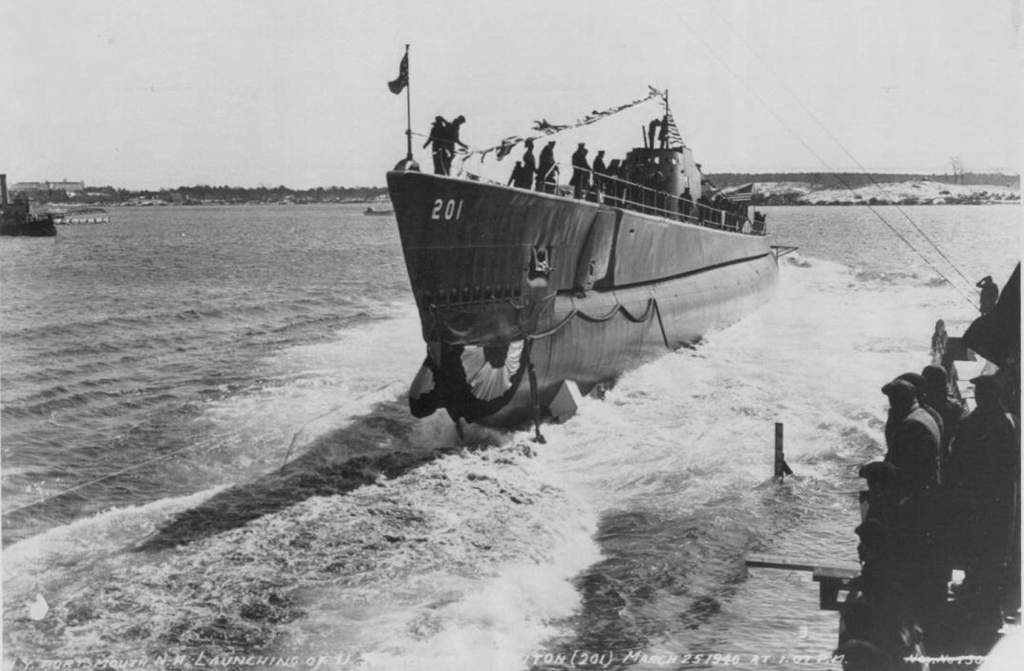
The U.S. Navy Tambor-class submarine USS Triton (SS-201) is launched by the Portsmouth Navy Yard (Kittery, Maine, U.S.A.).
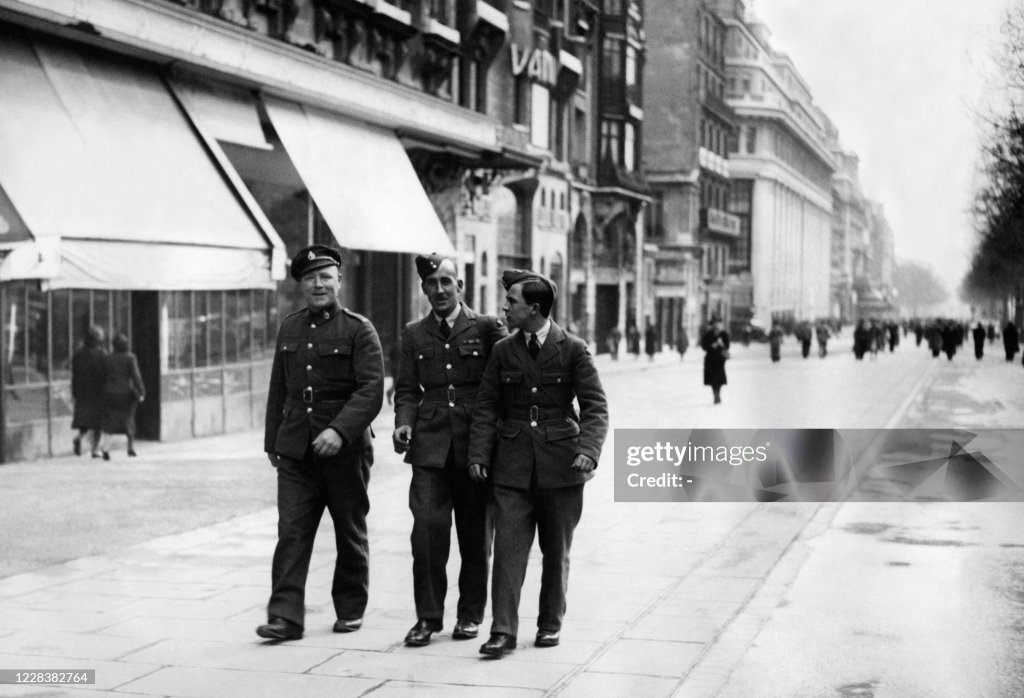
[Ed: It will be five long years before a British soldier can stroll here on Easter again.]

 History Diaries