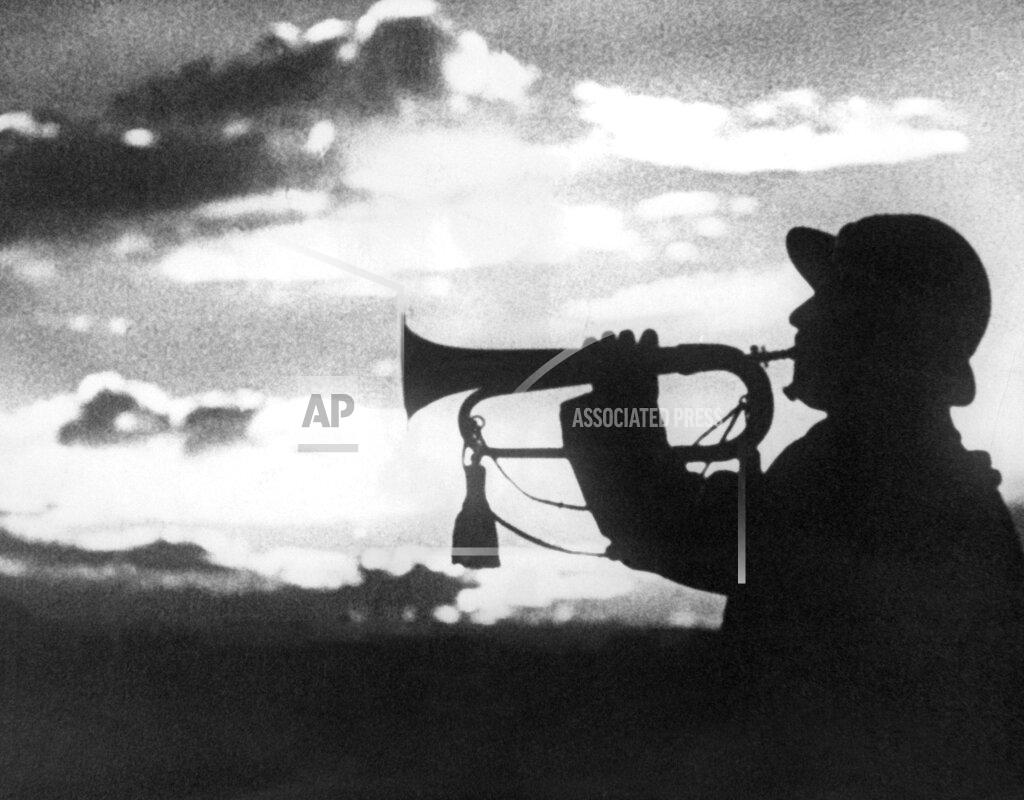
Easter Sunday.
There are reports of French and German patrols being active along the lines on the Western Front.
Hanson Baldwin of the New York Times opines:
The history of six months of war — particularly the end of the Russian-Finnish conflict, which has changed the entire strategical picture of Europe — is forcing a basic revision of Allied war policies. It now seems that unless a negotiated peace is arranged the belligerents will utilize the full force of totalitarian warfare, and that the Allies will definitely abandon their idea of war of “limited liability” — a war that was to be won not by any great victory, but simply by convincing Germany that she could not win.
Popular pressure, in both Britain and France, for more active and vigorous prosecution of the war and dissatisfaction with the Allied achievements to date, plus a growing realization in official minds that the war is to be won not by half-measures, but only in the traditional way — by the full utilization of the entire power of the nation — may cause dramatic and vigorous reaction by the Allies, though probably not in the near future.
The eventual hazard is that public opinion may force the Allied High Command into rash or hastily considered offensives; into action before the Allied forces are ready for action. Such pressure seems not as yet acute, for in both France and England there is a determination to be parsimonious of lives.
It is, moreover, realized that in the west the Allies are still inferior in land and air strength to Germany and hence would be foolhardy to attempt any offensive there this year, if ever, while in the Near East the attitude of Italy and the neutrality of Turkey, plus an insufficiency of Allied strength, seem to preclude any immediate offensive.
Prime Minister Reynaud’s inner war cabinet is considering different alternatives for prosecuting the war but face roadblocks. There also is a certain amount of self-deception going on. For instance, they wish to focus on submarine attacks on Soviet shipping in the Black Sea — but France doesn’t have a fleet of submarines. Another option is bombing Soviet oilfields at Baku — but their bombers cannot reach them. One option that is emphatically rejected and not under consideration is venturing beyond the Maginot Line and invading Germany because the Maginot Line is the country’s security blanket. Basically, the French government is contemplating “panacea” operations that wouldn’t involve very much bloodshed, and certainly no fighting on French soil.
The new government of Paul Reynaud, which got off to a shaky start last week, slowly is gaining strength as wavering members of the Chamber of Deputies and previously critical sections of the Rightist press rally to his support. The one-vote majority that the Premier received in his first test in the Chamber on Friday was increased to seventeen as the Official Journal disclosed that several Deputies had switched their stand. Of five who voted against M. Reynaud, three announced they are now for him and two announced themselves as abstaining. Of two others listed as not voting, one has decided for the new government and one against.
William Shirer, working in Berlin, is fascinated by the German mindset: “How patiently Germans stand in the rain for a tiny ration of candy!”
Swedish Defense Minister Per Edvin Skoeld, asserting that Sweden is preparing to reorganize her defense on a wartime basis, announced in a speech tonight that Parliament is expected soon to pass an act providing for longer compulsory military service.
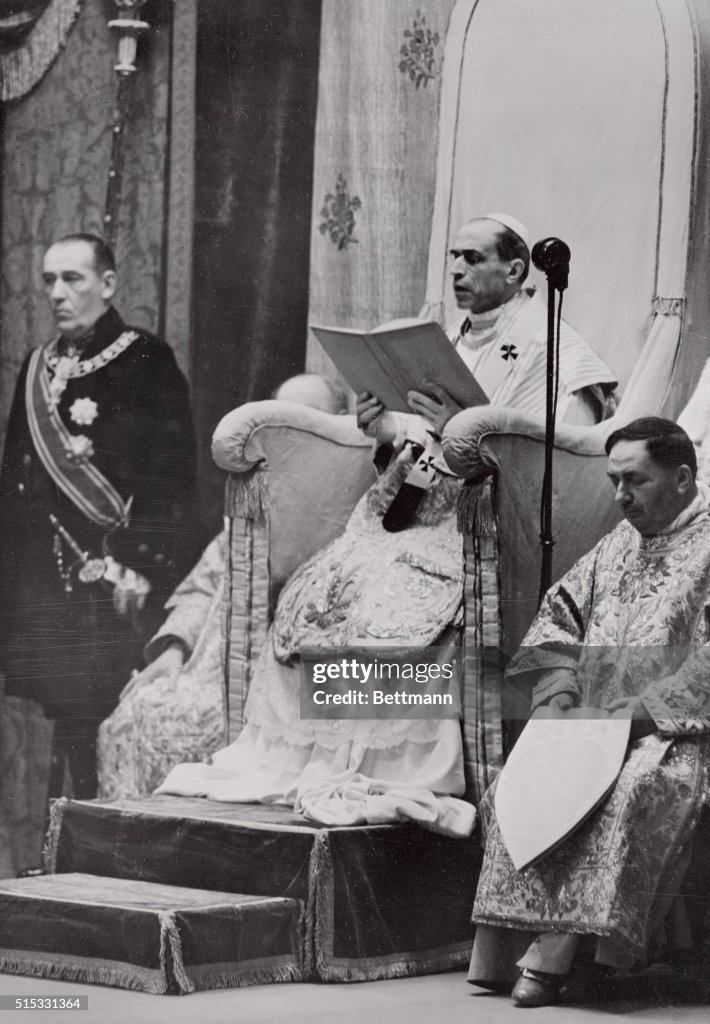
Pope Pius implored for “peace, concord and unity” among the nations today in an Easter homily in which he advocated settlement of their relations “not by force, but by rules of truth, justice and charity.” The words of the pontiff, who spoke from the throne briefly in Latin immediately after celebrating Easter mass in the basilica of St. Peter, were broadcast by Vatican radio and rebroadcast in the United States.
Viscount Halifax, the Foreign Secretary, indicated in a message broadcast tonight to the Finnish people as well as to Britons that, if the Allies won the war, they would try to restore to Finland the territory lost by her in the Russo-Finnish conflict.
[Ed: No. You won’t. And Roosevelt will let them have most of eastern Europe to boot.]
Members of the IRA rioting at Dartmoor Prison wish to prevent two of their number for being taken to trial for treason.
Hundreds of Australian and British soldiers were among the worshipers today at brilliant Easter services in the Church of the Holy Sepulcher in Jerusalem celebrating the resurrection of Christ as the climax of Holy week. Intermittent showers interrupted bright spring sunshine. For the first time since 1937 laymen were permitted to enter the hallowed church which has been undergoing repairs. Soldiers followed the patriarchal procession into the shrine for a pontifical high mass. War in Europe prevented the usual large pilgrimages from foreign lands for Easter in Palestine.
A French Potez 637 is shot down by Luftwaffe fighters over Zweibrucken.
Another ineffective raid is conducted by RAF bombers against Hornum seaplane base on the island of Sylt. The raids are good for public morale (and for PM Chamberlain keeping his job) but of almost no military consequence.
The RAF carries out more night-time reconnaissance flights over northwest Germany. One plane is lost.
Australian destroyer HMAS Voyager arrived at Gibraltar for escort duties with aircraft carrier HMS Ark Royal.
The French destroyer La Railleuse was sunk off Casablanca by the accidental explosion of one of its own torpedoes. A torpedo accidentally exploded as the Adroit-class French destroyer La Railleuse was leaving port in Casablanca, Morocco. The La Railleuse was destroyed and 28 crewmen were killed with 24 wounded.
The German cargo ship Ostpreussen ran aground off Skalderup, Denmark 5 miles from Hirsthals Light. She was refloated on the 30th.
Convoy ON.22 of five British, nineteen Norwegian, three Swedish, four Finnish ships (leader Norwegian steamer Breda (1260grt)) departed Methil at 1500 escorted by destroyers HMS Kimberley, HMS Kashmir, HMS Escapade, and HMS Zulu. Three ships were detached prior to the convoy crossing the North Sea; British steamers Strait Fisher (573grt) were detached for Scapa Flow and Harlaw (1141grt) for Invergordon. The convoy was joined the next day by destroyers HMS Faulknor and HMS Tartar with a contingent of eight ships from Kirkwall. Light cruisers HMS Aurora and HMS Sheffield and anti-aircraft cruiser HMS Cairo provided close support for the convoy. At 1655/23rd, Sheffield attacked a submarine contact west of Foula Island in 60-16N, 3-22W. Convoy ON.22 arrived without event on the 27th at Bergen. On the 29th Sheffield arrived at Scapa Flow, Aurora at Rosyth, and Cairo at Sullom Voe.
Convoy OA.116 departed Southend escorted by destroyers HMS Whitshed from 24 to 26 March and HMS Montrose from 25 to 26 March. The convoy dispersed on the 28th.
Convoy OB.116 departed Liverpool escorted by destroyers HMS Witherington from 24 to 27 March, HMS Vanquisher from 24 to 26 March, HMS Whirlwind on the 25th. The convoy dispersed on the 27th.
Convoy FN.128 of eighteen ships departed Southend escorted by sloops HMS Fleetwood and HMS Stork and destroyer HMS Juno. The convoy arrived at the Tyne on the 26th.
Convoy MT.37 of eleven ships departed Methil escorted by sloops HMS Auckland and HMS Hastings and trawlers of the 19th Anti-submarine Group. At 1237, Auckland off Berwick in 55-49N, 1-55W attacked a submarine contact. Hastings was detached to stand by the contact and Auckland rejoined the convoy. Two trawlers were detached to assist Hastings in her search which lasted until 1630 before rejoining the convoy. The contact was later assessed as not a submarine. After convoy MT.37’s arrival in the Tyne, Auckland and Hastings escorted convoy FS.128 from the Tyne.
Convoy FS.128 departed the Tyne, escorted by sloop HMS Auckland and HMS Hastings. The convoy became separated in fog. Auckland with 15 ships was able to proceed, but Hastings with 25 ships anchored off Cromer Knoll. The convoy arrived at Southend on the 26th.
Convoy TM.32 departed the Tyne escorted by 23rd Anti-submarine Group, sloop HMS Lowestoft, destroyer HMS Valorous.
Convoy BC.30 of seven steamers, including Baron Graham (Commodore) and Marslew departed Loire escorted by destroyer HMS Vivacious. The convoy arrived in Bristol Channel on the 25th.
The War at Sea, Sunday, 24 March 1940 (naval-history.net)
Steamer BECHEVILLE (4228grt) reported she was attacked by a German submarine in 59-21.2N, 2-27W, northwest of the Orkneys. Destroyer FIREDRAKE made an attack on a submarine contact in the Pentland Skerries in 58-42N, 2-45W. This contact was later assessed as non submarine. Destroyers SOMALI (D.6), MATABELE, SIKH departed Scapa Flow at 1330. At 1550, MATABELE attacked a submarine contact. Destroyers FOXHOUND, FAME, and FORESIGHT later departed Scapa Flow to hunt for the U-boat. FAME attacked a submarine contact at 1900 east, southeast of Copinsay in 58-20N, 2-15W. Destroyers ELECTRA and ENCOUNTER were searching for a submarine west of the Orkneys. They were ordered to search for the submarine reported. Destroyers IVANHOE, ESK, and ICARUS from Moray Firth Patrol were also ordered into the area. MATABELE, SIKH, SOMALI, FAME, and FOXHOUND attacked contacts off Auskerry in 58-58.5N, 2-17W. MATABELE remained on the location of this attack. ICARUS and IVANHOE patrolled the approaches to Stromsay Firth. FORESIGHT attacked a contact at 1930 in 58-50N, 1-51W, east, southeast of Copinsay, but this was later found to be a wreck. SOMALI, SIKH, FAME, FORESIGHT, and FOXHOUND searched the area 17° of 58-57N, 2-12W during the night.
At 0600, destroyer FAULKNOR departed her anti-submarine patrol northwest of the Orkneys to proceed to Kirkwall to escort the Kirkwall section of convoy ON.22.
Destroyer PUNJABI arrived at Scapa Flow escorting tanker PETROBUS from Stornoway.
Destroyer NUBIAN rendezvoused off Rosyth at 1900 to escort submarine TRIBUNE as far as Scapa Flow.
Destroyers HERO and HOTSPUR arrived at Sullom Voe to refuel at 0900, and departed at 1900 for anti-submarine patrol west of Fair Island Channel.
Destroyer IMPULSIVE arrived at Invergordon.
Submarine UNITY departed Blyth on patrol.
Convoy ON.22 of five British, nineteen Norwegian, three Swedish, four Finnish ships (leader Norwegian steamer BREDA (1260grt)) departed Methil at 1500 escorted by destroyers KIMBERLEY, KASHMIR, ESCAPADE, and ZULU. Three ships were detached prior to the convoy crossing the North Sea; British steamers STRAIT FISHER (573grt) were detached for Scapa Flow and HARLAW (1141grt) for Invergordon. The convoy was joined the next day by destroyers FAULKNOR and TARTAR with a contingent of eight ships from Kirkwall. Light cruisers AURORA and SHEFFIELD and anti-aircraft cruiser CAIRO provided close support for the convoy. At 1655/23rd, SHEFFIELD attacked a submarine contact west of Foula Island in 60-16N, 3-22W. Convoy ON.22 arrived without event on the 27th at Bergen. On the 29th SHEFFIELD arrived at Scapa Flow, AURORA at Rosyth, and CAIRO at Sullom Voe.
German steamer OSTPREUSSEN (3030grt) ran aground five miles 224° from Hirsthals Light. Submarine TRIAD was sent to investigate, but was not able to attack. The German steamer was refloated on the 30th.
Armed merchant cruiser AURANIA departed the Clyde for Northern Patrol.
Armed merchant cruiser SCOTSTOUN arrived in the Clyde after Northern Patrol.
Netlayer PROTECTOR arrived at Rosyth from Plymouth.
Convoy OA.116 departed Southend escorted by destroyers WHITSHED from 24 to 26 March and MONTROSE from 25 to 26 March. The convoy dispersed on the 28th.
Convoy OB.126 departed Liverpool escorted by destroyers WITHERINGTON from 24 to 27 March, VANQUISHER from 24 to 26 March, WHIRLWIND on the 25th. The convoy dispersed on the 27th.
Convoy FN.128 of eighteen ships departed Southend escorted by sloops FLEETWOOD and STORK and destroyer JUNO. The convoy arrived at the Tyne on the 26th.
Convoy MT.37 of eleven ships departed Methil escorted by sloops AUCKLAND and HASTINGS and trawlers of the 19th Anti-submarine Group. At 1237, AUCKLAND off Berwick in 55-49N, 1-55W attacked a submarine contact. HASTINGS was detached to stand by the contact and AUCKLAND rejoined the convoy. Two trawlers were detached to assist HASTINGS in her search which lasted until 1630 before rejoining the convoy. The contact was later assessed as non-submarine. After convoy MT.37’s arrival in the Tyne, AUCKLAND and HASTINGS escorted convoy FS.128 from the Tyne.
Convoy FS.128 departed the Tyne, escorted by sloop AUCKLAND and HASTINGS. The convoy became separated in fog. AUCKLAND with 15 ships was able to proceed, but HASTINGS with 25 ships anchored off Cromer Knoll. The convoy arrived at Southend on the 26th.
Convoy TM.32 departed the Tyne escorted by 23rd Anti-submarine Group, sloop LOWESTOFT, destroyer VALOROUS.
Convoy BC.30 of seven steamers, including BARON GRAHAM (Commodore) and MARSLEW departed Loire escorted by destroyer VIVACIOUS. The convoy arrived In Bristol Channel on the 25th.
In an air crash, Surgeon Lt Cdr G.A. Lawson, MB, ChB and Surgeon Lt P.G. Stainton, MRCS, LRCP, from heavy cruiser SHROPSHIRE, were killed. She had just completed refitting at Simonstown begun in February.
Australian destroyer HMAS VOYAGER arrived at Gibraltar for escort duties with aircraft carrier ARK ROYAL.
Midafternoon on the 24th, French destroyer LA RAILLEUSE of the 5th Destroyer Division departed Casablanca on patrol. In the channel, LA RAILLEUSE was blown in two in an accidental explosion of one of her torpedoes. Twenty-eight crew were killed and twenty-four were wounded.
After the cancelled Finland operations, armed merchant cruiser VILLE D’ALGER and troopship DJENNE departed Cherbourg, escorted by destroyer CYCLONE, arriving at Brest on the 22nd. The cruiser and troopship departed on the 24th with troopships PRESIDENT DOUMER and CHAMPOLLION, escorted by light cruiser EMILE BERTIN and large destroyers VAUTOUR, ALBATROS, BISON, and CHEVALIER PAUL. Troopship DJENNE and destroyer CHEVALIER PAUL arrived at Casablanca on the 27th. The other three liners and the remaining escort ships passed Gibraltar on the 27th and arrived at Oran on the 28th. The troopship and destroyer departed Casablanca on the 30th to return to Brest for Norwegian operations. They arrived on 1 April.
French armed merchant cruiser COLOMBIE departed Brest, escorted by large destroyer TARTU. The destroyer was detached off Gibraltar and the cruiser proceeded to Oran. TARTU arrived at Casablanca on the 27th. The cruiser arrived at Oran on the 28th. The destroyer departed Casablanca on the 31st to return to Brest for Norwegian operations. TARTU arrived at Brest on 2 April.
The U.S. Senate tomorrow tackles the bill to extend the Reciprocal Trade Agreements Act three years, with the Administration leadership confident it can deliver the legislation to the White House in the form President Roosevelt considers necessary for his foreign trade expansion program. A major fight will come over a proposal sponsored by a coalition led by Senator Key Pittman, chairman of the Foreign Relations Committee, to make treaties negotiated under the act subject to Senate ratification. This proposal is opposed by President Roosevelt and Secretary Hull on the ground that foes of the treaties could retard or destroy the program through dilatory tactics. The President is reported to have said he would veto the bill if it came to him with such a proviso. The act expires June 12, and Secretary Hull has urged that it be extended in order that his program, under which twenty-two trade pacts have been negotiated with South American and European countries, can be expanded to include other nations with which we want to trade. Senator Pat Harrison, chairman of the Finance Committee, will pilot the legislation and he feels confident he has sufficient votes to prevent the adoption of amendments. considered undesirable by the Administration, and a sizable majority for passage of the bill.
President Roosevelt heeded his physician today and refrained from Easter church services, but Mrs. Roosevelt joined in a sunrise ceremony at nearby Arlington, Virginia, cemetery, and laid a cross of lilies on the Unknown Soldier’s tomb. A cold wave sent the temperature down to 19 early today and Dr. Ross T. McIntire thought it would be unwise for Mr. Roosevelt, who has been suffering from a cold, to venture out. He said continuing cold would make it unwise for the president to attend tomorrow’s egg-rolling on the White House lawn.
Senator Thomas Connally (D-Texas) vowed to use the filibuster to prevent the 1940 Gavagan Anti-Lynching Bill from passing. Southern Democratic senators successfully used the power of the filibuster to thwart all anti-lynching legislation for over half a century, beginning in 1892.
A huge spot on the sun disrupted global communications today. Disruption of telegraph and short wave radio service was the worst in 30 years, some experts said. The American Telephone & Telegraph company, largest land-line owner in the country, said it was the worst case of traffic impairment its engineers could recall. Cable communication between Europe and the New York AP office broke suddenly at 10:20 a.m. One channel was restored at 1:50 p.m. and a second at 3:07. Service to Latin American countries was unaffected, inasmuch as it follows a north-south course. The direct cause, according to Director William Barton of the Hayden planetarium, was an “enormous” spot on the sun.
Undaunted by numbing winds and a clear cold that combined to make up the chilliest Easter Day in the history of the local weather bureau, New Yorkers and visitors turned out yesterday by the thousands to welcome again the springtime festival of the Resurrection. A spanking wind and sub-freezing temperature failed today to dim New York’s multi-million-dollar Easter parade as thousands of chic women flaunted spring’s pert fashions from beneath costly winter mink. On one of the coldest Easter days on record it was 16 above zero at dawn.
Proposed cuts in relief funds which would necessitate the laying off of 600,000 relief workers during the next fiscal year were termed “inhuman” by Bernard W. Baruch, New York financier and adviser to two Democratic Presidents, in a letter to Senator Wagner of New York.
The statement of James H.R. Cromwell, United States Minister to Canada, in his recent speech, that the future of all democracies depends on the victory of the Allies, continues to attract attention and to raise the hopes of British editorial writers.
Battle of South Kwangsi: Chinese 46th Army attacking Japanese 22nd Army around Lingshan.
Second Battle of Wuyuan: Japanese 26th Infantry Division counterattacking Chinese 8th War Area around Wuyuan.
The Japanese continue battling to cross the Wu-chia River for the third day without success. Headquarters is sending more troops.
Although the Central Political Conference has paved the way for the “return” of the National Government and the “orthodox” Kuomintang (Nationalist party) to Nanking as the capital there is little doubt that the Japanese Army will remain the real master of the situation. Under the leadership of Wang Ching-wei the new government is expected to be inaugurated Saturday, but this new organization will be a government in name only. Without an army the new government will be unable to enforce its proclamations ordering the civil servants at Chungking to return to Nanking and report for duty and ordering a cessation of hostilities.
The only support for this government at present is supplied by Japanese garrisons, and these control the territory they hold only by military force. The entire territory supposedly under control of the new government is punctuated with concrete pill boxes and barricaded with barbed wire which in some places is electrified. From these defenses protrude Japanese bayonets and the muzzles of Japanese guns. It is likely civil life will be almost entirely under Japanese control. All industries and communications will be superintended by Japanese. The new government is expected to be well supplied with Japanese advisers who will determine the policies of the officials although the actual signatures on all documents will be written by the Chinese holding the positions. It is impossible to believe the new government would institute any program that would be even remotely anti-Japanese.
The New South Wales Labor Conference, acting against the advice of State political leaders, tonight voted, 195 to 88, against Australian participation in any war overseas or extension of the present war into a conflict against Soviet Russia. Some speakers said the Allied war against Germany had been caused by “British imperialistic capitalists.”
Born:
Tom Erlandson, AFL linebacker (AFL All-Star, 1966; Denver Broncos, Miami Dolphins, San Diego Chargers), in Seattle, Washington.





 History Diaries