French Prime Minister Edouard Daladier resigned under a storm of criticism over his handling of the Finnish situation and other matters. The French Parliament criticized Prime Minister Daladier for the French inaction during the Winter War. The entire French cabinet resigned. Although Prime Minister Daladier won a vote of confidence in the Chamber of Deputies 239-1, there were so many abstentions among the 551 members that he recognized the vote as a defeat. French President Albert Lebrun called Paul Reynaud — a political independent and a persistent foe of Nazi expansion — to consider whether he could form a new government that would satisfy demands for a more ‘active’ war policy.
Paul Reynaud, a leader in the group of Democratic and Social Action and financial expert, is one of the strongest men in French public life. A moderate in politics, he enjoys the confidence of the French electorate, and in the turbulent political events of recent years he has demonstrated ability to get along with all important sections of the French people, including organized labor. He believes Europe must undergo a far-reaching economic reorganization to permit free trade if peace after the present war “is to be something more than another brief armistice between two conflicts.”
The BEF claims that in an encounter with a German patrol, five Wehrmacht soldiers were killed.
Oliver Stanley, Secretary of State for War, defending Great Britain’s war tactics, gently but ironically criticized American armchair strategists today and reminded them that the Allies were fighting “not for the entertainment of other people but for their own lives.” The War Minister likened neutral critics of the Allies to persons who come down after a good dinner to sit safely and comfortably at the ringside and watch others hitting each other and urge them to hit harder. To 700 guests at a National Defense Public Interest Committee luncheon Mr. Stanley complained of those who have labeled this “a phony war.” There is nothing “phony” about it, he declared, for the men aboard the destroyers and minesweepers of the battle fleet or for the millions whose ordinary lives have been torn up and whose professions, businesses or careers destroyed. Nor was it a “phony” war, he added amid loud cheers, for the airmen who last night “with great gallantry” bombed the German air base on the island of Sylt.
Sumner Welles ended his diplomatic tour of Europe and boarded a ship heading back to the United States. President Roosevelt’s envoy, Sumner Welles, sails from Genoa, ending his efforts on behalf of the U.S. to end the war.
An Italian-Rumanian trade agreement signed here today provides for the pupchase by Italy this year of 454,000 tons of oil and oil products, including 105,000 tons of gasoline, 107,000 tone of oil residue and 110,000 tons of crude petroleum. These figures are slightly higher than last year’s but far below those of 1936, when Italy bought 1,664,890 tons.
With the Spring sowing beginning, the Germans in occupied Poland are extending their grip on the country’s economic life, it is learned. About 2,500,000 independent Polish peasants have been ordered to turn over to the occupation authorities the greater part of all they produce.
The United States Consulate General in Warsaw was closed and its staff left for Berlin today following Germany’s decision to evacuate the members of the diplomatic and consular establishments of all foreign governments in the part of Poland it occupies. Today was set as the deadline.
Soviet destroyers, minesweepers, submarines, and other vessels begin basing at Hanko, Finland.
The USSR forbids an alliance between Finland, Norway and Sweden. Moscow expresses its displeasure at reports that the Scandinavian nations are going to form a mutual defense pact. The announcement by the official Russian news agency, Tass, that Moscow objected to the proposed Finnish-Swedish-Norwegian mutual assistance pact on the ground that it was directed against Russia was a severe blow to that ambitious project of northern solidarity, which had begun to be cautiously discussed in Stockholm and Oslo as a result of the shock of the Russian-Finnish peace terms.
The Finnish delegation in Moscow received two shocks, one after another, today, it was learned in Stockholm. Immediately after the Russian delegates, Premier-Foreign Commissar Vyacheslav M. Molotov and Andrey A. Zhdanov, Leningrad Communist leader, had informed. the Finnish delegation that the Soviet Government would not allow Finland to enter a Scandinavian defense alliance, the Russians produced a map on which the Soviet-Finnish frontier, alleged to be based upon the peace treaty, had been changed in several points, all to Russia’s advantage. Exact details are lacking here, but the fact that the Finnish delegation immediately communicated to its government in Helsinki is held to indicate that the new Russian claims are heavy.
The Soviet press has lately taken the position that Finland is a Baltic State. Everywhere in Russian newspapers Finland is referred to as the “fourth Baltic State.” Unlike Estonia, Latvia and Lithuania, the Government of Finland fought against Russia’s demands, but the Russian press emphasizes that Finland has nothing in common with Scandinavia.
Lavrentiy Beria dispatched 11 NKVD killing squads to Ukraine and Byelorussia to arrest, execute, and deport resistance elements.
German radio claims of Allied shipping losses become a running joke throughout the war due to incidents such as this one: Dr. Goebbels claims today that a Luftwaffe attack on a British convoy sank 9 British ships totaling 42,000 tons. The British quickly respond on the BBC, noting that in fact no ships were sunk and only four damaged. They describe the German claims as “42,000 tons in excess of the actual facts.”
Secretary for Colonies Malcolm MacDonald revealed in the House of Commons today that a number of supposedly Jewish persons among illegal immigrants who landed in Palestine about a month ago were being held in detention camps on suspicion that they were German agents. He did not say how many persons were suspected, but declared the total number of illegal immigrants who arrived in Palestine aboard two ships recently was “some hundreds.” Mr. MacDonald added that the Palestine government was taking steps to suppress such immigrant traffic. It was recalled that before the war charges were made that German agents under the guise of Jewish refugees had been smuggled into Britain.
British RAF Coastal command bombers sank converted minesweeper Sperrbrecher 12 (former steamer Altenfels) off the Dutch coast while it is clearing mines.
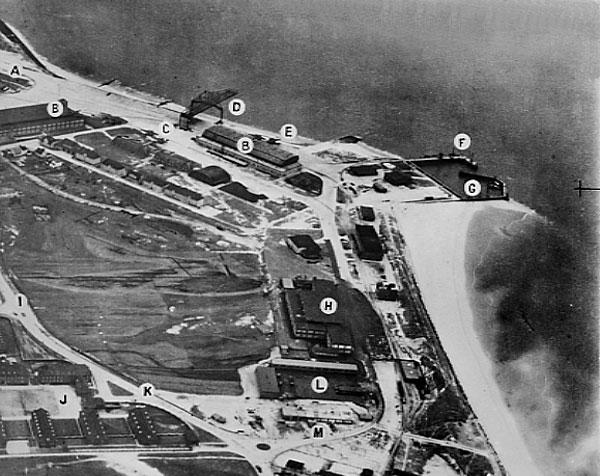
An RAF attack overnight scores damage on the Sylt Island Luftwaffe seaplane base. RAF reconnaissance on Sylt shows damage to the hangers, jetty, oil tanks and other infrastructure. One RAF plane fails to return. The RAF night raid on the German seaplane base on the Island of Sylt near the German-Danish coast on 19/20 March 1940, marked a decisive shift in the conduct of World War II. Until then, the RAF had been prevented from bombing military targets on land because of fears of civilian casualties. A German air attack on Scapa Flow on 16 March 1940, however, had purposely hit a nearby town, killing one civilian, and Bomber Command was ordered to retaliate.
Ten Luftwaffe bombers attack coastal convoy ON.21 and convoy HN.20 along British coast. The RAF and Coastal Command defend the convoy. The British cargo ship Barn Hill was bombed and damaged in the English Channel 3 nautical miles (5.6 km) south-southwest of Beachy Head, East Sussex by aircraft of KG26, Luftwaffe. She was beached south east of Langney Point but broke her back on 26 March, a total loss. Several of the attacking planes are damaged.
The Norwegian cargo ship Svinta in Convoy ON.21was bombed and damaged in the North Sea by Luftwaffe aircraft. She was taken in tow by the British ship St Mellons ( United Kingdom) but sank 4.75 nautical miles (8.80 km) east of Copinsay, Orkney Islands, United Kingdom following an explosion. She may have struck a mine.
British Home Fleet battlecruisers to the north of the Shetlands cover a cruiser sweep into the Skagerrak. As they do, screening destroyer HMS Fortune reports attacking and sinking a U-boat, but this was probably a mistake.
The German U-boat U-22 departed Wilhelmshaven. Communications with the submarine were lost shortly after this, and its crew of 27 was never seen again. No reason for its loss was ever determined.
The Danish steam merchant Viking was torpedoed and sunk by the U-19, commanded by Kapitänleutnant Joachim Schepke, at 0500 hours northeast of the Moray Firth in the North Sea (58° 21’N, 2° 22’W). At 0415 hours on 20 March 1940, U-19 spotted two steamers northeast of the Moray Firth and 20 minutes later fired a G7a torpedo that missed the first ship. At 0457 hours, a G7e torpedo was fired that struck Viking in the engine room and caused the ship to sink immediately. Of the ship’s complement, 15 died and 2 survived. The 1,153-ton Viking was carrying ballast and was bound for Blyth, England.
The Danish steam merchant Bothal was also torpedoed and sunk by the U-19 northeast of the Moray Firth (58° 21’N, 2° 22’W) at 0515 hours. At 0415 hours on 20 March 1940, U-19 spotted two steamers northeast of the Moray Firth and 20 minutes later fired a G7a torpedo that missed the first ship. The second steamer was Bothal, which was hit amidships by a G7e torpedo at 0515 hours and sank after breaking in two. Of the ship’s complement, 15 died and 5 survived. The 2,109-ton Bothal was carrying ballast and was bound for Blyth, England.
The British coaster Agnes Ellen departed from Holyhead, Anglesey for Workington, Cumberland. Nothing further was heard from her.
The British trawler Lowdock collided with the Royal Navy trawler HMT Lady Philomena in the North Sea off Montrose, Angus and sank with the loss of all but one crew.
The Dutch tanker Phobos struck a mine and sank off the south east coast of the United Kingdom with the loss of seven of her 37 crew.
The passenger liner Mauretania departs from New York with an unpublished destination.
Convoy HG.23 departs Gibraltar for Liverpool.
Convoy MT.34 departed Methil escorted by the 19th Anti-submarine Group, sloop HMS Londonderry, and destroyer HMS Vimiera. On arrival off the Tyne, sloop Londonderry and destroyer Vimiera escorted convoy FS.125.
Convoy FN.125 departed Southend, escorted by destroyer HMS Wallace and sloop HMS Flamingo. The convoy arrived in the Tyne on the 22nd.
Convoy FS.125 departed the Tyne, escorted by destroyer HMS Vimiera and sloop HMS Londonderry from convoy MT.34. The convoy arrived at Southend on the 22nd.
The War at Sea, Wednesday, 20 March 1940 (naval-history.net)
Light cruiser EDINBURGH entered the dockyard at South Shields, Tyne, started an extensive refit for structural defects which was not completed until 20 October 1940.
Light cruiser GLASGOW completed repairs at Glasgow begun on 24 February. Light cruiser GLASGOW departed Glasgow on the 22nd for the Clyde.
At 0130, armed merchant cruisers CILICIA, departing the Clyde, and CARINTHIA, arriving in the Clyde, collided in 56 11N, 08 20W. CILICIA had serious damage to her stem and had trouble steering. Tugs ENGLISHMAN, diverted en route to assist Norwegian steamer ASTRA (2164grt) whose engines had broken down, MARAUDER, ST MELLONS, and destroyer GALLANT, which was detached from Tender C escort, were sent to assist her. 20th Anti-submarine Group and and two ships of 29th Anti-submarine Group also proceeded to the area. CILICIA was taken to Belfast for repairs, arriving on the 21st. CARINTHIA arrived in the Clyde on the 21st and was taken to Birkenhead on the 24th for repairs, escorted by destroyer WARWICK.
Despite the protection of anti-aircraft cruiser CAIRO, on the 20th, German bombers attacked convoy HN.20 and the Kirkwall section of convoy ON.21 between 1840 and 1952. They damaged steamer NORTHERN COAST (1211grt) 18 miles east of Copinsay in 58 53N, 02 00W, steamer THISTLEBRAE (4747grt), tanker DAGHESTAN (5742grt), Norwegian steamers ERLING LINDOE (1281grt) and TORA ELISE (721grt) 53 miles off Noss Head, Norwegian steamer SVINTA (1267grt) in 59N, 2W, and Swedish steamer UTKLIPPAN (1599grt) 59 miles east of Scapa Flow in the North Sea. UTKLIPPAN was hit by an incendiary bomb and the crew abandoned ship, but she was later reboarded and continued with the convoy. She was the only unit of the Methil section damaged.
THISTLEBRAE and DAGHESTAN were in convoy HN.20. The remainder of the damaged ships were in the Kirkwall section of convoy ON.21. TORA ELISE returned to Kirkwall. Norwegian steamer CYGNUS (1333grt) stood by SVINTA until tug ST MELLONS arrived and took her in tow. The damaged ships of the Kirkwall section of convoy ON.21 returned to Kirkwall.
Light cruiser SOUTHAMPTON arrived at Scapa Flow from Northern Patrol.
German Sperrbrecher 12 (steamer ALTENFELS: 8132grt) was sunk by British bombing off Ameland.
German Naval Attache personnel in Oslo reported sixty British warships had been sighted off Egersund. All German submarines proceeding to sea were ordered to positions off the Norwegian coast. U-21 and U-22, en route to Pentland Firth, were ordered to patrol areas off Lindesnes.
Destroyer FORTUNE of battlecruiser REPULSE’s screen dropped three depth charges on a submarine contact northeast of Muckle Flugga in 63 27N, 00 36E at 1822. U-44 generally credited to the destroyer’s attack had already been lost.
Light cruisers ARETHUSA, AURORA, PENELOPE, and GALATEA of the 2nd Cruiser Squadron with destroyers SOMALI (D.6), MASHONA, MATABELE, SIKH, FAME, FIREDRAKE, FOXHOUND, and FORESIGHT departed Scapa Flow at 2330 on Operation DU. Destroyer FIREDRAKE attacked a submarine contact east of Duncansby Head in 58-48N, 1-07W. The contact was later evaluated to be non-submarine. The force was divided into two groups. Force B of light cruisers AURORA and GALATEA and destroyers SOMALI, SIKH, FIREDRAKE, and FOXHOUND patrolled between Lister and Osko Light during the night of 21/22 March. Force C of light cruisers ARETHUSA and PENELOPE with destroyers MASHONA, MATABELE, FAME, and FORESIGHT patrolled the Danish coast between Tyboron and Hantsholm Lights during the night of 21/22 March. On the 22nd, both Force B and C swept together off the Norwegian coast northward. The only contact of the operation was at 0922/22nd when destroyer SOMALI encountered small German steamer BUTT (736grt) near Obrestad. However, BUTT was able to escape into Norwegian waters.
Destroyer ZULU departed Leith after repairs for Rosyth, where she arrived that day.
Naval whaler WINDERMERE (560grt) of the 10th Anti-submarine Striking Force was damaged at 1944 by German bombers of KG26 in Moray Firth, north of Kinnaird Head. She was towed by whaler THIRLMERE (560grt) to Aberdeen escorted by destroyer IVANHOE.
Minelayers PRINCESS VICTORIA and TEVIOTBANK, escorted by minelaying destroyers ESK, EXPRESS, ICARUS, and IMPULSIVE, departed Invergordon on minelaying mission PA 4 in Moray Firth. This operation was completed during the night of 20/21 March. After the operation, the minelayers, escorted by destroyers ICARUS and IMPULSIVE returned to Rosyth. Destroyers ESK and EXPRESS were sent to hunt submarines in Moray Firth.
Anti-submarine trawler LADY PHILOMENA (417grt) collided with trawler LOWDOCK (276grt) five miles east of Todd Head. LOWDOCK sank immediately and the anti-submarine trawler was able to rescue only one survivor.
Convoy MT.34 departed Methil escorted by the 19th Anti-submarine Group, sloop LONDONDERRY, destroyer VIMIERA. On arrival off the Tyne, sloop LONDONDERRY and destroyer VIMIERA escorted convoy FS.125.
Convoy FN.125 departed Southend, escorted by destroyer WALLACE and sloop FLAMINGO. The convoy arrived in the Tyne on the 22nd.
Convoy FS.125 departed the Tyne, escorted by destroyer VIMIERA and sloop LONDONDERRY from convoy MT.34. The convoy arrived at Southend on the 22nd.
Destroyer BEAGLE was covering the operations of the 10th Mine Sweeping Flotilla between the North Goodwin Light Vessel and Fairy Ban Buoy. Destroyer BEAGLE also covered the operations on the 21st.
Destroyer KEITH arrived at Dover at 1252 after repairs at Chatham.
Submarine SUNFISH in the North Sea sighted a darkened ship, identified possibly as German training ship BREMSE. Attack was not possible.
The 5th Mine Sweeping Flotilla composed of minesweepers GOSSAMER, LEDA, HARRIER, SPEEDWELL, SALAMANDER, and NIGER arrived at Dover from the Humber. Minesweeper SKIPJACK followed later and joined the Flotilla.
Dutch tanker PHOBOS (7412grt) was damaged on a mine five miles east of north of North Goodwins Light Vessel. Destroyer BRILLIANT assisted PHOBOS. The survivors of the tanker were rescued by steamer SERULA (1600grt) and the Greek TASSIA (3034grt). Tugs LADY BRASSEY from Dover and FABIA and VINCIA from Ramsgate towed the tanker to Little Downs arriving at 2020. On the 21st, she was taken to Shellhaven.
Steamer BARN HILL (5439grt), formerly of convoy HX.25A, was badly damaged by German bombers of KG26, three miles SSW of Beachy Head, in 50-34N, 0-02W. Destroyer BRILLIANT was on patrol nearby. Five crew were lost, and the steamer was towed towards shore and beached three hundred yards southeast of Langney Point on the 21st. Tug LADY BRASSEY departed Dover at 0126/24th to attempt to salvage the steamer, but returned to Dover shortly before midnight. Salvage vessel DAPPER proceeded to the scene at daylight on the 25th and remained there until the fire was extinguished. The steamer’s back broke on the 26th and she was declared a total loss.
Minesweepers ALBURY and SALTASH departed Gibraltar for England for duty in Home Waters. SALTASH had arrived at Gibraltar on the 19th.
French destroyer FOUGUEUX, sloop CHEVREUIL, anti-submarine trawlers AJACIENE and TOULONNAISE attacked a submarine contact north, northwest of Cape Ortegal, 44-10N, 8-34W. The French ships were joined by British warships, but nothing came of the search.
Despite warnings that a choice must be made between unbudgeted benefits for agriculture and either the levying of new taxes or an increase in the $45,000,000,000 Federal debt limit, the Senate voted overwhelmingly today to appropriate $212,000,000 for parity payments to farmers. The vote was 63 to 19 in support of an amendment to the Agriculture Appropriation Bill by the Appropriations Committee to provide a return to growers of wheat, corn, rice, cotton and tobacco estimated at 75 percent of “parity.” The roll-call indicated that the Senate would approve tomorrow. another unbudgeted committee amendment appropriating $85,000,000 for the purchase and distribution of surplus commodities, if not a larger sum. When recess was taken tonight Senator La Follette was preparing to appeal from a ruling of the chair that an amendment to raise this figure to $113,000,000, the same as a comparable item voted last year, would violate the Senate rules.
The only “economy” move by the Senate during the day consisted in the defeat, by 56 to 27, of an amendment by Senator Lee, Democrat, of Alabama, to appropriate $607,000,000 for the payment to farmers of the difference between current prices and full parity rates on the crops named in the committee’s amendment. Senator Lee was supported by Senators Frazier of North Dakota and Bilbo of Mississippi, but the vote demonstrated the solidarity of an agreement in the farm bloc to back the committee in the relatively more modest demand, in the hope that the House would be forced to yield and accept the $212,000,000 appropriation. Opposition to the committee amendment was voiced by Senator Taft, one of the Senatorial aspirants for the Presidency, who deplored but conceded the necessity of some form of farm subsidy, and denounced parity payments while advocating a widening of farm subsidies through conservation payments to farmers.
Senator Taft’s speech brought down on him a hail of criticism from the Democratic side, with Senator Connally of Texas ironically leading a group that taunted the Ohio member for alleged inactivity in furthering plans for reducing expenditures, although he is a member of the Appropriations Committee. Senator Taft denounced the parity-payment amendment as “suicidal,” since it proposed to make appropriations that could not be paid out of government income. “The government has adjusted itself to deficit spending as a drug addict adjusts itself to morphine,” he said.
Postmaster James A. Farley, replying to charges that he was acting as a “stalking horse” for President Roosevelt in running for the Democratic presidential nomination, said today: “My name will be presented to the convention in Chicago, and that’s that.” Mr. Farley was asked whether this meant that President Roosevelt had decided against seeking a third term, or whether he meant to convey that he was in the fight to the finish regardless of Mr. Roosevelt’s intentions. Smiling, Mr. Farley evaded these questions. He also met with “silence” a question as to whether he would accept the second place on the Democratic ticket in the event that he could not get the Presidential nomination.
Forecasts were made today that the pro-Allied speech in Toronto yesterday by James H.R. Cromwell, United States Minister to Canada, would be officially disavowed and the envoy censured after Secretary of State Cordell Hull announced that he had requested an official version of the speech from both Mr. Cromwell at his home in New Jersey and the legation in Ottawa.
President Roosevelt’s stand in favor of releasing late-model American military planes for sale abroad was credited today with halting, for a time at least, plans for a Congressional inquiry into the Administration’s policy toward aircraft export.
Secretary of the Navy Charles Edison announced today that he was a candidate for the Democratic nomination for Governor of New Jersey.
The explanation for decreasing Allied war orders in the United States was indicated today in a statement by Edward Leslie Burgin, Minister of Supply, about the expansion of home industrial production, which, as it develops, decreases British dependence on foreign supplies.
Boeing delivers Pan American Airways its first Model 307 Stratoliners.
The Cunard White Star liner Mauretania sailed from her West Fourteenth Street pier last night at 8 o’clock, ending three months of idleness in the Port of New York to venture again on the high seas. Where she was going and for what purpose the British Admiralty planned to employ the 35,000-ton vessel remained mysteries, although persistent rumors along the waterfront had it that she and her larger sister, the Queen Mary, had been assigned to troopship duty between Australia and the Near East, where Britain and France are massing a huge army. She sailed in the midst of the year’s first Spring thunderstorm.
[Ed: She is on her way to Australia to be fitted as a troop ship. The Queen Mary will quickly follow.]
In a brief and bitter battle that turned New York’s Fifth Avenue into a rioting, free-for-all arena, 350 policemen, mounted and afoot, frustrated an attempt by twenty-three pickets to stage a demonstration in front of the French Consulate at 5 PM yesterday. The demonstration was planned by the Emergency Conference-to Save Spanish Refugees and was to have been a protest against “the expulsion of Spanish refugees from France,” an action which the French deny having any intention of taking. Acting on a recent order of Mayor La Guardia prohibiting picketing and demonstrations in front of the offices of foreign governments here, the police swung into action so quickly that the demonstrators had no chance to form a line or to raise the placards they had concealed under their coats.
U.S. Ambassador to Brazil Jefferson Caffery reported to U.S. Secretary of State Cordell Hull that the Brazilian government’s protest of the heavy cruiser HMS Dorsetshire’s stopping of the German freighter Wakama on February 12 had not pleased the British. Caffery reported that the British maintained that they were protecting Brazilian commerce. “Indeed you are not,” the Brazilian Minister for Foreign Affairs Oswaldo Aranha retorted, “you are definitely not protecting our commerce by maintaining your warships off our coast. It is apparent to me that your blockade of Germany is plainly ineffective. If it were effective, you could stop the German boats [sic] on the other side before they entered German ports.”
The fifty-third annual All-India Nationalist Congress concluded its sessions today by voting to Mohandas K. Gandhi power to direct the future program for freedom from British rule. The Assembly of the Indian Congress Party calls for independence and rejects dividing India.
Second Battle of Wuyuan: 35th Army of Chinese 8th War Area attacks Japanese garrison of Wuyuan by surprise overnight. The two sides engage in fierce combat for control of the city throughout the night.
Battle of South Kwangsi: Chinese East Route Force is attacking the Japanese 22nd Army around Lingshan.
Aggravated by the Japanese bombing of communication lines, an acute shortage of essential drugs threatens to imperil the continuation of the activities of the hospitals in Free China that are under subsidy from the International Red Cross.
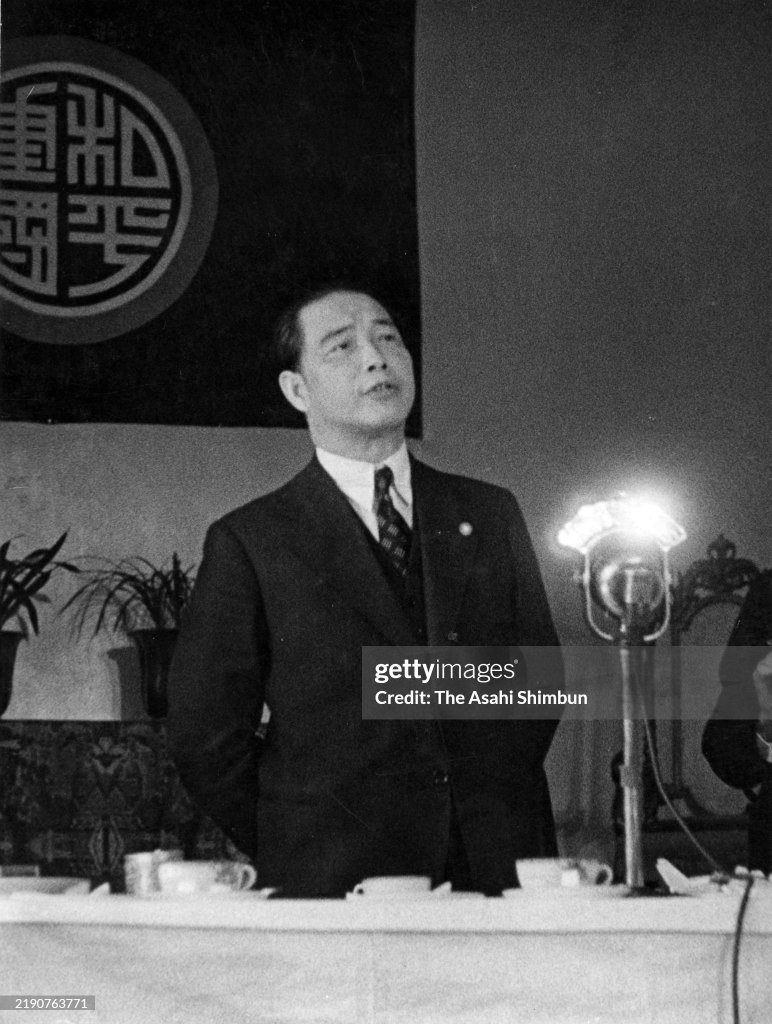
During the first meeting of the Central Political Council today, under the chairmanship of Wang Chingwei, leader of the “orthodox” Kuomintang, steps were taken for the establishment of the Japanese-sponsored “Central Chinese Government” on March 30. Resolutions adopted by the conference include:
- The empowering of Wang Ching-wei to determine and execute policies for the readjustment of Chinese-Japanese relations;
- A proposed outline of the new “Central Government”;
- The choice of Nanking for the capital and of the Kuomintang flag, to be used temporarily with a pennant.
The conference then decided on March 30 as the date for the “return” of the new national government to Nanking. It is a significant sidelight that this government declared that it was “returning,” since this implies that the conference considers that its party is the only Kuomintang in existence and that Chiang Kai-shek’s Kuomintang, the Chinese Nationalist party, is now discredited.
The followers of Wang Ching-wei, who is about to head a Japanese-sponsored regime in Nanking, regard adoption of the “white sun, blue sky, red background” Nationalist flag, the emblem of the Chinese Government, as bolstering the regime’s contention that it is the legitimate successor to the Chinese Government, now in Chungking. Mr. Wang’s supporters said today that foreign governments might carry on relations with the new regime without the necessity of formal recognition. However, “if certain powers consider us non-existent they will be non-existent for us,” they declared.
Dow Jones Industrial Average: 146.91 (+0.48)
Born:
Don Briscoe, American actor (“Dark Shadows”), in Yalobusha County, Mississippi (d, 2004).
Glenn Schwartz, American rock guitarist (Pacific Gas & Electric -“Are You Ready?”), in Cleveland, Ohio (d. 2018).
Vito Picone, American doo wop vocalist (Elegants – “Little Star”) and character actor, in Staten Island, New York.
Gianpiero Moretti, steering wheel designer (Momo), in Milan, Italy (d. 2012).
Died:
Alfred Ploetz, 79, German physician, biologist and eugenicist.
Naval Construction:
The Kriegsmarine (German Navy) Type IXC U-boat U-66 is laid down by AG Weser, Bremen (werk 985).
The Royal Canadian Navy Flower-class corvette HMCS Napanee (K 118) is laid down by Kingston Shipbuilding Co. (Kingston, Ontario, Canada).
 History Diaries