
Four United States sailors were wounded today when a grenade wrapped in bread exploded near their jeep in Chợ Lớn, Saigon’s Chinatown district. A United States military spokesman said the grenade had been tossed into the back of a two-and-a-half-ton truck 100 yards from the entrance of an American officers’ barracks. One of four men in the back of the truck picked it up and threw it out. It rolled a few yards and exploded. Two Navy officers and two enlisted men in a nearby jeep, as well as the Vietnamese driver, were wounded by flying fragments. They were treated in a hospital and were later released.
The Soviet press agency Tass reported from Hanoi today that United States planes had made another raid on North Vietnam. The Tass report said: “American aviation made another raid, the second in the last five days, on the Nghệ An province of the Democratic Republic of (North), Vietnam.” The last United States raid. on the Communist North reported from Saigon was on Monday when more than 100 United States Navy and Air Force planes blasted the Phú Quý ammunition depot, 100 miles south of Hanoi. That was the sixth raid on North Vietnam since Feb. 7.
Hanoi, the North Vietnamese capital, held an air-raid drill yesterday, according to a Polish correspondent there. According to Daniel Lulinski, correspondent of Trybunai Ludu, the Communist party newspaper, the alert took place at 9:30 PM, and lasted about an hour. Mr. Lulinski also reported that North Vietnamese youth were joining a new organization called “The Three Preparednesses.” By joining, the youths express willingness to serve in the armed forces and to undergo paramilitary training.
United States officials, attuned to any change in the intensity of the South Vietnamese guerrilla war, have noticed a slight drop in incidents initiated by the Communists. In recent months, incidents have averaged 12 a day throughout South Vietnam. In the first five days of this week, the total fell to eight a day, with only one Việt Cộng attack. The “incidents” total also includes terrorism, sabotage and propaganda distribution.
Tomorrow the Việt Cộng plan to observe “Anti-American Day.” United States officials will be watching to see if the frequency of terrorist attacks has been reduced by recent” bombing raids on North Vietnam. At Đà Nẵng, where more than 4,000 United States servicemen are stationed at the large air base, the town has been put off limits to all American forces for 48 hours. A bombing raid by the South Vietnamese Air Force near Đà Nẵng has given the Communists fodder for propaganda against the government and against the Americans who support it. The bombing killed about 48 villagers, including 45 school children. The South Vietnamese Government intends to reply to Anti-American Day by deporting three leaders of a peace movement that Salgon officials consider Communist-inspired.
A controversy is emerging between the press corps in South Vietnam and the U.S. military, with the former charging that curbs on coverage are so strict as to constitute censorship. The U.S. government claims that South Vietnam has imposed some of the restrictions.
The Soviet Foreign Minister, Andrei A. Gromyko, discussed Vietnam with Prime Minister Harold Wilson for about two and a half hours tonight. British sources said afterward that the leaders had failed to reach agreement on a way to end the fighting.
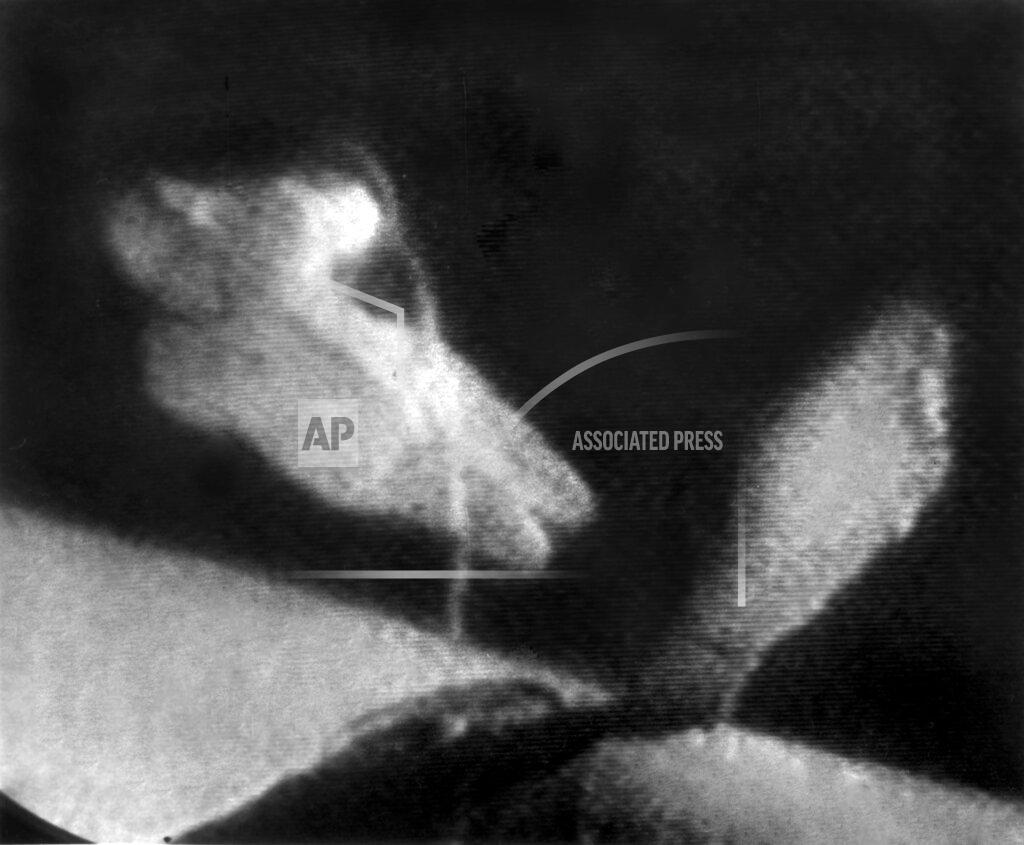
Soviet cosmonaut Alexei Leonov left the airlock on his spacecraft Voskhod 2 for 12 minutes and 9 seconds, becoming the first person to “walk in space.” The Voshkod ship was launched into orbit at 1:00 p.m. from Baikonur (10:00 a.m. in Moscow and 3:00 a.m. in Washington), and 90 minutes later, on the second orbit, as the ship was passing over the Soviet Union, Leonov exited the two-man capsule while 307.5 miles (494.9 km) above the Earth, the highest man had ever been into space at that time. Lieutenant Colonel Leonov, secured by a 5-meter (16 ft) long tether and equipped with oxygen, spent 12 minutes floating free during his time outside, while his crewmate, Colonel Pavel Belyayev, remained at the controls. When Leonov tried to re-enter the safety of the Voshkod airlock, he found that he could not bend enough to get through the narrow opening, as a result of the greater stiffness of the pressurized suit, rather than a “ballooning”, since the dimensions remained the same in both a vacuum and normal conditions. After a struggle that sent his pulse rate to 168 and consumed most of his remaining oxygen supply, Leonov reduced the pressure from 400 hPa to 270 and “with the urgent desperation of a doomed man, elbowed and fought his way back in to the safety of the airlock.”
The Johnson Administration has acquired apparently convincing evidence that Soviet-made antiaircraft missiles are about to be installed on Cyprus by the Cypriot Government. Some reports suggest that some of the missiles are already in place. United States officials, fearing a major crisis, are said to be applying strong pressure upon Greece in a last-minute effort to halt the emplacements. Although Athens is pledged to give military and diplomatic support to the Greek Cypriot majority on the island, there is some doubt about the extent of its influence over the Government of President Makarios.
Turkey, which has been supporting the Turkish Cypriot minority, has threatened to attack the missile sites from the air. Some sources feared that preventive raids would be made within the next few days, reviving the danger of war between Greece and Turkey, both members of the North Atlantic Treaty Organization. The Administration refused today to say anything about its evidence, except to note “press reports” of missile shipments. A guarded State Department comment betrayed some concern, however. It said that “now more than ever” the parties involved in the Cyprus dispute ought to handle their problem through “constructive discussion.” Privately, several officials admitted grave concern, on both military and diplomatic grounds.
A special task force headed by Under Secretary of State George W. Ball is concentrating on the situation. Information gathered by the Government in recent days was said to have shown that the basic installations for the missiles were virtually complete. There were conflicting reports about whether some missiles had been mounted on the sites or whether they were still to be delivered. There appeared to be no question, however, that the sites were meant for a Soviet anti-aircraft missile designated here as the SAM. The same missiles have been given by the Soviet Union to Cuba, Iraq, and the United Arab Republic. It is believed that the missiles and related equipment are being shipped to Cyprus through the United Arab Republic rather than directly from the Soviet Union. The same route was said to have been used earlier this month for the shipment of 30 Soviet-built T-34 heavy tanks to the Greek Cypriot forces.
The shipments presumably result from an agreement last year in which the Soviet Union promised to supply Cyprus with “defensive” weapons. The Cypriot Government has said that it needs better arms to defend itself against Turkey. Its supporters justify the acquisition of missiles as necessary to prevent a repetition of last year’s air attacks by Turkey. Soviet technicians or “instructors” may come with the missiles. The emplacement of these weapons would mark the success of a double-edged Soviet tactic designed to fan the rivalry over Cyprus by giving support and encouragement to both Greece and Turkey, thus worsening the relations of both with the United States and weakening, if not destroying, the eastern flank of NATO.
Last January, after promising material support to the Greek Cypriots. Moscow turned around to give some conspicuous diplomatic support to the Turkish side in the controversy. It declared itself opposed to the union of Cyprus and Greece and in favor of a federal form of government on the island, as proposed by the Turkish minority. In what appeared to be a return favor, the Turkish Government withdrew from the then-active efforts in the West to create an allied nuclear fleet. Turkey’s apparent reliance upon Soviet support reflected anger over the attitude of the United States and provoked anger in Washington in turn. Now that Moscow is again swinging some weight behind the Greek Cypriots, the United States is in the position of again having to restrain both its Greek and Turkish allies. Threats of war were twice deflected through Washington’s diplomacy last year, but they left both Greece and Turkey unhappy about American attitudes.
Chancellor Ludwig Erhard of West Germany has sent a special envoy to Cairo in a final effort to end the impasse with the United Arab Republic and to soften the blow of the expected break in diplomatic relations between the two countries. Diplomatic sources said the envoy met with high-ranking Egyptian authorities and gave them “new information” about steps Bonn could take if President Gamal Abdel Nasser carried out his threat to recognize East Germany and to seize West German assets here once Bonn formally recognizes Israel. The German Embassy confirmed tonight that a member of the German Parliament, Rudolf Werner, had slipped in and out of Cairo secretly in a trip to discuss with “very high-level” Egyptians an easing of the crisis. The diplomatic sources said the discussions, among other things, dealt with the fate of about 400 German rocket and aircraft specialists working for President Nasser.
British Prime Minister Harold Wilson announced today that the Labour Government would soon proceed with its bill to renationalize the steel industry. His remarks in the House of Commons served to end speculation that the government might drop its steel proposal. With a Labour majority of only three at the moment in the Commons, the chances of actually enacting the steel bill seem questionable. One Labor member is pledged to vote against it and another to abstain.
Communist labor unions cut off gas and electricity at a United States Embassy apartment building and the home of the American naval attaché here today and attempted to seize control of United States-owned oil installations in southern Sumatra. The Jakarta offices of the Indonesian-American Friendship Society, an activity of the embassy, and of The Associated Press were also deprived of electricity. Antara, the Government press agency, announced that Communist oil workers had actually taken control of the Standard Vacuum Oil Company’s refinery at Sungei Gerong near the Sumatran port of Palembang. However, a company spokesman here said that “the plant was not taken over and operations are normal.”
Informed sources said the Communist workers had demonstrated at the refinery and demanded that the American manager hand it over to them. When he refused, the workers hung posters on the walls of the refinery buildings declaring the installation the property of the Indonesian Government and returned to work. The posters were later removed by the Indonesian police.
United State officials suggested today that President Sukarno might be resisting pressures from the powerful Communist party for a final break with Washington.
The Convention on the Settlement of Investment Disputes Between States and Nationals of Other States, also known as “The Washington Convention”, was opened for signature in Washington, D.C.; it would take effect on October 14, 1966, after 20 nations had ratified it, and it created the International Centre for Settlement of Investment Disputes (ICSID). The Convention provided a neutral investment arbitration mechanism to resolve disputes between signing nations and foreign investors.
The Cuban Government announced today that it expected a bumper crop of sugar of five million tons by May 1. Aides of Premier Fidel Castro urged “an arduous effort” by the nation to meet this target.
A general election began in the Democratic Republic of the Congo, with balloting to continue through April 3. The Congolese National Convention party, led by Moise Tshombe, won a plurality of 38 of the 167 seats in the Chamber of Deputies.
Voters in eastern Nigeria and parts of Lagos elected 54 members of the 312-member Parliament today.
Gheorghe Gheorghiu Dej, the President of Rumania and the leader of Rumania’s Communist party, is seriously ill, according to reports from Belgrade.
President Johnson offered tonight to mobilize the Alabama National Guard to protect the Selma-to-Montgomery marchers next week. In rejecting a request by Governor George C. Wallace for “federal civilian forces” to police the demonstration, the President pointed out that the Governor could mobilize the Guard if he felt such protection was needed. He then said that if the Governor did not do so, and conditions warranted, he would call up the Guard himself.
The President’s statement was made to a hastily summoned news conference in his White House office at 10:15 PM tonight. He had delayed his departure for a weekend at his ranch in Texas because of the developments in the Alabama situation. The President first read reporters a telegram he had received from Governor Wallace. at 8:48 tonight. The Governor said that in order to maintain maximum security for the march which had been authorized by a Federal Court the state would need the services of more than 6,000 men, 489 vehicles, 15 buses and necessary supporting units.
The President’s statement said: “The questions raised by the Selma-Montgomery march were submitted to the court in Montgomery, Alabama. That court, with an Alabama judge sitting, after hearing all of the evidence, including evidence as to the problems of protecting marchers, determined that a march should be permitted and that the marchers should be protected. The Federal Government does not have civilian personnel approaching the figure suggested by Governor Wallace. However, Governor Wallace has at his disposal over 10,000 trained members of the Alabama National Guard which he could call into service. If he is unable or unwilling to call up the Guard, and to maintain law and order in Alabama, I will call the Guard up and give them all the support that may be required. Pursuant to the Governor’s telegram I am asking Attorney General Katzenbach to contact Captain Painter and supply him with this information.”
Alabama Governor George C. Wallace asked a Federal judge today to suspend his order allowing a 50-mile civil rights march from Selma to Montgomery. The Governor’s attorneys filed with Judge Frank M. Johnson, Jr. of the United States District Court a motion to stay his order of yesterday. There was no indication when Judge Johnson would rule. The motion, together with notice of appeal, was delivered to his office after the Governor’s lawyers hit a snag in an Appeals Court. Governor Wallace’s attorneys first asked the United States Court of Appeals for the Fifth Circuit in New Orleans to stay the district judge’s preliminary injunction until an appeal had been heard. Three members of the Appeals Court directed Governor Wallace to take his motion first to the district judge. This is a procedural policy of the Appeals Court. If Judge Johnson denies the requested stay, then the matter returns to the Circuit Court.
In Montgomery, Governor Wallace told a joint session of the Alabama Legislature of his request to President Johnson. After he spoke, the Legislature adopted a resolution calling the protest march “asinine and ridiculous.”
The bipartisan voting-rights bill started on its legislative journey through both houses of Congress today amid displays of overwhelming support that seemed to augur relatively quick enactment. In the Senate, Southerners began efforts to delay the bill as soon as it was introduced jointly by the Democratic leader, Mike Mansfield of Montana, and the Republican leader, Everett McKinley Dirksen of Illinois, with 56 co-sponsors from both parties. Later, more Senators joined, bringing the total sponsorship to 66. The Southerners were overwhelmed on a roll-call vote, 67 to 13.
In the House, where the bill was introduced yesterday, Attorney General Nicholas deB. Katzenbach was the first witness before the Constitutional Subcommittee of the Judiciary Committee. When the Attorney General completed his explanation of the bill and defense of its constitutionality, Representative William M. McCulloch of Ohio, the ranking Republican on the committee, said that Mr. Katzenbach had made “one of the best statements I have heard in my 17 years in the House.”
The Southern challenge came on a motion by Mr. Mansfield to send the bill to the Senate Judiciary Committee with instructions to report it back by April 9. Immediately. Senator James O. Eastland, Democrat of Mississippi, the committee chairman, protested that it was “an unheard-of thing” to give his committee only 15 days to study a bill that “flies in the face of the Constitution.” Mr. Eastland was supported by Senators Lister Hill of Alabama, John Stennis of Mississippi, Spessard L. Holland of Florida, all Democrats, and Strom Thurmond, Republican of South Carolina.
Senate courtesy forbade mention of the reason for the Mansfield motion, but the reason was no secret. Since 1953, the Senate has sent 122 civil right bills to the Judiciary Committee headed by Senator Eastland. Only once, in 1960, and then at the direction of the Senate, has a bill been reported back. Senator Russell B. Long of Louisiana, the assistant Democratic leader, said that he would oppose the Mansfield motion because of the rigid time limit. He also criticized some provisions of the bill and said he would later offer amendments. But, significantly, he did not join his fellow Southerners in charging that it was unconstitutional, and he said he would like to be able to vote for a voting bill.
In reply, Senator Dirksen, who has always been jealous of the prerogatives of committees, pointed out that the issue of voting rights for Blacks had repeatedly been before Congress. Last year Mr. Dirksen argued vehemently for sending the House version of the Civil Rights Act of 1961 to Mr. Eastland’s committee. Mr. Dirksen said the nation had been trying for 95 years to catch up with the 15th Amendment to the Constitution. which states that the right of a citizen to vote shall not be denied or abridged on account of race or color. “Now comes a condition: it is not a theory,” Mr. Dirksen said. “You don’t interpret the Constitution in a vacuum. How long do we have to thresh old straw? This fever will not subside: it is in the air.”
A fresh batch of 100 pickets squatted and lay down on the sidewalk in front of the White House today, demanding that federal troops be sent to Alabama. The demonstration, sponsored by the Student Nonviolent Coordinating Committee, was staged by white and Black youths from New York City. Detroit and Chicago and from Ohio, Wisconsin and other states. Tonight the District of Columbia police arrested nine of the pickets. The charge was blocking the public way. The police said later that all nine demonstrators had been released on bail. According to the police the nine had been blocking the sidewalk while picketing and singing civil rights songs. But the majority of the demonstrators remained sitting during the picketing and the police left them alone.
The Boston church where the Rev. James J. Peeb and his family worshiped during his short ministry in this city paid tribute today to his memory as a victim of civil rights violence in Alabama.
The huge Collinwood High School in Cleveland, Ohio called off classes today as fist fights broke out between white and Black pupils over what school officials said were racial incidents during the last week. A heckling, jeering crowd of white boys, estimated by the police at 700, gathered across the street from the school in the racially mixed neighborhood. Before classes could start, fights developed and some 60 policemen, mounted and in cruisers, set up barricades between the school and the crowd. Some pupils had clubs.
Henry H. Fowler, Washington attorney and a Democrat, was nominated by President Johnson to succeed Douglas Dillon as secretary of the Treasury.
An associate of banker Don C. Silverthorne invoked the Fifth Amendment 49 times as he refused to testify at a Senate hearing into the failure of the San Francisco National Bank.
Sections of the Midwest were under snowdrifts up to 25 feet high as a bitter blizzard struck winter’s worst blow in many areas. Eight deaths were blamed on the weather.
A truck loses control down Moosic Street, Scranton, Pennsylvania, killing the driver. This accident later inspired the 1974 Harry Chapin song, “30,000 Pounds of Bananas.”
Mick Jagger, Brian Jones, and Bill Wyman of The Rolling Stones were cited by police after publicly urinating on the wall of a garage in Stratford, London, following an argument with an attendant who refused to let them use the bathroom because of their long hair. On July 22, the three would be fined five pounds apiece and 15 guineas court costs for “insulting behaviour.” The senior court magistrate in West Ham, A.C. Morey, would admonish them: “Just because you have reached extreme heights in your profession, this does not mean you have the right to act like this. You should set a standard of behaviour, a moral pattern for all your very large number of supporters.”
The Poppin’ Fresh Pillsbury Dough Boy is introduced.
“Do I Hear a Waltz?” opens at 46th St Theater NYC for 220 performances.
Dow Jones Industrial Average: 896.55 (-2.82)
Born:
Jeff Labar, American glam rock guitarist (Cinderella, 1985-2014 – “Nobody’s Fool”; “Don’t Know What You Got (Till It’s Gone)”), in Darby, Pennsylvania (d. 2021).
Geronimo Berroa, Dominican MLB designated hitter and outfielder (Atlanta Braves, Cincinnati Reds, Florida Marlins, Oakland A’s, Baltimore Orioles, Cleveland Indians, Detroit Tigers, Toronto Blue Jays, Los Angeles Dodgers), in Santo Domingo, Dominican Republic.
Died:
King Farouk I of Egypt, 45, who had been dethroned and sent into exile in 1952 when his nation became a republic, collapsed from a heart attack during dinner in Rome. Farouk, who weighed 285 pounds (129 kg) and had lived the playboy life on a vast personal fortune estimated at 250 million dollars, was dining at the Ile de France restaurant with an unidentified female companion when he “collapsed face down into the remains of a meal of oysters, roast lamb, pastry and fruit.”
John Larry Kelly Jr., 41, American scientist best known for his 1956 work in creating the Kelly criterion formula; of a stroke.


 History Diaries