
President Reagan expressed hope that the change in Soviet leadership “will open up new possibilities” for improved East-West relations. But Mr. Reagan, ending a brief visit to Canada, strongly criticized what he called the “painful realities” of Soviet policies, which he said were shadowed by treaty violations and “human beings persecuted, religions banned, and entire democracies crushed.” In Washington, the State Department announced that Secretary of State George P. Shultz planned to meet in mid-May with his Soviet counterpart, Andrei A. Gromyko. Officials said Mr. Shultz might use the occasion to discuss a meeting between Mr. Reagan and the new Soviet leader, Mikhail S. Gorbachev.
The Soviet Union today published the text of Andrei A. Gromyko’s speech that nominated Mikhail S. Gorbachev as the new Soviet leader last week. The document offered an intriguing glimpse into the transition of power in the Soviet Union. The text of the speech, announcing the Politburo’s selection of Mr. Gorbachev at a special session of the Central Committee on March 11, appeared as a separate pamphlet rather than in the press. In contrast to the usual prepared official speeches, Mr. Gromyko’s address seemed extemporaneous.
The Belgian Parliament is scheduled to vote tomorrow on the government’s decision to deploy United States cruise missiles in Belgium. More than 100,000 people marched through Brussels on Sunday to protest the missile deployment. A total of 16 of the 48 missiles scheduled to be deployed arrived at Florennes Air Base last Friday. The rest will be deployed in 1987. NATO decided in 1979 to deploy 572 medium-range cruise and Pershing 2 missiles in five European nations — Britain, West Germany, Italy, the Netherlands and Belgium — to offset the installation of Soviet SS-20 missiles. In the voting Tuesday, the toughest challenge to Prime Minister Wilfried Martens’s center-right coalition is expected to come from a half-dozen renegade members of his own Christian Democratic Party. The coalition has a majority of 7 in the 212-seat Parliament.
British scientists once considered releasing radioactive material in a test in the Scottish Highlands but never contemplated testing an atomic bomb there, the British Defense Ministry said. It was responding to reports that a scientific paper written in the early 1950s by W.G. Marley, a scientist at the Harwell Atomic Research Center, showed that a nuclear test at Wick near Scotland’s northeast coast was seriously considered but rejected because of the effects of humidity on delicate monitoring instruments. The paper was read to an Australian Royal Commission investigating British nuclear tests in Australia between 1952 and 1963.
The pilot of an Iberia Airlines DC-9 that crashed near Bilbao, Spain, on February 19, killing all 148 on board, had “a reckless style and ignored aviation rules,” according to a report issued by Iberia flight inspectors. Jose Luis Patino had previously clashed with Iberia officials and was fired for his role as a strike leader last summer. He was later reinstated but needed “something more than a refresher course before being allowed to fly,” the report said.
Prime Minister Rashid Karami said today that a Christian militia revolt could lead to the downfall of the Christian President, Amin Gemayel, and threaten “the very existence of Lebanon.” The broadcast statement by Mr. Karami, who is a Sunni Moslem, reflected the anxiety of Lebanon’s Moslems over a week-old rebellion that has challenged Mr. Gemayel’s authority to speak for the Christians and his alliance with Syria. Referring to the rebels, Mr. Karami said: “If they consolidate their control on the ground, they will hold the reins of power. The President will have to bow to their will or resign.”
King Hassan II, warning that the guerrilla war over Western Sahara could drag on for years, says Morocco will spend $1 billion on modern weapons in the next five years. The King made his first visit Sunday to the former Spanish colony, where Algerian-backed Polisario guerrillas have been fighting for independence for nine years. He said: “We must modernize our army and prepare ourselves. We must expect this situation could last a long time.” “We must have a billion dollars, neither more or less, spread over five years,” he told local officials. “Then land, sea and air units of the royal armed forces will be up to their responsibilities and be able to follow the technological evolution and demands of the 21st century.” In his speech to Western Sahara’s elected Consultative Assembly, the King also announced plans to develop the territory’s phosphate, iron ore and oil deposits and fishing resources.
An unexpected visit to Baghdad was made by King Hussein of Jordan and President Hosni Mubarak of Egypt to express support for Iraq in its new fighting against Iran. Their departure for Baghdad came only three hours after Mr. Mubarak arrived in Amman to discuss the long-stalled Arab-Israeli peace process. Egyptian and Jordanian officials said Mr. Mubarak came to Jordan to discuss with King Hussein the outcome of his talks with President Reagan and other senior Administration officials last week in Washington. The two leaders decided on their trip to Baghdad during their meeting at the King’s downtown palace and a lunch later at King Hussein’s official residence, officials said.
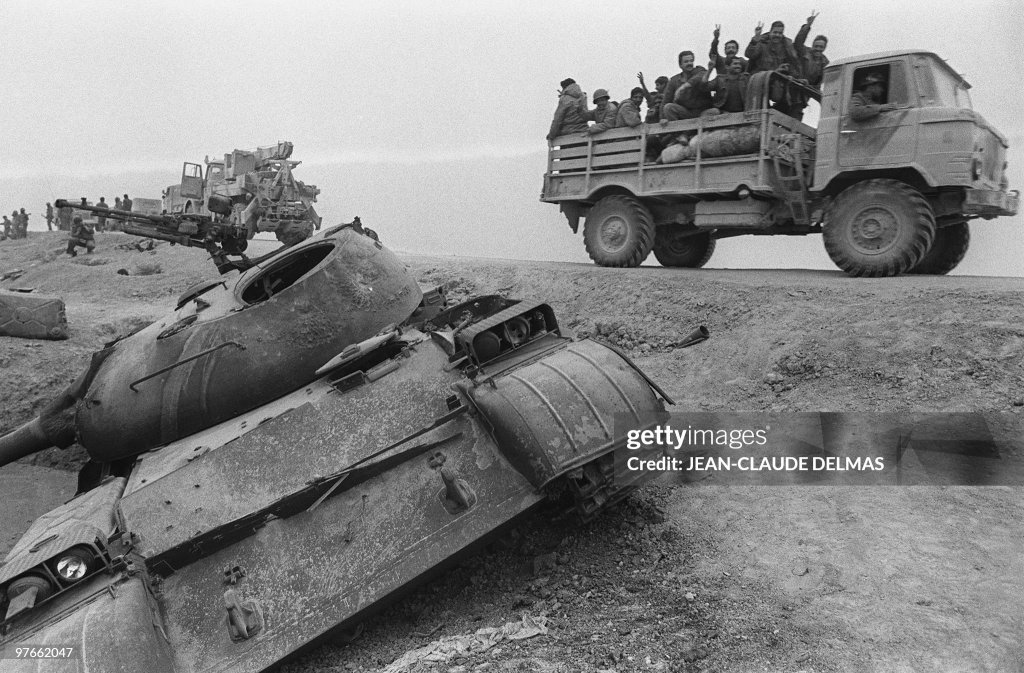
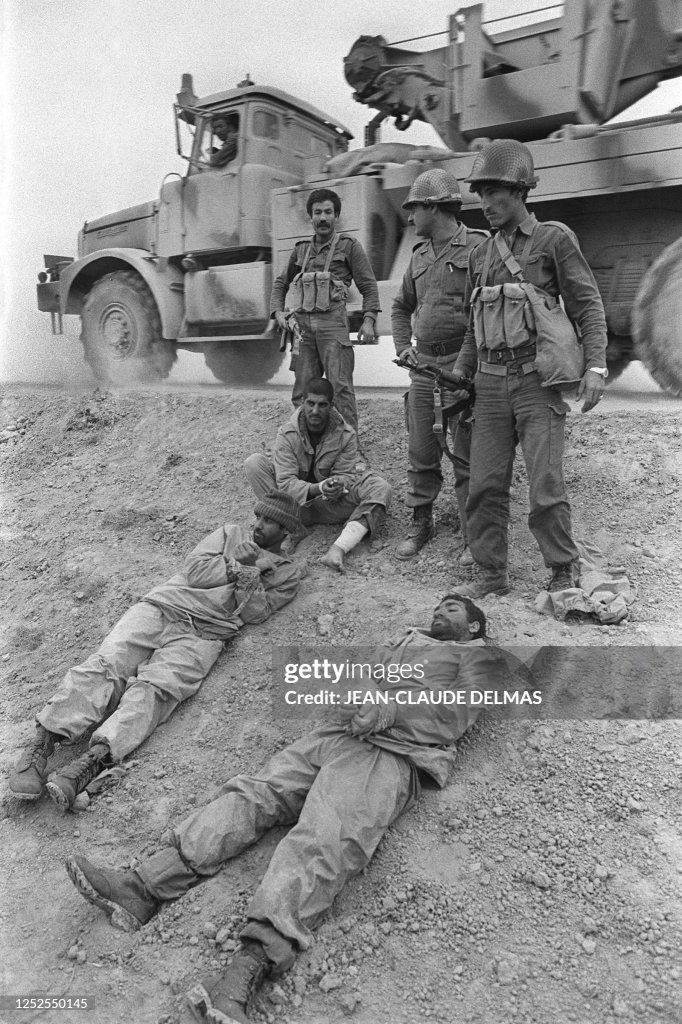
Iraq said its warplanes had bombed Tehran and several other Iranian cities, “scoring crushing hits.” At the same time, both sides, in broadcasts, claimed victory in a border battle for control of the highway linking Baghdad and the the strategic southern Iraqi port of Basra. Witnesses reported a huge explosion in Baghdad, near the residence of President Saddam Hussein. The Iranians said it was caused by one of their long-range missiles. Iraqi officials did not comment on the explosion but have attributed two previous blasts in the capital to saboteurs’ bombs. The war, which began in September 1980, has intensified sharply in recent weeks. A military communique from Iraq said its jets raided targets in Tehran, Kashan, and Khurramabad late this afternoon. Communiques earlier in the day reported attacks on Hamadan, Isfahan, Tabriz, Kermanshah, and Arak.
Iran has executed hundreds of political prisoners in the last few weeks and intends to kill 2,000 more, the leader of the major Iranian opposition group said in Paris. Massoud Rajavi, head of the Mujahideen organization, said he appealed in a telegram to U.N. Secretary General Javier Perez de Cuellar to use all possible means “to prevent the continuation of this bloodbath.” Rajavi said that 141 supporters of his Islamic socialist group were executed recently in Tehran and three other cities.
Vietnam will turn over to U.S. officials on Wednesday the remains of five people it says are those of Americans listed as missing in action, the U.S. Pacific Command in Hawaii said. The remains will be flown to the Army’s Central Identification Laboratory in Hawaii for identification, then returned to the next of kin. The transfer was arranged during March 3-5 meetings between Vietnamese Foreign Minister Nguyen Co Thach and representatives of the National League of Families.
Kim Dae Jung joined a fellow dissident, Kim Young Sam, today as joint leaders of the group behind a new opposition faction that finished a strong second to the government party in parliamentary elections last month. Kim Young Sam was a leader in founding the Council for the Promotion of Democracy last May. The council in turn played a key role in establishing the New Korea Democratic Party in time to contest the elections against President Chun Doo Hwan. Both Kims were present at council headquarters today when more than 100 members gave unanimous approval to the selection of Kim Dae Jung as co-chairman with Kim Young Sam. Both men were on a political blacklist that the government discontinued earlier this month, so neither holds office in the new opposition party. Kim Dae Jung returned home on February 8 after two years of exile in the United States.
A Chinese specialist on the United States, Vice Foreign Minister Han Xu, will be Peking’s next ambassador to Washington. Han’s selection was telegraphed in a printed itinerary for visiting U.S. Under Secretary of State Michael D. Armacost. The itinerary referred to Han as “ambassador-designate.” Formerly director of the Chinese Foreign Ministry’s American Department, Han, 59, has also served in Paris and Moscow.
A strong earthquake that measured 5.7 on the Richter scale shook the southern Philippine island of Mindanao, but officials said there were no reports of casualties or serious damage. The Philippine geophysical laboratory in Manila said the epicenter was located 570 miles south of the capital. Police in Zamboanga, 550 miles south of Manila, said the quake struck at 3:52 AM today. Police units there found little damage, but there were no immediate reports from remote areas closer to the epicenter.
President Reagan attends a luncheon in his honor where he addresses the guests on American – Canadian Relations.
President Reagan returns to the White House from his visit to Canada.
A remark by Caspar W. Weinberger added fresh fuel to a debate among Canadians over whether a new agreement on joint air defense might lead to the eventual stationing of United States weapons on Canadian soil. The Defense Secretary made the remark in a broadcast interview. The agreement, signed today at the end of President Reagan’s visit to Quebec, will create a new chain of 52 advanced radar stations across northern Canada and Alaska. The network, to be called the North Warning System, will replace the existing Distant Early Warning, or DEW, Line, which has grown obsolete since it was built in the 1950’s.
Nicaraguan rebels have inflicted severe damage on the country’s economy over four years. Guerrillas cut electrical power to two northern provinces in El Salvador and toppled electricity towers along the coastal highway on Sunday, officials said today. The action came after a weekend announcement from the rebels that they would begin a new highway sabotage campaign to disrupt March 31 elections, in which Salvadorans will vote for members of the Legislative Assembly and mayors in 237 towns. The elections are seen as a challenge to the Christian Democrats of President Jose Napoleon Duarte as rightist parties have usually been stronger in the country’s rural areas. In the northern provinces of Chalatenango and San Salvador, officials said the rebels toppled several electricity towers late Sunday, cutting power to 32 towns in the area.
Guerrillas cut electrical power to two northern provinces of El Salvador and toppled electricity towers along the coastal highway on Sunday, officials said today. The action came after a weekend announcement from the rebels that they would begin a new highway sabotage campaign to disrupt March 31 elections, in which Salvadorans will vote for members of the Legislative Assembly and mayors in 237 towns. The elections are seen as a challenge to the Christian Democrats of President Jose Napoleon Duarte as rightist parties have usually been stronger in the country’s rural areas. In the northern provinces of Chalatenango and San Salvador, officials said the rebels toppled several electricity towers late Sunday, cutting power to 32 towns in the area.
Fire officials say they have given up hope of putting out a three- week-old blaze fanned by strong winds that is threatening the exotic animals on the largest island in the Galapagos group, the home of giant tortoises and once the base for the British evolutionary theorist Charles Darwin. Troops and volunteers were digging trenches and erecting barriers to try to stop the fire on Isabela Island, the biggest island in the chain, fire officials said.
Unidentified assailants in a passing car hurled a bomb at the Lima home of Peruvian Labor Minister Joaquin Leduia and fired on his bodyguard on the 14th day of a nationwide strike by civil servants. Leduia was home at the time but no injuries were reported. The blast damaged Leduia’s garage. About 400,000 civil servants are on strike to press demands for higher pay. The walkout has paralyzed government offices, including customs, the post office and the national election board.
Bolivian labor unions said today that they had rejected government offers intended to end an 11-day-old general strike and threatened to step up pressure with power cuts. The leader of the manufacturing workers’ union, Felipe Tapia, said a government offer on Saturday to raise the minimum wage to $68.80 a month from $20.70 would reduce wages because it would be accompanied by increased deductions and taxes. The Bolivian economy is ravaged by inflation running at 3,400 percent a year. The strike, which is costing Bolivia $10 million a day, is to press demands for index-linked wages, stable food supplies and price controls.
South African authorities, moving to cope with a profound economic crisis, announced an austerity budget today in which military spending was held down while the education budget — regarded as critical in efforts to placate disaffected blacks — was increased by 19 percent. The South African Broadcasting Corporation reported, however, that only a fifth of the education outlays would be spent on the four million black pupils who make up two-thirds of the country’s school population outside the tribal homelands. Black activists, meanwhile, registered an economic message of their own with a near-total strike of white businesses in Port Elizabeth, center of the Eastern Cape region that has been seized with unrest in recent days. The work stoppage was called to protest price increases.
As the Senate began debate today over continued financing for the MX missile, Bob Dole of Kansas, the majority leader, said he was confident that the weapon system would survive a critical vote scheduled for Tuesday. Most Senate vote-counters agreed that the Administration seemed to have the upper hand in the MX fight, but the tally was close and the outcome remained uncertain. With the margin so narrow, the White House put on a “full court press” to woo wavering lawmakers, according to Larry Speakes, the Administration’s chief spokesman. President Reagan was calling key senators to lobby for votes, and he planned a personal visit to Capitol Hill on Tuesday to press his case for the missile just hours before the vote.
President Reagan has shelved a plan to dismantle the Commerce Department and replace it with a department of international trade and industry that would consolidate the government’s various trade agencies, Administration officials said. White House and Commerce Department officials cited the Administration’s heavy legislative agenda and dim prospects for congressional passage of the plan as reasons for the President’s decision. However, opposition from Secretary of State George P. Shultz also appears to have been a factor.
House Democratic leaders attacked President Reagan for lending his name to a Republican “all-out assault on House Democrats,” contending he could jeopardize his efforts to build bipartisan support for a number of sensitive issues. “Your letter and this entire negative campaign could destroy efforts to build bipartisan legislative bridges by members of both parties,” top Democratic leaders, including Speaker Thomas P. (Tip) O’Neill Jr. of Massachusetts and Majority Leader Jim Wright of Texas, told Reagan in a letter. The Democrats’ complaint concerned a recent fund-raising letter soliciting contributions for GOP candidates.
A drive to convert Democratic officeholders to the Republican Party, particularly state legislators in the South, has been begun by White House political officials. The drive hopes to draw upon President Reagan’s popularity, discontent among Democrats over the party’s national leadership and the perception among some party officials that the Democrats are out-of-step with the American mainstream.
Anne McGill Burford has asked the White House to pay $211,000 of her legal fees, contending that Attorney General Edwin Meese III had promised her that the Administration would pick up the tab if she resigned in March, 1983, as the administrator of the Environmental Protection Agency. “The agreement (with Meese) was oral and part of my resignation. You’d think he’d honor his word, wouldn’t you?” she said in an interview in Legal Times, a trade publication. Meese, who in 1983 was counselor to President Reagan, refused to comment.
One of the four black youths shot by so-called subway vigilante Bernhard H. Goetz last December testified against him before a New York grand jury trying to decide whether to reopen the case, his lawyer said. Lawyer Ronald Kliegerman said his client, James Ramseur, 18, testified against Goetz for 45 minutes after being granted immunity from prosecution by Manhattan District Attorney Robert Morgenthau. “His testimony contradicted Goetz’s version. He said he was unaware of any attempt to rob Goetz and that he was not seated near him,” Kliegerman said.
ABC agreed to be bought by Capital Cities Communications Inc., a stalker of broadcast and publishing properties, for more than $3.5 billion. It would be the biggest non-oil acquisition in corporate history. The deal, approved by the boards of both companies, also requires approval by their stockholders and regulatory agencies. Capital Cities is to pay $118 a share in cash plus warrants to get a company four times its size.
Ohio’s House of Representatives voted 85 to 2 to approve an emergency bill that would require Federal deposit insurance for all Ohio savings and loan associations. Legislative leaders were hopeful that the Ohio Senate would approve the bill in time for Governor Richard F. Celeste to reopen 71 privately-insured savings institutions tomorrow.
The $1,000 limit on spending by political action committees on behalf of Presidential candidates in general elections was struck down by the Supreme Court. In the 7-to-2 opinion written by Associate Justice William H. Rehnquist, the Court said the spending limit violated the constitutional rights of free speech and association.
A Federal law that requires railroads to reimburse Amtrak for the free or reduced-fare travel that the rail passenger system provides for one million rail workers and their families was upheld by the Supreme Court in a 8-to-0 decision.
Mississippi Governor Bill Allain vetoed a bill today that would have given a $4,400 raise to the nation’s lowest paid teachers. The veto was sent back to the Legislature, where the chairman of the Senate Finance Committee planned to try to override the Governor’s action. Governor Allain said the bill, which would have raised taxes by $77.6 million to finance the $4,400, would be detrimental and would drive away new industry. He urged a $1,500 raise. Mr. Allain’s veto came two hours after the Mississippi Association of Educators, an affiliate of the National Education Association, asked its 13,000 members to end the wildcat walkouts. Earlier today, a judge found the union in criminal contempt of court for calling for a strike.
At the height of the strike, which began Feb. 25, 9,000 teachers and 170,000 pupils were out of class. The vetoed bill called for a $2,400 raise this year and $1,000 in each of the next two years. Average pay for Mississippi teachers is $15,971, the lowest in the nation. Teachers sought two $3,500 raises to to meet the Southeastern average.
A federal judge in New York rejected requests by Vietnam War veterans to set aside a multimillion-dollar Agent Orange settlement that they called “an unmitigated mistake.” On January 7, the same judge, U.S. District Judge Jack B. Weinstein, gave his final approval to the $180-million settlement of a class-action lawsuit by more than 220,000 Vietnam veterans and their families against the makers of the herbicide Agent Orange. Robert Taylor, who represents Vietnam veterans, told Weinstein the settlement was “neither reasonable, fair nor adequate” and asked for reconsideration.
Kevin Coe was sentenced in Seattle to 55 years plus life in prison for three first-degree rape convictions in the retrial of Spokane’s “South Hill rapist” case. Coe, 38, whose retrial jury could not decide on a fourth rape count, received sentences of 25 years, 30 years and life. The sentences are to be served consecutively. Coe was charged in four of more than 40 brutal sexual assaults blamed on the “South Hill rapist,” who terrorized the Spokane neighborhood between 1978 and 1981.
Pan American World Airways said yesterday that about 500 members of the Union of Flight Attendants were now crossing picket lines and that it had hired about 400 trainee attendants on a temporary basis to expand flights to 52 percent of its full operations. Most of the attendants have refused to cross picket lines set up by the Transport Workers Union on February 28, when 5,800 of its members went on strike. About 150 attendants had been dismissed. Brian Moreau, the chairman of the New York unit of the flight attendants union, which has 6,000 members, disputed the company’s statement, saying only about 200 attendants were crossing picket lines. He also said the trainee attendants were being hired in violation of the union’s contract. Mr. Moreau said union leaders were not permitted to give the newly hired attendants fliers that explained their union rights. Jeffrey Kriendler, public relations vice president for the carrier, said the new hirees were being protected from harassment by union members.
Houston’s public housing authority has systematically funneled Vietnamese refugees into a downtown housing project to lessen opposition to a plan to demolish the project, a prime piece of real estate, according to a court document.
Justice Byron R. White of the Supreme Court today stayed the execution of Willie Watson, who had been scheduled to be electrocuted in Louisiana early Tuesday. The one-paragraph order issued in Washington, is pending the filing of an appeal to the Supreme Court. Mr. Watson, who is 28 years old, was to die for the April 1981 kidnapping, rape and murder of Kathy Newman, a 25-year-old Tulane medical student. In Georgia, John Young, 28, scheduled to be executed on Wednesday, was denied a new trial by Federal District Judge Wilbur Owens.
A member of the Charles Manson “family” says she has strong personal and political reasons for wanting to stay in prison when her mandatory release date comes up later this month. “It’s not that I’m institutionalized,” said Sandra Good, who has served 10 years of her 15-year sentence. “It’s just that I want to be where my family is, and my family is in prison.” Miss Good, 40 years old, is serving time for conspiring to mail death threats to corporate officials she accused of polluting the planet.
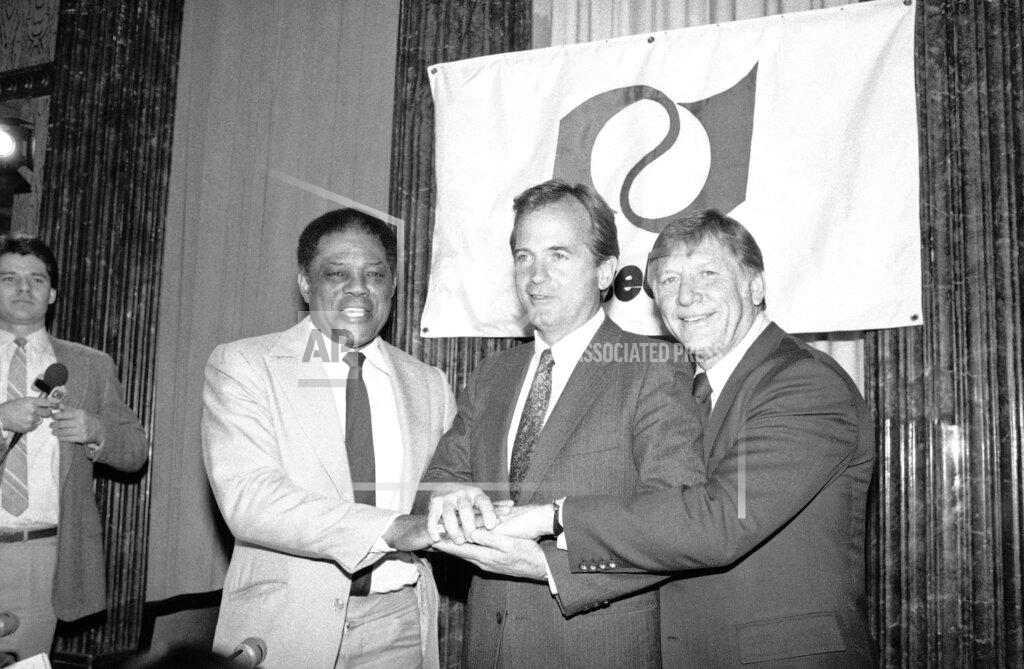
Willie Mays and Mickey Mantle were reinstated by the new baseball commissioner, Peter Ueberroth. They had been banned by the former commissioner, Bowie Kuhn, after they accepted jobs with Atlantic City gambling casinos. Mr. Ueberroth indicated he would introduce new guidelines within 30 days regarding players’ links with casinos.
Dow Jones Industrial Average: 1249.67 (+2.32)
Born:
Duane Henry, English actor (“NCIS”), in Birmingham, West Midlands, England, United Kingdom.
Died:
Jack Miller, 89, American orchestra leader (“Kate Smith Evening Hour”).






 History Diaries