
Hitler names Dr. Fritz Todt the German Reich Minister of Armaments and Munitions. Todt’s workers are known as the Todt Organization (Organisation Todt). Todt means “death” in German, so this has a sinister ring to it, but it basically is nothing more than a national construction service. Todt has been the Inspector General of German Roadways since June 1933 and built his Organization Todt from the ground up to construct the Autobahns, one of Germany’s great technical achievements. Todt’s elevation in rank marks an acknowledgment that Organization Todt would be focusing henceforth on military and paramilitary projects of utmost national importance. It also illustrates the gradual re-orientation of the German economy from a peacetime to a wartime footing.
The New York Times observes:
This is Easter week. In a few days it will be Spring. The weather is favorable now for major military operations in the West. If they do not begin soon the conclusion will be that neither side cares to embark on such a step. In that case the most likely consequence would be the prolongation of the present stalemate-unless efforts at mediation should succeed. Eastertide also connotes peace.
Meanwhile, in France as in Britain, public opinion is urging more. vigorous prosecution of the war, even should that entail modifications in the respective Cabinets. There is much talk of lost opportunities and of “the humiliation represented by the Finnish capitulation.”
But from the purely military point of view what can the Allies do? As indicated repeatedly in these dispatches their choice is confined to attacking the Westwall, which would be contrary to their desire to spare human lives, or to extend the theatre of war, which would be contrary to their pledges to respect all neutral territory. Failing which, they must wait until the enemy sees fit either to attack the Maginot Line or himself extend the field of operations.
Admiral Raeder advises Hitler to invade Norway pursuant to Operation Weserubung no later than 15 April.
Hitler and Mussolini depart by trains from their respective capitals for a meeting at the Brenner Pass.
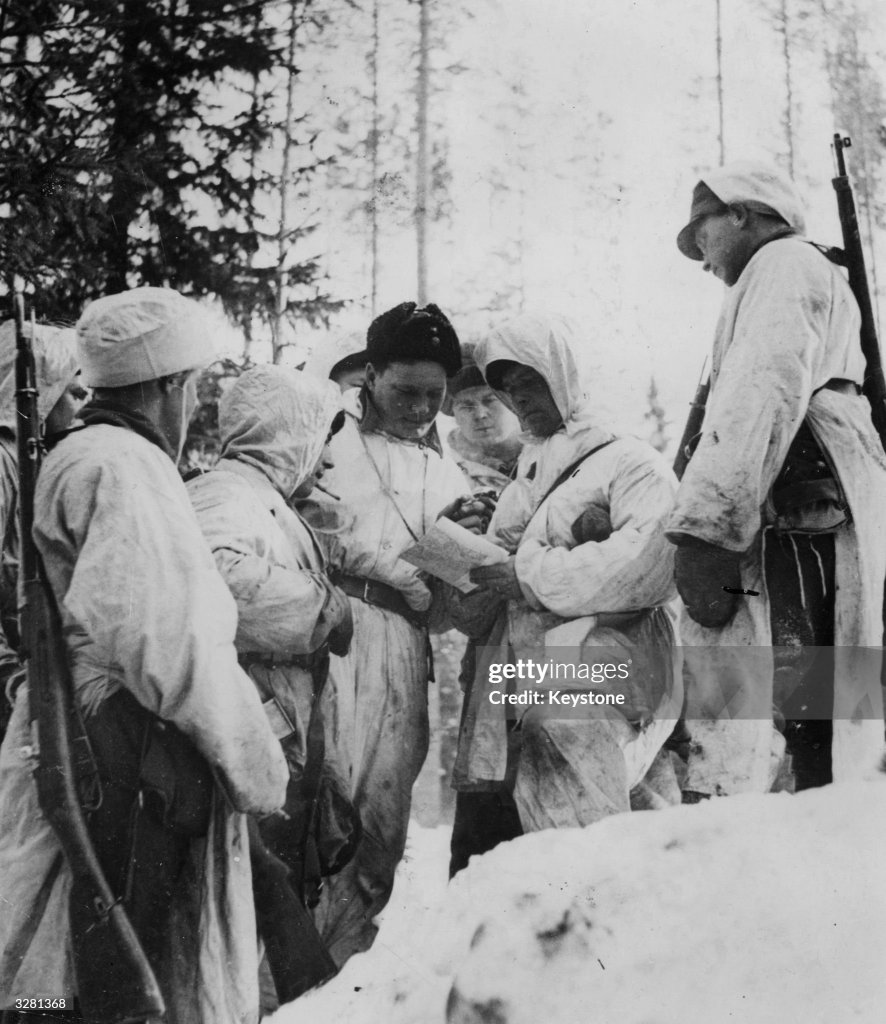
The last Finnish civilians evacuate Viipuri today. A Finnish officer comments, “All belongings being hastily taken away to deprive Russians, who occupy city tomorrow.”
Keen interest has been aroused throughout Scandinavia by a speech by Christian E. Guenther, Swedish. Foreign Minister, last night in which he partly lifted the veil that had hidden most of the negotiations between Sweden, the Allies, Russia and Finland. He shed a new light upon the predicament In which the Northern States may find themselves as long as the war lasts. Defending the Swedish Government’s refusal to send the Swedish Army to Finland and to permit the transit of Allied troops, he suggested that the Allied project to send troops to Finland was designed less in Finland’s interest than in that of the Allies who are looking for an opening to attack Germany and for a way to cut Germany’s iron ore supply from Sweden. He said that if the Swedish Army had left its own country to aid the Finns the Allies would have come to Sweden. This, he said, would have brought Germany into action and would have transferred the center of the European war to Scandinavia. He indicated Allied troops would have established themselves. in the north and from that point tried an attack on Germany.
[Ed: This is, of course, exactly what the British and French intended.]
A diplomatic conflict between Rumania and the Allies is threatening because the Germans have acquired shares in two of the most important iron works in Rumania, the Reshita works, and a gun factory, Compsha Mica Cugir.
Rumanian Premier George Tatarescu announced that meat rationing is to go into effect soon.
Italy announces that it will defend Rumanian neutrality against attacks.
To aid the war effort, ten thousand miners in Nottinghamshire agree to forego most of their holidays to increase coal production.
It was reported in Paris today that seventeen professors of Poland’s ancient Kraków University had died within the last three months — victims of the Nazi concentration camp at Sachsenhausen near Berlin.
French soldier Jean-Paul Sartre, working as a meteorologist, comments: “The war machine is running in neutral; 1 man said to me, insane hope in his eyes: ‘England will climb down.’”
RAF Spitfires intercept Luftwaffe bombers off coast of Scotland. A collier and 3 trawlers are attacked off the coast. The enemy aircraft are driven off.
In the wake of a German raid on Scapa Flow, the British Admiralty admitted that the Home Fleet base was vulnerable to air attacks. The fleet was ordered to depart Scapa Flow between 19 and 26 Mar. In anticipation of this move, German submarines U-57, U-19, U-21, and U-22 began to move toward Scapa Flow in an attempt to attack the departing warships.
The British fishing vessel Ocean Drift collided with HMS Intrepid (Royal Navy) in the North Sea and sank with the loss of two of her ten crew. The survivors were rescued by HMS Intrepid.
The Dutch cargo ship Sint Annaland struck a mine and sank in the North Sea off the coast of Belgium (51°23′N 2°01′E). All 21 crew were rescued by the Dutch ships Schieland and Schokland.
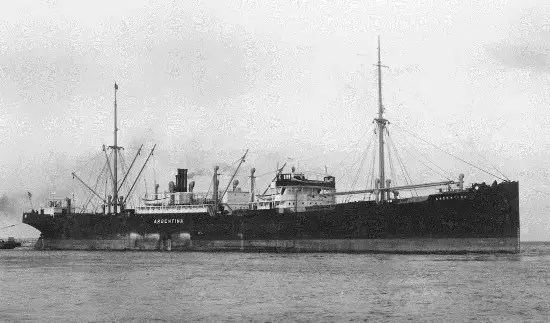
The neutral Danish motor merchant Argentina was torpedoed at 2325 hours and sunk by the U-38, commanded by Kapitänleutnant Heinrich Liebe, east of Unst, Shetlands in the North Sea (60°47′N 0°30′W). U-38 fired a spread of two torpedoes at an illuminated steamer of about 5000 grt east of Unst, Shetlands. The ship sank 10 minutes after being hit by one torpedo. The victim must have been the Argentina. All of the ship’s complement of 33 died. The 5,375-ton Argentina was carrying general cargo and was bound for South America.
The British coaster Alyn ran aground on Fort Island, Isle of Man with the loss of two of her nine crew.
The Dutch coaster Hinde sank after hitting rocks near Rathlin Island, County Antrim, United Kingdom. All seven crew survived.
The Panamanian cargo ship Basra in Convoy ON.20 was damaged in a collision with the Norwegian ship Listo in the North Sea and sank. The 27 crew were rescued by the Norwegian ship Løvaas.
The French cargo ship Capitaine Augustin struck a mine and sank in the North Sea north of Margate, Kent, United Kingdom with the loss of two crew. There were 28 survivors. The wreck was subsequently dispersed by explosives.
Convoy FS.123, delayed twenty four hours by fog, departed the Tyne escorted by destroyer HMS Wallace and sloop HMS Flamingo. The convoy arrived at Southend on the 19th.
Convoy HG.23F departed Gibraltar with thirty ships, escorted by destroyer HMS Bulldog, as local escort. French destroyer Panthere and auxiliary patrol vessel Minerve escorted the convoy from 17 to 23 March. Destroyers HMS Winchelsea and HMS Wakeful came from convoy OG.23F and escorted the convoy from 23 to 26 March. Destroyer HMS Whitehall joined the convoy on the 23rd and escorted the convoy until 26 March when the convoy arrived at Liverpool.
The War at Sea, Sunday, 17 March 1940 (naval-history.net)
Destroyers HERO and HYPERION departed the Clyde at 2015 with RFA tanker PETROBUS (475grt) for Scapa Flow. En route, the tanker was sent into Stornoway and HERO and HYPERION were ordered to Scapa Flow with dispatch, arriving at 0724/19th.
Destroyer INTREPID in an accidental collision in the Pentland Firth 50 miles northeast of Kinnaird Head sank trawler OCEAN DRIFT (227grt). Eight survivors were picked up and INTREPID proceeded to Invergordon with a damaged stem for emergency repairs, escorted by destroyers IVANHOE and GALLANT. She departed on the 18th for Southbank near Middlesbrough where repairs were completed on 28 April.
At 1750, steamer BELLWYN (1670grt) collided with heavy cruiser SUFFOLK in Princess Dock at Govan. The cruiser required docking, but there was no delay in the ultimate completion date for the cruiser’s repair.
Light cruiser EDINBURGH arrived in the Tyne for repairs.
Destroyer BRAZEN arrived at Scapa Flow at 0700 with Submarine SPEARFISH.
Destroyer IMOGEN departed the Clyde at 0800 for Portsmouth for escort duties.
Destroyers INGLEFIELD (D.3) and ILEX departed Scapa Flow at 0017 to join destroyers IVANHOE and GALLANT on Moray Firth anti-submarine striking force duties. After this, INGLEFIELD and ILEX arrived at Scapa Flow at 2000/18th.
At this time, the Moray Firth Anti-submarine Striking Force was no longer operating. IVANHOE and GALLANT joined the Home Fleet from the Orkneys and Shetlands Command at 0730 and 0830/19th, respectively.
Minelayers PRINCESS VICTORIA and TEVIOTBANK, escorted by minelaying destroyers ESK, EXPRESS, ICARUS, and IMPULSIVE, departed the Humber for Invergordon for minelaying mission PA 4. The ships arrived at Invergordon on the 19th.
The 7th Destroyer Flotilla was assigned to the Commander in Chief, Home Fleet at midnight.
Submarine TRIDENT and Polish submarine ORP ORZEL arrived at Rosyth after patrol.
Submarine SUNFISH on patrol in the North Sea sighted two large unescorted trawlers, but was unable to attack.
Convoy FS.123, delayed twenty-four hours by fog, departed the Tyne escorted by destroyer WALLACE and sloop FLAMINGO. The convoy arrived at Southend on the 19th.
Netlayer GUARDIAN departed Scapa Flow on the 16th for Rosyth. On the 17th off Bell Rock, she was attacked by German bombers of KG2, but was not damaged, and arrived at Rosyth later on the 17th.
Anti-submarine trawler STOKE CITY (422grt) was attacked by German bombers of KG26 off Girdleness, but was not damaged.
Italian steamer VERBANIA (6640grt) broke down in 60-54N, 08-52W. Armed boarding vessel NORTHERN DUKE (655grt) stood by and tug WATERMEYER was dispatched to take her in tow. Steamer CARIBOU (2222grt) sighted the ship on the 21st and NORTHERN DUKE located her on the 22nd. Tug ST MELLONS was ordered to replace WATERMEYER on the 23rd, while tug BRIGAND was also ordered to proceed. On the 27th, the Italian steamer in tow of BRIGAND and escorted by armed boarding vessels NORTHERN WAVE (655grt) and NORTHERN GEM (655grt) arrived at Stornoway.
Norwegian steamer VESPASIAN (1570grt) grounded on west side of Copt Point near Folkestone, but was refloated by tugs LADY BRASSEY and GANDIA with no apparent damage.
German submarines were ordered to positions to attack damaged British ships leaving Scapa Flow after the 16 March air raid. U-57 and U-19 in the North Sea were ordered to the west side of Pentland Firth. U-21 and U-22 were ordered to the east side of Pentland Firth.U-22 departed Wilhelmshaven on the 20th and U-21 departed Wilhelmshaven on the 21st. On the 22nd, U-22 was ordered to assist a German ship grounded on the southern coast of Norway. On the 26th, U-22 was ordered to Moray Firth. On the 27th, U-22 was ordered to assist U-21 which had run aground. U-22 acknowledged none of the changes of orders, and was apparently lost soon after her departure from Wilhelmshaven around 23 March. The submarine was lost with all twenty-seven crew on the 27th.
U-38 sank Danish steamer ARGENTINA (5375grt), which had departed Copenhagen on the 13th for Las Palmas, in the North Sea. There were no survivors from the steamer.
Convoy HG.23F departed Gibraltar with thirty ships, escorted by destroyer BULLDOG, as local escort. French destroyer PANTHERE and auxiliary patrol vessel MINERVE escorted the convoy from 17 to 23 March. Destroyers WINCHELSEA and WAKEFUL came from convoy OG.23F and escorted the convoy from 23 to 26 March. Destroyer WHITEHALL joined the convoy on the 23rd and escorted the convoy until 26 March when the convoy arrived at Liverpool.
Wiretapping as a means of procuring evidence will not be used in future by the U.S. Department of Justice, nor will it handle the cases of other government departments when any of the evidence is procured through wire tapping, this restriction covering cases involving the income tax, narcotic, mail fraud and alcohol tax laws. On the recommendation of J. Edgar Hoover, Director of the Federal Bureau of Investigation, Attorney General Robert H. Jackson announced today that he had issued an order to this effect. FBI use of wire tapping since 1931, although the practice has been held illegal by the Supreme Court, is one of the aspects of the work of the FBI which has recently come under strong criticism.
Several newspapers have campaigned against it and the Senate Interstate Commerce Committee adopted a resolution a few days ago recommending inquiry into this and other alleged contraventions of constitutional rights by Federal, State and local police. Attorney General Jackson noted today that Mr. Hoover had twice “advised strongly” against extension of wiretapping. Mr. Jackson put himself on record as approving the use of wiretapping against kidnappers, extortioners and racketeers, but not. unless Congress changed the law to make it possible.
From the time of its reorganization under Attorney General Harlan F. Stone until 1931 under Attorney General William D. Mitchell, wire-tapping was not authorized in the Bureau of Investigation. In 1931 Mr. Mitchell pointed out to a House Appropriations Committee that since wiretapping was practiced by the Prohibition Enforcement Bureau it might as well be used by the FBI and amended the rules to permit it. The rule which prevailed prior to 1931 has now been restored. It reads: “Unethical tactics: Wiretapping, entrapment, or the use of any other improper, illegal or unethical tactics in procuring information in connection with investigative activity will not be tolerated by the bureau.”
This action restoring this rule, together with instructions to United States District Attorneys and Justice Department attorneys to refuse cases of other Federal agencies where evidence has been obtained by such tactics, has been taken “in order that the rules governing the FBI shall conform to the decisions of the Supreme Court in recent cases, which have held interception and divulgence of any wire communication to be forbidden by the terms of the Communications Act of 1934.”
The Senate is expected tomorrow to end the two-week-old fight over the Hatch “clean politics” bill with a final vote, and then jump right into another controversial issue over the amount of unbudgeted farm benefits that are to be authorized for the agricultural electorate in this political year. Passage of the legislation by Senator Hatch to extend restrictions against political activity to more than 200,000 State and municipal employees paid wholly or in part from Federal funds was predicted, since the Senate has rejected by safe margins proposals designed to weaken the measure and make it as difficult to accept as possible by the House.
Informed sources said the strategy of House opponents of the Hatch bill would be to keep the measure bottled up in the Judiciary Committee. Both Speaker Bankhead and Majority Leader Rayburn are reliably reported to be opposed to it, although they have refrained from comment, pending the Senate’s action. Mr. Bankhead opposed the original Hatch Act putting restraints on political activity by Federal employes, but Mr. Rayburn supported it. The pending bill would extend these restrictions to State employees paid in whole or part with Federal funds.
One high-ranking Democrat said privately that Mr. Rayburn and other House supporters of Vice President Garner’s Presidential campaign were largely responsible for House approval of the original Hatch bill. He said the Garner forces felt that by curbing political activity by Federal employees, they would hamper efforts to win convention delegates for President Roosevelt. “Our fellows have found out, though, that the Hatch Act has played hell in a lot of ways they did not foresee,” he added, “so they’re not going to be disposed to vote for any extension of it.”
Dozens of miners were entombed tonight in the Willow Grove coal mine in Bellaire, Ohio — recognized as one of the country’s model bituminous mines — where a terrific gas explosion caught 180 men, killing at least three and injuring scores. The fate of those still trapped in a chamber known as “Twenty-Two South,” three miles from the mine entrance, was uncertain nine hours after the explosion. Officials of the Hanna Coal Company had not given up hope that some would be taken out alive, but members of the rescue crew that it would be a miracle if any survived. At least 91 had been helped out of the mine by rescue workers. Many were burned and bruised and most of them suffered from the effects of the poison gases that filled the tunnels after the explosion, shortly before noon. Other miners had been able to leave thru emergency exists without assistance. Many went home and an accurate count was impossible. The final death toll will reach 71.
An editorial published in The Charlotte News suggests that Rumania will be absorbed by Nazi Germany in the same manner as Czechoslovakia. It suggests that Hitler intends the same fate for all of the Balkans as well as Scandinavia, the Low Countries and France.
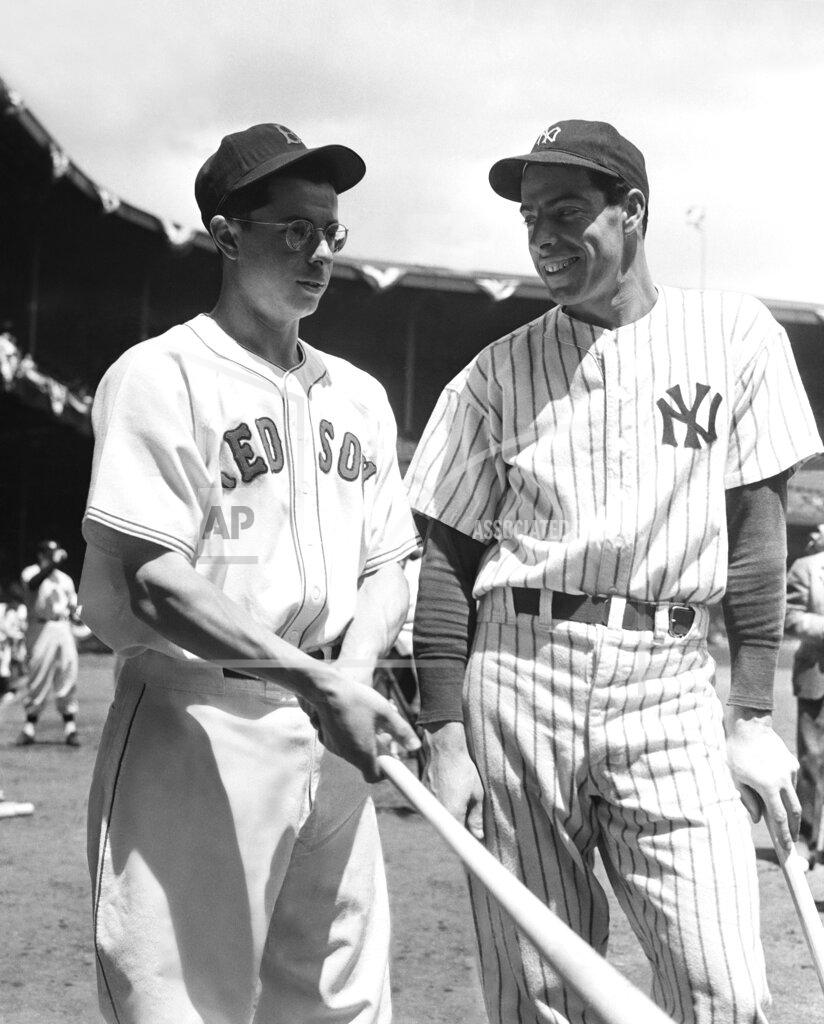
Major league baseball held a special spring training all-star game in Tampa, Florida to support the people of Finland. The exhibition raised more than $20,000 for the Finnish Relief Fund. The National League won the game 2-1 when Pete Coscarart of the Dodgers hit a walk-off single off Bob Feller in the bottom of the ninth. Over $20,000 is raised, but the Finlanders gave up their battle a few days before the benefit.
The Canadian general election, which will be held ten days hence, is generally expected to result in the return to office of the administration of Prime Minister W.L. Mackenzie King with a somewhat reduced majority.
Battle of South Kwangsi: Detachment of Japanese 22nd Army captures Lingshan.
The Japanese have opened a fresh offensive in Kwangsi. They assert that 20,000 Chinese troops are facing annihilation after the rapid progress of a Japanese enveloping movement east of the Yamchow-Nanning highway. The Japanese also declare that a Chinese force of 700 has been routed at Lingshan, sixty miles southeast of Nanning. However, a Chinese report asserts that a Japanese transport unit of more than 100 trucks, moving southward from Taitong along the main highway, was waylaid. More than 200 Japanese were killed, it is stated, and many of the trucks were wrecked.
According to a Chinese source, after a heavy rain, Japanese bluejackets landed yesterday at Namping Island, north of Macao. With the exception of this move, the Heungshan district appears to be very quiet since the fall of Shekki. Fighting is also reported near Swatow, where the Chinese report that they have recaptured Changpu Shan and Tengkang.
Domei, official Japanese news agency, declares that in the fighting in the Swatow-Chaoan area the Chinese casualties have totaled 13,443 since January 1, and that booty taken by the Japanese includes four trench mortars, forty-six heavy and light machine guns, 825 rifles, 368,513 rounds of ammunition and 3,760 hand grenades.
The Japanese cargo ship Kitafuku Maru ran aground off Kumejima Island (26°20′N 126°56′E) and was wrecked.
Born:
Mark White, American politician (Democrat), 43rd Governor of Texas (1983-1987), in Henderson, Texas (d. 2017).
Carl Charon, AFL cornerback and safety (Buffalo Bills), in Boyne City, Michigan.




 History Diaries