

The official Soviet press maintained its attack today on Washington’s approach to arms control, saying the United States intended to proceed with its plans to develop space weapons. The commentaries, which echoed an interview with the chief Russian arms negotiator, Viktor P. Karpov, that was broadcast on Soviet television Saturday night, included a suggestion that the United States was breaking an agreement to keep the substance of the talks confidential. Reports in the Communist Party newspaper Pravda and on nationwide television said Washington was trying to back out of an agreement to negotiate a ban on space weapons along with limitations on strategic and medium-range nuclear missiles. “Washington’s intention is clear,” the commentator Spartak Beglov said on the television program “International Panorama.”
He said the United States intended to sever the agreed-upon linking of the three areas of negotiations “and thus to have a free hand in the implementation of the plan to create an anti-missile defense with elements of space basing.” Pravda concentrated on the same question, asking, “Is the United States going to honor all parts of the Soviet-U.S. agreement on the subject and objectives of the talks?” The linkage agreement, reached in a January meeting in Geneva between Secretary of State George P. Shultz and Foreign Minister Andrei A. Gromyko, said the three areas of concern would be considered and resolved “in their interrelationship.” “The question is far from rhetorical,” Pravda said.
Tens of thousands of people marched through the center of Brussels in a peaceful protest against the Belgian government’s acceptance of U.S.-made nuclear cruise missiles. Organizers said at least 150,000 took part, but police put the figure at about 43,000. The march had been scheduled before Friday’s announcement of the government’s agreement to deploy the first 16 of 48 missiles under a North Atlantic Treaty Organization plan.
Thirteen Polish university teachers and students began a hunger strike at a church in the village of Podkowa Lesna, near Warsaw, seeking the release of an army conscript jailed last December for refusing to take the military oath of allegiance. Marek Adamkiewicz, 28, did not refuse military service but would not take the oath because it contains references of loyalty to the Soviet Union and other Warsaw Pact countries.
The Socialist Party of Prime Minister Andreas Papandreou failed to elect its candidate as President in the first round of parliamentary voting today. But the governing party was expected to obtain the necessary minimum in the third and decisive round, tentatively scheduled for March 29. Christos Sartzetakis, a Supreme Court Judge who is the only candidate, obtained 178 votes today, 22 short of the required two-thirds majority in the 300member chamber. The same minimum is required for the second round, scheduled for Saturday.
Lebanon’s hard-line Christian militia forces mobilized tonight to oppose a Syrian threat to use military force to support the Government of Amin Gemayel. Meanwhile, Israeli fighter jets flew over Syrian Army positions in northern Lebanon and were reportedly met by ground fire from Muslim militia positions in the port of Tripoli. “If the Syrians attack us, we will fight them,” Fuad Abu Nader, commander of the Christian militia known as the Lebanese Forces, which is challenging Mr. Gemayel, told reporters in Christian East Beirut. Radio Free Lebanon, which speaks for the Christian forces, said militia commanders had placed their combatants on alert to defend what the radio termed “the Christian uprising.” Meanwhile, Israeli fighter jets flew over Syrian Army positions in northern Lebanon and were reportedly met by ground fire from Muslim militia positions in the port of Tripoli.
An Arab hijacked a Saudi Arabian jetliner over Riyadh but was shot to death by security agents after he exploded a grenade as the Boeing 727 sat on the runway of an eastern Saudi airport, the state-run Saudi Press Agency said. All 76 passengers and 21 crew members aboard the domestic flight were freed before the hijacker was killed at the Dhahran airport, where the plane stopped to refuel. The agency said the hijacker was a citizen of Yemen working in Saudi Arabia.
A battle over a strategic highway in southern Iraq between Iraqi and Iranian troops was described by Iraq as the fiercest fighting of the war. Meanwhile, Iraq warned international airlines to stay out of Iranian airspace beginning Tuesday evening. The battle took place east of the Tigris River over the vital highway from Baghdad to the southern port of Basra. Sources in Tehran said Iranian troops had taken six miles of the road.
Iraq meanwhile warned airlines to stay out of Iranian airspace beginning Tuesday evening, saying it would continue air attacks on Iranian cities and would not be responsible for the safety of commercial aircraft. In London, British Airways suspended flights to Iran and Iraq after the warning. Two other European-based airlines canceled flights scheduled for tonight and said they would review the situation daily; several other airlines were considering similar action. In the Persian Gulf, at least three ships were reportedly attacked.
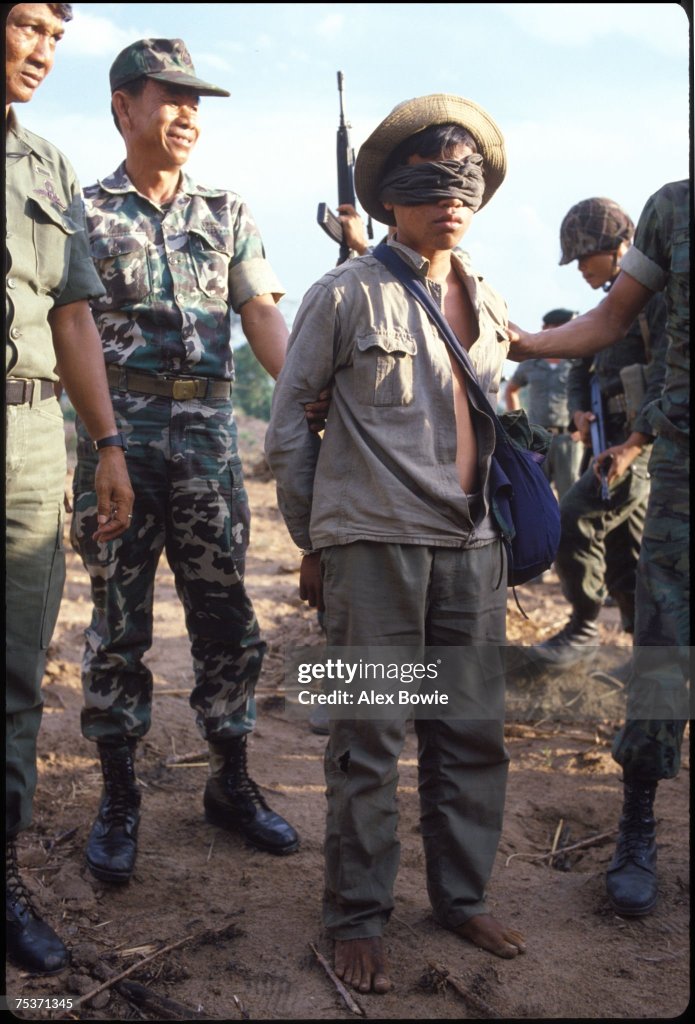
Philippine soldiers killed 67 Communist rebels in five days of fighting on southern Mindanao Island, a Manila newspaper reported. The paper, Bulletin Today, quoted military reports as saying two soldiers were killed and 10 wounded in the clashes with guerrillas in three Mindanao provinces. In the past, human rights groups have disputed government claims of anti-rebel successes in the countryside, contending that some of those killed were innocent civilians.
Ann Martindell, former U.S. ambassador to New Zealand, disclosed that she had banned port calls in that country by nuclear-armed U.S. warships when she was President Carter’s envoy there from 1979 to 1981. Interviewed from Washington by Radio New Zealand, she said she had ordered the ban because of concern that protests were damaging bilateral relations. Prime Minister David Lange has banned port calls by U.S. nuclear-armed and nuclear-powered vessels.
President Reagan travels to Canada where he is greeted by Prime Minister of Canada Brian Mulroney. Reagan discusses Prime Minister Mulroney’s recent meeting with Soviet General Secretary Mikhail Gorbachev.
The U.S.-Canadian acid rain dispute will be studied by a joint committee to be established by the two countries. This was announced in Quebec by President Reagan and Prime Minister Brian Mulroney of Canada after Mr. Reagan arrived on a two-day visit. They announced that Drew Lewis, a former Secretary of Transportation, and William G. Davis, a former Premier of Ontario, would serve as “special envoys” on the acid rain issue, which Canada views as the most crucial concern between it and the United States. “We have made an important start,” said Mr. Mulroney, with Mr. Reagan beside him. “We have broken a three- year deadlock by agreeing to our common and shared responsibility to preserve our common environment.” Mr. Mulroney said the appointments marked a “vital new dimension into this issue.”
Nearly a year and a half after United States forces invaded the Caribbean island of Grenada and were welcomed as liberators, American popularity seems to be as strong as ever. The Grenadians were delighted by the visit of Vice President Bush last week even though he brought what was regarded by many here as bad news: the United States is going ahead with the withdrawal of the last of its military policemen by the middle of June. “It doesn’t please me that they’re leaving,” said Anthony Charles, a 52-year-old carpenter. “But I’m not mad at the Americans. Mr. Bush said if we have problems they’ll come back. And I believe him.” Francis Alexis, the Minister of Labor, noted the apparent warmth of the Vice President and his strong assurances of continued United States support for Grenada and said the visit had been “fantastic.”
Nicaragua’s rebels are keenly aware of the debate they have generated in Congress and the effect it will have on their future. This was apparent in interviews with exile guerrilla commanders in mountain headquarters on the border between Honduras and Nicaragua, who assessed their chances of victory over the Sandinista Government. The border camp is the command center for the Nicaraguan Democratic Force, the largest exile army. The group received most of the $80 million the Central Intelligence Agency reportedly spent on the war until the financing was ended by Congress last June. A C.I.A. spokesman said the agency declined to comment on its activities or on the Nicaraguan rebels.
Leftist guerrillas warned El Salvador’s bus and truck drivers in the eastern provinces that they will paralyze traffic on the nation’s highways in an attempt to disrupt congressional and mayoral elections scheduled for March 31. The rebels said the campaign to halt transportation will begin March 25. Meanwhile, about 5,000 troops swept the countryside around San Salvador after a fierce guerrilla attack on a military communications base and other raids that the army said were attempts to “provoke fear of a new setback in the democratic process.” San Salvador Auxiliary Bishop Gregorio Rosa Chavez conceded that “there is still no enthusiasm by the people to go to the polls.”
Two weeks after a devastating earthquake killed more than 140 people, central Chile was struck by a powerful tremor that sent thousands of terrified Chileans into the street in their night clothes. The temblor, measured at 6.0 on the Richter scale, was centered 12 miles offshore from the Pacific port of Valparaiso. Officials said the only reported casualty was a 30-year-old woman who died of a heart attack. Left homeless by the March 3 quake, the nation’s worst in 25 years, she was staying in a school being used as a shelter.
Military contract profits are being examined by the Pentagon to determine whether the contractors make too much profit or not enough. It hopes to find out whether its pricing rules encourage companies to cut costs or — as many critics say — perversely reward inefficiency because, under the rules, higher costs generally yield higher profits.
Opponents of mandatory retirement are bringing their fight to Congress, the courts and federal agencies. Business groups, including the United States Chamber of Commerce and the National Association of Manufacturers, and many colleges and universities favor keeping the current law, which permits mandatory retirement ages in non-federal institutions and businesses.
The government has a big stake in the first of two espionage trials that begin this week in Los Angeles with a discharged agent of the Federal Bureau of Investigation and a Soviet emigre couple as defendants. Federal District Judge David V. Kenyon said that if classified information was determined in the course of the trial to be essential to a fair defense the government must choose between disclosing that information or abandoning prosecution.
Ohio savings-and-loan depositors are worried about their money. Access to funds was cut off Friday for about 500,000 depositors when Governor Richard F. Celeste ordered an emergency closing of 71 state-chartered, privately insured savings and loan institutions. The banks were closed to prevent a run on deposits following the collapse of one of Ohio’s largest thrift institutions, the Home State Savings Bank, which threatened to wipe out the private deposit insurance fund covering privately insured thrift institutions. Mr. Celeste and Federal and state officials spent the weekend attempting to find a way to reopen the banks, possibly with federal deposit insurance.
A firm defense of “whistle blowers” in the nuclear reactor industry is now being offered by the Labor Department. The department came under harsh criticism from Congress and the Nuclear Regulatory Commission last December when it declined to appeal an adverse court decision in the case of a man who lost his job as a result of “blowing the whistle” on reactor construction flaws.
The lack of federal laws to prevent government or private tampering with the tens of millions of electronic messages now being transmitted each year by electronic communications companies was the subject of a recent conference in Washington. Staff members from Congressional subcommittees, corporation officials and privacy experts examined the impact of new technologies on existing laws.
Two self-proclaimed revolutionaries were convicted in federal court in Newark, New Jersey, of unlawful possession of explosives, weapons and counterfeit identification cards. Convicted of eight counts each were Timothy Blunk, 27, who prosecutors say is a member of the radical May 19 Movement, and Susan Lisa Rosenberg, 29, who faces separate charges for her alleged role in the 1982 Brink’s robbery-slayings and the prison escape of Black Liberation Army leader Joanne Chesimard. Sentencing was set for April 29.
William J. Schroeder set a record Sunday for living 113 days on an artificial heart, surpassing pioneer Barney Clark, who died in 1983 after spending 112 days with his mechanical heart. Murray P. Haydon, Schroeder’s fellow bionic heart patient, notched his first month of life on a mechanical pump with improved breathing and brief trips out of bed, said Linda Broadus, spokeswoman for Humana Hospital Audubon in Louisville, Kentucky.
A new grand jury is to hear testimony in New York against subway shooter Bernhard H. Goetz despite defense efforts to avert a second inquiry into the shooting of four young men in a subway last December 22. A motion to stop the new panel will be reviewed Tuesday by state Supreme Court Justice Stephen Crane. “But the judge said, in effect, the grand jury could go ahead with its work on Monday, for one day at least,” said Joseph Kelner, one of Goetz’s lawyers.
The 1-pound, 15-ounce baby girl delivered from a woman who was paralyzed by a mistaken injection was in critical but stable condition, a hospital spokesman said. “We’re still optimistic,” said spokesman Elmer Streeter at the Albany, New York, Medical Center. Doctors decided to deliver the baby by Caesarean section after her comatose mother, Lillian Cedeno, 21, who was 26 weeks pregnant, developed tissue damage in her lung. The lung damage was the latest in a deterioration in the condition of the Schenectady woman, who was improperly injected with a chemotherapy drug February 27, officials said.
Three New York police officers have been suspended pending an investigation into a hit-and-run accident in which their squad car hit two elderly pedestrians, killing one and injuring the other, authorities said. Assistant Police Chief Charles Kelly said a witness told investigators that the car was traveling at a high speed when it struck the pedestrians in Manhattan.
Former Interior Secretary James G. Watt and his partner have proposed that they manage oil fields of Wind River Reservation tribes in return for 14% of oil and gas royalties, a Shoshone Business Council member said in Fort Washakie, Wyoming. Watt and Roy Sampsel, former Bureau of Indian Affairs official, who want to serve as oil and gas development consultants for the Arapaho and Shoshone tribes, spent much of last week on the reservation in central Wyoming pitching an economic development proposal to tribal leaders. Watt, whose law and consulting firm is based in Denver, has said the consulting fee would be paid only if the firm’s proposals paid off.
The United States must develop alternative domestic sources of natural gas in order to ensure an adequate supply of the fuel in the year 2000, the congressional Office of Technology Assessment said. And while the nonpartisan agency did not specifically call for the lifting of federal price controls on all natural gas, it warned that unfettered prices may be necessary to spur the technology needed to tap new gas sources. The OTA said that “by the year 2000 most of the gas produced by the United States will have to come from reserves not in our current inventory.”
A Federal district judge Saturday banned mass picketing by striking United Mine Workers union members at two coal processing plants, because of reported violence between truck drivers and striking workers. Judge Robert Staker issued a temporary order, sought by the National Labor Relations Board, forbidding pickets to gather in large groups outside Sprouse Creek Processing Company and Rocky Hollow Coal Company. A hearing was set for March 25. The companies, in West Virginia near the Kentucky border, are subsidiaries of the A.T. Massey Coal Company, the target of the mine workers strike since October 1. The company has refused to sign the national contract negotiated by the union and the Bituminous Coal Operators Association, saying it wants separate agreements for each of its subsidiaries. The union seeks a company-wide agreement.
The police today were looking for three armed robbers who took $5 million in cash and jewelry from a Deersfield Beach, Florida gallery that once handled gems for Elizabeth Taylor and Mae West. The robbery Saturday at Berdan’s Auction Gallery by the three men was carefully orchestrated and took about 10 minutes, the police said. Two employees were tied up but not injured. The theft was believed to be the largest in South Florida history, a police spokeman said. The robbers ignored most of the art objects in the showroom.
Matti Nykanen of Finland set a world ski jump record of 623 feet.
Born:
César Valdez, Dominican MLB pitcher (Arizona Diamondbacks, Oakland A’s, Toronto Blue Jays, Baltimore Orioles, Los Angeles Angels), in Santo Domingo, Dominican Republic.
Kelly-Anne Lyons, American actress (“Dick and Dom’s Funny Business”), television presenter, writer and model, in New Jersey
Died:
Anita Boyer, 69, American radio and big band singer (Tommy Dorsey – “I Concentrate On You”).







 History Diaries