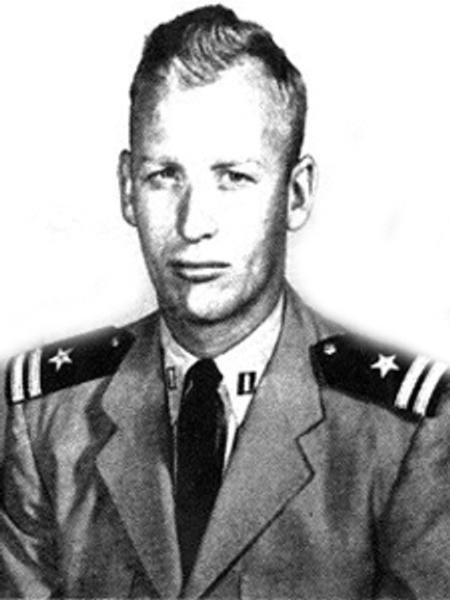
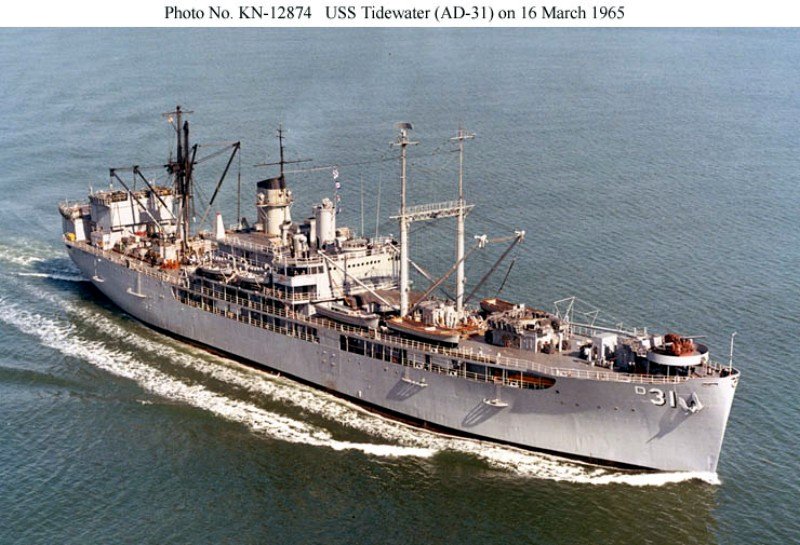
Lieutenant Harold D. Meyerkord was a U.S. naval advisor assigned to River Assault Group (RAG) 23. RAG 23’s nineteen boats operated out of Vĩnh Long and regularly patrolled three of the Mekong Delta’s provinces: Vĩnh Long, Vĩnh Bình, and Kiến Hòa. As an assault force, the RAG could transport up to 400 Vietnamese infantrymen into the wetland areas of the delta on converted landing craft. It also possessed various patrol boats and armored craft, capable of carrying mortars, 20- and 40-millimeter (mm) guns, and machine guns. On March 16, 1965, Meyerkord was scheduled to appear at the Naval Advisory Group headquarters to receive a Bronze Star medal. However, Meyerkord asked to be excused from the ceremony, explaining that he wanted to accompany his Vietnamese counterpart on a mission against a suspected Việt Cộng (VC) position near Vĩnh Long. Later that day, he was in the lead boat of a four-boat flotilla moving down a small canal. The flotilla turned a bend and was caught in a fusillade of enemy fire. Navy Chief Radioman Eugene E. Barney, one of Meyerkord’s enlisted sailors, seized his 12-gauge shotgun and took cover with an Army advisor behind a bench. Meyerkord remained in the exposed deckhouse and returned fire with his pistol. After a bullet slammed into his stomach, he cried out, “I’m hit,” and collapsed on the deckhouse but continued firing. Barney got up, grabbed Meyerkord in a bear hug, and attempted to get him to safety. A round hit Meyerkord in the chin, mortally wounding him, and another struck Barney’s shoulder. Both men collapsed onto the deck. Barney, who would later receive a Bronze Star for his heroism that day, was flown by helicopter from Vĩnh Long to the Third Field Hospital near Saigon and then back to the United States where he would spend the next six months recovering from his wound at the Balboa Naval Hospital in San Diego.
Navy Cross
Awarded for actions during the Vietnam War
CITATION:
The President of the United States of America takes pride in presenting the Navy Cross (Posthumously) to Lieutenant Harold Dale Meyerkord, United States Naval Reserve, for extraordinary heroism while serving with the Naval Advisory Group, United States Military Assistance Command, Republic of Vietnam, and assigned as Naval Advisor to the River Force of the Vietnamese Navy. Directly involved in more than thirty combat operations against enemy aggressor forces, Lieutenant Meyerkord at all times served to inspire all who observed him by his superb leadership and cool courage while under enemy fire. On 30 November 1964, he was instrumental in turning defeat into victory when, under fire, he reconnoitered ahead of friendly forces and discovered that river craft could proceed no farther because of a Việt Cộng canal block. He immediately proceeded to set up a shore command post, direct artillery fire, call for medical evacuation helicopters, and call for and direct air strikes. On 13 January 1965, he transferred from a command boat to a small boat, proceeded to a boat grounded in Việt Cộng territory, administered first aid to the wounded, and returned to the command boat, all of which took place while he was exposed to constant enemy fire. On 24 January 1965, he assumed direction of a Vietnamese River Force flotilla when the Vietnamese Commander was wounded in an ambush. Later in the action, although wounded himself and facing heavy fire, he continued the fight for almost an hour, until victory was assured. In his final action, on 16 March 1965, Lieutenant Meyerkord lost his life while leading a river sortie into insurgent territory after he had again positioned himself in the leading boat in order to direct operations and set an example for the Vietnamese Naval personnel. Caught in a heavy ambush in which he was wounded by the first fusillade from the Việt Cộng, he was reported to have returned their fire at pointblank range until he was again wounded, this time mortally. By his sustained leadership, initiative, and courage throughout these operations, Lieutenant Meyerkord contributed greatly to the United States effort in Vietnam and upheld the highest traditions of the United States Naval Service.
Harold is buried at Friedens Cemetery Mausoleum and Chapel, Bellefontaine Neighbors, St Louis County, Missouri. He is honored on the Wall at Panel 1E, line 96.
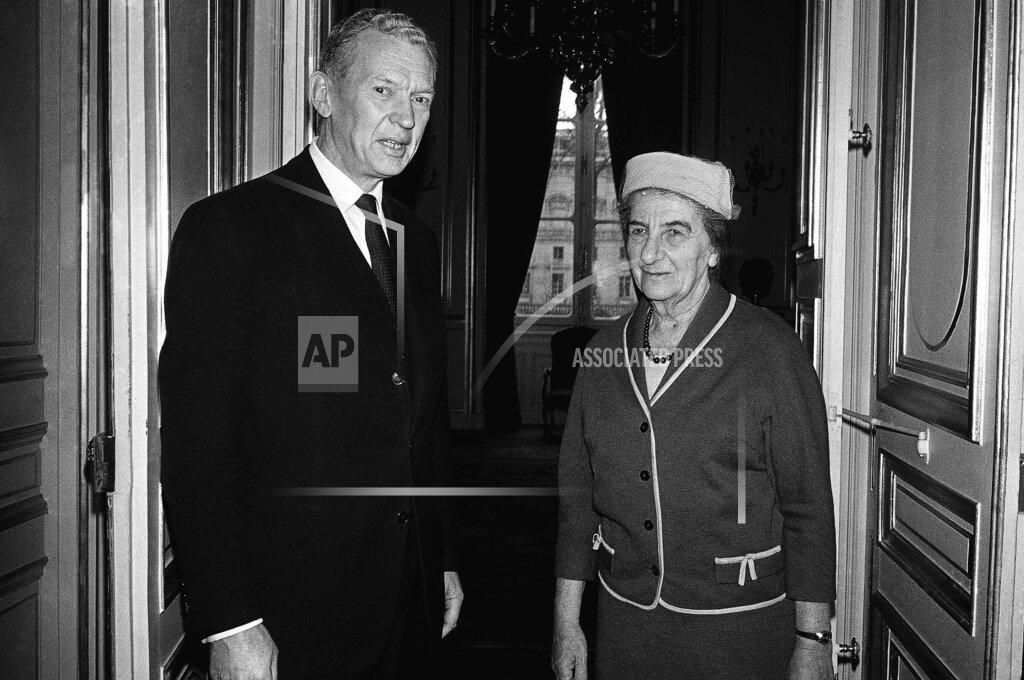
Undersecretary of State George Ball openly criticizes France for repudiating the ‘common burden’ of the anti-Communist world by failing to support U.S. efforts in South Vietnam. In an allusion to the Administration’s dispute with the French about Western obligations in Southeast Asia, Mr. Ball in effect called on them to contribute to the common effort or to stop pressing their views on others. The Undersecretary’s speech, made to a national foreign policy conference at the State Department, was a thinly veiled expression of the mounting irritation here with President de Gaulle’s opposition to American military efforts in Vietnam and Laos. Prominent officials not only are privately complaining of the lack of French support but also are charging that the French are attempting to undercut support for United States tactics,
“To play a useful and effective role on the world stage,” Mr. Ball asserted, “it is not enough for a nation simply to offer advice on all aspects of world affairs. It should be prepared to back that advice with resources. “If unwilling to do so, it does not contribute to the interests of the free world by seeking to impose its views on the nations that are carrying the common burden. In fact, when national positions are vigorously promoted without regard to their effect on the responsible common efforts of other states, free world interests may well be injured.” The Administration has never set out in detail the French actions that it regards as objectionable. Presumably, officials have known of French plans, reported from Paris today, to extend economic credits to North Vietnam.
Mr. Ball’s speech was aimed at many abroad and in the United States who, he said, have been calling for a gradual American withdrawal from various parts of the world. He said that the United States’ economic and military involvement with Europe was irreversible, while American support for non-Communist nations elsewhere was essential to fill the power vacuum left by the collapse of colonialism. He gave particular attention to the “proponents of a resurgent nationalism” in “certain European circles” who take advantage of the neoisolationism of others to injure the United States. That he meant the French was clear from his citation of a Gaullist phrase, “from the Atlantic to the Urals,” to describe their long-range vision.
France has agreed to give medium-term credits to North Vietnam under a one-year trade agreement.
An air raid today drove 200 Việt Cộng troops from Xóm Trưởng, a village 15 miles south of Saigon. Four government battalions went in to clear the area on the upper outskirts of the Mekong River (Sông Mê Kông) delta. The village is on the Vàm Cỏ Đông (East Vaico) River in Long An Province. Bombing and strafing by United States helicopters and South Vietnamese Skyraiders left it a smoldering ruin. The bodies of seven Việt Cộng guerrillas were picked up on the outskirts.
The Johnson Administration has quickly approved at least two recommendations for reinforcing anti-guerrilla operations in South Vietnam. More American-manned helicopters will be sent to South Vietnam for troop transport and strafing operations in the war against the Việt Cộng. In addition, 200 to 300 more United States military men will be assigned to work as advisers with training and combat units. of the South Vietnamese Government forces. General Harold K. Johnson, the Army Chief of Staff, made the recommendations yesterday at the White House on the basis of a week-long investigative trip to South Vietnam. President Johnson, Secretary of Defense Robert S. McNamara, and the Joint Chiefs of Staff, headed by General Earle G. Wheeler, heard General Johnson’s report and, it is understood, approved most of his proposals.
The Army chief focused the Administration leaders’ attention on the long-emphasized basic premise that the war against the Việt Cộng insurgents must, in the final analysis, be won inside South Vietnam. According to official estimates, without North Vietnam’s support 60 to 90 percent of the Việt Cộng operations could not be carried out. The intensified air attacks upon North Vietnam are intended to force the Hanoi regime to desist from its substantial role in the insurgency. But the import of General Johnson’s recommendations was that even with the air offensive the anti-guerrilla operations must be made more effective. He stressed logistical support, including helicopters, and increasing the number of military advisers with the South Vietnamese forces.
Of the 27,000 United States military men stationed in or on their way to South Vietnam, about 5,000 are advisers. They help train the regular government forces and also go into combat with them. In the combat zones the American advisers confer frequently with the military commanders and are available to provide advice on the basis of their own training and experience. Often they stay beside the battlefield commanders in actual combat. General Johnson came back from South Vietnam impressed by the effectiveness of the United States advisers and by the desire of South Vietnamese military authorities to have more of them.
The number of additional helicopter units to be sent to South Vietnam was not indicated. At present, including about two Marine helicopter squadrons, each equipped with 20 UH-34 transport helicopters,” there are about 400 United States-manned helicopters. Except for a handful of Air Force helicopters, the army provides the helicopter support. Its helicopter units serve as transports for South Vietnamese anti-guerrilla forces. They also engage in strafing operations.
Following the example of Buddhist monks who had performed self-immolation, 82-year old Alice Herz stood at the corner of Grand River Avenue and Oakman Boulevard in Detroit, doused herself with two cans of flammable cleaning fluid, then set herself ablaze. Though she was not a “Holocaust survivor” as reported in some accounts, Mrs. Herz had fled Germany in 1933 after the Nazis took power, and left France in 1940 after the German invasion, and she did stay temporarily in an internment camp for refugees before emigrating to the United States in 1942. She left a note that said, “I choose the illuminating death of a Buddhist to protest against a great country trying to wipe out a small country for no reason.” Two bystanders smothered the flames, but Mrs. Herz died of her burns 10 days later.
The Soviet Foreign Minister, Andrei Gromyko, confers with British government leaders in London, but the British are unable to persuade the Russians to join in convening peace talks on the situation in Vietnam. Mr. Gromyko spent almost two hours with the Foreign Secretary, Michael Stewart, on the first day of a four-day visit. “Friendly but unproductive” was the description of the talks given later by Foreign Office spokesmen. They said Mr. Gromyko was genial but had no response to Mr. Stewart’s questions about the possibility of talks on Vietnam.
Arab mobs attacked West German properties in Iraq and Lebanon today in protest against the German decision to establish diplomatic relations with Israel. In the worst demonstration, diplomatic sources reported from the Iraqi capital of Baghdad that a mob smashed windows and set fire to two floors of the West German Embassy there. The Baghdad radio said that 10,000 demonstrators marched on the embassy. It asserted that the building was not damaged. In the northern Lebanese port of Tripoli, 23 persons were hospitalized after thousands of students from the city’s schools clashed with security forces. Armed troops patrolled the streets.
The sailing of a 33-ship Turkish task force and heavy troop movements in southern Greece caused tension to mount over the Cyprus situation. Sporadic fighting between Greek Cypriot national guardsmen and Turkish Cypriots broke out yesterday and continued today in the village of Ambelikou near the northern mining town of Lefka. One Turkish Cypriot was reported to have been seriously wounded in the shooting. A Greek Cypriot National Guard sergeant was killed and a captain was wounded in the area last night. General Kodendera S. Thimayya, commander of the United Nations force in Cyprus, and Carlos Bernardes, special representative of U Thant, the United Nations Secretary General, discussed the tense situation with Archbishop Makarios, President of Cyprus.
A United Nations officer described the situation in the north as “pretty grim.” Turkish Cypriot sources reported that Ambelikou, which they said was surrounded and isolated, was running desperately short of food. Its piped water supply was cut off long ago, they said, and villagers are finding it difficult to get to wells. General Thimayya will fly to the area tomorrow for an investigation. So far United Nations efforts to arrange a ceasefire have failed. The latest trouble began last Friday when a force of Greek Cypriot national guardsmen, estimated at a total of three platoons, moved into the rough country between Ambelikou and Lekfa. The guardsmen were dispatched after the Turkish Cypriots attempted to improve the road between the two places with a bulldozer.
Tonight, as reports reached Cyprus of new Turkish fleet movements, the situation was recognized as the most serious since last August, when fighting on the island culminated in the bombing of northwestern coastal villages by Turkish aircraft. Both President Makarios and General George Grivas, who commands the Greek Cypriot armed forces, have said that if Turkish planes attacked again, Turkish Cypriot-held areas would be brought under Greek Cypriot control. Fighting between the Greek and Turkish Cypriots broke out in December, 1963. The Greek Cypriots, who hold a 4-to-1 majority on the island and control the Government, had sought to amend the constitution to dilute the veto power of the Turkish minority. The Turks considered this an infringement on the constitution’s guarantee of their minority rights.
Danish troops with bayonets were called out to restore order as scores of demonstrators swarmed over an army jeep heading a convoy carrying German soldiers into Denmark for a joint military exercise.
Peking sent a second protest note to Moscow today denouncing “shameless suppression” of a student demonstration against the United States in Moscow on March 4. The note demanded a fall Soviet apology for suppression of the demonstration over American actions in Vietnam and “brutal persecution” of the Chinese students injured in the incident.
The Soviet Union moved toward closer economic relations with the West by announcing today its intention to join the international agreement on patents and other industrial property rights. Yevgeny Artemyev, vice chairman of the Soviet Union’s State Committee of Inventions, informed a meeting here of the International Union for the Protection of Industrial Property of Moscow’s intention to ratify the 82-year-old pact. Officially termed the Paris Convention for the Protection of Industrial Property, the agreement requires that each member state grant the citizens of other member countries in the matter of patents, trademarks and other industrial property rights the same treatment it accords its own nationals.
The Allied Mobile Force is an “important deterrent” to Communist attack on the northern and eastern flanks of the Atlantic alliance, General Lyman L. Lemnitzer declared today. Plans for expanding the force from its present strength of one brigade group or 5,000 men are now before the North Atlantic Council, the alliance’s permanent political group. The Supreme Allied Commander disclosed that the Mobile Force now had a nuclear capacity. The force, he said, could be deployed in areas such as northern Norway, far from the center of NATO power, to reinforce local troops and face an invader with the prospect of fighting a force representing the entire alliance. Major General Michael Fitzalan-Howard of the British Army, who commands the Mobile Force, described its present composition and tactical role at the first on-the-record news conference at Supreme Headquarters in just over five years.
The Soviet Union disclosed today the establishment of a centralized civil defense organization to prepare the populace against missile attack in a thermonuclear war.
Differences of opinion have developed between the United States and Israel over the amount of arms Israel needs to maintain a military balance with the Arab states.
A 52-year-old civil servant in the guided weapons division of the British Ministry of Aviation was charged in court today with violation of the Official Secrets Act.
The Johnson Administration was reported today to be studying a wide-ranging plan for granting preferential tariff treatment to Latin America’s exports.
Civilian protests against the Brazilian revolutionary Government’s police methods are rising.
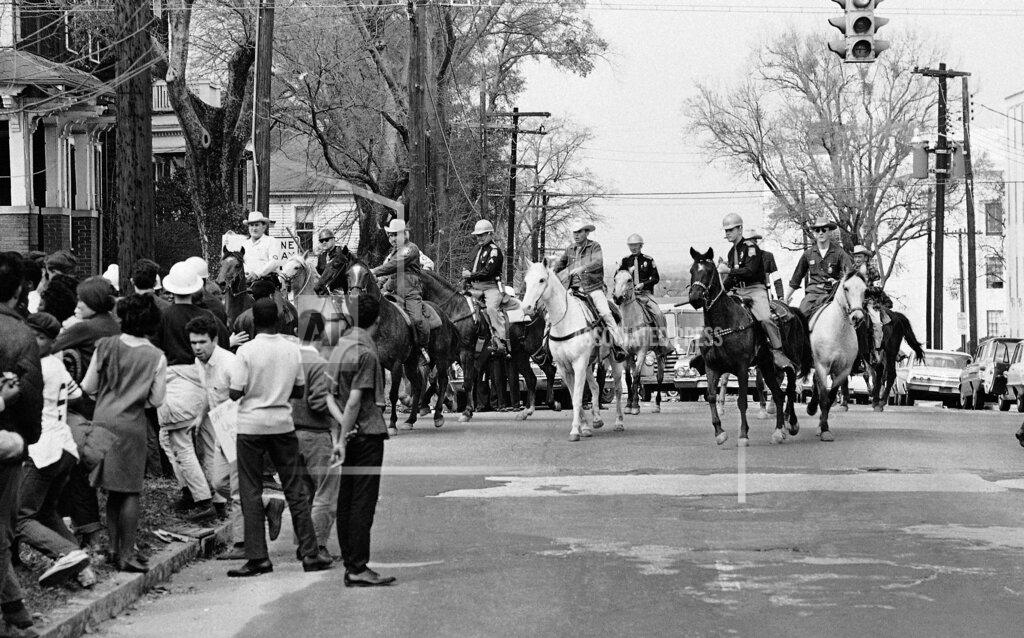
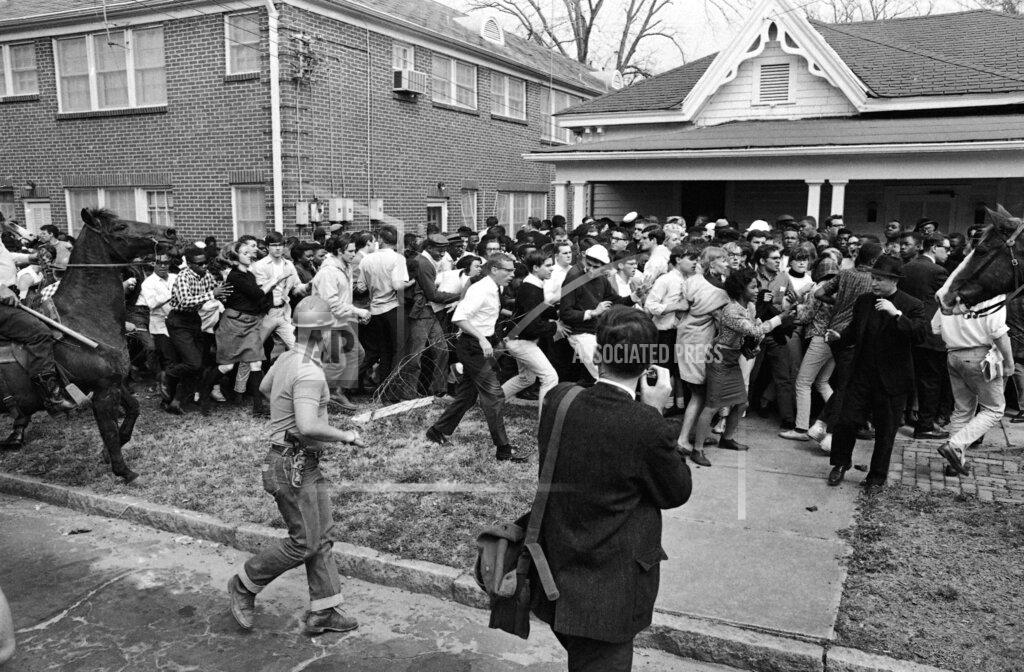
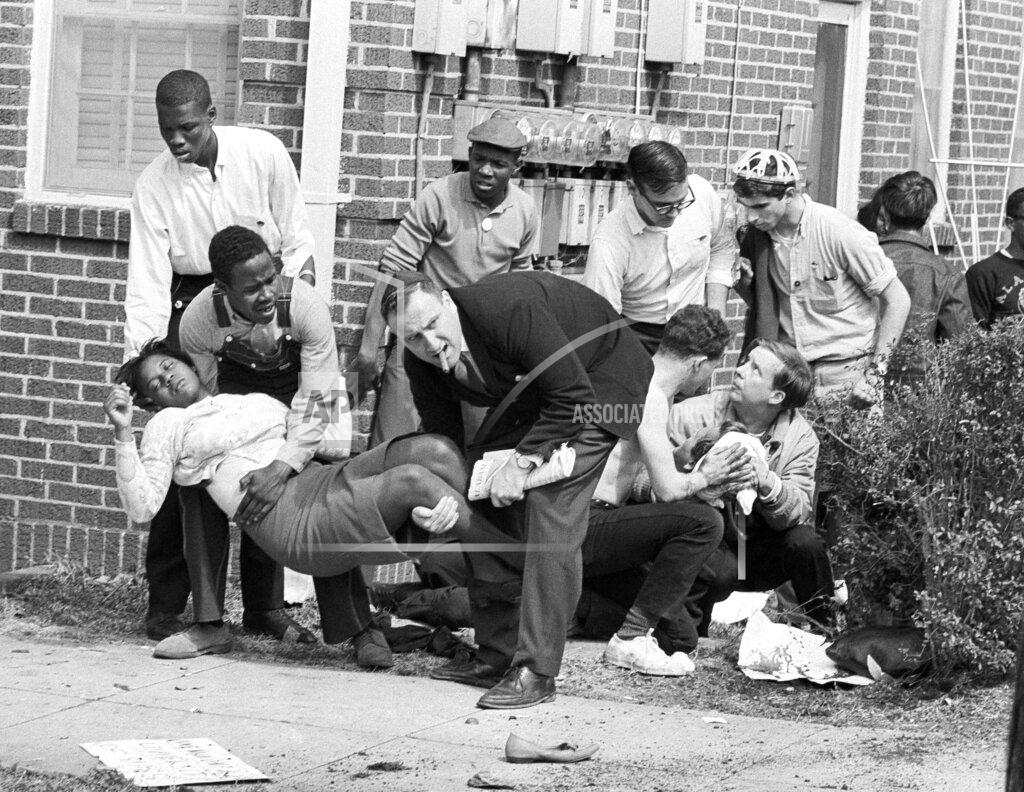
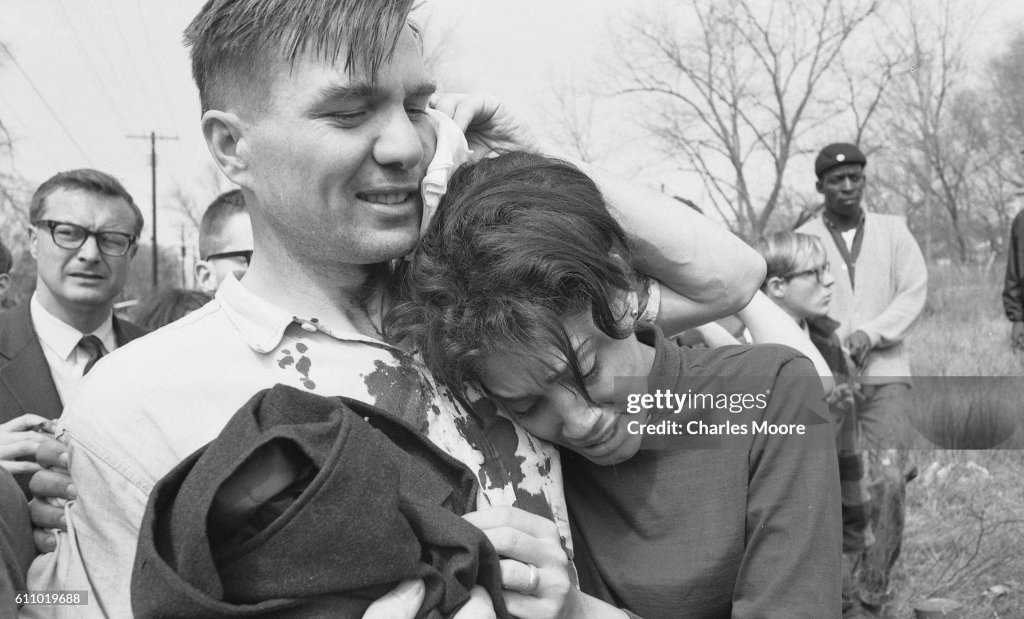
Mounted deputies of the Montgomery County Sheriff’s Office violently broke up a civil rights demonstration in Montgomery, Alabama, due to an order given by Circuit Solicitor David Crosland, who apologized later for a “mixup in signals.” Riding on horseback and swinging clubs and canes, officers rode into a crowd of about 600 marchers of the Student Nonviolent Coordinating Committee; 14 people were injured, and eight of them were hospitalized. A second march of 1,200 people, made after the organizers obtained a parade permit, took place without incident.
About 15 state and county policemen, some flailing with nightsticks and ropes, rode horses into 600 civil rights demonstrators in Montgomery today and sent the demonstrators screaming down a residential street. Eight persons were injured enough to be treated in hospitals, including Donald Hope, 38 years old, a white English teacher from Juniata College, at Huntingdon, Pennsylvania. He suffered scalp cuts. The police tactics in this Alabama capital so embarrassed local law-enforcement officials that they apologized publicly. attributing the clash to a “mixup.” Twelve hundred people crowded into a Black church tonight to protest the violence.
In Selm, Alabama, the Rev. Dr. Martin Luther King Jr. praised President Johnson’s proposed voting-rights legislation but called for continued demonstrations until the bill became law. Dr. King, arriving in Montgomery from Selma, called for an all-out protest march on the courthouse tomorrow. James Forman, executive secretary of the Student Nonviolent Coordinating Committee, made an appeal for a massive civil disobedience campaign to tie up transportation in Washington Thursday to force Federal action in Alabama.
[Ed: “Mix-up.” A “mix-up” is when they get your order wrong at McDonalds. “Excuse me, I didn’t order the police brutality with extra cavalry.”]
Congressional leaders in Washington were confident today that President Johnson’s bipartisan voting rights bill would be enacted substantially as the President outlined it last night before Congress. They were also confident that it would move swiftly through the House and with deliberate but rare speed through the Senate. The Senate Democratic leader, Mike Mansfield of Montana, and the Republican leader, Everett McKinley Dirksen of Illinois, do not expect Southern opponents of the bill to attempt a sustained filibuster, as they did last year against the omnibus civil rights bill. Therefore they are hopeful that it will not be necessary to shut off debate by a two-thirds closure vote. For the most part, Southern Senators agreed with this estimate, although one or two threatened to talk until their strength gave out.
In an address last night to a joint session, President Johnson promised that his Administration would remove once and for all every barrier to Black voting in some Southern states. The whole nation, not merely the South, “must overcome the crippling legacy of bigotry and injustice,” he said. Then, to prolonged applause, he sealed the pledge in the words of the Black civil rights hymn: “And we… shall… overcome.” Although the President said last night that he would send the bill, a product of bipartisan consultation, to the Hill on Wednesday, Mr. Dirksen said today that it would almost certainly not be offered until Thursday.
Mr. Dirksen explained that while there was agreement on procedures to assure the registration and voting of Negroes who had been discriminated against, there was still some tinkering to be done on details. This afternoon Mr. Dirksen and Mr. Mansfield, with their legal advisers, met with Attorney General Nicholas deB. Katzenbach and his deputy, Ramsey Clark. In the chorus of praise for the President’s speech last night, the only dissonant notes were sounded by Southern Democrats, and these were rather few and muted. The harshest criticism came from Senator Allen J. Ellender of Louisiana. He said he granted that in many Southern states, and in some parishes of his state, officials “have done many things they shouldn’t have to keep Negroes from voting.” He is not condoning these tactics, he said, but if the critics “looked at the reason these things were done, they would be sympathetic.”
[Ed: No. Just no. Don’t. In fact, you probably just need to not say anything at this time.]
More than 400 civil rights demonstrators tried to march to the courthouse in Selma, Alabama, but were turned back by Sheriff James G. Clark.
Plans for a four-day 50-mile march from Selma to Montgomery, Alabama, by civil rights demonstrators were taken under advisement by a federal judge who promised to rule “as soon as possible” on the march.
The House voted today to set up legal barriers against the long-standing practice of gerrymandering. A bill, passed by voice vote and sent to the Senate, would require all Congressional districts to be composed of contiguous territory “in as compact form as practicable.” This would at least discourage state legislatures from indulging in the more extreme form of gerrymandering, which has often resulted in the formation of grotesquely shaped districts, with the idea of benefiting the party in power.
The Senate approved today a $454 million bill to extend and expand the training of unemployed persons to fit them for jobs and to Improve their skills. The vote was 76 to 8.
With the announcement of the Administration’s new proposals for farm commodity programs expected in a few days, farmers are at each other’s throats again over the proper role of government in agriculture.
Federal Reserve officials told a Senate investigating group that the comptroller of the currency withheld from them information concerning possible irregularities at the San Francisco National Bank.
Offering of birth control advice and services to state welfare recipients became the official policy of the state of Michigan today.
New York police claim to have solved the knife murder of a teenager aboard a subway train in Brooklyn.
Dow Jones Industrial Average: 898.9 (-0.95)
Born:
Arto Blomsten, Finnish NHL defenseman (Winnipeg Jets, Los Angeles Kings), in Vaasa, Finland.
José Mota, Dominican MLB second baseman, pinch runner, and shortstop (San Diego Padres, Kansas City Royals), in Santo Domingo, Dominican Republic.
Joel Williams, NFL tight end (Miami Dolphins), in Pittsburgh, Pennsylvania.
Sergei Bazarevich, Russian NBA point guard (Atlanta Hawks), in Moscow, Russian SFSR, Soviet Union.
Cindy Brown, Team USA and WNBA power forward and center (Olympic gold medal, 1988; Detroit Shock, Utah Starzz), in Portland, Oregon.
Mark Carney, Canadian economist, Governor of the Bank of England, and Chairman of the G20’s Financial Stability Board, in Fort Smith, Canada.

 History Diaries