The Finnish parliament ratified the Moscow Peace Treaty, 145 votes for and 3 votes against (with 52 abstentions). Addressing the Finnish Diet Just before it approved the treaty, Premier Ryti declared: “In the same way as we waged war alone, we concluded peace alone. Only the future can show whether we acted wisely and rightly. Our country, like the whole of Europe, indeed, the whole of western civilization, still is in the greatest danger. No one can say what tomorrow will bring. We believe that by choosing peace we have acted in the best way for the moment.”
The West Front between the Rhine and the Moselle is quieter than ever. French general headquarters this morning had “nothing to report” and announced this evening that it had been “a quiet day on the whole.”
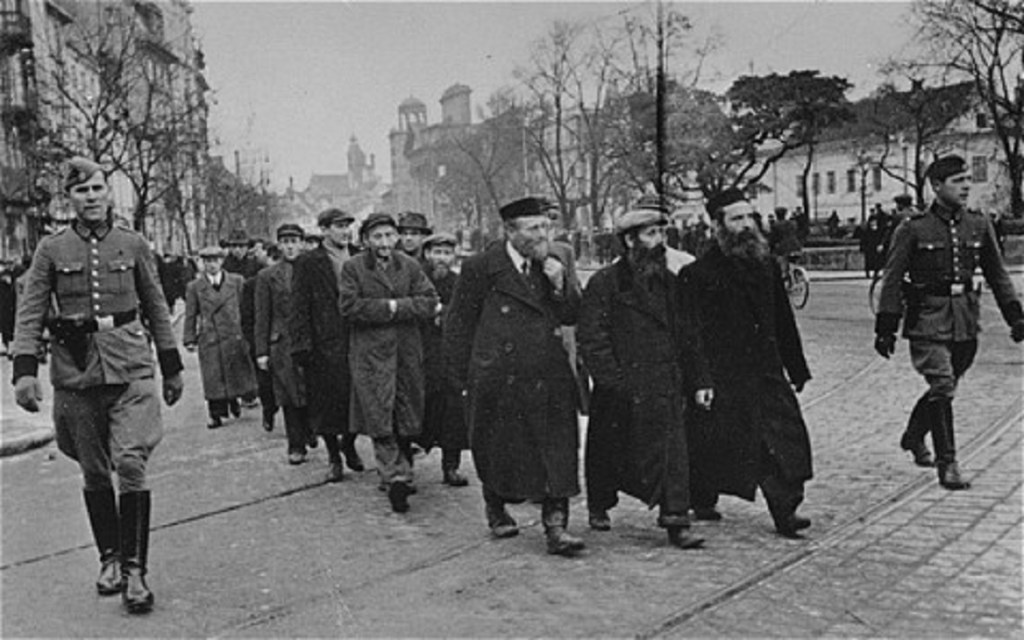
Some 80,000 Jews living in Kraków, the capital of the Polish Gouvernement General, are gradually being pushed back to the ghetto under the strict National Socialist regime of Governor Hans Frank.
Hitler assembles his senior military leaders for a conference.
Hermann Goering says 100-200 church bells are enough for Germany, smelt the rest.
By a vote of 240 to 0, with sixty abstentions, the French Senate this evening, at the end of its second day in secret session, voted confidence in the government “and its Allies” to continue the war “with increasing energy.”
Undersecretary of State Sumner Welles returns to Rome. He will see Count Ciano, the Italian Foreign Minister, and Premier Mussolini tomorrow and the Pope on Monday morning. Most important is that the American inquirer has come here in one of the most critical moments of the war, in a period of great diplomatic activity and tension, to hear from Premier Mussolini the last word on Italo-German desires and intentions. The atmosphere is infinitely more tense than when the Undersecretary previously visited Rome, less than three weeks ago. The Finnish war is over, Spring has come, relations between Britain and Italy are strained and Joachim von Ribbentrop, the German Foreign Minister, has been here and left behind rumors of sensational developments concerning the Axis and Russia.
Carol II of Rumania granted an amnesty to members of the Iron Guard in exchange for their allegiance. Imprisoned members of the Rumanian Iron Guard are released. King Carol granted amnesty to members of the fascist Iron Guard party after they swore allegiance to him. This is a key moment in the gradual shift of the country’s allegiance away from the Western Allies due to their ineffectiveness on the Continent.
There is unrest in Czecho-Slovakia on the first anniversary of the German takeover. The SS imposes harsh discipline with numerous arrests.
An Anglo-French staff conference with the Turks is held at Aleppo, Syria.
Indian nationalist Udham Singh is charged in London with the assassination of Sir Michael O’Dwyer, colonial ex-governor of Punjab.
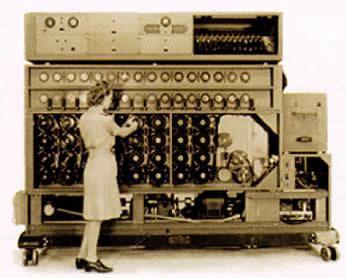
Alan Turing’s Government Code and Cypher School group at Bletchley Park makes a giant stride in reading German codes. Its first working Bombe, the “Victory,” is completed at the British Tabulating Machine Company at Letchworth, Hertfordshire. The Bombe goes operational and begins reading some German codes in virtually real-time.
The Colonial Office approved a request from the British High Commissioner in Palestine to introduce harsh penalties to deter the arrival of Jewish refugees from Nazi occupied Europe. Any ship involved would be liable to immediate forfeiture and the ‘owner, agent or master’ of any such vessel faced a fine or £1,000 and imprisonment for three years. The refugees themselves would also be liable to be six month prison sentences. The threatened fines and incarceration did little to stop the flow of fugitives, as six months in prison in Palestine was infinitely preferable to the possible alternatives the Nazis had planned for them.
British RAF bombers dropped propaganda leaflets over Warsaw, Poland. During the night (March 15-16), RAF bombers drop leaflets over Warsaw. During the return flight, a British Whitley bomber, low on fuel, lands by mistake in a field in western Germany. The startled inhabitants not only do not call the authorities, but they also chat with the British airmen and refuel their plane. They take off again before the authorities arrive amidst some small-arms fire.
The Royal Navy ASW trawler HMT Peridot struck a mine and was damaged in the English Channel off Dover, Kent (51°00′N 1°35′E). The crew was rescued by HMT Saon (also Royal Navy) and the ship was taken in tow by HMS Brilliant. The British tug Lady Duncannon later took over the tow but the Peridot sank before she could be brought into port. There were no casualties.
The British cargo ship Melrose struck a mine and sank in the North Sea off the coast of Belgium (51°21′N 2°13′E). 17 crewmen were lost.
The Dutch coaster Saba struck a mine and sank in the North Sea. all seven hands were lost.
Convoy ON.20 of nine British, eighteen Norwegian, seven Swedish, two Danish, two Finnish, two Panamanian ships departed Methil escorted by destroyers HMS Encounter, HMS Escort, HMS Electra, HMS Escapade. The convoy was joined at sea by destroyers HMS Kashmir and HMS Kimberley which departed Kirkwall at 0715/16th with a detachment of twelve ships for the convoy. These ships are included in the Methil sailing breakdown. Anti-aircraft cruiser HMS Cairo, assigned to this convoy, sustained sea damage and arrived at Scapa Flow. On the 17th, Cairo arrived at Sullom Voe to repair the damage. Light cruiser HMS Sheffield departed the Tyne on the 17th and provided close cover for the convoy. The convoy arrived safely at Bergen on the 18th.
Convoy MT.31 of five ships departed Methil escorted by the 19th Anti-submarine Group, destroyer HMS Vega and sloop HMS Stork. Vega and Stork detached at dark to escort convoy FS.122 which departed the Tyne at 2100. Convoy MT.31 arrived in the Tyne that night.
Convoy TM.27 departed the Tyne at 1700 escorted by the 3rd Anti-submarine Group and destroyer HMS Brazen. Submarine HMS Spearfish departed Blyth and joined the convoy on passage to Scapa Flow. Once the convoy was abeam Rosyth, Brazen took Spearfish on to Scapa Flow.
Convoy FN.121 departed Southend escorted by sloops HMS Lowestoft, HMS Hastings and destroyer HMS Valorous. The convoy arrived at the Tyne on the 17th.
Convoy OA.110G departs Southend.
The War at Sea, Friday, 15 March 1940 (naval-history.net)
Battlecruiser HOOD with destroyers HARDY (D.2), HOTSPUR, and IMOGEN arrived in the Clyde from Scapa Flow.
Heavy cruisers DEVONSHIRE and NORFOLK ran several runs over the D.G. range in the Firth of Forth. The cruisers then departed Rosyth for Scapa Flow. The cruisers were designated for Northern Patrol duties. DEVONSHIRE proceeded directly to patrol in the Denmark Strait.
Anti-aircraft cruiser CALCUTTA arrived at Sullom Voe.
Destroyers HAVELOCK and HAVANT departed Portsmouth for the Clyde, and arrived on the 16th. They left again on the 16th escorting submarine TARPON to Portsmouth.
Destroyer MATABELE arrived in the Clyde after refitting at Devonport.
Light cruisers GALATEA and AURORA escorted by destroyers SOMALI, TARTAR, and MATABELE departed the Clyde for Scapa Flow where they arrived at 0700/16th.
Destroyer MASHONA escorting tanker WAR BHARATA arrived at Scapa Flow.
Destroyers JERVIS and JANUS arrived at Rosyth.
Destroyer WOOLSTON departed Rosyth to act in conjunction with a Bomber Command exercise in the North Sea.
Submarine CLYDE departed Portsmouth for Blyth, joined convoy FN.122 on the 16th, and detached when the convoy was abreast Blyth, arriving on the 18th.
French torpedo boats BOUCLIER, FLORE, and MELPOMENE under the command of C.C. J.J.M.J. Fourniere arrived at Dover from Dunkirk for a courtesy visit. The torpedo boats were retained to assist in covering the 10th Minesweeping Flotilla operations between North Goodwin Light Vessel and Fairy Bank Buoy on 17 and 18 March. The torpedo boats then returned to Dunkirk.
Heavy weather again carried away a 500- to 600-foot section of the anti-submarine nets at Scapa Flow. Anti-submarine trawler COVENTRY CITY went ashore at Longhope. Destroyer KIMBERLEY commenced an anti-submarine patrol off Hoxa Boom south a line from Cantick Head to Sandwick Bay, South Ronaldsay. At 1900, KIMBERLEY was relieved by destroyer FORESIGHT. At 0800/16th, FORESIGHT was relieved by destroyer FEARLESS. The nets were repaired at 1100/16th and FEARLESS returned to Scapa Flow.
Anti-submarine trawler PERIDOT (550grt, Probationary Skipper W. H. Burgess RNR) was badly damaged on a mine off Dover in 51N, 1-35E, while on station LD 6. Anti-submarine trawler SAON (386grt) on station LD 7 took off the crew of the trawler. There were no casualties. Destroyer BRILLIANT took the trawler in the tow and transferred the tow at daylight at 0825 to tug LADY DUNCANNON (181grt). However, PERIDOT sank before arriving in harbour.
Destroyer BEAGLE was instructed to order Train Ferry No. 1 (2683grt), en route from Calais, to pass three miles southwest of the position where trawler PERIDOT was mined.
Convoy ON.20 of nine British, eighteen Norwegian, seven Swedish, two Danish, two Finnish, two Panamanian ships departed Methil escorted by destroyers ENCOUNTER, ESCORT, ELECTRA, and ESCAPADE. The convoy was joined at sea by destroyers KASHMIR and KIMBERLEY which departed Kirkwall at 0715/16th with a detachment of twelve ships for the convoy. These ships are included in the Methil sailing breakdown. Anti-aircraft cruiser CAIRO, assigned to this convoy, sustained sea damage and arrived at Scapa Flow. On the 17th, CAIRO arrived at Sullom Voe to repair the damage. Light cruiser SHEFFIELD departed the Tyne on the 17th and provided close cover for the convoy. The convoy arrived safely at Bergen on the 18th.
Convoy MT.31 of five ships departed Methil escorted by the 19th Anti-submarine Group, destroyer VEGA and sloop STORK. VEGA and STORK detached at dark to escort convoy FS.122 which departed the Tyne at 2100. Convoy MT.31 arrived in the Tyne that night.
Convoy TM.27 departed the Tyne at 1700 escorted by the 3rd Anti-submarine Group and destroyer BRAZEN. Submarine SPEARFISH departed Blyth and joined the convoy on passage to Scapa Flow. Once the convoy was abeam Rosyth, BRAZEN took SPEARFISH on to Scapa Flow.
Convoy FN.121 departed Southend escorted by sloops LOWESTOFT and HASTINGS and destroyer VALOROUS. The convoy arrived at the Tyne on the 17th.
Seventeen miles south of Needles, a civilian aircraft reported a submarine. Destroyer ISIS and anti-submarine yacht ST MODWEN (237grt) were ordered into the area, later joined by destroyers HERO and WILD SWAN. Destroyer HERO, en route from Portsmouth to the Clyde, made an attack on a submarine contact off the Needles Channel in 50-36.2N, 1-40.4W. Destroyers ARROW, WILD SWAN, and ANTHONY joined HERO in the search of Christchurch Bay and Poole Bay.
Anti-submarine trawler STELLA DORADO (416grt) stopped Belgian trawler IBIS (160grt) and brought her to the Downs for examination.
The Northern Patrol from 15 March to 31 March sighted sixty-nine eastbound merchant ships of which thirteen were sent into Kirkwall for inspection. One German ship was intercepted in this period.
Australian armed merchant cruiser HMAS KANIMBLA seized Soviet steamer VLADIMIR MAIAKOVSKY (3972grt) in the Sea of Japan and took her into control because she was carrying a cargo of copper from the United States to Germany. On the 26th, near Hong Kong she was handed over to French light cruiser LAMOTTE PICQUET, and taken to Saigon, arriving on 1 April. KANIMBLA also captured Russian steamer SELENGA.
The U.S. Senate’s long-drawn contest over the Hatch “clean politics” bill approached a conclusion tonight with an agreement by unanimous consent to vote on it at 3 PM Monday. The agreement was reached after two major and several minor roll calls had demonstrated conclusively that a Democratic bloc of about thirty members opposed to the bill could not smash a coalition including some Democrats and all of the Republicans marshalled for the measure by Senator Barkley, the majority leader.
The coalition prevailed first in a vote of 47 to 30 by which the Senate approved Section 15 of the bill, incorporating the prohibition of “pernicious political activities” that Senator Hatch would prescribe for State job holders paid wholly or in part with Federal funds, in the same manner that federal employes now are governed.
Later the Senate voted, down, 52 to 31, a motion by Senator Lucas to recommit the bill to the Committee on Privileges and Elections, an action tantamount to killing it for this year at least. The upshot of the day, which ended after debating and voting had dragged through more than eight hours, was that the Senate. demonstrated a firm intention to pass the bill and send it to the House, despite an amendment adopted yesterday to limit all contributions in federal campaigns to $5,000 by an individual in a year.
This amendment under other circumstances would have meant the death of the bill, as intended by the bloc which sponsored it; but the Democratic and Republican leaders chose to work for passage of the bill. And it appeared certain that the amendment would be lost somewhere along the route, in the House committee, in the full House itself, or in conference. The agreement for a vote was obtained by Senator Barkley about 7 in the evening after earlier efforts had failed and the Senate had headed toward a night session.
President Roosevelt unleashed a new attack today on opponents of individual income questions included by the Census Bureau in its 1940 population count. He accused Senator Tobey of New Hampshire of publicly advocating violation of the law and said Mr. Tobey was the first member of the upper chamber ever to do so. From his private quarters in the White House, where he spent the day recuperating from a cold, the President instructed his secretary, Stephen Early, to make public answer to an unnamed Senator who had urged a radio audience to refuse to answer inquiries of census takers about their incomes, The Senator recently urged his listeners to join him in refusing the information.
It was not necessary for Mr. Early to name the object of the Presidential attack. He merely smiled when it was suggested that Senator Tobey was the person in question. But news of Mr. Roosevelt’s stand brought an immediate reply from the New England Senator, who has been the spearhead of Senate opposition to the income questions and who sponsored a resolution condemning them as an invasion of private affairs of citizens. In a telegram to the President, Senator Tobey said: “If it is your position that an unauthorized ruling of a departmental bureau constitutes a law of the United States, then it is important that the people recall that such were the tactics used by Hitler in gaining powers never sanctioned by the people.”
Mr. Tobey added that it was “time to call a halt to attempts of departments to arrogate to themselves the function of a legislative body, especially in matters which threaten the people of this free country with imprisonment for not bowing to the will of a bureau.” The President already had denounced Senate opposition to the Census Bureau income form as an “obviously political move,” and the anonymity of the Senator referred to by Mr. Early on Mr. Roosevelt’s order was readily penetrated by newspaper men who heard him and Mr. Tobey himself.
Apologizing first for the President’s cancellation of his press conference along with all other appointments, Mr. Early said: “Had he seen you in person today he would have followed up the statement of Secretary Hopkins last night — as I know it was his intention. Mr. Hopkins discussed the objections raised, particularly those of one Senator to the census forms, attacking the questions relative to income. The President would have told you that these questions, endorsed by a wide range of prominent citizens and organizations, will develop the same basic statistics about the low-income groups that are now available for the higher income brackets through the Treasury.
“He would have added that he thought these statistics are needed by American business as a guide to mass buying power and that they are also vitally needed to study the situation of part-time and piece workers for whom there is no common denominator to represent the degree of employment in relation to the amount of wages and salaries received — in other words, the amount of money received in exchange for work. The President also would have pointed out that for the first time in his knowledge a United States Senator openly advised the American people to violate the law and held himself out as one person who will not answer the two income questions when he knows full well that, in his case, the answer would be unnecessary, since the enumerator would know that the Senator earns more than $5,000 plus.”
Senator D. Worth Clark (D-Idaho) today introduced a resolution to break off diplomatic relations with Russia in protest over the Soviet’s successful invasion of Finland.
Howard O. Hunter, Deputy WPA Commissioner, said almost a third of the nation’s WPA workers would be dismissed by June 30. The sharp reduction in WPA rolls will start next month.
A 13-year old New York boy whose twin sister had been held back in school fired a shot at her teacher from his rooftop. He fired a .32 caliber pistol at the teacher’s bedroom window, at 543 17th St., but she wasn’t there. The bullet crashed through a single room and landed on the floor, doing no other harm.
“The Grapes of Wrath,” starring Henry Fonda and directed by John Ford from the novel by John Steinbeck, is released.
Canada, which has 90 percent of the world’s supplies of nickel, develops it with the aid of large amounts of American capital and finds a chief market for it in this country, will shortly impose quotas on her export to make sure that none reaches Germany and Russia.
More than 80 people perished in a flood from the River Doce in southeastern Brazil.
Royal Navy aircraft carrier HMS Eagle arrived at Singapore for repairs for damage caused by the accidental explosion of 14 March 1940.
Soviet troops were reported to have sustained more than a dozen casualties today in a clash between Russian and Japanese border patrols near the Sakhalin-Karafuto boundary. Two Japanese were reported wounded. The Japanese said the Soviet patrol opened fire without warning when the two patrols met.
Reports reaching Peiping today said both Japan and Russia were reinforcing their positions in the Nomonhan Hill area of the disputed Manchukuo-Outer Mongolia frontier. Observers in China said recent developments “unmistakably confirm” that friction was continuing on the border between Japanese-dominated Manchukuo and Sovietized Outer Mongolia, where a truce last September halted large-scale fighting. A Japanese-Russian mixed commission, appointed to determine the boundary line, disbanded January 31, announcing that it was unable to reconcile the views of the two parties. A report in Tokyo said there had been two exchanges of fire between Russian and Japanese troops on the disputed frontier in recent weeks.
Battle of South Kwangsi: A detachment of the Japanese 22nd Army captures Yungshun, east of Nanning.
Japanese forces were reported in action in three South China war sectors today as the Japanese High Command announced in Canton that a fresh mopping-up drive had been launched Wednesday against 30,000 Chinese troops in Southeastern Kwangsi Province. The announcement said fighting east of the road connecting the Japanese military outpost at Nanning with their supply base on the Gulf of Tonkin was turning “decisively” in the Japanese favor.
Chungking sources said strong Chinese reinforcements had moved into the Hsunshan district, south of Canton, which the Japanese occupied on March 8, and that bitter clashes were in progress.
Japanese press dispatches said Japanese mopping-up drives on Hainan Island, south of Kwangtung Province, had been successful, with the remnants of Chinese forces being cornered and “wiped out.”
Royal Australian Navy armed merchant cruiser Kanimbla, a converted Australian passenger ships, is operating in the Sea of Japan. It captures two Soviet freighters, the Selenga and the Vladimir Mayakovsky (U.S. copper), carrying ore to Germany. The captured ships are taken to Saigon in French Indochina via Hong Kong.
General Sir Cyril Brudenell White is appointed Australian Chief of General Staff. He had held the same position from 1920-1923 and is recalled to service and promoted to General to take this position, which became available when his predecessor Lieutenant-General Ernest Squires unexpected passed away.
Dow Jones Industrial Average: 146.53 (-1.58)
Born:
Phil Lesh, American bass guitarist for the Grateful Dead, in Berkeley, California.
Tommy McLain, American swamp pop singer, multi-instrumentalist “Sweet Dreams”), and songwriter, in Jonesville, Louisiana.
Vladislovas Česiūnas, Lithuanian sprint canoeist (Olympic gold medal, USSR, C-2 1000, 1972), in Vyšnialaukiai, Lithuania (d. 2023).
Naval Construction:
The Royal Navy “T”-class (Second Group) submarines HMS Trusty (N 45) and HMS Turbulent (N 98) are laid down by Vickers Armstrong (Barrow-in-Furness, U.K.).





 History Diaries