



South Vietnam’s President Nguyễn Văn Thiệu ordered his army to abandon defense of the nation’s second largest city, Huế, and to retreat southward to defend Saigon. The decision led to more than 250,000 civilians refugees fleeing southward over the next six weeks.
The Saigon command said today that heavy fighting had flared in Pleiku Province, stirring worry about renewed North Vietnamese attacks in the Central Highlands. Late last night, the command reported, North Vietnamese troops attacked an armored cavalry command post near Củ Hành Air Base, less than two miles east of the city of Pleiku. Heavy fighting was also reported around the district town of Thành An, 12 miles south of Pleiku, a key highland city. These, clashes are part of a surge of North Vietnamese activity in the northern provinces, the highlands and around Saigon. Last week the North Vietnamese seized the highlands city of Buôn Ma Thuột — a military as well as psychological blow to the government — leaving only two highlands towns of any consequence, Pleiku and Kon Tum.
The Associated Press reported that the South Vietnamese command moved its Central Highlands headquarters to the coast today and that a United States Embassy spokesman said almost all Americans in the highlands were evacuated because of expected North Vietnamese drives in the region. The heavy fighting around Thành An raised speculation about a North Vietnamese thrust toward the western flank of Pleiku, a town whose airstrip has been under rocket attack in recent days. The worsening military situation in the highlands was underscored when the Saigon command disclosed that the Buôn Dôn base camp in Đắk Lắk Province had fallen to the North Vietnamese. The camp was 25 miles northwest of Buôn Ma Thuột.
South Vietnamese military authorities have denied that Buôn Ma Thuột has been lost and insist that Government troops are fighting to keep the city. But reliable informants and reports from the scene have made it plain that the city is now in the hands of the North Vietnamese. At the weekly Saturday briefing of the Việt Cộng here, Colonel Võ Đông Giang, deputy head of the Việt Cộng delegation, said that the Communists were in complete control of Buôn Ma Thuột but that South Vietnamese planes were carrying out heavy bombing and strafing raids in the city. The focus of attention remained the Central Highlands and the situation around Pleiku
A government communiqué said that army rangers and the North Vietnamese were engaged in fighting west and northwest of Thành An. The command added that the town was shelled by 130‐mm guns and 70 rounds of assorted heavy weapons. The command said that seven government soldiers were killed and listed North Vietnamese casualties at 17. The government added: “The nationwide offensive by North Vietnamese Communist forces in South Vietnam is now almost two weeks old and new attacks with infantry, tanks and artillery were continued by the Communists.” The Saigon command added that there was “heavy fighting on all main warfronts across the country.” With the clashes in the high lands, North Vietnamese forces launched more tank‐led assaults near the key city of Tây Ninh, a capital and district of 250,000.
A military source reported that two regiments, or about 4,000 men, of the North Vietnamese Fifth Division were moving out of the Kiến Tường area of the Mekong Delta and toward Tây Ninh Province through Cambodia. The source said that the North Vietnamese were moving toward the Gò Dầu Hạ front along Route n leading to Tây Ninh city. Gò Dầu Hạ is 18 to 20 miles south of Tây Ninh, and the highway is the key supply route to the city. The road is now interdicted by small guerrilla groups. Should the North Vietnamese succeed in permanently cutting off Route 22, it would virtually strangle Tây Ninh and force the South Vietnamese Air Force to mount a major airlift of food and key supplies into the city.
The bleak situation around Tây Ninh was evident with the announcement by the Saigon command today that South Vietnamese troops had withdrawn yesterday from a village headquarters and nearby militia outpost, four miles southwest of Hiếu Thiên, a district town. The town is about 65 miles southwest of Tây Ninh City. At the same time, radio contact was lost last night with an outpost about eight miles north of Hiếu Thiên. This followed a sizable North Vietnamese ground attack led by 14 tanks, the command said. One South Vietnamese military source said that elements of three North Vietnamese divisions were moving through Tây Ninh Province and preparing for a major assault on Route 22, if not on the city itself. The units are the Fifth, Ninth and the new Third Divisions. One South Vietnamese from Tây Ninh estimated that Government forces in the province totaled 18,000 troops, compared to an estimated 20,000 North Vietnamese.
On the highway from Gò Dầu Hạ today, families with sacks of clothes and rice waited nervously for buses and silently watched army trucks with troops and ammunition speed past. Helicopters whirred overhead. Artillery and rocket fire sounded in the distance. Puffs of white and black smoke flared over the peanut and sugar‐cane fields that flank the flat highway northwest of Saigon.
“My son may die, my son may die,” said Phân Đạm Mang, a barefoot farmer whose 19‐year‐old soldier son is missing in the surge by North Vietnamese forces around this area, 40 miles northwest of Saigon and 20 miles south of Tây Ninh. Trịnh Thị Mây, an old woman with a towel around her head, shrugged and laughed. “People are afraid all the time now, daytime, nighttime, all the tune,” she said in Vietnamese. “I wish I could sleep under a tree and not hear the noise. I’m tired. I want to go home.”
Even during the 1968 Tet offensive, the villagers remained in their homes around Gò Dầu Hạ, a district seat in Tây Ninh Province. But in the last few days the families here have become alarmed because of the stepped up drive, apparently designed either to overrun the city of Tây Ninh or to cut Highway 22, the key supply route. The families that surged along Highway 1 today were frightened and forlorn. They sat beneath banana trees and were huddled in groups beside the road, whispering and listening to the thump of artillery and dozing in the pulsing heat on their packs of clothes. “The artillery came today so close, everybody began running,” said 18‐year‐old Trần Văn Nghĩa, pedaling a rickshaw with his 15‐year‐old sister and 6‐year‐old brother. “We’ve never left home before. We’re a little scared. When it’s quiet, we’ll go back.”
“We’re afraid of the two sides,” said Nguyễn Văn Hải, a truck driver. “There is so much panic. People are afraid of the fire. When there’s a helicopter circling and about to land, the firing begins. When there are no choppers, there’s no firing. It goes on like that. We’re in the middle.” In Gò Dầu Hạ itself, insurgent artillery fire centered on the district headquarters and a nearby landing zone for government helicopters. Heavier fighting and a buildup of government troops and tanks were reported around the province capital to the north of Gò Dầu Hạ. One source from Tây Ninh said there were about 20,000 insurgents now in the province, including elements of the North Vietnamese Third Division, comprised of former prisoners of war. There are said to be at least 18,000 government troops within Tây Ninh. The military command has set up a headquarters in the city, led by Brigadier General Lý Tòng Bá, the commander of Saigon’s 25th Division.
Paul Leandri, a 37-year-old correspondent of Agence France-Presse, was shot and killed by Saigon police, who had summoned him to ask questions about a dispatch he had written about the battle for Buôn Ma Thuột. The police said Mr. Leandri was accidentally killed when he bolted from the police headquarters compound in his automobile. According to a police statement, Paul Leandri, a 37‐year‐old correspondent of Agence France‐Presse, was accidentally killed when he drove away from police headquarters in his Peugeot automobile and refused to heed warning shots and cries for him to stop. The statement said a patrolman had fired three times at the tires of the vehicle to stop it and that one shot killed Mr. Leandri. According to doctors at the French‐staffed Grail Hospital, one bullet struck Mr. Leandri on the left side of his head and lodged in his skull, apparently killing him instantly. One hospital source said the bullet appeared to have been fired from a distance of about 30 feet.
Cambodian government forces retook the strategic town of Tuol Leap, eight miles west of Phnom Penh, the capital. This was the first major advance by government troops since the start of this year’s insurgent offensive. At the same time, however, at least nine rockets landed in the vicinity of the United States Embassy in downown Phnom Penh. Two of them struck a Buddhist pagoda less than 100 yards away, killing four persons and wounding 20, including the monk who heads the pagoda.
Government forces have been trying for nearly three weeks to retake Tuol Leap. They lost the area during a major move against rocket emplacements northeast of the village. Since then, the Communist forces have reportedly moved in more rockets and 105‐mm. howitzers, which are far more accurate than their 107‐mm rockets, for the daily attacks on Pochentong Airport. The rockets and artillery bombardments have on occasion caused suspension of an emergency airlift that is the lust supply link between the capital and the outside world. Last Thursday, a rocket destroyed an ammunition depot at the airport.
Government military sources said that the troops reoccupied Tuol Leap about 5 PM today, after having inflicted heavy casualties on the Khmer Rouge troops. There was no mention of the extent of government casualties in the assault. Possibly one measure of the troop advance in the area, eight miles west of the capital, was that only seven rockets landed on the airport today compared with as many as 65 on earlier days. The government forces have been able to halt or slow enemy advances in many areas, but the pattern has been that when a major village or outpost has fallen the government forces have been unable to retake it.
Now, the question is whether the government forces can retain Tuol Leap. Stretched thin along the front lines, the government forces might have to withdraw from Tuol Leap at a Moment’s notice for action on another front. The capture of Tuol Leap has not necessarily relieved the pressure on Pochentong Airport. Many rocket positions still exist, concealed among thick stands of bamboo along the Prek O Khsach River northeast of the village. But the recapture does give government forces a better base for attack in two directions on this river bank area. Three weeks ago, when the Khmer Rouge realized that government forces were about to undertake a major campaign against these rocket positions they moved, into Tuol Leap, splitting the fovernment lines.
The action today is likely to raise the morale of government forces. For them, there has been little but grim news from all fronts almost from the moment that Khmer Rouge troops began their dry‐season offensive in the first week of January. Details of battle at Tuol Leap were not immediately made public. Yesterday, government forces were using armored personnel carriers and helicopter gunships to open the way for infantry units. In most cases, the insurgents broke off contact.
From other battlefronts, the news today continued to be negative for the government, by and large. At Neak Luong, the besieged Mekong River town 38 miles southeast of Phnom Penh, insurgent gunners continued their shelling of the town, firing more than 300 rockets and artillery rounds during the night and more than 100 rounds during the day today into the center. However, helicopters were able to land and take off during the day with some of the wounded.
In Phnom Penh the rockets that landed near the American Embassy caused no damage to the embassy itself, which is heavily protected by antisharpnel screens and concrete walls. In the Wat Thanh pagoda near the embassy, the rockets landed in an area where more than 400 refugee families have camped, huddled together in wooden shelters with bunkers or shallow holes for protection against rockets. The first rocket struck without warning and there was no time for the refugees to dive into their bunkers. The men were making the brass artifacts they sell to the few tourists here. Children were playing between the shacks. One of those struck by the shrapnel from the first rocket was Le Long, the chief priest in the pagoda. He was taken to a nearby hospital and was reported in satisfactory condition.
Meanwhile, Cambodian political sources indicated tonight that the efforts of Premier Long Boret to form a new government were still being stalled by interparty bickering. Although the Premier was ordered by Cambodia’s President, Marshal Lon Nol, to form a new government last Monday, there has been no progress. The dominant party here is the Social Republicans. But the party has been under pressure from two other parties, the Democratic and the Republican. These two parties would like some role in new government. Regardless of its final composition, however, it is assured of having the same leaders at its head, Marshal Lon Nol and Premier Long Boret, and therefore little changed in character.
The Ford Administration is considering asking Congress for at least $421-million in new military aid for Cambodia as soon as there is a settlement of efforts to give Cambodia $222-million in immediate emergency help.
Within the last two days, Portugal’s new High Council of the Revolution has seized the great bulk of the country’s financial power. It nationalized all insurance companies, following the nationalization of banks Thursday. The council declared that it had been “urgent” to take control of the 35 insurance companies because they controlled huge sums of money that were being used “not for the benefit of the working class but to augment still further the profits of a privileged minority.”
Former President Antonio de Spinola, a stanch opponent of the Communists, may have inadvertently bolstered their political fortunes in Portugal, according to an account of an abortive coup last Tuesday. Leftist officers supported by the Communists are now in control. Yet, according to the most plausible account now available, they came close to losing power on Tuesday and were saved by premature action of General Spinola. Brazil granted asylum to General Spinola, who fled Lisbon last week.
Kidnappers who seized Gianni Bulgari, 40, heir to a jewelry fortune, three days ago on a Rome street have demanded a record $16 million ransom for his release, police sources reported. The request came through a note written by Bulgari to his family and delivered to a friend, the sources said. The previous biggest ransom demand was $14.2 million for Victor E. Samuelson, an Exxon executive kidnaped in Argentina last year and released after 49 days and payment of the ransom.
Britain ordered troops to start clearing 60,000 tons of rat-infested garbage piled high in Glasgow because of a nine-week wildcat strike by refuse truck drivers. The decision came after Glasgow’s council held an emergency session and warned the situation was “getting out of control.”
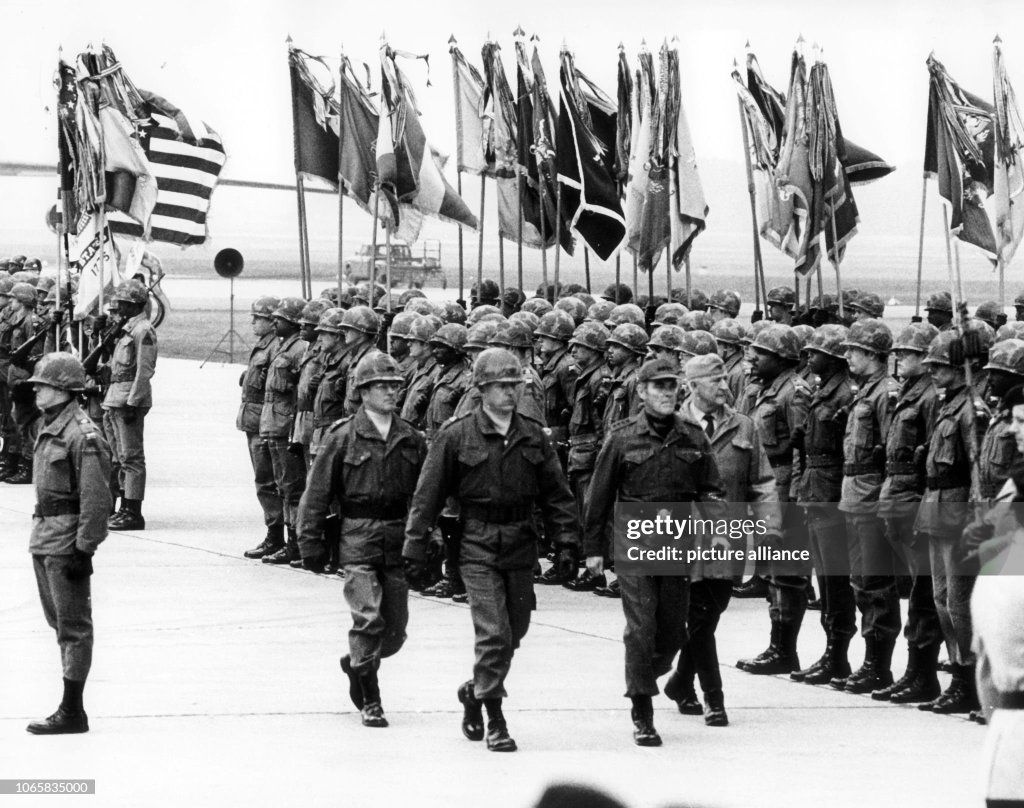
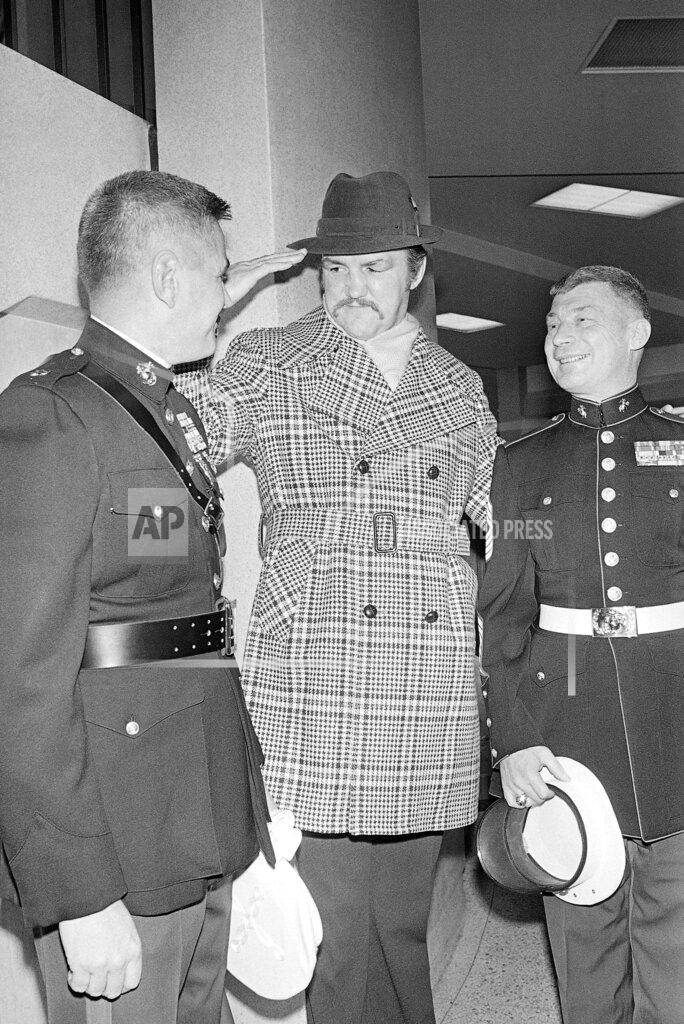
A general’s daughter testifying for the defense told a U.S. Army court-martial in Frankfurt, West Germany, that she heard another general tell her father that he had been instructed “to get” 1st Lt. Matthew R. Carroll, who is on trial for refusing to cut his hair. Peggy Hoefling, daughter of Major General John A. Hoefling, said the remark was made by Major General Jonathan R. Burton, commander of the 3rd Armored Division and the man who convened the trial. The woman said Burton said the order to get Carroll came from Lieutenant General William R. Desobry, who commands the 5th Corps to which the 3rd Armored Division is assigned.
An Athens lawyer defending some of Greece’s former military leaders has been convicted of defamation of authority and incitement to disobedience. Lawyer George Alfantakis, defending top members of the former junta, was released pending appeal of his 10-month sentence. Alfantakis was indicted for publishing a statement in which he claimed that the officers involved in last month’s attempted coup had been held illegally and in violation of the constitution.
Mikhail S. Agursky, a leading Jewish dissident and son of a founder of the American Communist Party, said that Russian authorities have given him permission to leave for Israel. Agursky is the first well-known Jewish activist to be allowed to emigrate since January, when the Soviet Union disavowed the 1972 Soviet-American trade agreement because of a stipulation in U.S. trade legislation that linked trade benefits with freer emigration.
A supertanker owned by Finland’s state oil refinery sailed toward Africa to dump thousands of tons of poisonous industrial wastes into the Atlantic Ocean. The Finnish Interior Ministry was trying to force the ship to return to Finland and not dump the waste in the ocean.
In the four months since the World Food Conference ended in Rome amid criticism of its failure to provide immediate famine relief, several of the meeting’s long-range proposals for preventing famines have been moving toward realization at a promising pace, experts on the world food situation say. They also say that it is already evident that the conference marked a significant beginning in the world’s efforts to prevent famine.
Secretary of State Kissinger made another apparently fruitless effort to persuade President Hafez al-Assad of Syria to withdraw his opposition to Egypt’s negotiating alone with Israel on a new Sinai agreement. After five hours of talks in Damascus with Mr. Assad, Mr. Kissinger went to Amman, Jordan, without any apparent sign that the Syrian leader had altered his opposition to the Egyptians’ negotiating with the Israelis alone. As he did eight days ago in his first session with Mr. Assad on his current Middle Eastern visit, Mr. Kissinger held open a possibility that once there was an Egyptian‐Israeli accord, Israel and Syria might hold talks of their, own—something that American officials acknowledge is only a distant hope. Aboard Mr. Kissinger’s Air Force jet, reporters were told that the Secretary did not exclude Syrian‐Israeli talks. At the airport Mr. Kissinger said he would return again to Damascus while he was still in the Middle East.
Kuwait imposed a temporary ban on all dollar transactions today to ease selling pressure on United States currency. Egypt’s official Middle East News Agency reported. The move followed by a day Saudi Arabia’s decision to end its currenrcy’s links to the dollar, in effect raising the. value of the riyal by 2.3 percent. Kuwait’s Finance Minister, Abdel‐Rahman Salem al‐Atili, said that the dollar ban would last only “until the situation clears up,” the agency said. The actions by two oil‐producing nations were not expected to have serious short‐term consequences on international money markets since the immediate impact was confined to internal chanbes. The dollar is the unit of measurement, for oil contracts.
Talks began in Tehran today between Iran and Iraq to settle long‐standing disputes, including demarcation of their borders. The Iranian delegation was led by Foreign Minister Abbas Ali Khalatbari and the Iraqis were headed by Foreign Minister Saadun Hamadi. Also present was Algerian Foreign Minister Abdelaziz Bouteflika, representing President Houari Boumediene, who brought the two countries together during last week’s summit meeting of the Organization of Petroleum Exporting Countries in Algiers. On arriving in Teheran today, Mr. Bouteflika said: “I can say with confidence that the Iran-Iraqi talks will be successful.” Later he and Mr. Hamadi were, received by Shah Mohammed Reza Pahlevi. The talks today were concentrating on drawing up plans and procedure to implement the four‐point agreement worked out in Algiers by the Shah and Saddam Hussein, deputy chairman of the ruling Iraqi Command Council. The agreement included defining land boundaries and a border along the Shatt al Arab waterway that will give both countries equal navigation rights.
Meanwhile, Kurdish rebels in northern Iraq said they would send observers to the border talks and might accept the Baghdad Government’s ceasefire offer made three days ago, according to a rebel radio broadcast monitored in eastern Turkey. The Kurdish radio, monitored by the Independent Hurriyet Haber news agency, said that the Kurdish leader, General Mustafa al‐Barzani, believed it might also be possible to respect all legal decisions made at the talks between the foreign ministers of Iran and Iraq. The agency also monitored a Tehran radio report saying that the Shah of Iran was seeking a solution to the bitter dispute between Kurds and Iraqis.
The Massachusetts Institute of Technology announced an agreement with Iran to train nuclear engineers for the Iranian electric power industry. The agreement would mean about $1.3 million in tuition for MIT over a period of three years.
Guyana Prime Minister Forbes Burnham, on the third day of an official visit to China, said that Chinese officials told him he could not see Chairman Mao Tse-tung because the 81-year-old Chinese leader is suffering from a cold. Concern over Mao’s health increased recently when he failed to receive two other visiting dignitaries.
A leading Filipino opposition leader acting as attorney for defendants charged with subversion said today that the military had used torture to extract confessions from his clients. Former Senator José Diokno, who was himself detained for more than a year by the martial law government here, made his statement before a Military commission investigating two Roman Catholic priests and 29 youths charged with conspiracy to commit rebellion. After the two priests charged maltreatment of other detainees, the military investigated and substantiated some of the charges. Several soldiers were penalized. Mr. Diokno said that the torture or threat of it had led some of the accused youths to admit the government’s charges.
The administration is considering an offer of major concessions on the President’s economic program in return for a commitment of congressional restraint on spending. The administration is reported to be willing to accept a tax cut of as much as $30 billion and a budget deficit of $70 billion or more in the fiscal year starting this July. This would be an increase from the $16 billion tax cut and a budget deficit of $52 billion proposed by the President in January. The substantial changes are being considered because the administration believes that Congress might go on a spending spree, White House officials said.
White House sources confirmed that the Rockefeller commission would start investigating allegations of complicity by the Central Intelligence Agency in assassination plots against leaders of foreign governments as an outgrowth of its inquiry into the C.I.A.’s domestic activities. President Ford’s growing concern over recent news reports linking the C.I.A. to several assassination plots was said to be responsible for the additional inquiry.
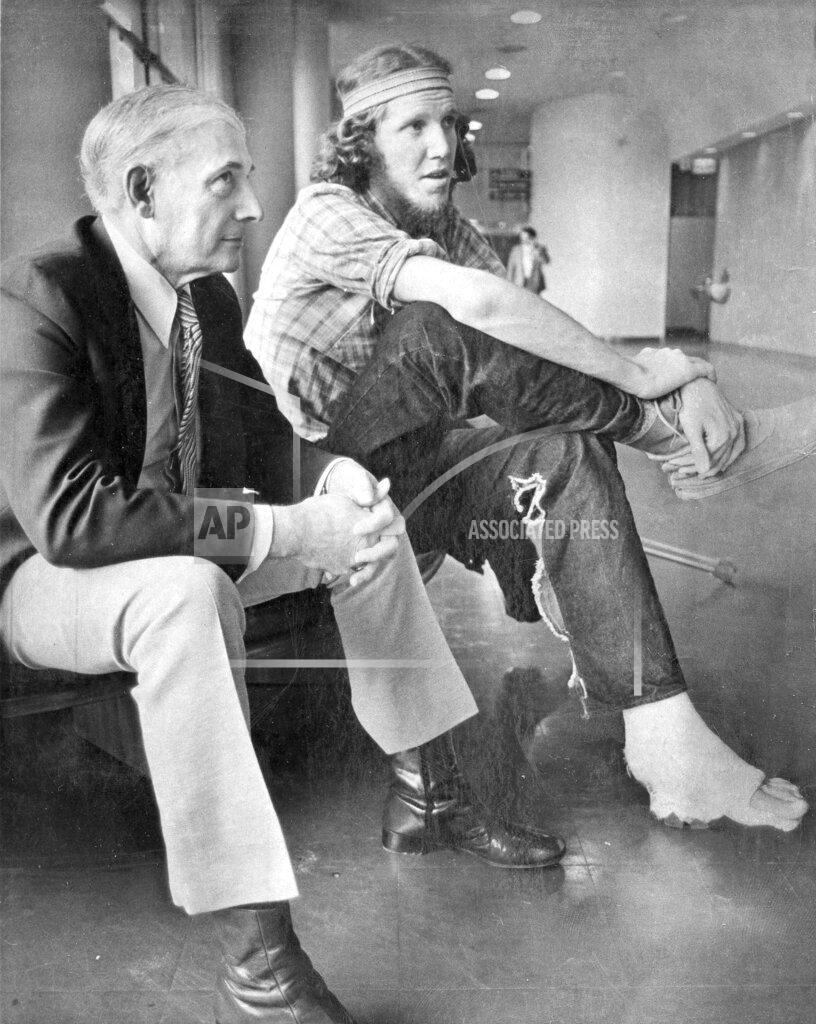
Ted Bundy victim Julie Cunningham disappears from Vail, Colorado. Julie was born in Winchester, Massachusetts. She had lived in Vail, Colorado, for years prior to her murder, working as a ski instructor in a ski shop. 26-year-old Julie Cunningham was last seen in Vail on March 15, 1975. She disappeared early in the evening after she left her apartment in the Apollo Park neighborhood to visit a local tavern. She was last seen wearing a brown suede jacket, blue jeans, a ski cap, and boots. She has never been heard from again. Although never charged in her case, serial killer Ted Bundy confessed to Cunningham’s murder. Bundy stated that he lured her into his vehicle by posing as an injured skier on crutches and asking her to help carry his ski boots. He claims he knocked her unconscious, drove her to a remote area about eighty miles west of Vail and raped her. He states he strangled her and then disposed of her body in a shallow grave near Rifle, Colorado in a high desert area with a circular drive and some large trees. Her body was never found, however.
A strike that would have shut down United Air Lines was averted when representatives of the airline and its 142 flight dispatchers reached agreement on a new contract in Elk Grove Village, Illinois, near Chicago. The dispatchers, who work at control centers in Washington, Chicago and San Francisco, direct United’s 1,430 daily departures and have final say on all airline flights. A cooling off period called for by the National Mediation Board was to expire today. Terms of the agreement were not released pending ratification by the dispatchers, members of the International Assn. of Machinists and Aerospace Workers.
A Miami judge rejected a hospital’s request to evict a young woman who has been in a deep coma for almost two years. Doctors Hospital argued that it could do nothing more for Ronda Seaman, who has been unable to hear, speak or see since a 1973 auto accident. Dade County Circuit Judge Francis Christie said, “We are dealing with a human life and not just abstract principles of the law.” His refusal to grant the hospital a summary judgment in its trespassing suit against Miss Seaman virtually assures that the case will be heard by a jury.
The sex habits and private lives of 30 federal and Florida officials were studied by spies hired in 1972 by the Internal Revenue Service, the Miami News reported. The paper identified its informant only as “Jane Doe, who worked as an IRS agent. It said she did not know why the IRS began what was called Operation Leprechaun but said her story was backed by numerous documents from the IRS and sworn affidavits. An IRS spokesman commented, “I don’t think that now we are in a position to deny that some of the information we got was definitely not tax-related.”
The media “communicate an excessively dramatic, anxious and negative view of the economy,” said Herbert Stein, former chairman of the President’s Council of Economic Advisers. He censured the media’s economic coverage in an article in the Columbia Journalism Review. “When the unemployment rate hits 7%,” Stein said, journalists “do not show or describe seven jobless people and 93 people who are still working; they focus on the lines of unemployed at the unemployment insurance office.” Stein is W. Willis Robertson professor of economics at the University of Virginia.
Although the United Nations has been under heavy criticism in recent months, a large majority of Americans, 75%, favors retaining U.S. membership, the Gallup poll showed. The percentage has changed little over the last quarter of a century. Only 11% thought the United States should get out of the world body, and 14% were undecided. Those surveyed who wanted the United States to retain its membership believed there was more to gain by staying in than by withdrawing. Over the last 25 years, those favoring membership ranged from 72% in January, 1951, to 86% in January, 1962.
At least 10,000 students have left the Boston public school system since the implementation of court-ordered racial desegregation last September. according to figures compiled for the Boston School Committee. The withdrawals represent more than 10% of the city’s 94,000 elementary and secondary students. The report led school officials to warn that several of the city’s 200 schools might be forced to close and that there might be cutbacks in teaching and other staff. In a related development, a federal jury convicted a south Boston man, Joseph E. Griffin Jr., 33, in the beating of a black man after an anti-busing demonstration last fall.
The nude, frozen body of a Rockford, Illinois boy, apparently abducted the morning of March 4 when he was delivering newspapers, was found at a Boy Scout camp near the Wisconsin state line. The boy, Joseph Didier, son of a Rockford alderman, had been the object of an extensive search. Police refused to comment on the cause of death. The two camp staff members who found the body said there was a rod mark around a wrist, but no other noticeable marks Authorities said the case was similar to the abduction in 1973 of two other Rockford newspaper boys who were sexually molested and were later released. Their assailant was not found.
Aristotle Onassis, the Greek shipping magnate who in 1968 married Jacqueline Kennedy, the widow of President Kennedy, died at the American Hospital in Neuilly-sur-Seine, near Paris. He was brought to the hospital from Athens on February 7 and underwent an operation for the removal of his gall bladder two days later. He also suffered from myasthenia gravis, a debilitating neurological disease, but the immediate cause of death, a physician said, was bronchial pneumonia.
Environmentalists lost their bid to have a proposed federal strip-mining regulation program administered by the Environmental Protection Agency. The U.S. House of Representatives rejected two attempts to give the program to the EPA instead of the Interior Department, which some environmentalists claim is biased toward the coal industry. The program is part of a bill being debated in the House. A similar bill was passed by the Senate last week.
Mariner 10 is operating normally again — and the spacecraft should get tomorrow the closest pictures ever taken of Mercury. Controllers at the National Aeronautics and Space Administration’s Jet Propulsion Laboratory told newsmen, yesterday that the 1,000‐pound craft was not obeying their commands. They said there was a chance that the, cameras might not be functioning when Mariner made its third and final swoop by the planet. But later a spokesman for the laboratory said that scientists, at a tracking station in Canberra, Australia, had got Mariner to receive commands. A laboratory spokesman, Frank Bristow, said that the problem had been caused by a “dead area” of the spacecraft’s low-gain antennas. When that area was pointed toward earth, Mariner did not respond to the commands. Mariner 10 is to sweep within 131 miles of the tiny planet closest to the sun during its four‐hour visit. Scientists are hoping, for about 650 photographs of the planet’s scorched and pock ‐ marked surface, which was glimpsed in previous sweeps by the craft. Mariner took a series of “good quality” test pictures of Mercury today in preparation for tomorrow’s sweep.
Helios 1 made the closest approach to the Sun up to that time by a man-made object, coming within 28.7 million miles (46.2 million km) and sending back data to West Germany’s space agency, the DFVLR (Deutsche Forschungs- und Versuchsanstalt für Luft- und Raumfahrt) at Oberpfaffenhofen as well as to the United States space agency, NASA.
In Racine, Wisconsin, hang glider pilot John Moody was able to run and then lift off (“foot-launch”) from the frozen surface of a lake to begin a 30-minute flight. Moody had modified a UFM Easy Rider biplane glider by adding a 12.5 horse power engine and a 28 in (710 mm) propeller, achieving the first foot-launched powered hang glider takeoff and sustained flight. He would demonstrate his creation, which he dubbed Icarus II, at a convention of the Experimental Aviation Association on July 27, 1976, effectively introducing ultralight aviation to the United States.
“That’s the Way of the World” 6th studio album by Earth, Wind & Fire is released (Billboard Album of the Year 1975).
Jevgeni Kulikov skates a world record 500m (37.99 seconds).
Wales trounces Ireland, 32–4 at the National Stadium, Cardiff to clinch their 18th Five Nations Rugby Championship.
The Los Angeles Dodgers sign free-agent pitcher Juan Marichal. After two poor outings, Marichal will retire on April 17th, leaving a career record of 243–142, 52 shutouts, and a 2.89 ERA.
Born:
Eva Longoria, American actress (“Desperate Housewives”), in Corpus Christi, Texas.
will.i.am [William James Adams Jr.], American rapper (Black Eyed Peas), singer, songwriter, record producer and actor, in Los Angeles, California.
Darcy Tucker, Canadian NHL right wing, centre, and left wing (Montreal Canadiens, Tampa Bay Lightning, Toronto Maple Leafs, Colorado Avalanche), in Castor, Alberta, Canada.
Cornell Brown, NFL linebacker (NFL Champions, Super Bowl 35-Ravens, 2000; Baltimore Ravens), in Englewood, New Jersey.
Vladimir Núñez, Cuban MLB pitcher (Arizona Diamondbacks, Florida Marlins, Colorado Rockies, Atlanta Braves), in La Habana, Cuba.
Dan Perkins, MLB pitcher (Minnesota Twins), in Miami, Florida.
Veselin Topalov, Bulgarian chess grandmaster and world champion (2005-2006); in Ruse, Bulgaria.
Died:
Aristotle Onassis, 69, Greek shipping magnate who rose from a menial job to become a billionaire and the husband of former U.S. first lady Jackie Kennedy.



 History Diaries