The Treaty of Moscow ending the Winter War is signed in the Kremlin at 1 o’clock in the morning Finnish time.
In Lapland, Soviet aircraft bomb Rovaniemi and Kemijärvi an hour or two before noon.
The last trainload of children being evacuated to Sweden leaves Helsinki just a couple of hours before news of the peace treaty reaches the city.
The peace treaty takes effect on all fronts at 11 o’clock in the morning.
In the Taipale and Vuosalmi sectors of the front the Finnish artillery, which has played a major role in the successful defence of these sectors, finally falls silent as the fierce fighting is broken off at 11 o’clock.
The coming of peace interrupts the Finnish 12th Division’s counteroffensive in Kollaa.
In the north, the fighting in Juntusranta in the Suomussalmi sector, which had become bogged down in trench warfare, ends at 11 o’clock with a ferocious Soviet artillery bombardment of the Finnish positions on the River Kellojoki.
In Ladoga Karelia fighting continues throughout the day in the wilds on Group Talvela’s southern flank. Neither side manages to get word of the peace treaty to their troops in time to stop the fighting.
In the Salla sector in the far north, a Soviet battalion in Saija attempts to get round behind Detachment Roininen. In the event, the Finnish troops manage to surround the entire Soviet battalion. Even after the onset of the ceasefire, the exchange of fire in Saija continues until 2 p.m.
Hostilities between the Soviet Union and Finland ceased at 11 a.m. The three-month long Battle of Kollaa ended in Finnish victory, though the war was lost. Russo-Finnish War hostilities cease as treaty signed in Moscow goes into effect. At 0200 hours in Moscow (0100 hours Finland time) Finnish and Soviet representatives signed the Moscow Peace Treaty prepared on the previous day. The ceasefire takes effect at 1100 hours; both sides continued to bombard the other with ferocity until the ceasefire time came.
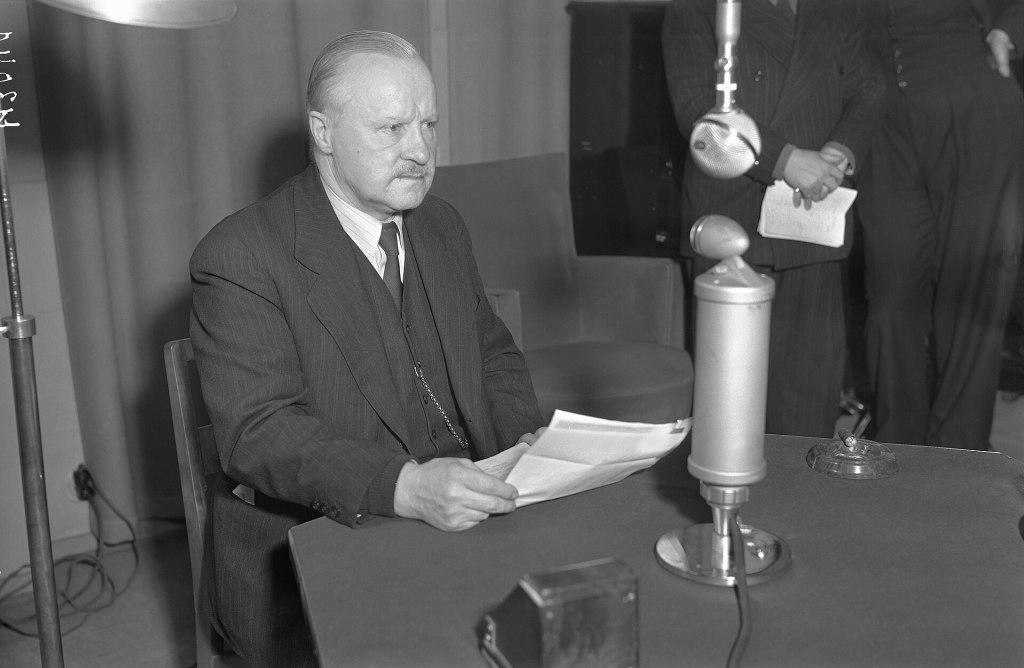
Foreign Minister Väinö Tanner spoke over the radio at 12 p.m. to explain the terms of the peace treaty and the factors leading to its agreement. He praised the stamina and endurance of the army and the home front in carrying through a struggle in which Finland was left to stand or fall alone. Tanner criticized Finland’s Scandinavian neighbors, who have hidden behind their declared neutrality in turning down all requests for help and even preventing Finland taking up the help proffered by Great Britain and France. Without assistance Finland could no longer continue the unequal struggle, and the Government was left with no alternative but to attempt a negotiated peace. Despite the severity of the terms and the painful matter of having to cede territory, Finland had in Tanner’s opinion succeeded in its central aim: “Our right to self-determination has been preserved intact.”
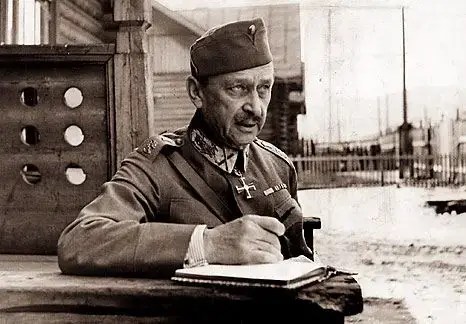
Field Marshal Mannerheim addressed the Finnish Army: “Peace has been concluded between our country and the Soviet Union, an exacting peace which has ceded to Russia nearly every battlefield on which you have shed your blood on behalf of everything we hold dear and sacred. You did not want war. You loved peace, work and progress; but you were forced into a struggle in which you have done great deeds, deeds that will shine for centuries in the pages of history.”
Simo Häyhä regained consciousness after being severely injured in the face in combat a week prior in Finland.
At 3:40 PM the Finnish flag is lowered from the flagpole on Viipuri Castle. The Winter War is over.
The Finnish tugbaots Ahti, Astra, Pitkaranta, and Toysa, border guard ships Jaameri and Turja, and dredging ship Laatokka were scuttled in Lake Ladoga by the crews rather than being left for the Soviets.
Despite the fact that the Red Army attacked Finland without so much as a formal declaration of war, the harsh terms of the peace treaty mean Finland is forced to cede to the Soviet Union the Karelian Isthmus and areas to the north of Lake Ladoga. The towns of Viipuri, Sortavala and Käkisalmi are incorporated into the Soviet Union. Most of Salla in Lapland is also lost, while the south coast port of Hanko is to be leased to the Soviet Union as a naval base for 30 years. The total surface area of the ceded territories amounts to some 35,000 square kilometres. This represents one tenth of Finland’s total surface area. Almost 430,000 Karelians, or 12 per cent of the country’s population, lose their homes.
According to the New York Herald Tribune the Treaty of Moscow demonstrates the inability of democratic countries to help a small freedom-loving people. The paper reserves its main ire for the United States’ Congress, whose inertia and hesitation hampered the sending of aid to Finland.
During the course of the war a total of 84,000 women took part in the work of the defence organization Lotta Svärd. Most worked in the catering corps, while some served at the front. 64 members of the Lotta Svärd gave their lives in carrying out their duties.
The Finns have never had more than 200,000 men in the fight and have lost 25,904 dead or missing and 43,557 wounded. Altogether the war has absorbed, on the Soviet side, 1,200,000 men, 1500 tanks and 3000 planes. Official sources put their losses at 48,000 dead and 158,000 wounded but this may well be a considerable understatement. Actual Soviet losses probably total at least 127,000 dead or missing and 188,000 wounded. The subject of Soviet casualties has been the subject of wild guesses that often are influenced by the political environment of the moment – extremely typical in the USSR. Molotov, immediately after the war, gave an estimate of 200,000 Soviet killed and wounded. In the post-Stalin era, though, Nikita Khrushchev ratchets that figure up to 1,000,000 in his memoirs. The first figure appears low, the latter high — but nobody knows.
The war is a Soviet victory, but at a tremendous cost to its reputation. Its failure to overcome Finnish resistance despite massive numerical superiority in all areas of warfare betrays incompetence at all levels. This results partly from the Stalin purges of the 1930s, but also from unrealistic communist principles applied to the military, lack of proper training in all ranks and weaponry that is unsuited to the conditions faced and, in many cases, of mediocre quality for the era. Many Soviet soldiers of all ranks are disgusted at the casualties and the small gains attained.
This impression of incompetence contributes to Hitler’s decision to invade the USSR and makes the British and Americans a little reluctant to send supplies to the Soviets when the Germans do invade because they expect that the Germans will win quickly.
British troops originally Norway-bound were disembarked from their transports without ever having left port.
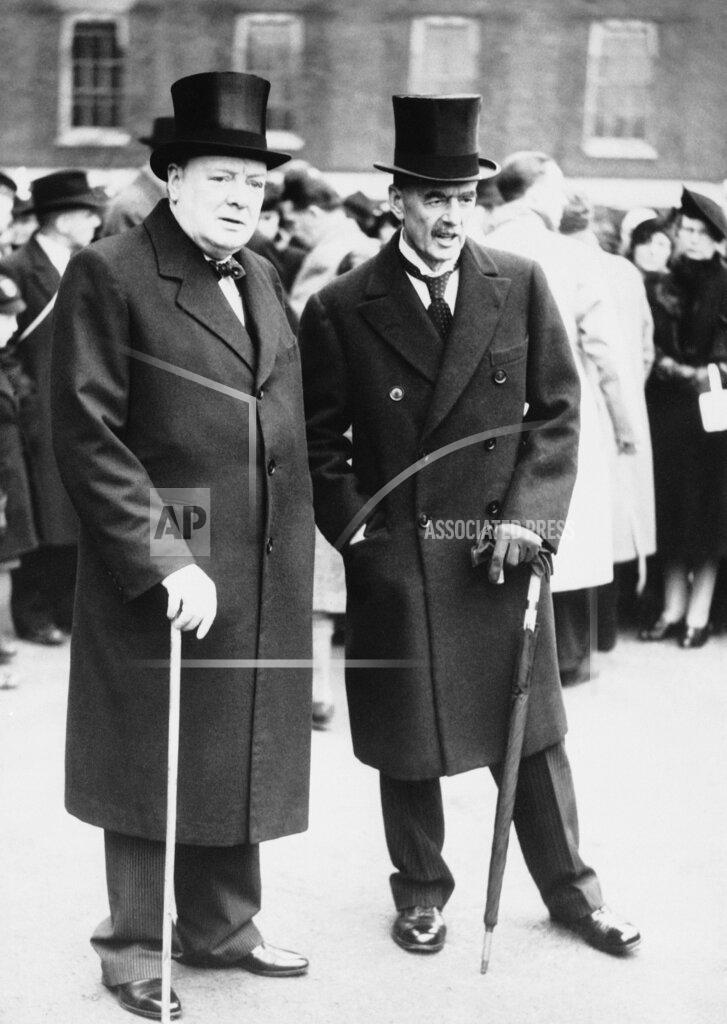
Prime Minister Neville Chamberlain today defended Britain’s readiness to aid Finland’s “epic struggle against aggression” but was sharply criticized by former War Secretary Leslie Hore-Belisha for failing to go to the defense of the Finns. The dismissed war secretary who previously had urged aid to Finland even if it meant war with Russia, rose in the House of Commons and asked: “Isn’t it a fact that repeated appeals have been made by that country (Finland) for assistance not only in materials but in men and isn’t it a pity in relation to the magnitude of these events and their far-reaching character to plead as an excuse for inaction a pure technicality?” Horse-Belisha obviously referred to the refusal of Sweden and Norway to agree to passage of Allied troops through their territory as a “technicality”. The former cabinet minister demanded an opportunity for Commons to debate the government’s whole conduct of the war. The discontent with the Chamberlain government will grow in the coming weeks, and come to a head in early May.
While the pretext to send Allied troops to Norway has evaporated, the idea remains very much alive in the Supreme War Council. As First Lord of the Admiralty Winston Churchill, a notorious hawk, puts it in a letter to Foreign Minister Halifax: “Whether they [the Germans] have some positive plan of their own [for Norway]… I cannot tell. It would seem to me astonishing if they have not.”
Disgruntled members of the French Chamber of Deputies, alarmed by the possible import of the Finnish-Russian peace treaty, began a drive tonight to question the government on its handling of relations with Finland.
The termination of the Russo-Finnish conflict was celebrated in Berlin’s Wilhelmstrasse today as the loss of the first great battle by the “plutocratic Allied powers” in their struggle with the National Socialist Third Reich.
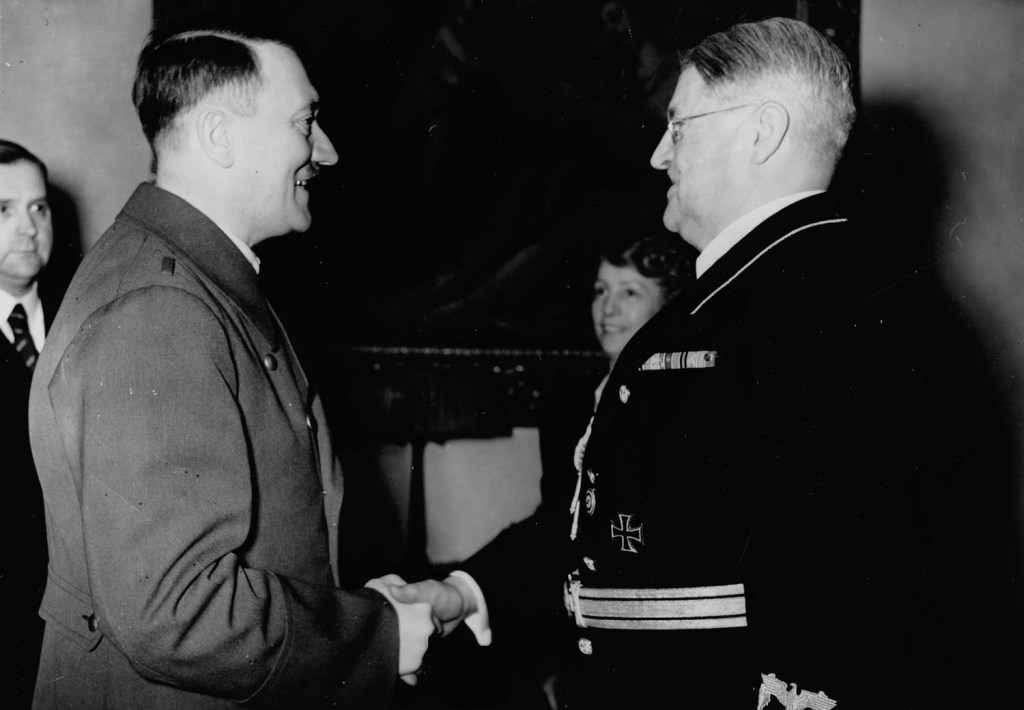
Joachim von Ribbentrop informed the Italians that Adolf Hitler would like to push the date of the upcoming Brenner Pass meeting with Benito Mussolini up to on or about 18 March 1940.
Berlin agrees to supply all of Italy’s coal requirements by rail shipment.
Hitler tells Colin Ross: “I’d welcome a positive solution to the Jewish question, but I haven’t space for my own people.”
Punjabi nationalist Udham Singh assassinated the former British governor of Punjab Sir Michael O’Dwyer in London.
General Maxime Weygand, Allied Commander in Chief in the Near East, talked over the possibility of an attack on the Russian Caucasus and the Baku oil field during his January visit to Turkey, informed persons in Ankara believe.
The Kriegsmarine (German Navy) Type IXA submarine U-44, commanded by Korvettenkapitän Ludwig Mathes, was sunk in minefield Field No 7 in the North Sea (54°14′N 5°06′E). All of the ship’s complement of 47 died. During its career under Korvettenkapitän Mathes the U-44 sank 8 merchant ships for a total of 30,885 tons.
German cargo ship La Coruna was intercepted in the Atlantic Ocean south east of Iceland (63°00′N 10°20′W) by HMS Maloja ( Royal Navy) and was scuttled by her crew, all 68 of whom were rescued by HMS Majola.
The German cargo ship Eschersheim struck a submerged wreck in the Skaggerak off Hirtshals, Denmark and sank some hours later in a snowstorm (57°36′N 9°57′E) with the loss of six of her 31 crew.
The British cargo ship Rossington Court in Convoy HX.26 collided with the British ship Athelviking in the Atlantic Ocean 600 nautical miles (1,100 km) east of Halifax, Nova Scotia, Canada and sank. All 37 crew were rescued.
The Dutch coaster Buizerd ran ashore on Kalder Steel, off the coast of Yorkshire, United Kingdom and was wrecked. All six crew were rescued by the lifeboat Robert Patton. Buizerd was later raised and repaired, resuming service in September 1941.
Convoy OA.109 departed Southend escorted by destroyer HMS Whitehall. The convoy was joined on the 14th by destroyers HMS Antelope and HMS Acasta, with Antelope being relieved on the 15th by destroyer HMS Vanessa. The convoy was dispersed on the 16th with Acasta and Vanessa in the escort at that time.
Convoy OB.109 departed Liverpool escorted by destroyers HMS Mackay and HMS Volunteer from 13 to 16 March, when they were detached to convoy HX.25.
Convoy MT.29 of six ships departed Methil at 0800 escorted by the trawlers of the 1st Anti-submarine Group, sloop HMS Fleetwood and destroyer HMS Vimiera. The convoy arrived later in the day.
Convoy FN.120 departed Southend escorted by sloops HMS Black Swan and HMS Grimsby. The convoy included submarine HMS Porpoise on passage to Rosyth. Porpoise was detached at 0200/15th and arrived on the 16th. The convoy arrived in the Tyne on the 15th.
Convoy FS.120 of 29 ships and an additional five ships from Middlesborough and five from the Humber departed the Tyne escorted by sloops HMS Londonderry, HMS Fleetwood and destroyer HMS Vimiera. The convoy arrived at Southend on the 15th.
Convoy SA.33 of two steamers departed Southampton, escorted by sloops HMS Foxglove and HMS Rosemary, and arrived at Brest on the 15th.
Convoy AXF 2 of one steamer arrived at St Malo.
Convoy HX.27 departed Halifax at 0700 escorted by Canadian destroyers HMCS Restigouche and HMCS St Laurent. At 1500/13th, Restigouche was ordered by armed merchant cruiser HMS Ascania to assist French submarine Sidi Ferruch which was having trouble getting through the ice area. At 1340/14th, the convoy was turned over to the ocean escort armed merchant cruiser Ascania, which was detached on the 25th. Destroyers HMS Amazon, HMS Vanoc, HMS Versatile and HMS Windsor escorted the convoy from 25 to 28 March, when it arrived at Liverpool.
The War at Sea, Wednesday, 13 March 1940 (naval-history.net)
Light cruisers ARETHUSA and PENELOPE departed Rosyth for Scapa Flow, and arrived on the 14th.
Light cruisers GALATEA and AURORA departed Rosyth for the Clyde, and arrived on the 14th.
Light cruiser EDINBURGH arrived at Rosyth after practices.
Armed merchant cruiser FORFAR arrived at Greenock after Northern Patrol.
Destroyer KEITH was damaged in a grounding near South West Goodwin Buoy. Damage was limited to her asdic dome, and she was taken to Chatham on the 15th for repairs completed on the 20th.
Destroyers HOSTILE and TARTAR departed Scapa Flow for the Clyde, and arrived at 1630/14th.
Destroyer SOMALI departed the Tees after refitting at Middlesborough for Scapa Flow to conduct a high speed trial en route. She arrived in the Clyde at 1400/14th being diverted en route.
Destroyer JAGUAR arrived at Dundee.
Due to damage to the anti-submarine nets at Scapa Flow, destroyer FIREDRAKE was detached from a U-boat search and began anti-submarine patrol at daylight in the approaches to Hoxa Sound. At 2000, destroyer IMOGEN relieved FIREDRAKE on this patrol station. At 0800/14th, destroyer FOXHOUND relieved IMOGEN. The work on Hoxa Boom was completed at 1900/14th and FOXHOUND returned to Scapa Flow.
Destroyers ESKIMO (escort SO), PUNJABI, and MASHONA departed the Clyde with convoy NS 1 for Plan R.3. At 0233/15th, the convoy was ordered back to the Clyde with ESKIMO and PUNJABI, while MASHONA continued to Scapa Flow escorting tanker WAR BHARATA.
Destroyer HUNTER arrived in the Clyde at 1935 on completion of her refitting at Falmouth.
Submarines NARWHAL, TRIAD, THISTLE, and TRIDENT departed Rosyth on patrol.
Submarine SPEARFISH departed Newcastle and conducted diving trials off Blyth, escorted by a trawler, before arriving at Blyth.
Submarine TRIBUNE undocked at Rosyth.
Patrol sloop GUILLEMOT was damaged in a collision with an unknown ship off Southwold, and patrol sloop WIDGEON stood by. She was repaired at Great Yarmouth from 18 March to 19 April.
Convoy OA.109 departed Southend escorted by destroyer WHITEHALL. The convoy was joined on the 14th by destroyers ANTELOPE and ACASTA, with ANTELOPE being relieved on the 15th by destroyer VANESSA. The convoy was dispersed on the 16th with ACASTA and VANESSA in the escort at that time.
Convoy OB.109 departed Liverpool escorted by destroyers MACKAY and VOLUNTEER from 13 to 16 March, when they were detached to convoy HX.25.
Convoy MT.29 of six ships departed Methil at 0800 escorted by the trawlers of the 1st Anti-submarine Group, sloop FLEETWOOD and destroyer VIMIERA. The convoy arrived later in the day.
Convoy FN.120 departed Southend escorted by sloops BLACK SWAN and GRIMSBY. The convoy included submarine PORPOISE on passage to Rosyth. PORPOISE was detached at 0200/15th and arrived on the 16th. The convoy arrived in the Tyne on the 15th.
Convoy FS.120 of 29 ships and an additional five ships from Middlesborough and five from the Humber departed the Tyne escorted by sloops LONDONDERRY and FLEETWOOD and destroyer VIMIERA. The convoy arrived at Southend on the 15th.
Convoy SA.33 of two steamers departed Southampton, escorted by sloops FOXGLOVE and ROSEMARY, and arrived at Brest on the 15th.
Convoy AXF 2 of one steamer arrived at St Malo.
U-44 was lost on a mine in 54-14N, 05-06E in a minefield laid by destroyers EXPRESS, ESK, ICARUS and IMPULSIVE on the 3rd. Her entire crew of forty-seven men was lost.
U-30 on patrol encountered a British submarine.
German merchant ship LA CORUNA (7359grt), which had departed Rio de Janiero on 3 February, was intercepted east of Iceland in 63 00N, 10 20W by armed merchant cruiser MALOJA on Northern Patrol. The German steamer, disguised as Japanese steamer TAKI MARU, set herself afire when she was unable to escape. The British ship rescued the 18 officers and 50 ratings of the German crew.
Convoy HX.27 departed Halifax at 0700 escorted by Canadian destroyers HMCS RESTIGOUCHE and HMCS ST LAURENT. At 1500/13th, RESTIGOUCHE was ordered by armed merchant cruiser ASCANIA to assist French submarine SIDI FERRUCH which was having trouble getting through the ice area. At 1340/14th, the convoy was turned over to the ocean escort armed merchant cruiser ASCANIA, which was detached on the 25th. Destroyers AMAZON, VANOC, VERSATILE, and WINDSOR escorted the convoy from 25 to 28 March, when it arrived at Liverpool.
Steamer ROSSINGTON COURT (6922grt) and tanker ATHELVIKING (8779grt) of convoy HX.26 collided six hundred miles east of Halifax. The tanker had to return to Halifax.
German steamer ESCHERSHEIM (3303grt) was lost near Loenstrup and Hirtshals off the coast of Jutland after hitting a submerged wreck. Flooding became uncontrollable, and she was run aground in 57-36N, 09-57E to prevent sinking.
Armed merchant cruiser RANPURA, cable ship MIRROR and A.S.I.S. PHILOMEL departed Gibraltar, escorted by destroyers ACTIVE and WRESTLER until dark on the 15th. The armed merchant cruiser and A.S.I.S. ship headed for Freetown, via Dakar and the cable ship for St Vincent, Cape Verde Island, for cable repair. ACTIVE arrived back at Gibraltar on the 16th after escorting the cable ship, and WRESTLER arrived back at Gibraltar on the 17th after escorting the Freetown ships.
In Washington today, President Roosevelt, recovered from his cold, conferred with Treasury, Army and Navy Department officials on the effect of foreign orders upon the production capacity of American airplane factories and discussed rivers and harbors appropriations with Senators Bailey, Sheppard and McNary and the proposed Hatch act amendments with Senator Minton. In a statement issued through a secretary, he lauded Finland and proclaimed the right of small nations to maintain their independence against attacks by stronger nations. He proclaimed April 6 as Army Day.
The Senate considered amendments to the Hatch act, heard Senator Wagner criticize the Smith committee report on the National Labor Relations Board, received the La Follette resolution for an investigation of foreign purchases of American airplanes and munitions and recessed at 5:36 PM until noon tomorrow. A judiciary subcommittee approved the anti-lynching bill.
The House passed the $23,907,744 legislative appropriation bill, heard Representative Taber protest a proposed Reconstruction Finance Corporation loan for the new East River Tunnel in New York and adjourned at 4:10 PM until noon tomorrow.
President Roosevelt asserted today that the ending of the Finnish-Russian war “does not yet clarify the inherent right of small nations to the maintenance of their integrity against attack by superior force.” President Roosevelt, in a statement issued through his secretary, Stephen Early, coupled praise for Finnish valor with condemnation of Russia’s disregard of Finland’s rights.
The New York Herald Tribune publishes a scathing editorial castigating the United States Congress for not supporting the Finns when it mattered. According to the New York Herald Tribune the Treaty of Moscow demonstrated the inability of democratic countries to help a small freedom-loving people. The paper reserved its main ire for the United States Congress, whose inertia and hesitation hampered the sending of aid to Finland.
The Senate Democratic division on the Hatch bill does not mean a split in the party’s ranks on “real” New Deal issues, Senator Minton, leader of the dissident group, asserted today on the floor soon after he had lunched with President Roosevelt, and “squawked” about the bill. The fight, he said, in effect, is for perpetuation of the present system of State political machines, supported by the workers benefiting by patronage, on the ground that this system is preferable to a possible alternative of organizations controlled by wealthy individuals.
Terming himself a New Deal “rubber stamp” and “a 2 percent boy,” the Senator denounced the solid Republican phalanx supporting the Hatch bill as a “collection of rubber stamps” and warned his Democratic colleagues, marshaled under Senator Barkley, the majority leader, that no good could come of this Republican support.
Upon leaving the White House, Senator Minton conceded that the fight by the insurgent group of about thirty-five Democrats probably would be lost and said there was no intention to filibuster the bill. “The President listened attentively to my squawks, but was not very sympathetic with them,” he told newspaper men.
Senator Barkley apparently took his assistant leader and antagonist at his word, for he refrained today from trying to get an agreement to limit debate and thereby expedite a vote on the bill, despite the probability of extended debate on the measure. Only one step was accomplished today, in considering the measure designed to eliminate political activities by State jobholders supported in whole or in part by the federal government. That was the defeat, 45–36, of an amendment by Senator Bankhead to limit all political contributions to $1,000. The vote on this amendment demonstrated the continued solidarity of the Democratic-Republican coalition supporting the bill.
The anti-lynching bill passed by the House of Representatives in January was approved today by a subcommittee of the Senate Judiciary Committee by 5 to 1. The dissenter was Senator Connally of Texas.
New Hampshire’s eight delegates to the Democratic national convention will be pledged to nominate President Roosevelt for a third term until he releases them, virtually complete returns from the nation’s first presidential primary showed. The Republicans’ eight national convention votes will not be pledged, but most delegates favor Senator H. Styles Bridges, a “favorite son” for the presidential nomination.
Tornadoes which twisted across western Louisiana and eastern Texas last night claimed 13 lives and caused property damage in excess of $1,000,000 it was estimated. Scores were injured. The principal storm centered in industrial and residential districts of Shreveport, cutting a four-mile swath and killed 10 people. Another twister struck a rural community near Marshall, Texas, killing three more people.
The New York Board of Estimate at a special meeting adopted a resolution requesting the Planning Commission “to initiate the amendment of the 1940 capital budget to provide acquisition of such land as may be immediately necessary for the construction of the Brooklyn-Battery Tunnel.” It was understood the land referred to is an area of about 31,000 square feet, bounded roughly by Van Brunt St., Hamilton Ave., Richard and Rapelye Streets, to be used as a site for a shaft and ventilation building at the Brooklyn end. All forces concerned In construction of the Brooklyn-Battery Tunnel pitched in today to clear away preliminary details so that ground may be broken for the $80,000,000 vehicular link within the announced 40 days. Chief action today toward this end was a special meeting of the Board of Estimate, called by Mayor LaGuardia in City Hall, at which a date was to be set for a public hearing on the necessary land acquisitions at the Brooklyn terminus of the tube, where the first shaft is to be sunk.
National Guardsmen armed with machine guns were mobilized in Oklahoma to block completion of the $20,000,000 Grand River Dam pending settlement of State claims for damages to roads and bridges. Governor Leon C. Phillips said he would declare martial law at the dam site late this afternoon to prevent closing of the last gap in the giant hydro-electric project.
The plan to send Colonel Kermit Roosevelt and an international brigade of 5,000 volunteers to aid the Finns evidently will be cancelled because of the Russian-Finnish peace treaty. Most of the brigade’s khaki-uniformed men, Czechs. Poles. Swedes. Austrians and a handful of soldiers of fortune from the two Americas, still were quartered in London. It was expected that Colonel Roosevelt would rejoin the British Army, from which he resigned as a major to take command of the brigade.
The U.S. Navy hopes to continue its program of two battleships a year in the 1942 fiscal year, Secretary Edison said today. Studies made or to be made by the General Board and by officers of the Navy Department might determine the future size of battleships, he added. These studies will be completed within the year, and they may indicate ships of 45,000 tons or of smaller size, ships of 52,000 tons, or even ships as large as 60,000 to 80,000 tons. Mr. Edison said that personally it did not “terrify” him “to think of a 75,000-ton ship,” but he added that he was not advocating such a ship and that all he wished to do was to institute a study which would insure this country the best design of ship regardless of tonnage. Mr. Edison stated that the restrictions of the now defunct naval treaties had imposed an arbitrary tonnage limitation upon the navy and that he was anxious to remove the influence of this limitation from naval thought.
Fleet Landing Exercise (FLEX) No. 6 concludes at Culebra, Puerto Rico. The Fleet Marine Force makes progress in developing techniques for rubber boat landings, getting heavy combat materiel ashore, and improving ship-to-shore supply.
An agreement is reached for the Canadian Army to provide coastal guns to protect Bell Island off the northeastern coast of Newfoundland.
The French Navy submarine Side Ferruch departed Halifax escort for Convoy HX.27.
Resumption of fighting between Soviet Russia and Japanese troops on the Nomonhan front on the border of Outer Mongolia was reported in Shanghai today in unconfirmed reports from Manchukuo. The reports said that Soviet troops had advanced five miles and were moving troops and equipment eastward on the Trans-Siberian Railway. Chinese returning from Hailar said that rail traffic there consisted mostly of military movement toward Nomonhan, and similar information came from Dairen. Observers linked the reports of increased Soviet pressure on Manchukuo with cessation of Russian-Finnish hostilities.
The Foreign Office today lodged a strong protest with Moscow against the alleged flight of Russian planes over Japanese territory in the southern half of Sakhalin Island North of Japan proper. Domei [Japanese News Agency] reported on March 11 that Russian planes had violated Japanese territory on Sakhalin, one penetrating twenty-five miles before turning back and the other flying fifty miles toward Estoru, a west coast seaport, before returning northward to Russian territory.
News of the Russo-Finnish peace was received by Chinese officials with misgivings. Although the first reaction was a belief that, since Russia was assured of security in Continental Europe, she might now adopt a more positive pro-Chinese policy in the Far East, it was felt the advantages to China was partly offset by the possibility that the further estrangement of the Allies and Russia by the latest triumph of Russo-German diplomacy might render China’s diplomatic position more difficult. It was further pointed out that the Russo-Finnish peace set a precedent of territorial compromise with an aggressor that is distasteful to China. The Foreign Office spokesman, according to the government’s policy of diplomatically ignoring the Russo-Finnish conflict, refused to make any comment.
When Japanese Premier Mitsumasa Yonai issued at noon today his pledge of support to the projected regime of Wang Ching-wei in Nanking, foreign observers here noted a striking omission. That omission is the most significant feature of the statement, as far as foreign powers are concerned. Admiral Yonal entirely ignored the question of foreign rights and interests in China, although Mr. Wang’s Shanghai manifesto, to which the Premier was ostensibly replying, had made a specific declaration on this point. Mr. Wang had stated that foreign rights and interests in China would be respected, as the result of the peace that Japan offered, and he invited foreign capital and technical skill to participate in the Chinese reconstruction. This phase of the problem was not touched upon by the Japanese Premier, who confined himself to the promise of aid and recognition for Mr. Wang and to generalities about Japan’s benevolent aims in China.
The Australian coaster Idant sank off the mouth of the Camden Haven River, New South Wales after hitting a breakwater. Her eight crew members were rescued.
Dow Jones Industrial Average: 148.32 (-0.05)
Born:
Candi [Canzetta] Staton, soul and gospel singer (“Young Hearts Run Free”), in Hanceville, Alabama.
Gary Larsen, NFL defensive tackle (NFL Champions-Vikings, 1969 (lost Super Bowl IV); Pro Bowl, 1969, 1970; Los Angeles Rams, Minnesota Vikings), in Fargo, North Dakota.
Gary Kolb, MLB outfielder, pinch hitter, and catcher (St. Louis Cardinals, Milwaukee Brewers, New York Mets, Pittsburgh Pirates), in Rock Falls, Illinois (d. 2019).
Died:
Ira Flagstead, 46, American baseball player.
Naval Construction:
The Royal Navy Flower-class corvette HMS Begonia (K 66) is laid down by Cook, Welton & Gemmill (Beverley, U.K.). She will be transferred to the U.S. Navy under reverse lend-lease in 1942, becoming the U.S. Navy corvette USS Impulse (PG-68).
 History Diaries