
General Westmoreland begins work on a report titled ‘Commander’s Estimate of the Situation in SVN’ which he will complete on 26 March, with the advice that he needs 40,000 more U.S. troops to forestall a Việt Cộng victory.
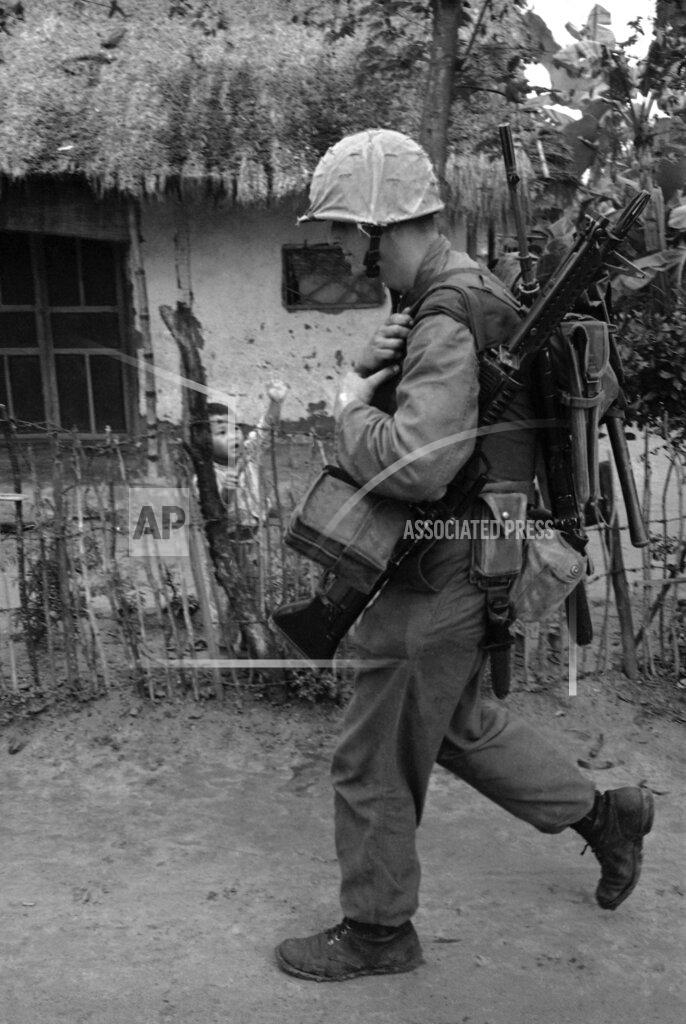
A dozen Việt Cộng guerrillas snaked through the heavy underbrush last night and early today, trying to to probe United States Marine positions. Three times they tried to probe at the base of Hill 327, which dominates the Đà Nẵng air base. Each time they were met with a storm of mortar and machine-gun fire and withdrew. “I’ll bet they wondered how we knew they were out there,” a machine gunner said. The reason the Marines knew the Việt Cộng were there is a radar device that is a miniature version of the dish type of radar common on airport control towers. “It’s beautiful, just beautiful,” a platoon leader said after the radar had passed its first combat tests.
The Việt Cộng conducted themselves in a trained military manner, the radar showed, but they were foiled by modern technology. A daylight patrol this morning failed to find any Việt Cộng bodies or any other signs that they had been there. Captain H. J. Morgan, a 30-year-old father of four from Colorado Springs, said that the Việt Cộng probe had been made by what appeared to be a well-trained outfit. He said observation of pips on the radar scope disclosed activities much the same as American reconnaissance units would make in similar circumstances.
The little radar machines, slightly shorter than a man of average height, are dotted around hill 327 — the tall hill that the marines call the hungry i. It is possible, some officers believe, that the probe and the other smaller pips indicated a Việt Cộng effort to find out how effective the radar really is. Its range and effectiveness are classified. It has been under development since the late nineteen-fifties and is standard issue to American troops in Europe. The French, and probably others, have developed similar equipment.
A Vietnamese terrorist tried to plant an 11-pound bomb this morning at a Saigon apartment building occupied by American civilians. The building custodian observed a man escaping through a hole in a wire fence around the Park Apartments. The charge, a puttylike plastic substance, was defused before its two timing devices could set off an explosion. The bombing attempt was the first action unmistakably directed against Americans since the February 10 barracks explosion at Quy Nhơn, where 23 United States enlisted men were killed. That assault was followed by a bombing raid against North Vietnam the next day. Three days earlier, a Việt Cộng attack on American installations at Pleiku had also been followed by bombing strikes in the North.
Since then, there had been no further incidents that clearly involved Americans, and military leaders speculated that North Vietnam might have urged its agents with the Việt Cộng to refrain from further attacks of that nature. American officials have avoided linking occasional terrorist attacks in Saigon to Hanoi as directly as they have attributed military assaults against outlying bases. Eleven of the Park apartments are occupied by employees of the United States Embassy or the United States Operations Mission, the American aid program in Vietnam. A 12th apartment is vacant.
The major military action of the night occurred 20 miles from Saigon. The Việt Cộng shelled Đức Hòa, west of the capital, for 20 minutes with 60-mm. and 81-mm. mortars. Before two armed United States helicopters reached the area, five government soldiers were killed and 33 soldiers and villagers wounded.
A prisoner described as the highest-ranking North Vietnamese captured in the Vietnamese war was displayed today by Brigadier General Nguyễn Chánh Thi, commander of the I Corps. The captive was identified as Nguyễn Phan, a political commissar trained in Peking and Moscow. He answered questions in an impromptu roadside news conference near Đà Nẵng. Phan said he joined the Communists in the North in 1953 during the war against the French. He said that he was sent to Peking in 1959 for a year’s indoctrination and training and that he later made a six-month tour of the Soviet Union.
A South Vietnamese politician with strong Buddhist ties indicated today that the withdrawal of foreign influences from both North and South Vietnam was necessary to set the stage for reunficiation and peace.
North Vietnam’s official newspaper said today that the decision of the United States to send troops to take a direct part in the South Vietnamese war and the air attacks on North Vietnam constituted “an open declaration of war on the entire Vietnamese people.”
President Johnson declared again today that there was no possibility of negotiating a settlement of the Vietnamese war until North Vietnam indicated a willingness to stop its aggression. Thus far, the President said at his news conference, there has been no such indication from Hanoi. The President said recent changes in United States tactics, manpower and strategy in Vietnam did not spell a change in American policy. The President acknowledged that in the last five weeks there had been a change in American tactics and in some instances in strategy. He was referring to strikes by American planes against Communist targets in North and South Vietnam steps intended to drive home to North Vietnam the demand that Hanoi halt support of the Việt Cộng.
“Our policy is still the same and that is to any armed attack, our forces will reply,” the President said. “To any in Southeast Asia who ask our help in defending their freedom, we’re going to give it — and that means we’re going to continue to give it.” President Johnson did not rule out a negotiated settlement of the conflict. Since 1962, he noted, the United States has been consulting actively and continually with other governments, including on occasion Communist governments, on the possibility of negotiations.
In Belgrade, Yugoslavia, 10 nations opened talks to seek a formula for peace in Vietnam. President Tito, who summoned the surprise gathering, is expected to address it early in the week.
Three Americans were listed as killed in the Vietnam hostilities this week, increasing the total of United States combat dead to 305. One of the week’s deaths occurred in a bomber crash and one in an ambush. The third was accounted for when a Navy pilot, previously listed as missing, was declared dead. The total of American wounded in South Vietnam increased during the week from 1,887 to 1,913. Sixteen Americans are listed as having died of wounds. Deaths from accidents not caused by hostile action now stand at 124. The missing number 26, of whom 12 are believed to have been captured.
Laotian Government forces won their biggest victory in more than a year this week over the pro-Communist Pathet Lao and its North Vietnamese supporters, it was reported today. The bodies of 112 Pathet Lao and Việt Minh troops were counted after fighting in southern Laos near a right-wing garrison. Most of the slain Reds were North Vietnamese, informed Lao military sources said. Earlier reports on the action said 60 Pathet Lao soldiers had been killed. Government losses were 30 dead and wounded, the sources said. The fighting ranged over two days, Tuesday and Wednesday. Right wing T-28 fighter-bombers pursued the retreating pro-Communist forces. The army chief of staff, General Ouane Rathikoun, estimated that more than 100 pro-Communists were killed or wounded in the barrage.
The pro-Communist Pathet Lao leader, Prince Souphanouvong, conditionally agreed today to three-way peace talks aimed at a ceasefire in Laos, the Chinese Communist press agency Hsinhua said. Prince Souphanouvong said talks could begin if “the United States immediately stop their bombing and strafing of the. Laotian people.” He suggested in a message to his half-brother, Premier Souvanna Phouma, at Vientiane, that the talks be held in Paris.
Five and a half months after the fall of Nikita S. Khrushchev, the Chinese-Soviet ideological conflict is as bitter as ever. Moreover, Western observers here believe, the position of the new Soviet leaders was appreciably weakened during the intervening period. The conflict entered a new phase last night with the publication by the Soviet Government of a note of great sharpness addressed to the Chinese Embassy. The note accused Communist China of “provocation,” “slander” and “base distortion” in connection with the bloody clashes between Asian students and Soviet policemen and soldiers in front of the United States Embassy on March 4.
This was Moscow’s answer to a Chinese note demanding that the Soviet authorities “admit their errors,” “apologize” to the students and “punish” the Soviet officers involved. This morning all Moscow newspapers printed the Soviet note. Pravda also published a letter from irate Muscovites who had witnessed “the outrageous acts committed by the hooligans” who defied the police during the demonstration against U.S. actions in Vietnam.
Peking alleged today that a Chinese student was “brutally beaten” in a Moscow hospital. The victim was said to be Huang Chao-keng, who had been hospitalized “for wounds suffered at the hands of Soviet soldiers and policemen in the March 4 anti-U.S. demonstration.” Reporting this from Moscow, Hsinhua said the student was detained in a “small and cold room” of the mental ward with hands and feet bound for eight hours. A representative of the Chinese Embassy has lodged a protest with Soviet authorities. Hsinhua described the beating as a “shocking ease of persecution.” It said that after having evicted seven of nine seriously wounded Chinese students from the hospital, the Soviet authorities continued to try to evict Mr. Huang and another student.
An impression is hardening among seasoned Yugoslav Communist observers that the position of the new Soviet leaders — Premier Aleksei N. Kosygin and the party chief, Leonid I. Brezhnev — is growing less secure. The Yugoslavs cite a variety of recent developments to substantiate this impression. Foremost in their minds are strains between Moscow and Washington resulting from the Vietnam crisis. They also argue that Soviet foreign policy has met a series of rebuffs since the fall of Premier Nikita S. Khrushchev last October.
To the Yugoslavs the recent Moscow conference of Communist delegations from 19 countries can be written off as a failure, since it achieved nothing toward overcoming the split in the world movement. Rather, they say, it only inspired more virulent attacks from the Chinese and their supporters. One observer remarked that the meeting had been burdened with formulas remaining from the days when the Soviet party was the undisputed leader of the world movement.
Israel, in an attempt to reassure the United States of her intentions to use atomic energy peacefully, has quietly permitted American engineers to inspect a heavily guarded atomic reactor in the Negev. On the basis of the inspections, American officials have come to the tentative conclusion that Israel is not now using the relatively large research reactor for the production of plutonium for atomic weapons.
However, only periodic inspections can establish if a reactor is being run primarily to produce plutonium for weapons or to produce heat for generating electricity. Only two inspections by reactor engineers of the Atomic Energy Commission have been permitted — one a year ago and the second about a month ago. At the insistence of the Israeli Government, strict secrecy has been imposed on the fact that American engineers have been permitted to visit the Dimona reactor, situated near Beersheba.
The inspections apparently were permitted because of repeated expressions of concern by American officials about the purpose of the reactor and to insure continued American cooperation in nuclear research such as the development of a nuclear desalting plant. Israeli officials in 1960 indicated that the installation was a textile plant that was under construction. It was only after the Eisenhower Administration publicly questioned the purpose of the project that Israel openly acknowledged to the United States that a reactor was being built.
The acknowledgement was accompanied by repeated assurances that the reactor would be devoted to peaceful research and training in industry, health and agriculture. The Israelis, however, have continued to impose considerable secrecy about the reactor, which, according to American officials, recently went into operation. Recent visitors say the large site is surrounded by a wire fence with frequent signs forbidding photographs.
Foreign ministers of Arab countries meet in Cairo tomorrow to decide on action against West Germany, with President Gamal Abdel Nasser of the United Arab Republic at odds with Tunisia’s President, Habib Bourguiba, on how to deal with Bonn’s plans to seek formal relations with Israel. On the eve of the conference, Cairo was swept by recurrent rumors of impending hostilities with Israel. The Egyptian Government has canceled some military leaves and placed some forces on a modified alert.
The Bourguiba-Nasser differences came into the open as the Egyptian leader attacked the Tunisian President by implication, accusing him of trying to mislead other Arab states and suggesting that Mr. Bourguiba was being bought off with West German promises of economic aid. Delegates from 13 Arab states recommended last Tuesday that all Arab countries break with Bonn when it formally established relations with Israel. Two days later Mr. Bourguiba indicated that he was unwilling to go along with the boycott and accused Mr. Nasser of having failed to consult other Arab states on the matter.
Johnson Administration officials believe that, despite increasing tensions in the Middle East, military conflict is unlikely between Israel and the Arab states.
Thailand and Malaysia signed an agreement at Songkhla, a town on the Thai side of the border of the two nations, to combine operations against guerrilla and terrorist incursions.
Almost a thousand miners attacked the police headquarters in the Asturian coal-mining center of Mieres, Spain, last night, wrecking part of the building before order was restored. Civil authorities said today that the violence had been instigated by leaders of the outlawed Communist party. The attack capped a march from the Mieres union headquarters, where the miners had assembled from various points of the province of Asturias to discuss union problems. Officials said the miners marched to shouts of “Liberty!” and “Long live Communism!”
The Iraqi Government declared today that it would not resume the war against the Kurds in northern Iraq.
[Ed: LMAO. See also, 1975.]
President Mohammad Ayub Khan’s reputation for statesmanship is at a new high in Pakistan as a result of his week-long visit to Communist China.
President Hamani Diori of Niger charged today that Communist China was trying to subvert democracy in Africa.
An all-white school of an Anglican church has decided to admit a non-white student, the Anglican Archbishop of Cape Town, the Most Rev. Robert Selby Taylor, announced today.
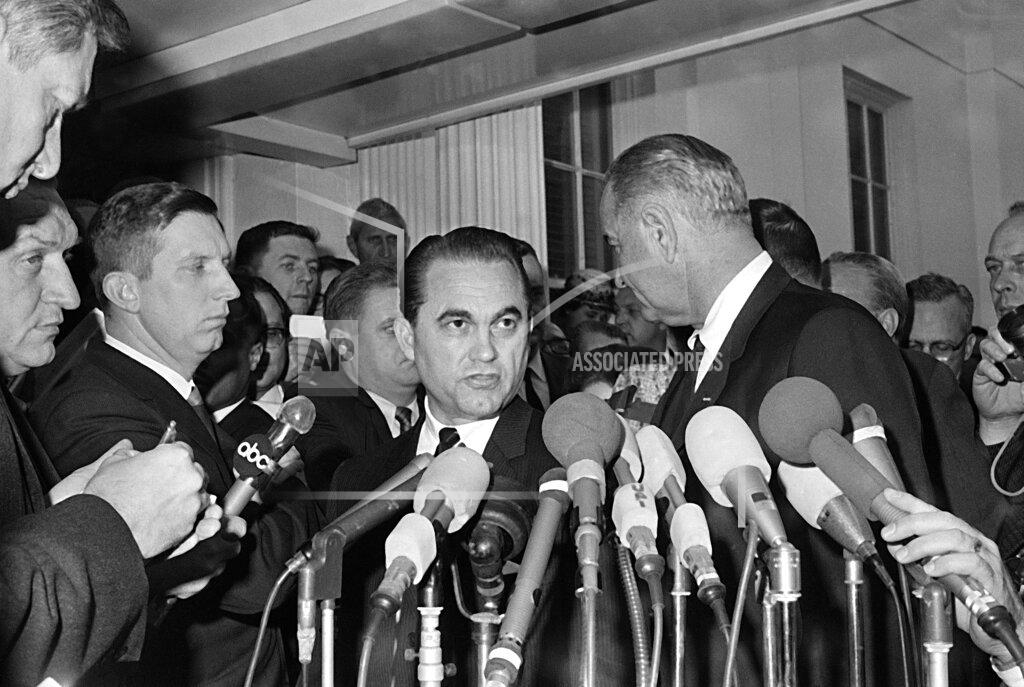
A week after a White House meeting with Martin Luther King Jr., President Johnson met with Alabama Governor George Wallace to discuss the recent events in Selma, and to seek Wallace’s support for federal efforts toward African-American voting rights and the right of peaceful assembly for all races. After the meeting, Johnson and Wallace appeared at a press conference, and said, “This March week has brought a very deep and painful challenge to the unending search for American freedom… before it is ended, every resource of this government will be directed to insuring justice for all men of all races in Alabama and everywhere in this land.” He described the recent Bloody Sunday in Selma as “an American tragedy.”
President Johnson told Governor Wallace of today that police brutality in Selma, Alabama, “just must not be repeated” and that federal force would be used if necessary to protect Blacks there. If, as expected, a federal court orders that the Rev. Dr. Martin Luther King Jr. be permitted to lead a civil rights protest march from Selma to Montgomery the stage will thus be set for a possibly serious confrontation between Mr. Johnson and Mr. Wallace. “When the court has made its orders it must be obeyed,” Mr. Johnson said firmly as he spoke to newsmen gathered in the White House Rose Garden. Mr. Johnson met for more than three hours with the Alabama Governor today and then told a news conference that he had “respectfully” suggested that Mr. Wallace should do the following:
- “Publicly declare his support for universal suffrage in the state of Alabama and the United States of America.”
- “Assure that the right of peaceful assembly will be permitted in Alabama so long as law and order is maintained.”
- “Call a biracial meeting… to seek greater cooperation and to ask for greater unity” among Alabama citizens of both races.
Governor Wallace said he would give “careful consideration” to the President’s suggestions, but he reserved further public comment until he appears on “Face the Nation,” a television program of the Columbia Broadcasting System, at 12:30 PM tomorrow. In his news conference the President confirmed that federal troops had been on alert since last Tuesday “to carry out any instructions that the President gave them.” Mr. Johnson has believed that it was not feasible for him to use federal troops or marshals in Alabama until there was a federal court order clarifying the rights of civil rights demonstrations. But he is reported to be willing to use federal force to enforce such an order. He said forcefully today that “I have plotted my course… have made clear whether the Governor agrees or not that law and order will prevail in Alabama” and that the right of peaceful assembly will be preserved. Wallace told the press that he would consider Johnson’s recommendations and that he recognized the right of peaceful assembly, “but there are limitations.”
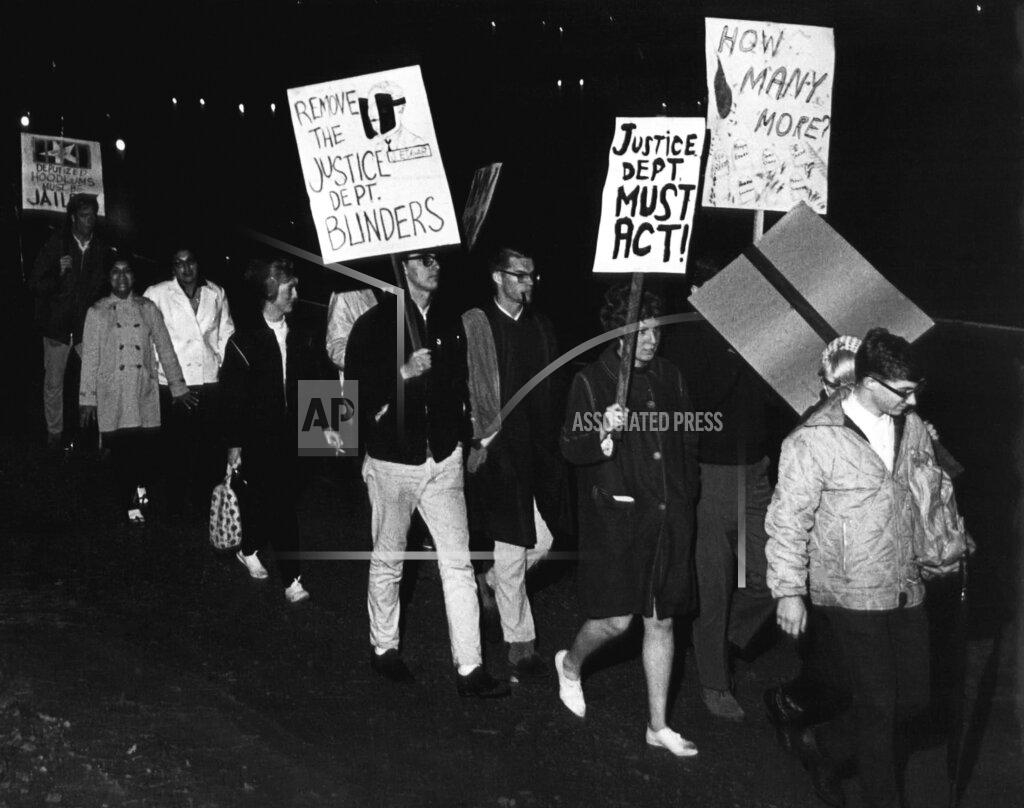
President Johnson told an apprehensive nation today that he would send to Congress on Monday a sweeping, bipartisan bill to erase all discrimination against citizens seeking to register and vote. “Wherever there is discrimination,” the President said at a televised news conference hastily arranged in the chill sunshine of the White House Rose Garden, “this law will strike down all restrictions used to deny the people the right to vote.” He spoke after a three-hour face-to-face confrontation with Alabama’s Governor, George C. Wallace, the segregationist in whose state the denial of voting rights has sparked nationwide demonstrations demanding Federal action. Outside the White House, about 1,000 civil rights demonstrators continued to picket while the President spoke.
Civil rights demonstrators, including ministers and nuns, tried to break through police blockades in Selma, Alabama today, setting off a riotous disturbance that lasted more than an hour. The outburst occurred within a one-block area of the Black section after President Johnson said in Washington that Blacks seeking to register and vote should be permitted to conduct lawful demonstrations. It involved about 1,000 demonstrators and 200 officers.
At least one person was injured and scores were pushed back by state troopers with nightsticks. The troopers’ actions were restrained, however, compared with those of last Sunday, when a highway demonstration was broken up with nightsticks and tear gas. A group of about 20 Blacks and whites broke through the blockades today and reached the Dallas County Courthouse. They were shoved back by Sheriff James G. Clark Jr.’s possemen. Wilson Baker, Selma’s Director of Public Safety, arrived on the scene, dispersed a white mob that was threatening the demonstrators and escorted them back to safety.
The head of the Alabama Highway Patrol acknowledged in Federal Court here today that one of his troopers had shot at a Black civil rights demonstrator during a march in Marion, Alabama, last month, The victim died eight days later. Colonel Al Lingo, Director of the Alabama Department of Public Safety, volunteered in sworn testimony that he had made “a full investigation” of the shooting at Marion on February 18 of Jimmy Lee Jackson. He contended that Mr. Jackson had died of “a massive infection,” not of the gunshot wound in the stomach. But he said that the case would be “settled in the courts.”
Colonel Lingo’s statement was the first admission by any Alabama official that Mr. Jackson had been shot by a state trooper, as civil rights groups have contended. His explanation today came at the United States District Court hearing on a request for an injunction to prevent police intimidation of a planned civil rights march from Selma to Montgomery, the state capital. The police head also disclosed that tear gas containing an agent creating nausea had been used last Sunday at Selma, when state troopers broke up an attempt by Blacks to march to Montgomery. Colonel Lingo told the court that he had decided to authorize “necessary force” by troopers against the Black marchers on Sunday because “I just don’t like” to make mass arrests of civil rights demonstrators and put them in jail. He said such arrests were “futile.”
In Los Angeles, 6,000 people marched in support of the protesters in Selma. The march was marred by a bomb threat.
Three weeks after the assassination of Malcolm X, his former bodyguard and potential successor, Leon 4X Ameer, was found dead in his room at the Sherry-Biltmore Hotel in Boston. However, a Boston medical examiner concluded that Ameer, 31, had a history of epilepsy, had “died in a coma while peacefully in bed”, and police found “no signs of a struggle and no visible marks of violence on the body.”
The F-111, the swing-wing aircraft that is intended to be the mainstay of the United States fighter forces before 1970, has run into worrisome technical troubles. Flight tests of the Air Force version, formerly called the TFX (for tactical fighter experimental), have turned up a series of problems with the engines and with the inlets that feed air to those engines. Three test engines have been severely damaged in stringent run-up tests on the ground. Top officials say the problems are normal in any development program. They are confident the problems are being licked, though the cost in time and money cannot yet be calculated.
Several qualified sources say the F-111’s troubles are causing more concern than project directors are acknowledging. In addition, the Navy version of the plane (the first one is nearing completion) is still so badly overweight that some Navy leaders are seriously worried about its ultimate utility. And the Phoenix missile system being developed for the Navy plane is a year or more behind schedule. The cost is soaring as the technical problems persist. All this has further chilled Navy enthusiasm.
The police in Philadelphia began using German shepherd dogs this week, in their efforts to stem mounting violence in subway and elevated stations.
Automation in American business and industry is rushing ahead at express-train speed, but its sociological aspects in terms of such significant indexes as employment are still a big question mark.
British guitarist Eric Clapton quits the Yardbirds due to the band moving away from traditional blues; Jeff Beck becomes his replacement.
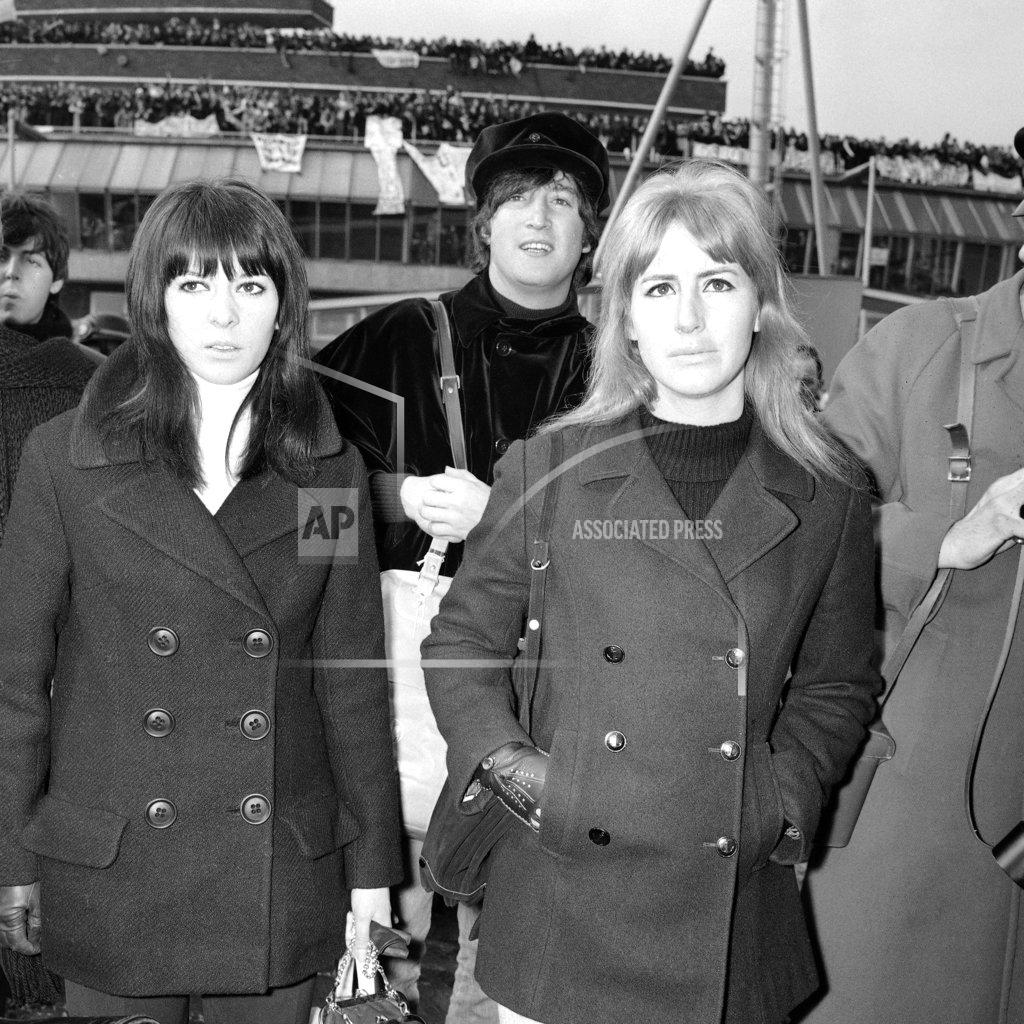
The Beatles’ “Eight Days a Week” single goes #1 and stays #1 for 2 weeks.
Born:
Aaron Cox, NFL wide receiver (Los Angeles Rams, Indianapolis Colts), in Los Angeles, California.
Donald Snell, NFL wide receiver (Seattle Seahawks), in Radford, Virginia.
Jim Culhane, Canadian NHL defenseman (Hartford Whalers), in Haileybury, Ontario, Canda.
Pamela Andersson, Swedish journalist that writes for Expressen and the magazine Amelia; in Hudiksvall, Sweden.
Died:
Corrado Gini, 80, Italian statistician, demographer, and sociologist, best known for developing the Gini coefficient as a measure of income inequality.
Fan Noli, 83, founder of the Albanian Orthodox Church and one-time Prime Minister of Albania.




 History Diaries