Soviet divisions punch multiple gaps in the final Finnish line in the Karelian Isthmus.
The Soviet troops in the centre of the Karelian Isthmus launch an offensive across the Vuoksi with supporting artillery and other fire.
The fighting continues with the Soviet troops fiercely attacking the Finnish defences in Viipuri. The Soviets break through into the suburbs of Viipuri. By early evening the vanguard of five enemy tanks has reached Tammisuo station to the northeast of the city. Three of the tanks are subsequently destroyed.
At 2.45 PM the Russians achieve a 500 meter breakthrough to the northwest of Vasikkasaari, but the defending Finnish troops manage to contain it.
During the night, the Finnish troops in Vuosalmi withdraw from Vitsaari after heavy fighting.
Troops from the Coastal Group withdraw to new positions at Vilajoki.
In the vicinity of Tali-Portinhoikka, Red Army tanks support a breakthrough into the area around the Portinhoikka crossroads. The defending Finnish regiment has suffered enormous losses and is utterly exhausted.
In Kollaa, the 69th Infantry Regiment just doesn’t have the strength left to retake the advance strongholds.
Finnish fighters engage a flight of five DB-3 Soviet bombers near Kouvola and shoot one down near Loviisa. This is the final aerial victory of the war.
The Finns lose a Fiat flown by an Italian volunteer who perishes, SSgt Diego Manzocchi, on the ice of Ikolanjarvi. He was shot in the chest and then hangs upside down in his crashed plane for six hours before expiring. Manzochi had flown his own Fiat fighter to Finland back in December.
The Finnish press published a bulletin from the Ministry for Foreign Affairs telling the public for the first time of the peace talks being conducted in Moscow.
The Finnish Government was ready to accept the Soviet Union’s peace terms. Thirteen members of the Foreign Affairs Committee of the Finnish Parliament voted in favor of accepting the peace terms, while four voted against acceptance. News of the Parliamentary Foreign Affairs Committee’s readiness to accept the Soviet Union’s terms was leaked to the Swedish evening papers.
In a final bid to prevent the Finns agreeing to an armistice Chamberlain and Daladier announce that Britain and France will send help to Finland. The plan to do so is shelved when the Finns conclude their agreement with the Soviets. Chamberlain and Daladier, obviously informed of the proceedings, try to prevent the Finnish capitulation by announcing that they will send help to Finland despite the lack of a formal Finnish request. This comes to naught with the announcement of the peace deal. However, the original idea to send troops to Narvik remains on the minds of the British and French. The entire idea all along, in fact, was a cynical use of the Finnish difficulties as a pretext to occupy the iron ore mines so that Hitler could not use them.
British and French governments prepared to dispatch troops to Sweden in an attempt to capture the Swedish iron mines around Gällivare. Norway and Sweden made the statement that they would resist such an invasion.
Finland’s delegation to the Moscow peace talks met for the third time in the Kremlin at 6 p.m. The news leaked to the Swedish press had already reached Moscow giving the Soviet Union no reason to soften its negotiating stance. The final terms of the armistice between the USSR and Finland are concluded. Finland is to give up the whole of the Karelian Isthmus, including Viipuri, territory in the “waist” of the country near Salla, and Rybachiy Peninsula near Murmansk and is to grant a lease on the port of Hango to the Soviets. Petsamo is returned to the Finns. When the recent Soviet military successes are taken into account these terms can be described as fairly moderate.
German Foreign Minister Ribbentrop continues his visit to Rome with visits to the King of Italy and the Pope. He concludes his visit with a meeting with Count Ciano, promoting the “shared destiny of fascist nations,” and then with Mussolini interpreter Dr. Schmidt (who describes Ribbentrop’s speaking style as “flatulent”), and then returns to Berlin after an open car ride — Hitler-style — through cheering Roman crowds with Ciano.
During a visit to Rome, Ribbentrop tells Pius XII that Hitler wants “to maintain their existing truce and, if possible, to expand it. In this respect Germany has made very considerable concessions. The Führer has quashed no less than 7,000 indictments of Catholic clergymen.”
Sumner Welles had tea with King George VI, who made clear his hope that no peace negotiations would take place until the Nazi regime was destroyed. Welles then spoke with Neville Chamberlain, who reiterated the points from his Birmingham speech of February 24. Welles continues to push his vague and completely impossible idea of mutual disarmament.
Britain no longer considers herself bound to submit to the judgment of the Permanent Court of International Justice at The Hague any dispute in which she may become involved with her fellow-members of the court for any action she takes while at war, it was announced today.
Meat rationing begins in Britain with a restriction of 1s 10d (9 pence) worth of meat per person per week. Poultry, game, offal, sausage, and pies are not rationed. The ration amount works out to 1 pound of joint of lamb or beef. Restaurants are not rationed. The public is encouraged to grow its own food, but it is difficult to grow a cow in your garden.
The highlands of Scotland after today are officially off-limits to non-authorized personnel due to the presence of British naval bases.
London signs trade agreement with Norway.
For more than six months the British press and government have portrayed the German Chancellor as a trapped beast who would be strangled slowly but certainly by the Allied blockade. Now questions are being fired at the government in Parliament which reveal an uneasy suspicion that Germany is getting enough food and raw materials despite the blockade. The people are beginning to abandon their complacency. There is less boredom with the blackouts and air raid alarms. The people seem convinced they may have to endure savage warfare in the months ahead and are preparing to face it. In the end, the pressure of British public opinion may decide the course of events.
One French aircraft downed in engagement with Luftwaffe fighters.
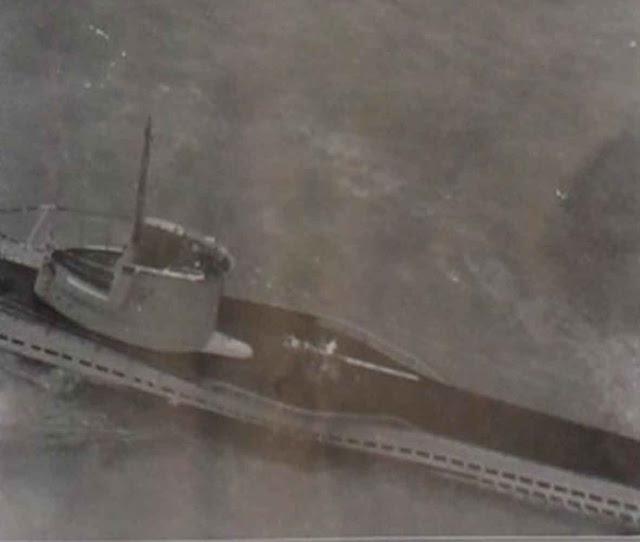
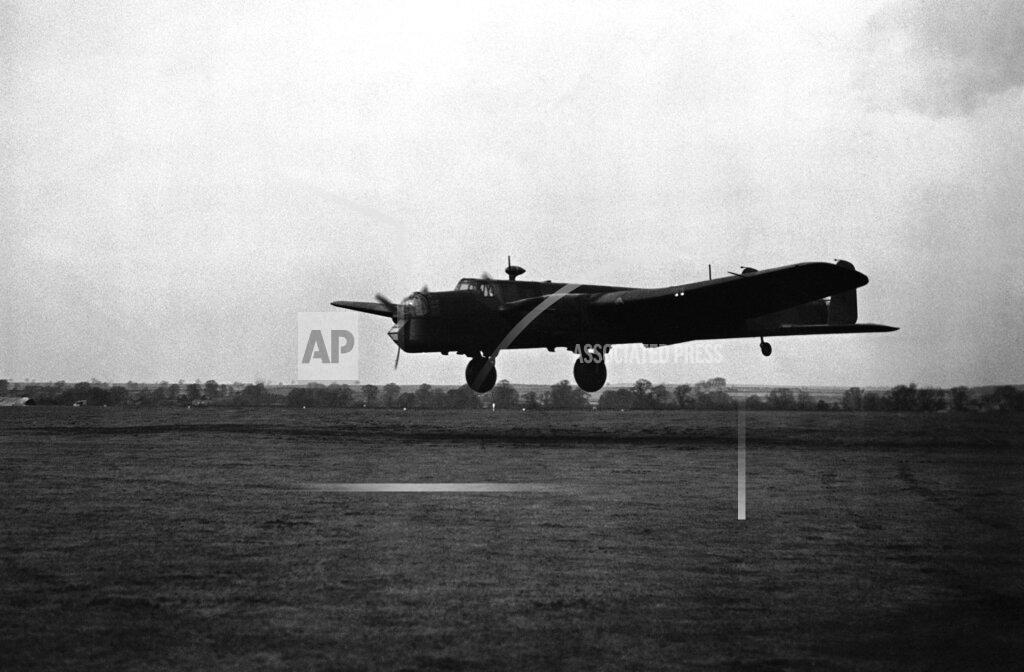
On sea trials in Jadebusen (Jade Bay) near the Wilhelmshaven submarine base, the German U-boat U-31, commanded by Kapitänleutnant Johannes Habekost, was sighted by a British Bristol Blenheim of No. 82 squadron, RAF Bomber Command, on patrol off Borkum, as the submarine was on the surface in the Schillig Roads. The RAF bomber dropped 4 antisubmarine bombs, scoring 2 hits that sank the U-boat. Of the 58 man crew, all hands were lost as well as 10 dock workers. The attack was pressed home at such a low altitude that the Blenheim was damaged by the explosions and the pilot of the Blenheim, Squadron Leader Miles Villiers ‘Paddy’ Delap, was subsequently awarded the Distinguished Flying Cross for his actions. This was the first U-Boat of the war to be sunk by a Royal Air Force aircraft without the assistance of surface vessels. The U-31 would be refloated later in March, repaired and returned to service. She was sunk again by depth charges from HMS Antelope on November 2, 1940, becoming the only German submarine to be sunk twice in World War II. During its career under Kapitänleutnant Habekost, the U-31 sank 2 auxiliary warships, damaged 1 warship, and sank 8 merchant ships for a total of 17,962 tons.
French battleship Bretagne and heavy cruiser Algerie, carrying 2,379 bullion bars (147 tons) of gold to be deposited in the United States, departed Toulon escorted by large destroyers Vauban, Aigle, and Maille Breze. The ships passed Gibraltar on the 13th. Since the United States was still a declared neutral, the battleship and heavy cruiser proceeded to Halifax where the gold was unloaded and shipped to the United States. The destroyers were detached at sea and returned to Casablanca on the 17th. Vauban and Aigle departed Casablanca on the 21st and joined armed merchant cruisers El Kantara, El Mansour, Ville D’ Oran and El Djezair which departed Brest on the 20th after the cancellation of Finland operations. Destroyers Tartu and Chevalier Paul departed Brest with the cruisers, but were ordered to return for other duties. Vauban and Aigle passed Gibraltar with the cruisers on the 23rd and arrived at Oran on the 24th. Destroyer Maille Breze with steamer Medie II departed Casablanca on the 19th and passed Gibraltar on the 20th. They arrived at Marseilles on the 22nd with troops.
Three German commerce raiders, Schiff 16 (Atlantis), Schiff 21 (Widder), and Schiff 36 (Orion), set sail through the Kaiser-Wilhelm canal into the North Sea. As the Kiel Canal was still icebound, ex battleship Hessen, acting as an icebreaker, cleared the Canal for their passage to the sea.
Kriegsmarine commerce raiders Schiff 16-Atlantis, Schiff 21-Widder, and Schiff 36-Orion set sail through the Kaiser-Wilhelm canal into the North Sea.
The Dutch motor tanker Eulota was hit amidships by a torpedo from U-28, commanded by Kapitänleutnant Günter Kuhnke, about 120 miles west of Quessant in the English Channel (48°35′N 8°22′W) at 0317 hours. The ship broke in two but the bow remained afloat. The crew abandoned ship, but returned later that morning. An Allied aircraft sighted the burning tanker in the afternoon. HMS Broke (D 83) and HMS Wild Swan (D 62) subsequently arrived to rescue the entire crew of 42. The bow of Eulota was scuttled upon completion of the rescue. The 6,236-ton Eulota was carrying ballast and was bound for Curaçao, Netherlands Antilles.
The Dutch cargo ship Amor struck a mine and sank in the North Sea (51°24′N 2°09′E). All 33 crew were rescued by British ship City of Bremen.
The British cargo ship Clan Stuart collided with the British ship Orlock Head in the English Channel 18 nautical miles (33 km) southeast of Start Point, Devon and sank. All 75 crew were rescued.
The British trawler Halifax caught a mine in her nets whilst fishing in the North Sea. The mine exploded sinking the vessel. All nine crew were rescued by the trawler Ipswich (also British).
Destroyer HMS Veteran, en route from Portsmouth to Plymouth in convoy OA.107, was sent to search for steamer Clan Stuart (5760grt), which had been damaged in a collision. HMS Veteran was herself damaged in collision with tanker Horn Shell (8372grt), also of OA.107, ten miles 176° from Start Point,. Her stern was damaged, maximum speed was restricted twelve knots, and she was taken to Devonport for repairs, completed on 17 April.
The U.S. freighter SS Exmoor, detained at Gibraltar by British authorities since 9 March, is released.
Convoy OG.21 was formed from two convoys – (1) OA.105G, which departed Southend on the 7th, escorted by sloop HMS Aberdeen, and (2) OB.105G, which departed Liverpool on the 8th escorted by destroyers HMS Vimy and HMS Winchelsea, with 38 ships. OB.105G was delayed due to fog and diverted to Milford Haven, arriving on the 9th. HMS Winchelsea escorted the convoy from Milford Haven, and destroyers HMS Broke and HMS Wild Swan escorted the OB.G section from Isle of Wight on the 9th. Destroyer HMS Vimy from convoy HG.21 and joined on the 11th. The convoy was escorted by destroyers HMS Winchelsea, HMS Vimy and HMS Broke until the 11th March. French destroyer Panthere and patrol vessel Mercedite joined the convoy on the 10th and destroyer HMS Wishart on the 14th. The convoy arrived at Gibraltar on the 17th, escorted by the two French ships and the British destroyer.
Convoy ON.19 of eight British, fourteen Norwegian, seven Swedish, two Danish, five Finnish, four Estonian ships for Norway and one ship for Aberdeen departed Methil at 1500 escorted by destroyers HMS Cossack, HMS Nubian, HMS Gurkha and HMS Ilex. The convoy was joined by a section of 13 merchant ships from Kirkwall escorted by destroyers HMS Faulknor and HMS Fortune which departed Scapa Flow on the 12th. These merchant ships are included in the sailing breakdown from Methil. Destroyers HMS Faulknor and HMS Fortune relieved HMS Ilex which returned to Scapa Flow. On the 13th, at 1715 east of Duncansby Head in 58-37N, 1-06W, HMS Nubian attacked a submarine contact. The destroyer then returned to the convoy. Light cruiser HMS Edinburgh and anti-aircraft cruiser HMS Cairo arrived at Scapa Flow on the 12th to provide close support for the convoy. HMS Cairo after sailing from Scapa Flow was forced to return with sea damage. Antiaircraft cruiser HMS Calcutta departed Sullom Voe on the 13th to provide anti-aircraft support. The convoy arrived safely at Bergen on the 14th.
Convoy MT.28 of twenty one ships departed Methil, escorted by the 19th Anti-submarine Group and covered by destroyers HMS Jervis and HMS Jaguar, and arrived in the Tyne the next day.
Convoy FN.118 of 27 ships departed Southend escorted by destroyer HMS Vega, sloop HMS Stork, destroyer HMS Woolston, and arrived in the Tyne on the 13th.
Convoy FS.119 departed the Tyne escorted by sloop HMS Lowestoft, HMS Hastings and destroyer HMS Valorous and covered by destroyers HMS Jervis and HMS Jaguar. The convoy arrived at Southend on the 13th.
Convoy OA.108GF departs Southend.
The War at Sea, Monday, 11 March 1940 (naval-history.net)
Vice Admiral Battlecruiser Cruiser Squadron raised his flag on battlecruiser RENOWN.
Light cruiser EDINBURGH arrived at Rosyth.
Heavy cruisers NORFOLK, BERWICK, and YORK, after completing their practices, were to proceed to Rosyth where they arrived on the 13th.
Light cruiser GALATEA became flagship of the 2nd Cruiser Squadron at 1600.
Light cruiser ORION, which arrived from the West Indies in the Clyde on 25 February, completed her refitting at Devonport, and departed for Bermuda on the 14th.
Destroyers HASTY and HOTSPUR departed the Clyde escorting tankers BACCHUS, PRESTOL, and BRITISH LADY to Scapa Flow.
Destroyer VETERAN, en route from Portsmouth to Plymouth in convoy OA.107, was sent to search for steamer CLAN STUART (5760grt), which had been damaged in a collision. VETERAN was herself damaged in collision with tanker HORN SHELL (8372grt), also of OA.107, ten miles 176° from Start Point. Her stern was damaged, maximum speed was restricted twelve knots, and she was taken to Devonport for repairs, completed on 17 April.
Anti-submarine exercises were conducted at Scapa Flow with all available destroyers participating under HARDY (D.2).
Submarine UNITY arrived at Blyth after patrol.
Submarine L.23 departed Blyth on patrol.
Submarine STERLET departed Lowestoft and arrived at Harwich.
Submarine TRIBUNE conducted her full speed trial, which was unsatisfactory, and docked at Rosyth later in the day.
Minelayer TEVIOTBANK, destroyers ICARUS and IMPULSIVE, and minesweepers SEAGULL and SHARPSHOOTER departed Invergordon on the 11th on minelaying mission PA 3 off Kinnaird Head in Moray Firth. The mines were laid on the 12th.
GGGgggConvoy OG.21 was formed from two convoys – (1) OA.105G, which departed Southend on the 7th, escorted by sloop ABERDEEN, and (2) OB.105G, which departed Liverpool on the 8th escorted by destroyers VIMY and WINCHELSEA, with 38 ships. OB.105G was delayed due to fog and diverted to Milford Haven, arriving on the 9th. WINCHELSEA escorted the convoy from Milford Haven, and destroyers BROKE and WILD SWAN escorted the OB.G section from Isle of Wight on the 9th. Destroyer VIMY from convoy HG.21 joined on the 11th. The convoy was escorted by destroyers WINCHELSEA, VIMY, and BROKE until the 11th March. French destroyer PANTHERE and patrol vessel MERCEDITE joined the convoy on the 10th and destroyer WISHART on the 14th. The convoy arrived at Gibraltar on the 17th, escorted by the two French ships and the British destroyer.
Blockship JUNIATA (1139grt) departed the Tyne under the tow of tug KROOMAN, and escorted by the 1st Anti-submarine Group and destroyer JUPITER. The blockship arrived at Methil on the 12th. On the 13th, JUNIATA departed Methil escorted by anti-submarine trawlers IMPERIALIST (520grt) and ALOUETTE (520grt) for Scapa Flow. She was later deployed at Scapa Flow.
Convoy ON.19 of eight British, fourteen Norwegian, seven Swedish, two Danish, five Finnish, four Estonian ships for Norway and one ship for Aberdeen departed Methil at 1500 escorted by destroyers COSSACK, NUBIAN, GURKHA, and ILEX. The convoy was joined by a section of 13 merchant ships from Kirkwall escorted by destroyers FAULKNOR and FORTUNE which departed Scapa Flow on the 12th. These merchant ships are included in the sailing breakdown from Methil. Destroyers FAULKNOR and FORTUNE relieved ILEX which returned to Scapa Flow. On the 13th, at 1715 east of Duncansby Head in 58-37N, 1-06W, NUBIAN attacked a submarine contact. The destroyer then returned to the convoy. Light cruiser EDINBURGH and anti-aircraft cruiser CAIRO arrived at Scapa Flow on the 12th to provide close support for the convoy.
CAIRO after sailing from Scapa Flow was forced to return with sea damage. Antiaircraft cruiser CALCUTTA departed Sullom Voe on the 13th to provide anti-aircraft support. The convoy arrived safely at Bergen on the 14th.
Convoy MT.28 of twenty one ships departed Methil, escorted by the 19th Anti-submarine Group and covered by destroyers JERVIS and JAGUAR, and arrived in the Tyne the next day.
Convoy FN.118 of 27 ships departed Southend escorted by destroyer VEGA, sloop STORK, destroyer WOOLSTON, and arrived in the Tyne on the 13th.
Convoy FS.119 departed the Tyne escorted by sloops LOWESTOFT and HASTINGS and destroyer VALOROUS and covered by destroyers JERVIS and JAGUAR. The convoy arrived at Southend on the 13th.
U-28 was sighted late on the 10th in the area of convoy HG.21 being escorted by destroyers VELOX and VIDETTE. Destroyers BROKE, WILD SWAN, and WINCHELSEA had departed OG.21 and were ordered to investigate the report. U-28 badly damaged Dutch steamer EULOTA (6236grt) in 48 35N, 08 22W; the entire crew, 42 survivors, was rescued by WILD SWAN.
WINCHELSEA continued on towards the contact area while BROKE and WILD SWAN assisted EULOTA.
BROKE sank the wreck with gunfire. The British ships were joined by French destroyer FRONDEUR and sloop CAPRICIEUSE from Brest.
U-31 was sunk at 1215 by RAF Bomber Command aircraft at Schillig Roads, in 53-58N, 08-05E. The entire crew of forty five and thirteen other naval personnel were lost. German dockyard personnel were able raise the submarine on the 19th, which was repaired and recommissioned on 30 July 1940.
French battleship BRETAGNE and heavy cruiser ALGERIE, carrying 147 tons of gold to be deposited in the United States, departed Toulon escorted by large destroyers VAUBAN, AIGLE, and MAILLE BREZE. The ships passed Gibraltar on the 13th. Since the United States was still a declared neutral, the battleship and heavy cruiser proceeded to Halifax where the gold was unloaded and shipped to the United States. The destroyers were detached at sea and returned to Casablanca on the 17th. VAUBAN and AIGLE departed Casablanca on the 21st and joined armed merchant cruisers EL KANTARA, EL MANSOUR, VILLE D’ ORAN, and EL DJEZAIR which departed Brest on the 20th after the cancellation of Finland operations. Destroyers TARTU and CHEVALIER PAUL departed Brest with the cruisers, but were ordered to return for other duties. VAUBAN and AIGLE passed Gibraltar with the cruisers on the 23rd and arrived at Oran on the 24th. Destroyer MAILLE BREZE with steamer MEDIE II departed Casablanca on the 19th and passed Gibraltar on the 20th. They arrived at Marseilles on the 22nd with troops.
In night air accident, a Swordfish of 823 Squadron crashed at Hal Far. Lt T W G French, Naval Airman J O’Riley, and LAC G A Lawrence of 812 Squadron were killed.
German auxiliary cruisers ATLANTIS and ORION departed Kiel for gunnery exercises in the North Sea prior to departing on mercantile raiding missions. As the Kiel Canal was still icebound, ex battleship HESSEN, acting as an icebreaker, cleared the Canal for their passage to the sea. After these exercises, both returned to Kiel for final preparations and provisioning.
Light cruisers CAPETOWN, CALEDON, and CALYPSO arrived at Alexandria after a short exercise.
U-30, U-46, U-47, U-49, and U-51 departed Wilhelmshaven to take stations off Norway to combat British STRATFORD operations and later support their own WESERUBUNG operation.
In Washington today, President Roosevelt remained in his private apartments because of a cold, but conferred with Congressional leaders on pending legislation and discussed census questions with Senator Bailey. He promoted three army colonels to be brigadier generals.
The Senate considered amendments to the Hatch act, defeating a motion to lay aside the bill and take up the Agriculture Appropriation Bill, received the O’Mahoney bill to provide tax credits for employers creating work for additional employees, considered the first deficiency bill and recessed at 5:58 PM until noon tomorrow.
The House considered District of Columbia bills, heard Representative Taber criticize parity payment expenditures, received the financial reports of the Republican and Democratic parties and adjourned at 4:15 PM until noon tomorrow.
The Senate coalition which held firm throughout last week in every effort to modify by amendment the Hatch bill defeated today by a considerable margin an effort to displace this measure and take up the bill for appropriating money for the Department of Agriculture. The vote carried extraordinary force, first, because it demonstrated clear-cut support for the Hatch bill — with its provisions to extend the same political control over employees of states supported wholly or partly by federal funds as now governs federal employes — and, second, because the majority of the Senate placed consideration of the “clean politics” bill above an appropriation measure containing extraordinary benefits for agriculturists, a most important political group.
The Senate defeated, 47 to 36, a motion by Senator Russell to lay aside the Hatch bill in favor of the Agricultural Bill. On this measure thirty-five Democrats and one Farmer-Laborite voted for the motion, while twenty-four Democrats, twenty Republicans, one Progressive, one Independent and one Farmer-Laborite joined in defeating it. The unexpected victory for the coalition, whose own leaders had generally expected last Saturday to lose the votes of many Senators representing the farm bloc, occurred after Senator Clark of Missouri had openly charged on the floor that the insurgent Democrats led by Senator Minton, Lucas and Pepper were conducting a filibuster against the measure.
This charge was denied by Senators Schwellenbach and Minton. Earlier in the day the Senate defeated by a vote of 53–31 an amendment by Senator Brown of Michigan to extend the existing Hatch Act to prohibit political activities or contributions by officers or stockholders owning more than $25,000 worth of securities in corporations having business with or protected by the government. However, the Hatch bill faced a long series of other amendments, including one by Senator Bankhead, introduced late today, to prohibit, under heavy penalties, expenditures of more than $1,000 by candidates for Federal office or contributions to campaigns by individuals in excess of $1,000.
While this amendment faced the same probable fate as other radically qualifying ones, it gave further material for future debate. The Senate refused to sidetrack the Hatch bill after Senator Barkley, the majority leader, failed to obtain an agreement by unanimous consent to vote finally on the bill and pending amendments either this evening or tomorrow evening. He stated his proposition in various forms, in an effort to meet numerous minor objections and obtain immediate acceptance of a minor amendment by Senator Thomas of Oklahoma, but after fifteen minutes of dickering Senator Bailey forestalled any further effort in this direction.
The threat of new tax legislation was revived today when Congressional leaders were told by President Roosevelt that the Senate Appropriations Committee’s increases in the farm bill might necessitate raising additional revenue to offset the added expenditures which threaten an upset to the 1941 budget. Soon after the leaders went back to the Capitol it was revealed that the Senate farm bloc had sought to hurry the $922,864,568 Agriculture Bill to the White House before appropriation measures are passed by the House, so that the burden of economy would fall upon the other nine supply bills that remain to be acted upon by the House or the Senate or both.
Senator Bankhead told his farm bloc colleagues that “it is highly desirable that the President’s signature be put on this bill without delay,” and he volunteered the further information that the “real fight” over farm benefits would come in a conference between the two branches. The House previously had refused to grant $212,000,000 in parity payments and other benefits totaling $297,000,000, which, if enacted, would wipe out the savings made to date by the House.
The U.S. Government lifts its arms embargo to allow Britain and France to buy some P-40 fighter planes. While conferences between French and British purchasing agents and American airplane and engine manufacturers were taking place, looking to orders that may amount to as much as $1,000,000,000 and cover about 8,000 war planes, it was revealed by sources usually entirely reliable that government agencies were not inclined to withhold from release for export any current type of combat aircraft. This would mean that the French and British, if they so desired, could buy not only the 400-mile-an-hour Curtiss P-40 pursuit planes, but also other advanced types of fighting aircraft, including the Bell Airacobra, the Lockheed P-38 twin-engine interceptor — both with top speed well above 400 miles an hour — and bombers of the Boeing B-17 (Flying Fortress) or larger types and the latest Douglas and Consolldated bombers. Latest current engines also would be available.
The belief that the Department of Justice made a biased report on alleged violations of civil liberties by the Federal Bureau of Investigation was expressed today by Senator Norris in an open letter to Attorney General Jackson.
A new drive under Democratic auspices for a mandatory 5-cent fare on the unified subway lines of New York City was launched in the New York State Legislature.
Japan and Russia are making considerable progress in negotiations to settle all their controversies, Foreign Office spokesman Yakichiro Suma said today, but he denied reports that a non-aggression pact was being negotiated in Moscow. He observed, however, that an improvement was noticeable in general relations covering boundary, fisheries, oil and coal disputes
The Japanese Army in South China tonight stated that the Chinese had abandoned 10,000 dead after three days of fighting with the Japanese in the Swatow area. The Japanese said that “masses of Chinese troops were attracted” to this region and “then decisively smashed.” “The Japanese had no intention to occupy territory or to expand the zone of hostilities,” the statement said, “but merely to deal the Chinese a crushing blow.” Japanese headquarters at Canton announced that 5,892 Chinese had been killed in South China engagements from February 6 to February 29, not including losses in the vicinity of Pinyang, in Kwangsi Province. Japanese losses in the same fighting were given as only seventy-one men. The Japanese reported that they captured much booty as well as killing many Chinese in the fighting near Swatow.
But the Chinese version of the fighting said that heavily reinforced Japanese troops were repulsed in an attempt to recapture Tenghai, twelve miles northeast of the port city. The Chinese announced they Had taken Tenghai by scaling its walls on February 28. The Japanese had seized it five months ago. Chinese dispatches said further that Japanese forces operating south of Suihsien in Northern Hupeh Province had been crushed in a four-day battle. When it ended on Friday, the Chinese said 1,400 invaders were killed. The Central Chinese News Agency reported that the Japanese transport Kameyama Maru, had been shelled by Chinese shore batteries and sunk off the coast of Chekiang Province. The agency said the vessel was loaded with munitions and provisions from Formosa.
The Japanese Government has abandoned the idea that it can alter America’s attitude toward Japan’s aims in China and is now concentrating on a policy of removing the existing American grievances in China and of preventing fresh cases from occurring. The policy of former Foreign Minister Admiral Kichisaburo Nomura of continuing conversations with American Ambassador Joseph C. Grew has been dropped, and Hachiro Arita, the present Foreign Minister, will trust to the policy thus outlined for a gradual amelioration of American resentment and the eventual renewal of a trade. treaty with the United States. This policy appeared from an analysis of the American-Japanese situation that Yakichiro Suma, Foreign Office spokesman, propounded today. He classified the causes of estrangement between the United States and Japan as follows:
- American resentment at Infringement of American rights and interests in China.
- Disagreement on a question of principle, based on America’s belief that Japan’s aims in China are purely aggressive.
On the first count, he observed, Japan is now doing her best to reduce friction. On the second, he remarked: “The situation cannot be discussed in terms of aggression or invasion. We are sacrificing our national economy to create a new order and ‘no territory and no indemnities’ are the twin pillars of our China policy. If the United States takes measures against Japan on the basis of the misunderstanding of this policy it naturally arouses Japanese indignation.”
The New Zealand budget shows an $8 million shortfall due to war expenditures, which the government hopes the public will cover through donations.
Dow Jones Industrial Average: 148.15 (+0.01)
Born:
Jon Gibson, American flute and saxophone player (Philip Glass Ensemble, 1968-2019), and composer (“The Voyage of The Beagle”), in Los Angeles, California (d. 2020).
Bill Lecaine, Canadian NHL left wing (Pittsburgh Penguins), in Moose Jaw, Saskatchewan, Canada (d. 2019).
Died:
John Monk Saunders, 42, American novelist, screenwriter and film director (suicide).
Naval Construction:
The passenger liner SS Prince Henry is purchased for conversion to a Royal Canadian Navy armed merchant cruiser.
The Royal Navy Assurance-class rescue tug HMS Prudent (W 73) is laid down by Cochrane & Sons Shipbuilders Ltd. (Selby, U.K.).
The Kriegsmarine (German Navy) Type VIIC U-boat U-333 is laid down by Nordseewerke, Emden (werk 205).
The Kriegsmarine (German Navy) Type VIIC U-boat U-352 is laid down by Flensburger Schiffsbau-Ges, Flensburg (werk 471)
The Royal Canadian Navy Flower-class corvette HMCS Levis (K 115) is laid down by George T. Davie & Sons Ltd. (Lauzon, Quebec, Canada).
The Royal Navy armed boarding vessel HMS Chakdina, formerly the British India Steam Navigation Company passenger/cargo ship Chakdina, is commissioned. Her first commander is R Bignall, RNR.
The Kriegsmarine (German Navy) Type VIIB U-boat U-101 is commissioned. Her first commanding officer is Kapitänleutnant Fritz Frauenheim.




 History Diaries