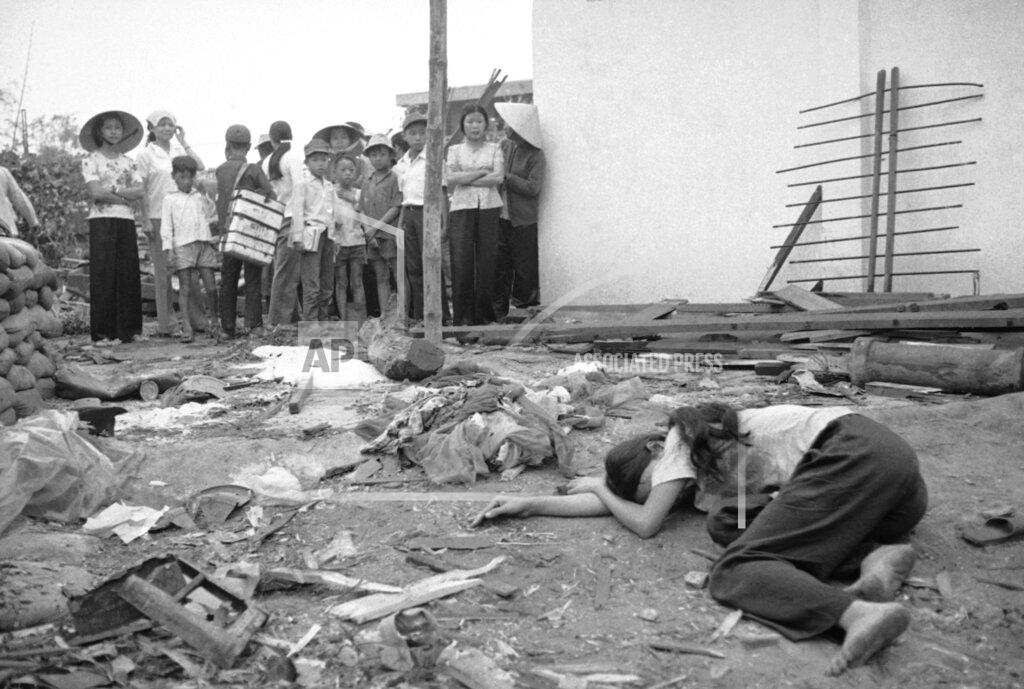
Fighting picked up sharply across South Vietnam. Government reinforcements reached the provincial capital of Buôn Ma Thuột in the Central Highlands where North Vietnamese troops have a firm foothold in the southern section. Some thought the action there might be a feint with the real direction of the North Vietnamese drive not yet evident. The Government brought in three battalions of rangers from the north of the city, military sources said. The arrival of the 1,200 rangers was believed to have almost doubled the size of the defending garrison of regular troops and militiamen. One informant in touch with the beseiged city said that last night was “quieter” than the night before, though street fighting persisted.
Government and North Vietnamese artillery units were said to have exchanged fire yesterday while frightened civilians hid in their houses. According to one account, a government spotter plane with a loudspeaker hovered over the city warning residents not to venture outside lest they be mistaken for invaders. The Saigon command said that North Vietnamese troops, who twice reportedly penetrated the heart of the city Monday supported by tanks, again threw themselves against the defenses of Buôn Ma Thuột, the capital of Đắk Lắk (Darlac) Province, yesterday morning. As the battle for the city unfolded rather uncertainly and as the pace of fighting picked up sharply across the country, the Saigon command spokesman, Lieutenant Colonel Lê Trung Hiền, charged that the Communists had launched “a nationwide general offensive.”
Though in places the fighting was intense, several Western analysts were reluctant to call the Communist attacks so far an “offensive” — which evokes memories of the 1968 and 1972 offensives. Some cautioned that the targets so far — possibly including Buôn Ma Thuột — could represent feints, diversions or attempts to draw troops away from other Government strong points and that the real shape of the current “high point,” which began on March 4, would become clear only as more days elapsed. From various accounts, the attackers in Buôn Ma Thuột have a firm foothold in the southern section of the once‐placid town, where the military headquarters, the province chief’s office and residence and a vaguely Bavarian manor once owned by the former Emperor, Bảo Đại, are situated. The Emperor used to hunt in the hills around Buôn Ma Thuột.
A North Vietnamese tank was reported to have blasted its way into the town’s military headquarters, obliging the province chief and others to move to a makeshift center further toward the center of Buôn Ma Thuột. The city and its surrounding district have a population of 150,000 Montagnards, Vietnamese, and ethnic Chinese. The rangers were said to have had some success in clearing out demolition troops, and snipers from a landing strip, at the northeastern edge of the town. But the command acknowledged that six helicopters and a light observation plane had been destroyed there. The command says that air strikes — which have reportedly been called in on the city’s main thoroughfares — and ground troops have knocked out 24 tanks in and around the city.
Some scattered house‐to-house fighting was reported. Also, a battle for the town’s main airfield, which is four miles to the east down a largely deserted country road, was said to be in progress, with the outcome uncertain.
The command said that elements of the North Vietnamese 320th Division had joined the 25th Regiment and a battalion of demolition troops in the fight for the city. But to some analysts the force doesn’t seem that great. An American Embassy spokesman said that Paul A. Struharik, a representative of the United States consulate general in Nha Trang reports the scale of the fighting seemed to indicate that the North Vietnamese had not committed even the bulk of the troops they had been thought to have put around Buôn Ma Thuột. “That’s part of the real mystery,” said one Western military analyst.
There were these other battlefield developments:
- Heavy shelling and ground attacks and one tank‐led assault were reported from South Vietnam’s northernmost provinces, Quảng Trị and Thừa Thiên, whose capital, Hue, was flooded with more than 25,000 refugees. The command reported that marine positions southeast of Phong Điền, a district capital in northern Thừa Thiên, were hit with 1,100 runds of mortar, rocket and artillery fire.
- In the northern province of Quảng Tín, where a full North Vietnamese division was recently reported to have infiltrated two district capitals in the hills were reported captured. In addition, an outpost manned by militiamen and artillery seven miles southwest of the province capital near the coast was said to have been overrun.
- In Quảng Đức province in the Central Highlands, to the southwest of Buôn Ma Thuột, the Government reported the loss of Đức Lập, a district capital, and three satellite base camps. Another district capital, Men Đức, was attacked.
- As fighting picked up around Saigon, the command reported that North Vietnamese tanks thrust toward the district capital, Trí Tám, which is 40 miles north northwest of here surrounded by dense rubber plantations owned by the French company Michelin. The command said that Government forces killed 60 Communist troops and knocked out three tanks in the heavy Trí Tám fighting. The road to nearby Tây Ninh city remained cut for the second day and Tây Ninh itself was struck by rockets, as it has been regularly.
- The air bases of Đà Nẵng, Pleiku and Biên Hòa north of Saigon were struck with rockets. Twelve people were killed and 14 wounded in the Đà Nẵng attack and three Idled and 10 others wounded at Biên Hòa, the command reported. Three soldiers and two civilians were wounded at Pleiku and three aircraft were damaged.
- Government armored units were reported to have clashed with North Vietnamese troops north of Bình Khê in Bình Định Province where Route 19 leading from the coast to Pleiku in the highlands is cut. Another bridge on Route 21—the other usable road leading out of the highlands from Buôn Ma Thuột — was still out, the command reported.
While the fighting in Quảng Trị and Thim Thien was probably the most dramatic—morItars were reportedly fired into a residential area on the outskirts of Huế, wounding 11 civilians — some analysts focused on the Quảng Tín and Quảng Đức fighting as possibly the most important. The command reported that North Vietnamese forces attacked and took both Hầu Đức, a district headquarters, and Tiên Phước, a district capital, which lie in narrow valleys in the rugged hills back from the coast. The Communists also reportedly attacked militia positions throughout the Quảng Tín hinterlands and appeared to have sealed off escape routes to the coast. Some analysts, watching the pattern of troop movements lately, have predicted that the North Vietnamese might try to drive on the provincial capital, Tam Kỳ, while crack airborne and marine units are pinned down to the north in Quảng Trị. The situation in Quảng Đức is also extremely worrisome to the Saigon side. With the capture of Đức Lập, the overland escape route from Gia Nghĩa is sealed off — though army engineers are reported to have been improving an old colonial road that leads south of the isolated capital.
By this day, the day after Buôn Ma Thuột was attacked, South Vietnamese President Thiệu came to the conclusion there was no longer any hope of receiving a $300 million supplemental aid package he requested from the U.S. government. On that basis he called a meeting attended by Lieutenant General Đặng Văn Quang and General Viên. After reviewing the military situation, Thiệu pulled out a small-scale map of South Vietnam and discussed the possible redeployment of the armed forces to “hold and defend only those populous and flourishing areas which were most important.” Thiệu then sketched in on the map the areas which he considered most important – all of the III and IV Corps Tactical Zones. He also pointed out the areas currently under PAVN/VC control which would have to be retaken. The key to the location of these operations were concentrations of natural resources – rice, rubber, industry, etc. Those areas that were to be held also included coastal areas where oil had been discovered on the continental shelf. These areas were to become, in Thiệu’s words: “Our untouchable heartland, the irreducible national stronghold.” As to the future of the I and II Corps Zones, he drew a series of phase lines on the map indicating that South Vietnamese forces should hold what they could, but that they could redeploy southward as circumstances dictated. Thiệu declared this new strategy as “Light at the top, heavy on the bottom.”
As panic sets in, the retreat southward will quickly turn into a rout and disaster, with the NVA in close pursuit, shelling the refugees. This is the beginning of the end of the Republic of Vietnam. Many of those fleeing south will die along the way. It was later estimated by the ARVN that only 20,000 of the 60,000 troops that had started out from Pleiku during the March retreat finally reached the coast. Of the estimated 180,000 civilians that fled the highlands with the column, only about 60,000 got through. Those who failed to break through were either killed or taken prisoner by PAVN forces.
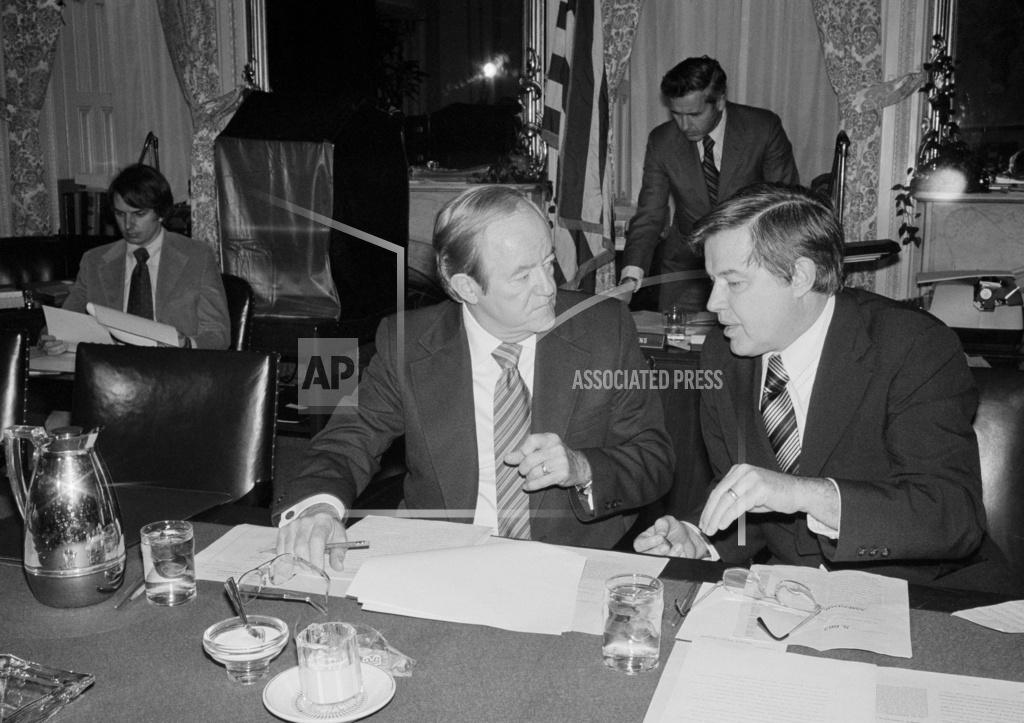
A surprise vote of 4 to 3 in a Senate Foreign Relations subcommittee approved an administration compromise to give Cambodia an additional $125 million in military aid. This action, and to a lesser extent a 3-3 tie vote on a similar measure in a House Foreign Affairs subcommittee, gave at least a temporary reprieve in the administration’s uphill struggle to aid the Lon Nol government. The original Administration request had been for $222‐million in supplemental aid to see Cambodia through the dry‐season warfare. The Senate subcommittee’s action — and to a lesser extent that of the House subcommittee — gave at least a temporary reprieve to the Administration in its uphill struggle to win Congressional approval. According to the Administration, without the additional assistance, largely in ammunition, the Government would fall to the Communist‐led insurgent forces within a matter of weeks.
Though the Administration was winning some support at the subcommittee level, Democratic and Republican leaders still felt it to be extremely doubtful that the House of Representatives, and the Senate, but with less doubt, would approve any additional military aid. The Senate subcommittee action came after its chairman, Senator Hubert H. Humphrey, Democrat of Minnesota, had gone into the closed‐door meeting confident that even the compromise would be defeated. The swing vote, according to subcommittee members, was provided by Senator Jacob K. Javits, Republican of New York. He had been wavering, and the White House was lobbying with him intensively. Senator Javits said after the two‐hour meeting that he had decided to vote for the aid because he believed “that is the more likely course to bring about an orderly transition of government.”
President Lon Nol asked Premier Long Boret to form a new cabinet in Cambodia today and removed the commander of the armed forces. This was seen as a gesture to the Cambodian insurgents and to leaders of the American Congress who have demanded removal of the entire Lon Nol government, but the action was not expected to have a major impact on either group. The formation of the new Cabinet and the installation of the new armed forces commander is likely to produce little real change either in the Government or in the immediate military picture, which continued to show no improvement today on any front.
The insurgents have named seven “criminals” who they say must be “hanged” before any settlement talks can begin. While General Sosthene Fernandez is one of the seven, the list also includes Marshal Lon Nol and Premier Long Boret, who remain in power. It was Marshal Lon Nol who joined with two confederates to overthrow Prince Norodom Sihanouk as Chief of State on March 18, 1970. Prince Sihanouk has been living in Peking where he is the titular head of the Cambodian insurgent movement.
General Saksut Sakhan, the new chief of staff, served as Defense Minister during the filal days of the Sihanouk regime and the early days of the Lon Nol Government, but he is not known to have a close relationship with Prince Sihanouk. And it is doubtful that Prince Sihanouk holds any real power over the insurgent leaders in charge of the war within Cambodia. The exact role of the American Embassy here in shaping the new Cabinet was not known although the United States Ambassador, John Gunther Dean, is known to have met with Marshal Lon Nol only two days ago.
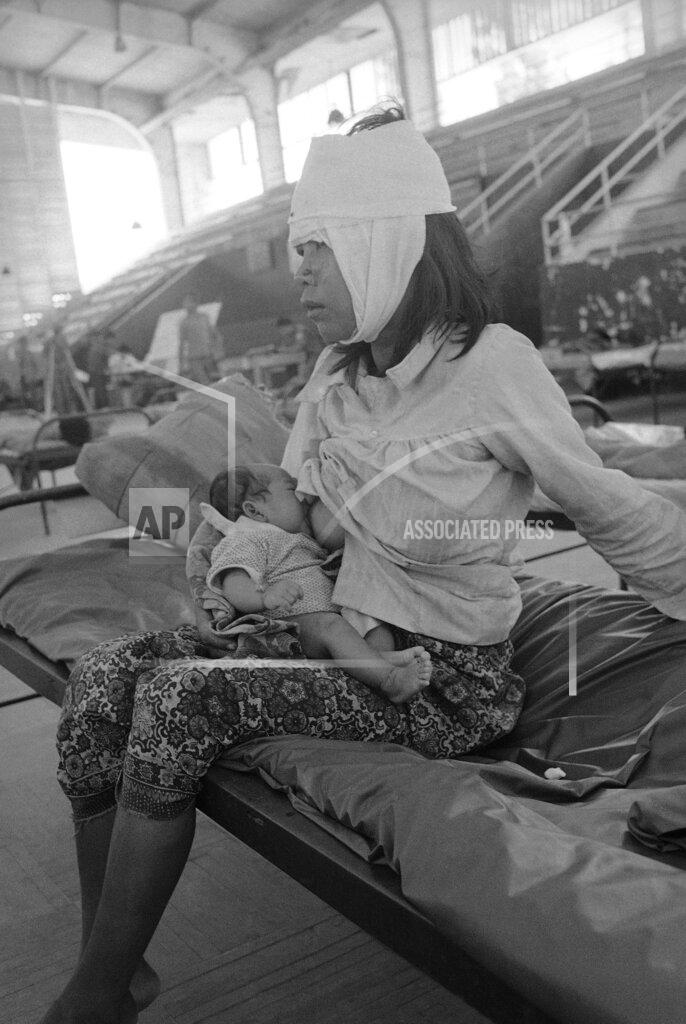
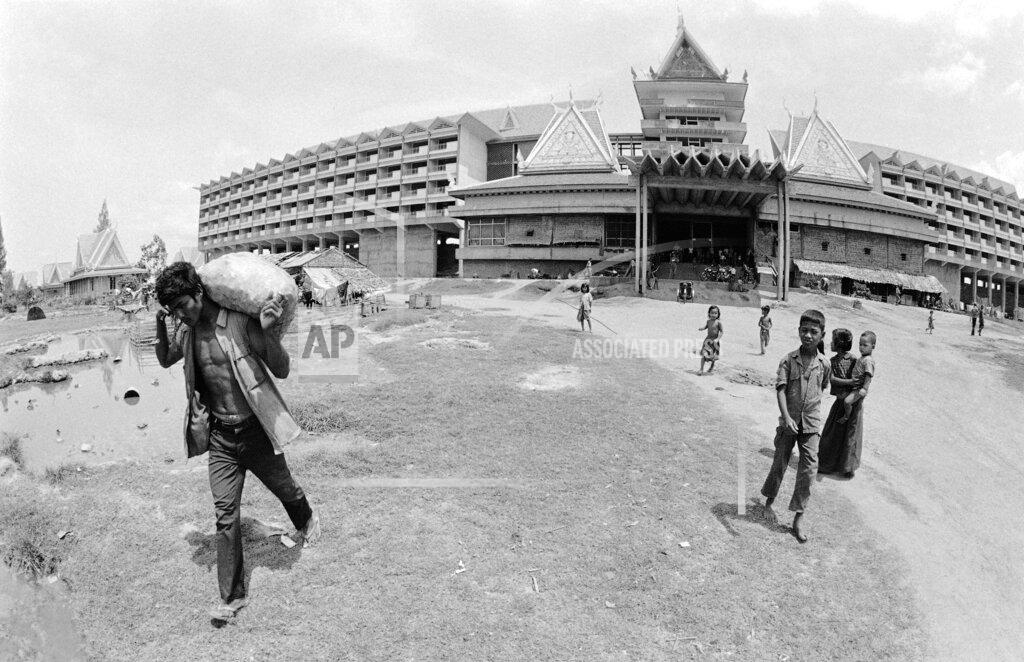
A British military transport plane evacuated 30 foreigners from Phnom Penh today, transporting them and some British Embassy documents and equipment to Singapore shortly after 2 PM. No British Embassy personnel left since the embassy had already been reduced to a staff of six. Three 107‐mm rockets struck Pochentong Airport shortly before the passengers arrived there from the British Embassy to board the plane. The aircraft escaped damage. More rockets continued to fall on the airport, which is the last supply line for the isolated capital, and on Phnom Penh itself. Three struck near the National Assembly, two blocks from the British Embassy. Another landed in the grounds of a school for Buddhist monks, but there were no injuries. The American airlift of supplies into Pochentong Airport was not disrupted by the rocket attacks.
The military situation continued serious on most of the fronts around Phnom Penh. To the northwest, near Tuol Leap, where Government forces have been trying for weeks to clear insurgents from rocket positions within range of the airport, progress was reported. Air strikes against insurgents in bunkers there continued throughout the night but with no apparent effect. Heavy fighting was reported east of Tuol Leap, near Prek Phnou, off Route 5, where the military command said the fighting was “hand to hand.” This is unusual in this war in which the two sides rarely join closely in combat.
More than 17,000 men, 200 aircraft and 31 ships from the United States, Canada, Australia, and New Zealand tested their Pacific defenses in a massive naval exercise dubbed RIMPAC ‘75. RIMPAC stands for Rim of the Pacific. The exercise, under the overall direction of Vice Admiral James H. Doyle Jr., commander of the U.S. 3rd Fleet, will last 11 days, a Navy spokesman in Honolulu said.
The State Department, citing rising terrorism abroad, is increasing the number of Marines guarding U.S. diplomatic posts in 96 countries. The Marine Corps has picked an additional 344 elite noncommissioned officers for this duty, raising the total guard force to 1,489. Marine protection is being extended to 27 additional posts, principally in the Middle East and Africa.
The leftist military government in Portugal defeated a rightist coup attempt. Two planes of Portugal’s Air Force attacked a Lisbon artillery barracks in what officers called an attempted coup against the left-wing military government. Loyal officers said the government remained in complete control. The chief of security forces hinted that he believed the United States was involved. General Antonio de Spinola, who led the coup against the dictatorship last April but was ousted as president in September, arrived in Spain and was detained by the authorities.
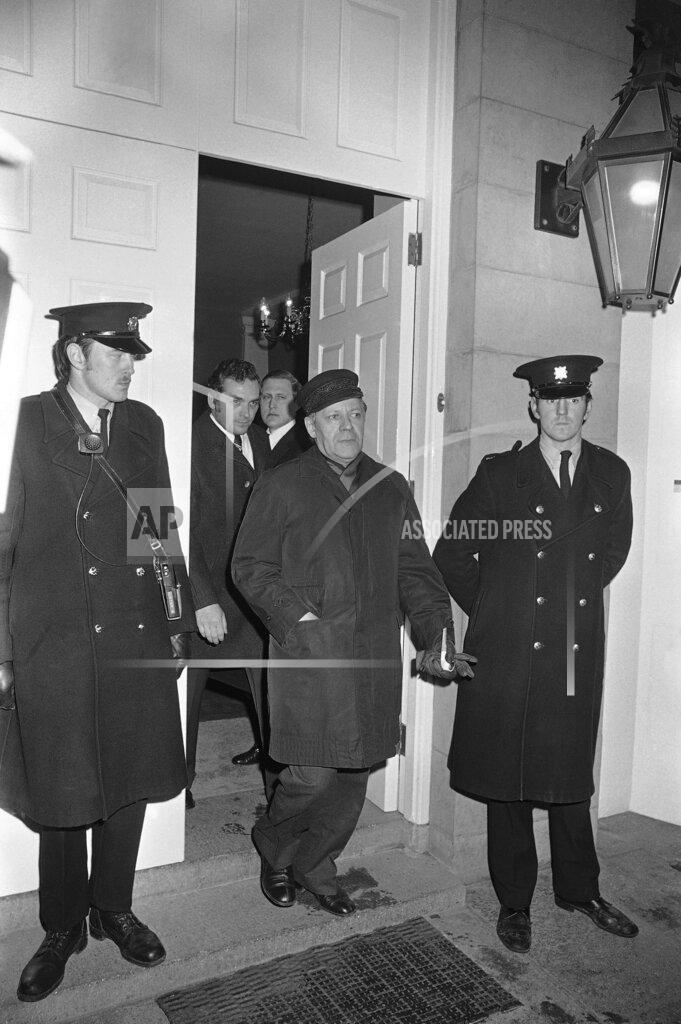
The government chiefs of the nine Common Market countries reached agreement in Dublin on easier membership terms for Britain. After two difficult days of bargaining in the face of British threats of withdrawal, the others conceded to Prime Minister Wilson the lower budget payment to the Market he had sought. His cabinet is now expected to urge the people to vote “yes” in the coming referendum, but there is no certainty voters will do so.
Secretary of State Kissinger said today in Ankara, Turkey, that after extensive talks with Turkish leaders, he believed progress had been made toward finding a solution to the-Cyprus crisis.
Egypt has suggested that a new disengagement agreement with Israel in Sinai contain some of the language as the first such agreement in January, 1974, according to Egyptian officials in Aswan. That one included a formal cease-fire observance pledge and a promise to refrain from military or paramilitary action. The Egyptians have also suggested that the accord extend to naval units operating in the Mediterranean and Red Sea.
Yasser Arafat, the Palestinian guerrilla leader, has criticized President Anwar el‐Sadat of Egypt as a misguided moderate who is deceiving himself in expecting that Secretary of State Kissinger can achieve for the Arabs a recovery of the lands occupied by Israel in the war of 1967. Mr. Arafat said he believed that President Sadat was preparing to abandon the Palestinians. In an interview with Norman Cousins, editor of Saturday Review, Mr. Arafat said he doubted that the Israelis would ever relinquish any of the land unless forced to do so. Mr. Cousins talked with the Palestinian leader, who kept a machine gun in his lap during the conversation, in Beirut, Lebanon, during a recent tour of the Middle East. A report on the interview is to appear in the March 22 issue of Saturday Review. Mr. Arafat asserted during the interview that he was convinced that the strategy of Israel was to sit tight and surrender nothing. For 30 years, he said, the Israelis have not made a single conciliatory gesture toward the Palestinians, and for this reason the Palestinians believe they have no choice but to be militant.
Lebanon’s Muslim leaders are pressing for a reorganization of the army command to obtain an equal share with Christian politicians in the making of military decisions. The Muslim demand has embroiled the nation’s two political clans in a conflict that may endanger the Cabinet of Premier Rashid es‐Solh, Lebanon’s third government within a year. Political commentators also fear violence among the heavily armed civilian factions if there is no compromise. The issue arose over orders issued to the army to put down demonstrations by largely Muslim fishermen against the start of operations of a modern trawling fleet owned by a private company. During fighting at roadblocks put up by the demonstrators in the port of Saida, five army soldiers were killed and nine wounded, while at least nine civilians were killed, including a former Muslim deputy, Maarouf Saad.
The Kurdish forces of General Mustafa Barzani have vowed to continue their revolt against a much stronger Iraqi army, which is thrusting into the Kurds’ mountain stronghold. A Barzani spokesman confirmed in Beirut that Iran had stopped sending military supplies to the Kurds in the mountains of northeastern Iraq, following the announcement last week of an Iran-Iraq agreement to settle border disputes.
The political mood in South Korea today is one of expectancy. Everyone thinks something is going to happen, but no one is quite sure just when, just what or just how, and all this narrows down to the fundamental question: Can the President survive? Clearly, President Park Chung Hee and his increasingly vigorous opponents among Christians, students, intellectuals and Opposition parties are on a collision course. Critics of the President are determined to achieve curbs on his unlimited power and reforms to guarantee freedom of speech and political activity, and some of the critics want Mr. Park to resign. The President himself is equally determined that he will be obeyed, that his means and ends will be accepted without question and that attention will be concentrated on the nation’s economic development and what he sees as the threat from North Korea.
British Defense Minister Roy Mason assured Parliament that there will be no facilities for nuclear weapons on Britain’s Diego Garcia Island in the Indian Ocean. He was being closely questioned about controversial U.S. plans to counter Soviet naval activity in the area by expanding military facilities on the strategic island with the agreement of the British government.
The Roman Catholic Church charged in La Paz that the US. Agency for International Development was conducting “modern genocide” in Bolivia through birth control programs. The 22 Catholic bishops in Bolivia, in a pastoral letter, called on the government to “beat back international pressures and interests of those who are ready to support that aggression.” The letter said “increased use of contraceptives, sterilizations, legalized abortion and economic punishment of large families” was being planned in Bolivia.
The Senate approved the Administration’s controversial nomination of Nathaniel Davis as assistant secretary-of state for African affairs. Davis. was ambassador to Chile during the events leading to the overthrow and death of Marxist President Salvador Allende in 1973. The Senate also approved Harry W. Shlaudeman, who served in Chile under Davis, as ambassador to Venezuela, and William Bowdler as ambassador to South Africa. The congressional black caucus had opposed Davis and several African countries also had expressed concern over his nomination.
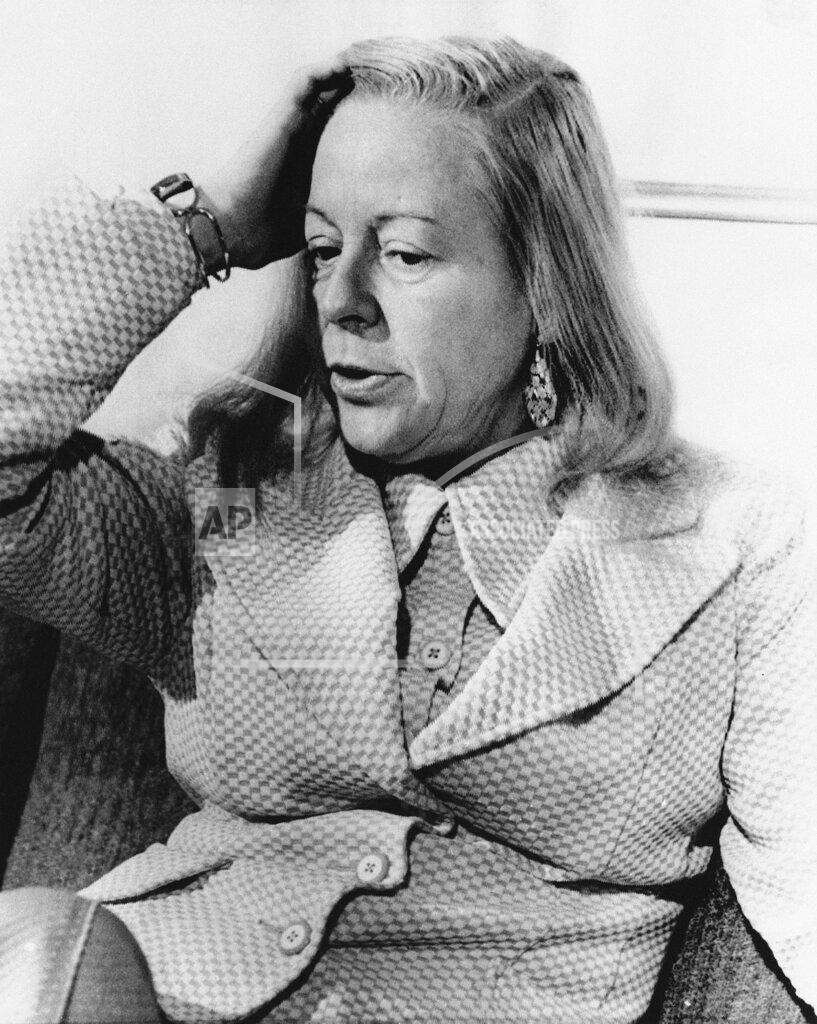
J. M. Kariuki, a leading critic of the Kenyan Government and advocate of social reform, has been shot to death, two of his wives said today after identifying his body at the city morgue. They said the body of the 45-year-old legislator and former official, missing since he was seen with a high police official at a Nairobi hotel nine days ago, was found by Masai herders more than 20 miles from the city. A police spokesman declined to confirm the indentification pending a fingerprint check. Kenyan sources said the announcement by Terry and Nyambura Kariuki, two of the three wives he married under Kikuyu custom, posed a grave threat of civil disorder. Mr. Kariuki, who boasted of grassroots support and said he, not Jomo Kenyatta, would be president if there was a fair election, often predicted to friends that his radical views would lead to his violent death.
African nationalist leader Rev. Ndabaningi Sithole will answer charges of plotting to kill political rivals at a special court hearing March 24, a Rhodesian government spokesman announced in Salisbury. Mr. Sithole, a leading member of the African National Council, was arrested March 4. He was a key figure in negotiations between the ANC and the white minority Rhodesian government on increasing the political power of Africans.
Prime Minister John Vorster expressed hope that South Africa, which practices apartheid, or separation of the races, was on the point of a breakthrough in gaining acceptance throughout the world, and particularly among the black nations of Africa. Vorster spoke at a dinner in his honor in Mafeking, where he had gone to open the legislative assembly of South Africa’s Bophutatswana African homeland.
The USSR performs a nuclear test at the Semipalatinsk Test Site in northeast Kazakhstan.
President Ford won a victory of sorts in the House today when the Democratic leadership abandoned the idea of overriding his veto of the 90-day oil tariff delay, and the House voted 364 to 57 to send the bill back to the Ways and Means Committee. The Republican minority apparently had garnered enough Democratic votes to sustain Mr. Ford’s veto. Speaker Carl Albert conceded that the Republicans “might have” had the votes to sustain the veto, although the majority leader, Thomas P. O’Neill of Massachusetts, had said last week that the Democrats had the strength to override.
The nation could lose its economic allies if it fails to produce more domestic fuel and conserve it more stringently, Interior Secretary Rogers, C. B. Morton told a group of businessmen. “We must reduce our need to compete with our allies for foreign oil. Morton said at a speech in New York City to the American Paper Institute. “We will lose the friendship and the trade of our economic partners if we continue our hoggish energy use. They will leave us as economic partners and will take on marriages with other nations, Morton said.
The House of Representatives voted without dissent today to give 10 of its committees $10-million in operating funds this year, a 79 percent increase over 1974. The largest increases were given to committees whose chairmen were replaced, an indication that the new leaders of the panels intended to investigate their areas of jurisdiction more stringently. As an example, the Agriculture Committee authorization was raised from $150,000 to $788,000. This reflects the stated aim of the new chairman, Representative Thomas S. Foley, Democrat of Washington, to conduct the committee’s oversight functions more diligently than did the deposed chairman, Representative W. R. Poage, Democrat of Texas.
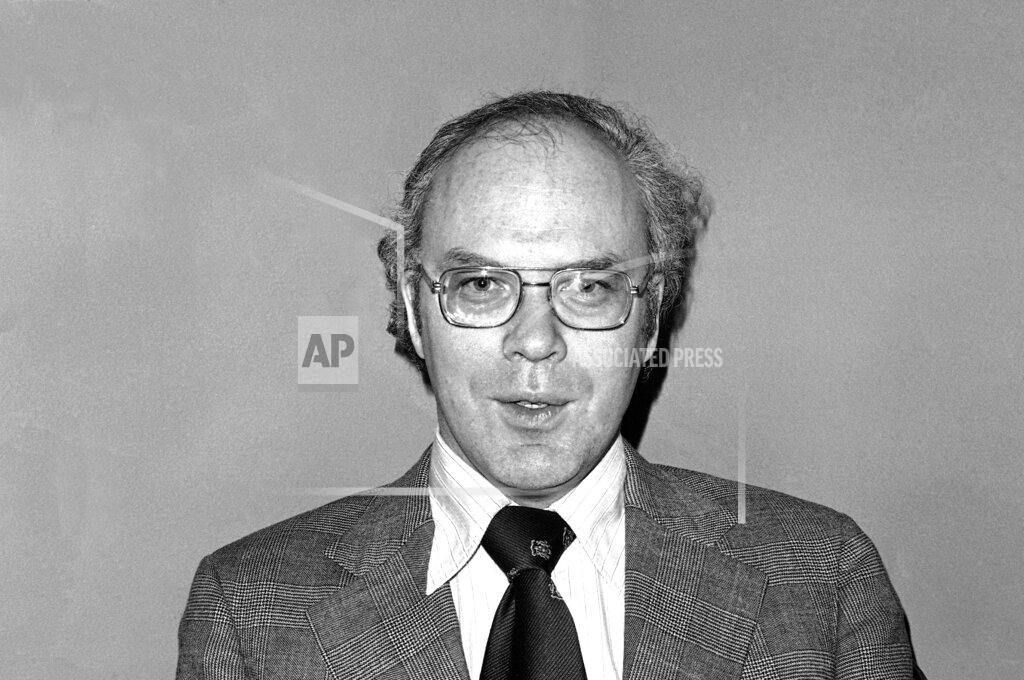
Alan Greenspan cited two main objectives when he left his lucrative consulting practice in New York City last fall to take over as chairman of the President’s Council of Economic Advisers. The conservative, 48‐year‐old business economist wanted to have a strong voice in determining Administration economic policy, particularly in the tax and spending areas. And he said he planned to restore some of the professional objectivity and expertise that the council had lost during the time it was under the chairmanship of Herbert Stein, a man who frequently had pursued a controversial public role as political spokesman for President Nixon. In his efforts to win the President’s ear Mr. Greenspan seems to be gaining success. “Alan has more influence on the man in the White House than any other chairman of the Council of Economic Advisers in a long, long time — perhaps forever,” one Administration official said. In the last six months, the new President, Gerald Ford, and his Nixon-nominated adviser, Mr. Greenspan, have grown close, this, official said, “both professionally and personally.”
Senator Russell B. Long (D-Louisiana) said he doubted that any undue influence can be inferred from his acceptance of campaign contributions from the oil industry. Long issued a statement reacting to disclosure by Common Cause that he had received $52795 in contributions since September 1, 1973, from persons identified with the oil and gas industry. The Senate Finance Committee, which Long heads, has agreed to postpone action on a House-passed amendment that would repeal the oil depletion allowance, which gives the industry a $2.5 billion annual tax break.
The Securities and Exchange Commission charged the Gulf Oil Corporation with falsifying its reports to conceal a $10 million secret fund from which illegal political contributions were made between 1960 and 1974. The sum is by far the largest corporate political fund alleged to exist by any law enforcement agency since disclosures began as an outgrowth of the Nixon administration scandals. The S.E.C. said that Gulf had agreed to an order that will bar it from taking similar illegal action. The company will be required to produce details about the fund and to correct its previous false reports.
The Food and Drug Administration said it is expanding the largest recall of television sets in history to include more than 5,000 additional sets of three different brands. It said the sets had the potential for leaking radiation at dangerous levels The FDA recalled 400.000 other sets in January for the same reason. The FDA added that set owners would be paid a mileage allowance for bringing the receivers to appliance centers for repair. The latest to be recalled involve 19-inch color sets made by Toshiba of America, Inc., and Quasar Electronics Corp.
The recall of more than 212,000 cans of lobster bisque, clam bisque and Spanish pimientos was announced by the Food and Drug Administration It said they could create a potential health hazard because of underprocessing. The FDA added that it knew of no one having been made sick and emphasized that any risk was theoretical, because no micro-organisms had been found in the cans. The soups were packed under labels of Atlantic Brand, Embassy Seafoods, House of Stevens, Weathervane Farm, Salt Water Farm, and Old Sturbridge Brand. The pimientos were labeled Pomona Sunshine. Whole Pimientos, Blue Plate Whole Pimientos and King Pharr Fire Roasted Whole Pimientos.
After more than two weeks, a jury was seated today to try former Senator Edward J. Gurney of Florida on charges of bribery, conspiracy and perjury. Federal District Judge Ben Krentzman, who conducted jury selection in semi-secrecy, swore in 18 trial jurors — 12 regular jurors and six alternates. But he did not disclose which were which. Testimony is scheduled to begin tomorrow. Mr. Gurney is the first former Senator ever tried on charges filed against him while serving in office. The trial is expected to last at least three months. The 61‐year‐old former Senator, who served on the Senate Watergate committee last year, is accused of extorting money from Florida builders from 1971 until early last year.
Two more fires of suspicious origin brought to six the number of blazes at New York City telephone installations in less than two weeks. One fire destroyed records in a tightly guarded New York Telephone Co. building and the second knocked out 416 phones in a New York Stock Exchange administrative office. The series of fires began with a disastrous five-alarm blaze caused by a short circuit on February 27 that knocked out 170.000 telephones in a Lower East Side switching center. The last four fires have been labeled apparent arson.
New York City authorities said they smashed a “Colombian Connection” cocaine ring that allegedly smuggled $30 million worth of the drug into the city over an 18-month period. Seven men have been arrested as wholesalers and dealers.
A warning by a General Dynamics engineer that a DC‐10 crash was close to “inevitable” unless the cabin floor the company was making for the McDonnell Douglas plane was redesigned was not transmitted to McDonnell Douglas, largely because of a contract dispute between the companies, according to a court document. The 1972 document was contained in a brief submitted Monday in a Federal court in Los Angeles in damage suits growing out of the DC‐10 crash near Paris a year ago in which 346 person were killed. The document shows that the engineer urged his company to approach top McDonnell Douglas officials to persuade them “to incorporate changes in the DC‐10 which, will correct the fundamental cabin floor catastrophic failure mode.” His concern had been prompted by the near‐crash of a DC‐10 in June, 1972, on a flight in this country.
Fossil hunters in Big Bend National Park in West Texas have discovered remains of an extinct winged reptile with an estimated wing span of 51 feet — more than twice the span of the biggest previously known pterodactyl and the largest known creature ever to have flown. It flourished more than 50 million years ago.
Dow Jones Industrial Average: 770.89 (-5.24, -0.68%)
Born:
Shawn Springs, NFL cornerback (Pro Bowl, 1998; Seattle Seahawks, Washington Redskins, New England Patriots), in Williamsburg, Virginia.
Terry Cousin, NFL cornerback and safety (Chicago Bears, Atlanta Falcons, Miami Dolphins, Carolina Panthers, New York Giants, Jacksonville Jaguars, Cleveland Browns), in Miami, Florida.
Tyson Nash, Canadian NHL left wing (St. Louis Blues, Phoenix Coyotes), in Edmonton, Alberta, Canada.
Cedric Henderson, NBA small forward (Cleveland Cavaliers, Golden State Warriors), in Memphis, Tennessee.
Buvaisar Saitiev, Russian freestyle wrestler (Olympic gold medal, 74kg, 1996, 2004, 2008), in Khasavyurt, Russian SFSR, Soviet Union (d. 2025).
Eric the Actor, [Eric S. Lynch], American radio personality (“The Howard Stern Show”), formerly known as ‘Eric the Midget’, in Rodeo, California (d. 2014).
Died:
Sammy Spear, 65, American big band trumpet player and orchestra leader (“The Jackie Gleason Show”), of a heart attack.



 History Diaries