Soviet 7th Army, 13th Army, and 15th Army continue to press forward against Finnish positions on the verge of collapse. The Red Army closed in around Viipuri, Finland’s second largest city.
Soviet forces capture Repola, northeast of Viipuri, as well as Karppila and Ruhela on the north shore of Viipuri Bay. The massive Soviet pincer around Viipuri is wide open and getting ready to close. There is hand-to-hand fighting deep in the city itself. The city is the linchpin of the defense, once it is lost the Soviets will have multiple avenues into the heart of the country.
Finnish General Öhqvist: “This is an awful gamble. We might hold Viipuri until tomorrow night. After that, either city or army is doomed.”
The situation in Viipurinlahti Bay remains critical: the Red Army is constantly funnelling new troops and equipment into the area. The Russians are working to extend their bridgehead on the western side of the bay. The aim of the Soviet troops is to use the bridgehead as a staging post to get round to the west of Viipuri and cut the Finnish troops defending the city off from their vital supply lines to the interior. The Soviets are attempting to take the city of Viipuri itself by a straight frontal assault, while the troops to the northeast of the city are making a drive towards Antrea. During the course of the afternoon the enemy breaks through the Finnish defences in the western part of Nisalahti village and carries on three kilometres to the north. The unfolding events in Viipurinlahti Bay mean the Finnish troops have lost use of the main defensive positions on the Isthmus and will have to fight from now on in totally unprepared positions.
Some of the Finnish troops are suffering from battle fatigue, while others are raw, inexperienced troops; the chain of command and the responsibilities of the officers are also having to be constantly reworked.
Aerial reconnaissance reports 200 Soviet assault tanks in Pullinniemi.
On the Karelian Isthmus, the Soviets overrun the countryside around Leitimo manor on the Tali Isthmus. The Soviet troops launch their assault in the morning and break through the Finnish defences to a depth of 4 kilometres.
Fresh troops are concentrated around Viipurinlahti Bay, including a cavalry brigade from Ladoga Karelia.
In Vuosalmi the Red Army is concentrating its efforts on the Liete meadows to the northeast of Vasikkasaari.
The Soviet force in Ladoga Karelia is able to establish a good grip on the southern tips of the Lapoinniemi and Kuivaniemi promontories on the shores of Lake Ladoga. As night falls, the defending Finnish troops withdraw.
Three Finnish planes strafe Soviet columns, destroying vehicles.
Finland’s former president, P.E. Svinhufvud is in Berlin to seek help for Finland, but is unable to gain access to members of the German leadership.
Marshal Mannerheim, president of Finland, urges the government to make terms with the USSR.
The Finnish and Soviet negotiators meet for a second round of talks in the Kremlin at 2 PM today. Finland is in an awkward negotiating position. Contact with the Government at home has to be conducted via Stockholm and telegrams can take up to 12 hours to reach their destination. The deadline of March 12 set by the Allies is also getting ominously close.
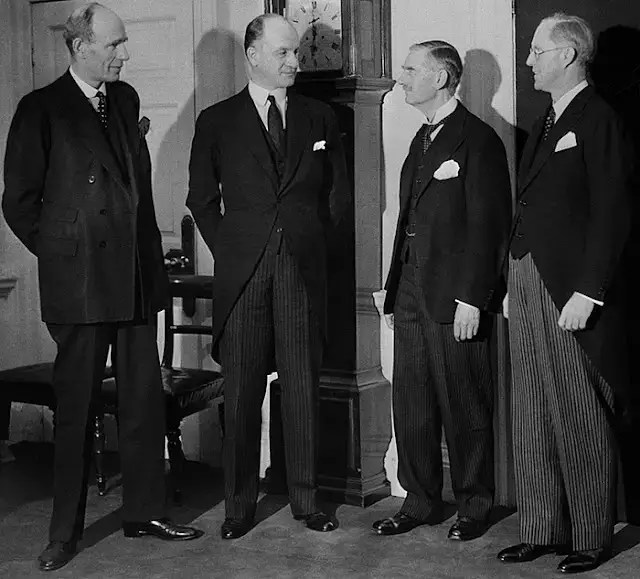
Finland’s delegation under the leadership of Prime Minister Risto Ryti in Moscow met the Soviet negotiating team at the Kremlin for 2 hours. The Soviet team was led by Foreign Minister Vyacheslav Molotov. The Finnish negotiators attempt to haggle over the Soviet terms, but without success. The Finns tried to revise the peace terms but according to Finnish Prime Minister Ryti the Soviets would change “not a single comma.” This causes some resentment in Finland, but nothing can be done about it — for now.
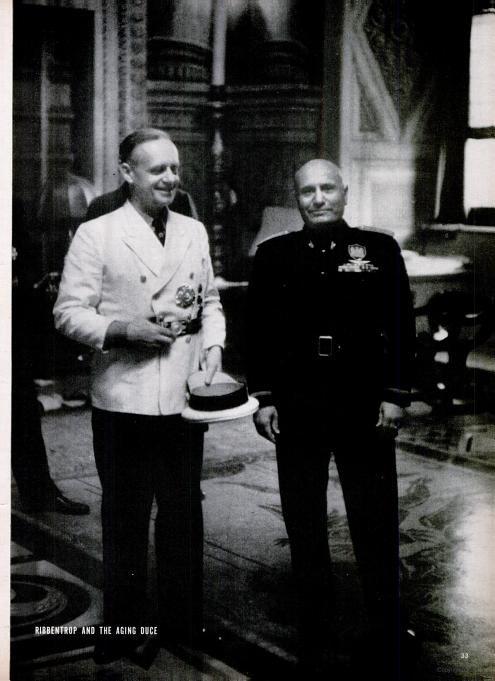
Joachim von Ribbentrop arrived in Rome for a two-day meeting with Benito Mussolini. It was agreed that Mussolini would have a face-to-face meeting with Hitler soon to discuss Italy entering the war. German Foreign Minister Joachim von Ribbentrop met Italian Prime Minister Benito Mussolini in Italy. von Ribbentrop informed Mussolini of Hitler’s plan to invade France and assured him of a swift victory, hoping for an Italian commitment to join the war with Germany. Mussolini promised only to intervene as soon as possible. Mussolini was not convinced and, knowing that his forces were not ready to fight a modern war, preferred to sit on the sidelines and await the results.
[Ed: Bennie should have stayed on that sideline, but he got greedy when he saw France falling later this year. It cost him everything.]
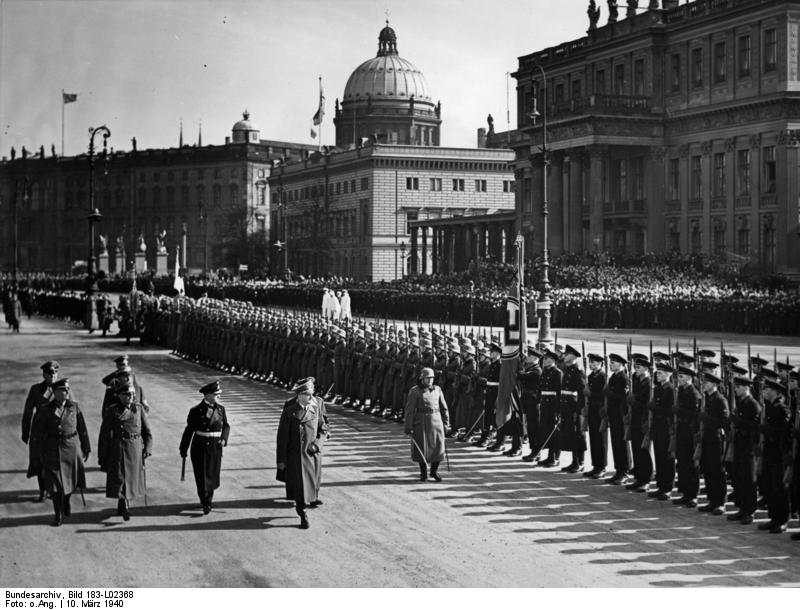
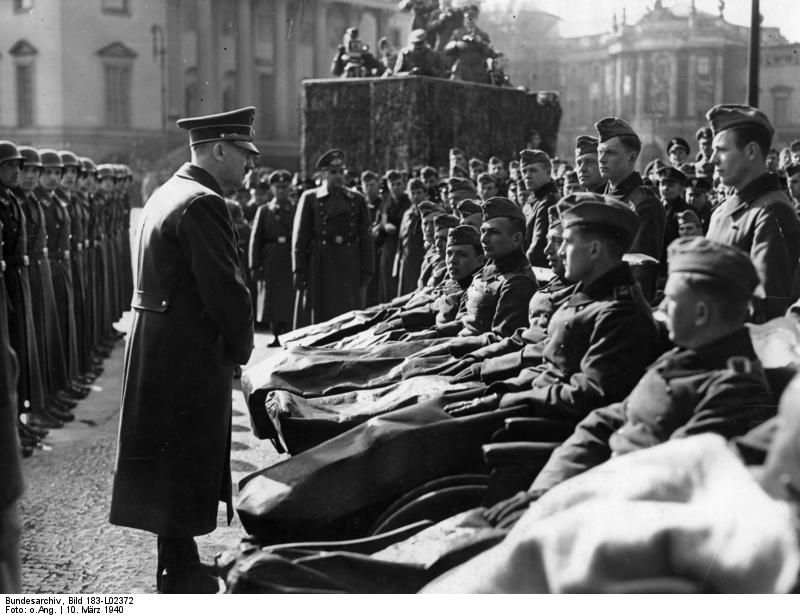
Hitler gave a speech at the Berlin Zeughaus on Heroes’ Memorial Day. Dressed in the uniform that marks him as the “first soldier” of his country, Chancellor Hitler today spoke to the nation from the glass-covered courtyard of Berlin’s historic arsenal on the occasion of Heroes’ Memorial Day.
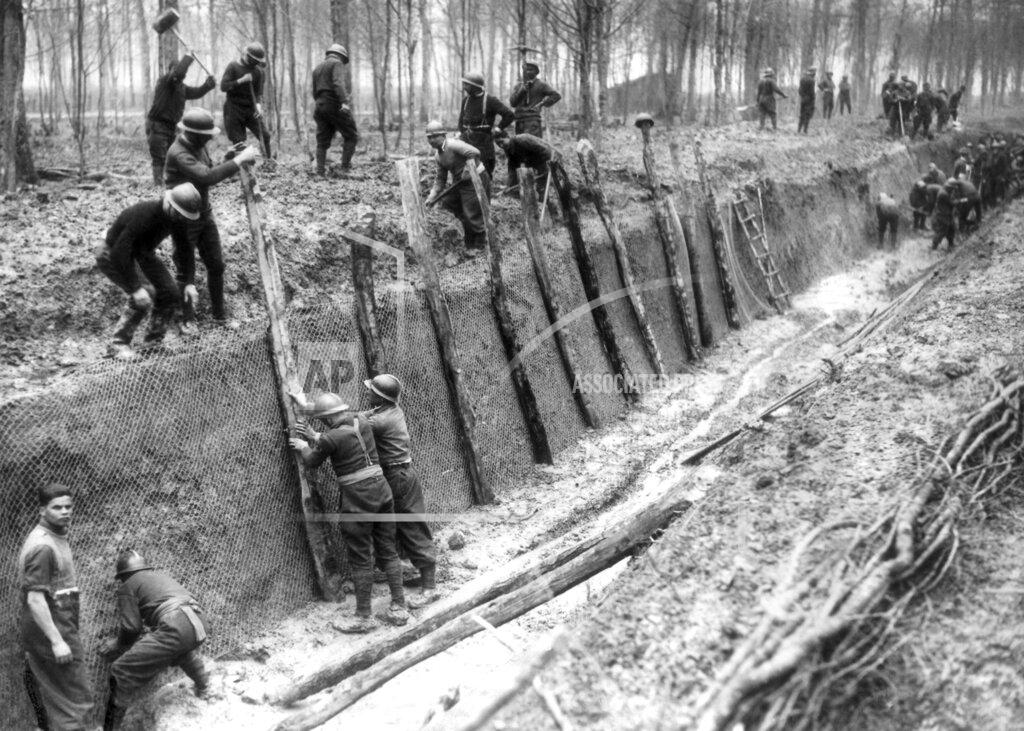
On the Western Front the Germans are becoming more and more inquisitive in the air and on land. Their numerous patrols are persistently exploring the Allied advanced lines between the Rhine and Moselle Rivers while their aerial observers fly over them methodically.
Sumner Welles flew to London and met with Lord Halifax. U.S. Undersecretary of State Sumner Welles conferred with British Prime Minister Neville Chamberlain in London. In briefing Chamberlain on Hitler’s intransigence, Welles argued that the only hope for lasting peace was to disarm Germany. Chamberlain’s advisers, however, viewed Welles’s approach as naive and insisted that even a “disarmed” Nazi Germany posed a threat to Europe.
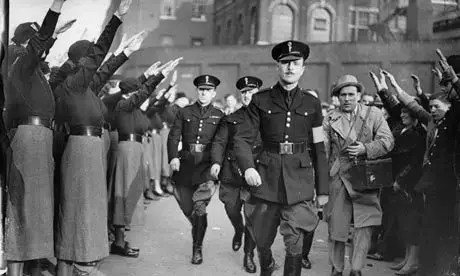
British fascist leader Oswald Mosley demands Jews be expelled from the United Kingdom.
Ireland’s neutrality has saved her from the horrors of war, depressing blackouts, food rationing and a host of other inconveniences suffered by belligerent countries, but she has not escaped some of the worst economic consequences of the present European situation. Inflationa nd increased taxation have led to labor unrest.
Between 1,200 and 1,500 political refugees from Bohemia-Moravia and from Slovakia, for the most part ex-soldiers, officers and students—the sections of Czecho-Slovak life which are being most cruelly persecuted in the Protectorate—are reported to be at present in Hungarian prisons. The names and whereabouts of nearly 1,200 are known.
A certain amount of anxiety troubles the Near East tonight, with increasing fear in diplomatic and Turkish Government circles that Finland may be forced to capitulate to the Russian terms and that German pressure is making difficult Italy’s non-belligerent position. The Turks most fear a Soviet attack.
Death of the noted Russian writer and playwright, Mikhail Bulgakov (1891-1940), whose work Joseph Stalin liked but would not allow to be staged or read. When Bulgakov’s play about Stalin’s early life was turned down in 1939, he became ill and depressed, and died less than a year later. His crowning achievement, the novel “The Master and Margarita,” was not published until 1968.
The RAF conducts reconnaissance over Vienna and Prague.
Perhaps the most far-reaching surprise of the European war has been the widespread use by the Germans of self-sealing, puncture-proof airplane fuel tanks. All nations, including the United States, knew something about this type of tank before the war started but they had been installed in quantity only in German planes. Now other countries are racing to field the same innovation.
The U.S. freighters Explorer, Exchester, and West Cohas were detained at Gibraltar by British authorities; all were released, however, after only several hours.
Convoy OA.107 departed Southend escorted by destroyer HMS Veteran from the 11th to 12th, although she was damaged in collision on the 11th. The convoy dispersed on the 13th.
Convoy OB.107 departed Liverpool escorted by destroyers HMS Versatile and HMS Walpole from the 10th to 15th, when the convoy dispersed.
Convoy HN.18 of three British, eleven Norwegian, twelve Swedish, eight Finnish and two Estonian ships departed Bergen escorted by destroyers HMS Encounter, HMS Escort, HMS Electra and HMS Eclipse. Submarine HMS Narwhal joined the convoy on the 11th. Destroyer HMS Kimberley departed Scapa Flow at 1800/9th for patrol and then joined the westbound section. When the convoy split into sections, destroyers HMS Fame, which departed Scapa Flow on the 11th, and HMS Kimberley joined to escort the west coast section of ten steamers. HMS Narwhal joined the convoy on the 12th. Three steamers from the Orkneys joined for passage to east coast ports. The convoy of 25 steamers arrived at Methil on the 13th without incident, escorted by HMS Encounter, HMS Escort, HMS Electra and HMS Eclipse. On the same day, HMS Fame and HMS Kimberley arrived at Scapa Flow.
Convoy MT.27 of nine steamers departed Methil escorted by the 1st Anti-submarine Group, supported by destroyer HMS Javelin, and arrived in the Tyne later that day. HMS Javelin went on ahead to the Tyne to escort Norwegian steamer Mira (1152grt) to Methil, where they arrived on the 11th.
Convoy FN.117 departed Southend escorted by sloop HMS Pelican and destroyer HMS Vivien, and arrived at the Tyne on the 12th.
Convoy FS.118 departed the Tyne, escorted by sloops HMS Black Swan and HMS Grimsby, and arrived at Southend on the 12th.
The War at Sea, Sunday, 10 March 1940 (naval-history.net)
NORTHERN PATROL
Light cruiser SOUTHAMPTON departed Scapa Flow on Northern Patrol.
Heavy cruiser YORK arrived at Scapa Flow after Northern Patrol.
Armed merchant cruiser WORCESTERSHIRE departed Greenock on Northern Patrol.
Armed merchant cruiser CORFU arrived at Greenock after Northern Patrol.
At 1710, armed merchant cruiser WOLFE reported sighting nine vessels, believed to be warships, which were later determined to be ice.
Destroyer depot ship WOOLWICH escorted by destroyers TARTAR, ESKIMO, and MASHONA departed the Clyde at 1000, and arrived at Scapa Flow at 1700/11th.
Monitor MARSHAL SOULT, towed by three tugs, was escorted by destroyers EXPRESS and ESK, from Sheerness to Portsmouth.
Light cruiser GALATEA departed Scapa Flow for Rosyth, where she arrived on the 11th.
Destroyer DELIGHT reported her feed tank leaking.
Submarine NARWHAL departed Scapa Flow escorted by anti-submarine trawler BUTTERMERE and two other trawlers of the Group for exercises in the Fair Isle Channel.
Submarine THISTLE arrived at Rosyth after patrol.
Submarine SUNFISH departed Lowestoft for Harwich, where she arrived later that day.
Convoy OA.107 departed Southend escorted by destroyer VETERAN from the 11th to 12th, although she was damaged in collision on the 11th (q.v.). The convoy dispersed on the 13th.
Convoy OB.107 departed Liverpool escorted by destroyers VERSATILE and WALPOLE from the 10th to 15th, when the convoy dispersed.
Convoy HN.18 of three British, eleven Norwegian, twelve Swedish, eight Finnish and two Estonian ships departed Bergen escorted by destroyers ENCOUNTER, ESCORT, ELECTRA, and ECLIPSE. Submarine NARWHAL joined the convoy on the 11th. Destroyer KIMBERLEY departed Scapa Flow at 1800/9th for patrol and then joined the westbound section. When the convoy split into sections, destroyers FAME, which departed Scapa Flow on the 11th, and KIMBERLEY joined to escort the west coast section of ten steamers. NARWHAL joined the convoy on the 12th. Three steamers from the Orkneys joined for passage to east coast ports. The convoy of 25 steamers arrived at Methil on the 13th without incident, escorted by ENCOUNTER, ESCORT, ELECTRA, and ECLIPSE. On the same day, FAME and KIMBERLEY arrived at Scapa Flow.
Convoy MT.27 of nine steamers departed Methil escorted by the 1st Anti-submarine Group, supported by destroyer JAVELIN, and arrived in the Tyne later that day. JAVELIN went on ahead to the Tyne to escort Norwegian steamer MIRA (1152grt) to Methil, where they arrived on the 11th.
Convoy FN.117 departed Southend escorted by sloop PELICAN and destroyer VIVIEN, and arrived at the Tyne on the 12th.
Convoy FS.118 departed the Tyne, escorted by sloops BLACK SWAN and GRIMSBY, and arrived at Southend on the 12th.
Destroyer FORESTER attacked a contact east of South Ronaldsay in 58 47.8N, 02 45.9W at 1044, which was later found to be the wreck of sunken collier GIRALDA.
Destroyer FOXHOUND, after standing by the scene of destroyer GURKHA’s submarine attack, was ordered to return to Scapa Flow. En route, she was diverted to Rosyth, where she arrived on the 11th.
Destroyer HASTY, which departed Devonport on the 9th en route to the Clyde after refitting, attacked a submarine contact at 0315, SW of Chicken Rock, I.O.M. in 53 47N, 05 16W. The attack was unsuccessful, and the contact was later assessed as probably a collier wreck. HASTY arrived in the Clyde at 1100/10th.
Destroyer KELLY, on passage from Lerwick, attacked a contact at 1230 off Stronsay in 59-00-07N, 2-18-09W, which was later determined to be non-submarine. She later arrived at Scapa Flow for temporary repairs.
Sloop FOLKESTONE on convoy duty SW of Milford Haven in 51-32N, 5-21W attacked a submarine contact, which was determined to be non-submarine, and rejoined the convoy. Later at 1925/11th, FOLKESTONE, ahead of her convoy of two ships, attacked a submarine contact in 55-29N, 4-56.5W off Holy Isle in the Firth of Clyde.
Anti-submarine trawler JUNIPER (530grt) attacked a submarine contact at 1700 in 57-15N, 7-00W off Ushinish.
Light cruiser DRAGON arrived at Gibraltar from Portland and departed the same day for Malta.
A counter-attack designed to hold the House in line against the $309,793,584 farm-benefit increases voted by the Senate Appropriations Committee was planned by House economy leaders tonight, after one of their spokesmen said it was “time to let the country know the exact state of its finances.” The Senate is expected to adopt the increases to the Department of Agriculture Supply Bill after it lays aside tomorrow the Hatch “clean politics” bill, an action which seemed certain since its opponents appeared to have successfully threatened a filibuster unless a vote was postponed.
House economy leaders conceded their task of holding the House in line against the “blandishments” offered to the farm vote by huge sums for parity payments, surplus crop-disposal funds and the like was a difficult one, but they declared nevertheless they would attempt to show their colleagues that it was more important to genuine recovery to hold expenditures as low as possible and avoid new taxes or an increase in the debt limit. The increases voted by the Senate committée virtually offset the savings made to date by the House on eight appropriation bills. It was understood leaders would point out to their colleagues that the savings they took on pet items would be “gobbled up” by the Senate increases, and that their dreams of going back to constituents and pointing to their economy records on other subjects would be empty ones if the House “swallowed” the increases.
In order to get to the agriculture bill tomorrow, the Senate is expected to put aside the Hatch bill after voting upon an amendment by Senator Prentiss M. Brown of Michigan, which would bar political activities by all persons having Federal contracts or receiving government loans or payments. Senator Hatch said he would oppose efforts of Senator Russell of Georgia to displace the Hatch bill, and felt confident the Senate would defeat the Brown proposal and others which he said would weaken the measure. He predicted eventual passage this session, even though his bill may be put into the realm of unfinished business or what has been described as the “legislative graveyard.”
Fighting side by side with Senator Hatch is the majority leader, Senator Barkley of Kentucky, who last week threatened to resign his leadership should the Democrats force a caucus. If that had been done, the odds were greatly in favor of the party members going on record against the Hatch bill. A caucus usually binds its members to vote with the majority of the party, and in this case it would have taken along several Democrats favorable to the Hatch bill, unless they ran counter to the usual custom. But Senator Barkley, realizing the pressure against enactment of the bill, observed that it might be necessary to lay it aside temporarily to take up other matters.
Certainty that President Roosevelt will receive — willingly or not — a handful of delegates pledged to his renomination for as long as he wants them was evident tonight as New Hampshire’s first-in-the-nation Presidential primary moved quietly toward its ballot box climax on Tuesday.
Alf M. Landon said in an interview today that every time the question arises of re-electing. President Roosevelt for a third term he wonders whether the President, if he won re-election, would regard it as a mandate and perhaps institute radical changes in our foreign policy as a result.
The Congress for Industrial Organizations today denounced the Smith amendments to the National Labor Relations Act, introduced last week in the House by the committee investigating the Labor Board, and called upon labor not only to oppose the proposed changes but to fight to put “teeth into the law” through amendments proposed by the C. I. O.
Rabbi Wolf Gold, chairman of the Mizrachi World Center in Jerusalem, now visiting the U.S., declared in New York that the recent British restriction of sales of land to Jews in Palestine “makes a scrap of paper of the Balfour Declaration, which, promised to restore the Jewish homeland.”
A cross was burned on the lawn of a home recently purchased by an African-American family by an unruly mob near the eastern limits of Ferndale, Michigan. The house was said to have changed hands for $5,000. A city commission meeting in Ferndale tonight probably will be the occasion of a move toward restricted zoning arrangement, it was said. Windows in the basement and on the first floor were shattered by stones thrown by leaders in the demonstration and by boys with slingshots. Many women participated in the melee. Capt. Roy A. Butcher of the Ferndale police and state policemen escorted Howard Davis and his wife, Carrie, the new owners, from the residence. A neighbor identified as William Anderson said a unit of the Ku Klux Klan was active in Ferndale, which has many former residents of Tennessee, Kentucky and Virginia. Asked if the Klan had anything to do with the fiery cross, Anderson remarked: “What do you think?” Davis told police he would never have purchased the house if he had known the situation.
1st US opera telecast, W2XBS, NYC: Ruggero Leoncavallo’s “Pagliacci”.
At Los Angeles’s Wrigley Field, an all-star exhibition game between the major leagues and the PCL raises $7,953 for the Finnish relief fund. A crowd of 9,753 is on hand, the numbers kept down by rain the previous evening. The Major League team, made up of players from the White Sox, Cubs, A’s and Pittsburgh wins, 4–1, on 11 hits. The Majors use 9 pitchers, each tossing an inning, and the hurlers include Ted Lyons, Bill Lee, Thornton Lee and Johnny Gee. The opposing moundsmen are Tony Frietas and Rugger Ardizoia, each allowing 2 runs, and Hi Bithorn. Frankie Frisch manages the Major Leaguers in his civvies. Rip Collins has the first coast hit, while the best fielding play of the day is Babe Herman’s running catch of a Vaughan drive.
In a spring training game, Dominic DiMaggio sprains his ankle in a collision with Reds’ catcher Bill Baker. Dom is forced to slide after a fine throw by his brother Vince. The Red Sox win the sloppy game over the Reds, 13–10. With Joe Vosmik traded, DiMaggio will recover for the opener.
Born:
Chuck Norris, martial artist and actor (“Missing in Action”), in Ryan, Oklahoma.
Dean Torrence, one-half of the rock and roll duo Jan and Dean (“The Little Old Lady From Pasadena”), in Los Angeles, California.
David Rabe, American playwright, in Dubuque, Iowa.
Leroy Ellis, NBA center and power forward (NBA Champions-Lakers, 1972; Los Angeles Lakers, Baltimore Bullets, Portland Trailblazers, Philadelphia 76ers), in Far Rockaway, New York (d. 2012).
Joe Bugel, NFL assistant coach (offensive line Washington Redskins ‘Hogs’, Super Bowl 1982, 1987), in Pittsburgh, Pennsylvania (d. 2020)
Naval Construction:
The Imperial Japanese Navy fleet repair ship HIJMS Akashi, sole ship of her class to be completed (2 more planned but never laid down), is commissioned. Her first commanding officer is Captain Shutoku Miyazato.
The Royal Navy Tree-class minesweeping trawler HMS Elm (T 105) is commissioned. Her first commanding officer is T/Lieutenant John Hutchinson, RNR.
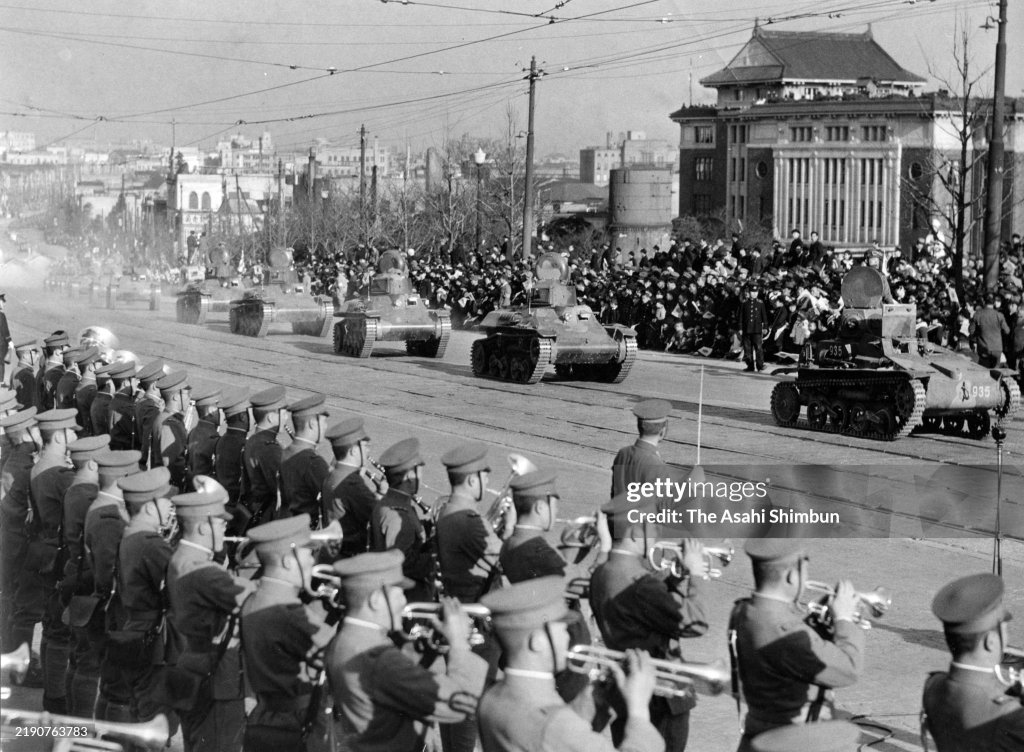
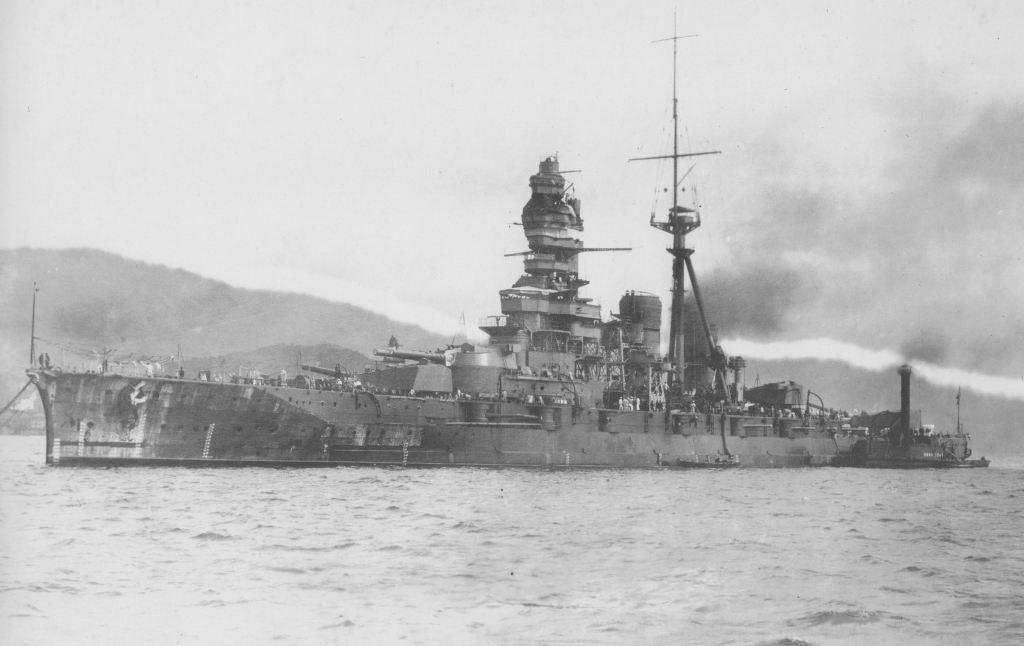
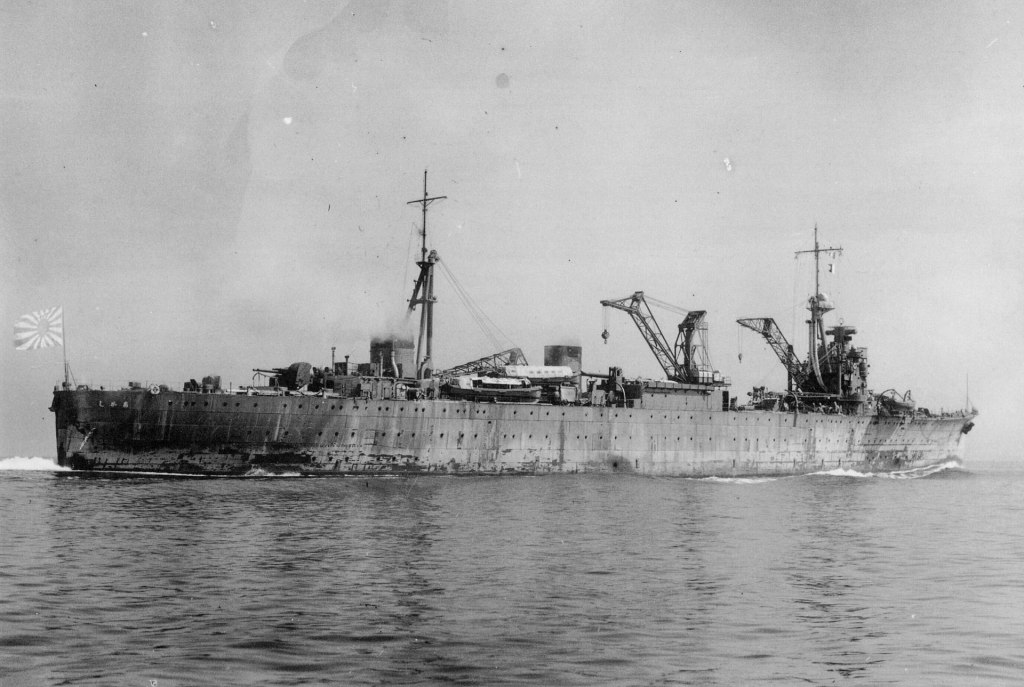
During the war Akashi operated out of the Japanese base in the Truk atoll where she repaired various types of battle-damaged Japanese warships, including Shōkaku in October 1942 and Yamato in December 1943. In February 1944 the Americans made a raid on Truk (Operation HAILSTONE), sinking and damaging many ships. Akashi was damaged in these attacks and escaped to the Japanese atoll of Palau.
On 30 March 1944, while anchored off Urukthapel in the Palau Islands, Akashi was hit numerous times by bombs and rockets from American aircraft from Task Group 58, during Operation DESECRATE ONE. She was sunk in shallow water with her bridge still remaining above the water.
 History Diaries