
Troops of the Army of North Vietnam began an early morning attack on the city of Buôn Ma Thuột (Ban Me Thuot) in South Vietnam with the 316th, 10th and 320th Divisions, easily overrunning a South Vietnam Army regiment of defenders who were outnumbered by 5½ to 1. By 10:30 the next morning, “Campaign 275” was over and had effectively placed half of South Vietnam behind enemy lines. Because of Buôn Ma Thuột’s strategic location at the intersection of South Vietnam’s two main highways, the defeat created a “domino effect” that would lead to the disintegration and conquest of South Vietnam, as ARVN troops abandoned the Highlands and fled south. NVA General Văn Tiến Dũng would later write, “Was it true that the thunderous blow we had dealt at Buôn Ma Thuột had produced such a shattering impact on the enemy? It was true that the enemy had been stunned and rendered strategically confused. The enemy had again made another strategic mistake.”
Government soldiers and North Vietnamese troops were fighting house‐to‐house for the second day today in the embattled provincial capital of Buôn Ma Thuột, the Saigon command reported. Late yesterday Government fighter‐bombers were reported bombing tanks on the main streets of the graceful Central Highlands town, the capital of Đắk Lắk (Darlac) Province which has a lingering French colonial charm. A Western military analyst said the situation looked very grim for the defenders, who were buffeted by an attack before dawn Monday. But the Saigon command said today the situation had stabilized somewhat and that the city’s fall did not appear imminent.
Eight American missionaries and a United States Government official were reported to be trapped in the city, but, according to an embassy spokesman here yesterday, were all right. About a hundred French and Italian planters, missionaries and small‐business men also live in the area. It was not clear whether the Communists hoped to take and hold Buôn Ma Thuột and its rich surrounding district, which have a population of 150,000 Montagnards, Vietnamese, and ethnic Chinese. Military analysts speculated that the attackers might be hoping to draw government units into a costly engagement. Firm Communist control would almost doom the Saigon Government’s efforts to hold onto isolated Quảng Đức Province, to the south, and would dramatically shrink its hold on the Central Highlands, which Communist theoreticians have termed the key to the control of Indochina.
As fighting raged in the Central Highlands — where the government lost a number of important outposts and at least one district town — the Saigon command reported that North Vietnamese tanks had penetrated the strategic district headquarters of Trí Tâm, 40 miles north‐northwest of the capital. Trí Tâm, which lies in flat rubber‐plantation country, is a long‐contested area that controls the eastern approaches to Tây Ninh City. Trí Tâm controls the eastern approaches to the vital province capital of Tây Ninh, which has been regularly shelled. Yesterday the only highway leading to Tây Ninh was reported to have been temporarily cut for the second time in two days. The assault had been expected for some time. The command reported an extremely high level of fighting throughout the country, with Communist rocket attacks on the key airfields of Pleiku, Đà Nẵng and Biên Hòa north of Saigon. Fighter‐bombers were flying missions from all three bases to Government positions under attack throughout the country.
In northern Quảng Tín Province, Communist troops shelled and attacked the exposed district town of Tiên Phước. The command said that by early yesterday afternoon, radio contact with the town had been lost. In the highlands fighting, the command acknowledged the fall of the important district town of Đức Lập and two satellite base camps, which lie 30 miles southwest of Buôn Ma Thuột on the Cambodian border. The loss of Đức Lập, which controls Route 14 at a point four miles from the Cambodian border, blocks the overland route from the isolated province capital of Quảng Đức Province, Gia Nghĩa. Fifteen miles east of Gia Nghĩa, the little hilltop lumber town of Kiến Đức, which was razed in fighting in the fall of 1973, was reported under attack, and some sources said it had fallen.
To the northeast of Buôn Ma Thuột, in Phú Bổn Province, North Vietnamese troops overran the Buôn Hoai refugee camp, which is six miles northeast of the district town of Thuận Man, the command said. Thuận Man was reported captured by the North Vietnamese on Saturday. Meanwhile, fierce fighting has been going on at two ends of Route 19 in the highlands. The key road leads out of Pleiku to the coast and was lent in numerous places beginning March 4. The next day, Route 21, the other road leading out of the highlands, from Buôn Ma Thuột, was cut as well.
The State Department again accused North Vietnam today of gross violation of the Paris peace accords and said that it had moved 50,000 troops to South Vietnam since mid‐January. Although cautioning that the information was incomplete and “the details sketchy,” a press officer, Robert Funseth, said at a news conference that “our intelligence indicates continued heavy offensive actions.” “The new offensive demonstrates gross violation of the Paris agreement and a renewed escalation of the fighting,” he added.
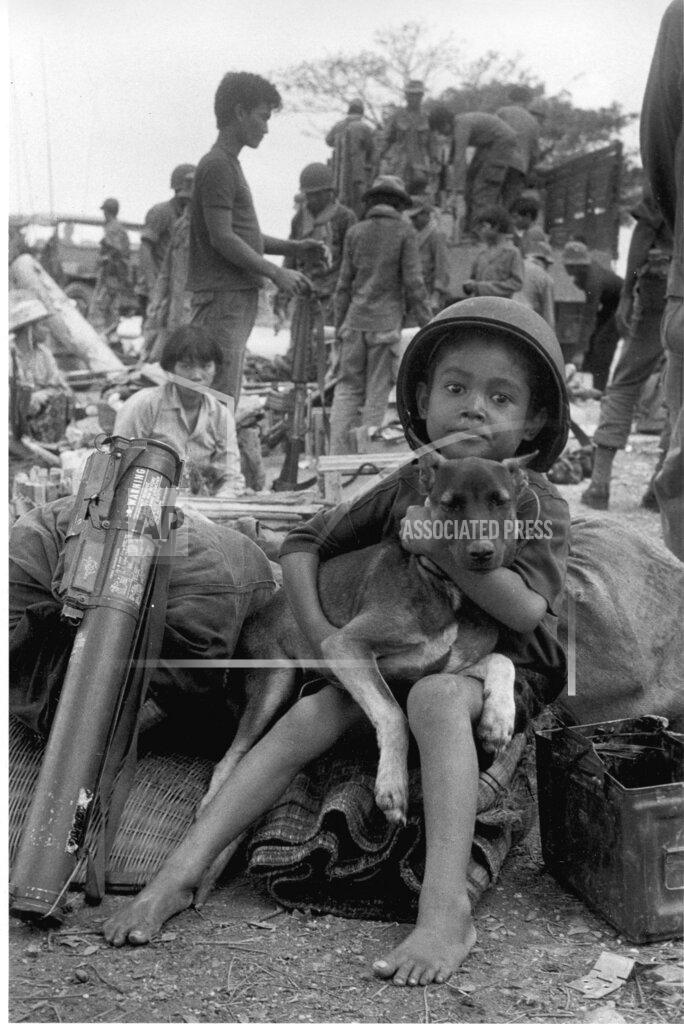
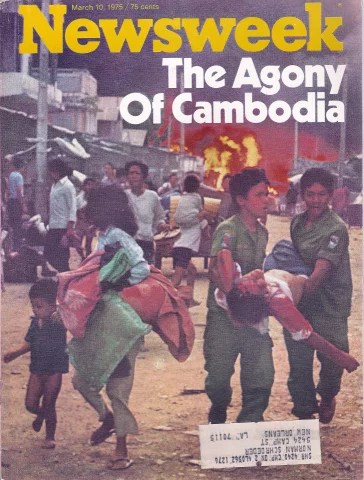
The Cambodian government sought to keep the morale of its army and people from deteriorating further as insurgent forces again shelled Phnom Penh, the capital, and its airport, and continued their ground attacks elsewhere. Four civilians were killed in the city and 19 wounded. At the airport, five miles to the west, two persons were killed and three wounded. Phnom Penh, meanwhile, was flooded with rumors that a government shake-up might be under way in preparation for negotiating a takeover by Communist-led insurgents. Foreign news reports about the possibility of surrender were denied today by the Government of President Lon Nol. It said in a statement: “The sacrifices made by the Khmer people for five years have been enormous, and this struggle is going to continue with as much determination as before.”
At the same time, the commander of the armed forces, Lieutenant General Sosthene Fernandez, appealed for an end to the “insane rumors.” Calling on the Cambodian people to ignore them and unite behind the army, he declared: “We in the army swear to fight to the death, but never will we accept defeat.” Both the Government statement and that of General Sosthene Fernandez were broadcast over the Government radio and published by the Government press agency as the Cambodian insurgents continued to press their attacks on a Government defense line at Prek Phnou, only eight miles north of the center of Phnom Penh.
To the northwest and west, the news was not much better, with Government forces continuing to suffer heavy casualties. With all supply routes cut by the insurgents, the capital remained dependent for its survival on the big American air lift, which has not yet been halted despite continued shelling of the airport. Through the day, about 50 shells and rockets rained on the airport. One of the two killed there was a baggage handler who was struck by shrapnel while loading luggage onto a DC‐3 that was about to take off for a domestic passenger flight to Kompong Som. The shrapnel set the plane afire, and it was partly destroyed. No passengers were injured.
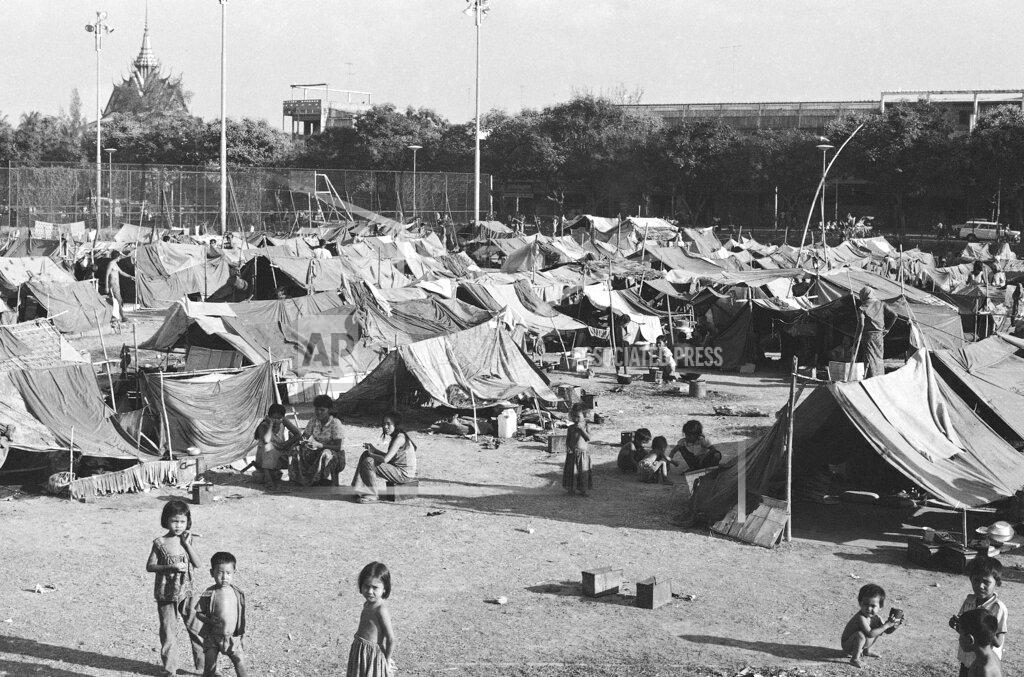
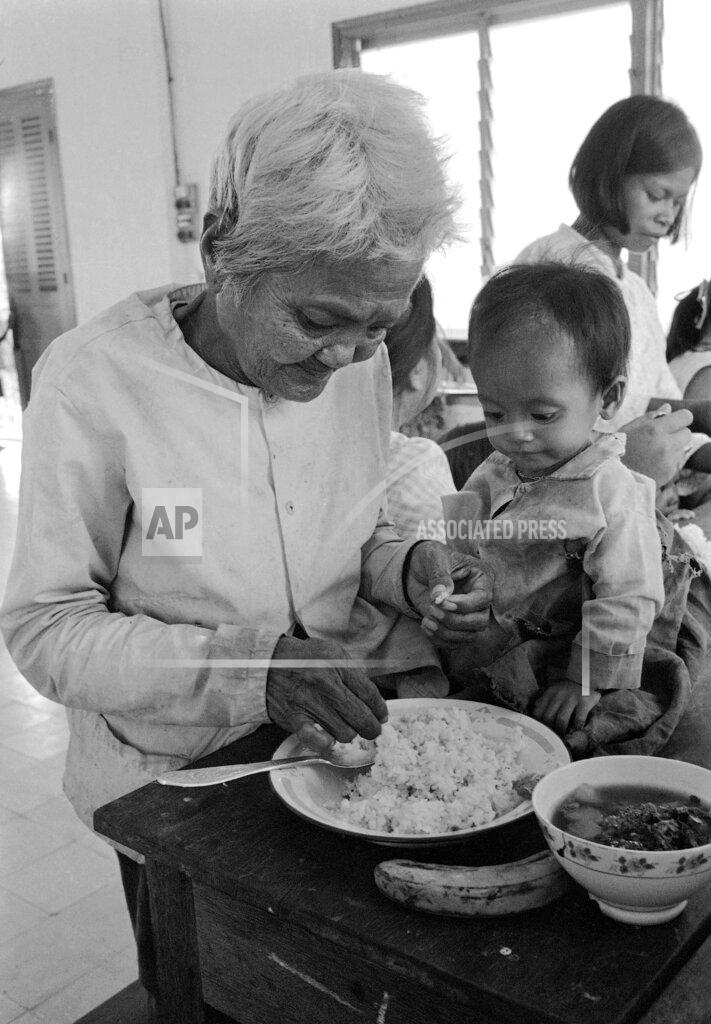
A government push to clean insurgent gunners out of their firing area northwest of the airport remained bogged down during the day. The rockets that continued to fall on Phnom Penh itself were fired from insurgent positions only a few miles east and northeast of the city. Six rockets landed inside the city during the day. The rockets have cast a pall of nervousness and depression over Phnom Penh. Morale has been further sapped by food shortages, which have kept prices soaring and have produced hunger and malnutrition; many children are now dying.
Some of the speculation about a Government shake‐up that was sweeping the city stemmed from an article in The New York Times last Friday. It reported that the American Embassy here had come to the conclusion that given the deteriorated conditions, the best that could be hoped for was little more than a negotiated surrender in which basically the only subjects open for discussion would be the details and humaneness and orderliness of the insurgent take‐over. High Government officials have since been telephoning the Embassy, asking for clarification and reassurance. The American Embassy is apparently trying to use its influence to help produce a reorganized government here and also to replace some corrupt and incompetent army commanders. Two field generals were relieved over the weekend.
Despite American predictions last week that the critical shortage of rice in Phnom Penh could be eased by a new American aid program, the average Cambodian is receiving less of this staple than ever before. The rice shortage, which is producing malnutrition and even death and in most families a desperation bred of hunger results from a variety of causes:
- The insurgent forces’ blockade of the Mekong River and their stranglehold on the capital have meant that most rice must be brought in by airlift, an expensive method that provides nut a fraction of the amount brought by the former supply networks.
- Communist control of vast agricultural areas of this country, which was once Indochina’s rice bowl, has also cut off large amounts of domestic rice, forcing up the price.
- In the major cities, inadequate supplies of rice have in many instances pushed the price of this staple beyond the range of the average worker.
Last week, in Washington and simultaneously in Phnom Penh, American officials announced that 20,000 tons of American rice would be transferred from Government stocks that are now being sold to the people by the Cambodian Government into a new free rice program administered by the major world voluntary agencies that operate soup kitchens here for the refugees and the needy. But, it turns out, much of this rice is simply being taken out of one pocket and placed in the other. There will be less rice to be sold to the people through the government’s rice program as more goes to the voluntary agencies. It is the government’s rice program, administered through the small administrative division known as the “Ilot,” or block of houses, that is the backbone of the rice network for the average Cambodian.
Senator Hugh Scott, the Senate Republican leader, broke with administration policy and said the United States should use pressure to bring about a transition government in Cambodia that could negotiate a truce and safe treatment of refugees. He told newsmen that he did not see how Marshal Lon Nol, the Cambodian President, could stay in power.
The State Department was reported to have turned down a proposal by the United States Embassy in Phnom Penh to try to make diplomatic contacts with local Communists last spring because they might have interfered with a secret attempt to start negotiations with Prince Sihanouk, the former Cambodian leader, who is living in Peking. Mr. Kissinger’s thinking, as related today, was that the best hope for a negotiated solution lay in combining the three major political forces in Cambodia into a coalition. But Mr. Kissinger has never been very optimistic that any negotiations would produce results, after Congress halted the American bombing in 1973. Prince Sihanouk said that Mr. Kissinger had made no attempt to get in touch with him during Mr. Kissinger’s seven visits to Peking.
The House Appropriations Committee today voted $3.5‐billion for all foreign aid programs, down $2.5‐billion from the initial Administration request and down $1.3‐billion from the Congressional authorization bill approved last January. The foreign aid appropriations bill includes traditional military and economic aid programs under the Foreign Assistance Act and all other American contributions to international development associations. Representative Otto E. Passman, Democrat of Louisiana and chairman of the Appropriations subcommittee on foreign operations, said that “it is time to start tightening up these programs, and that’s what we did.” The committee made the major cuts in economic development programs. Economic aid for Indochina was approved at $440‐million, down from the Administration’s original request of $939‐million, and the authorization bill of about $617‐million. Of this new total, South Vietnam would receive about $300‐million.
The heads of government of the Common Market countries in Dublin today sought an agreement on meeting Britain’s demands for easier terms in the community to increase the chances of her continued membership. The outcome of the two days of talks will be decisive in whether the Government of Prime Minister Wilson will urge the British people to remain in the European Economic Community when they vote, in a referendum on the issue this June. A majority of the Cabinet is expected to back the community if Mr. Wilson gets all he wants. Late tonight the meeting turned to experts in an effort to work out an arrangement that would lower Britain’s payments to the community budget. A West German proposal, regarded as a compromise, was under study.
Twelve suspected members of the Irish Republican Army wriggled out through a basement window of the courthouse in Newry, 35 miles south of Belfast, and escaped moments before they were to appear on charges that included jailbreaking. The prisoners apparently used acid to cut through bars on the window of a toilet. Once outside, they climbed a 20-foot fence to freedom. Two were quickly captured but the rest may have succeeded in crossing the border into the Irish Republic, about 10 miles from Newry.
The United States and other food-exporting nations can feed the world’s hungry for another 10 years, but after that, the poor nations will have to save themselves from starvation, the head of the new World Food Council said at the United Nations. “The gap between what they will need and what they can produce is estimated at 85 million tons by 1985,” said John Hannah, secretary of the council. “Even if the present exporters could produce that much, it would be impossible to transport it to the areas where it will be needed.”
West Germany brought formal charges of treason and breaching of official secrets against Guenter Guillaume, who was arrested as a spy last April. The arrest of Guillaume, personal political assistant to Chancellor Willy Brandt, led to a government crisis and Brandt’s resignation. Guillaume’s 47-year-old wife, Christel, also was charged with treason and complicity in the breach of official secrets.
Alleged Mafia chieftain Frank (Three Fingers) Coppola went on trial in Florence, Italy, accused of ordering the assassination of former Rome Police Chief Angelo Mangano in April, 1973. Mangano, a Sicilian with a reputation for relentlessly hunting Mafia bosses, survived the attack. Coppola, 76, was deported from the United States in 1948.
Secretary of State Kissinger said he had covered all aspects of a possible new Egyptian-Israeli agreement on Sinai with Israeli leaders in Jerusalem. He then went to Ankara to urge Turkey to take steps to reopen the Cyprus negotiations. President Anwar Sadat said that it was possible that Mr. Kissinger might fail in his current mission. President Anwar el-Sadat told Egyptian officials and newspaper editors today that there was a serious chance “10 to 20 per cent” that Secretary of State Kissinger might fail in his current mission to the Middle East.
Algeria has made another break in the oil cartel’s price front by lowering the price of its low-sulfur crude oil by 21 cents a barrel, from $11.96 to $11.75, sources in Dubai report. Meanwhile, the oil minister for the United Arab Emirates, Mana Oteiba, said the Organization of Petroleum Exporting Countries should start a rationing system on production because of the excess of crude oil in the world.
Iraqi armor and infantry units have reportedly pushed Kurdish rebels out of several militarily important mountain areas in the north since the government offensive began there last Friday. The Iraqis were said to have taken part or all of two key areas, Mount Serti and Mount Handran, in Kurdistan. This was reported here today by supporters of the Kurdish leader, General Mustafa al‐Barzani, on the basis of telephone conversations with Kurds on the Iranian side of the border. “It is very bad in Kurdistan,” one Kurdish informant said in an interview. There was no confirmation from Iranian officials that the reported. Iraqi offensive has actually been going on. The Iraqi offensive was said to have begun about six miles west of Mount Zozuk on Friday morning. This was only hours after it had been announced in Algiers that Iran and Iraq had signed an agreement there to end border clashes between their forces and to settle their longstanding dispute over frontiers.
India has emerged as the largest foreign buyer of U.S. wheat this season with orders that could exceed 5 million metric tons at an estimated cost of more than $760 million, according to an Agriculture Department report. The Indian wheat orders, mostly for cash, are the largest since the country received huge quantities of U.S. grain as aid in the mid-1960s.
At 5:40 A.M. today, Takahiro Inoue, a 10‐year‐old schoolboy, cut a ribbon at Tokyo Station to send a sleek blue‐and-white electric train on its way to Hakata, 668 miles away on Japan’s southwestern island of Kyushu. This afternoon, at 1:32, an identical train slid into Tokyo Station from Hakata. The two events marked the opening of the newest leg of this country’s famed highspeed express train line, known here as the Shinkansen, or New Tokaido Line, and sometimes called outside of Japan the “bullet train.” The newest segment, connecting the city of Okayama in central Japan with Hakata, which is part of the city of Fukuoka, brings rail travel time between Tokyo and Hakata down to seven hours, give or take a few minutes depending on the number of stops. The top speed is about 150 miles an hour and the average speed, including stops, about 95 miles an hour. Opening of the new section cuts more than three hours from the rail time between here and Hakata. The air travel time is one hour and 40 minutes, plus about an hour on either end getting to and from airports, and waiting.
In a move that has more powerful political than economic impact, a Japanese importer has signed a contract that will raise oil purchases from China this year to twice the 1974 level. Sources in the Japan‐China Oil Import Council said that Ryutaro Hasegawa, the council president, signed a $189‐million contract in Peking over the weekend that will bring imports from China to 58 million barrels this year. The total cost of the imports is put at $701‐million. The oil has a low sulphur content, which means less pollution, and is priced at $12.10 a barrel, slightly less than comparable crude from the Middle East. Chinese oil helps the Japanese Government to achieve a diversity of suppliers, but it will account for only 3 percent of needs this year. More important, the contract is another step toward closer relations with Peking and away from Moscow. Officials said that Takeo Miki’s Government was leaning toward China rather than the Soviet Union for political, economic and security reasons. The Japanese seem to feel no threat from China but do perceive a potential threat from the Soviet Union.
Bad weather forced the Argentine air force to suspend rescue operations for crewmen aboard the U.S. icebreaker Glacier trapped in thick ice near the tip of the Antarctic Peninsula. Argentine planes and helicopters will try to evacuate about 121 persons via the Argentine naval base of Marambio on the Antarctic subcontinent as soon as the weather permits, leaving about 90 aboard the vessel to attempt to free her.
Ibrahim Nasir, the President of the Maldives, fired Premier Ahmed Zaki and imposed presidential rule on the African nation. Diplomatic sources reported today that Premier Zaki and his nephew Jaleel, his chief of protocol, had been taken to a remote island of the Indian Ocean archipelago. The change was reported to have occurred on Thursday. Mr. Zaki became Premier after an attempted coup against President Nasir nearly two years ago and the arrest and detention of 160 persons. He was re‐elected on February 22 and had the support of 36 of the 42 members of Parliament.
The Senate Foreign Relations Committee approved the Administration’s choice of Nathaniel Davis as assistant secretary of state for African affairs and Harry W. Shlaudeman as ambassador to Venezuela. The appointments must be approved by the full Senate. Both men had been opposed because they were serving in Chile at the time Marxist President Salvador Allende was overthrown.
With joblessness rising and workers running out of unemployment benefits, AFL-CIO President George Meany predicted “an avalanche” of foreclosures on home mortgages. He further told the National Housing Conference, Inc., in Washington that the government must immediately make available 6% subsidized home mortgages for people with low or moderate paying jobs to get the housing industry moving again. An upsurge in home purchases at the subsidized rate would stimulate other segments of the economy, Meany said. Thomas R. Bomar, chairman of the Federal Home Loan Bank Board, said despite $5 billion deposited as savings in January, the average rates for mortgages would not drop substantially lower than the prevailing 9%.
The Indiana Senate defeated by a vote of 27 to 21 the ratification of the Equal Rights Amendment to the US. Constitution. In light of comments by U.S. Senator Birch Bayh (D-Indiana), who steered the ERA through Congress, and other backers of the measure, the rejection by the Indiana Legislature means the ERA has no chance of ratification this year and puts future approval in doubt. The Indiana House passed the ERA on January 27. The Senate defeated it in 1973 and killed it without a vote last year.
The House voted to continue full spending for cancer research, drug abuse, mental health, and other programs by rejecting all but $16.5 million out of $1.248 billion in cuts requested by President Ford. The action must now be approved by the Senate before spending can go forward. The bulk of Mr. Ford’s proposed cut of funds already appropriated by Congress would have come out of the Department of Health, Education and Welfare’s budget. He had asked for recissions of $912.3 million. Mr. Ford asked in his budget for a total of $17 billion in cuts and postponements, saying deficits would be swelled by an equivalent amount if Congress refused. While angry Republican leaders predicted that the projected $52 billion budget deficit would swell to $80 billion, the House rejected President Ford’s request for a cut of an additional $1.2 billion from federal programs. A vote of 371 to 17 approved the cutback of only $16.5 million in health, education, conservation and job programs.
Two senators called for a constitutional amendment banning abortion and possibly prohibiting some birth control methods. Jesse A. Helms (R-North Carolina) and James L. Buckley (Cons-R-New York) outlined their proposed amendments before a judiciary subcommittee. Buckley’s proposal would extend Fifth and 14th Amendment protections of due process and equal protection to unborn children at every stage of their biological development.” Helms, defining the beginning of life as the moment of fertilization, would place the basic right to life in the Constitution.”
New York Senator James L. Buckley reserved judgment on whether he would support a Ford‐Rockefeller national ticket next year, contending that he had “mixed” feelings on Administration policy so far. But the New York Senator, whose political unorthodoxy was demonstrated last March when he called for the resignation of President Nixon long before other Republicans, made it clear he has many reservations about Mr. Rockefeller and much admiration for a political rival, Ronald Reagan of California. He said, for example, that he thought that Mr. Reagan had been a better Governor than Mr. Rockefeller, Mr. Reagan did not seek re‐election last year when his second term as Governor ended.
Carla Anderson Hills became the first woman Cabinet member in 20 years today when she was sworn in as Secretary of Housing and Urban Development. In a ceremony in the East Room of the White House, President Ford said that Mrs. Hills faced “an immense responsibility” and was taking on the administration of the department “at a time of recession” in the housing industry.
Former Illinois Governor Otto Kerner will undergo surgery today to remove at least one-third of his right lung. Dr. Arthur T. Haebich of Chicago, who will operate, said he was 95% sure a tumor was cancerous. There is no evidence that the tumor has spread, he said, but a more detailed examination will be made during surgery. Kerner, 66, was paroled last week after the lung lesion was discovered. The former U.S. Appeals Court judge was serving a three-year term in connection with a racetrack stock scandal.
The Senate Select Committee on Intelligence will make a thorough investigation of allegations about the Central Intelligence Agency’s involvement in political assassinations and the inquiry could end up in public hearings, committee sources said today. Senator Frank M. Church, Democrat of Idaho, the committee’s chairman, has pledged a careful investigation of allegations that the C.I.A. was involved in the assassination of leaders in foreign countries or in plots to assassinate them. Meanwhile, several members of his committee have said privately they believe the question of whether the government is involved in political assassinations should be treated in public session. Senator Church has not ruled out the possibility of public sessions on the subject, but sources close to the Senator say he is concerned about embarrassment to the United States if details of the plotting become known.
Author George O’Toole said electronic analysis of 10 seconds of tape recordings convinced him Lee Harvey Oswald was innocent of the assassination of President John F. Kennedy. O’Toole, who once worked for the Central Intelligence Agency, contends in a book. “The Assassination Tapes, to be published next month. that Oswald was telling the truth when he denied any guilt. Oswald’s brief statement was recorded by newsmen and analyzed by OToole with a method called psychological stress evaluation. PSE involves the electronic breakdown of the voice into vibrations which its developers claim can reveal stress. The method is similar to a lie detector test. Neither device is admissible as evidence in court.
The Federal Trade Commission initiated formal legal action against six major hearing-aid manufacturers over what the commission claimed was misleading advertising. It said the six misrepresented their devices as new concepts and sure cures for any type of hearing loss. The FCC wants the following disclaimer on future ads: “Many persons with a hearing loss will not receive any significant benefit from any hearing aid.” The companies involved are Beltone Electronics of Chicago, Dahlberg Electronics of Golden Valley, Minnesota, Radioear Corp. of Canonsburg, Pennsylvania, Seeburg Industries of New York, Sonotone Corp. of Elmsford, New York, and Textron, Inc, of Providence, Rhode Island.
The Senate began debate on a strip mining bill which supporters say meets most of President Ford’s objections that prompted him to veto similar legislation last year. Senator Mike Mansfield (D-Montana) presented an amendment that would ban strip mining of federal coal underlying private land in the West. He said, “The people of the Great Plains and the Rocky Mountains don’t want to become the utility backyard of the nation.”
Legislation was introduced in the U.S. Senate to impose taxes up to half the purchase price on new cars that failed to meet minimum fuel efficiency standards. The bill by Senator Clifford Case (R-New Jersey) also would give tax rebates up to $1,000 to buyers of cars with exceptional fuel economy. He estimated the bill, which would take effect in the 1977 model year, would save 1 million barrels of oil daily by 1980.
Chief Justice Warren E. Burger’s campaign to bar incompetent lawyers from practicing in Federal courts appeared today to be winning growing, if not overwhelming, support from some of the most experienced and successful trial lawyers in the nation.
American Indian Movement leader Russell Means was formally charged today with murder in the shooting death of a Kyle, South Dakota man. Also charged in the death of Martin Montileaux, 28 years old, was Richard Marshall, of Allen, South Dakota.
Cities around the country are making steady but uneven progress in implementing the $1 billion public service employment program that became law last December 31. Estimates by the Department of Labor indicate that nearly 200,000 people have been hired under the program.
The U.S. Army rejected yesterday civilian assertions that its combat units are becoming predominantly black. Major General L. Gordon Hill, chief of public, information, reported that of the 149,500 black soldiers serving last December, only about 29,000 were in the infantry, armor or field artillery. Senator Edward M. Kennedy and other civilian critics have said that trends in recruiting suggested that the percentage of blacks in the Army was increasingly high, especially in the combat units. “As far as the Army becoming all black,” General Hill said in a letter to The New York Times, “these fears have proved to be unfounded although the Army’s total black enlisted content has increased to about 22.5 percent.”
Two reports published today in the Journal of the American Medical Association conclude that Vitamin C shows little merit in treatment of the common cold.
“The Rocky Horror Picture Show” opens at the Belasco Theater, NYC; runs for 45 performances.
John Lennon releases single “Stand By Me”, a cover of Ben E. King’s song from 1961.
Dow Jones Industrial Average: 776.13 (+6.03, +0.78%)
Born:
Andy Sutton, Canadian NHL defenseman (San Jose Sharks, Minnesota Wild, Atlanta Thrashers, New York Islanders, Ottawa Senators, Anaheim Ducks, Edmonton Oilers), in Kingston, Ontario, Canada.
Stefan Bergkvist, Swedish NHL defenseman (Pittsburgh Penguins), in Leksand, Sweden.





 History Diaries