
American arms control negotiators arrived in Geneva today to meet Soviet officials in what the chief American delegate described as a first step toward abolishing nuclear weapons altogether. Max M. Kampelman, the chief United States negotiator, told reporters at the airport here, “We are ready to build a bridge to a global environment of greater stability through the taming, and then the elimination, of nuclear weapons.” But he acknowledged that “our differences on the issues of nuclear arms are deep and deeply held.” “It would be folly to expect them to be bridged overnight,” he said.
Polish Solidarity leader Lech Walesa was banned from leaving his hometown of Gdansk without permission in the toughest action against the Nobel Peace Prize winner since his release from prison in 1982. The restriction on Mr. Walesa, who received the 1983 Nobel Peace Prize, was the first formal curb since his release in 1982 from 11 months of internment that began when Solidarity was suppressed under martial law. Mr. Walesa, who has been under constant police surveillance for three years, said he was notified of the restriction in Gdansk during an hour-long interview to which he had been summoned. Walesa said he was told by the Gdansk state prosecutor that he is suspected of inciting public unrest by calling for a 15-minute general strike to protest food price hikes. The strike was called off after the government agreed to a phased price increase.
Greek Socialist Prime Minister Andreas Papandreou, staging a major political power play, persuaded party leaders to reject conservative President Konstantine Karamanlis’ candidacy for a second term. The 78-year-old Karamanlis, who nursed the country back to democracy from military rule, immediately announced that he would not be a candidate for a second term. “I did not ask for my reelection, but on the contrary, I had serious reservations in accepting,” he said in a statement. Political analysts saw Papandreou’s surprise action as a move to gain support from the Greek Communist Party.
A British air force commander who is one NATO’s top officers escaped unhurt when gunmen ambushed his car in Moers, West Germany. A British army spokesman said two gunmen fired three shots at the chauffer-driven car of Air Marshal Patrick Hine, who commands the North Atlantic Treaty Organization’s 2nd Allied Air Force as well as British air units in West Germany. It was the latest in a series of urban guerrilla bombings and shooting attacks on NATO personnel and installations in Europe.
The Vatican announced today that it ran a deficit last year of 58.4 billion lira, roughly $29 million. But the Government of Vatican City, the 108-acre independent state that is occupied by the Vatican and which is a separate entity from the Holy See, ran a modest surplus of 412 million lira, about $200,000. The Vatican did not announce budget figures for 1983, but in 1982 it budgeted for an $18 million deficit, although it did not report the actual amount at the end of that year. Official figures for 1981 showed a $12.5 million deficit.
Egyptian President Hosni Mubarak, believing a “golden opportunity” exists to break the impasse in Mideast peace efforts, was greeted on his arrival in Washington by Secretary of State George P. Shultz. Mubarak will try to persuade President Reagan to support his recent Mideast peace initiative, which calls for the United States to talk with a Jordanian-Palestinian contingent as the first step toward renewing the stalled peace process. Egypt’s President is in Washington to try to persuade the United States to play a more active role in Middle East diplomacy and to provide Egypt with a large-scale increase in military and economic aid. But Reagan Administration officials said before President Hosni Mubarak arrived for a five-day visit that he was unlikely to win an American commitment either to mediate between Israel and the Arabs or to give Egypt much more money.
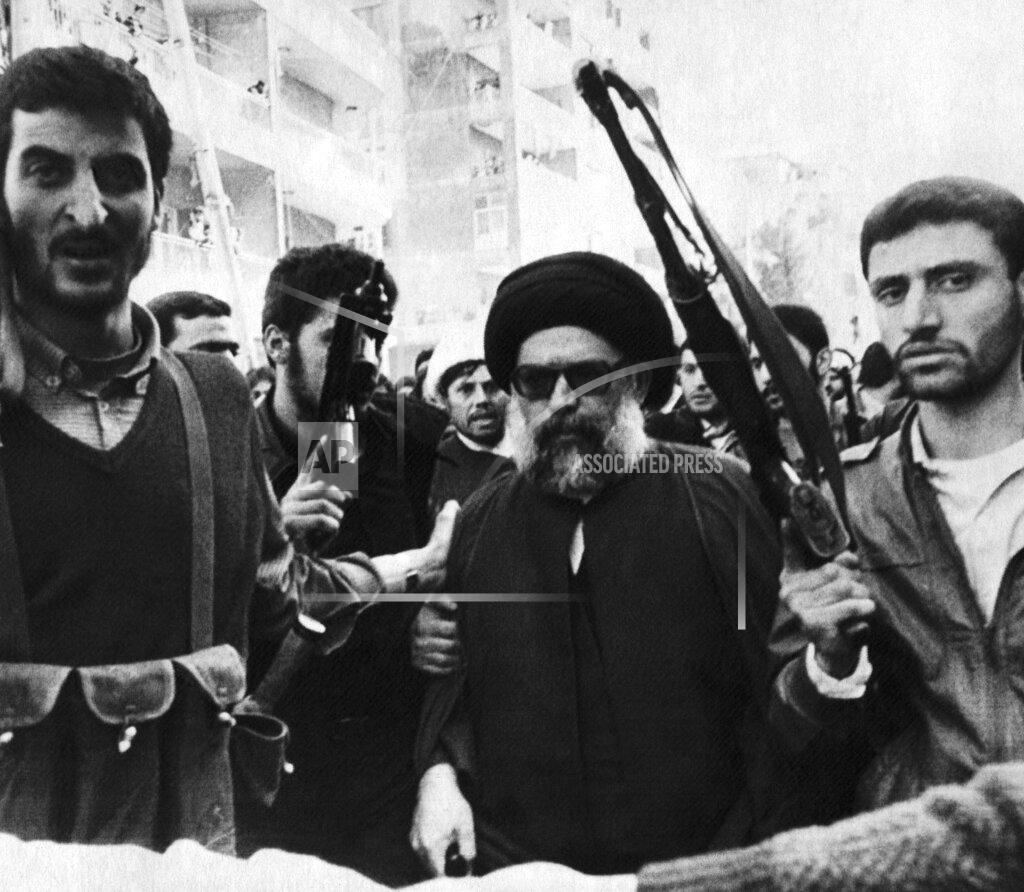
Israel’s crackdown in southern Lebanon, aimed at curbing attacks by Shiite Moslems on Israeli troops, is deepening a resentment among the population that could strengthen support for anti- Israeli guerrillas. The new policy, called “iron fist” by some Israeli leaders – surrounding villages, rounding up male inhabitants and conducting house-to-house searches for weapons – is also fostering the popularity of an Iranian-style Islamic fundamentalism. These conclusions emerge from interviews with many residents and foreigners, including United Nations personnel, during a three-day tour of the region this week. The Israeli Army has barred journalists based in Beirut from entering the territory it controls, but several correspondents, including this one, were able to slip through the Israeli lines. The Israelis, who invaded Lebanon in June 1982, announced a three-stage withdrawal in mid-January. They imposed the stricter policy after the first pullback in February was followed by an upsurge in attacks on Israeli soldiers.
The Israeli crackdown in occupied southern Lebanon was a policy forced upon Israel “by a dramatic increase in terrorist acts” against its forces since the decision was reached in mid-January to withdraw those forces, an army spokesman said here Friday. “At a time when we could have expected a decrease in such acts due to the fact that we are on our way out, terrorist leaders apparently preferred to score points in their intercommunal fights by using Israeli soldiers as an expedient and convenient target,” the spokesman, Brigadier General Ephraim Lapid, said in a written statement. Under the circumstances, he added, “we had no choice but to introduce an appropriate response.” General Lapid said the decision to send troops into any village was based on intelligence information. In each case, he asserted, “we found substantial quantities of weapons and explosives including antitank missiles, shoulder-fired surface-to-air missiles, sophisticated detonators, remote-control mechanisms, automatic weapons and guns with silencers.”
Iran and Iraq continued the bombardment of civilian targets for a fifth day today, and the Iraqis were reported to be bracing for an Iranian ground offensive. Iran kept up the heavy shelling of the southern Iraqi port city of Basra that it started Tuesday in retaliation for what it said were Iraqi air raids on an unfinished nuclear power plant and a steel complex a day earlier. Long columns of Iraqi armor and troops were seen moving south and diplomats in Baghdad said they were part of a buildup to counter the expected Iranian ground thrust.
Six people have been killed in the south Indian city of Hyderabad in violence set off by voting disputes. The Press Trust of India said two people died in the city today: a man who was stabbed to death when a curfew was relaxed and another who died of stab wounds he received Friday. The curfew was imposed on the old part of the city Friday after clashes in which four people were killed and 10 wounded. The street battles erupted between supporters of two rival political parties after rumors that a new vote had been ordered after local elections. The Press Trust quoted an election official as saying votes in the constituency were being checked after most polling stations reported an unusually high turnout. Hyderabad is the capital of Andhra Pradesh.
China today reported an unprecedented high growth rate for 1984. A State Statistical Bureau spokesman said total economic output grew by 13 percent, and national income, which is closer to the Western idea of gross national product, jumped by 12 percent. “We are confident that we can develop our economy with a stable and high growth rate,” Xu Gang, deputy director of the statistical bureau, said. But he said longstanding problems of low energy growth, bad transportation and misplaced investment remained. Mr. Xu also said the average income of China’s 800 million rural people rose 14.7 percent to the equivalent of $120 a year, while urban residents earned $217 each, a 15.5 percent rise.
Leaders of Nicaragua’s principal opposition coalition said today that they had been summoned to state security headquarters here and warned to cut all ties with the opposition leader Arturo Jose Cruz. Eight leading members of the coalition, the Democratic Coordinator, said they had been told by the Director of State Security, Lenin Cerna, this morning that they would “suffer the consequences” if they continued to maintain contact with Mr. Cruz. On Friday Mr. Cruz, a former member of the governing junta here, was accused by the Sandinistas of taking part in a counterrevolutionary plot backed by the Central Intelligence Agency. The opposition leaders said security officials claimed to have discovered an anti-Sandinista plot involving the United States Government, Mr. Cruz and the Coordinator. They said they had been specifically warned not to attend a meeting in Costa Rica with Mr. Cruz that the officials said had been “detected.”
An obscure guerrilla group claimed responsibility for the assassination of Salvadoran army Colonel Ricardo Cienfuegos. Unidentified callers to a San Salvador radio station said that members of the Clara Elizabeth Ramirez Brigade were responsible for killing Cienfuegos, the army’s chief spokesman. The brigade has claimed responsibility for a number of terrorist acts, including assassinations, and also claims ties to the Popular Liberation Forces, one of five guerrilla groups fighting the U.S.-backed Salvadoran government.
Militant peasants, supporting a three-day-old general strike, threatened today to block all roads leading into the cities of Bolivia. The army said it would intervene if they tried to halt food shipments. Leaders of the peasants said they would begin their blockade Monday if the Government does not implement programs to help them and meet the demands of labor unions for bonuses and higher wages. The Bolivian Labor Confederation vowed to continue its general strike, which was called Thursday in response to harsh economic measures the Government implemented Feb. 9 to control inflation and meet terms set by the International Monetary Fund. The measures included an 81 percent devaluation of the peso and a 450 percent increase in the costs of food, gasoline, transportation, medicines and utilities. It granted a wage increase of 30 percent that put the minimum monthly wage at the equivalent of $37.50. The strike has closed factories, banks, businesses, schools, hospitals, intercity transportation, mines, communications and bakeries. Bread has disappeared from market shelves and other food has become scarce.
The Paraguayan police today turned back Domingo Laino, an exiled opposition leader, in his third attempt to return since he was expelled in 1982. Witnesses said the police also beat and arrested two of his supporters. Mr. Laino, who flew in from Buenos Aires, was not allowed to leave the plane and was sent back in the same aircraft. Mr. Laino was expelled from Paraguay in 1982, when Government officials accused him of links with the killers of the former Nicaraguan dictator Anastasio Somoza Debayle.
Uruguay’s newly installed Parliament approved an amnesty bill for an estimated 260 political prisoners jailed by the former military government on charges ranging from distributing pamphlets to assassination. Under the amnesty, which also covers about 4,900 people sentenced by military courts and later released, prisoners accused of murder may be tried in civilian courts.
The British and Canadian Ambassadors to Ethiopia, back from a rare tour of Eritrea and Tigre, said Friday that the chronic warfare between Government and rebel forces in those northern regions was severely hampering efforts to save the lives of famine victims. The British Ambassador, Brian Barder, said it was “quite evident that the conflict is a major hindrance to the sort of free and easy supply of food and other commodities to those in desperate need.”
The South African authorities, invoking a catch-all security law, have said 16 prominent opponents of white minority rule detained last month will not be granted bail before or during their trial, which is expected to last 18 months. Human rights activists say the action means the dissidents, though not convicted of any crime, will remain in prison for more than a year until a court pronounces the verdict on the charges against them, which include treason. The authorities’ action seems designed, Western diplomats said, to stifle opposition to President P. W. Botha’s program of political liberalization by effectively “banning” some of the program’s most prominent challengers.
President Reagan makes a Radio Address to the Nation on the MX Missile. President Reagan stepped up his effort today to win support for the MX missile, linking the success of the Geneva arms talks in large measure to the Congressional votes this month on the weapons program. “If the Congress acts responsibly our negotiators will have a chance to succeed,” Mr. Reagan said as the American arms delegation arrived in Geneva for the talks with the Soviet Union, scheduled to start Tuesday. He said: “But if we don’t have the courage to modernize our land-based strategic missile systems, the Soviets will have little reason to negotiate meaningful reductions, and why should they? “We would be signaling to them that they can gain more through propaganda and stonewalling than through serious negotiations,” Mr. Reagan said. At one point, Mr. Reagan said the missiles protecting the United States are so old that “they’re sort of like a 1963 jalopy with some new parts.”
President Reagan’s veto of the emergency farm credit bill Wednesday ended only the first skirmish in a political battle over farm policy that is expected to continue with few pauses until late fall. The Democrats’ leaders in Congress conceded there were not enough votes to override the veto. But the next day, joined by many Republicans from the Farm Belt, they were back in the Senate and House Agriculture Committees blasting away at the President’s new farm proposals as hundreds of visiting farmers watched and applauded.
Murray P. Haydon, the world’s third permanent artificial heart recipient, is no longer in isolation and visitors can see him without donning masks and gowns at Louisville’s Humana Hospital Audubon. Dr. William C. DeVries, who implanted Haydon’s heart February 17, said he believes Haydon, 58, can get more exercise now and doctors can start thinking about moving him from the coronary care unit. Haydon is alert and eating well, a week after surgeons reopened his chest to correct bleeding.
American Central Airlines, suffering the financial effects of a federally ordered 30-day shutdown, has filed for protection from its creditors in hopes of continuing its commuter service to 20 Midwestern cities, airline officials said. The filing under Chapter 11 of the U.S. Bankruptcy Code was made “so that we would assure the continued operation of our scheduled flights,” airline President James A. Pickett said. The Federal Aviation Administration grounded the airline last December for failing to meet record-keeping and operational standards, citing such violations as flying planes in excess of weight limitations.
A self-proclaimed “God’s army” protested outside the twice-bombed The Ladies Center where abortions are performed in Pensacola, Florida. Seven trumpets blared, seven American flags waved and 2,000 demonstrators chanted “Let my children go” seven times after a silent march. It began two hours after a National Organization for Women leader, at a press conference across town, accused anti-abortion forces of immoral tactics. The marchers’ leader, former singer Penny Lea of Apple Valley, Minnesota, compared the rally to the biblical story in which Joshua sent the walls of Jericho tumbling down with the sound of seven trumpeters on the seventh day.
Inspection programs to control car exhaust fumes are being weakened because too many states have fought the system and too many inspection centers have ignored strict anti-pollution standards, the General Accounting Office said in a report to Congress. It accused the Environmental Protection Agency of being too lenient in forcing states to adopt the emission control program. The states were required under a 1977 law to reduce pollution by carbon monoxide and ozone — two elements of automobile exhaust — by 1983. But 30 states and the District of Columbia received an extension until December 31, 1987, on the condition they adopt a vehicle emissions inspection program to help control pollution.
Six Mississippi state legislators will return today to work on pay raise proposals that could end a teachers’ strike keeping 172,000 students out of class. They face the task of devising a plan acceptable to both houses of the Legislature, the strikers and Governor Bill Allain. Meanwhile, one school district became the first to fire strikers who did not return to work as ordered. In dismissing 137 of 163 teachers, the Marion County school board acted under a state law that says teachers’ contracts are void if they willfully abandon their jobs.
Louisiana’s Governor Edwin Edwards and six co-defendants pleaded innocent to charges that they ran a racketeering enterprise through which big hospital chains became eligible for millions of dollars in federal aid. Each was released on $100,000 bond pending trial at which the prosecution will seek prison terms and return of $10 million in “ill-gotten gains.” Within hours of the arraignment, U.S. District Judge Marcel Livaudais issued a gag order prohibiting the co-defendants from discussing the case in public.
State tax officials, seeking a potential new source of revenue, urged the federal government Friday to let states collect sales taxes on consumer mail-order purchases of goods from outside the state. According to a study by the Advisory Commission on Intergovernmental Relations, Americans will buy more than $70 billion worth of goods by mail this year, and the mail-order business is growing at a rate of 8 percent to 12 percent a year. Under a 1967 Supreme Court ruling, a state cannot require a mail-order company to collect a sales tax unless the company has an office, warehouse or other place of business in that state. Consumers who buy from outside the state are supposed to pay the tax voluntarily in the state where they live, but few do.
While thousands of college students around the country are on spring vacation, as many as 200 students at Principia College will remain on campus bcause of a measles outbreak. The two-week break began Saturday for most Principia students, but 26 with active cases of the infectious disease and 150 to 200 who have refused a measles vaccine will remain on campus. The school has imposed a quarantine on such students since February 21. The outbreak has been linked to three deaths. The students are Christian Scientists, and their faith holds that disease is overcome by prayer. Despite their faith, more than 500 students have received measles vaccinations.
Senator John Glenn faces a March 31 deadline for paying off a $1.85 million debt from his 1984 Presidential bid, but he says he is seeking an extension from the four Ohio banks involved. Mr. Glenn, a Democrat, met Friday with bank officials and indicated that they agreed to consider an extension. In his unsuccessful campaign for the Democratic nomination for President, Mr. Glenn secured loans totaling $2 million from Bank One of Columbus, BancOhio, Huntington National Bank and AmeriTrust of Cleveland. Mr. Glenn said he has paid interest and $150,000 of the principal.
A new wave of curriculum changes is sweeping general education programs at hundreds of colleges and virtually every major liberal arts institution. “What we have done in essence is to redefine our concept of what constitutes an educated person,” said Joseph C. Palamountain Jr., president of Skidmore College, which will introduce a whole new academic program this fall. Skidmore’s new curriculum is constructed around four areas, including one called “science, society and human values.”
The nation’s toxic waste threat is far more serious and will be much costlier to resolve than the government has estimated, two Congressional research agencies have concluded. A report by one of the agencies said there were more than 10,000 hazardous waste sites around the country that will require cleanup on a priority basis to protect public health.
Archbishop John Roach, past president of the National Conference of Catholic Bishops, pleaded not guilty Friday to a charge of drunken driving, the authorities said. Archbishop Roach, scheduled for arraignment on next Tuesday, entered the plea by mail, said James P. Reuter, acting Chisago County Attorney. His driver’s license was revoked for 90 days after he was arrested February 21 after an accident. The police said his car hit the wall of a store in Lindstrom. According to the authorities, the Archbishop’s blood-alcohol content at the time of his arrest was .19 percent, or nearly double the state’s legal standard for intoxication.
The first page of the 355-year-old charter of the Massachusetts Bay colony, missing for seven months, has been recovered by the police in a drug raid. The document, issued by King Charles I of England in 1629 to the Massachusetts Bay Company, was recovered by accident Thursday when the Boston police raided an apartment in the Dorchester section, where they also found several antique guns, Oriental rugs and a quantity of drugs. The charter originally empowered the company to carry on an import business but the colonists, without royal approval, transferred managment of the company to America and used the document as the basis of the Massachusetts Constitution. “It appears to be in superb condition,” a spokesman for Secretary of State Michael Connolly said. “It’s been locked in the vault in the State Archives.” The charter disappeared from a display case in the archives in the Statehouse August 8. Kathryn Perry, the apartment’s tenant, was charged with possession of narcotics and released on $150 bail. She was not immediately charged in connection with the charter because the document’s identity was not discovered until Friday.
A fire today destroyed the Amherst College gymnasium, causing $3 million to $4 million in damage, officials said. Only the steel frame remained after the blaze that erupted at about 1 AM. About 100 firefighters battled the fire. Most of the damage was to the basketball court and indoor tennis courts, built in 1976, but the fire spread to the roof of the Pratt Swimming Pool next to the gymnasium, causing some damage to the pool. The state fire marshal’s office said the blaze started in the gym.
26th SEC Men’s Basketball Tournament: Auburn beats Alabama, 53–49.
6th Big East Men’s Basketball Tournament: Georgetown beats St. John’s, 92–80.
The Ladies’ Figure Skating Championship in Tokyo is won by Katarina Witt (East Germany). Witt, the defending champion, performing with steely determination to the graceful strains of Gershwin music, won her second straight world figure skating title today. Tiffany Chin of the United States won the bronze despite a fall, finishing behind Kira Ivanova of the Soviet Union. Miss Witt, who said she would like to try for a third straight championship next year, received near-perfect marks from the panel of nine judges. For artistic impression, she earned five 5.9’s. The perfect score is 6.0.
Born:
Brent Burns, Canadian NHL defenseman and right wing (NHL All-Star, 2011, 2015-2019; Minnesota Wild, San Jose Sharks, Carolina Hurricanes), in Barrie, Ontario, Canada.
Jesse Litsch, MLB pitcher (Toronto Blue Jays), in Pinellas Park, Florida.
Brian Bocock, MLB shortstop (San Francisco Giants, Philadelphia Phillies), in Harrisonburg, Virginia.






 History Diaries