
Soviet troops pushed into the suburbs of Viipuri while Moscow rejected a Finnish plea for an immediate ceasefire. As Soviet troops entered the suburbs of Viipuri, Finnish diplomats in Moscow sought an immediate ceasefire while negotiations were still proceeding, but were refused as Soviet troops were on the verge of taking Viipuri. Finland’s delegation under the leadership of Prime Minister Risto Ryti in Moscow met the Soviet negotiating team at 4 p.m. The Soviet delegation was comprised of Foreign Minister Vyacheslav Molotov, Chairman of the RSFSR Supreme Soviet Andrei Zdanov, and General A. M. Vasilevski. The Finns were disappointed in their hope of getting Soviet Marshal Josef Stalin to participate in the talks. The first session of talks begins in Moscow at 7 o’clock in the evening.
Soviet 7th Army and 13th Army continue assaulting the T Line. Soviet troops on the Isthmus reach the Finnish support line in Tali. The Soviets edge further into Viipuri. There is fighting in the suburb of Tali. The weakest spot in the Finnish line, aside from the foothold the Soviets have established on the western shore of Viipuri Bay, is to the northeast of the city. The T Line is holding, but barely.
To block the enemy advance, the Finnish defenders attempt to dam the waterways to the northeast of Viipuri and manage finally to flood the area.
The Finnish troops in Viipurinlahti Bay are forced to evacuate Suonionsaari and Ravansaari islands.
On the mainland, the Soviet Army consolidates its bridgeheads in Niskapohja, Vilaniemi and Häränpääniemi.
In Vuosalmi the Soviets are digging in on the northern bank of the Vuoksi. Two Soviet divisions attack across the Vuoksi from Vasikkasaari to Vuosalmi.
The Finnish 2nd and 21st divisions are estimated to be facing six Russian divisions. They are thus outnumbered three to one.
In Taipale, the Finns pull back their positions in the Terenttilä sector.
In the north, the Finns take the eastern Luelahti ‘motti’ in Kuhmo. More elements of 54th Rifle Division of Soviet 9th Army destroyed in a pocket in the Kuhmo sector.
General Headquarters orders the evacuation of the Mantsi islands at the eastern end of Lake Ladoga.
Meanwhile, large quantities of French arms, ammunition and aircraft (175) are now on the way to Finland. But too late.
The Commander in Chief of Finland’s armed forces Field Marshal Carl Mannerheim suggested that Finland consider one more time the offer of assistance by Great Britain and France. Foreign Minister Väinö Tanner believed asking for assistance from Great Britain and France could wreck the talks in Moscow.
The Soviet Union is today celebrating International Women’s Day. The special “sisters of struggle” women’s groups attached to the Red Army arrange numerous dance performances and other programmes in the various units of the army. Selected women soldiers are decorated for valour.
Ambassador Laurence A. Steinhardt of the United States had a two-hour conversation at the Kremlin this evening with Premier Vyacheslav M. Molotov. The interview followed an hour’s conversation in the morning between Mr. Steinhardt and the Swedish Minister.
In Finland, the Central Organization of Social Democratic Women urges its members to join the Lotta Svärd women’s defence organization.
Sumner Welles had separate meetings with Jules Jeanneney and Édouard Herriot, who were both adamant that France would have to continue the war until Germany was defeated.
The Italian dispute with Britain assumed a dramatic character tonight when it was announced that Joachim von Ribbentrop, the German Foreign Minister, would leave Berlin tomorrow for Rome.
Hitler writes to Mussolini about future progress of the war. One of the lesser-known features of the war is Hitler’s correspondence with other leaders. Today, he corresponds with Mussolini, who he wants to join the German war effort, in a sort of chatty way.
German police order all Jews in Łódź to move to the ghetto immediately. Anyone resisting such orders is shot. According to Irena Liebman, a Jewish resident of Łódź: “Starting this morning more & more people filled the streets with knapsacks, suitcases, bundles.” It is a “caravan of poverty.”
U.S. Secretary of the Interior Harold Ickes has dinner with Archduke Otto von Habsburg (Hapsburg) and his brother Felix in Washington. Habsburg tells him that “Hitler had disclosed to a very confidential group, which included two Austrians, one of whom, is in the confidence of Otto, that his ultimate objective is the United States, after he has conquered Europe.” Ickes writes in his diary the next day: “I am convinced that this is absolutely what Hitler would attempt to do.”
Perhaps to allay public fears, the British Government releases information about the countermeasures it has developed to magnetic mines. The arrival of the Liner Queen Elizabeth in New York with a conspicuous antimagnetic mine girdle around her hull brought the disclosure here today that the invention, hitherto kept secret, thus far has proved effective in the protection of all vessels so equipped.
Following on from the 7 March 1940 Politburo decision to execute the Polish officers, their relatives now are condemned as “enemies of the state” and are slated to be sent to Siberia.
Luftwaffe Heinkel He 111s attack fishing trawlers and any other ships that they can spot along the British east coast. A Heinkel is shot down in the North Sea off Scapa Flow by RAF fighters.
An RAF reconnaissance goes all the way to Poznan, (occupied) Poland, to drop leaflets, the farthest of the war to date.
The Canadian destroyer HMCS Assiniboine (I 18) stopped the 5,600-ton German freighter Hannover in Mona Passage, off the coast of the Dominican Republic, at which point the merchantman’s crew set fire to the ship and abandoned her. A boarding party from the Royal Navy light cruiser HMS Dunedin (D 93), however, saved the Hannover from destruction. Conflicting representations by British and German diplomats as to the Hannover’s exact position prompted the Dominican government to drop the question of violation of territorial waters. The effort expended to capture Hannover, however, allowed German freighters Mimi Horn and Seattle to escape the Caribbean and make a break for Germany. Mimi Horn is scuttled to avoid capture in the Denmark Strait on 28 March. Seattle is lost during the early phases of the invasion of Norway on 8-9 April. The Hannover would be converted into the Royal Navy escort aircraft carrier HMS Audacity (D 10).
The British steam merchant Counsellor, flagship of Rear Admiral Franklin of convoy HX.22, struck a mine near the Mersey Lightship off Liverpool in the Irish Sea (53°38′N 3°23′W) and sank the next day. The Admiral, his 7 naval staff, and the entire crew of 70 were rescued by destroyer HMS Walpole and landed at Liverpool. The mines were laid on 6 January 1940 by German U-boat U-30, commanded by Kapitänleutnant Fritz-Julius Lemp; these mines had claimed 6 ships totaling 33,000 tons. The 5,068 ton Counsellor was carrying general cargo, including cotton and was bound for Liverpool, England.
Convoy OA.106 departed Southend escorted by destroyer HMS Vanessa from the 8th to 9th.
Convoy OB.106 departed Liverpool escorted by sloop HMS Rochester and destroyer HMS Venetia. On the 11th, when the convoy dispersed, they joined convoy SL.22.
Convoy FN.115 departed Southend escorted by sloop HMS Flamingo and destroyer HMS Wallace, and arrived in the Tyne on the 10th.
Convoy MT.26 departed Methil escorted by the 19th Anti-submarine Group and supported by destroyer HMS Javelin.
Convoy TM.22 also departed the Tyne. When the two convoys crossed, Javelin detached to the north-bound TM convoy and escorted it to Rosyth. The south-bound MT convoy arrived in the Tyne on the 9th.
Convoy FS.116 departed the Tyne escorted by destroyers HMS Vega, HMS Woolston and sloop HMS Stork, and arrived at Southend on the 10th.
Convoy AXF 1 arrived at St Malo.
The War at Sea, Friday, 8 March 1940 (naval-history.net)
Heavy cruisers NORFOLK from the Clyde and BERWICK from Northern Patrol arrived at Scapa Flow.
Anti-aircraft cruiser CURACOA arrived in the Humber.
Destroyer KANDAHAR developed structural defects.
Destroyer VIMIERA departed Portland for Rosyth.
Submarine SEAWOLF arrived at Harwich after patrol.
Destroyer VIVACIOUS, escorting convoy BC.29 dropped depth charges on a submarine contact 15 miles from Ushant Island.
Patrol trawlers CHILTERN (324grt) and CLOUGHTON WYKE (324grt) fishing in 58-12N, 9-18W, northwest of St Kilda were attacked by a submarine with gunfire. They drove her off with no damage to themselves or the submarine.
Convoy OA.106 departed Southend escorted by destroyer VANESSA from the 8th to 9th.
Convoy OB.106 departed Liverpool escorted by sloop ROCHESTER and destroyer VENETIA. On the 11th, when the convoy dispersed, they joined convoy SL.22.
Convoy FN.115 departed Southend escorted by sloop FLAMINGO and destroyer WALLACE, and arrived in the Tyne on the 10th.
Convoy MT.26 departed Methil escorted by the 19th Anti-submarine Group and supported by destroyer JAVELIN. Convoy TM.22 also departed the Tyne. When the two convoys crossed, JAVELIN detached to the north-bound TM convoy and escorted it to Rosyth. The south-bound MT convoy arrived in the Tyne on the 9th.
Convoy FS.116 departed the Tyne escorted by destroyers VEGA and WOOLSTON and sloop STORK, and arrived at Southend on the 10th.
Convoy AXF 1 arrived at St Malo.
Armed boarding vessel NORTHERN REWARD (655grt) attacked a submarine contact SE of Munken Rock, Faroes, 110 miles 348° from Cape Wrath in 60-32N, 4-57W.
Sloop ABERDEEN, escorting convoy HX.20, attacked a submarine contact SW of Portland Bill in 50-09N, 2-44W.
Steamer COUNSELLOR (5068grt, Commodore HX.22) was sunk by a mine laid on the 7th by U-32 off Mersey Light Vessel in 53 38N, 03 23W. Destroyer WALPOLE unsuccessfully attempted to tow her to safety; the entire crew was rescued. (Note: Rohwer’s “Axis Submarine Successes” lists her as COUNCILLOR, and confirms the mines were laid by U-32. UBoat.net reports they were laid by U-30, and that WALPOLE rescued 78 survivors.)
Finnish steamer JULIETTE (1449grt) was brought into the Downs for inspection by French torpedo boat L’INCOMPRISE.
German steamer HANNOVER (5537grt), which departed Curacao during the night of the 5th/6th, was captured early on the 8th by light cruiser DUNEDIN and Canadian destroyer HMCS ASSINIBOINE (Cdr E R Mainguy RCN) off Santa Domingo in the Mona Passage. DUNEDIN took her in tow for Kingston, and while on passage ASSINIBOINE had to fight a fire onboard after the crew attempted to scuttle her. HANNOVER arrived at Kingston on the 13th with DUNEDIN and ASSINIBOINE secured on either side. French light cruiser JEANNE D’ ARC had also been involved in the search for this German ship and arrived at the same time. The captured ship was renamed EMPIRE AUDACITY for British service and later became HMS AUDACITY, the Royal Navy’s first escort carrier.
French light cruiser PRIMAUGUET after repairs at Lorient departed Brest on the 3rd and arrived at Toulon on the 8th. She departed on the 11th, escorted by destroyer LYNX and arrived at Casablanca on the 13th, after passing Gibraltar the same day. LYNX departed Casablanca on the 20th and arrived at Brest on the 25th, while PRIMAUGUET left Casablanca on 1 April and arrived at Fort de France on 10 April.
French submarine REDOUTABLE, escorted by destroyer LA PALME, which departed Toulon on the 4th, arrived at Gibraltar. The destroyer continued on to Casablanca, but the submarine remained at Gibraltar for ten days for anti-submarine exercises with the British Gibraltar Force escorts, and then departed on the 18th, escorted by armed yacht ALPHEE, flying the flag of Vice Amiral Ollive.
President Roosevelt told the nation’s 6,000,000 farmers tonight that the reciprocal trade program must go hand in hand with the benefits of the Agricultural Adjustment Administration, and that it was “more than ever important for farmers to have a government in Washington that is looking out for their interests.” His words were interpreted by many here as, in effect, opening the Democratic campaign for the farm vote in 1940. Speaking from the White House with Secretary Wallace to more than 2,000 dinners in twenty-two States celebrating the seventh anniversary of the AAA, Mr. Roosevelt warned that in Europe economic instability in some countries had brought about dictatorship. Then he added: “In America we are using the tools of democracy to make our economic system efficient, to preserve our freedom, and to keep away even from any talk of dictatorship. The national farm program is American democracy’s response to agricultural distress.”
In an address from New York City, broadcast on the same program by all major radio networks, Postmaster General James A. Farley cautioned farmers that they could not take it for granted that the farm program benefits would be continued unless they attended “to the votes in Congress which keep it going, or to the views of the men and parties seeking office.” Facing a Congressional fight for extension of the reciprocal trade program beyond the June 12 expiration date, the President and Secretary Wallace stressed the importance of foreign markets for American farm products and of the trade agreements policy as a necessary adjunct to the AAA domestic program. “So it is more than ever important for farmers to have a government in Washington that is looking out for their interests — not just by uttering glittering generalities, but by specific policies and concrete action,” the President said.
Using a dramatic threat to resign his leadership of Senate Democrats, Senator Barkley of Kentucky blocked a determined attempt to kill off the pending Hatch “anti-politics” legislation. The bill would extend to all state employees who get any part of their pay from federal funds, the existing Hatch act’s ban on political activity by federal employees. President Roosevelt has said it should be passed and Barkley has been fighting for it. Senatorial debate on the Hatch bill to forbid political activities by State jobholders supported wholly or in part by federal grants turned today into a bitter Democratic feud that in the end challenged but could not defeat an Administration leadership which throughout this week has held its lines with the undivided support of the Republican minority. Senator Barkley threatened to resign if his fellow-Democrats forced a party caucus on the bill, but the insurgents did not force the issue.
In an atmosphere of angry debate, punctuated by long discussions In the Democratic cloakroom, the Senate headed into an apparent impasse in which two-score normally loyal Democrats saw that they probably could not defeat the measure and therefore apparently determined to prevent a final vote on it. Complicating this procedure was an amendment introduced by Senator Brown which would bar, from political activities and political contributions, every officer, stockholder, or employee of corporations benefiting from federal grants, loans or tariffs, or holding government contracts, or pressing claims for tax refunds, as well as lobbyists and legislative agents.
In the midst of this confusion, Senator Barkley told Senator Minton in the Democratic cloakroom, in response to a demand by the latter that he call a Democratic caucus on the bill, that if he called a caucus he would do so only to submit to a vote his resignation from the Democratic leadership. This evening he saw that leadership questioned in a technical but nonetheless pointed manner, when, after he had moved that the Senate proceed to executive session as a prelude to recessing until tomorrow, Senator McKellar moved an adjournment until Monday. But Mr. Barkley prevailed and the adjournment motion was defeated on roll-call, 34–30.
As the upshot of the day, the coalition backing the Hatch bill held control, but faced the possibility that discussion would prevent a final vote until this bill would have to be laid aside in order to permit action on major legislation. such as the Agriculture Appropriation Bill and the trade treaty resolution, both of which will be ready for action next week. After the Senate recessed this evening, Senator Hatch said “it seems as if they (the opposing Democrats) are using every conceivable means to block a vote on the measure.”
Senator Barkley was not as emphatic, affirming only that he had declined to call a caucus of the Democratic membership, but added: “For seven years we have never found need to call a caucus on a major piece of legislation, and I would not call one on a simple bill to put a little purity into politics.” He told inquirers that he would not characterize the action by his rebellious followers as a “stall,” but said “you can draw your own conclusions.”
The U.S. Congressional economy drive came to an abrupt halt when a farm-minded Senate appropriations sub-committee approved a $297,000,000 increase in agriculture department funds.
A sharp legislative struggle over the amendments to the National Labor Relations Act proposed yesterday by the special House committee investigating the law and its administration, was brewing today as members of Congress, Labor Board officials and leaders of organized labor studied the twenty-one changes proposed in the act.
President William Green of the American Federation of Labor warned today that the continuing split in the American labor movement “endangers our progress” and called on the Congress of Industrial Organizations to resume peace talks.
Father Divine, Black cult leader who is proclaimed to be God by several thousand followers, must repay Mrs. Verinda Brown, a former “angel” in his “heavenly kingdom,” $3,937 that she entrusted to his care, Supreme Court Justice Benedict D. Dineen ruled yesterday.
The latest American aeronautical equipment will be available to the Allies when the Anglo-French purchasing board confers here Monday with American aircraft manufacturers on the placing of plane orders that may reach the $1,000,000,000 mark. Although this could not be confirmed officially, aviation circles here said reports from Washington indicated such was the case. It is understood that the French and English want 8,000 war planes — 2,800 pursuit ships and 5,200 bombers — and although they wish to take delivery on all within about twelve months, they want as many as possible by next Fall. The French, it was learned, are more interested in pursuit planes and medium bombers, while the English require fast interceptor and escort pursuits and long-range bombers.
The Cuban tanker barge Regina ran aground at Bradenton Beach, Florida, United States in bad weather and was wrecked. One of her eight crew members drowned.
After repeated bombardments by naval planes, Shekki, the chief town of the Chungshan district, was captured by the Japanese today. Numerous villages have been bombed and hundreds of civilians killed in this campaign, which at present is the main operation in all of China. The conquest of the rich Chungshan district hurts Macao [Portuguese] and Hong Kong as well as China, important supplies of fish and vegetables being cut off. There are reports that Japanese troops are converging from Sheklung and Namtau to repeat the mopping up operation in the Hong Kong border areas. It is conjectured that the Japanese desire to clean up the district in order to assure the seemingly popular inauguration of the new Nanking regime of Wang Ching-wei in the first week of April.
The Japanese Army’s South China headquarters announced today the complete occupation of the Chungshan area, fifty miles south of Canton, by an expedition that drove inland from the Pearl River delta three days ago. Chungshan is important in Chinese eyes as the birthplace of Dr. Sun Yat-sen, father of the Chinese Republic.
The United States Export-Import Bank’s $20,000,000 credit to China was announced when its adverse psychological effect on Japan’s plans to consolidate her victories in China would be greatest. Yakichiro Suma, spokesman of the Foreign Office, today described the loan as an unfriendly act, which would normally presage a diplomatic protest, but the spokesman indicated Japan’s displeasure would be expressed by newspapers and other informal methods. He evidently intended that his description of the United States loan should be understood in a psychological rather than a strictly diplomatic sense. Mr. Suma explained that Japan considered the United States action unfriendly because Japan was engaged in hostilities with the Chinese Government that received the loan and because “we are on the verge of seeing the establishment of a new central government in China.”
The latter statement reveals the real motive for Japan’s annoyance. Wang Ching-wei’s new regime is expected to make its formal debut before the end of this month. It represents Japan’s principal step in constructing a “new order” in East Asia. With the appearance of the Wang regime Chungking will become, in the Japanese Government’s view, a mere local regime that will gradually lose importance and wither away in the undeveloped hinterland of West China. But if foreign support enables Generalissimo Chiang Kai-shek to maintain his resistance to Japan and, what is more important, if such assistance leads the Chinese to refuse allegiance to the new government, the process of withering may be seriously delayed, if not frustrated. The newspaper Asahi declares United States hostility is growing more intense as Japan nears her goal in China. It says the loan may be disguised as assistance in building roads to promote exports of wood, oil and tin that the United States needs, but that in fact it is intended to help Chiang Kai-shek.
Dow Jones Industrial Average: 148.07 (-0.25)
Born:
Susan Clark, Canadian-American actress (“Coogan’s Bluff”, “Webster”), in Sarnia, Ontario, Canada.
Johnny Ventura, merengue and salsa bandleader (“Patacon Pisao”), and politician (Mayor of Santiago, 1998-2002), in Santo Domingo, Dominican Republic.
Claude Crabb, NFL cornerback, safety, and wide receiver (Washington Redskins, Philadelphia Eagles, Los Angeles Rams), in Monterey, California (d. 2021).
Glen Clark, MLB pinch hitter (Atlanta Braves), in Austin, Texas (d. 2018).
Died:
Princess Masako Takeda, 51, tenth child of Emperor Meiji of Japan.
Naval Construction:
The U.S. Navy Navajo-class fleet tug USS Seminole (AT-65) is commissioned. Her first commanding officer is Lieutenant Commander William Galusha Fewel, USN.
The Royal Navy “T”-class (First Group) submarine HMS Tarpon (N 17) is commissioned. Her commanding officer on commissioning is Lieutenant Commander (retired) Charles Bate Limpright Wren, RNR. He is succeeded four days later by Lieutenant Commander Herbert James Caldwell, RN.
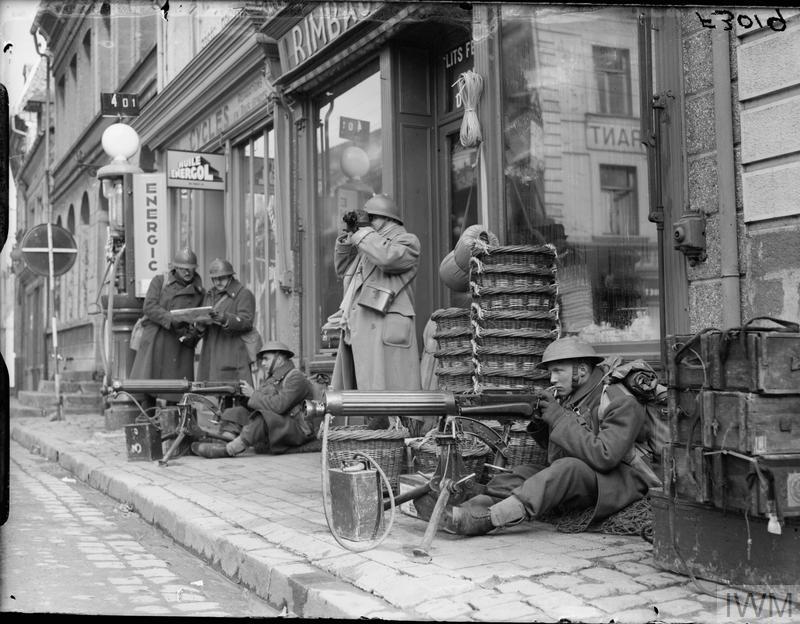


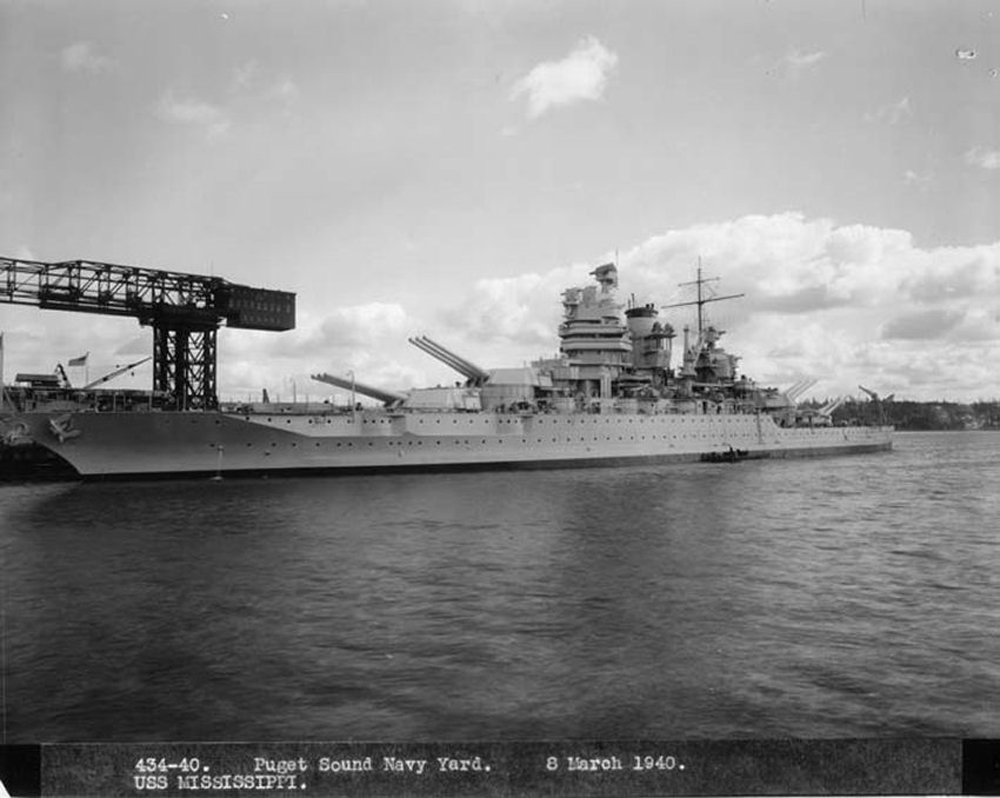

Lost 25 October 1942.
Sunk off Tulagi by gunfire from the Japanese destroyers Akatsuki, Ikazuchi, and Shiratsuyu.
Seminole received one battle star for World War II service.
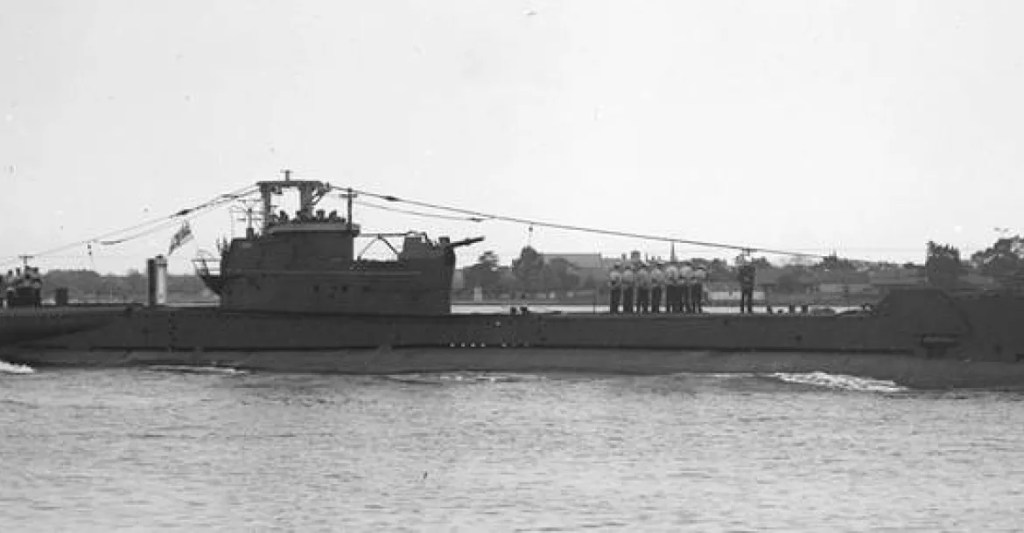
Lost 10 April 1940.
Tarpon had a short career, serving in the North Sea. She left Portsmouth on 5 April 1940 for Rosyth in company with HMS Severn. The following day they were ordered to Norway. On the 10th Tarpon was ordered to take up a new position. Tarpon was never heard from again. Post War German records showed that Tarpon had attacked the Q-ship Schiff 40/Schürbek, but her first torpedoes had missed. The Q-ship picked up the Tarpon on her sonar and her periscope was sighted. The ship dropped numerous depth charges in a sustained counterattack that went on most of the morning. Finally a pattern of depth charges brought wreckage to the surface. The Q-ship remained on the scene until 0500 the next morning until it became clear the submarine had been sunk. Tarpon was reported overdue on 22 April 1940.
 History Diaries