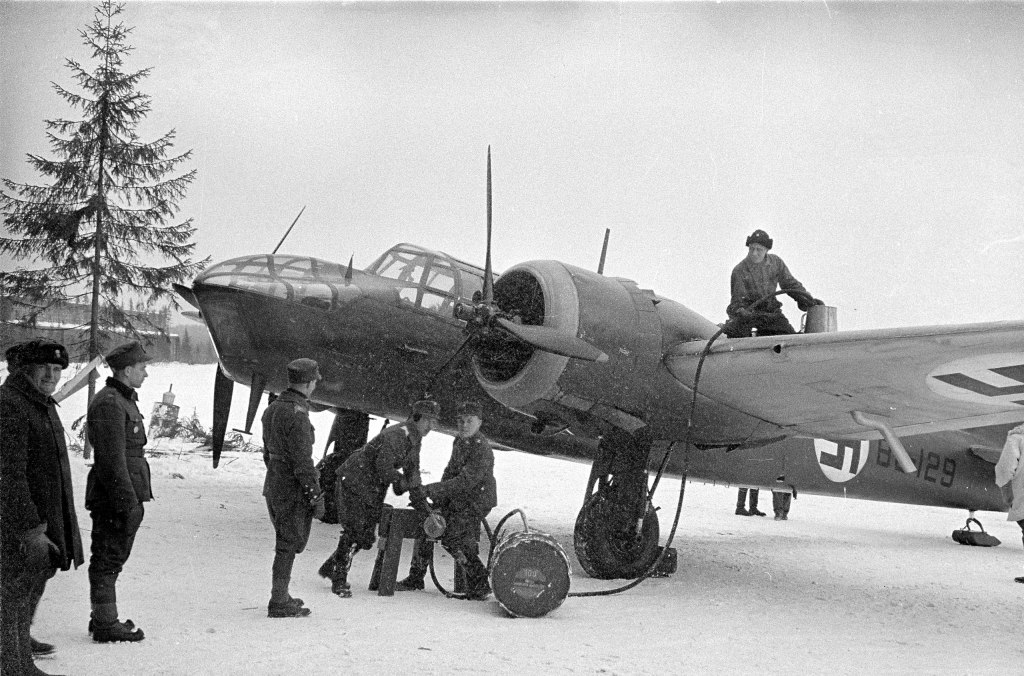
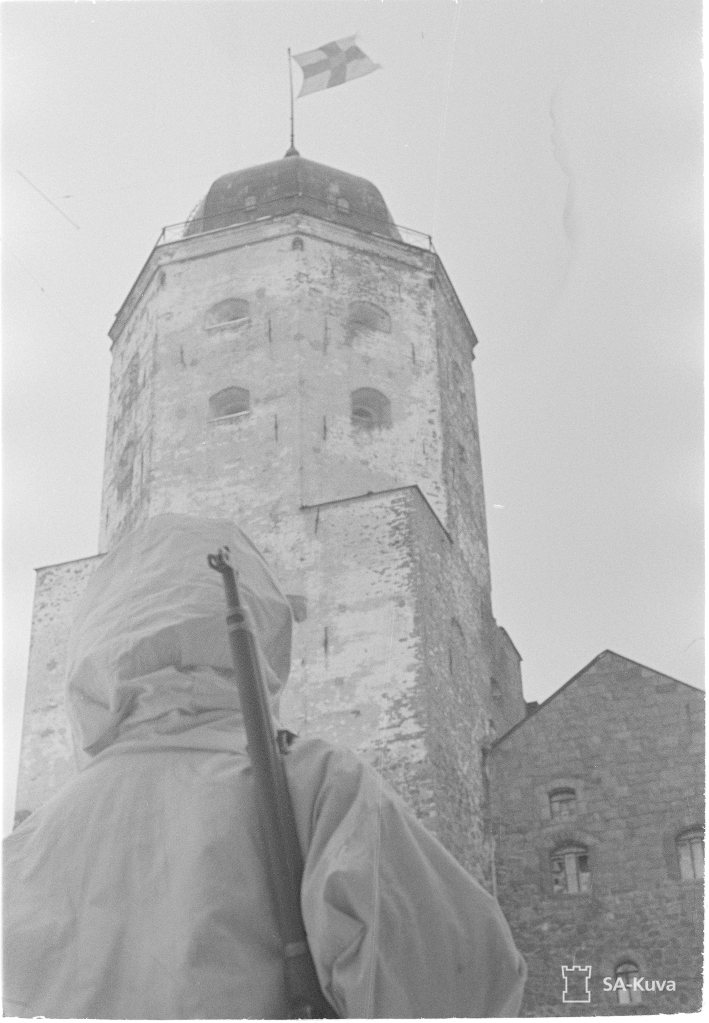
Heavy fighting continues around Viipuri. Soviet troops began to break through the final defense line there.
With the situation becoming desperate, the Finns have begun calling up the next class of recruits, lowering the service age to 20.
The Finns have almost no ammunition left, but they know they have to stop the Soviets from continuing to cross the bay. Someone thinks of using saws to cut the ice… but the cuts quickly freeze.
Following preliminary artillery drumfire, the Soviet force on the Isthmus launches an assault and breaks through the Finnish backline positions in Tali, advancing thereafter in the direction of Tali village. The Soviet troops make several local breakthroughs, which are successfully contained.
Soviet 28th Corps cuts road between Viipuri and Helsinki.
A new group, the Hamina Group, is formed to give added strength to the defence of Viipurinlahti Bay. The command of the new group is entrusted to Major-General E. Hanell, who is to be directly responsible to Commander-in-Chief Mannerheim.
In Taipale, an enemy battalion attacks the Terenttilä stronghold. Finnish losses on this comparatively quiet day in Taipale are 10 dead and 35 wounded.
The attacking Russian force in the Sintolanniemi sector is completely destroyed.
In Ladoga Karelia, Detachment Alfthan cuts the supply lines of the Soviet troops in Lavajärvi village.
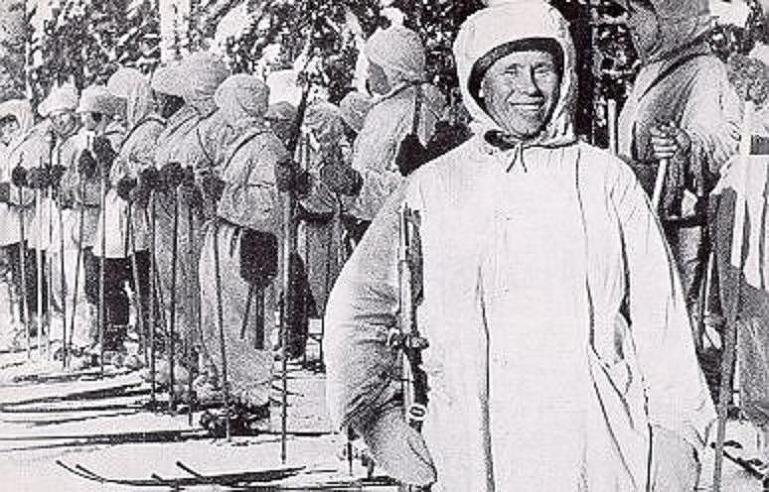
Legendary Finnish sniper Simo Hayha, the “Magic Shooter” who has 505 kills in 95 days, is shot in the jaw, but survives. “Half his head is hanging out,” says one man who helps to rescue him.
The Red Army launches yet another attack in the Kollaa sector. The 69th Infantry Regiment nevertheless manages to hold its ground.
In the far north, a Red Army regiment overruns the Finnish defensive positions at Nautsi in Petsamo. Nautsi’s one and only house is raised in the Soviet Union’s war bulletin to the status of “the town of Nautsi”. Detachment Pennanen’s losses in Petsamo total 33 dead, 87 wounded and 67 missing in action.
British volunteers swear their oath to Colonel Kermit Roosevelt in the Finnish Aid office in London.
Finland’s delegation to the Moscow peace talks under the leadership of Prime Minister Risto Ryti arrived in the Soviet capital in the early evening. They announce that negotiations are in progress over Soviet terms that are even more drastic than those issued before the war — and they should know since Juho Kusti Paasikivi is the one who failed at his negotiations with the Soviets in November. German and Swedish mediators are participating.
In the United Kingdom, British Chief of the Imperial General Staff Edmund Ironside offered military assistance to Carl Mannerheim of Finland.
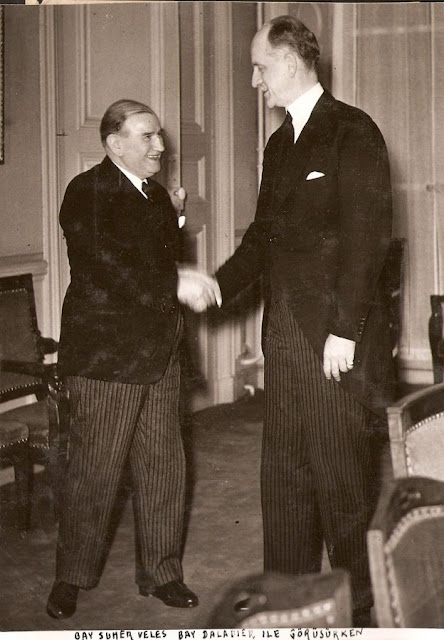
Sumner Welles visited Paris and met with President Albert François Lebrun. Welles found Lebrun friendly, but was annoyed that he spent much of the meeting rambling on about details of his life that Welles did not find to be “in the slightest degree significant.” Welles was then taken to see Prime Minister Édouard Daladier, who stressed that restoration of independence for the Poles and Czechs was a primary objective of any peace settlement. Although Daladier said he deeply distrusted Hitler, he also said he would not rule out dealing with the present German regime.
British warships detain more Italian coal ships with cargos of German coal. This action follows a warning that Britain will seize all German coal found at sea. The ships are brought to The Downs, off Deal, Kent where they are anchored of the coast while the government decides whether to unload the cargoes. Four more Italian colliers have set sail from Rotterdam and a further six are loading with Rhineland coal destined for Italy where coal rationing is in force. Many Italians believe that the seizure of their ships is a deliberate attempt to force them to buy British coal on British terms. This becomes known as the “Coal Ships Affair”.
The incident is turning Italian public opinion against the British, who it is believed are using the war as a pretext for arms deals that Mussolini refuses to approve. It is an extreme example of the high-handed British attitude toward neutral rights that has permeated the Admiralty’s conduct to date, exemplified by the seizure of mail and dubious “contraband” and lengthy detainments of neutral vessels.
There is heightened patrol activity in the no man’s land between the Maginot and Siegfried Lines. One officer, a Captain Twomey, states that British posts are so poorly situated that “No one can see another to support it.”
Hitler expands Operation Weserubung, which originally was a one-division operation, to eight divisions. It will include the occupation of Norway and, as a “land-bridge” to Norway, Denmark. At this point in the war, all of Hitler’s military decisions are turning up roses.
The authoritative German commentary service, Dienst aus Deutschland, today disclosed that Foreign Minister Joachim von Ribbentrop had expressed the opinion that the war would be over within a year. Herr von Ribbentrop’s statement was made at a reception for Yugoslav journalists. He added, however, that Germany was prepared for a five-year war. The Foreign Minister declared Germany had no territorial aspirations in Southeastern Europe and repeated assertions that the British blockade was ineffective while the German counter-blockade was becoming increasingly effective.
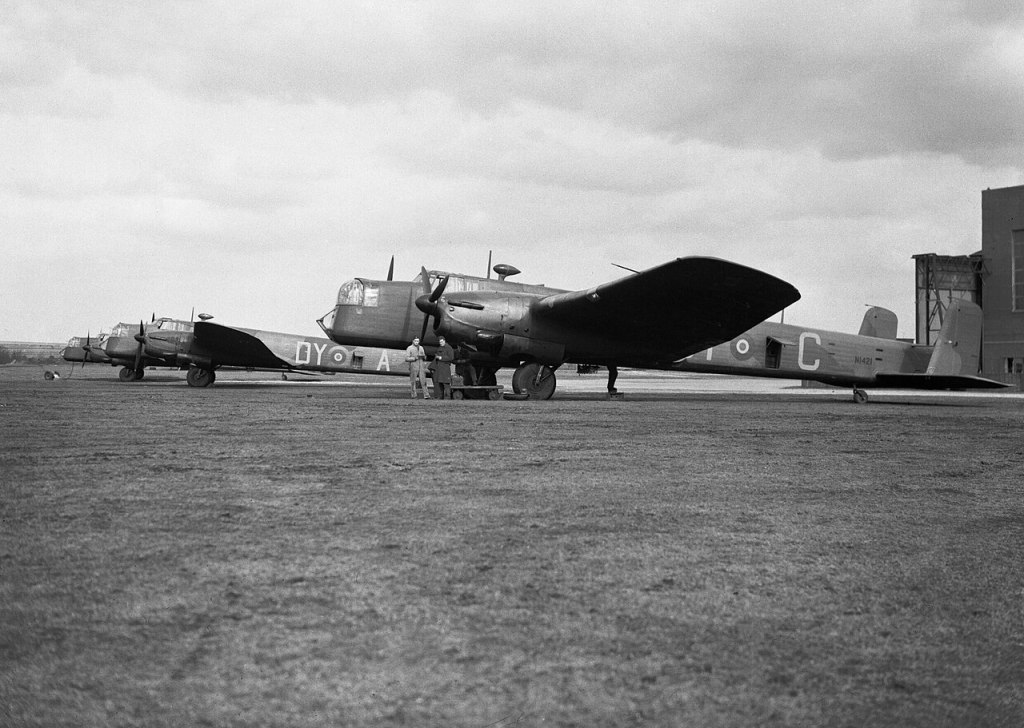
Sir Kingsley Wood, announced that fighting strength of the British Royal Air Force (RAF) had doubled in the last 12 months. Sir Kingsley Wood, the Air Minister, told the House of Commons today that Allied production of war planes was now greater than Germany’s output. He warned the Nazis that, if they seriously attacked this country “our bomber force will be both ready and able to hit hard, hit often and keep on hitting.”
Concerned about “loose lips,” the RAF picks out some men and makes the “specially deputized” to report on those they hear speaking indiscreetly.
The debate over land sale restrictions in Palestine boils over in the House of Commons, where Labour laments these cruel impositions on “a weak and hunted race,” while Tories point out that “Now is not the time to face Arab revolt.”
Oberst Alois Stoeckl was named the commanding officer of the German Kampfgeschwader 55 wing.
From 1940 hours to 2005, shipping in the Downs is attacked by German aircraft. Ramsgate guardship Lormont and steamer Dover Abbey (958grt) are bombed by He111’s of KG26 (X Air Corps), but no damage is done. One enemy aircraft is destroyed.
The Italian cargo ship Amelia Lauro was attacked in the North Sea by Luftwaffe aircraft and set afire. She was on a voyage from Newcastle upon Tyne, Northumberland, United Kingdom to Piombino. She was towed in to Immingham, Lincolnshire, United Kingdom. Subsequently placed under repair, but seized as a prize of war when Italy declared war on the United Kingdom. Returned to service as Empire Activity under the British flag.
RAF aircraft, operating from France, drop Polish language leaflets over German occupied Polish lands and German language leaflets over Leipzig and the Ruhr.
The German Kriegsmarine conducts minelaying operations. German naval auxiliary Schiff 11 (former Estonian steamer Hanonia (2564grt) which had been captured on 24 September 1939) departed Wilhelmshaven and on the 9th, disguised as a neutral ship, laid mines off North Foreland. Five ships of 14,152 tons were lost on this minefield.
German minelayers Roland and Cobra laid two anti-submarine mine barriers west of Heligoland during the 7th and 8th.
U-32 laid mines north of Liverpool Bay, on which one merchant ship was lost.
U-28 laid mines southeast of the Isle of Wight off Portsmouth.
Battleship HMS Rodney (C-in-C, Forbes) and battlecruisers HMS Renown and HMS Repulse with destroyers HMS Hardy (D.2), HMS Hostile, HMS Inglefield (D.3), HMS Imogen, HMS Foxhound, HMS Fortune, HMS Firedrake, HMS Punjabi and HMS Kimberley departed the Clyde at 1615 to arrive at 1600 on the 8th. The ships were taken to the west of the Orkneys for 24 hours while the channel was swept. Winston Churchill was on HMS Rodney, and he transferred to HMS Kimberley, which carried him on to Scapa Flow, where he spent the night on HMS Hood. Destroyers HMS Faulknor and HMS Forester left Scapa Flow on the 8th and joined the Commander in Chief off Cape Wrath. HMS Rodney, HMS Renown, HMS Repulse with destroyers HMS Hardy, HMS Hostile, HMS Inglefield, HMS Imogen, HMS Foxhound, HMS Fortune, HMS Firedrake, HMS Punjabi, HMS Faulknor and HMS Forester arrived at Scapa Flow at 1000 on the 9th.
The Belgian fishing vessel Yolande-Marguerite was bombed and sunk in the North Sea off the Noord Hinder Lightship by Heinkel He 111 aircraft of KG26, Luftwaffe. Four crew were killed.
The French Naval (Marine Nationale) auxiliary minesweeper Marie Yette collided with the French ship Spramex in the Gironde and sank.
The Dutch steam merchant Vecht was torpedoed and sunk in the North Sea off Knokke-Heist, West Flanders, Belgium (51°45′N 3°05′E) by the German U-boat U-14, commanded by Oberleutnant zur See Herbert Wohlfarth, with the loss of all 22 crew. At 04.30 hours the unescorted and neutral Vecht (Master P. Smit) was hit aft by one G7a torpedo from U-14, settled by the stern and sank after 20 minutes. The U-boat had spotted the ship three hours earlier, but reported that she carried no neutrality markings.
Convoy OA.105G departs Southend.
Convoy ON.18 of ten British, thirteen Norwegian, twelve Swedish, two Danish, four Finnish and two Estonian ships departed Methil at 1700 escorted by destroyers HMS Cossack (D.4), HMS Escort, HMS Eclipse, HMS Electra and HMS Encounter. Destroyers HMS Kelly (D.5) departed Scapa Flow on the 8th and HMS Kandahar from Kirkwall on the 8th with a detachment of ten ships for the convoy. These ten ships are included in the sailing breakdown. They joined off Scapa Flow, relieving HMS Cossack which joined convoy HN.17. On the 8th, German aircraft attacked the Kirkwall section. Two bombs were dropped, but no damage was done. Base ship HMS Dunluce Castle and three other merchant ships for Scapa Flow proceeded with the convoy. Light cruisers HMS Edinburgh, HMS Arethusa and anti-aircraft cruiser HMS Cairo provided near cover. HMS Cairo departed Sullom Voe on the 9th to join the convoy. Destroyers HMS Fame and HMS Sikh put out from Scapa Flow. The destroyers met four merchant ships from the convoy at 1300 and escorted them into Scapa Flow, arriving on the 8th. The convoy arrived at Bergen without event on the 10th.
Convoy HN.17 of eight British, nineteen Norwegian, one Danish and one Finnish ship departed Bergen escorted by destroyers HMS Nubian, HMS Delight, HMS Diana, HMS Ilex and HMS Gurkha. On the 9th when the convoy split, HMS Delight and HMS Diana were assigned the west coast section and were reinforced by destroyers HMS Kimberley, which came out from Scapa Flow at 1800/9th, and HMS Kelly, detached from convoy ON.18. HMS Gurkha obtained a submarine contact at 1412/9th southwest of Fair Isle in 59 15N, 1 08W and dropped six depth charge patterns in 59-07N, 0-44W. HMS Ilex stood by the contact while the convoy continued. Destroyer HMS Foxhound arrived from Scapa Flow at 0300/10th to relieve HMS Ilex, which rejoined the convoy before it arrived at Rosyth. The submarine contact was later found to be sunken steamer Santos. At 0520/9th, HMS Kelly reached convoy HN.17 in heavy weather, collided with HMS Gurkha, and Gurkha’s propeller guard tore a thirty foot gash in her bow, requiring Kelly to leave the convoy for repairs. After emergency repairs at Lerwick and then from depot ship HMS Woolwich at Scapa Flow, HMS Kelly departed Scapa Flow on the 14th and was escorted by destroyer HMS Sikh to Blackwall for repairs. HMS Gurkha was able to continue with HN.17 and was repaired at Methil in less than a week. After suspected enemy vessels were reported four miles NE of Kinnaird Head, destroyer HMS Cossack was informed and light cruisers HMS Edinburgh and HMS Arethusa were advised to investigate. No contact was made and the vessels were later determined to be destroyers HMS Gallant and HMS Griffin. On the 10th, the convoy arrived at Methil with HMS Cossack (D.4), HMS Nubian, HMS Gurkha and HMS Ilex. HMS Delight and HMS Diana, after escorting the five ships of the west coast portion of the convoy to Cape Wrath, arrived at Scapa Flow.
Convoy TM.21 departed the Tyne escorted by the 3rd Anti-submarine Group, and supported by sloop HMS Egret and destroyer HMS Whitley.
Convoy MT.25 departed Methil escorted by the 19th Anti-submarine Group, supported by sloop HMS Pelican and destroyer HMS Vivien, and arrived later that day.
Convoy FS.115 departed the Tyne escorted by sloop HMS Pelican and destroyer HMS Vivien, and arrived at Southend on the 9th.
Convoy BC.29 of six steamers, including steamer Baron Kinniard (Commodore) departed Bristol Channel escorted by destroyer HMS Vivacious, and arrived in the Loire on the 9th.
The War at Sea, Thursday, 7 March 1940 (naval-history.net)
Completing patrol, battleship VALIANT and battlecruiser HOOD with destroyers FAULKNOR, FAME, FORESTER, KELLY, KANDAHAR, and SIKH arrived at Scapa Flow at 1600 after dummy battleships REVENGE (decoy ship PAKEHA) and RESOLUTION (decoy ship WAIMANA) from Rosyth spent some time at Scapa Flow testing the base’s ability to resist air attacks. After VALIANT and HOOD arrived in the anchorage, aircraft of German KG26 (X Air Corps) dropped mines in the main entrance to Scapa Flow.
Battleship RODNEY (C-in-C, Forbes) and battlecruisers RENOWN and REPULSE with destroyers HARDY (D.2), HOSTILE, INGLEFIELD (D.3), IMOGEN, FOXHOUND, FORTUNE, FIREDRAKE, PUNJABI, and KIMBERLEY departed the Clyde at 1615/7th to arrive at 1600/8th. The ships were taken to the west of the Orkneys for 24 hours while the channel was swept. Winston Churchill was on RODNEY, and he transferred to KIMBERLEY, which carried him on to Scapa Flow, where he spent the night on HOOD. Destroyers FAULKNOR and FORESTER left Scapa Flow on the 8th and joined the Commander in Chief off Cape Wrath. RODNEY, RENOWN, and REPULSE with destroyers HARDY, HOSTILE, INGLEFIELD, IMOGEN, FOXHOUND, FORTUNE, FIREDRAKE, PUNJABI, FAULKNOR, and FORESTER arrived at Scapa Flow at 1000/9th.
Heavy cruiser NORFOLK departed the Clyde for Scapa Flow.
Armed merchant cruiser SALOPIAN arrived at the Clyde from patrol.
Destroyers WOLSEY and BRAZEN and cable ship ROYAL SCOT departed Rosyth to mend cables.
Destroyers INTREPID and GRIFFIN and anti-submarine whalers BUTTERMERE (560grt) and WASTWATER (560grt) made attacks on a contact sighted by aircraft at 1448, ESE of Noss Head in 58 17N, 02 26W. INTREPID attacked at 1715 and 1744, and GRIFFIN at 1730. The two destroyers were joined by destroyers FAME at 1800/7th and SIKH at 1900. These two were ordered to join the hunt until required to escort base ship DUNLUCE CASTLE and three other steamers from convoy ON.18 into Scapa Flow. After GRIFFIN, SIKH and FAME detached, INTREPID was left to stand by the contact, later leaving for Invergordon where she arrived at 1300/8th. Destroyer GALLANT joined the search at midday on the 8th, but the search was unsuccessful. FAME buoyed the location on the 8th, and INTREPID and GALLANT returned to patrol the area.
BRITISH SUBMARINE MOVEMENTS
TRIDENT arrived at Rosyth from patrol with a damaged asdic dome, and docked later that day. She undocked on the 11th.
SEAL was undocked at Rosyth.
SNAPPER arrived at Harwich after patrol.
URSULA was docked at Blyth to make good leaking glands, and undocked on the 8th.
TRUANT was undocked at Rosyth.
TRITON was docked at Rosyth for reballasting, and undocked on the 9th.
SEAWOLF departed Portsmouth under escort for Harwich.
SALMON departed Harwich on patrol.
L.23 was undocked at Blyth.
Convoy ON.18 of ten British, thirteen Norwegian, twelve Swedish, two Danish, four Finnish and two Estonian ships departed Methil at 1700 escorted by destroyers COSSACK (D.4), ESCORT, ECLIPSE, ELECTRA, and ENCOUNTER. Destroyers KELLY (D.5) departed Scapa Flow on the 8th and KANDAHAR from Kirkwall on the 8th with a detachment of ten ships for the convoy. These ten ships are included in the sailing breakdown. They joined off Scapa Flow, relieving COSSACK which joined convoy HN.17. On the 8th, German aircraft attacked the Kirkwall section. Two bombs were dropped, but no damage was done. Base ship DUNLUCE CASTLE and three other merchant ships for Scapa Flow proceeded with the convoy. Light cruisers EDINBURGH, ARETHUSA and anti-aircraft cruiser CAIRO provided near cover. CAIRO departed Sullom Voe on the 9th to join the convoy. Destroyers FAME and SIKH put out from Scapa Flow. The destroyers met four merchant ships from the convoy at 1300 and escorted them into Scapa Flow, arriving on the 8th. The convoy arrived at Bergen without event on the 10th.
CONVOY HN.17
Convoy HN.17 of eight British, nineteen Norwegian, one Danish and one Finnish ship departed Bergen escorted by destroyers NUBIAN, DELIGHT, DIANA, ILEX, and GURKHA. On the 9th when the convoy split, DELIGHT and DIANA were assigned the west coast section and were reinforced by destroyers KIMBERLEY, which came out from Scapa Flow at 1800/9th, and KELLY, detached from convoy ON.18. GURKHA obtained a submarine contact at 1412/9th southwest of Fair Isle in 59 15N, 1 08W and dropped six depth charge patterns in 59-07N, 0-44W. ILEX stood by the contact while the convoy continued. Destroyer FOXHOUND arrived from Scapa Flow at 0300/10th to relieve ILEX, which rejoined the convoy before it arrived at Rosyth. The submarine contact was later found to be sunken steamer SANTOS. At 0520/9th, KELLY reached convoy HN.17 in heavy weather, collided with GURKHA, and GURKHA’s propeller guard tore a thirty-foot gash in her bow, requiring KELLY to leave the convoy for repairs. After emergency repairs at Lerwick and then from depot ship WOOLWICH at Scapa Flow, KELLY departed Scapa Flow on the 14th and was escorted by destroyer SIKH to Blackwall for repairs.
GURKHA was able to continue with HN.17 and was repaired at Methil in less than a week. After suspected enemy vessels were reported four miles NE of Kinnaird Head, destroyer COSSACK was informed and light cruisers EDINBURGH and ARETHUSA were advised to investigate. No contact was made and the vessels were later determined to be destroyers GALLANT and GRIFFIN. On the 10th, the convoy arrived at Methil with COSSACK (D.4), NUBIAN, GURKHA, and ILEX.
DELIGHT and DIANA, after escorting the five ships of the west coast portion of the convoy to Cape Wrath, arrived at Scapa Flow. On arrival, DELIGHT reported a defect in her feed tank.
Minelayer TEVIOTBANK escorted by destroyers ICARUS and IMPULSIVE departed the Humber for Invergordon, where they arrived on the 9th.
Destroyer MASHONA departed Sheerness for the Clyde, arriving on the 8th.
Convoy TM.21 departed the Tyne escorted by the 3rd Anti-submarine Group, and supported by sloop EGRET and destroyer WHITLEY.
Convoy MT.25 departed Methil escorted by the 19th Anti-submarine Group, supported by sloop PELICAN and destroyer VIVIEN, and arrived later that day.
Convoy FS.115 departed the Tyne escorted by sloop PELICAN and destroyer VIVIEN, and arrived at Southend on the 9th.
Destroyer BEAGLE completed boiler cleaning and degaussing alongside depot ship SANDHURST. Destroyer BRILLIANT went alongside SANDHURST for similar work and repairs which were completed on the 12th.
British minefield DML 9 was laid by auxiliary minelayer HAMPTON, escorted by Polish destroyers ORP BURZA and ORP BLYSKAWICA from Harwich and destroyers KEITH and BOADICEA from Dover, in the English Channel, between 51-53N and 51-59N in a direction 20° east to 20° west. Minesweeper FRANKLIN had already laid the mark buoys. After the operation, the destroyers returned to Harwich.
A submarine contact report by anti-submarine yacht MAID MARION (506grt) eight miles from Eddystone Light caused destroyers WILD SWAN, ESKIMO, and VANESSA to be dispatched from Plymouth to investigate.
ATTACKS BY 12TH ANTI-SUBMARINE STRIKING FORCE
The 12th Anti-submarine Striking Force, comprised of anti-submarine trawlers, was operating in Moray Firth in 57-55N, 02-15W.
At 1500/7th, NORTHERN WAVE (655grt) made a submarine contact, which NORTHERN PRIDE (655grt) and NORTHERN SPRAY (655grt) attacked.
At 0026/8th in Moray Firth in 58-02.7N, 2-09W, NORTHERN DAWN (655grt) made a contact which was attacked by NORTHERN SPRAY.
At 1310/9th off Buchanness in 57-31N, 1-38W, NORTHERN PRIDE made a contact which was attacked by NORTHERN GEM (655grt) and NORTHERN PRIDE.
At 1940/9th, east of Kinnaird Head in 57-42N, 1-35W, NORTHERN DAWN made a contact which was attacked by NORTHERN SPRAY and NORTHERN DAWN.
At 0955/10th, ENE of Kinnaird Head, NORTHERN PRIDE made a contact which was attacked by NORTHERN GEM and NORTHERN PRIDE.
At 0100/11th, north of Kinnaird Head in 57-52.5N, 1-56W, NORTHERN WAVE made a contact which was attacked by NORTHERN WAVE and NORTHERN SPRAY.
Patrol sloop MALLARD damaged her bows in collision with an unknown ship off Harwich, and was under repair at London from 9 March to 27 April.
Minesweeping trawler CEDAR (649grt) was damaged in collision with the dockyard wall at Leith.
Convoy BC.29 of six steamers, including steamer BARON KINNIARD (Commodore) departed Bristol Channel escorted by destroyer VIVACIOUS, and arrived in the Loire on the 9th.
From 1940 to 2005, shipping in the Downs was attacked by German aircraft. Ramsgate guardship LORMONT and steamer DOVER ABBEY (958grt) were bombed by He111’s of KG26 (X Air Corps), but no damage was done.
GERMAN AUXILIARY SHIP MINELAYING OFF NORTH FORELAND
German naval auxiliary Schiff 11 (Estonian steamer HANONIA (2564grt)) which had been captured on 24 September 1939) departed Wilhelmshaven and on the 9th, disguised as a neutral ship, laid mines off North Foreland. Five ships of 14,152 tons were lost on this minefield.
On the 11th, Dutch steamer AMOR (2325grt) was sunk in 51 24N, 02 09E, eight miles NW of Fairy Bank Buoy; the entire crew was rescued by Irish steamer CITY OF BREMEN (903grt).
Greek steamer NIRITOS (3854grt) was badly damaged on the 11th in 51 25N, 01 45E; steamer KIRKPLEIN stood by and tug GUARDSMAN later brought the ship in to Small Downs.
On the 15th, steamer MELROSE (1589grt) was sunk in 51 21N, 02 13E; eighteen crew were lost and five rescued.
On the 17th, French steamer CAPITAINE AUGUSTIN (3137grt) was lost 2½ miles 126° from Tongue Light Vessel; two crew were killed.
On the 17th, Dutch steamer SINT ANNALAND (2248grt) was sunk in 51 23N, 02 01E; the entire crew was rescued by Dutch steamer SCHIELAND (2249grt).
On the 18th, Italian steamer TINO PRIMO (4853grt) was lost in 51 20N, 01 42E; tug KENIA from Ramsgate took her in tow, but she struck two more mines and sank. One crewman was lost.
German minelayers ROLAND and COBRA laid two anti-submarine mine barriers west of Heligoland during the 7th and 8th.
U-32 laid mines north of Liverpool Bay, on which one merchant ship was lost.
U-28 laid mines southeast of the Isle of Wight off Portsmouth.
U-14 sank Dutch steamer VECHT (1965grt) in 51 45N, 03 05E.
Belgian fishing vessel YOLANDE MARGUERITE (26grt) was bombed and sunk by He111’s of German KG26 (X Air Corps) off Noord Hinder.
Dutch steamer CONFID (249grt) was bombed and damaged by He111’s of German KG26 (X Air Corps) 6½ miles 350° from Flamborough Head.
Italian steamer AMELIA LAURO (5335grt) was damaged by German bombing in 52 55N, 02 19E. Italian steamer TITANIA (5397grt) rescued the 37 crew and took them to the Downs. Sloops PINTAIL and LONDONDERRY were also involved in the rescue. The steamer was taken to Immingham, and was still there on 10 June, when she was seized and renamed EMPIRE ACTIVITY for British use.
French auxiliary minesweeper MARIE YETTE (286grt) was sunk in collision with French steamer SPRAMEX (2560grt) in the River Gironde.
Today in Washington, President Roosevelt conferred with Senator Wheeler on transportation legislation and discussed with Jerome Frank of the Securities and Exchange Commission proposals for regulation of investment trust companies.
The Senate considered amendments to the Hatch act, received the Pittman amendment to require Senate ratification of reciprocal trade treaties and recessed at 5:10 PM until noon tomorrow.
The House passed the Interior Department Appropriation Bill, received the Smith committee amendments to the National Labor Relations Act and adjourned at 6:05 PM until noon on Monday.
The U.S. Senate stood fast in rejecting an effort to abolish the Hatch Act’s ban on political activity by government workers. The Senate coalition backing the Hatch bill to extend prohibitions against political activities by federal job-holders to state employees, wholly or partly supported by federal funds, approved today two minor concessions incorporated in amendments, but held firm against efforts to vitiate prohibitions on electioneering. Following yesterday’s defeat, 44-41, of an amendment by Senator Miller to remove all restrictions on outside political activities by federal and state jobholders below the rank of policy-making officials, who already are exempt, the Senate today voted down, 42-35, an amendment by Senator Adams to strike that prohibition from the current law affecting only federal employes.
At recess tonight, the Senate was debating with some heat a motion by Senator Maloney to strike from the pending bill an entire section defining political activities which would be prescribed for employees of States whose pay is derived in whole or part from federal funds. The Maloney amendment, like its predecessors, was put forward in an open attempt to make the pending bill of little force. “The effect of this motion is to destroy the bill,” said Senator Maloney.
Backing the amendment were Senators Minton and Pepper, who are most active in flouting the guidance of Senator Barkley, the majority leader. In fact, some forty Democrats today continued ranged against Mr. Barkley on this issue, reflecting presumably the exigencies of home politics in their own States while Mr. Barkley exercised control only with the assistance of about a third of his titular following and a combination of almost the entire group of Republicans and spokesmen for minor parties.
The House passed today by a voice vote the $118,578,187 supply bill for the Interior Department. It declined to alter the recommended appropriation of $5,650,000 for the Bonneville Authority for 1941.
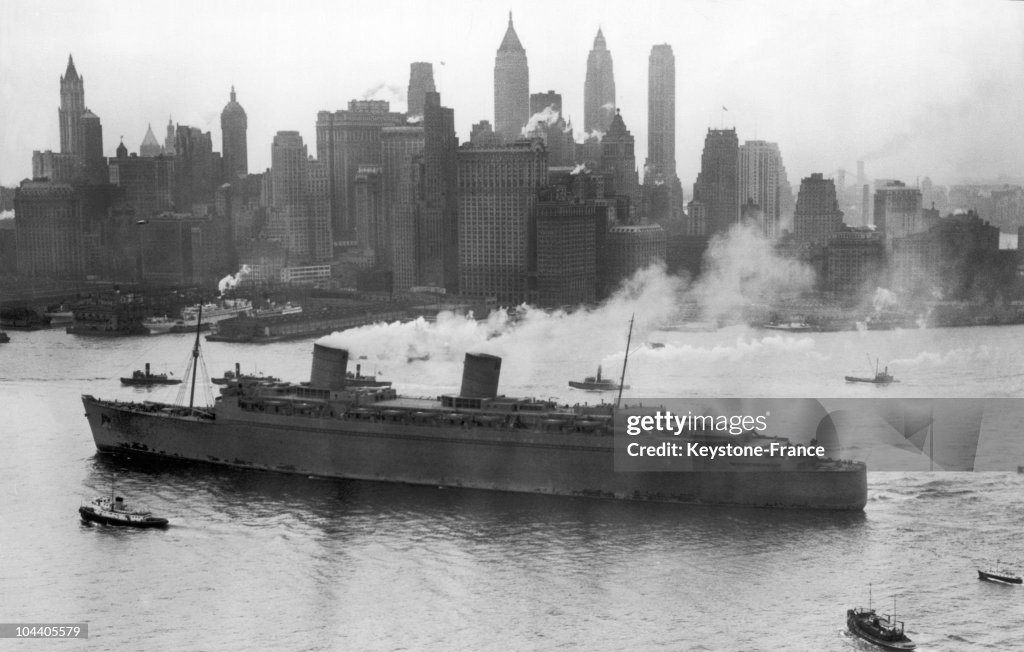
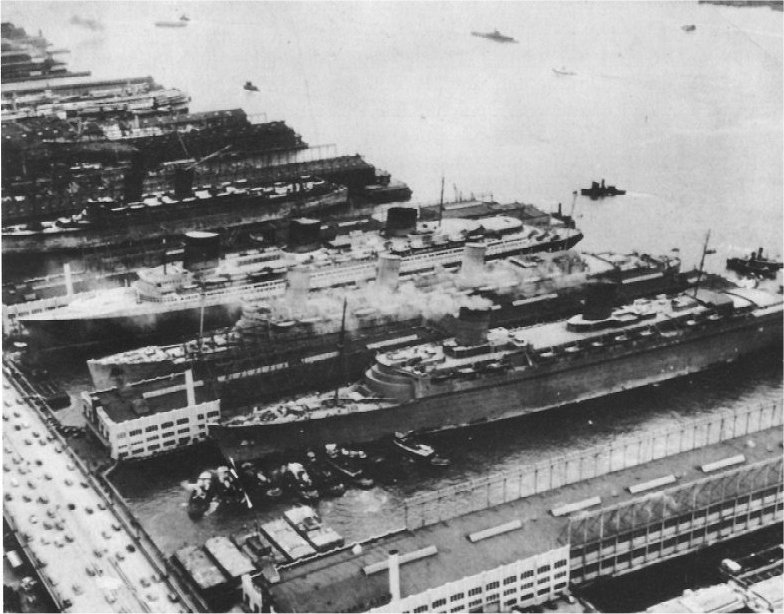
The RMS Queen Elizabeth completed her secret maiden voyage from England to New York.Cunard Line’s newest ship, RMS Queen Elizabeth was given a heroine’s welcome when she docked in New York City at 1700. The 83,673 ton passenger liner, the biggest in the world, dashed across the Atlantic at an average speed of 24.5 knots, relying on her speed to evade the U-boats and dropping her destroyer escort one day out. The voyage was kept a firm secret until the liner shrouded in wartime gray, appeared over the horizon moving towards Nantucket. … Strict security is being maintained, with no visitors allowed on board. The ship is fitted with a new magnetic mine protector device. How much of the final fitting out work has been done is not yet clear, but what is certain is that she will be prepared for war work, not luxury passengers.
With the arrival of the Queen Elizabeth it was announced that the special police detail now protecting the Hudson River waterfront has been augmented until it now numbers 157 men, who are being maintained at a cost of more than $1,300 a day.
A 17-point plan to replace the national labor relations board with a new agency and to make other major changes in the Wagner Act was laid before an election-year Congress by a special House committee which investigated the board. Amendments to the National Labor Relations Act providing drastic changes in the law, including abolition of the National Labor Relations Board and its replacement by a three-man agency divested of prosecution functions, were introduced today in the House by the Smith committee, which has been investigating the operations of the board. No restrictions against the reappointment of the incumbent members were contained in the amendments, but the prosecution of unfair labor practices would be placed under a new officer, to be known as an administrator. The new board would act only in a judicial capacity.
The map of Europe will not be greatly changed as a result of the current war, in opinion of Jesse M. Jones, Federal Loan Administrator. Mr. Jones made the statement as he left the White House today in support of his view that Finland is a good credit risk.
The Anglo-French purchasing board will confer with American aircraft manufacturers in New York Monday on the placing of new Allied plane orders which may run into hundreds of millions of dollars.
Thomas E. Dewey, Republican candidate for the Presidential nomination, spent seven hours in Chicago today in conference with Illinois and Wisconsin party chiefs and studied plans for his first public appearances in these two States this month.
Results of a survey conducted by the American Institute of Public Opinion indicate that Mrs. Franklin D. Roosevelt exceeds her husband, the President, in popularity and has grown in public esteem since last year, it was announced yesterday by Dr. George Gallup, director of the organization.
Peter Saur, fighting as Ray Steele, beats Bronko Nagurski in St Louis, to become the National Wrestling Association World Heavyweight Championship.
The Montreal Canadiens lose a record-tying NHL 15th straight game at home
In Tampa, the Brooklyn Dodgers beat the Cincinnati Reds, 9–5, in 10 innings in an exhibition game. Bert Haas, subbing for the absent Dolph Camili, singles in 2 runs in the 10th, steals second baseman and reaches third baseman on the overthrow, then steals home. Camili will arrive in camp in 2 days to reclaim his job.
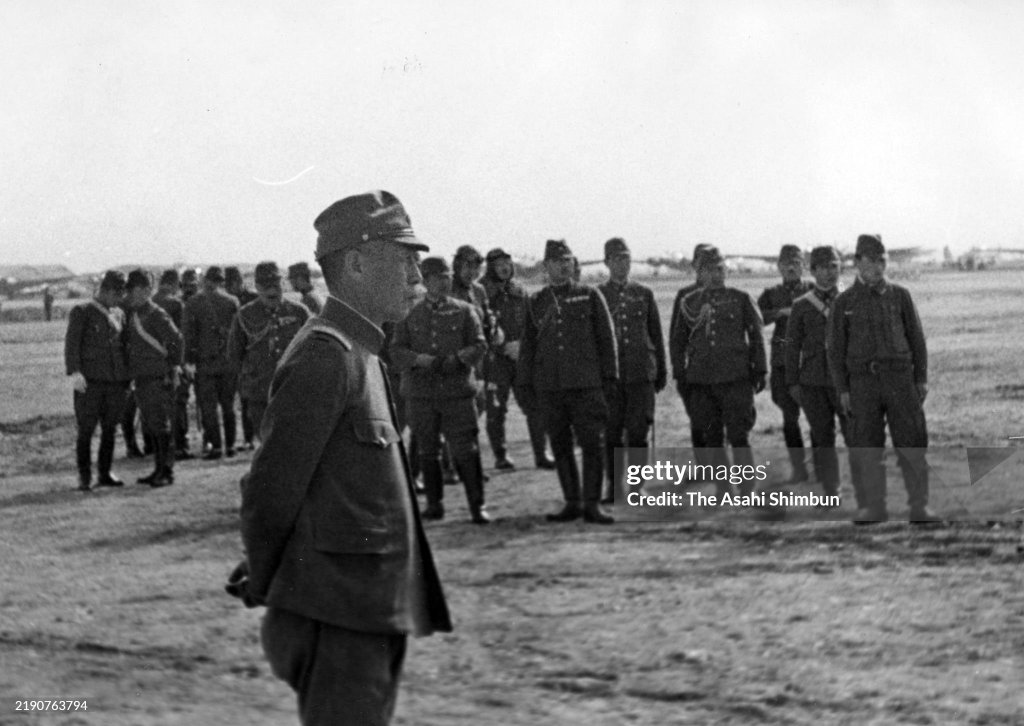
A Japanese expedition operating against Chinese guerrillas in the Chungshan district of Kwangtung Province, has occupied Shekki. The drive is believed linked with the impending proclamation of a new Japan-sponsored government in Nanking to be headed by Wang Ching-wei, who wants this district. to increase the prestige of his regime and to furnish administrative posts for his followers, many of whom are from the Chungshan district, where the late Dr. Sun Yatsen, father of the Chinese nationalist revolution, was born.
In Tokyo, deputy Takao Saito, adviser to the Minseito (political party) and a leading liberal member of the Lower House, was expelled from the Diet (Parliament) tonight because of his address last month criticizing aspects of Japan’s policy in China as conceived and enforced by the army. The lower house voted the expulsion in a quiet secret session of forty-five minutes ending at 6:30 PM. Later the action was approved by the House of Peers. The vote count was not announced. The action was taken on a report of the lower house disciplinary committee, which recommended the expulsion after ultra-nationalists, acting for the army, had lodged a formal complaint. Mr. Salto received the news without comment. He had said earlier he would run for his seat again at the next election and that his course was approved by a majority of his constituents.
Dow Jones Industrial Average: 148.32 (+0.35)
Born:
Daniel J. Travanti, American actor (“Captain Frank Furillo” – “Hill Street Blues”), in Kenosha, Wisconsin.
Viktor Savinykh, Soviet-Russian cosmonaut (Soyuz T-4, 1981; (Soyuz T-13/T-14, 1985; (Soyuz TM-5/TM-4/Mir EP-2, 1988), in Berezkiny, Kirov Obalst, Russian SFSR, Soviet Union.
Rudi Dutschke, spokesperson of the German student movement, in Schönefeld, Germany (d. 1979).
Died:
Edwin Markham, 87, American poet (1st winner of American Academy of Poets Award 1937).
John Huston Finley, 76, American academic and editor (NY Times 1937-38, President of the American Geographical Society).
Naval Construction:
The Royal Fleet Auxiliary Sprite-class tanker RFA Nasprite (A 252) is laid down by Blythswood Shipbuilding (Scotstoun, Scotland).
The Royal Navy Flower-class corvette HMS Clarkia (K 88) is launched by Harland & Wolff Ltd. (Belfast, Northern Ireland).
The Royal Navy Tree-class minesweeping trawler HMS Acania (T 02) is launched by Ardrossan Dockyard (Ardrossan, Scotland); completed by Plenty.
The Kriegsmarine (German Navy) Type 1936A destroyer Z24 is launched by AG Weser (Deschimag), Bremen (werk 958).
 History Diaries