

The conflict between the Soviet Union and Communist China has become, for the first time, a major element in United States diplomacy. This development is demonstrated, and sometimes even acknowledged, in many private discussions of the war in Vietnam. It is not mentioned publicly because official comment might influence the delicate triangular relationship developing in Southeast Asia among Moscow, Peking and Washington. But it is no secret to any of the three governments. The United States and China are pressing the Russians to choose either support of a Communist cause in Vietnam or good relations with the West.
Britain has made a quiet approach to the Soviet Union in an effort to find some path to negotiations on Vietnam. Two weeks have passed since this diplomatic feeler was put forward. Not a word has come from Moscow in response. Sir Humphrey Trevelyan, Britain’s Ambassador to Moscow, conveyed the feeler in a message to the Kremlin on February 20. Soviet officials have since been given several reminders that a reply is expected. The British approach was preliminary. Its clear purpose, it is understood, was to bring the Soviet Union toward some kind of negotiations over Vietnam.
Secretary of State Dean Rusk said today that the two new battalions of marines to be stationed in South Vietnam would shoot back if shot at. But he stressed that the marines mission was to put a tight security ring around Đà Nẵng Air Base, thus relieving South Vietnamese ground forces for combat. Mr. Rusk spoke on the radio and television program “Face the Nation” on the Columbia Broadcasting System networks.
He restated the American position that any worthwhile negotiated settlement in Vietnam would have to be preceded by evidence that Hanoi-and Peking-would leave South Vietnam alone. Mr. Rusk pointed out that many channels of communication with the Communists were open but he said: “We do not find yet any indication on the part of Hanoi that they are prepared to leave their neighbors alone. We are not going to reward aggression.” This would lead only to a much more dangerous situation, Mr. Rusk said.
Mr. Rusk called the Vietnamese military situation a mixed picture, with Việt Cộng forces that are reinforced and supplied through Laos stepping up their activities in north-central Vietnam. But nearer Saigon, where aid programs are beginning to take hold, Mr. Rusk said it is “another kind of picture.” He was questioned about criticism in Europe of the policy of air strikes against North Vietnam and the general hardening of the stand against negotiations on Communist terms. The Secretary said there had been many discussions “with our friends in Europe,” but he emphasized, “They make it clear that if we were to pull out of Vietnam they would consider this a very serious development.”
Mr. Rusk maintained that despite a continuing debate in Congress over policy in Vietnam, the Administration had firm Congressional support. “Literally dozens upon dozens of the closest consultations have been held,” he said, and again cited a Congressional resolution passed last August supporting whatever steps were necessary to preserve South Vietnam.
Mr. Rusk also said there was no tangible evidence of the arrival of new Soviet military equipment in North Vietnam. On another front, he said the United States had been disappointed by the failure of efforts of several administrations to halt the arms race in the Middle East. He said Israel and the Arab nations had a right to and must find a way to live in peace.
The United States’ allies in Europe reacted coolly today to Secretary of State Dean Rusk’s suggestion that they join in supporting efforts to defeat aggression in Southeast Asia. Allied representatives in the North Atlantic Treaty Organization said most member nations had all they could do to maintain their present military and political commitments to NATO. Even if NATO was 100 percent behind United States policy in South Vietnam, which it is not, there would be little the alliance could do, one source emphasized. The majority of the members of the alliance consider a ceasefire in South Vietnam, followed by negotiations, the wisest course for the United States to follow.
President Mohammad Ayub Khan of Pakistan has completed the main business of his visit to China without eliciting any public response to his call for a negotiated settlement of the Vietnamese conflict.
An exchange between President Johnson and Senators of both parties on the question of Vietnam is reported in this week’s issue of Newsweek magazine. The meeting last week between the President and the Senators is said by the magazine to have occurred after dinner at the White House. The magazine said that Senator Ross Bass, Democrat of Tennessee, referring to the recent coups in Saigon, asked the President why the United States permitted them to happen instead of simply picking a man and saving to the South Vietnamese, “Look, this is the guy we want, and he’s staying in charge.”
According to Newsweek, the President’s reply was: “Let me tell you about the time we needed a good sheriff down in Blanco County in my state. We got a guy to run and he was great for the first two years. Then he got himself a fancy car, and the next thing you know, he was keeping a woman; and we couldn’t get rid of him. Now, if I can’t get rid of a sheriff, how can I get rid of a government in South Vietnam?”
Senator Hugh Scott, Republican of Pennsylvania, was reported to have asked about reports that the Vietnamese did not make good soldiers, “that they like to smell flowers like Ferdinand the Bull, and don’t like to fight.” According to the article, the President replied with emotion: “The Vietnamese makes a first-class fighting man. Let me tell you this: they have sustained over 30,000 casualties. If you compare their population with ours, this is the equivalent of 325,000 casualties. If we suffered that many casualties, wouldn’t you say we were fighting…?”
West Germany announced today it was seeking to establish diplomatic relations with Israel. It will not break relations with the United Arab Republic, at least for the time being. A government statement, issued after day-and-night debate in the Government of Chancellor Ludwig Erhard over Middle Eastern policy, said the all-out reception given in Cairo last week to Walter Ulbricht, head. of state of Communist East Germany, had been “answered” by Bonn’s cutting off further economic aid to the United Arab Republic. The government warned, however, that any further Egyptian moves to the advantage of East Germany would be met by additional reprisals.
“An upgrading of this terror regime will be regarded by the Federal Republic of Germany as an unfriendly act and answered in each case by appropriate measures,” the statement said. Chancellor Erhard’s decision was taken after four days of almost uninterrupted consultation with his Cabinet, with political leaders and with Bonn’s allies. In effect, the Chancellor challenged President Gamal Abdel Nasser of the United Arab Republic to decide whether West Germany’s decision to seek formal ties with Israel is to be met with Cairo’s recognition of East Germany.
The visit of President Walter Uubricht of East Germany and the furor over Western arms for Israel have raised new fears in the West about the shift of President Gamal Abdel Nasser’s Socialist regime to the East.
France has signed a trade protocol with the United Arab Republic, thus becoming the first major Western power to promise aid for President Gamal Abdel Nasser’s second five-year plan.
Six Cuban refugees hurled soda bottles containing a tar-like substance at the Soviet Embassy in Washington this afternoon to protest the presence of Russian troops in Cuba. The demonstrators said they were also protesting Thursday’s student attack on the United States Embassy in Moscow. Five of the bottles hit the light-colored stone and brick face of the embassy, leaving black splotches. A three-man police detail had been guarding the embassy. and four of the Cubans were arrested. A fifth was arrested later in a second, abortive, attack. All were charged with defacing private property and with interfering with the property of a foreign government. A District of Columbia law forbids demonstrations within 500 feet of an embassy.
The Indian Government is facing a crucial decision in the politically unstable state of Kerala. A choice must be made soon between national security and democratic principles. Elamulam M. S. Namboodiripad, former Chief Minister and leader of the pro-Peking Communists of Kerala, demanded today that 29 newly elected state legislators of his party be released from prison. Most informed observers here expect the Government to refuse the demand, with consequent violent demonstrations by Communists and their sympathizers.
Changes to the Liturgy of the Roman Catholic Mass took place throughout the world, with large parts of the Mass being said in local languages (the vernacular) for the first time, rather than in Latin, as the papal instruction Inter oecumenici became effective on the first Sunday of Lent following the 1964 reform. In Rome, Pope Paul VI conducted services in Italian at the small All Saints Church as part of a plan to substitute for the parish priest in five suburban Rome churches during the Lent season.
The Organization of African Unity, less than two years after it was founded amid widespread enthusiasm, was described today as a forum full of “hollow verbalism and outdated phrases.” Foreign Minister Doudou Thiam of Senegal, addressing the organization’s Council of Ministers, said that after listening to more than 10 days of speeches he had come to the conclusion that the words colonialism, neo-colonialism, and imperialism were being bandied about by some delegates who did not know what the words meant. “There is a kind of internal imperialism in Africa,” he said. “Some of the states here seem even to want to impose their own regimes on all of Africa.” At the root of Mr. Thiam’s complaint and at the center of a controversy that has brought the organization to a state approaching paralysis is the Congo, with her recurring strife and underlying racial bitterness.
Christian-democrats win control of parliament in Chile. President Eduardo Frei’s reform-minded Christian Democratic Party piled up huge gains in parliamentary elections in Chile, with an unofficial tabulation giving them an 11-seat majority in the Chamber of Deputies.
Leaders of the Kurds in northern Iraq expect the Iraqi Government to resume the war against them this spring.
Malaysia announced it has accepted a U.S. offer of $4 million in military aid under a 10-year loan.
Queen Louise of Sweden, 75, great-granddaughter of England’s Queen Victoria, died of complications from surgery.
The Super VC-10, a new British jetliner, made its first trans-Atlantic flight today. The airliner landed at Kennedy International Airport at 1:32 PM after a flight of 6 hours and 50 minutes that had followed a two-and-a-half-hour delay at London’s fogbound airport.
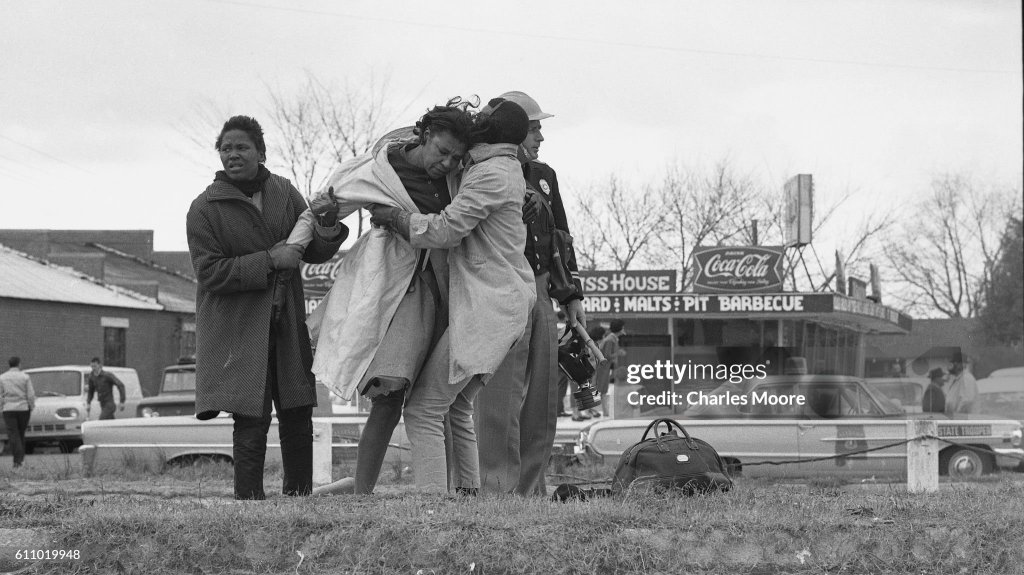
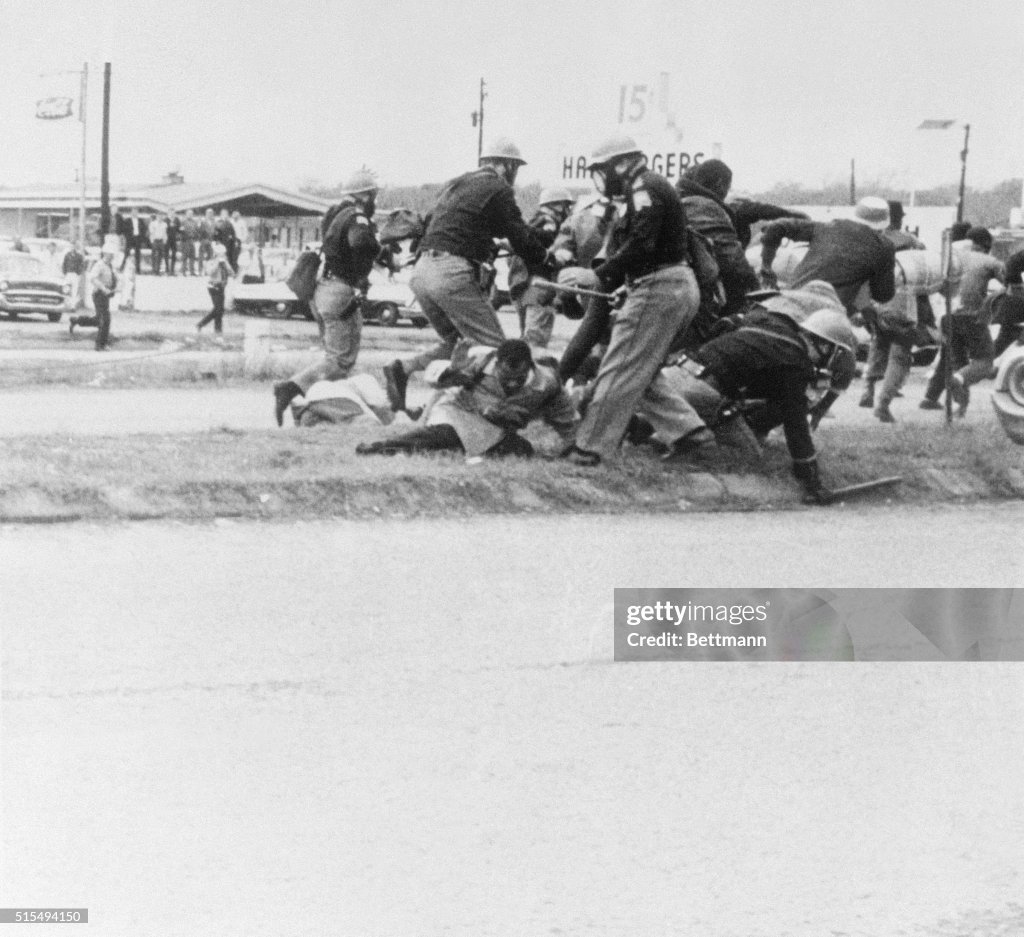
Bloody Sunday in Alabama.
Alabama state troopers and mounted deputies bombarded 600 Blacks with tear gas and clubbed them as they attempted a “walk for freedom.”
A march of 550 civil rights demonstrators was broken up violently by 200 members of the Alabama Highway Patrol, as the protesters began their march from Selma, Alabama, to the state capital at Montgomery. In response to the killing of Jimmie Lee Jackson. Hosea Williams and John Lewis started from the Brown Chapel AME Church and proceeded over the Edmund Pettus Bridge on U.S. Route 80 with a petition for Alabama Governor George C. Wallace. Reverend Frederick D. Reese would recall later that the officer in charge of the troopers told them, “I have orders from the Governor. You cannot march down Highway 80. This is for your protection.” When the marchers began kneeling in prayer rather than turning back, “the troopers came forward and began beating the people with billy clubs” then dispersed the crowd with tear gas. When the marchers moved back across the bridge into Dallas County, members of the county sheriff’s department began beating the group again. Protesters including future congressman John Lewis were beaten and hospitalized. The event would be commemorated in the American civil rights movement as “Bloody Sunday.”
The march began as an estimated 525 to 600 civil rights marchers headed southeast out of Selma on U.S. Highway 80. The march was led by John Lewis of SNCC and the Reverend Hosea Williams of SCLC, followed by Bob Mants of SNCC and Albert Turner of SCLC. The protest went according to plan until the marchers crossed the Edmund Pettus Bridge, where they encountered a wall of state troopers and county posse waiting for them on the other side.
County sheriff Jim Clark had issued an order for all white men in Dallas County over the age of twenty-one to report to the courthouse that morning to be deputized. Commanding officer John Cloud told the demonstrators to disband at once and go home. Rev. Hosea Williams tried to speak to the officer, but Cloud curtly informed him there was nothing to discuss. Seconds later, the troopers began shoving the demonstrators, knocking many to the ground and beating them with nightsticks. Another detachment of troopers fired tear gas, and mounted troopers charged the crowd on horseback.
Televised images of the brutal attack presented Americans and international audiences with horrifying images of marchers left bloodied and severely injured, and roused support for the Selma Voting Rights Campaign. Amelia Boynton, who had helped organize the march as well as marching in it, was beaten unconscious. A photograph of her lying on the road of the Edmund Pettus Bridge appeared on the front page of newspapers and news magazines around the world. Another marcher, Lynda Blackmon Lowery, age 14, was brutally beaten by a police officer during the march, and needed seven stitches for a cut above her right eye and 28 stitches on the back of her head. John Lewis suffered a skull fracture and bore scars on his head from the incident for the rest of his life. In all, 17 marchers were hospitalized and 50 treated for lesser injuries. After the march, President Johnson issued an immediate statement “deploring the brutality with which a number of Negro citizens of Alabama were treated”. He also promised to send a voting rights bill to Congress that week, although it took him until March 15.
Selma Blacks, in a mass meeting, defied Governor George C. Wallace and state troopers, and declared they will march again Tuesday.
The Johnson Administration is seeking to gain wide advance agreement on the contents of a voting rights package before submitting the measure to Congress.
Two Johnson Administration “must” bills health care for the aged and aid to schools-will be in the spotlight as Congress moves into a busy week tomorrow. Elated over their success in pushing through the Appalachia measure last week, Democratic Congressional leaders hope to clear the way this week for other Great Society legislation. President Johnson will sign the $1.1 billion Appalachia bill on Tuesday and will send Congress still another program — one to curb crime and juvenile delinquency. Before the week is over, the long-stalled program of health care for the aged may be approved by the House Ways and Means Committee. Some committee members have predicted that a vote will come either Tuesday or Wednesday.
Meanwhile, efforts will be made to win clearance of the $1.25 billion school aid bill in the House Rules Committee. Quick action by that committee could move the bill to the House floor next week. Likely to emerge from the Ways and Means Committee is an enlarged version of the Administration’s health-care plan. The committee is expected to add a voluntary insurance feature, covering doctors’ fees, prescribed drugs and other medical services, to the basic program of hospital and: nursing care. It is possible that the committee action may be disclosed at a luncheon Wednesday in the vast Ways and Means Committee hearing room. The luncheon is being given for a group of older citizens by Representative Eugene J. Keogh, Democrat of Brooklyn and a member of the committee. Representative Wilbur D. Mills of Arkansas, chairman of the committee, is scheduled to speak at the luncheon. His committee has spent five weeks discussing the legislation.
The Administration is looking with favor on the idea of a basic change in the income-tax withholding system that would reduce the present widespread under-withholding for middle-income and upper-income taxpayers. A graduated withholding system, with higher rates for higher salaries, is currently under active study by the Treasury Department, Assistant Secretary Stanley S. Surrey disclosed today. The graduated system, if approved by Congress, would replace the present 14 percent withholding rate, which applies to all wages and salaries, regardless of size.
An 18-month study by a 30-member committee has found that the performing arts in the United States are in trouble and should be subsidized.
Chief Justice Earl Warren announced the appointment of a committee of federal judges, prominent trial attorneys and legal scholars to help improve the administration of justice in federal courts.
A warning that recently proposed amendments to the United States Constitution could endanger “all constitutional rights and the independence of the judiciary” came from the committee on Federal legislation of the Association of the Bar of the City of New York. It issued a report on amendments and bills introduced since the Supreme Court decision of June 15, 1964. requiring that both houses of state legislatures he apportioned substantially on the basis of population. Accepting the “so-called one-man, one-vote rule” as “the law of the land,” the committee of 24 lawyers with Fred N. Fishman as chairman found shortcomings and even dangers in measures proposed to modify that decision.
President Johnson, attending a coffee hour after church services in Washington, playfully bounced two small sisters in his arms.
“Enemy” guerrillas stubbornly battled the marines today for every inch of ground during Exercise Silver Lance, the Navy-Marine war games under way at the Southern California base at Camp Pendleton.
Detroit Tigers manager Chuck Dressen suffers a mild coronary occlusion. He will be sidelined until May 19th. Coach Bob Swift will be acting manager.
Born:
Jack Armstrong, MLB pitcher (World Series Champions-Reds, 1990; All-Star, 1990; Cincinnati Reds, Cleveland Indians, Florida Marlins, Texas Rangers), in Englewood, New Jersey.
Steve Beuerlein, NFL quarterback (NFL Champions, Super Bowl 27-Cowboys, 1992; Pro Bowl, 1999; Los Angeles Raiders, Phoenix-Arizona Cardinals, Jacksonville Jaguars, Carolina Panthers, Denver Broncos), in Hollywood, Los Angeles, California.
[Willie] Flipper Anderson, NFL wide receiver (Los Angeles Rams, Indianapolis Colts, Washington Redskins, Denver Broncos), in Philadelphia, Pennsylvania.
Sidney Johnson, NFL defensive back (Kansas City Chiefs, Washington Redskins), in Los Angeles, California.
Alvin Horn, NFL defensive back (Cleveland Browns), in Hanford, California.
Barry Black, NFL guard (Los Angeles Raiders), in Santa Rosa, California.
Jesper Parnevik, Swedish golfer (Ryder Cup 1997, 1999, 2002; British Open 2004, 2007 runner-up), in Stockholm, Sweden.
Cameron Daddo, Australian actor (Brian Petersen-Models Inc), in Melbourne, Victoria, Australia.
Died:
Queen Louise, 75, consort of Sweden and wife of King Gustaf VI Adolf. Born Louise Mountbatten and a great-granddaughter of Britain’s Queen Victoria, Louise was beloved by her subjects as “vår drottning” (“our queen”) “because she shopped in Stockholm’s stores and markets just like any housewife.”




 History Diaries