The White House confirms that the United States is sending two battalions of U.S. Marines — 3,500 men — at the request of South Vietnam to be deployed in security work at Đà Nẵng Air Base, freeing South Vietnamese troops for combat. Their arrival appeared imminent. These will be the first United States ground combat troops committed to help in the fight against the Việt Cộng insurgency. Most of the 23.500 American military men already in South Vietnam serve as advisors to the country’s army, navy and air force.
The two marine battalions will be deployed to the area of Đà Nẵng, a major jet bomber base used in recent raids against North Vietnam, to strengthen the security. Đà Nẵng is 300 miles north of Saigon. The Pentagon said that the marines would have a limited mission. It was believed that they would relieve many of the South Vietnamese now protecting the Đà Nẵng base so that those troops could be more active against the Việt Cộng. It appeared evident that the marines would do more than act as military policemen and would deploy in a wide area around the Đà Nẵng base. Presumably they will control the movements of the population in an effort to ferret out and destroy any Việt Cộng units.
United States military personnel in South Vietnam have been involved in fighting in the past under authorization to fire when fired upon while accompanying South Vietnamese combat units or in protecting their encampments. They have also participated in jet fighter and helicopter action. The usual strength of marine battalions is 1,200 to 1,400 men, but those going to South Vietnam will be reinforced to bring the total strength to more than 3,500, defense sources said, In recent weeks more than 1,000 other men were sent to South Vietnam as reinforcements. More than 500 men in a Marine Hawk anti-aircraft missile battalion were ordered in to help protect the Danang base against possible return strikes following the start of air assaults against the Việt Cộng and North Vietnam.
It has been reported that about 1,000 additional military policemen would be sent into South Vietnam in view of the successful Việt Cộng raids against United States installations, such as the one at Pleiku February 7, which precipitated United States retaliatory air attacks against North Vietnam. Secretary of Defense Robert S. McNamara has said only that: “several hundred” additional military policemen would be sent to South Vietnam. The Defense Secretary emphasized, following the Việt Cộng attack on Pleiku, that it was “almost impossible to provide effective security” against! such guerrilla raids. The Defense Secretary also said at a news conference at that time: “I don’t believe it will ever be possible — and I think when I say that I reflect the views of our Joint Chiefs — I don’t believe it will ever be possible to protect our forces against sneak attacks of that kind.”
South Vietnamese Army forces normally have guarded not only their own installations but those in which United States military personnel are quartered. However, dissatisfaction with the performance of the South Vietnamese guards became acute after the Vietcong successfully raided the American compound at Pleiku and blew up a four-story American headquarters building at Quinhin four days later, killing a number of Americans. The stationing of combat marines in Vietnam apparently was intended to improve security precautions. But United States officials have stressed that it would take at least four American divisions totaling some 50,000 men to initiate a practical security program against guerrilla raids.
The Defense Department would not say which marine units had been assigned to Danang. It was believed that they were from Okinawa or Hawaii and not from the ships of the Seventh Fleet that are on patrol in the South China Sea. The Defense Department announcement came after a week of steady denials that any marine units had been ordered to South Vietnam.
One of the major problems in protecting such installations has been the establishment of perimeter toward off attacks by mortars. The marines have a historic reputation as a fighting force on the mainland of Asia dating back to pre-World War II days. In recent times, about 5,000 marines were sent into northeast Thailand during a Laotian crisis in 1962. This deployment was said to have had a settling effect on pro-Communist Pathet Lao forces, which had been threatening to invade Thailand.
South Vietnamese warplanes flew over Saigon Saturday in an air alert called as reports circulated of plans for another coup d’état, but none developed. On the war front, government troops continued action against guerrillas south of the Đà Nẵng Air Base. Air Vice Marshal Nguyễn Cao Kỳ sent Skyraider fighter-bombers loaded with napalm bombs and rockets over the capital yesterday afternoon as reports circulated of plans for another coup d’etat. No coup developed. The alert in Saigon had apparently been touched off by a report that Lieutenant General Trần Thiện Khiêm, a major figure behind the unsuccessful coup d’état of February 19, had booked passage on an airliner arriving from Washington. General Khiêm, Saigon’s Ambassador to the United States, was not on the plane when it landed.
In the war against the Việt Cộng, meanwhile, government troops continued action against guerrillas south of the Đà Nẵng Air Base. Another action, north of Đà Nẵng, appeared to have ended after the Việt Cộng ambushed a column of armored cars, destroying one. A South Vietnamese regimental commander and his deputy were missing after the attack. The Việt Cộng force south of Đà Nẵng has been estimated at, a thousand men armed with mortars and 57-mm. recoilless rifles. One mortar was a large caliber weapon capable of long-range fire.
United States military authorities said that 50 Việt Cộng guerrillas had been killed in the two actions. most by United States Air Force strikes with F-100 Supersaber fighter-bombers. The jet raids were also reported to have destroyed 23 Việt Cộng buildings. American pilots said they had hit a Việt Cộng ammunition dump, setting off a secondary explosion. Government losses were given as 24 killed, 33 wounded and 5 missing. One United States adviser was also wounded.
There was a flurry of new complaints today from United States servicemen in South Vietnam who said they were fighting with shoddy weapons, were often short of ammunition and often lacked equipment — although, they said, some items were for sale on Saigon’s black market.
Cambodian Prince Norodom Sihanouk said today that Communist North Vietnam and the Việt Cộng refused to negotiate a peaceful settlement in Vietnam until United States forces pulled out.
President Johnson has warned Congress privately that the campaign to halt Communist aggression in Southeast Asia could be seriously jeopardized if America displays any sign of vacillation.
Prime Minister Lester B. Pearson of Canada said today that the task of preventing outside aggression in South Vietnam should be entrusted to the United Nations if possible.
The American death toll in South Vietnam was increased by two this week, and another name was added to the list of the missing. The identity of one American was withheld at the request of his survivors, the Defense Department said. The department identified the other as Lieutenant Elvis G. Barker of Pacific Grove, California. The missing man is Lieutenant Hayden J. Lockhart Jr., of Alexandria, Louisiana, a pilot. The United States death toll stands at 426. This includes 302 who have died as a result of hostile action and 124 killed in air crashes and other accidents.
Chinese students protested at the Soviet Embassy in Beijing, criticizing the USSR’s use of force in breaking up the March 4 demonstration in Moscow. Four hundred Chinese Communist students protested outside the Soviet Embassy in Peking today against Moscow’s use of force last Thursday to break up a huge anti-United States demonstration. The Chinese Government also protested in a note denouncing the “ruthless suppression” of the demonstrators by Soviet policemen and soldiers. Before the Moscow demonstration was crushed, its nearly 2,000 participants, most of them Asian students, shattered 310 windows at the United States Embassy with ink bottles, bricks, and pieces of metal. This mob attack was in protest against American air strikes on North Vietnam.
Peking’s note, delivered in Moscow to Foreign Minister Andrei A. Gromyko, charged that more than 30 Chinese students had been injured by Soviet policemen and soldiers. Soviet Apology Demanded It demanded that the Soviet Government “acknowledge its error,” apologize to the students and “severely punish those who committed violence,” according to Hsinhua, the Chinese Communist press agency. The agency said that 11 of the injured Chinese had been taken to a hospital and that nine had been detained after examination. But it added that the hospital authorities “unjustifiably expelled” six of them today. Hsinhua said also that the doctor in charge had “hindered in many ways” the Chinese Ambassador. Pan Tzu-li, when he sought to visit the hospitalized students.
Secretary of State Dean Rusk implored the Atlantic alliance today to move toward new joint ventures in defense, diplomacy and economics. Warning against “traditional nationalism” and the “collapse of another postwar order,” he urged those Western nations that are ready to cooperate to proceed on a series of projects now. He proposed discussions of a reorganization of the North Atlantic Treaty Organization, of methods of sharing responsibility for nuclear weapons, of expansion of the international monetary system and of ways of developing common policies toward the Communist world and other problems outside Europe.
Alexander Kerensky, the old revolutionary whose provisional Russian Government was toppled by the Bolsheviks in 1917, has suggested that President Johnson sit down for a personal conversation with Premier Aleksei N. Kosygin of the Soviet Union.
West Germany’s three major allies — with the United States taking a vigorous lead — are urging Bonn not to break diplomatic relations with the United Arab Republic. Diplomatic sources said Britain, France and the United States shared the view that a radical West German reaction to President Gamal Abdel Nasser’s overtures to Communist, East Germany could shake the delicate power balance in the Middle East. The United States is said to have warned that a new Arab-Israeli military confrontation could result from a break. Ambassador George C. McGhee is understood to have argued the case for moderation with great vigor to Chancellor Erhard yesterday.
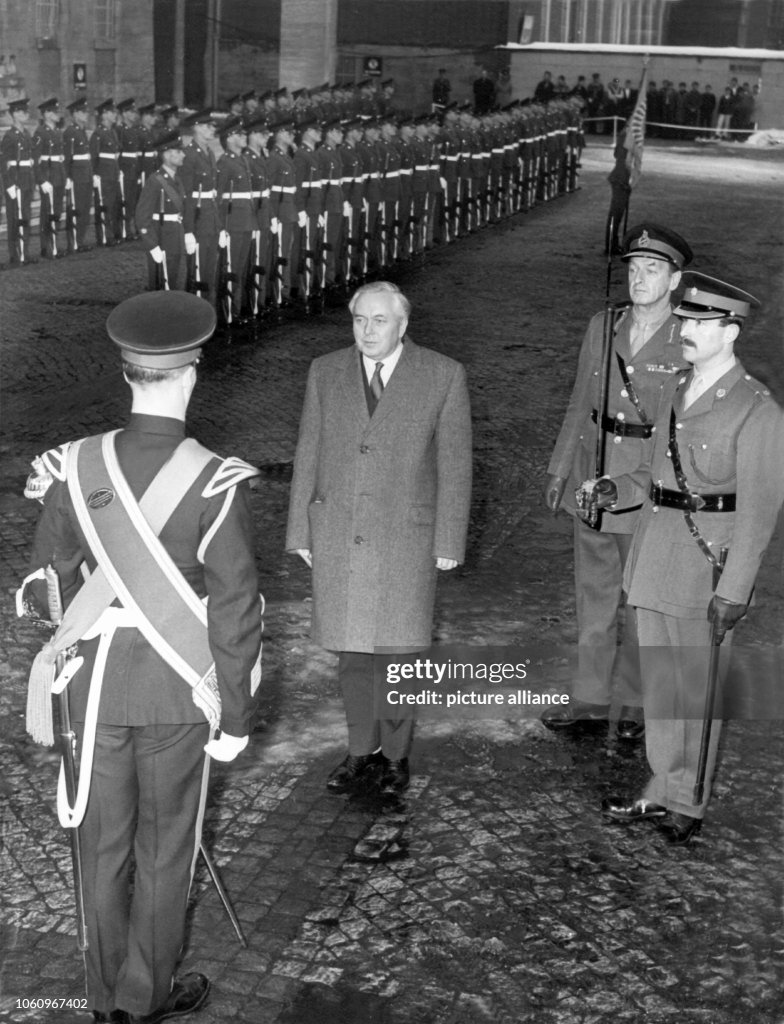
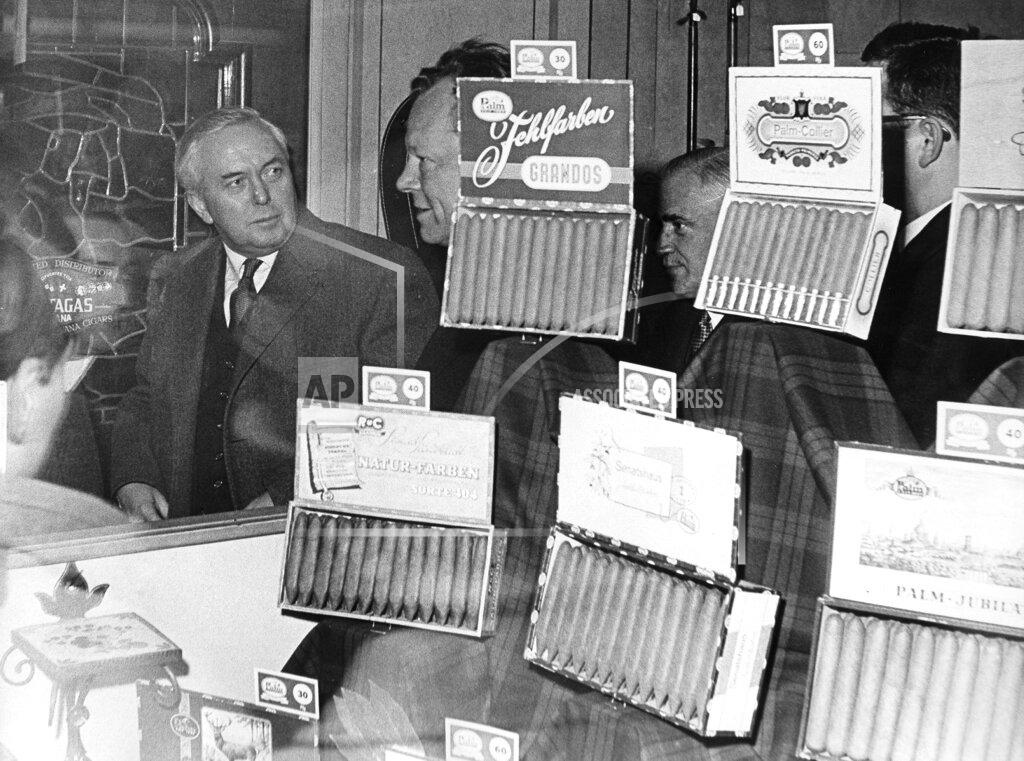
British Prime Minister Harold Wilson visited Berlin and vowed that Britain would defend the city in spite of worldwide commitments. Mr. Wilson, who arrived in Berlin at the start of a three-day visit to West Germany, made his remarks after touring the Communist-built wall that separates West Berlin from East Germany. In a policy statement at City Hall apparently aimed at paving the way for his talks tomorrow and Monday with Chancellor Ludwig Erhard in Bonn, the British Labor leader said that Britain, despite heavy defense burdens, was not considering a reduction of her commitments in Berlin.
While Harold Wilson confers in West Germany, political troubles are mounting for him and his Labor Government at home. Left-wing pressure against the Government’s support of United States policy in Vietnam is becoming more serious. The official view is that it can still easily be contained, but some are not sure. The Guardian said today that a number of developments suggested that the Government would not be able to “hold the line much longer” in Parliament. It predicted a real test in the House of Commons next week over Vietnam. Thus far Prime Minister Wilson has forestalled not only any open revolt within the Labor party on Vietnam but even a debate in the Commons. He has done so by saying that too much talk would damage whatever part Britain is able to play in working for peace.
Britain’s disarmament negotiator, Lord Chalfont, believes another round of East-West talks could produce an agreement to prevent the spread of nuclear weapons.
The adviser who inspired President Charles de Gaulle’s proposal for a return to the gold standard now speaks of “alternatives,” à possible French strategic retreat.
Tunisia’s President Habib Bourguiba broke with the leaders of the rest of the Arab nations in North Africa and the Middle East, and called for the recognition of Israel, within the borders that had been set by the United Nations, in 1947, for separate Jewish and Arab states, though “all it earned him was a violent campaign of hate and vilification.”
The Indonesian Government issued orders to American diplomats today aimed at keeping track of their travels in the country. The order requires all diplomatic personnel to report in advance any plans to travel inside Indonesia, whether the travel is personal or involves business. The order on the travel of American diplomats came after a disclosure by United States Embassy officials that Indonesian employees of the embassy had been called into the Indonesian Attorney General’s office and questioned about embassy activities. One Indonesian secretary received a crudely printed note calling on all Indonesian nationals to quit their jobs at the embassy.
Indonesia hosted the first Africa-Asia Islamic Conference (KIAA, Konferensi Islam Afrika-Asia), with 107 delegates from 33 nations traveling to Bandung. President Sukarno declared today that the spirit of Islam could flourish only if Asia and Africa were free from “imperialism and colonialism.”
Malaysia, harassed by Indonesian guerrilla attacks, announced Sunday acceptance of a $4 million military defense credit from the United States, according to Reuters.
Red Army General Nikolai F. Vatutin, leader of the Ukrainian Front, was declared a Hero of the Soviet Union, 21 years after his death.
Fayzulla Khodzhayev, who had served as the leader of the Uzbek Soviet Socialist Republic until his arrest in 1937 on orders of Soviet premier Joseph Stalin, was rehabilitated posthumously by the Soviet government, almost 27 years after he had been among the people executed after the “Trial of the Trotskyite and Rightist Bloc of 21.”
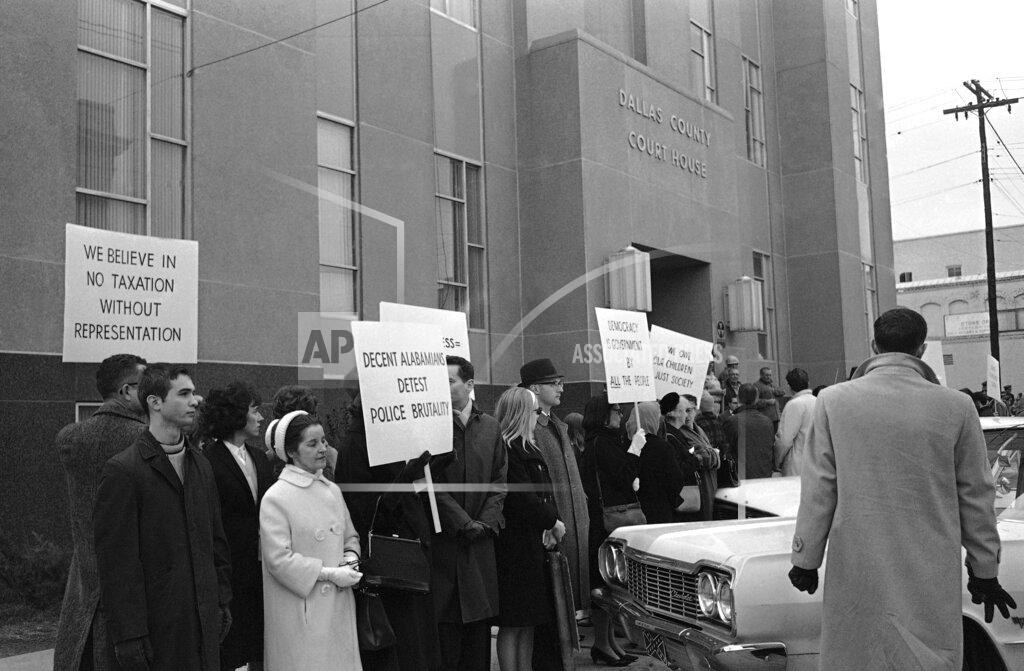
Seventy white Alabamians expressed their concern for the plight of Alabama Blacks in a public demonstration in Selma today. Observers said it was the first time an all-white group of Southerners had demonstrated in the streets for Black equality. The demonstrators marched 12 blocks to form a line in front of the Dallas County courthouse, the scene of repeated Black demonstrations in recent weeks, and immediately found themselves between 500 friendly Blacks and 100 menacing whites.
One of the white bystanders slugged a photographer. another knocked a stack of leaflets out of a demonstrator’s hands and two of them were arrested for disorderly conduct. The white bystanders, most of them sturdily built and roughly dressed, jeered and insulted the white pickets. The Blacks cheered the pickets and shouted encouragement. The police moved the white crowd back several times as it became more and more hostile. At the height of the tension, one white bystander yelled, “I think we ought to send them back to Birmingham.” Another bystander shook his head and answered, “Huh-uh. I think we ought to put them in the river, right now.” The Black bystanders were ignored.
The Rev. Joseph Ellwanger of Birmingham, the white pastor of a Lutheran Church for Blacks, led the demonstration. He read a statement on behalf of the group as he stood on the courthouse steps, flanked by sheriff’s deputies posed rigidly with an eye on the hostile white crowd. With his voice almost drowned out by taunts, Mr. Ellwanger read: “We, as white citizens of Alabama, have come to Selma today to tell the nation that there are white people in Alabama who will speak out against the events which have recently occurred in this and neighboring counties and towns.”
A wave of public-school desegregation has begun moving across the South, propelled by what one Southern educator this week called “that great equalizer-the Yankee dollar.” By that — and not without a trace of bitterness — he meant federal education grants, the millions and millions of dollars in federal money dispensed each year for everything from teachers’ salaries and classroom construction to science and foreign-language classes, vocational training, and special courses for the handicapped. To continue getting this money next year, Southern school systems will have to desegregate or at least make beginnings that move them beyond “tokenism.” So far, many school systems have indicated that they will push desegregation — not gladly, but of necessity.
One official of the United States Office of Education, Allen Lesser, said that “through negotiations, we hope to keep all our grants in force.” “We don’t want to take money away from anyone,” he said. “But each new application for a grant will have to include a satisfactory statement that segregation is being abolished, or it will simply not be approved.” A federal guideline memorandum warns specifically that “it is crucial to note that…. merely directing the admission of a few named [Negro] individuals, for example, without otherwise providing for desegregation of the system, will not suffice.” The guideline memorandum says that “no tersely stated or vague plan will be approved,” and goes on to caution that grade-a-year desegregation plans are of “questionable status.”
Hundreds of segregated school systems in the South have filed worthless statements of compliance with the 1964 U.S. Civil Rights Act.
The National Association for the Advancement of Colored People in New York threatened yesterday to hold demonstrations unless the Board of Education adopted what the N.A.A.C.P. characterized as a firm integration policy.
For the first time since they gave Barry Goldwater their Presidential nomination, the Republicans have regained the initiative on civil rights and are making headway in losing an anti-Black label.
Robert Welch, John Birch Society founder, accused Nobel Peace Prize winner Martin Luther King Jr. of being a “troublemaker.”
West Gulf Coast district longshoremen began returning to their jobs after voting to accept a new contract.
The Supreme Court is wrestling with the question of whether the draft law requirement that conscientious objectors have faith in a Supreme Being is constitutional.
The Labor Department took a major step today to pave the way for rapid disposal of any protests that may be filed with it over the outcome of the recent elections of the United Steelworkers of America.
Mrs. Alta Faubus, wife of Governor Orval E. Faubus, was hostess Wednesday to about 35 white and Negro leaders of the Little Rock area in a meeting at the Governor’s Mansion for a briefing on a Federally assisted program to help pre-school children prepare for entering school next fall.
First nonstop helicopter crossing of North America, by J.R. Willford. Commander James R. Williford and his crew took off from the U.S. Navy aircraft carrier USS Hornet on a record-setting non-stop helicopter flight across the country. The Sikorsky SH-3A Sea King helicopter was named “Dawdling Dromedary,” and Williford, Lieutenant David A. Beil, and Aviation Machinist Mate 1st Class Paul J. Bert began the journey with 1,690 gallons (6,397 liters) of fuel on board. A while after takeoff, the crew flew through the Guadalupe Pass between Carlsbad, New Mexico, and El Paso, Texas, and proceeded to shut down one of the SH-3A’s two turboshaft engines to reduce fuel consumption. They continued to fly on just one engine for 9.5 hours, only restarting the second engine as they approached the end of their flight over Jacksonville, Florida.
Frank Loesser’s musical “How to Succeed in Business Without Really Trying”, starring Robert Morse and Rudy Vallée, closes at 46th Street Theatre, NYC, after 1415 performances, 7 Tony Awards, and a Pulitzer Prize.
The Temptations’ single “My Girl” reaches #1 on the Billboard Pop Chart; written and produced by the Miracles members Smokey Robinson and Ronald White.
12th ACC Men’s Basketball Tournament: North Carolina State beats Duke, 91–85.
Born:
Tammy Liley, U.S. women’s volleyball mid blocker/captain (Olympic bronze medal, 1992), in Long Beach, California.
Died:
Herbert Morrison, 77, former Deputy Prime Minister of the United Kingdom (1945–51).
Jules Goux, 79, French auto racer (first European to win Indianapolis 500, 1913).
Margaret Dumont, 82, American film actress best known as the foil for Groucho Marx.





 History Diaries