
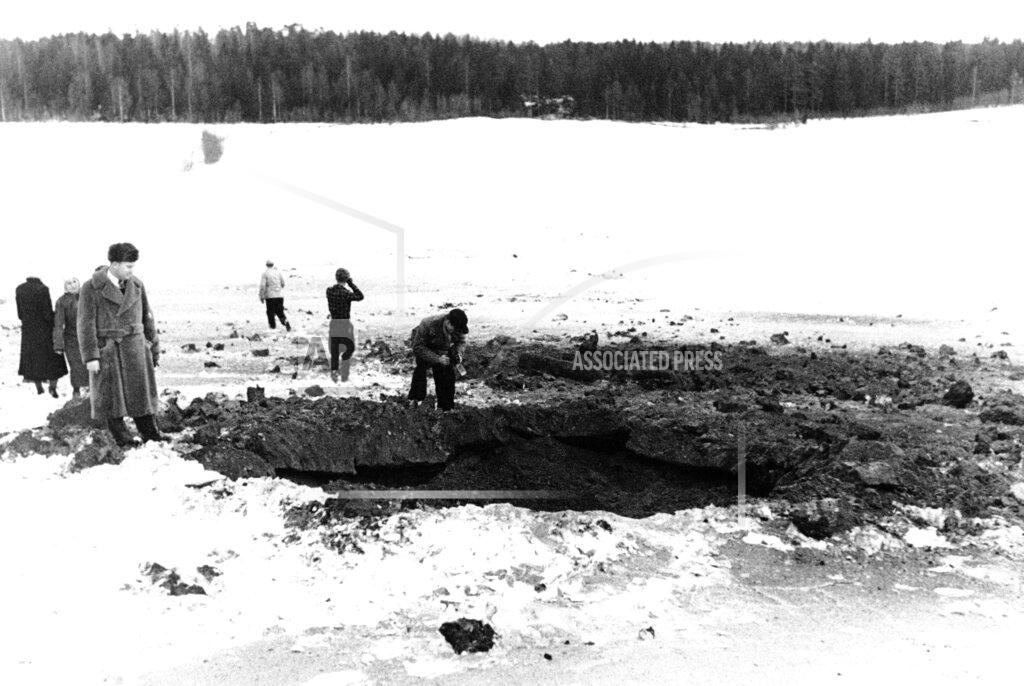
NKVD chief Lavrentiy Beria first proposed to execute all captive members of the Polish Officer Corps held in Soviet prison camps, such as the Kozelsk camp. He reports, “All of them are implacable enemies of Soviet power and full of hatred for the Soviet system.” Stalin among others soon sign an Order for the massacre at Katyn, Poland. Soviet agents will shoot 21,768 Polish military officers, intellectuals and priests who had been taken prisoner during the invasion. Between April and May some 25,700 (15,000) Polish citizens will be massacred by the Soviets in the Katyn and Miednoje (Mednoye) forests on the outskirts of Moscow and at Kharkov in western Russia (later Ukraine). Some 14,700 Polish officers are eventually identified by their uniforms when occupying German forces discover the bodies. Excavations of the sites began in 1994. 6,313 Polish officers were all shot in the back of the head near Mednoye. 9,000 Russians were also massacred at the site. Those who died at Katyn included an admiral, two generals, 24 colonels, 79 lieutenant colonels, 258 majors, 654 captains, 17 naval captains, 3,420 non-commissioned officers, seven chaplains, three landowners, a prince, 43 officials, 85 privates, 131 refugees, 20 university professors, 300 physicians; several hundred lawyers, engineers, and teachers; and more than 100 writers and journalists as well as about 200 pilots. In all, the NKVD executed almost half the Polish officer corps. Six members of the Soviet Politburo — Iosef Stalin, Vyacheslav Molotov, Lazar Kaganovich, Kliment Voroshilov, Anastas Mikoyan, and Mikhail Kalinin, signed an order to execute 25,700 Polish “nationalists and counterrevolutionaries” kept at camps and prisons in occupied western Ukraine and Belarus.
The Soviet 28th Corps gains a firm beachhead across frozen Viipuri Bay.
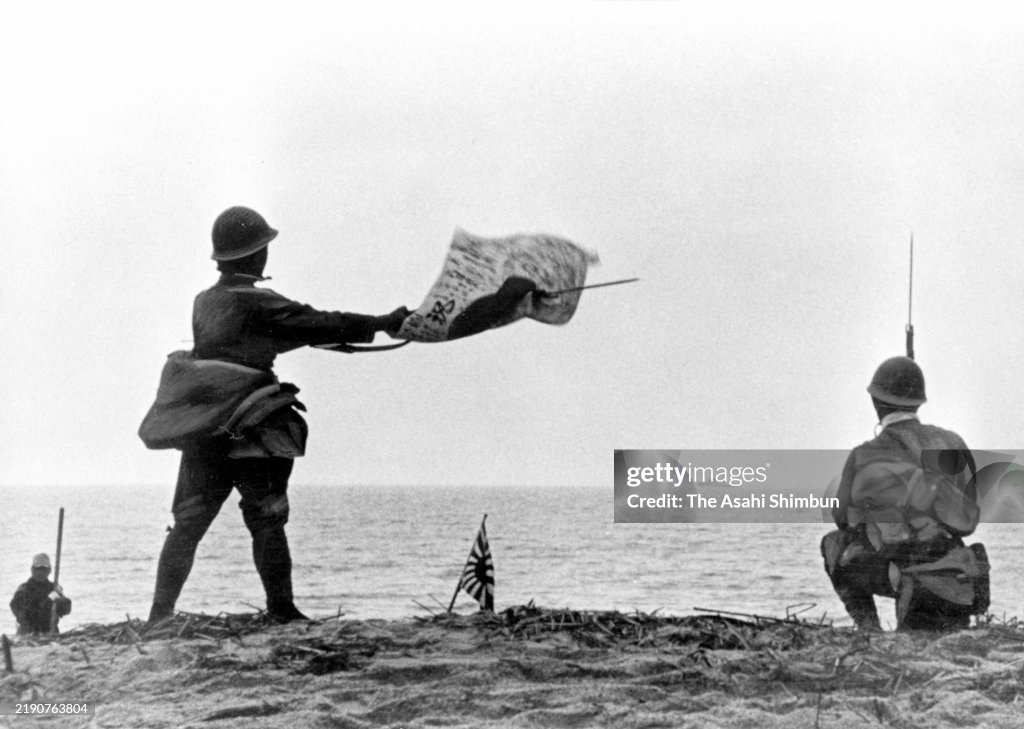
Despite heavy casualties delivered by the Finnish Air Force, Soviet forces captured more islands in Viipuri Bay in Finland and asserted more pressure on the city of Viipuri. The Finnish defenders of Viipuri, after battling all day yesterday with Russians attacking across the islands of the Bay of Viipuri, were still locked in combat in this strategic area, the Finnish high command announced in its daily communique. There is fierce fighting on the islands of Ravansaari, Turkinsaari and Neulasaari in Viipurinlahti Bay. On the western shore of the bay the Soviets are advancing in Vilaniemi and Häränpäänniemi. The invading Soviets were attempting to encircle the city, long deserted by civilians and considered virtually lost even by the Finns themselves. The Soviet military command announced early today that the Red Army troops advancing over frozen Viipuri Bay had occupied several points on the west coast in their encirclement of the city of Viipuri and had seized long range naval guns and much other war material in Trongsund fortress on Uuraansaari island.
The counterattack to retake the church hill at Äyräpää is delayed by the late arrival of the Finnish detachment at the starting position. The launch of the operation is put back until daylight. The Finnish attack founders with heavy losses in the face of intense enemy fire. During the half-hour attack up the church hill, the attacking Finnish soldiers from the Ostrobothnia municipality of Nurmo lose 40 dead and 30 wounded, some fatally. The hill remains in enemy hands.
During the course of the morning the Russians occupy Vasikkasaari.
The Finns engage in heavy attacks against Soviet troops in the Ristniemi-Tuppura sector. Two Soviet Tupolev SB-2 bombers collide near Kymi, three crew members killed. Two Polikarpov I-153 “Chaika” biplane fighters force-land behind Finnish lines.
The town of Mikkeli, the home of General Headquarters, is heavily bombed and 33 civilians killed.
Soviet aircraft attack Helsinki, Finland.
Soviet minelayer Murman conducts operations off Petsamo, Finland.
General Headquarters sets up an office to coordinate recruitment of foreign volunteers.
The deadline for Finland to formally appeal for help from the Western Allies has expired. The Soviet Union renewed its peace offer, and this time it was seriously considered by Finland. The Finns conclude that the British and French promises of military aid are valueless and, therefore, the government accepts the Soviet offer to reopen negotiations for a truce and for the cession of border areas.
After a heated debate, the Finnish Government decided to accept the Soviet Union’s preconditions for opening peace talks. Moscow announced its intention to stick to its demands that Finland would have to cede Viipuri and Sortavala.
The Soviet Government formally apologized to Sweden over the bombing of the town of Pajala on February 21, 1940.
The first train of Finnish child evacuees arrives in Copenhagen with 93 children on board.
A French ambulance arrives in Finland.
Canada promises to send 1,000 volunteers to fight with the Finns.
The British government announces a £300,000,000 3% War Loan to aid Finland.
In the English Channel, the Royal Navy seized seven Italian ships leaving Germany loaded with coal. Six Italian ships carrying cargoes of German coal were seized in mid-Channel today after a warning that Britain will intern all German coal found at sea. The ships are anchored off the Kent coast while the government decides whether their cargoes should be unloaded. Four more Italian colliers sailed into Rotterdam today, and a further six are loading with Rhineland coal destined for Italian ports. All are likely to be seized following an announcement by the Ministry of Economic Warfare that German coal exported to any foreign port would be regarded as contraband. Severe weather in Germany has reduced normal supplies of coal to Italy, where rationing is now in force. Many Italians believe that the seizure of the ships is a deliberate attempt to force them to buy British coal on British terms. British sources are insisting that the blockade of German produce applies to all neutral ships and deny discrimination against Italy.
The British order that German coal shipments bound for Italy are liable to confiscation has aroused official indignation in Berlin that finds expression in the Foreign Office mouthpiece tonight.
Dr. Hjalmar Schacht, Hitler’s former Economic Minister but now a member of the resistance, has a meeting with Sumner Welles. Schacht, swearing Welles to secrecy, tells him: “A movement is now underway, by leading generals, to depose Hitler. Hitler is the greatest of all liars, a criminal genius.” He also tells Welles that atrocities in Poland are “worse than imagined.”
German troops capture a British outpost in the Maginot Line (2 killed, 16 taken prisoner). The outpost is later recaptured.
Skirmishing between German and French forces along the Maginot Line continues.
Hitler meets with senior commanders regarding invasion of Denmark and Norway.
Hermann Göring complained that he was not consulted for the planning of the Norwegian invasion.
General Kleist takes command of German Panzer Group Kleist.
Moscow’s food supply is “worse than at any time since the famine of 1933,” Spencer Williams, secretary of the American-Russian Chamber of Commerce, said tonight in an interview broadcast to the United States.
An admission that he had flown to Moscow and seen Soviet officials during a recent trip from Chungking previously described as a visit to Sinkiang was made in a statement released by Sir Stafford Cripps, Left-Wing British Laborite.
Poland’s miniature exiled Parliament met today for its first business session in Angers, France, the provisional Polish capital, in the hall of a provincial hotel.
A nine-hour curfew was imposed on the Jewish sections of Jerusalem today following Jewish demonstrations and stone-throwing in the city after the funeral of a Jewish youth who had been fatally injured in previous disturbances.
RAF Bomber Command reconnaissance of German naval bases.
The German U-boat U-17, commanded by Kapitänleutnant Udo Behrens, torpedoed and sank the Dutch steam merchant Grutto 20 miles off Ostend, West Flanders, Belgium (51°41′N 2°47′E). At 2015, The Grutto (Master B. Kuiper) was spotted by U-17, heading ENE with all navigation lights burning. At 2040, a torpedo was fired, which missed. At 2058, a second torpedo was fired and struck the ship amidships, breaking her in two. The stern section sank within one minute and the bow followed six minutes later. All 18 of her crew perished. In the early morning of 6 March, a ship of the Dutch Batavier-line spotted wreckage and a raft marked Grutto 7.5 miles SW of Thornbank. The Belgian pilot-boat #8 also reported this raft and later picked up debris two miles west of the Belgian lightship Wandelaar. This wreckage was later identified as belonging to Grutto. The Belgian Pilot boat #5 salvaged the raft and delivered it to Oostende. On 29 March, the bodies of two crewmen washed ashore on the Dutch coast, the body of sailor B. van der Spek near Callantsoog and the one of first steerman R. Teensma on Texel. Their families identified both. The 920-ton Grutto was carrying general cargo and was bound for London, England.
Convoy OA.104 departed Southend escorted by sloop HMS Fowey from the 5th to 7th.
Convoy OB.104 departed Liverpool escorted by destroyers HMS Mackay and HMS Vanquisher from the 5th to 8th.
Convoy SA.32 departed Southampton with two steamers, escorted by sloops HMS Foxglove and HMS Rosemary, and arrived at Brest on the 7th.
Convoy MT.24 departed Methil, and arrived in the Tyne the next day.
Convoy OG.21F was formed from two convoys – (1) OA.103GF, which departed Southend with sloop HMS Enchantress, and was joined by sloop HMS Sandwich the next day, and (2) OB.103GF of 48 ships, which departed Liverpool escorted by destroyers HMS Whirlwind and HMS Volunteer, which remained with the combined convoy from the 5th to 6th, when they detached to convoy HG.21F. HMS Sandwich and HMS Enchantress were with OG.21F from the 5th to 11th, when they were temporarily attached to the 13th Destroyer Flotilla as replacements for destroyers HMS Watchman and HMS Vortigern which proceeded to England for leave. Destroyer HMS Douglas joined on the 9th and remained with the convoy until its arrival at Gibraltar on the 11th.
Convoy FN.112 departed Southend escorted by sloop HMS Egret and destroyer HMS Whitley, and arrived in the Tyne on the 7th. Convoys FN.113 and FS.113 were cancelled.
Convoy HX.25 departed Halifax at 0800 escorted by Canadian destroyers HMCS Restigouche and HMCS St Laurent, which were detached on the 6th. Armed merchant cruiser HMS Laconia was in the escort and detached on the 18th. At 0650/7th, the convoy was joined by battleship HMS Royal Sovereign, returning to Halifax after escorting HX.22. Destroyers HMS Antelope, HMS Mackay, HMS Vanessa and HMS Wolverine escorted the convoy from the 18th to 20th when it arrived at Liverpool.
Convoy SL.23 departed Freetown escorted by armed merchant cruiser HMS Pretoria Castle. On the 19th, convoys SL.23 and SLF.23 merged and armed merchant cruiser HMS Jervis Bay joined the escort, relieving HMS Pretoria Castle. HMS Jervis Bay was relieved on the 20th by destroyer HMS Whitshed which was joined on the 22nd by armed merchant cruiser HMS Esperance Bay. The convoy arrived on the 22nd.
The War at Sea, Tuesday, 5 March 1940 (naval-history.net)
Light cruiser NEWCASTLE arrived at Scapa Flow after Northern Patrol.
Destroyers HARDY, HOSTILE, PUNJABI, FORTUNE and FOXHOUND departed Greenock to screen armed merchant cruisers SCOTSTOUN, LETITIA, and WORCESTERSHIRE for full calibre firings. SCOTSTOUN ten proceeded to her patrol area, while LETITIA arrived back at 1500, WORCESTERSHIRE at 1700, and the destroyers at 2010. WORCESTERSHIRE and LETITIA were returning from Northern Patrol at the time.
Destroyer IVANHOE arrived at Rosyth from Scapa Flow, via Aberdeen, for boiler cleaning.
Destroyers JAVELIN and WOOLSTON departed the Humber escorting base ship DUNLUCE CASTLE for Rosyth, arriving there on the 6th.
Destroyer WANDERER arrived at Liverpool at 1030 with urgent defects, which were corrected and she was able to sail later that day. She attacked a contact in St Georges Channel in 52 01N, 6 27W, which was later determined to be non-submarine.
Armed merchant cruisers SCOTSTOUN and MALOJA departed the Clyde on Northern Patrol. Both were given air escort.
Submarine TRITON arrived at Rosyth after patrol.
Submarine SEALION departed Harwich on patrol.
Submarine NARWHAL arrived at Scapa Flow for direction finding trials.
Submarine THISTLE and the Polish ORP ORZEL departed Rosyth for patrol in the vicinity of Devil’s Hole.
Submarine TRITON was docked at Rosyth for reballasting.
Convoy OA.104 departed Southend escorted by sloop FOWEY from the 5th to 7th.
Convoy OB.104 departed Liverpool escorted by destroyers MACKAY and VANQUISHER from the 5th to 8th.
Convoy SA.32 departed Southampton with two steamers, escorted by sloops FOXGLOVE and ROSEMARY, and arrived at Brest on the 7th.
Convoy MT.24 departed Methil, and arrived in the Tyne the next day.
Convoy OG.21F was formed from two convoys — (1) OA.103GF, which departed Southend with sloop ENCHANTRESS, and was joined by sloop SANDWICH the next day, and (2) OB.103GF of 48 ships, which departed Liverpool escorted by destroyers WHIRLWIND and VOLUNTEER, which remained with the combined convoy from the 5th to 6th, when they detached to convoy HG.21F. SANDWICH and ENCHANTRESS were with OG.21F from the 5th to 11th, when they were temporarily attached to the 13th Destroyer Flotilla as replacements for destroyers WATCHMAN and VORTIGERN which proceeded to England for leave. Destroyer DOUGLAS joined on the 9th and remained with the convoy until its arrival at Gibraltar on the 11th.
Convoy FN.112 departed Southend escorted by sloop EGRET and destroyer WHITLEY, and arrived in the Tyne on the 7th. Convoys FN.113 and FS.113 were cancelled.
Destroyer TARTAR was boiler cleaning and destroyer KIMBERLEY was shifting her asdic dome alongside destroyer depot ship WOOLWICH at the Tail of the Bank.
Owing to reports of floating mines 15 miles SW and SE of Beachy Head, sloop ABERDEEN with convoy HX.20 was ordered southward of the area.
Steamer SCALTSCAR lost her propeller and was drifting on shore 10 miles off Saltburn Pier. Destroyer VIVIEN stood by until a tug arrived.
U-17 sank Dutch steamer GRUTTO (920grt) in 51 41N, 02 47E.
U-52 and U-38 departed Kiel on the 2nd and Wilhelmshaven on the 9th respectively for patrol, but in the Atlantic were recalled, and with U-30, U-43, U-44, U-46, U-47, U-49, and U-51 were ordered to stations on both sides of the Orkneys and Shetlands to operate against British naval units. U-30, U-46, U-47, and U-51 departed Wilhelmshaven on the 11th, and U-43 and U-44 on the 13th, while U-49 departed Kiel on the 16th.
Convoy HX.25 departed Halifax at 0800 escorted by Canadian destroyers HMCS RESTIGOUCHE and HMCS ST LAURENT, which were detached on the 6th. Armed merchant cruiser LACONIA was in the escort and detached on the 18th. At 0650/7th, the convoy was joined by battleship ROYAL SOVEREIGN, returning to Halifax after escorting HX.22. Destroyers ANTELOPE, MACKAY, VANESSA, and WOLVERINE escorted the convoy from the 18th to 20th when it arrived at Liverpool.
Cruiser HAWKINS departed Montevideo for Port Stanley. After a short refit, she departed on the 15th for the Plate area.
Light cruiser COLOMBO arrived at Gibraltar from England, and sailed on the 6th for Malta.
Convoy SL.23 departed Freetown escorted by armed merchant cruiser PRETORIA CASTLE. On the 19th, convoys SL.23 and SLF.23 merged and armed merchant cruiser JERVIS BAY joined the escort, relieving PRETORIA CASTLE. JERVIS BAY was relieved on the 20th by destroyer WHITSHED which was joined on the 22nd by armed merchant cruiser ESPERANCE BAY. The convoy arrived on the 22nd.
Light cruiser GLOUCESTER arrived at Colombo.
President Roosevelt, at a Washington press conference, expressed approval of a proposed extension of the Hatch Act to cover State employees paid in part from federal funds and declined to comment upon newspaper articles purporting to give his attitude toward a third term. He sent to the Senate the nomination of Herbert F. Goodrich to be judge of the Third Circuit Court of Appeals and signed the bill making the Kings Canyon area in California a national park.
The Senate debated amendments to the Hatch act and recessed at 5:03 PM until noon tomorrow. The Judiciary Committee ended hearings on the Anti-lynching bill and the Commerce Committee postponed action on the Tobey resolution to eliminate certain questions from the census.
The House considered the Interior Department Appropriation Bill and adjourned at 5:12 PM until noon tomorrow.
As the Senate began debate today on a bill by Senator Hatch to extend the present prohibitions against “pernicious political activity” by Federal job holders, President Roosevelt stated at a press conference that he endorsed the principles of the proposal. The Hatch Act applies to Federal Job holders below the rank of policymaking officials. The extension would embrace equivalent State employees paid in whole or in part with Federal funds, principally employees of States whose jobs depend on regular Federal contributions to highway funds. It would reach many others, however. The President said it always had seemed to him that if the Hatch Act applies to one type of Federal employee who receives his whole salary from Federal funds, it should apply to those who receive part of their pay from the Federal Treasury.
The Senate debate developed a sharp difference of opinion. Not only did the Democratic members separate on the question of extending the act, but Senator Miller, Democrat of Arkansas, supported by Senator Minton, the majority whip, attempted to amend the original act and the amending bill to remove restrictions on political activities by job holders. His effort was to retain in the law only those provisions that protect them from assessment and coercion. When the Senate recessed, the bill apparently had the support of Senator Barkley, the majority leader, and had been openly endorsed by Senator Chandler, while Senators Pepper, Minton, and Miller were leading the fight against the bill. Senator Hatch served notice that he would vote against his pending bill if the Senate should approve the Miller amendment.
President Roosevelt adhered to his policy of strict public silence on the third term question today despite the heaviest barrage of press conference questioning in more than a year. President Roosevelt, refusing to give an inkling of his 1940 political plans, turned a deaf ear today to a published and much-discussed report here that he would support Secretary Hull for the Democratic Presidential nomination and that he had advised against giving Postmaster General Farley second place on the ticket because of his religious affiliation. In the face of the most intensive quizzing on his political intentions in months, the President steadfastly maintained that he had not read the report and that he had discussed it only in a joking way with Senator Byrnes in a telephone conversation, during which the South Carolinian advised him to make a statement on it so as to clarify the situation.
The full force of Administration influence was placed by President Roosevelt today behind the schedule of questions proposed to be included in the 1940 census after a Senate committee had deferred action on the Tobey resolution to eliminate from the schedule all inquiries bearing upon individual income. Mr. Roosevelt asserted that those opposing the income and other questions during congressional debate were motivated entirely by political considerations and that everyone, in and out of Congress, recognized the fact.
He readily agreed to a press conference request for permission to quote him directly on his remarks, which were as follows: “The whole thing is an obviously political move and nothing else. Everybody accredited to Congress knows that the motive for the opposition is political.” With reference to the Senate committee’s action in postponing a decision on the Tobey resolution by a vote of ten to five, a reporter asked Mr. Roosevelt whether he would comment on the controversy stirred up by the income questions in the census schedule.
After pondering the question a moment, the President replied substantially as follows: Probably no one in the press conference would want to hide from the United States Government — as distinguished from their neighbors — any information it sought for purely statistical purposes. Take the question of divorce. A person might not want his neighbor to know that he had been divorced, but the Federal Government doesn’t care a rap about individual identities; it is concerned only with trends.
In asking the individual citizen about such matters, the census taker is not gathering the information for the benefit of his neighbors but for the federal government, and the same thing might be said of questions concerning individual incomes. In addition, all such information is kept confidential by the government. The President’s remarks on the controversy were given in a casual manner and were not without their humorous side, because he had said at the outset that, personally, he had nothing to hide from the federal government.
President Roosevelt signed the bill to create Kings Canyon National Park, which added the original General Grant National Park to over 400,000 acres (160,000 ha) of the High Sierra above Cedar Grove.
On Long Island, as well as in New Jersey, huge oaks and other trees that had survived the hurricane of 1938 split down the middle or broke off near the base in yesterday’s winter storm, falling across highways and dragging telephone and telegraph wires with them. In the Bronx and upper Manhattan, it was estimated that 65,000 trees thus came down.
An African-American Communist witness testifying before the Senate Judiciary Subcommittee on the anti-lynching bill was threatened with expulsion today for questioning the honor and integrity of Senators and Congressmen. Senator Frederick Van Nuys (D-Indiana) chairman of the subcommittee and co-author of the bill, told the witness, Benjamin J. Davis Jr., member of the editorial board of the Daily Worker, New York Communist newspaper, that Communists have harmed the bill more than any other group. Van Nuys instructed the committee reporter to expunge Davis’ angry remarks that Vice President John N. Garner was “an evil old labor-baiter,” and a reference to the “shameful tactics of Senator (Tom) Connally.”
The Jewish Labor Committee, representing about 500,000 members of Jewish labor unions in this country, requested the Labor party in England by cable last night to oppose the recent British restriction of Jewish land purchases in Palestine. The subject is scheduled for discussion in the House of Commons tomorrow.
Brigadier General H. H. Arnold, Chief of the Army Air Corps, complained today to the House Military Affairs Committee that the defense forces have to pay too much for airplanes.
Charley Gehringer, veteran second baseman of the Tigers, said today that he may retire from baseball unless a back iniury heals.
Joe DiMaggio came to an agreement with the New York Yankees after holding out for a salary increase.
The U.S. Government announced today the sale to Brazil of ninety 6-inch guns from its stocks of World War munitions and weapons no longer regarded as fitted for use by the American Army. The weapons will be added to the Brazilian coast defenses.
Communist Chinese troops laid siege to Yanchuan County seat, Shaanxi Province, China; the local paramilitary forces loyal to the Nationalists would quickly surrender.
Takao Saito’s expulsion from the Diet (Japanese Parliament) for adopting an ironical attitude toward Japan’s “holy war” became certain last night. Mr. Saito, who is prepared for the worst, declares he will run again in April when a general election will be held.
The Japanese Embassy in Washington said in a statement today that Japan, instead of following a policy of deliberately driving foreign interests out of China, intended to practice due regard for the “fair and just rights and interests of the foreign powers” in that country.
Japan, although no longer a member of the League of Nations, has recently submitted to the League an annual report for the calendar year 1938 on her administration of the former German islands of the Caroline, Marshall and Mariana Islands that she holds under League mandate.
Dow Jones Industrial Average: 146.89 (+0.46)
Born:
Graham McRae, New Zealand auto racer (Tasman Formula 5000 Series 1971, 72, 73; L&M Continental 5000 C’ship 1972), in Wellington, New Zealand (d. 2021).
Ken Irvine, Australian rugby league HOF winger (31 Tests; NSW 24 games; North Sydney RLFC, Manly-Warringah RLFC; record first-grade career tries–212), in Sydney, New South Wales, Australia (d. 1990).
Malcolm Hebden, English actor (“Coronation Street”), in Chester, England, United Kingdom.
Mary Rose Oakar, American politician (Rep-D-Ohio 1977-93), in Cleveland, Ohio.
Tetsuya Noda, Japanese artist, photographer and printmaker (Diary series), in Uki, Japan.
Died:
Maxine Elliott, 72, American actress and businesswoman.
Cai Yuanpei, 72, Chinese educator and philosopher.
Naval Construction:
The Royal Navy Dance-class ASW trawler HMS Sarabande (T 125) is laid down by A & J Inglis Ltd. (Glasgow, Scotland); completed by Aitchison Blair.
The Royal Navy “P”-class destroyer HMS Pathfinder (G 10) is laid down by Hawthorn Leslie & Co. (Hebburn-on-Tyne, U.K.)
The Royal Canadian Navy armed patrol yacht HMCS Sans Peur (Z 02) is commissioned. Her first commanding officer is A/Lieutenant Commander William Charles Halliday, RCNR.
The U.S. Navy Sims-class destroyer USS Morris (DD-417) is commissioned. Her first commanding officer is Lieutenant Commander Harry Bean Jarrett, USN.




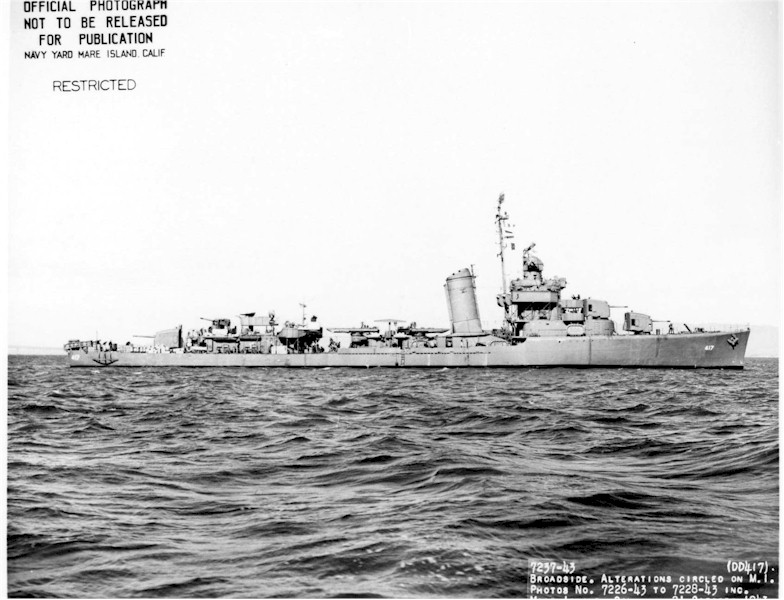
Morris, flagship of Destroyer Squadron 2 (DesRon 2), followed her shakedown with routine training schedules until the summer of 1941 when she joined the North Atlantic Patrol. With the entry of the United States into World War II, she entered Charleston Navy Yard, where she was equipped with the first fire control radar for a destroyer. By 3 January 1942, she was underway for Pearl Harbor, rejoining her squadron there at the end of February.
Morris fought in many of the major Pacific battles of World War II, including Coral Sea, Guadalcanal, Attu and Kiska, Hollandia, Morotai, Leyte Gulf, Luzon, and Okinawa.
Decommissioned 9 November 1945. Stricken 28 November 1945. Sold 2 August 1947 and broken up for scrap.
Morris received 15 battle stars for her action in World War II, placing her among the most decorated US Naval vessels of World War II.
https://www.history.navy.mil/research/histories/ship-histories/danfs/m/morris-vii.html
 History Diaries