Cambodian insurgents brought captured American-made howitzers to bear on the airport that is Phnom Penh’s last remaining link with the outside world, supplementing the scatter-shot rockets with more accurate fire. Although the airport was not shut, the new weaponry raised serious concern at the United States Embassy and the Cambodian command. An American DC‐8 was slightly damaged by rocket fire at dusk Wednesday, shortly after arriving at Pochentong from Saigon with a cargo of rice, American officials in the South Vietnamese capital reported. They said the plane, which was chartered by the United States Government, was able to return to Saigon safely.
By last night, more than 35 shells had fallen on the airport, about five miles west of the center of Phnom Penh. Six were identified as artillery rounds. The rest were the usual shells, which fell on the runways, around the terminal, in the parking lot and on a road, kept passengers and ground crews scrambling for cover. One person was reported killed. The insurgents’ use of captured American‐made 105‐mm. guns emplaced northwest of the airport raised concern at the United States Embassy and the Cambodian command.
The insurgents in previous offensives severed highway supply lines to Thailand, South Vietnam and the sea. In this dry‐season offensive, they have used mines and heavy guns to cut the Mekong River route, which used to bring in 80 percent of the supplies. Phnom Penh, a refugee-swollen city of over two million, has been kept alive by an American airlift, bringing military supplies from Thailand and rice from Saigon. On Tuesday, a typical day, cargo planes made 46 flights, carrying at least 1,300 tons of supplies. On the civilian side of the airport, flights were disrupted. No officials could be found to explain what the schedules were. By late afternoon, the domestic terminal was deserted except for a few guards in steel helmets and flak jackets. The airport and its environs have been bombarded regularly by rockets, many shells have been falling on a suburban town and market about a mile away, inflicting casualties.
Phnom Penh itself has been struck daily too, in an apparent effort to terrify and demoralize the population. In all, about 1,000 rockets have fallen on Phnom Penh and the airport area in the nine weeks of the offensive, killing more than 150 people and wounding nearly 600. According to military experts, there was one possibly hopeful aspect about the use of artillery. The experts say that, unlike rocket launchers, artillery pieces can be spotted from the air when they fire their shells and can be destroyed by accurate bombing. Whether the Cambodian air force can do this remains to be seen.
Meanwhile, the besieged town of Neak Luong, the Government’s last major position on the lower Mekong, 38 miles from the capital, came under increased pressure as Government troops lost several posts they had been clinging to on the west bank of the river, opposite the town. In Siem Reap, a provincial capital about 200 miles northwest of Phnom Penh, student riots erupted in protest against soaring prices.
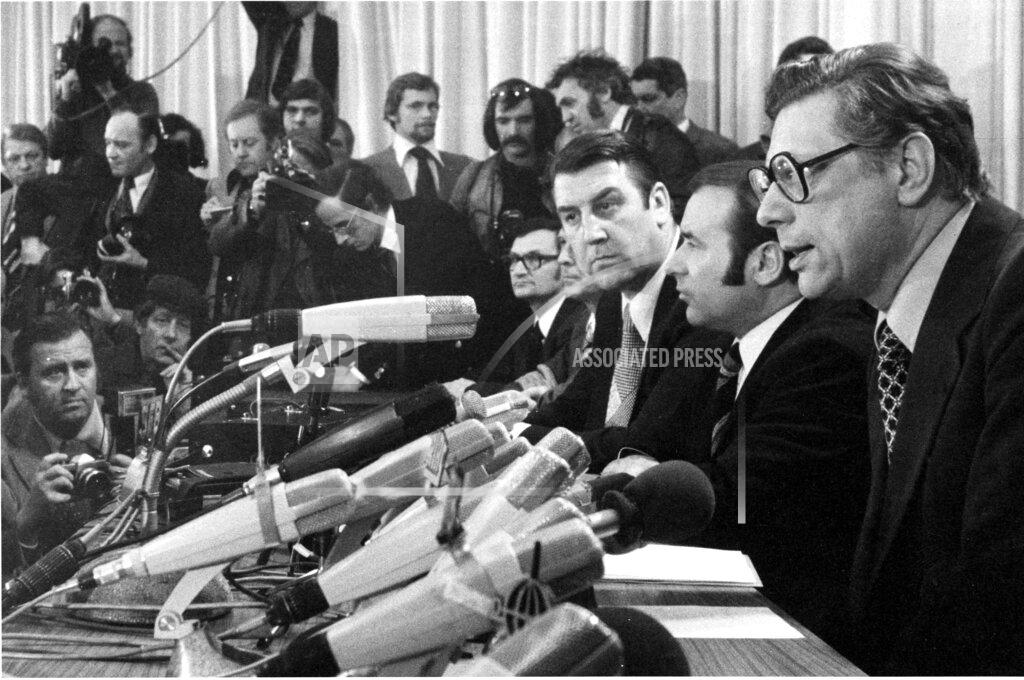
Premier Long Boret said at a news conference that neither President Lon Nol nor anyone else in the Government would step down unless the insurgents gave a guarantee that such a move would lead to peace talks. The remark appeared directed at speculation, set off by the American Embassy last weekend during a visit by a six‐member Congressional delegation, that Marshal Lon Nol was willing to step down for the cause of peace. The Premier also seemed to dispute a prediction by the White House a week ago that if Congress did not grant additional military aid, Phnom Penh would fall “in less than a month.” Asked whether he agreed with the President’s assessment, Mr. Long Boret said: “I would not say that Phnom Penh would fall, but there would be more bloodshed.”
Secretary of Defense James Schlesinger said that the United States would have to reassess its military airlift into Cambodia if the Phnom Penh government could not protect the airport adequately. Officials said privately that if Cambodian troops could not or would not force insurgents out of artillery and rocket range of the airport, there was little hope that the government could survive through United States military aid. The helicopter carrier USS Okinawa was stationed off the coast to evacuate Americans if necessary.
Mr. Schlesinger made the comment to reporters shortly after a Pentagon‐chartered DC‐8 transport carrying rice was hit by shrapnel from gunfire directed by the Communist‐led insurgents at the Pochentong airport outside Phnom Penh. After the incident — the first time an American plane has been hit during the five‐month airlift — flights were halted for the few remaining hours of daylight. Airlift flights are not normally conducted during the night. The airlift is now the Cambodian Government’s sole source of military supplies. From the Comments of Mr. Schlesinger and other Pentagon officials, however, it was clear that the feasibility of continuing the airlift of some 45 flights a day was being weighed in view of the deteriorating military situation around Phanom Penh.
Mr. Schlesinger said it was “incumbent” on the Cambodian Government “to provide reasonable security for the Pochentong airport.” If Phnom Penh forces are unable to provide such security, he said, “we will have to consider our policies in that context.” Privately, defense officials were expressing dismay and discouragement at the unwillingness or inability of the Cambodian Government’s troops to push insurgent forces out of artillery and rocket range of the airport. The attitude of these officials was that if Government forces were unable to take this basic military step, then there was little hope for the survival of the Government of President Lon Nol through emergency military aid from the United States.
Mr. Schlesinger said that the United States “would be prepared to use marines to extricate Americans if the need arises.” He said he could not answer a question as to how close the United States was to evacuating American civilians. The stationing of the carrier with the Marine battalion — about 800 men — in the gulf arouses suspicions among some members of Congress, including the Senate majority leader, Mike Mansfield, that the Administration was looking for a pretext, such as the wounding of an American citizen, to send in a Marine detachment as symbolic support for the Lon Nol Government. “If the situation is so dangerous, why don’t they start evacuating them now by air?” Senator Mansfield asked in an interview. Defense Department officials insisted that the Marines would be used only as a last resort and said that the preferred method of evacuation would be by civilian airplane.
United States support for the Cambodian Government will prolong the war for several months but can not prevent victory of the insurgents, Prince Sihanouk declared in a message received here by T. D. Allman, a writer on Southeast Asia. “As for compromise or negotiations,” the Prince said, “Henry Kissinger himself, who is intelligent but intellectually dishonest, does not believe in them, does not know their meaning.”
A Chinese military delegation has made a public appearance in Hanoi, according to Western analysts.
Two American travelers accused of espionage by the Communist-led Pathet Lao were expelled from Laos today under a Government order banning “hippies,” a police spokesman announced.
Soviet and U.S. delegations talked for 95 minutes in Geneva in quickening negotiations for a new agreement to limit the numbers of their countries’ offensive nuclear weapons. Expert teams headed by Soviet Dep. Foreign Minister Vladimir Semoynov and U.S. Ambassador-at-large U. Alexis Johnson agreed to meet again Friday — their third working session this week, conference sources said.
Secretary of State Kissinger arrived in London late tonight on his way to the Middle East, where he hopes to arrange a new Sinai agreement between Egypt and Israel. At the invitation of British Forgign Secretary, James Callaghan, Mr. Kissinger will spend most of tomorrow in the Welsh city of Cardiff, where Mr. Callaghan and George Thomas, a deputy speaker of the House of Commons, will receive the civic honor, Freeman of the City. Enroute to London from Washington aboard Mr. Kissingers Air Force jet, newsmen were told that while the Secretary was generally optimistic about the prospects for his latest efforts at Middle East diplomacy, he had no certainty of success. The Middle East phase of this trip begins tomorrow night when he is due in Aswan, Egypt, to confer with President Anwar el‐Sadat. He will probably stop in Brussels Friday morning to confer with the Greek Foreign Minister, Dimitrios Bitsios, on the possibilities of resuming negotiations between the Greek and Turkish Cypriotes to resolve the Cyprus crisis.
U.S. Ambassador to Turkey William B. Macomber Jr. urged members of the Senate Foreign Relations Committee to support legislation rescinding the cutoff of military aid to Turkey imposed by Congress effective last February 5. Turkey, he said, feels it is being “humiliated and bullied” by a long-term ally, and the cutoff is having the opposite effect from its objective of encouraging a Greek-Turkish settlement on Cyprus.
Sources close to both the Official wing of the Irish Republican Army and the breakaway Irish Republican Socialist Party said they were optimistic about a settlement. The outlook in the vicious feud between the two factions that has claimed two lives in recent weeks changed suddenly after Thomas McGiolla, president of the Official Sinn Fein, political wing of the IRA, said he would put representatives of the IRSP in touch with IRA chiefs in Belfast with a view to arranging peace talks.
The cause of last Friday’s 41-death London subway disaster may never be known. An autopsy on the driver has ruled out a heart attack or other illness. The transit authority, London Transport, already has said it seemed that the brakes had never been applied as the train roared through Moorgate Subway Station and hit the end of a blind tunnel at full power traveling about 30 m.p.h.
British police hunting the kidnapper of heiress Leslie Whittle, 17, used dogs to search a 30-acre park near the Staffordshire town of Kidsgrove. Two schoolboys in Kidsgrove, 60 miles from the Whittle family home, found a message printed on a piece of plastic marking tape, similar to the original $117,500 ransom message. The tape, reading, “Drop the suitcase in the hole,” was found tied to a tree in the park near a manhole. Miss Whittle was kidnaped January 13.
Peter Lorenz, free after spending five and a half days in the hands of kidnappers, said today he had been handcuffed and drugged and held in a cell in the basement of a West Berlin house. The Berlin opposition political leader said he had no idea where in the city he was and could not identify his captors, who wore hoods. At least four men and one woman were involved, he said. At a news conference in City Hall, Mr. Lorenz called on all democratic forces in Germany “to stand together and fight terrorism and radicalization.” He warned that his abduction — the first political kidnapping by Germans in the postwar history of Germany — might not remain an isolated case. “It can be repeated anywhere and against anybody,” he said. Pale but composed, Mr. Lorenz, a 52‐year‐old lawyer and father of two, told how the kidnappers, a group of leftwing extremists who call themselves the June 2 Movement, overpowered him in his automobile in a holdup on a suburban street in West Berlin on Thursday morning.
Moderate groups in Portugal are trying to resist an attempt by the armed forces to hold on to political power indefinitely. The crucial struggle is going on behind closed doors in consultations between a special military commission of eight officers led by Premier Vasco dos Santos Gonçalves and representatives of the political parties on what the armed forces call their “institutionalization” as a permanent force in political life. The Socialists, the centrist Popular Democrats and groups farther to the right are fighting against what they fear will be a military dictatorship. The Communists and their allies, trying to remain close to Premier Gonçalves and the other leftist elements in the Armed Forces Movement, appear ready to grant everything the officers want.
In Tel Aviv, the Savoy Hotel was seized by eight Al-Fatah commandos after they rowed ashore to Israel from the Mediterranean Sea. Thirteen people were taken hostage in the early morning. The Israeli counter-terrorism unit Sayeret Matkal stormed the hotel later in the day, killing seven of the eight guerillas. As the soldiers fought their way into the hotel, an explosion destroyed one wing of the building. Eight hostages and three of the Israeli soldiers died in the operation.
The Al Fatah guerrilla orgarization announced in Beirut tonight that it was demanding the release of 10 prisoners from Israeli jails, including‐the Greek Catholic Archbishop of Jerusalem, the Most Rev. Hilarion Capuccci. AI Fatah also demanded that a United Nations plane take the 10 prisoners to an Arab capital. Archbishop Capucci was jailed last year on charges of having smuggled arms to guerrillas inside Israel. Al Fatah claimed responsibility for the guerrilla raid in Tcl Aviv.
The Shah of Iran said today that it was ridiculous to speak of reductions in oil prices without simultaneous reductions in the prices of industrial goods. As the meeting of chiefs of state of the Organization of Petroleum Exporting Countries went into its second day, there was considerable discussion, among delegates about speculation in the United States and Europe that oil prices were being forced down by declining demand. The delegations’ marketing experts who follow international trading said there was little to support such predictions. They cited a three‐year agreement today between Exxon and Kuwait for 100,000 barrels a day starting July 1 at $10.36 a barrel—which is what the OPEC price structure calls for in the case of Kuwait.
An ousted Cabinet official told Indian Prime Minister Indira Gandhi today that her government was floundering and that “chaos and anarchy” loomed in India unless the Congress party spurred rapid social and economic changes. The official, Mohan Dharia, said in a silent and packed Parliament that India’s situation was “grave” and that there were “enormous social tensions and strains.” “This nation is facing unprecedented problems,” he said. “The economic, social and political situation is in a state of ferment.” Mr. Dharia was unexpectedly dismissed Sunday from his Cabinet post as Minister for Works and Housing after he forcefully and publicly urged contacts between Mrs. Gandhi and Jaya Prakash Narayan, a 72‐year‐old follower of Mohandas K. Gandhi who has emerged as a powerful opposition force here.
The closely knit Parsi community of Bombay is melancholy. Its numbers are declining, younger members are leaving India and ritual is the object of controversy. “I’m worried about the extinction of this community,” said Sapur F. Desai, an educator and Parsi authority. “Very few people seem to realize what is happening. The crossroad has been passed. There are 200 more deaths than births each year.” The Parsis are descendants of the Zoroastrians, adherents of a complex religion that depicts a cosmic struggle between the forces of light and darkness, or evil. The Zoroastrians, whose doctrines influenced the development of Judaism and Christianity, fled from Persia to India in the seventh century when Moslems overran their homeland. A flourishing Gujarati‐speaking community grew in Bombay — shipbuilders, bankers, traders and merchants — but there are only 90,000 left.
Career diplomat Charles Whitehouse is expected to be the next U.S. ambassador to Thailand succeeding William Kintner, according to Thai sources. Whitehouse is currently U.S. ambassador to Laos. Meanwhile, six Bangkok university teachers suggested in an open letter to President Ford that Daniel Ellsberg be appointed to the post. “He made a meaningful contribution to the American foreign policy-making process in publicizing the Pentagon Papers,” the letter said.
Canadian Prime Minister Pierre Elliott Trudeau arrived in Rome from Bonn at the start of a two-day official visit and began preliminary talks with Prime Minister Aldo Moro. According to informed sources, the main purpose behind Trudeau’s current European tour is to gain support for his idea of a contractual link between. Canada and the Common Market.
The chief of the Buenos Aires supreme court, Alfredo Benedicto Anzoarreguy, beaten and kidnaped five days ago, has been freed, a government spokesman said. The spokesman for the provincial government in La Plata refused to disclose details of the release. Two armed men and a woman dragged the judge from his chauffeured limousine Friday morning in Monte Grande, about 17 miles south of Buenos Aires.
It became increasingly clear today that the white Rhodesian Government’s decision to imprison the Rev. Ndabaningi Sithole, the militant black nationalist, had shattered News the chances of a peaceful settlement between this country’s black and white communities. In detaining Mr. Sithole yesterday the Government of Prime Minister Ian D. Smith charged that he had plotted to kill his rivals for leadership of the country’s 5.5 million blacks. The government’s many enemies and critics, however, seem to be unanimously convinced that the arrest was made to evade promised new constitutional negotiations made in the hope that, with Mr. Sithole eliminated, a better deal could be reached with more moderate black leaders.
President Ford asked for expenditure of more than $2 billion above his budget for additional summer jobs for youths and to extend public service jobs for six months. A statement issued by the White House press office said that Mr. Ford had decided to seek supplemental funding of $412‐million for 760,000 additional summer jobs for youths and $1.625‐billion for extending some 310,000 public service jobs for six months. The President’s action, however, fell short of the demands many members of Congress have been making for emergency employment and is not considered likely to have a major impact on high unemployment. Earlier, President Ford recommended a $16‐billion income tax rebate to individuals and corporations and announced he would release up to $2‐billion in highway construction funds to spur the economy. He is expected to take additional steps if unemployment continues at an unusually high level in the months ahead.
Representative Bella Abzug expressed outrage that the Central Intelligence Agency has kept a dossier on her at least since 1953 when as a lawyer she represented a client before the House Committee on Un-American Activities. She said that it was clearly illegal to open letters of a lawyer representing a client. William Colby, director of the agency, acknowledged at a House subcommittee hearing that the C.I.A. had special files on her and three other unnamed present or former Congress members as part of its operations against Vietnam war dissidents.
President Ford gave the leaders of the Senate Select Committee on Intelligence only a qualified pledge of support in their investigation of the United States intelligence apparatus, Senator Frank Church, the committee, chairman, said today. After a 50‐minute meeting at the White House with the President and Senator John G. Tower, Republican of Texas, vice chairman of the committee, Mr. Church said in an impromptu news conference that he had found the session “very friendly and constructive,” and that President Ford had said he “hoped to be as cooperative as possible” with the inquiry. But Senator Church said the President had given him no commitment on any of the three requests the two Senators had carried to the meeting. Senator Church said last week that he intended to ask the President formally to direct the agencies of the intelligence community to cooperate with the investigation.
The Senate decided the ultimate outcome of debate on the filibuster rule by an overwhelming 73 to 21 vote on a key procedural issue. It made the final blow inevitable in a battle that reformers have fought for more than two decades to ease the rule that has blocked so much liberal legislation. Technically, all today’s vote did was to invoke closure, or limit debate, on a motion to bring up the rules change, thus restricting each Senator to one nontransferrable hour of debate on the motion. Senator James B. Allen, Democrat of Alabama, and his depleted band of allies spoke for a total of about three hours this afternoon before allowing the motion to be adopted. If they persist — and they apparently intend to do so — they can force another closure vote Friday on the rules change itself and then speak an hour each on that issue. But, after that, they cannot prevent the Senate from adopting a new Rule 22, as the filibuster rule is known.
The Republican National Committee agreed grudgingly to accept federal money to finance its 1976 presidential convention, but only as a last resort if legal action failed. The decision reversed an overwhelming vote a year ago rejecting the idea of federal funding. The prevailing mood was expressed by Michigan state chairman William F. McLaughlin who said necessity might force the party to accept the money, but ‘we ought to do it as a party kicking and screaming all the way. But first, a resolution virtually directs the party’s lawyers to join in a legal challenge to the 1974 Campaign Reform Act, which offers $2 million to each party for their conventions.
Meanwhile, a three-judge federal appeals court ruled unconstitutional the Republican Party’s “victory bonus rule for the 1976 national convention. But other judges on the court suspended the ruling until the entire nine-member court could rehear the case. The bonus rule gives more representation to those states which voted Republican in 1972-74, rather than on a basis of one-man, one vote.
The Air Force announced it would eliminate 3,675 civilian jobs — about one out of every 70 civilians it now employs. A spokesman said all the cuts would come at five logistics centers around the country and were partly a result of the substantial cutback in flying hours that has been enforced since oil prices soared. The cutbacks will save $47 million a year after all are made by July, the spokesman said. About 2,000 of the jobs will come from normal retirements and resignations. Centers affected are McClellan AFB at Sacramento, 700 jobs; Warner-Robbins AFB in Georgia, 550; Tinker AFB in Oklahoma City, 1,150; Kelly AFB in San Antonio, 800, and Hill AFB in Ogden, Utah, 475.
Although earlier surveys have shown the public leaning in favor of gasoline rationing, when it comes to paying 10 cents more a gallon or being limited to 10 gallons a week, public opinion shifts in favor of paying more per gallon. In a Gallup Poll, 48% of all persons interviewed chose the 10-cent price hike, compared to 37% who favored rationing. Another 10% chose neither plan and the rest had no opinion. When results are based only on those who chose one plan or the other, the results were 44% for. rationing and 56% for price increase.
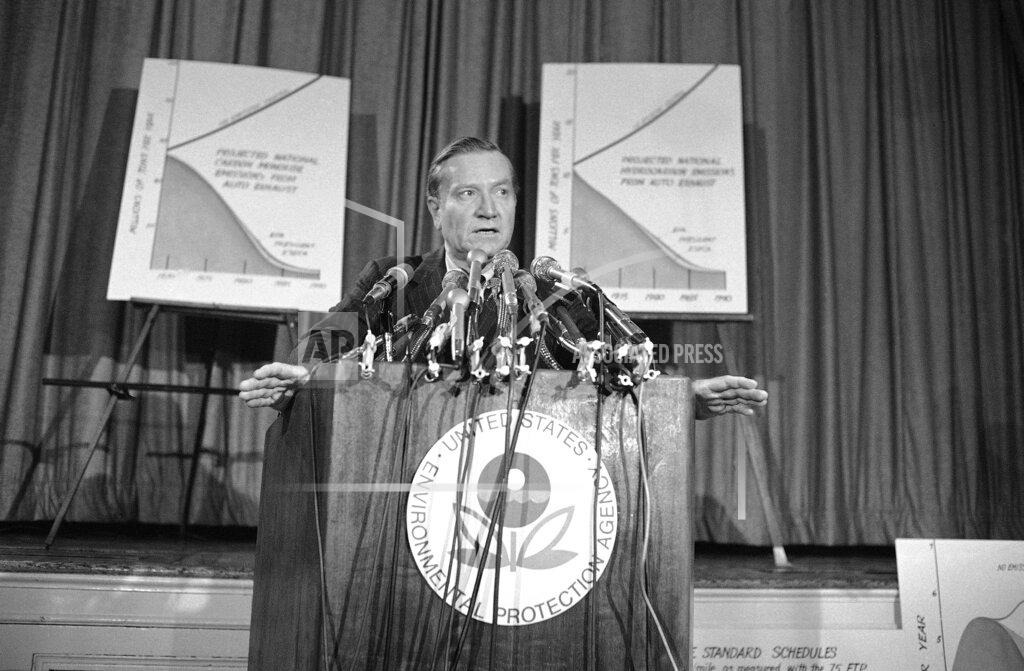
Detroit should be required to build more efficient cars rather than relax. auto emission standards, Leonard Woodcock, president of the United Auto Workers, said in testimony before the Senate Budget Committee in Washington. Automakers should be penalized for producing gas guzzling vehicles, he said, adding that mileage of 20 to 22 miles per gallon would be feasible within several years. The union leader opposed a Democratic proposal for taxing autos which use a lot of gasoline. “Simply because one can pay the tax, he should not be allowed to buy a car that gets nine or 10 miles per gallon,” Woodcock said.
The Federal Aviation Administration announced new safety standards for airport X-ray machines in order to safeguard employees who work around them. The standards also would help prevent damage to film in passengers’ carry-on luggage. The new regulation, which takes effect April 4, requires that all machines comply with radiation level standards set by the Food and Drug Administration and the Department of Health, Education and Welfare. Also, passengers now may “request and receive a hand search of carry-on articles in lieu of X-ray inspection,” the agency said.
Two barges slammed into a Mississippi River bridge at Vicksburg, Mississippi, killing one man and spilling thousands of barrels of crude oil, the U.S. Coast Guard said. One barge sank and the other was partly submerged and pinned against a pier of the old U.S. 80 bridge. A towboat and two other barges were brought under control. Men aboard the towboat said its engine stalled after the barges passed the bridge heading upriver and that before it could be restarted, the current had pushed the barges parallel to the bridge. The barges were said to be carrying 72,282 barrels of crude.
Mayor Charles Evers of Fayette, Mississippi’s best‐known black political leader, has charged the state government with trying to establish a nineteen‐seventies version of a literacy test to discourage black voter registration. A white political colleague. Mrs. Patricia Derian, the Democratic National Committeewoman from Mississippi, has also objected to the new registration device. She calls it an invasion of privacy rather than a literacy test. Whatever the device is to be called, its opponents say, it has a “chilling effect” that is keeping some potential voters, black and white, from registering. Mississippi is to elect a Governor this year.
David Owen Brooks, who assisted Dean Arnold Corll and Elmer Wayne Henley in the serial killings of 28 young men and boys in Texas, was sentenced to life in prison for strangling of 15-year-old Billy Ray Lawrence, one of 27 murders committed in the summer of 1973 of which he had been accused.
The Homebrew Computer Club, originally a gathering of computer hobbyists, held its very first meeting, at the garage of Gordon French in Menlo Park, California. One of the people in attendance, 24-year-old Steve Wozniak, couldn’t afford the Intel 8080, and began searching for a cheaper 8-bit substitute. After finding the MOS Technology 6502 microprocessor, Wozniak worked at trying to modify it to hook to a standard keyboard and to connect to an ordinary television. Wozniak, Steve Jobs, and Ronald Wayne would join to form Apple, Inc.
10th Academy of Country Music Awards: Merle Haggard and Loretta Lynn win.
Tony Conigliaro signs a contract with Pawtucket (International League) in an attempt to make a comeback.
Dow Jones Industrial Average: 752.82 (-4.92, -0.65%)
Born:
Jolene Blalock, American actress (“T’Pol” — “Star Trek: Enterprise”), in San Diego, California.
Niki Taylor, American model (Elle, Marie Claire), in Fort Lauderdale, Florida.
Obafemi Ayanbadejo, NFL running back (NFL Champions, Super Bowl 35-Ravens, 2000; Minnesota Vikings, Baltimore Ravens, Miami Dolphins, Arizona Cardinals), in Chicago, Illinois.






 History Diaries